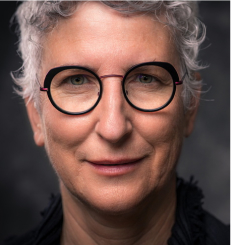
Shamini Jain: The Missing Link Between Consciousness and Healing

    —
January 17, 2017

Shamini Jain: The Missing Link Between Consciousness and Healing

Shamini Jain — January 17, 2017

Dr. Shamini Jain is a psychologist, scientist, and social entrepreneur who is also the founder and director of the Consciousness Healing Initiative (CHI). She will be a featured presenter on Sounds True’s upcoming Energy Healing Summit, where she will speak on “Biofield Science: How Consciousness Catalyzes Healing.” In this episode of Insights at the Edge, Tami Simon and Shamini speak on how biofields are the missing link in understanding how consciousness affects our health. They also discuss biofield-centric therapies such as Reiki and acupuncture, as well as the role of belief in healing. Finally, Shamini explains her vision for the future of biofield study and how it might be the component needed to bridge the spiritual with the scientific. (65 minutes)

Shamini Jain, PhD, is the founder and CEO of the Consciousness and Healing Initiative (CHI), a nonprofit collaborative that leads humanity to heal ourselves. Dr. Jain is an Ivy League-trained clinical psychologist and an award-winning research scientist in psychoneuroimmunology (PNI) and integrative medicine. She is a sought-after speaker and teacher in mind-body-spirit healing. Dr. Jain is also adjunct faculty at UC San Diego. For more, visit shaminijain.com.

Author photo © Namuun Bat

900 Episodes and Counting…

Subscribe to Insights at the Edge to hear all of Tami’s interviews (transcripts available too!), featuring Eckhart Tolle, Caroline Myss, Tara Brach, Jack Kornfield, Adyashanti, and many more.

Meet Your Host: Tami Simon

Each week on Insights at the Edge, Tami Simon interviews leading voices in the Mind/Body/Spirit space about a vast spectrum of fascinating ideas. Since 2009, Tami and her guests have been exploring the edge of understanding, nearly 1,000 episodes on the honest work of change, including spiritual discovery, awakening, intuition, purpose, trauma, and grief.

Photo © Jason Elias

Also By Author

Just One Question | Shamini Jain: How Can You Heal Fro...

There’s an elephant in the room anytime someone talks about energy healing, an elephant named Placebo. 

For most of us, placebo means you got the sugar pill. It means whatever’s happening is all in your mind, not in your body. That’s even what Tami thought when she sat down to talk with award-winning researcher in psychoneuroimmunology and trained clinical psychologist Shamini Jain, PhD, in 2023. 

But here’s the thing—placebo isn’t the thing science needs to control for and throw out. It’s the measurable evidence of what our bodies do on their own, and Shamini makes the case with research most of us have never heard about.

In this episode:

  • The open-label placebo studies where patients are told outright they’re receiving a placebo—and improve anyway
  • The four elements Shamini says show up in every healing encounter: expectation, conditioning, relationship, and meaning and ritual
  • Why placebo-controlled surgery trials should make all of us ask harder questions
  • What the antidepressant data actually says—and why “we work” may be the better takeaway than “the drugs don’t”

Mallory and Chris have spent the past year and a half working on a podcast about energy healing (Phenomena) and Sounds True is offering—right now—an immersion course on energy healing featuring Shamini Jain as well as Robert Peng and Laurie Nealon…so now felt like the perfect time to bring this conversation back. And maybe rename that elephant for good.

Taken from the full Insights at the Edge conversation with Shamini Jain.

Shamini Jain: Healing Ourselves at This Time—The Ben...


What is the future of health and healing? In this podcast, Tami Simon speaks with Dr. Shamini Jain about her vision of the medicine of tomorrow, where not only the physical aspects of who we are but also our emotions, energy, and spirit are all vital considerations in the prevention and treatment of illness. 

Tune in to this illuminating conversation with the author of the book, Healing Ourselves: Biofield Science and the Future of Health, for a glimpse ahead to an emerging, universal flourishing of humanity. Tami and Dr. Jain explore: the body as a garden, the field of psychoneuroimmunology and the link between mind and body, subtle energy and the biofield, the “benevolent challenge” facing humanity at this time, using vibration and sound to work with difficult emotions, energy healing and preventative care practices, a guided biofield vocal toning exercise, the movement toward “whole-person health” in an interconnected world, the neuroscience of social pain and empathy, extending healing to others, surrender and trust, giving ourselves permission to be everything that we want, and more.

Note: This episode originally aired on Sounds True One, where these special episodes of Insights at the Edge are available to watch live on video and with exclusive access to Q&As with our guests. Learn more at join.soundstrue.com.

The Biofield: The Missing Link Between Healing and Con...

Dr. Shamini Jain is a clinical psychologist, researcher, public speaker, and the founder of the nonprofit Consciousness and Healing Initiative. With Sounds True, she’s released the new book Healing Ourselves: Biofield Science and the Future of Health. In this episode of Insights at the Edge, Tami Simon has a conversation with Shamini about the interconnections between human consciousness, the biological world, and our ability to heal. Shamini explains “the biofield” and how it relates to both our physical and spiritual selves. She and Tami discuss already existing healing modalities that work with the biofield (such as Reiki and qigong), as well as recent scientific discoveries that support and expand those fields. Finally, Tami and Shamini talk about the essential step of surrendering to the healing process, the mystery and potential of the placebo effect, and our fundamental connection to all of life.  

You Might Also Enjoy

Just One Question | Jeffrey Rutstein: Did I Inherit My...


Ever notice how a tiny criticism can send you into a full-blown spiral, and then you spend the rest of the day furious at yourself for spiraling? Dr. Jeffrey Rutstein has a theory about why that happens, and it starts before you ever had a say in the matter: with the nervous system you were born with.

Rutstein, a clinical psychologist, Hakomi-certified somatic psychotherapist, and host of Sounds True’s Healing Trauma Program, talks with Tami Simon about inheriting his own mother’s fight-or-flight wiring, and how a childhood encounter with Indra Devi’s Yoga for Americans sent him down a decades-long path through pranayama, Hatha yoga, and Zen practice.

In this conversation, Tami and Jeffrey explore:

  • Why your baseline nervous system state is more inheritance than character flaw
  • How naming that inheritance can interrupt years of self-blame and shame
  • The difference between a fixed nervous system and one you can learn to shift

This one’s for anyone who’s ever hated themselves for “overreacting.” So…pretty much everyone.

Taken from the full Insights at the Edge conversation with Jeffrey Rutstein titled “Not Being a Prisoner To Your Nervous System.”

Find the complete interview: https://bit.ly/iate-jeffrey-rutstein

Beatrice Chestnut: “Going Deeper with the Enneag...

What if the type you’ve been typing yourself as isn’t the whole story? Tami Simon sits down with Enneagram pioneer Beatrice Chestnut to mark the re-release of her classic guide, The Complete Enneagram, and to ask why facing our shadow, not avoiding it, is the real path to waking up.

Beatrice Chestnut, PhD, is a global expert, researcher, and educator on the Enneagram. She holds a PhD in communication studies and a master’s degree in clinical psychology, and is a licensed psychotherapist, coach, and business consultant based in San Francisco. She is the author of several acclaimed books on the Enneagram, including the newly re-released edition of The Complete Enneagram: 27 Paths to Greater Self-Knowledge, widely considered a classic in Enneagram literature.

In this conversation, Tami and Beatrice explore:

  • The difference between personality (the protective “false self” formed in childhood) and our essential, true nature
  • Why each of the nine Enneagram types has its own distinct shadow challenge to confront and integrate
  • The 27 subtypes, and why Beatrice believes they matter far more than Enneagram “wings”
  • How the connecting lines, or arrows, reveal each type’s specific growth pathway — and why the order matters
  • What each type looks like at its highest, most evolved expression
  • Why more people may be ready to “wake up” to who they really are now than ever before

This episode is for anyone who’s taken an Enneagram test and wondered what to do next, as well as therapists, coaches, and longtime students of the system looking to go deeper with the subtypes.

Listen now to discover your own path to greater self-knowledge. →

This conversation offers genuine transmission, not just concepts about awakening, but the palpable presence of realized teachers exploring the growing edge of spiritual understanding together, and it originally aired on Sounds True One.

Get a FREE month of membership at https://bit.ly/STOne-Free-Month.

Just One Question | Gabor Maté: What Keeps Me from Be...

Why do some of the most hardened people—lifers on death row, people who’ve killed—turn out to be, underneath it all, remarkably sensitive? Physician and trauma expert Dr. Gabor Maté has spent decades working with addicts and prisoners, and he’s found a pattern that upends how we usually think about cruelty and compassion.

Dr. Gabor Maté is a physician and bestselling author whose work on trauma and addiction has shaped how millions understand pain, illness, and healing. He’s the author of In the Realm of Hungry Ghosts, When the Body Says No, Scattered Minds, and, with his son Daniel, The Myth of Normal.

In this conversation, Tami and Gabor explore:

  • Why compassion is wired into us from birth and what shuts it down
  • The neuroscience of care, drawing on affective neuroscientist Jaak Panksepp’s research on emotional systems
  • What Gabor has witnessed firsthand working with lifers and people on death row
  • The difference between “orchid” and “dandelion” temperaments, and why high sensitivity can become either a liability or a gift
  • Why genes linked to addiction may really be genes for sensitivity

This one’s for anyone trying to understand the roots of cruelty, or working through their own compassion fatigue; toward others, or toward themselves.

Taken from the full Insights at the Edge conversation with Gabor Maté titled “Gabor Maté: Healing Principles to Embody in a Traumatized World”