
Vanessa Bennett: Mothers and Wives: Resentment Is Yours to Own

    —
October 14, 2025

Vanessa Bennett: Mothers and Wives: Resentment Is Yours to Own

Vanessa Bennett October 14, 2025

Tami Simon and depth psychologist Vanessa Bennett explore the psyche’s need to experience initiation in our key life transitions, using resentment as a focal point for healing, how to change our unhealthy patterns in relationships, and reclaiming personal agency.

What relationship myth causes us the most suffering? According to depth psychologist Vanessa Bennett, it’s this: “That if you’re not fulfilled by parenthood, sex, or your relationships, then there’s something wrong with you.” Why? Because it’s often the fault of our culture, and not you personally, that’s to blame.

This week, Tami Simon welcomes the author of The Motherhood Myth to discuss the hidden pressures and misconceptions surrounding parenthood and intimate partnership—and how looking at your resentments is a surprisingly direct way to discover the roots of the wounds that unconsciously drive unhappiness in your relationships.

Join us to explore:

  • At your life’s turning points, why your unconscious may invite chaos or trauma
  • The societal roots of discontent in parenthood and intimate relationships
  • How Vanessa’s own experiences—from her neighborhood’s destruction by fire to everyday life with her daughter and husband—illustrate how to grow and heal
  • “If you’re good, I’m good. And if you’re not, I’m not”—codependency explained
  • The “choose me” wound—how we abandon ourselves in relationships and how to reintegrate
  • The “Consent Tool,” a practice to help restore safety and intimacy in your relationships, and more

If you’ve ever felt frustrated about the demands of your relationships—obvious or hidden—this episode will spark a wealth of “aha!” moments and insights for change.

This episode is sponsored by BetterHelp. Listeners of Insights At The Edge get 10% off their first month at www.betterhelp.com/soundstrue.

Note: This interview originally aired on Sounds True One, where these special episodes of Insights at the Edge are available to watch live on video and with exclusive access to Q&As with our guests. Learn more at join.soundstrue.com.

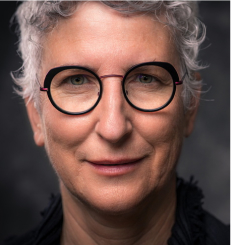
Vanessa Bennett, LMFT, is a licensed depth psychotherapist, author, and facilitator known for her no-nonsense yet compassionate approach to personal growth and healing. She is the coauthor of the bestselling relationship book It’s Not Me, It’s You with her partner, John Kim, and she cohosts the Cheaper Than Therapy podcast. A former New Yorker now based in Los Angeles, Vanessa leads transformational retreats and workshops grounded in Jungian and depth-oriented psychology. Through her writing, teaching, and digital content, she helps others break generational patterns and reconnect with their truest selves. Visit vanessabennett.com for more.

Author photo © Sarah Williams Photography


600 Podcasts and Counting…

Subscribe to Insights at the Edge to hear all of Tami’s interviews (transcripts available too!), featuring Eckhart Tolle, Caroline Myss, Tara Brach, Jack Kornfield, Adyashanti, and many more.

Meet Your Host: Tami Simon

Founded Sounds True in 1985 as a multimedia publishing house with a mission to disseminate spiritual wisdom. She hosts a popular weekly podcast called Insights at the Edge, where she has interviewed many of today's leading teachers. Tami lives with her wife, Julie M. Kramer, and their two spoodles, Rasberry and Bula, in Boulder, Colorado.

Photo © Jason Elias

Also By Author

Vanessa Bennett: Mothers and Wives: Resentment Is Your...

Tami Simon and depth psychologist Vanessa Bennett explore the psyche’s need to experience initiation in our key life transitions, using resentment as a focal point for healing, how to change our unhealthy patterns in relationships, and reclaiming personal agency.

What relationship myth causes us the most suffering? According to depth psychologist Vanessa Bennett, it’s this: “That if you’re not fulfilled by parenthood, sex, or your relationships, then there’s something wrong with you.” Why? Because it’s often the fault of our culture, and not you personally, that’s to blame.

This week, Tami Simon welcomes the author of The Motherhood Myth to discuss the hidden pressures and misconceptions surrounding parenthood and intimate partnership—and how looking at your resentments is a surprisingly direct way to discover the roots of the wounds that unconsciously drive unhappiness in your relationships.

Join us to explore:

  • At your life’s turning points, why your unconscious may invite chaos or trauma
  • The societal roots of discontent in parenthood and intimate relationships
  • How Vanessa’s own experiences—from her neighborhood’s destruction by fire to everyday life with her daughter and husband—illustrate how to grow and heal
  • “If you’re good, I’m good. And if you’re not, I’m not”—codependency explained
  • The “choose me” wound—how we abandon ourselves in relationships and how to reintegrate
  • The “Consent Tool,” a practice to help restore safety and intimacy in your relationships, and more

If you’ve ever felt frustrated about the demands of your relationships—obvious or hidden—this episode will spark a wealth of “aha!” moments and insights for change.

This episode is sponsored by BetterHelp. Listeners of Insights At The Edge get 10% off their first month at www.betterhelp.com/soundstrue.

Note: This interview originally aired on Sounds True One, where these special episodes of Insights at the Edge are available to watch live on video and with exclusive access to Q&As with our guests. Learn more at join.soundstrue.com.

You Might Also Enjoy

Rob Bell: “The Risk of Not Becoming More YouR...


What if not doing the thing is the riskier choice?

This week, Tami Simon speaks with Rob Bell—New York Times bestselling author of 14 books and plays, host of The RobCast, and a former pastor—about what he calls his civilian phase. Rob left the role years ago. What surprised him was how long the role stayed with him afterward: “We leave an external form, and then over the years, the form begins to leave us.”

This is an unusually candid conversation. Tami goes first, admitting she didn’t feel free to fully reveal herself until she had economic security—and Rob meets her there without a tidy answer.

Join Tami and Rob to explore:

  • Why he doesn’t believe in risk versus no risk—only in risk management, and which risk is actually smaller
  • The “answer man” conditioning of a job that expected crisp soundbites about the deepest human questions—and what it did to his nervous system
  • Hiding in plain sight: how public visibility can be its own kind of concealment
  • The abyss, the void, the fallow field—learning to stop fighting the empty seasons
  • “And then I kept going”: the phrase that came out of pandemic sessions, and why people can’t see their own resilience
  • What shifted when a plant medicine experience dropped his head into his heart
  • Toxic positivity, a lineage that didn’t know what to do with pain, and the son who taught him it’s okay to be sad
  • Why a birch tree scatters 250 million seeds and doesn’t seem worried about efficiency
  • His father’s dementia, temporariness, and the strange way mortality heightens aliveness

Rob will lead an immersive workshop, The Ongoing Creation of Your Life, at Omega Institute, August 30–September 4.

Listen now and hear what it costs to keep standing at a distance from your own life. →

This conversation offers genuine transmission, not just concepts about awakening, but the palpable presence of realized teachers exploring the growing edge of spiritual understanding together, and originally aired on Sounds True One.

Just One Question | James Hollis: Why Am I Here?

Tami came to Living with Borrowed Dust wanting to talk about the abyss — the chapter that held her attention most. James Hollis offers Heidegger’s framing of it: not the pit that swallows you, but the openness of being.

Then he does something guests rarely do here. He takes the question back. The abyss opens, he says, every time we ask a truly radical question — radical from radix, root — and there is none more radical than “Why am I here?”

He answers it from inside a hospital bed. Two serious spinal surgeries, real doubt about whether he’d come through, and what he describes feeling is not despair but something closer to adventure. He thanked his surgeon on the way into the operating room. Fear is normal, he says, and anxiety is real — but neither one has to be the thing that decides how you live.

In this episode:

  • Heidegger’s abyss as the openness of being, and how that reframe exposed Hollis’s own defenses
  • The patterns we build against the unknown: power over small things, staying out of harm’s way, narcissistic inflation
  • Why mortality is the one statistic with no uncertainty in it, and what that should free us to do
  • Keep walking — if you’re in the middle of the forest, you’re halfway through
  • Dignity over pride, and the one thing nobody can take from you unless you give it away

Taken from the full Insights at the Edge conversation with James Hollis. Find the complete interview in this feed or at soundstrue.com

Just One Question | Rev angel Kyodo williams: How Do W...

Reverend angel Kyodo williams has spent decades bridging Zen practice and social change, and she doesn’t offer the version of spirituality where relief is waiting somewhere down the road. She told Tami Simon that our joy lives at the center of our suffering, and Tami, to her credit, pushed back. Really? Right in the middle of my deep suffering and the world’s deep suffering?

Reverend angel’s answer is why this segment felt so powerful and transformative to us. She argues we’ve been handed a spiritual life that lives in a box: well-maintained, kept in good order, scheduled for Tuesday evenings from 6:30 to 8:30. Real practice, she says, pulls the lens all the way back to take in a whole life: the trauma, the history, the parts we’ve been trained to walk around. And when we refuse to touch our own suffering, we don’t contain it. We leave it behind us like roadkill, in how we treat each other and in what we let stand: patriarchy, racism, xenophobia.

In this episode:

  • Why “radical” means whole rather than extreme, and what a complete dharma asks of us
  • The cold-water method—entering your suffering ankle-deep, then further
  • What joy actually is, and why it isn’t an ice cream cone in the middle of the mess
  • The question Reverend angel keeps returning to in her own practice: where have I not yet looked?
  • Why fearlessness isn’t something you choose, but something that surfaces once the path is clear

Taken from the full Insights at the Edge conversation with Reverend angel Kyodo williams. Find the complete interview here: Reverend angel Kyodo williams: Warrior Spirit.
