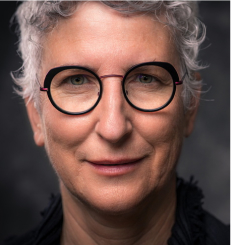
Jeff Foster: The Way of Rest

    —
July 4, 2017

Jeff Foster: The Way of Rest

Jeff Foster July 4, 2017

Jeff Foster is a spiritual teacher whose methods do not belong to any one lineage or style. He teaches a form of total acceptance—a dismantling of the armor of the heart so that we can live vibrantly in the here and now. With Sounds True, Jeff has published several books and audio programs, including The Way of Rest: Finding The Courage to Hold Everything in Love. In this episode of Insights at the Edge, Jeff and Tami Simon speak on the obstacles that stand between us and rest, and how learning to abide in discomfort is a difficult but necessary step to achieving true rest. Reading an excerpt from his newest book, Jeff explains why it’s actually a daring act to choose to rest. Finally, Jeff and Tami talk about depression and the desire to die, and why that desire can be a gateway to a deeper, richer understanding of the self. (71 minutes)

Photo of ()\

Jeff Foster shares from his own awakened experience a way out of seeking fulfillment in the future and into the acceptance of "all this, here and now." He studied astrophysics at Cambridge University. Following a period of depression and physical illness, he embarked on an intensive spiritual search that came to an end with the discovery that life itself was what he had always been seeking.

Foster, Jeff © Emily Goodman


Listen to Tami Simon's in-depth audio podcast interviews with Jeff Foster:
The Deepest Acceptance »
The Deepest Acceptance: Part 2 »
Unconditioned Awareness and the Challenges of Everyday Life »

600 Podcasts and Counting…

Subscribe to Insights at the Edge to hear all of Tami’s interviews (transcripts available too!), featuring Eckhart Tolle, Caroline Myss, Tara Brach, Jack Kornfield, Adyashanti, and many more.

Meet Your Host: Tami Simon

Founded Sounds True in 1985 as a multimedia publishing house with a mission to disseminate spiritual wisdom. She hosts a popular weekly podcast called Insights at the Edge, where she has interviewed many of today's leading teachers. Tami lives with her wife, Julie M. Kramer, and their two spoodles, Rasberry and Bula, in Boulder, Colorado.

Photo © Jason Elias

Also By Author

Victory! A Poem

Victory!

By Jeff Foster


You don’t have to be the best. 

You don’t have to win. 

You only have to be yourself.


You only have to be real. 

And speak from the heart. 

And know that you have the right to see how you see, 

and think how you think, and feel what you feel, 

and desire what you desire.


You don’t have to be a success in the eyes of the world 

and you don’t have to be an expert on living.


You only have to offer what you offer, 

breathe how you breathe, make mistakes and screw 

up 

and learn to love your stumbling and say the 

wrong thing 

and stop worrying so much about impressing anyone 

because in the end you only have to live with yourself


and joy is not given but found in the deepest 

recesses of your being 

so there can be joy in falling and joy in making 

mistakes 

and joy in making a fool of yourself and joy in 

forgetting joy 

and then holding yourself close as you crumble to 

the ground 

and weep out the old dreams.


Joy is closeness 

with the one you love: 

You.


You don’t have to be the best. 

You really don’t have to win.


You only have to remember this intimacy with 

the sky, the nearness of the mountains and feel the sun 

warming your shoulders and the nape of your neck


and know that you are alive, 

and that you are a success at being alive, 

and that you have won already, 

and you are victorious already, 

without having to prove 

a damn 

thing.


To anyone.

This poem is excerpted from You Were Never Broken: Poems to Save Your Life by Jeff Foster.


jeff fosterJeff Foster shares from his own awakened experience a way out of seeking fulfillment in the future and into the acceptance of “all this, here and now.” He studied astrophysics at Cambridge University. Following a period of depression and physical illness, he embarked on an intensive spiritual search that came to an end with the discovery that life itself was what he had always been seeking.


book cover

Learn More

Sounds True | Amazon | Barnes & Noble | Bookshop

The Courage to Stand Alone

The Courage to Stand Alone

It can be scary when we are called to confront our aloneness, the seemingly infinite depths of that empty, homeless feeling inside of us. When all our old protections fall away and the abandoned and neglected ones inside come begging for our love and attention. It can feel sometimes as though there’s nowhere to turn, like we want to crawl out of our own skin, urgently get out of the Now and into some other time or place.

It takes bravery to stop, breathe, and—slowly, slowly, slowly—turn back toward the lonely, dark, empty “void” inside (in reality, there is no void). To actually turn to face the sense of abandonment buried deep within our guts, to soften into the sense of separation that has been with us for as long as we can remember. We don’t have to make the feeling go away today, only lean into it, breathe into it, begin to make room for it, maybe even learn to trust its presence. 

quote image

Perhaps loneliness is like a cosmic nostalgia, a preverbal memory of a deep womb-connection, with ourselves, with the planet, with every being who has ever lived. In leaning into our own loneliness, shame, and existential anxiety, we may be able to touch into compassion for the loneliness of every human being, for every heart longing to connect, for every grieving heart, every frightened heart. 

We are alone, yet never alone. This is the great paradox of existence. Our loneliness, when not resisted or numbed away, may actually end up connecting us more deeply to life and each other, like it did for me and my sweet father that winter evening. 

Let us learn to be alone, then! Alone, without distraction, which is true meditation. Alone, communing with the breath as it rises and falls. Alone with the mind and its incredible dance. Alone with the rain and the morning sun. Alone with the crackle of autumn leaves under our feet, or the crunch of winter snow. Alone with the hopes and joys and anxieties of this human form, living a single day on this remarkable planet. Alone with our precious selves, with this unfathomable sense of connection to all things, with birth and loss and death and their myriad mysteries. 

Alone, with all of life.

This is an excerpt from You Were Never Broken: Poems to Save Your Life by Jeff Foster.

jeff fosterJeff Foster shares from his own awakened experience a way out of seeking fulfillment in the future and into the acceptance of “all this, here and now.” He studied astrophysics at Cambridge University. Following a period of depression and physical illness, he embarked on an intensive spiritual search that came to an end with the discovery that life itself was what he had always been seeking.


book image of excerpt on lonliness

Learn More

Sounds True | Amazon | Barnes & Noble | Bookshop

Into the Belly of Meditation

Into the Belly of Meditation

By Jeff Foster


You are weary, friend. 

Sit. 

You are thirsty. 

Here. Drink.


You are hungry. Here. Take this. 

A piece of bread. 

A small bowl of soup. 

See how God has taken form! 

It is all I have but it will keep you alive.

image 1

I will light a fire that will never go out. 

A sacred flame. Unconditional in its burning. 

To illuminate us in the darkness.


Oh. I see you are wounded. 

Bruised. Bleeding.

Exhausted from the world. 

You have suffered much, I know.


image 2

Come. 

Take off these dirty rags. 

Don’t worry. It’s safe. 

There is strength in your nakedness.


Here. Wash. 

Rub this medicine onto your wounds.


Put on these robes, they are clean and dry. 

Lie down. Close your eyes. 

I will watch over us tonight.

image 3

Listen. You have not failed. 

I see new life breaking through. 

I see birth. An insurrection. 

The sharp edge of hope.


I have no teaching for you. 

No wise words.


I only want you to trust what you are going through. 

To bring this fire inside of you.

Until the end.


I have known this pain. Yes

This courage to keep moving. Yes

This courage to rest, too.

The sacrifice of the known world.

image 1

Friend. 

Drop into the belly of meditation now. 

The place you were always seeking. 

The vast silence at the Earth’s core which is your own core. 

Breathing into the gut now. 

The throat. The chest. 

Irradiating the nervous system with unspeakable 

tenderness. 

Flooding the body with soft, warm light. 

Drenching the human form with divine love. 

And sleep. 

And sleep.

image 2

I may not be here when you wake. 

We may not meet again in form.


Yet I leave you with all you need. 

Food. Water. A bed. 

A chance to rest. 

A touch of kindness.

And your unbreakable Self.

flowers

This poem is excerpted from You Were Never Broken: Poems to Save Your Life by Jeff Foster.


jeff fosterJeff Foster shares from his own awakened experience a way out of seeking fulfillment in the future and into the acceptance of “all this, here and now.” He studied astrophysics at Cambridge University. Following a period of depression and physical illness, he embarked on an intensive spiritual search that came to an end with the discovery that life itself was what he had always been seeking.


you were never broken cover

Learn More

Sounds True | Amazon | Barnes & Noble | Bookshop


You Might Also Enjoy

Laurie Nealon: “Energy Healing with Help From the Ot...

What if you were never working alone—and neither was anyone you were trying to help?

This week, Tami Simon speaks with Laurie Nealon, an intuitive energy healer, medium, and educator whose work is profiled on the Sounds True podcast Phenomena: The Science and Stories of Energy Healing. Seventeen years ago, Laurie began seeing and hearing those who had passed—not in dreams, but in the middle of her waking life. She resisted it. Then she built a practice around it.

Join Tami and Laurie to explore:

  • What Laurie actually perceives when someone who has died “appears”—and how she learned to filter it
  • Integrated Energy Therapy (IET), attunement, and why she calls the practitioner a facilitator rather than a healer
  • The “spiritual support group”: angels, guides, ascended masters, and loved ones she says fill the room during a session
  • A guided practice—rolling the energy—you can do in two minutes before you get out of bed
  • The screen technique: how to stay open to love without carrying everyone else’s journey
  • Why “lightening someone’s load” may actually dishonor their path
  • Entity energy, imprints, and what clearing a block really means
  • Tami’s hardest question: what about the people who did everything right and still died?
  • A closing prayer Laurie offers for every listener

Laurie’s conviction is that none of this is exotic. Everyone, she says, should be trained in energy healing the way everyone is trained in CPR—and everyone has the capacity to open to their own gifts.

Listen now, and find out who else is in the room. →

This conversation offers genuine transmission, not just concepts about awakening, but the palpable presence of realized teachers exploring the growing edge of spiritual understanding together, and originally aired on Sounds True One.

Michelle Wadleigh: “I Demand to Be Me”

“You have to want the freedom more than you want to be right about it.”

That’s what Reverend Dr. Michelle Wadleigh offers to anyone who has tried forgiveness and found that it didn’t take. Not a technique. A decision.

This week, Tami Simon speaks with Wadleigh—ordained minister in Centers for Spiritual Living, retreat facilitator, co-founder of the Planned Happiness Institute, and author of Forgiveness, Shadow Work, and the new Dance Like Nobody’s Watching: The Soul’s Journey to Courage, Authenticity, and Self-Love—about what it actually takes to stop living at the mercy of our own stories.

Join Tami and Michelle to explore:

  • Why forgiveness practices fail when they skip the body and the subconscious—and what to do instead
  • How shadow work and forgiveness depend on each other, and why projection drives so much of the divisiveness we see
  • “Functioning on top of dysfunction”: our addictions to being nice and being liked, and how they train us to dumb ourselves down
  • The 15 to 20 minutes before sleep, when the mind turns porous—and how Michelle guards that window
  • Fire walking, cold plunges, and the discovery that fear is a choice rather than an automatic
  • What it means to demand to be me without excuses—and who, exactly, that demand is addressed to
  • Why a book about bold self-expression closes with instructions for a solo silent retreat
  • Presence as a practice, learned while walking beside a dying husband

Michelle speaks throughout from the middle of her own hardest passage, which gives everything she says about buoyancy, beauty, and determination a weight it would not otherwise carry.

Listen now. →

This conversation offers genuine transmission, not just concepts about awakening, but the palpable presence of realized teachers exploring the growing edge of spiritual understanding together, and originally aired on Sounds True One.

Insights at the Edge is supported by Omega Institute, a global gathering hub for lifelong learning and spiritual exploration. Located in upstate New York’s beautiful Hudson Valley, Omega offers weekend workshops, special events, rest and rejuvenation retreats, professional trainings, online learning, and more.

Special Offer – Sounds True community members enjoy 10% off any workshop registration at Omega Institute. Discover what calls to you at eomega.org/true. Use code TRUE at checkout.

Insights at the Edge is supported by Magic Hour, whose ceremonial teas carry more presence, beauty, and ritual into ordinary days. Magic Hour draws its leaves and botanicals from regenerative small farms around the world, in blends made to nourish the body and open the mind.

Explore their teas, matchas, and herbal rituals at clubmagichour.com. Get 20% off your first order with the code TRUE.

What Is Brainspotting? David Grand on Using Eye Positi...

What happens when healing needs to go deeper than words can reach? For many people, the most profound emotional experiences resist easy articulation. Brainspotting is a therapeutic approach developed by David Grand that uses specific eye positions to access what the brain and body hold onto, even when language falls short.

At Sounds True, we’ve spent more than 40 years sharing trusted teachings from therapists, authors, and spiritual teachers whose work nurtures healing, personal growth, and lasting transformation. From online courses and in-depth programs to podcasts and digital resources, we bring the voices that matter most directly to you.

We cover what brainspotting is, how David Grand developed the approach, the role of eye position in trauma therapy, and how brainspotting compares with EMDR.

Key Takeaways:

  • Healing Beyond Words: Brainspotting uses specific eye positions to access unresolved trauma and emotional experiences stored in the brain and body, creating a path forward that doesn’t require verbal storytelling alone.
  • David Grand’s Path to Healing: David Grand developed brainspotting after observing that a client’s eye position reflected deeper emotional processing during trauma treatment, giving rise to an approach built around the brain’s natural capacity to heal.
  • EMDR vs. Brainspotting: While both approaches help people process trauma, brainspotting and EMDR differ in structure and session style. The right fit depends on your history, goals, and therapeutic relationship.

Discover the Power of Daily Meditation and Inner Stillness

What Is Brainspotting?

Brainspotting is designed to help people access and process unresolved trauma through focused attention on specific eye positions. The method rests on the idea that where a person looks can correspond to where difficult experiences are stored in the brain and body. Staying with a brainspot while remaining aware of physical sensations and emotions, people can work through material that language alone might not reach.

Since David Grand developed this approach, brainspotting therapy has been applied broadly, with athletes, artists, business leaders, and survivors of large-scale events, among others. Grand also offers an online course through Sounds True that walks through the core principles behind brainspotting therapy, available to those who want to learn directly from the source.

His insights align with the conversations we host on the Insights at the Edge Podcast, where therapists, teachers, and practitioners share what healing really looks like from the inside out.

David Grand and the Development of Brainspotting Therapy

Brainspotting therapy came out of a significant clinical observation. During trauma treatment, David Grand noticed that a client’s eye position seemed to shift when deeper emotional material surfaced. That moment became the foundation for a method built around the brain’s own capacity to process and release what it has long held in place.

Since its introduction, brainspotting therapy has been used by clinicians around the world to help people facing trauma, anxiety, grief, chronic stress, and performance-related challenges. Grand’s work continues to shape the field by drawing attention to the connection between the brain, the body, and emotional healing.

Sounds True is home to teachers like David Grand alongside hundreds of other practitioners, healers, and visionaries whose work spans a wide range of healing traditions. Those who want to trace that full breadth can visit our All Teachers & Authors collection, where every teacher’s body of work is gathered in one place.

Trauma Therapy Eye Position and the Brain-Body Connection

Trauma therapy eye position describes the relationship between where someone directs their gaze and what emotional or physical experiences become accessible as a result. During a session, a therapist guides the client to a specific visual point and invites them to notice what arises in the body as they hold that focus. Sensations, emotions, and memories can surface as the nervous system begins to process material it has held in place for years.

The body carries what the mind sometimes can’t articulate. A shift in eye position can open access to experiences held below conscious awareness, gently creating conditions for the nervous system to complete what was once interrupted. Healing, in this way, becomes a process the whole person takes part in, not just the thinking mind.

The teachers and practitioners gathered in our Health & Healing collection share this same orientation: that real healing often begins when we learn to listen to what the body already knows.

How the Brainspotting Technique Uses Eye Position to Access Trauma

The brainspotting technique begins with identifying an eye position linked to an emotional or physical response. From there, the therapist invites the client to rest their attention on that visual point while remaining aware of what arises in the body. The process creates space for the nervous system to do what it naturally knows how to do, without demanding that memories surface on command.

A concrete example might be this: someone working through anxiety tied to an experience might start by calling that experience to mind. As the therapist slowly moves a pointer across their field of vision, the client notices a position where a physical sensation intensifies, perhaps tightness in the chest or a change in breath. That’s the brainspot. The session then focuses there while the client tracks what unfolds internally, allowing the nervous system to process what it has previously stored.

Awaken Your Inner Healing Power: Your Wellness Journey Starts Now

EMDR vs Brainspotting: Understanding the Key Differences

EMDR follows a standardized eight-phase protocol and uses bilateral stimulation, typically through guided eye movements, sounds, or tapping, to help the brain reprocess traumatic memories. Brainspotting focuses on identifying one significant eye position and following the client’s internal experience from there. Sessions tend to be more open-ended, allowing the individual’s nervous system to lead.

Neither method is universally better than the other. A qualified therapist can help determine which fits a person’s history, goals, and comfort level. Many clinicians receive training in both and draw on each as the situation calls for it.

Those who want to go deeper into trauma healing and related practices can find immersive learning through our In-Depth Programs, where experienced practitioners bring both clinical knowledge and heart to each course.

Discover how your mind really works

Final Thoughts

Brainspotting offers a distinctive perspective on trauma healing, one that trusts the body’s capacity to know where attention is needed. Working with eye position rather than narration alone, this approach creates conditions for healing to happen at the body’s own pace.

As David Grand has shown through decades of clinical work, healing is often less about forcing change and more about creating the conditions for it to unfold. That belief is at the heart of what we do at Sounds True. We share the work of practitioners and teachers who honor the full range of human experience, including the places where language falls short, and the body quietly holds the way forward.

Frequently Asked Questions About Brainspotting

Is brainspotting backed by research?

Brainspotting is supported by a growing body of clinical research and case studies. While research continues to evolve, many mental health professionals use it as part of trauma-informed care for emotional and psychological concerns.

Who can benefit from brainspotting?

Brainspotting may benefit adults and adolescents experiencing trauma, anxiety, grief, stress, or performance-related challenges. A qualified mental health professional can determine whether it is an appropriate approach for an individual’s needs.

Do I have to talk about my trauma during brainspotting?

Not necessarily. While some people choose to discuss their experiences, brainspotting can also focus on physical sensations and emotions, allowing processing without requiring detailed verbal storytelling.

Can brainspotting be combined with other therapies?

Yes. Many therapists integrate brainspotting with other evidence-based approaches, such as cognitive behavioral therapy, mindfulness practices, or somatic therapies, to create a personalized treatment plan.

Is brainspotting only used for trauma?

No. Although it is widely recognized for trauma treatment, brainspotting is also used to support people dealing with anxiety, creative blocks, chronic stress, and performance enhancement in sports, music, and public speaking.

What should I expect after a brainspotting session?

Some people feel calm or relieved after a session, while others may continue processing emotions or physical sensations for a short time. Therapists often recommend rest, hydration, and self-reflection between sessions.

Is brainspotting suitable for everyone?

Brainspotting may not be the best fit for every individual or situation. A licensed therapist can evaluate your mental health history and recommend the most appropriate treatment approach.

Michelle Cassandra Johnson is an author, activist, spiritual teacher, racial equity consultant, and intuitive healer. She is the author of six books, including Skill in Action and Finding Refuge. Amy Burtaine is a leadership coach and racial equity trainer. With Robin DiAngelo, she is the coauthor of The Facilitator's Guide for White Affinity Groups. For more, visit https://www.michellecjohnson.com/wisdom-of-the-hive.