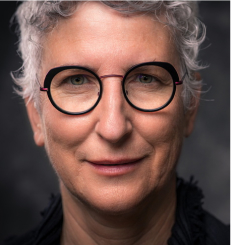
Caroline Myss: Prayer and the Reality of Evil

    —
August 30, 2011

Caroline Myss: Prayer and the Reality of Evil

Caroline Myss August 30, 2011

Tami Simon speaks with Caroline Myss, a leading voice in the fields of energy medicine and human consciousness. Caroline is the author of four New York Times bestsellers, including Anatomy of the Spirit and Sacred Contracts. Her latest audio release from Sounds True is The Power of Prayer: Guidance, Prayers, and Wisdom for Listening to the Divine, which is a training course on what Caroline calls “the ultimate tool we have for sparking our spiritual evolution.” In this episode, Tami speaks with Caroline about faith and divine intervention, who or what hears our prayers, how to work with prayer in the face of illness, and why prayer is a force that counteracts evil in the world. (51 minutes)

Caroline Myss is a five-time New York Times bestselling author and internationally renowned speaker in the fields of human consciousness, spirituality and mysticism, health, energy medicine, and the science of medical intuition. Her many groundbreaking books include Anatomy of the SpiritSacred ContractsInvisible Acts of Power, and Why People Don’t Heal and How They Can. She holds degrees in journalism, theology, intuition, and energy medicine, and in 2003 established her own educational institute: CMED (Caroline Myss Education). For more information about workshops and seminars with Caroline Myss, please visit myss.com.

Author photo © David Sutton

600 Podcasts and Counting…

Subscribe to Insights at the Edge to hear all of Tami’s interviews (transcripts available too!), featuring Eckhart Tolle, Caroline Myss, Tara Brach, Jack Kornfield, Adyashanti, and many more.

Meet Your Host: Tami Simon

Founded Sounds True in 1985 as a multimedia publishing house with a mission to disseminate spiritual wisdom. She hosts a popular weekly podcast called Insights at the Edge, where she has interviewed many of today's leading teachers. Tami lives with her wife, Julie M. Kramer, and their two spoodles, Rasberry and Bula, in Boulder, Colorado.

Photo © Jason Elias

Also By Author

Caroline Myss: Breaking Through Fear—Welcome to Spir...

Why does the world feel so unstable right now—and why does the fear so many of us are feeling seem to have no clear target?

In this special episode, Tami Simon shares an excerpt from medical intuitive and New York Times bestselling author Caroline Myss’s opening presentation for Spiritual Home Base, the new online community where Caroline serves as spiritual director. In her session, “Breaking Through Fear,” Caroline offers a wide-lens view of this moment in human evolution—and closes with a live Q&A drawn directly from program participants.

Join Caroline to explore:

  • Why humanity appears to be moving through a collective “download” in consciousness—and why so much of today’s fear doesn’t seem to have a clear target
  • The real difference between what causes us pain and what causes us to suffer or break down
  • How our relationship to time, technology, and attention is reshaping our sense of personal power
  • Why an old, punishing image of God is giving way to a more expansive understanding rooted in love, light, and law
  • A practical teaching on staying “impersonal” with fear and old stories—without becoming uncaring
  • Live questions from program participants on grief, loneliness, faith, and staying spiritually grounded amid world events

Whether you’re feeling the weight of the world or searching for steadier ground, this excerpt offers both a map for making sense of the moment and practical tools for meeting it with more trust and less fear. 

Learn more and join at myss.com/spiritual-homebase.

Listen now, and step into Spiritual Home Base. →

This conversation offers genuine transmission—not just concepts about awakening, but the palpable presence of realized teachers exploring the growing edge of spiritual understanding together. Originally aired on Sounds True One.

Caroline Myss: From the Love of Power to the Power of ...

Few luminaries in modern times have opened the doors to the spiritual dimensions of who we are, why we are here, and how we heal and evolve more profoundly than Caroline Myss. In this podcast, Tami Simon speaks with the longtime Sounds True author and renowned medical intuitive about her new online program, The Way of Guardians and Grace, where Caroline shares for the first time an intimate account of her relationship with unseen allies and the energetic realms they opened to her. 

Listen now as the inimitable Caroline Myss tells us how these turning-point events in her life can inform your own greater path and calling. She and Tami discuss and illuminate: accessing our latent mystical intelligence; forging a partnership with the Divine; how your biography becomes your biology; life—a sacred spiritual adventure; wisdom, faith, love, and light; shifting from the love of power to the power of love; humanity’s collective shadow at this time; cultivating a high-voltage moral conscience; making grace-filled choices; what to pray for (and what not to); turning on your light in service of the world—and keeping it on; and more.

Note: This episode originally aired on Sounds True One, where these special episodes of Insights at the Edge are available to watch live on video and with exclusive access to Q&As with our guests. Learn more at join.soundstrue.com.

Caroline Myss: The Power of Holy Language

Caroline Myss is a five-time New York Times bestselling author and a leading voice in the field of human consciousness, spirituality, mysticism, energy medicine, and the science of medical intuition. A long-time friend of Tami and Sounds True, Caroline has created more than 20 audio learning programs with us. Her latest audio program is called The Power of Holy Language to Change Your Life, which is the topic of this episode of Insights at the Edge. Tami and Caroline talk about how our souls will literally starve without holy language, and how it can both transform us and our understanding of our experiences. They also discuss how prayer, outside of any religious institutions, is the ultimate form of holy language. Finally, Tami and Caroline explore how we can open ourselves to the field of light and grace that is all around us and within us at all times.

You Might Also Enjoy

Being with Dying: Roshi Joan Halifax on Compassionate ...

What if the most powerful thing you could do for someone who is dying is simply to stay?

Instead of fixing or solving, offer a steady, open presence that says: I am here, and you are not alone. For most of us, that kind of stillness is harder than it sounds. We reach for words, for solutions, for anything that keeps us from feeling the full weight of what is happening. In the practice of end-of-life care, though, the willingness to remain present without an agenda may be the most generous gift we can give.

For more than 40 years, we at Sounds True have been committed to sharing teachings that meet people at life’s most profound thresholds. In this piece, we look at Roshi Joan Halifax’s approach to compassionate end-of-life care, what contemplative care looks like in practice, and how a different relationship with death and dying can change the way we live.

Key Takeaways:

  • Presence Transforms the Dying Process: Being fully present with someone who is dying doesn’t require having all the answers. Halifax shows us that steady, open attention is the most generous thing we can offer to someone nearing the end of life.
  • Contemplative Care Begins Within: Mindfulness and self-awareness sit at the heart of Halifax’s approach, equipping caregivers, family members, and healthcare professionals to meet grief and fear with greater clarity and less reactivity.
  • Death as a Door to Awakening: Halifax invites us to release the story that dying equals failure and see it, instead, as a profound passage that can open the heart and deepen our connection to life.

Center Yourself With Meditative Teachings by Sounds True

Roshi Joan Halifax and the Work of Being with Dying 

Joan Halifax, Ph.D., is an anthropologist, Buddhist teacher, and writer who has worked with dying people since 1970. She has served on the faculties of Columbia University, the University of Miami School of Medicine, the New School for Social Research, the Naropa Institute, and the California Institute for Integral Studies. In 1994, she founded the Project on Being with Dying to train healthcare professionals in contemplative care, a program that shapes how practitioners, families, and spiritual seekers relate to death and dying.

Her work has shaped how practitioners, families, and spiritual seekers relate to death. Her voice is one of many you can hear through the Insights at the Edge Podcast, where Sounds True founder Tami Simon brings these kinds of conversations to life.

Learn Different Ways to Meet Death and Dying

Much of our culture frames death as something to be managed or delayed as long as possible. Halifax takes a different path. Rather than viewing dying as failure, she invites us to see it as a natural passage in the human experience, one that, when met with awareness and openness, can deepen our appreciation for life and sharpen our capacity to respond to the suffering of those we love.

The Practice of Compassionate Presence in Death

One of Halifax’s most essential teachings is compassionate presence at death, or the art of being fully with someone as they near the end of life. 

More than having the right words or eliminating pain, this approach is about offering steady attention and genuine care without needing to redirect what is happening. A hospice nurse who sits in silence with a patient, a son who holds his mother’s hand through the night without trying to reassure her. These are acts of compassionate presence that ask nothing of the dying person except to be witnessed.

When we bring that quality of attention to the dying process, we create space for people to feel seen and held, even in the most uncertain moments. Compassionate presence honors the emotional, spiritual, and relational dimensions of dying, which matter just as deeply as physical comfort. Caregivers looking to deepen their practice can find a range of teachings that address the whole person through our Health & Healing collection.

Build Relationships That Nourish And Sustain

Being with Dying: The Audio Learning Course

Halifax’s decades of work have been distilled into the Being with Dying audio learning course, a direct response to the question caregivers, family members, and spiritual seekers carry: How do I do this well?

The course draws on Eastern and Western psychology, philosophy, and contemplative practices from across spiritual traditions. The approach is kind, open, and dignified, designed to guide medical professionals, social workers, clergy, community activists, and spiritual seekers toward a path that takes the fear out of dying and replaces it with presence, clarity, and love. 

End of Life Care as a Path of Compassionate Service

Halifax has long taught that end-of-life care is not only a professional skill. Caring for someone through death is a practice of the heart, one that asks for patience, humility, and a genuine willingness to remain open to what is hard. A chaplain who sits with a grieving family long after visiting hours have ended, a social worker who stays present in the room when words have run out, these are the moments where caregiving becomes something closer to a calling.

What many caregivers find, alongside the grief, are unexpected gifts: moments of beauty, gratitude, and profound human connection that they did not anticipate. Death, when met with presence, does not only diminish. Death also reveals.

Contemplative Care: Integrating Mindfulness into Caregiving

Contemplative care dying weaves mindfulness, reflection, and compassionate awareness into caregiving at every level. Rather than managing the dying process from clinical distance, this approach asks both caregivers and the people they accompany to meet what arises, fear, grief, resistance, wonder, with honest, grounded presence.

For healthcare professionals, contemplative care means developing the inner resources to stay present in high-stress environments without shutting down emotionally. For family members, the practice offers a way to move through grief with tenderness rather than being swept away. Our Spirituality & Awakening collection brings together teachings that can help build that foundation at any stage of your path.

Seeing Death Not as Failure, But as Possibility

We have absorbed a quiet cultural story that says life equals success and death equals failure. Halifax challenges that story with great compassion and persistence. What if dying were not a defeat, but a doorway? What if the dying process could hold the conditions for awakening, for the kind of presence, love, and release that transforms everyone in its path?

Roshi Joan Halifax has spent more than 50 years demonstrating that this reorientation is both possible and necessary. When we stop relating to death as the enemy, we free ourselves to accompany others through it with courage and care. 

Our All Teachers & Authors page brings together many more voices who hold that same commitment, teachers and guides for every threshold life presents.

Awaken Something Greater Within You. Find Teachings that Speak to You With Sounds True.

Final Thoughts

Roshi Joan Halifax’s teachings on death and dying remind us that compassionate end-of-life care begins with presence, and that presence begins with the willingness to stay. When we approach the dying process with awareness and an open heart, we bring something no clinical protocol alone can match: the assurance that another person does not face their final passage alone.

Her work continues to shape how caregivers, loved ones, and practitioners meet life’s most profound transitions. We are grateful to carry her voice as part of the Sounds True community, and we hope her teachings open something tender and true in you.

Frequently Asked Questions About Being with Dying

What is Being with Dying?

Being with Dying is a training approach developed by Roshi Joan Halifax that focuses on mindful, compassionate support for people facing serious illness, aging, and the end of life.

Who is Roshi Joan Halifax?

Roshi Joan Halifax is a Zen Buddhist teacher, author, anthropologist, and hospice caregiver known for her work in contemplative practice, compassion training, and end-of-life care.

How does contemplative care differ from traditional caregiving?

Contemplative care incorporates mindfulness, self-awareness, and spiritual reflection into caregiving, helping both caregivers and patients navigate difficult experiences with greater clarity.

Can the principles of Being with Dying be applied outside hospice settings?

Yes. The principles can support anyone caring for a loved one, working in healthcare, or seeking to develop greater compassion in everyday life.

What challenges do caregivers commonly experience during end-of-life care?

Caregivers may face emotional exhaustion, grief, stress, and feelings of helplessness. Developing self-awareness and supportive practices can help address these challenges.

What role does spirituality play in end-of-life care?

Spirituality can offer comfort, meaning, and perspective during difficult times. It may help individuals connect with their values, beliefs, and sense of purpose.

Michelle Cassandra Johnson is an author, activist, spiritual teacher, racial equity consultant, and intuitive healer. She is the author of six books, including Skill in Action and Finding Refuge. Amy Burtaine is a leadership coach and racial equity trainer. With Robin DiAngelo, she is the coauthor of The Facilitator's Guide for White Affinity Groups. For more, visit https://www.michellecjohnson.com/wisdom-of-the-hive.

Inner Alchemy: Zulma Reyo On The Path Of Mastery And T...

For years, a young woman split her time between formal psychotherapy training and long journeys across South America, India, and Europe, gathering pieces of a practice that didn’t yet have a name. That practice eventually became Inner Alchemy, and its founder, Zulma Reyo, has spent decades refining it into one of the more distinctive voices in contemporary spiritual teaching.

At Sounds True, we’ve long championed teachers who blend rigorous inner work with genuine warmth, and Zulma’s approach reflects exactly that balance. Here, we’ll take a closer look at who Zulma Reyo is, what her path of mastery actually involves, and how consciousness development connects to a more heart-centered way of living.

Key Takeaways:

  • Transformation Begins With The Personality: Zulma Reyo teaches that inner alchemy starts by working through the personality before a deeper sense of self can emerge.
  • Mastery Unfolds Through Consistent Practice: The path of mastery is not a single destination but a gradual unfolding shaped by sustained, patient inner work.
  • Let The Heart Lead You: Heart-centered spirituality asks us to lead with love and radiance, meeting our wounds with compassion as the heart opens. 

Who Is Zulma Reyo? A Life Devoted To Inner Alchemy

Zulma Reyo’s teaching draws from a wide range of sources: Gestalt therapy, psychosynthesis, bioenergetics, energy balancing, and psychic arts, alongside Esoteric Christianity, Zen, Sufism, Taoism, Theosophy, and Tantra. She wove these threads together into what she calls Inner Alchemy, a systematic approach to raising the vibratory quality of the self, without anchoring the work to any single tradition or belief system.

As the founder of the Zulma Reyo School of Consciousness, she leads a five-year program built entirely around these principles, working from the belief that personal transformation is the foundation for lasting change in the wider world. Her teachings speak to something we return to often in our Spirituality & Awakening collection: the idea that authentic teaching emerges slowly, shaped by years of direct experience.

Inner Alchemy maps a rich inner landscape. Key concepts include chakras, the seven rays, dimensional and astral realms, karma, the role of dreams in spiritual development, and the practice of gratitude as an active spiritual force, each offering students a clear framework for the inner journey ahead.

Your Wellness Journey Starts Here At Sounds True

What Consciousness Development Asks From Us

Zulma Reyo often speaks about the three energy bodies of the personality as a framework for understanding how physical, emotional, and mental patterns shape our experience. Consciousness development, in her view, requires working with all three together.

Working With The Three Energy Bodies

Each energy body carries its own kind of conditioning, and addressing one without the others tends to produce only partial change. Zulma treats the body, emotions, and mind as interconnected systems that need coordinated attention. In practice, this might look like somatic awareness exercises to release held physical tension, emotional processing practices to move stuck grief or fear, and mindfulness techniques that train the mind to observe its own patterns without immediately reacting.

This kind of subtle inner work is something we explore across our Subtle Energy collection, where teachings on energy anatomy, chakra work, and somatic awareness open complementary pathways into the same territory.

Meet Your Sorrow with Kindness. Learn Practices for Self-Compassion with Sounds True.

Bringing Energetic Work Into Daily Life

One of the most grounding aspects of Zulma Reyo’s teaching as a spiritual teacher alchemy practitioner is that this work is meant to live in ordinary life, not only in formal practice. She offers several principles that translate directly into the daily rhythm:

  • Turning attention from the personality to the deeper self: When we notice ourselves reacting from old patterns, habitual defenses, or conditioned emotions, the practice is to pause and ask what lies beneath. This might mean sitting quietly for five minutes after a frustration arises and witnessing the emotion without identifying with it.
  • Finding community support: Transformation deepens when held in relationship. Being witnessed by others and witnessing them in return accelerates growth in ways that solitary practice rarely can. A spiritual practice group, a trusted circle of friends, or programs led by teachers you resonate with all serve this function.

Honesty, Service, And The Inner Life

  • Seeing the purity within others: Zulma teaches that each person carries an essential self beneath their wounds and conditioning. Training ourselves to look for that purity in daily interactions, even difficult ones, softens the heart and shifts how we move through the world.
  • Humility and self-honesty: The path of mastery asks us to see ourselves clearly, without harsh judgment, but without self-deception either. Practices like reflective journaling or letter writing, one of Zulma’s own recommended tools, give the inner life a place to surface and be heard.

Working on oneself becomes, in this framework, a form of service. The more we clear our own patterns, the less we project onto others, and the more fully we can show up for them. Zulma is one of many teachers whose devoted practice you can find in our All Teachers & Authors directory.

Heart Centered Spirituality And The Radiant Sun Within

In her Sounds True conversation on the Insights at the Edge podcast, Zulma Reyo and Tami Simon explore what it means to access an inner radiance that lives beneath layers of conditioning and self-protection.

The conversation covers the gift of etheric sight, a kind of expanded perception that becomes available as the personality grows quieter. Tami and Zulma also discuss the relationship between the personality and the soul, and what happens when the ego begins to release its grip through what Zulma calls ego death, not a destruction but a gradual loosening of the false self so the deeper self can step forward.

This heart-centered spirituality doesn’t ask us to bypass difficulty. Instead, the practice asks us to meet our own wounds with enough compassion that the heart can soften and open again. Much of this involves working through emotional patterns many of us carry from childhood, including learning to offer ourselves the love and acceptance we may not have received early on.

Build Relationships That Nourish And Sustain

Final Thoughts

Zulma Reyo’s decades of work suggest that real transformation asks more of us than insight alone. Real transformation requires patient attention to the personality, a willingness to feel what we’ve avoided feeling, and a steady return to the heart as a source of guidance. 

Explored through Zulma’s teachings or through the many other voices we carry at Sounds True, the path of mastery remains open to anyone willing to begin. We believe the inner work each person does ripples outward, and we’re honored to walk alongside you on that path. 

Frequently Asked Questions About Zulma Reyo

Who is Zulma Reyo?

Zulma Reyo is an educator, writer, and spiritual teacher who developed Inner Alchemy, a practice blending psychotherapy, energy work, and mystical traditions from both Eastern and Western sources.

What is Inner Alchemy?

Inner Alchemy is Zulma Reyo’s system for raising the vibratory quality of the self through sustained inner work, blending psychological and spiritual approaches to personal transformation.

What does the path of mastery involve?

The path of mastery involves an ongoing process of clearing stuck emotional patterns and redirecting attention from personality-driven behavior toward a deeper sense of self.

What are the three energy bodies Zulma Reyo discusses?

They refer to physical, emotional, and mental patterns of conditioning that Zulma Reyo suggests must be addressed together for meaningful consciousness development to occur.

Is Inner Alchemy connected to a specific religion?

No. Zulma Reyo draws from many traditions, including Esoteric Christianity, Zen, Sufism, and Taoism, without requiring students to follow any single belief system.

What does heart-centered spirituality mean in this context?

It refers to approaching spiritual growth by softening toward one’s own wounds with compassion, allowing love and radiance to guide the process rather than intellect alone.

Where can I hear Zulma Reyo speak about her own path?

Sounds True’s Insights at the Edge podcast features a full conversation between Tami Simon and Zulma Reyo, including a guided alchemical alignment practice.

Michelle Cassandra Johnson is an author, activist, spiritual teacher, racial equity consultant, and intuitive healer. She is the author of six books, including Skill in Action and Finding Refuge. Amy Burtaine is a leadership coach and racial equity trainer. With Robin DiAngelo, she is the coauthor of The Facilitator's Guide for White Affinity Groups. For more, visit https://www.michellecjohnson.com/wisdom-of-the-hive.

Fred Luskin on Forgiveness: The Stanford Research That...

Holding a grudge carries a cost, and science has measured it. Fred Luskin spent decades quantifying that cost through some of the most rigorous forgiveness research ever conducted at Stanford University, and what he found changes how we think about what letting go really means.

At Sounds True, we have spent forty years building a library of more than 3,000 titles to carry teachings like this one into people’s daily lives. Our mission began with nothing more than a tape recorder and a conviction that wisdom deserved a wider reach. That conviction still drives everything we do.

Here, we will look at Luskin’s background, what his research found, and what forgiveness does and does not require of us.

Key Takeaways:

  • Grudges Cost Your Health: Holding onto resentment is not just emotionally exhausting. Research shows it creates a measurable, chronic stress response that the body cannot simply shrug off.
  • What Stanford’s Research Found: Years of controlled studies, tested across continents and populations, reveal that forgiveness training reliably reduces stress, depression, and in some cases, blood pressure.
  • Forgiveness Is a Learnable Skill: Luskin’s method treats forgiveness as something you can build through structured practice, not something you either feel or don’t.

Meet Your Sorrow with Kindness. Learn Practices for Self-Compassion with Sounds True.

Who Is Fred Luskin?

Fred Luskin, PhD, directs the Stanford Forgiveness Projects and has spent more than thirty years researching and teaching the psychology of letting go. He holds a senior fellowship at the Stanford Center on Conflict and Negotiation and has taught wellness education at Stanford’s School of Medicine.

His approach grew from a core belief that forgiveness is not a moral obligation but a trainable capacity with measurable health implications. Everything from his research design to the programs he developed for hospitals, workplaces, and conflict survivors worldwide reflects that conviction.

Readers curious about how his work sits alongside that of other researchers and teachers can browse the full roster on our All Teachers & Authors page, where voices from many traditions and disciplines come together.

Inside the Stanford Forgiveness Project

The Stanford Forgiveness Project began under Luskin’s direct leadership as a randomized trial involving 55 students who completed a six-session training program. 

Results showed measurable increases in forgiveness and physical vitality compared with a control group. That initial study aligned with Luskin’s core belief that most of our suffering does not come from what happened, but from the ongoing story we tell ourselves about it. The project expanded in the years that followed:

  • A trial of 259 adults, the largest randomized forgiveness study conducted to date. Participants reported significant reductions in anger, stress, and depression after completing structured forgiveness training, confirming that the initial findings were not limited to a small or narrow population.
  • Work with hypertensive patients showing reduced anger and, in some cases, measurably lower blood pressure after completing the program. These results positioned forgiveness squarely within the domain of preventive health.
  • Training programs adapted for survivors of the Northern Ireland conflict and civil war in Sierra Leone, demonstrating that learning to forgive is possible even in the wake of profound, collective trauma.

One point Luskin returns to often surprises people: no one has to forgive. Forgiveness is a choice. As he defines it, forgiveness means releasing our suffering over a difficult situation. This does not mean returning to a hurtful relationship or excusing what happened. Even when what occurred was not acceptable, forgiveness is how we reclaim peace for ourselves.

Holding Grudges Health: What the Research Says About Forgiveness Health Benefits

The forgiveness health benefits Luskin’s research documents go well beyond feeling better in the moment. Across multiple studies, people reported reduced stress, less depression, and greater optimism after completing forgiveness training. Some trials also documented physical improvements, including lower blood pressure among people with hypertension.

One workplace study found a 24 percent increase in sales productivity among employees who completed forgiveness-focused training compared to matched coworkers who did not. That finding reflects something Luskin has long argued: unresolved anger does not stay in one corner of life. It spreads.

Conversations about findings like these, and what they mean outside a lab setting, come up regularly on our Insights at the Edge Podcast, where teachers and researchers bring science and lived practice together.

Center Yourself With Meditative Teachings by Sounds True

Spotlighting the Three Kinds of Forgiveness

Luskin identifies three distinct types of forgiveness, and recognizing which one applies to your situation can make the whole process feel more grounded and less abstract.

Interpersonal Forgiveness

Interpersonal forgiveness is the most commonly recognized kind. This is forgiveness directed at another person who has hurt you, a parent, a partner, a colleague. The negative effects of holding grudges are most prevalent in this area, as staying locked in blame keeps the body in a low-grade stress state, with stress hormones elevated long after the original event has passed.

Intra-Personal Forgiveness

Intra-personal forgiveness means forgiving yourself. This form is often the hardest to name, let alone practice. Shame, regret, and self-blame can be just as corrosive as resentment toward another person, and the same framework applies. Releasing blame toward yourself is not excusing past behavior. Choosing to stop letting an old wound define your present is where the real work begins.

Existential Forgiveness

Existential forgiveness arises when the hurt feels directed at life itself, at fate, or at the question “How could this happen?” This form surfaces alongside illness, loss, or circumstances beyond anyone’s control, and it is where the spiritual and psychological converge most clearly. That convergence is part of why Luskin’s research resonates so deeply in communities navigating grief and serious illness.

Applying These Findings to Daily Life

Luskin’s method does not require a clinical setting to start applying. A few grounding practices drawn directly from his work:

  1. Notice where the distress lives: Current pain over a past hurt usually comes from present thoughts, not the original event itself. Naming that shift, from then to now, creates space for something different. This awareness alone can interrupt the loop of replaying a grievance and redirect attention toward what remains within your control.
  2. Use a calming technique the moment old anger resurfaces: Luskin recommends bringing attention to the breath, then shifting focus to something beautiful or deeply loved. This two-step process interrupts the body’s stress response and creates room for a considered response rather than a reactive one. Practiced consistently, it becomes a reflex.
  3. Match the practice to the type of forgiveness you need: Interpersonal tension calls for releasing blame toward someone else. Self-criticism points toward intra-personal work. A sense that life has been fundamentally unfair opens the door to existential forgiveness. Connecting the type of hurt to the right practice makes the work feel more approachable.

Those building a broader toolkit around stress, resilience, and healing will find rich material in our Health & Healing collection, which brings together courses and programs from teachers across many traditions. Readers drawn to self-kindness as a companion to forgiveness work will also find a natural path in our Self-Compassion collection, which pairs well with everything Luskin’s framework asks of us.

Awaken Something Greater Within You. Find Teachings that Speak to You With Sounds True.

Final Thoughts

Fred Luskin’s research offers something rare in this space: forgiveness backed not by sentiment but by data collected across decades and continents. Letting go, in his framing, is less about being generous toward someone else and more about reclaiming a body and mind no longer running on old stress.

At Sounds True, our mission has always been to wake up the world, and Luskin’s work is a clear example of what that looks like when science and compassion move in the same direction. We keep returning to his research because it permits people to let go of what never served them in the first place.

Frequently Asked Questions About Fred Luskin

What is the Stanford Forgiveness Project?

It’s Fred Luskin’s ongoing series of research studies examining how forgiveness training affects health and well-being.

Does forgiveness really improve physical health?

Studies show reductions in stress, anger, and depression, with some trials also showing lower blood pressure.

Do I have to reconcile with someone to forgive them?

No. Luskin defines forgiveness as releasing blame, not necessarily reconciling or condoning what happened.

Can forgiveness be taught, or is it just a feeling?

Luskin’s research treats forgiveness as a learnable skill, using structured steps rather than relying on spontaneous emotion.

What are the Nine Steps to Forgiveness?

They are Luskin’s structured method for practicing forgiveness, which includes calming techniques and reframing past hurts.

Has this research been tested outside the United States?

Yes, including studies with survivors of conflict in Northern Ireland and Sierra Leone.

Where can I learn more about Fred Luskin’s work?

Sounds True offers books and programs from Fred Luskin, alongside those from other teachers focused on healing and resilience.

Michelle Cassandra Johnson is an author, activist, spiritual teacher, racial equity consultant, and intuitive healer. She is the author of six books, including Skill in Action and Finding Refuge. Amy Burtaine is a leadership coach and racial equity trainer. With Robin DiAngelo, she is the coauthor of The Facilitator's Guide for White Affinity Groups. For more, visit https://www.michellecjohnson.com/wisdom-of-the-hive.

Leave a Reply

Your email address will not be published. Required fields are marked *