Plants, People, and Cosmic Balance: A Healing Justice Invitation

    —
September 14, 2020

Plant medicine has always been the people’s medicine, and flower essences create unique opportunities for issues surrounding accessibility, as essences are extremely safe and can be made rather inexpensively. The shift toward holism—complementary and alternative medicine (CAM) and integrative medicine—and the proliferation of herbal interventions within our health-care system are proof that we are making progress. In light of this, there are a number of dynamic ways we can promote flower essences to be even more accessible and inclusive for people. Even flower essence therapy itself is a modality historically dominated by white men, but increasingly it is being pushed forward by women-identified, LGBTQIA+, and BIPOC healers.

Currently, the alternative healing community is processing its own biases. Much of alternative medicine was developed in the service of the dominant culture, or the patriarchy. Therefore, it hasn’t been a healing space for many groups, including but not limited to women, people of color (BIPOC), LGBTQIA+, people with disabilities, economically oppressed people, neurodiverse people, and (in the United States) non-native English speakers. In the words of Cara Page, a founding member of Kindred Southern Healing Justice Collective, healing justice “identifies how we can holistically respond to and intervene on generational trauma and violence, and to bring collective practices that can impact and transform the consequences of oppression on our bodies, hearts, and minds.”
Plants, People, and Cosmic Balance: A Healing Justice Invitation blog image 1

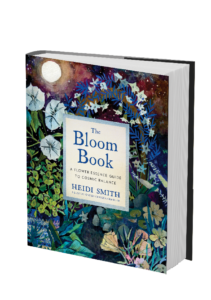
One of the main themes of The Bloom Book involves balancing duality, which means challenging the perpetuation of oppressive systems. Unless we are actively engaged in dismantling racism, sexism, homophobia, transphobia, xenophobia, and ableism, we are merely reinforcing the power structures we are claiming to challenge. As models of healing justice are emerging, many organizations and community collectives are generating their own missions and value statements from which to work. Meanwhile, practitioners—especially white practitioners like me—have to ask ourselves:

How is my work a function of my privilege? 

Where can I be doing better? 

Does my practice truly support inclusivity, diversity, and accessibility?

The working definitions of healing and trauma are also evolving. Within a healing justice framework, one can see how, by understanding trauma merely as “an emotional response to a terrible event,” we are ignoring a more inclusive interpretation that includes the cumulative and historical trauma of colonization. In the last decade, science has validated that trauma is intergenerational and historical. Likewise, many traditions include community in what constitutes emotional and spiritual healing, whereas Western models of mental health are focused exclusively on the individual self. 

When you open yourself up to the plant kingdom, new awareness can develop. You can become more empathic, which sounds pleasant in theory, but can be overwhelming because now you’re not just experiencing more of your own feelings, but the feelings of others as well. If you’re committed to applying a healing justice framework in your work, you will likely expose new trauma and have to reckon with your own privilege, which can be painful. You could develop more attunement with nature, which also can feel wonderful and, because of the tragic state of our Earth, completely disorienting. At this time, we are experiencing a heightened polarity between the light and the dark. We are being asked to hold a neutral space for all this duality and to have more compassion for all life. Flower essences enhance the energetic interconnection between all living things and so are especially well suited to support an expansion of consciousness.

Understanding how we function within—and our responsibility to—the collective is important because none of us operates alone. If you forget what you derive from the collective, you assume you don’t owe it anything and exist separately from everyone. Much of the privileged world enjoys the benefits of being part of the collective, whether we are conscious of it or not: rights, amenities, protection, accessible health care, clean drinking water, electricity, and so on. So, those with the material upper hand at this time have a special responsibility to the rest of those sharing the Earth.

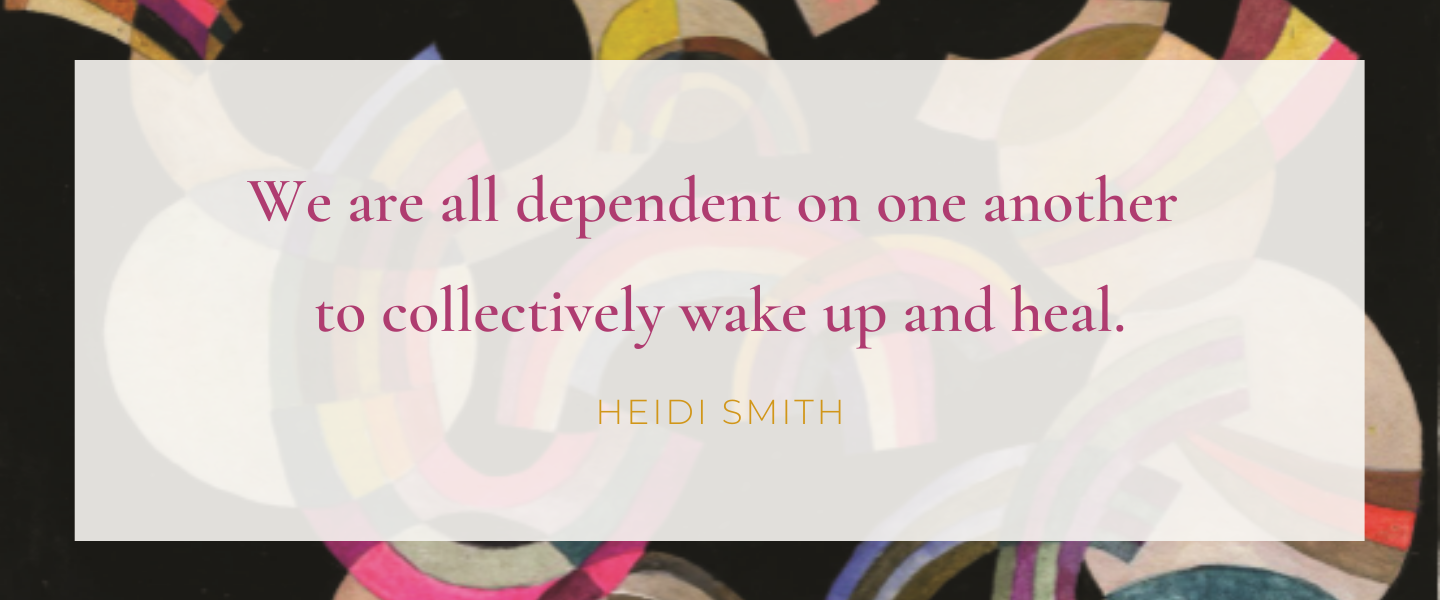
Within a healing justice framework, we must not only question our privilege as white people, we must elevate BIPOC leadership within all the transformative justice movements. We are all dependent on one another to collectively wake up and heal.
Plants, People, and Cosmic Balance: A Healing Justice Invitation blog image 2

In this way, it is an exciting time for the community of herbalists and flower essence practitioners. Modalities that are so helpful in bringing people into balance are themselves coming into greater balance. A sign of hope within an era of great hope. The ancient wisdom explored in The Bloom Book supports that the power of the plants is coming through in dynamic new ways. This text exists, in part, to provide more context around the validity and potency of the flowers. The spectrum of human emotional experience is here for our development and delight.

The Absence of Women-Identified, WOC, and QTBIPOC Healers Throughout History 

Missing from our Western history books are most of the contributions by women-identified healers through the ages. Even more scarce are WOC, and most scarce are queer and trans people of color (QTBIPOC) within the codex of Western medical history. The misogyny of the burgeoning patriarchy from ancient Greece spread throughout Europe, Africa, the Americas, and the rest of the world through colonization by white settlers. The suppression of women healers in Europe and the Americas coincided with the rise of the ruling class, capitalism, and the privatization of medical care, away from folk-healing traditions—traditions that women played a huge role in preserving and advancing. Gender seemed to be less of a construct throughout many parts of the ancient world, as there are significant written reports of intersex and gender-fluid healers. In many cases, those who exhibited androgyny were known as having special healing powers because of their ability to connect with both masculine and feminine energy. 
Plants, People, and Cosmic Balance: A Healing Justice Invitation blog image 3

As historical contexts are becoming more inclusive and less Eurocentric, there is more room for the theory around matriarchal-centered civilizations being much more prominent than previously thought. Senegalese anthropologist and historian Cheikh Anta Diop felt that, historically, most of Africa was matriarchal in organization. Colonizers were tremendously misogynistic, which holds much information for us to ponder as we consider our connection to the feminine and the history of medicine. 

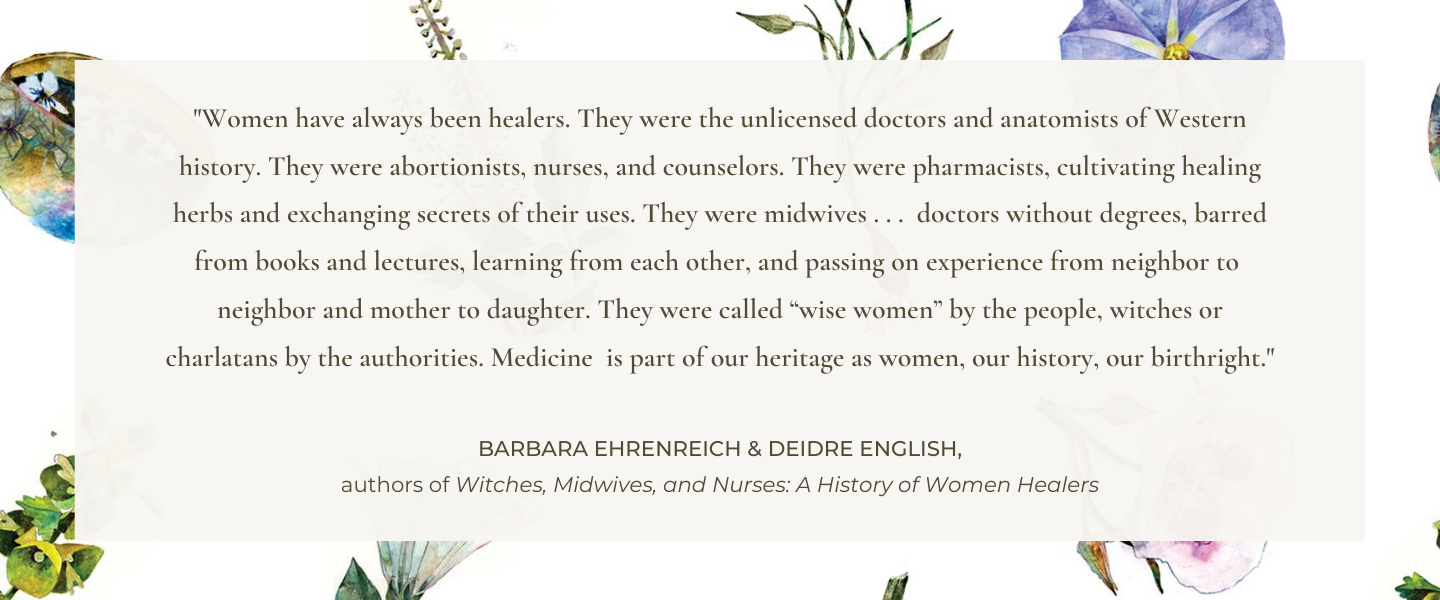
The lack of representation of women and WOC healers in the historical literature of medicine is decidedly a Western trait. Not only is much history transmitted orally and through practices and traditions, but the written history is also a very biased account, formulated in large part by, and for, white men. While our participation in medicine and healing traditions has been historically restricted in the West, women have long been associated with healing, especially within the domains of life and death—as midwives and compassionate caregivers helping to bring new life and support the soul into the afterlife. Women healers have traditionally addressed the issues and needs of populations that our culture typically shames and would rather ignore. Written accounts are limited, but we do have a record of a talented few. We must honor the oral traditions that are not meant to be shared (by me anyway) with the mainstream. There is a protection in keeping knowledge hidden from the masses. This wisdom is secured within the light lineage of all healers. 
Plants, People, and Cosmic Balance: A Healing Justice Invitation blog image 4

Conclusion 

The social and healing justice movements have affected me deeply, and it is my sincere hope that we can continue to decolonize and dismantle where dominant systems are limiting the positive proliferation of alternative healing and flower essence therapy to make them more accessible and inclusive. The more we come into balance in this way, the more transformation is available to us all, our communities, and our Earth—and the more we maintain plant medicine as medicine for all people.

Healing Justice Flower Essence Allies

There are a number of herbalists such as Karen Rose of Sacred Vibes Apothecary, Jennifer Patterson of Corpus Ritual (also a Bloom Book contributor), Lauren Giambrone of Goodfight Herb Co., and Amanda David of Rootwork Herbals, (to name a few), who have been speaking on the subject of healing justice for quite some time, and I am grateful for their leadership and inspiration. Healing justice business models such as that of Third Root, a worker-owned community center that provides collaborative, holistic health care in Brooklyn, offers a standard that everyone in the healing arts should aspire to. 

I offer some essences below that are wonderful to use in process groups or healing circles that center on antiracism and anti-oppression work. Some flower allies to assist you as you dig deeper into this rich and rewarding terrain are:

Delta Gardens lemon balm—a wonderful essence for when you are immersed in deep work, to keep calm and carry on

Delta Gardens valerian—for any resistance to change, to be able to take in and assimilate new information

Flower Essence Society quaking grass—“harmonious community consciousness,” letting go of personal attachments in social groups

Flower Essence Society lupine—seeing beyond the level of self, seeing self as part of the whole

Flower Essence Society or Delta Gardens echinacea—integration of those parts of the self that may have been repressed

Flower Essence Society or Delta Gardens borage—to support the heart and offer courage

Bach Original Flower Remedies water lily—for humility and wisdom in communication, to heal the perceived separation we feel from others based on race, class, or gender

Flower Essence Society pink yarrow—for emotional vulnerability, assists in discerning what is your responsibility to emotionally process

Additional Information on Healing Justice

A Not-So-Brief History of the Healing Justice Movement, 2010-2016

What Is Healing Justice?—Healing by Choice Detroit

Healing Justice: Holistic Self-Care for Change Makers—Transform Network

Corpus Ritual

Railyard Apothecary

Good Fight Herb Co.

Rootwork Herbals 

Sacred Vibes Apothecary

Harriet’s Apothecary

Third Root 

Heidi Smith headshot

Bloom Book

Heidi Smith, MA, RH (AHG), is a psychosomatic therapist, registered herbalist, and flower essence practitioner. Within her private practice, Moon & Bloom, Heidi works collaboratively with her clients to empower greater balance, actualization, and soul-level healing within themselves. She is passionate about engaging both the spiritual and scientific dimensions of the plant kingdom, and sees plant medicine and ritual as radical ways to promote individual, collective, and planetary healing. She lives in Brooklyn, New York, with her partner and two cats. For more, visit moonandbloom.com.



Learn More

Sounds True | Amazon | Barnes & Noble | Bookshop

Heidi Smith

Heidi Smith, MA, RH (AHG), is a psychosomatic therapist, registered herbalist, and flower essence practitioner. Within her private practice, Moon & Bloom, Heidi works collaboratively with her clients to empower greater balance, actualization, and soul-level healing within themselves. She is passionate about engaging both the spiritual and scientific dimensions of the plant kingdom, and sees plant medicine and ritual as radical ways to promote individual, collective, and planetary healing. She lives in Brooklyn, NY, with her partner and two cats. For more, visit moonandbloom.com.

Author photo © Frances F Denny

Also By Author

Planting a Moon Garden

What does the moon have to do with flower essences and ritual? As we discussed in an earlier chapter, the moon represents a time before the dominant culture came into power. While the moon has no gender, it is a metaphor for the divine feminine and a symbol for the creative, the intuitive, the unconscious, and the shadow. Before the Gregorian calendar came into use in the sixteenth century, many cycles of time were measured on a lunar basis, as are the Islamic, Chinese, and Jewish calendars today. All ancient agriculture was organized around lunar and astrological transits, which is one of the basic practices of biodynamic farming today. Many of us feel a fascination with the moon, and I feel it beckons us back to a different consciousness, where much healing potential awaits.

Creating altars or sacred spaces outdoors can be another place for ritual work. While I can’t have a moon garden in the city, I can have a few lunar plants in my windowsill to catch the moonlight.

Not all flowers bloom in the sunlight. Some plants prefer the darkness, opening to the night. Moon plants can be cultivated in any terrain. Many night bloomers are also very fragrant. I consider all plants medicinal to some degree; however, some of the moon garden plants may be more therapeutic than others. These can also be plants that you use for making your own flower essences. Or, if you like to make dried sticks of herbs to burn, you can use the plants from your moon garden, such as mugwort.

You can see the lunar signature of mugwort by observing the underside of the leaf, which is silver. The Latin name for it is Artemisia vulgaris; Artemis, if you remember, was the Greek goddess of the moon! Plants with light and white blooms work best, as well as gray and silvery leaves.

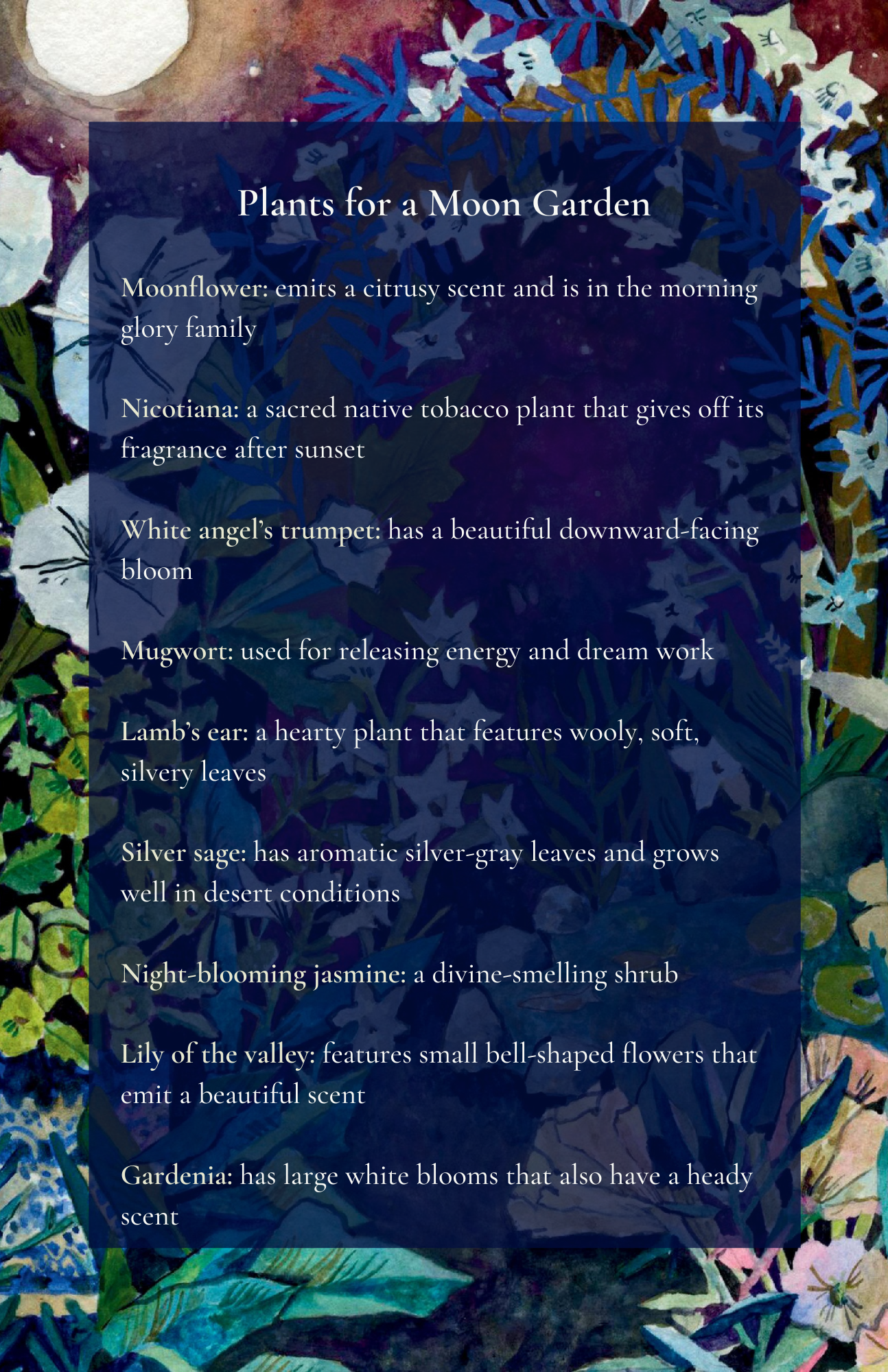
Here are some perfect moon garden plants:

plants for a moon garden


The video on how to make your own flower essence medicine can be found here.

This is an excerpt from The Bloom Book: A Flower Essence Guide to Cosmic Balance by Heidi Smith.


Heidi Smith, MA, RH (AHG), is a psychosomatic therapist, registered herbalist, and flower essence practitioner. Within her private practice, Moon & Bloom, Heidi works collaboratively with her clients to empower greater balance, actualization, and soul-level healing within themselves. She is passionate about engaging both the spiritual and scientific dimensions of the plant kingdom, and sees plant medicine and ritual as radical ways to promote individual, collective, and planetary healing. She lives in Brooklyn, New York, with her partner and two cats. For more, visit moonandbloom.com.


bloom book cover

Learn More

Sounds True | Amazon | Barnes & Noble | Bookshop


The Remedy We Are Excited To Try in the New Year: Flow...

What are flower essences?

The goals of flower essence therapy include: ease in accessing higher vibratory states like joy and gratitude; enhanced mind-body-spirit balance, presence, acceptance of emotions and integration of difficult vibratory states; encouraging flow states like creativity; manifesting; supporting balance; expanding awareness of self and the Universe, ancestral connection and healing; and helping us to be of greater service to ourselves, others, and the Earth.

Flower essences work by way of the following:

  • synchronicities—helping us connect seemingly unrelated or previously unseen opportunities or happenings
  • indirect occurrences—positively affecting different environments and interpersonal dynamics
  • insights—supporting mental, emotional, physical, and/or astral awakening; new ideas, solutions, or information may present
  • physical changes—bringing up new sensations, shifts in organ/system functioning or in symptoms
  • emotional responses—bringing up new feelings or memories; stabilizing or releasing them
  • expression—inspiring artistic, verbal, and kinesthetic expression
  • dreamtime—bringing about new or recurring dreams, insights, and subconscious resolution
  • invoking intention—the more time and space you can offer, the more likely you’ll be able to feel flower essences. For example, taking them with a light meditation, a visualization, while doing yoga or some other kind of bodywork or prayer  

flower essence illustration

How to Select a Flower Essence

Flower essences can be purchased from a quality producer, or you can make your own. Here, I will discuss how to select and apply ready-made flower essence remedies. You can learn how to wildcraft your own flower essences with me in this video.

When you’re starting out with flower essences, it can be overwhelming—so many producers and so many essences! I like to encourage people to remember that it’s your relationship with the plant that is the most important thing in selection. Your relationship with the remedy is the co-creation with that plant. The more you work with flowers, the more you will be able to feel and trust this part of the process.


The following are some ways to begin exploring flower essences:

  • Depending on what issue(s) you’d like to address, begin by taking one to three essences that resonate with you. Many producers offer sets of remedies that have a particular focus. You may want to purchase a set to experiment with, such as the FES’s Range of Light, Delta Gardens’ Protection Set, Alaskan Essences, or the Bach Essences.
  • Consider flower essences that invite presence, relaxation, protection, and grounding.
  • If you want to study the essences more carefully, consider making flashcards or purchasing the flower cards (Alaskan Essences, FES, and Bach make sets).
  • If you’re curious to learn more about how a plant might connect with your ancestry, consider doing some research on how it was used historically.
  • Perhaps there’s a flower you’re curious about, or have seen in nature. Ask this plant if it would like to work with you.

flower essence


Here are five basic ways to select a flower essence:

  • Intuitively: A flower essence might come to you by way of revealing itself in nature, or appearing in a dream.
  • By dowsing: Using a tool of resonance, such a pendulum, to test for essences.
  • Through muscle testing: A simple way to muscle test is to make a ring with the index finger and thumb of your nondominant hand. If you would like to test for a yes for an essence, say the name of the plant and flick the circle with your dominant hand. If the circle holds, that’s a yes. If it breaks open, that is a no.
  • By consulting reference literature: Books, repertories, or flower affirmation cards.
  • Through blind testing: By drawing a card or randomly selecting an essence from a set. This method works well with children.

Any of these methods can be integrated into your ritual. Before making remedies for other people, it’s a good idea to spend some time with the flower essences yourself. The flowers will have much to share with you. Also, the more experience you have with the essences yourself, the better you will understand how the essences will work for others.

This is an excerpt from The Bloom Book: A Flower Essence Guide to Cosmic Balance by Heidi Smith.


Heidi Smith, MA, RH (AHG), is a psychosomatic therapist, registered herbalist, and flower essence practitioner. Within her private practice, Moon & Bloom, Heidi works collaboratively with her clients to empower greater balance, actualization, and soul-level healing within themselves. She is passionate about engaging both the spiritual and scientific dimensions of the plant kingdom, and sees plant medicine and ritual as radical ways to promote individual, collective, and planetary healing. She lives in Brooklyn, New York, with her partner and two cats. For more, visit moonandbloom.com.


Learn More

Sounds True | Amazon | Barnes & Noble | Bookshop


DIY Rose Essence and Heart Breathing Ritual

The heart chakra is the central integrating chamber of the chakra system. Through the healing power of love, all things eventually find their way to connection and wholeness. 

ANODEA JUDITH

Heart Medicine Rituals

The greatest lesson I have learned so far is to exist within my heart. This is a lifelong practice for me because, like many, I was not taught to inhabit my heart space. On a physical level, the general collective is not doing so well in our hearts. This is evidenced by the stark reality that heart disease is the leading cause of death worldwide. This high incidence of disease points to a deeper situation of the heart, but in order to be open to the possibility that more profound heart healing is necessary and possible, we must open our minds to a more metaphysical or energetic interpretation of what the heart is and what it does. Ancestrally, the heart held a much higher evolutionary significance, and as our consciousness split, we moved from inhabiting our hearts to glorifying our minds. Perhaps this disconnect can illuminate some clues for us to consider to reclaim more balance within our hearts, ourselves, and our world. 

Vibrationally, the heart contains the strongest electromagnetic field of any organ in the body. Transference of heart energy can occur in close proximity with another human or animal; and if you apply the theories of quantum entanglement and wave function collapse, transference of heart energy can resonate beyond space or time. Plants and the elements, too, can have a positive entrainment effect on the heart, reiterating the interconnectedness of all life and the organic balance nature engenders. In both traditional Chinese and Tibetan medicines, the heart is the mind. In TCM, grief is stored in the lungs and closely related to the heart. The Hopi defined harmony as one’s heartbeat in resonance with others and the Earth.

Our liberation is tied to the heart. The cost of liberation is unique to every person and is cosmically linked to each of us. The price of liberation varies for each individual, but we are given choices: in what we think, what we feel, what we believe, how we want to be. The inability to see choice is the unconsciousness of the fear-based toxic masculine that seeks to keep us disconnected and disempowered. 

Image 1

Our liberation depends largely on our ability to love unconditionally. Unconditional love means loving without circumstance or codependence. This can take different forms, from exiting a toxic relationship to taking more care of yourself. And it doesn’t stop there. If you want to get really free, you have to love yourself no matter what, and love all beings no matter what. Tall order? Yes. Impossible? No! While humans are conditioned to be in separation, plants (and animals) hold only unconditional love for all life. There are people on this Earth who radiate unconditional love, and when you are in their company, your heart is completely relaxed and open. For instance, my heart feels completely free when I am with people and animals who love me unconditionally. My heart also feels free in this way when I am in nature. Can you think of anyone who loves you unconditionally? Or perhaps it’s easier to think of an animal or pet? What if you loved yourself and everyone like that? What if you loved all your uncomfortable parts, illnesses, and neuroses like that?

EXERCISE: Making a Rose Essence and Heart Breathing Exercise

There are a few plants whose application is almost universal, and the rose is one such flower. Roses hold the frequency of unconditional love and have an affinity for the heart chakra. This ritual works best with either a wild growing or organically cultivated rose; it can be any species within the Rosa genus. Some of the lower vibratory states that can be addressed with rose include grief, loss, heartbreak, depression, and panic. 

This ritual is very simple. You’re going to combine the process for making your own medicine (see a simple how-to video here) using the rose of your choice, with the heart breathing exercise that follows. The heart breathing can be done while the flowers are in the water, working their magic. The heart energy you engage during the medicine-making process will become part of the energetic signature of your flower essence. After you bottle it and make the dosage bottle, take a few drops and see what you notice around your heart. Be sure to notate your findings. You now have a rose flower essence for your apothecary whenever you or someone else needs it. 

HEART BREATHING RITUAL

After you have placed the flowers in the bowl with the water, sit comfortably on the ground, if possible. Close your eyes or set your gaze low. Place both hands over your heart and begin to breathe into the heart space. Visualize the rose you are working with. Notice how the breath moves in and out of the heart—not forcing the air, just allowing it to move. See if you can sense into how the heart is feeling—in the front, in the back, all sides. Be sure to breathe into the back of the heart space. Notice how the heart feels when you place your awareness on it. See if it’s okay to allow whatever is arising, witnessing without judgment. 

After a few minutes, begin to bring the heart back into a neutral position. Thank your heart and the spirit of rose for sharing with you. Feel your body making contact with the Earth, deepen the breath, and slowly open your eyes.

The video on how to make your own flower essence medicine can be found here.

This is an excerpt from The Bloom Book: A Flower Essence Guide to Cosmic Balance by Heidi Smith.

Heidi Smith Bio

Bloom Book

Heidi Smith, MA, RH (AHG), is a psychosomatic therapist, registered herbalist, and flower essence practitioner. Within her private practice, Moon & Bloom, Heidi works collaboratively with her clients to empower greater balance, actualization, and soul-level 

healing within themselves. She is passionate about engaging both the spiritual and scientific dimensions of the plant kingdom, and sees plant medicine and ritual as radical ways to promote individual, collective, and planetary healing. She lives in Brooklyn, New York, with her partner and two cats. For more, visit moonandbloom.com.
 

Learn More

Sounds True | Amazon | Barnes & Noble | Bookshop

You Might Also Enjoy

Wim Hof on Cold as a Noble Force: How Cold Exposure Re...

Many people spend their lives avoiding discomfort. Cold weather sends us indoors, stress pushes us toward distraction, and physical tension becomes something we ignore until it feels impossible to avoid. Wim Hof approaches discomfort differently. Through cold exposure and breathwork, he teaches that moments of intensity can become opportunities to reconnect with the body, calm the mind, and build greater resilience. His methods have sparked global interest because they encourage people to experience awareness directly rather than simply think about it.

At Sounds True, we have spent decades sharing transformational teachings from respected spiritual teachers, wellness experts, and visionaries who help people deepen self awareness and reconnect with meaningful practices for inner growth. Conversations with voices like Wim Hof continue that mission by offering grounded approaches to resilience, presence, and the connection between body and mind.

Here, we discuss Wim Hof method benefits, the role of cold exposure and breathwork, and how these practices may support resilience, focus, and emotional balance.

Key Takeaways:

  • Nervous System Response: Learn how cold exposure and conscious breathing may influence stress regulation and emotional resilience.
  • Mind-Body Awareness: Understand how the Wim Hof method encourages greater presence, focus, and connection with physical sensations.
  • Adaptation Through Discomfort: See how controlled cold exposure can help strengthen mental steadiness and the body’s natural adaptability.

Discover the Power of Daily Meditation and Inner Stillness

Why Wim Hof Calls Cold a Noble Force

Wim Hof sees cold as a way to reconnect with the body and sharpen awareness. The moment people encounter cold, breathing changes, attention focuses, and distractions fade. He believes modern comfort has weakened the body’s natural resilience, while cold exposure helps restore that connection. For Hof, learning to stay calm in the cold can also help people respond to stress and discomfort with greater steadiness in everyday life.

Wim Hof Method Benefits for Body and Mind

The Wim Hof method combines conscious breathing, cold exposure, and mental focus. Together, these practices are designed to strengthen the connection between body and mind while encouraging resilience under stress. Many people are drawn to the method because it feels deeply experiential rather than theoretical.

Before discussing specific benefits, it helps to understand that the method is rooted in adaptation. The body constantly responds to its environment, and Hof believes intentional exposure to manageable stress can help restore physical and emotional balance.

Physical Energy and Nervous System Support

One of the most discussed Wim Hof method benefits is increased energy and mental clarity. Many people report feeling more alert and refreshed after cold exposure practices. Cold immersion also activates the nervous system, encouraging people to regulate their breathing instead of reacting automatically to stress. Over time, this may support better focus, emotional steadiness, and recovery from stress.

Emotional Resilience Through Discomfort

The emotional side of the Wim Hof method is just as important as the physical practice. Through controlled discomfort, people learn to notice fear and stress without immediately reacting to them. By focusing on the breath and staying present, many practitioners develop greater emotional resilience and feel calmer during stressful situations in daily life. 

How Wim Hof Breathing Supports Mental Clarity and Focus

Wim Hof breathing forms the foundation of the method and serves as a bridge between physical sensation and mental awareness. The breathing exercises involve deep rhythmic breathing followed by periods of breath retention, creating noticeable shifts within the body and mind.

For many people, breathing becomes shallow and unconscious during stressful moments. Tension accumulates quietly, and the nervous system remains in a reactive state without conscious awareness. Hof’s breathing practices encourage people to reconnect with the breath in a more intentional way.

How Conscious Breathing Influences Stress

The breath has a direct relationship with the body’s stress response. Rapid, shallow breathing can reinforce anxiety and tension, while slower and more deliberate breathing often encourages relaxation and stability.

Wim Hof breathing teaches people to become aware of those patterns rather than remaining trapped inside them unconsciously. During the breathing exercises, many people experience a sense of release as physical tension softens and attention becomes more grounded in the present moment.

This shift may help support emotional regulation throughout daily life. When stressful situations arise, conscious breathing can become an anchor that creates space between reaction and response.

Breathwork as a Practice of Presence

Breathwork also supports greater awareness and presence in everyday life and relationships. Many people describe Wim Hof breathing as both calming and energizing because it encourages deeper attention to the body, emotions, and mental patterns. Rather than avoiding discomfort, the breath becomes a tool for moving through it with greater awareness and steadiness.

Cold Exposure Benefits for Stress and Emotional Resilience

Cold exposure benefits extend beyond physical endurance or athletic recovery. Many people become interested in cold showers or ice baths because of the emotional and psychological effects associated with the practice.

Building Calm During Intensity

Stepping into cold water immediately activates the body’s stress response. Muscles tighten, breathing becomes rapid, and the mind often searches for escape. Hof teaches people to notice these reactions without becoming consumed by them.

By consciously slowing the breath and remaining present, practitioners begin training the nervous system to stay calmer under stress. This practice may gradually influence emotional resilience outside the cold itself. Situations that once triggered panic or overwhelm can begin to feel less consuming.

The experience also encourages patience and trust. Instead of reacting impulsively, people learn how to remain steady within intensity.

Reconnecting With Bodily Awareness

Cold exposure also creates a stronger relationship with physical awareness. Many people move through daily life disconnected from bodily sensation, carrying stress without fully recognizing it.

Cold immersion interrupts that disconnection. The body becomes impossible to ignore, and attention naturally returns to breathing, sensation, and presence. For many practitioners, this creates a renewed appreciation for the body’s intelligence and adaptability.

Awaken Your Inner Healing Power: Your Wellness Journey Starts Now

Ice Bath Benefits Beyond Physical Recovery

Ice bath benefits are often associated with athletic recovery, but the practice can influence mental and emotional well being as well.

  • Ice baths may support circulation and physical recovery after intense activity.
  • Many people report increased alertness and energy following cold immersion.
  • Ice baths encourage awareness of breathing and stress patterns.
  • Cold exposure creates opportunities to practice calmness under pressure.
  • Some practitioners describe greater emotional steadiness through regular practice.
  • Ice baths may strengthen resilience by teaching the body and mind to adapt together.

Although the physical effects often receive the most attention, many people continue the practice because of the emotional clarity it creates. Ice baths become less about endurance and more about awareness, patience, and presence.

The Wim Hof Method and the Science of Adaptation

A central principle within the Wim Hof method is that the human body is naturally designed to adapt. Hof often speaks about modern comfort as something that has weakened this connection with innate resilience.

Controlled exposure to cold challenges the body in manageable ways, encouraging adaptation without overwhelming the system. This process reflects a broader truth about human growth. People often become stronger not by avoiding difficulty entirely, but by learning how to remain present within challenge.

The method encourages a different relationship with stress. Instead of treating discomfort as something purely negative, practitioners begin viewing it as an opportunity for awareness and transformation.

How Wim Hof Breathing and Cold Exposure Benefits Work Together

Breathing exercises and cold exposure are deeply connected within Hof’s teachings. The breath prepares the body and mind for intensity, while the cold creates an immediate environment in which those tools can be practiced.

Together, these methods encourage people to slow reactive patterns and remain grounded during stress. Breathwork supports nervous system regulation, while cold exposure strengthens the ability to apply that regulation in real situations.

Many practitioners describe this combination as empowering because it creates direct experience rather than abstract theory. The lessons are felt physically, emotionally, and mentally all at once.

Bringing Wim Hof Method Benefits Into Everyday Life

Wim Hof often emphasizes that transformation does not require extreme challenges. Small, consistent practices can create meaningful shifts over time. Brief cold showers, intentional breathing exercises, and moments of conscious stillness during stressful situations may gradually strengthen resilience in everyday life.

The Wim Hof method invites people to become more aware of how they relate to discomfort, stress, and uncertainty. Rather than immediately resisting difficult experiences, the practices encourage curiosity, presence, and adaptability.

For many people, the deeper value of the method is not simply enduring cold temperatures. It is learning how to remain connected to awareness during moments that would normally trigger fear, tension, or emotional reactivity. Through breath and cold, people may begin developing a steadier relationship with both the body and the mind.

Discover how your mind really works

Final Thoughts

Wim Hof’s teachings invite people to reconsider their relationship with discomfort, stress, and the body itself. Through conscious breathing and cold exposure, the Wim Hof method encourages greater awareness, resilience, and presence in everyday life. What begins as a physical practice often becomes something deeper: a reminder that the body and mind are capable of far more balance, adaptability, and inner strength than many people realize.

Frequently Asked Questions About Wim Hof Method Benefits

Is the Wim Hof method meant only for athletes?

No. While athletes often use cold exposure for recovery, the Wim Hof method is practiced by people from many different backgrounds who are interested in stress management, focus, and overall well being.

How long does it take to feel Wim Hof method benefits?

Some people notice increased alertness or energy after a single session, while others experience more gradual changes over several weeks of consistent practice.

Can beginners practice the Wim Hof method at home?

Yes. Many beginners start with short cold showers and simple breathing exercises before progressing to longer or more advanced practices.

Does Wim Hof breathing require special equipment?

No. Wim Hof breathing can be practiced without equipment, though it should always be done in a safe environment and never in water or while driving.

Why do people feel energized after cold exposure?

Cold exposure activates the body’s alertness response, which may increase circulation and create a feeling of heightened energy afterward.

Can the Wim Hof method help with daily stress?

Many practitioners use the method to support emotional balance and stress management by learning how to regulate breathing and remain calmer during challenging situations.

What makes ice baths mentally challenging?

Ice baths trigger an immediate stress response in the body, including rapid breathing and tension. Learning to stay calm within that discomfort is part of the practice.

Is the Wim Hof method connected to mindfulness?

Yes. The method encourages awareness of breathing, bodily sensation, and mental reactions, which aligns with many mindfulness-based practices.

How cold should beginners start with cold exposure?

Beginners are often encouraged to begin gradually with cool or cold showers rather than extreme temperatures, allowing the body to adapt slowly.

Can cold exposure improve focus and concentration?

Some people report improved mental clarity after cold exposure because the experience requires immediate attention and presence.

Michelle Cassandra Johnson is an author, activist, spiritual teacher, racial equity consultant, and intuitive healer. She is the author of six books, including Skill in Action and Finding Refuge. Amy Burtaine is a leadership coach and racial equity trainer. With Robin DiAngelo, she is the coauthor of The Facilitator's Guide for White Affinity Groups. For more, visit https://www.michellecjohnson.com/wisdom-of-the-hive.

Thomas Hubl on Healing Collective Trauma: How Intergen...

Many people carry emotional patterns they cannot fully explain. Anxiety, fear, and emotional distance can sometimes be rooted in experiences passed down through generations. Thomas Hübl’s teachings on collective trauma healing bring awareness to how unresolved pain continues shaping families, communities, and human connection.

At Sounds True, we have spent decades sharing transformational teachings that support mindfulness, healing, and conscious living. Thomas Hübl’s work on intergenerational trauma and collective wound work offers a compassionate perspective on inherited emotional pain and healing.

Here, we discuss how intergenerational wounds are passed down and how awareness can support collective trauma healing.

Key Takeaways:

  • Trauma Transmission: Collective and intergenerational trauma can influence emotional patterns, relationships, and nervous system responses across generations.
  • Healing Through Presence: Thomas Hübl’s teachings emphasize awareness, emotional regulation, and compassionate connection as essential parts of healing.
  • Collective Repair: Healing inherited wounds involves both personal reflection and shared conversations that restore trust, empathy, and human connection.

Discover how your mind really works

Collective Trauma Healing and the Hidden Patterns We Inherit

Collective trauma healing begins with recognizing that unresolved pain can continue shaping families and communities across generations. Thomas Hübl teaches that inherited emotional patterns, fear, and disconnection often stem from trauma that was never fully processed. Healing starts with awareness, compassion, and the willingness to acknowledge difficult experiences without turning away from them. 

How Intergenerational Trauma Shapes Families and Communities

Intergenerational trauma is often passed down through emotional patterns, behaviors, and nervous system responses that children absorb long before they fully understand language or history. Families communicate survival strategies in countless unconscious ways, including silence, emotional withdrawal, hypervigilance, or fear around intimacy and trust.

Emotional Patterns Learned Through Survival

Children are highly sensitive to the emotional states of caregivers. When parents or grandparents carry unresolved trauma, younger generations frequently adapt themselves around those conditions. A child may become overly responsible in response to instability within the home. Another may learn to suppress emotion because vulnerability feels unsafe within the family system.

Thomas Hübl teaches that trauma transmission often occurs not only through direct experiences but through emotional environments. Unspoken grief, unresolved fear, or chronic stress can quietly shape a child’s nervous system over time. These inherited responses may continue into adulthood, affecting relationships, work, communication, and emotional regulation.

The Community Impact of Intergenerational Trauma

Intergenerational trauma also appears collectively within communities shaped by historical suffering. Entire groups may carry inherited distrust, shame, or disconnection after generations of violence, discrimination, or displacement. These experiences can influence educational systems, economic opportunities, social structures, and cultural identity.

Hübl’s work encourages people to understand trauma through both personal and collective lenses. Healing becomes more meaningful when individuals recognize they are not isolated from larger social and historical experiences. Awareness creates the possibility for compassion rather than judgment, both toward oneself and toward others carrying visible or invisible pain.

Thomas Hübl Teachings on Trauma, Presence, and Emotional Repair

Thomas Hübl’s teachings often focus on the relationship between awareness, embodiment, and healing. Rather than approaching trauma as something to quickly fix or overcome, he encourages people to develop the inner capacity to remain present with difficult emotions and sensations.

Presence as a Foundation for Healing

According to Hübl, healing begins with the ability to stay connected to the present moment without becoming overwhelmed. Trauma frequently disrupts this capacity by pulling people into cycles of emotional reactivity, numbness, or dissociation. Developing presence allows individuals to observe these patterns with greater clarity and steadiness.

Practices such as meditation, conscious breathing, and relational dialogue can support nervous system regulation while helping people reconnect with parts of themselves that may have been suppressed for survival. Hübl emphasizes that healing is not about perfection. It is about increasing one’s ability to remain connected during moments of discomfort or vulnerability.

Why Emotional Repair Requires Connection

Hübl also speaks about the importance of relational healing. Trauma often creates separation, both internally and between people. Emotional repair becomes possible through authentic connection, compassionate witnessing, and shared humanity.

This perspective challenges the idea that healing happens entirely alone. While personal reflection matters, collective healing also requires supportive relationships and communities where people feel emotionally safe enough to tell the truth about their experiences. Through open dialogue and mindful listening, individuals begin rebuilding trust in themselves and others.

Ancestral Trauma Healing and the Stories Carried Through Generations

Ancestral trauma healing involves recognizing that emotional pain can move through generations in ways that are both visible and invisible. Families often carry stories of migration, loss, violence, or survival that continue shaping descendants long after the original events occurred.

How Ancestral Trauma Lives in the Body

Many people experience inherited trauma physically before they fully understand it intellectually. Chronic anxiety, emotional shutdown, tension, or heightened stress responses may reflect nervous system adaptations connected to earlier generations. Hübl teaches that the body often carries unfinished emotional experiences that were never fully processed.

This understanding helps people approach healing with greater compassion. Instead of viewing emotional struggles as personal failures, individuals can begin recognizing the deeper historical and relational contexts influencing their experiences.

Reconnecting With Compassion and Awareness

Ancestral trauma healing does not require romanticizing the past or becoming trapped in it. Instead, it invites people to acknowledge inherited pain while developing the awareness needed to respond differently in the present.

Thomas Hübl encourages practices that support reflection, emotional honesty, and embodied awareness. Through conscious attention, people can begin interrupting inherited cycles of fear, shame, or disconnection. This process creates space for healthier forms of connection that future generations may continue building upon.

Discover the Power of Daily Meditation and Inner Stillness

Why Collective Wound Work Requires Nervous System Awareness

Collective wound work asks people to engage trauma without becoming consumed by it. Thomas Hübl frequently highlights the importance of nervous system awareness because healing cannot happen when individuals remain in constant overwhelm or emotional shutdown.

Key elements of nervous system awareness within collective wound work include:

  • Recognizing physical signs of stress, such as tension, rapid breathing, or emotional numbness
  • Learning to pause before reacting impulsively during emotionally charged conversations
  • Developing practices that support grounding and emotional regulation
  • Building the capacity to stay present with discomfort instead of immediately avoiding it
  • Creating relationships and communities where emotional honesty feels safer
  • Understanding how unresolved trauma can shape perception, communication, and behavior
  • Allowing moments of rest and integration throughout the healing process

Hübl’s teachings remind people that collective wound work is not about endlessly revisiting pain. The goal is to create enough internal stability for difficult emotions and historical realities to be acknowledged without causing further fragmentation. Nervous system awareness supports this balance by helping individuals remain connected to themselves while engaging in meaningful healing work.

Thomas Hübl on Healing Silence, Grief, and Historical Trauma

Silence often becomes one of trauma’s most enduring legacies. Families and communities may avoid speaking about painful experiences because the emotions connected to them feel overwhelming or unresolved. Thomas Hübl teaches that what remains unspoken does not disappear. Instead, silence can deepen disconnection across generations.

Historical trauma frequently leaves emotional gaps where stories should exist. Children may sense grief or fear within a family system without fully understanding its origins. This uncertainty can create confusion, anxiety, or emotional distance that persists over time. Hübl encourages compassionate dialogue as a way of bringing awareness to these hidden dynamics while honoring the emotional weight they carry.

Grief also plays a central role in healing. Many collective wounds remain unresolved because people were never given the space or support needed to process profound loss. Allowing grief to be acknowledged collectively can help restore connection and humanity within communities shaped by suffering.

Collective Trauma Healing Through Connection and Shared Humanity

Collective trauma healing becomes more possible when people move beyond isolation and reconnect through honest conversation, compassionate presence, and shared humanity. Thomas Hübl’s teachings remind us that healing happens through connection, helping individuals, families, and communities rebuild trust and emotional understanding together. 

Intergenerational Trauma, Collective Wound Work, and the Path Forward

Intergenerational trauma and collective wound work require awareness, compassion, and presence. Thomas Hübl’s teachings help people understand how inherited pain shapes individuals and communities while offering a path toward healing. Through honest reflection and meaningful connection, collective trauma healing can help restore relationships and reconnect people with their shared humanity. 

Awaken Your Inner Healing Power: Your Wellness Journey Starts Now

Final Thoughts

Thomas Hübl’s teachings remind us that healing does not happen in isolation. The emotional wounds carried through families, communities, and cultures ask for awareness, compassion, and presence. By recognizing the ways intergenerational trauma shapes human experience, collective trauma healing becomes an opportunity to create a deeper connection with ourselves and with one another. Through conscious attention and shared humanity, it becomes possible to interrupt inherited cycles of pain and move toward greater understanding, resilience, and repair.

Frequently Asked Questions About Collective Trauma Healing

What is the difference between collective trauma and personal trauma?

Personal trauma relates to distressing experiences affecting an individual directly, while collective trauma impacts larger groups such as families, communities, or entire cultures. Collective trauma often shapes shared emotional patterns and social behaviors over time.

Can intergenerational trauma affect people who did not experience the original event?

Yes. Emotional responses, survival behaviors, and nervous system patterns can be passed down through generations, even when descendants did not directly experience the original trauma.

Why are people becoming more aware of ancestral trauma healing?

Many people are beginning to recognize connections between inherited emotional patterns and unresolved family histories. Increased awareness around mental health and nervous system regulation has also expanded conversations around ancestral trauma healing.

How does Thomas Hübl describe the role of the nervous system in healing?

Thomas Hübl teaches that the nervous system plays a central role in how people process stress, connection, and emotional experiences. Healing often involves developing greater capacity to remain grounded and present during difficult emotions.

Can collective wound work happen without revisiting painful memories?

Collective wound work does not always require reliving traumatic experiences in detail. Many healing approaches focus on creating safety, awareness, and emotional regulation while acknowledging the impact of past events.

What are some signs of unresolved intergenerational trauma?

Signs may include chronic anxiety, emotional numbness, difficulty trusting others, intense fear responses, people-pleasing behaviors, or patterns of emotional avoidance repeated within families.

How can mindfulness support collective trauma healing?

Mindfulness practices can help people become more aware of emotional reactions, physical stress responses, and unconscious patterns. This awareness creates space for more intentional responses instead of automatic survival behaviors.

Why is community important in trauma healing?

Supportive relationships can help restore a sense of safety and connection. Healing often deepens when people feel seen, heard, and emotionally supported within healthy communities.

Is collective trauma healing connected to social change?

Yes. Greater awareness of collective trauma can influence how societies approach justice, education, mental health, and community care. Healing often involves both personal transformation and broader cultural awareness.

How does Thomas Hübl’s teachings approach emotional accountability?

Thomas Hübl encourages people to meet emotional pain with honesty, presence, and compassion. His teachings focus on recognizing inherited patterns while taking responsibility for how individuals respond and grow in the present.

Michelle Cassandra Johnson is an author, activist, spiritual teacher, racial equity consultant, and intuitive healer. She is the author of six books, including Skill in Action and Finding Refuge. Amy Burtaine is a leadership coach and racial equity trainer. With Robin DiAngelo, she is the coauthor of The Facilitator's Guide for White Affinity Groups. For more, visit https://www.michellecjohnson.com/wisdom-of-the-hive.

Making Sense of Menopause: A Holistic Guide to Midlife...

Many women enter menopause expecting physical symptoms like hot flashes, sleep changes, or mood swings. What often comes as a surprise is how deeply this stage can affect emotional well being, identity, and spiritual awareness. Midlife can bring long ignored feelings to the surface while also creating space for reflection, healing, and personal growth. For some women, menopause feels less like an ending and more like a transition into a wiser and more grounded version of themselves.

At Sounds True, we have spent decades sharing spiritual wisdom and transformational teachings that support people through life’s most meaningful transitions. Through conversations with respected teachers, authors, and practitioners, we continue to create space for deeper understanding, emotional honesty, mindfulness, and healing during seasons of change.

This guide discusses the menopause spiritual transition and how a holistic approach can support emotional well being, self trust, and personal growth during midlife.

Key Takeaways:

  • Spiritual Shift: Menopause spiritual transition can reshape identity, emotional awareness, and personal purpose during midlife.
  • Holistic Support: A menopause holistic approach encourages emotional care, mindful practices, and deeper connection with the body.
  • Inner Wisdom: Perimenopause wisdom often helps women strengthen intuition, boundaries, and self trust through life changes.

Awaken Your Inner Healing Power: Your Wellness Journey Starts Now

Understanding the Menopause Spiritual Transition

Menopause is often viewed through physical symptoms and aging, yet many women experience it as a deeper emotional and spiritual shift. This transition can reshape identity, relationships, creativity, and purpose while encouraging greater self trust and reflection. As familiar routines and roles begin to change, many women find themselves questioning what truly matters and how they want to move through the next stage of life.

Many spiritual traditions recognize midlife as a meaningful turning point. Menopause often invites women to slow down, listen inward, and reconnect with their emotional and physical needs. Fatigue, mood changes, and heightened sensitivity can become signals that the mind, body, and spirit are closely connected during this stage of life. Rather than viewing these experiences as something to resist, many women begin seeing them as invitations to rest, heal, and reconnect with themselves more honestly and compassionately.

Why a Menopause Holistic Approach Supports Whole-Person Healing

A menopause holistic approach recognizes that healing does not happen through physical care alone. Emotional health, spiritual connection, lifestyle habits, and supportive personal relationships all shape the experience of midlife transition and emotional well being.

Honoring the Emotional Landscape

Menopause can intensify emotions that have remained hidden beneath years of responsibility and routine. Instead of treating these feelings as problems to eliminate, holistic healing invites women to approach them with curiosity and compassion.

Journaling, therapy, meditation, and honest conversations can create space for emotional processing. Many women find that this stage encourages stronger boundaries and a clearer understanding of personal needs.

Supporting the Body With Gentle Practices

The body benefits from nourishment that feels sustainable and supportive during menopause. Restorative movement, mindful nutrition, hydration, and stress reduction practices can help women reconnect with physical balance.

A holistic approach also encourages women to listen closely to changing energy levels instead of forcing themselves into exhausting routines. The body is not failing during menopause. It is adapting and communicating new needs that deserve attention and care.

Perimenopause Wisdom and the Body’s Changing Inner Landscape

Perimenopause wisdom often begins long before menopause officially arrives. During this stage, women may notice irregular cycles, emotional shifts, changes in focus, or increased sensitivity. These experiences can feel confusing when viewed only through a medical lens, yet they also carry important insight about the body’s evolving rhythms.

Learning to Listen Instead of Override

Many women spend decades overriding exhaustion and emotional discomfort in order to meet expectations at work, within family life, or in relationships. Perimenopause interrupts that pattern. The body begins asking for deeper attention.

This transition can teach women how to pause and respond differently to their own needs. Slowing down, resting, and creating moments of stillness are ways of building a more honest relationship with the body and nervous system.

Reframing Change as Inner Growth

Perimenopause wisdom also invites women to reconsider long held beliefs about aging and identity. Society often portrays midlife as decline, yet many women describe this stage as a time of awakening. Priorities become clearer. Relationships shift. Creative energy returns in unexpected ways.

Women may begin releasing roles or expectations that no longer reflect who they are becoming. That process can feel emotional, but it also opens space for greater authenticity and self respect.

Menopause as Initiation Into a New Season of Life

Across cultures and spiritual traditions, rites of passage have long marked important transitions in human life. Menopause as initiation offers a similar perspective. Instead of viewing menopause as an ending alone, it can be understood as an entry into a new phase of wisdom, clarity, and inner authority.

Letting Go of Earlier Roles

Midlife often invites women to reevaluate the identities they have carried for years. Caregiver roles, professional expectations, and social conditioning may no longer fit in the same way. Menopause can bring a growing awareness that constant self sacrifice is unsustainable.

Letting go of old roles is not always comfortable. Yet this process also creates room for a more grounded and truthful sense of self to emerge over time.

Claiming a More Authentic Voice

As women move through menopause, many describe feeling less interested in pleasing others or shrinking themselves to maintain harmony. A stronger inner voice begins to take shape. Women may speak more honestly, protect their energy more carefully, and trust their instincts more deeply.

This stage of initiation often carries a quiet sense of liberation. The desire to live with greater alignment becomes stronger than the pressure to perform or conform.

Discover the Power of Daily Meditation and Inner Stillness

Emotional Shifts and Identity Changes During a Midlife Spiritual Transition

A midlife spiritual transition can bring emotional and psychological changes that reshape daily life and relationships.

  • Increased emotional sensitivity and stronger intuitive awareness
  • A desire for more meaningful relationships and honest communication
  • Grief connected to aging, changing family roles, or unrealized dreams
  • A growing need for solitude, reflection, and personal space
  • Frustration with social expectations that no longer feel authentic
  • Renewed creativity and interest in spiritual or contemplative practices
  • A stronger connection to personal values and inner truth

These shifts can feel overwhelming without support or understanding. Many women question whether they are becoming unfamiliar versions of themselves. In reality, menopause often strips away patterns that were built around obligation instead of authenticity.

During a midlife spiritual transition, relationships may also evolve. Women sometimes recognize that certain dynamics no longer support their well being. While change can create discomfort, it can also deepen emotional honesty and connection over time.

Reclaiming Intuition and Purpose Through Menopause Spiritual Transition

The menopause spiritual transition often awakens a stronger relationship with intuition. Many women begin noticing an inner voice that feels clearer and more direct than before. Decisions that once depended heavily on external approval may begin to arise from a deeper sense of inner knowing.

Creativity frequently returns during this stage as well. Some women feel drawn toward artistic expression, spiritual study, writing, teaching, or time in nature. Others begin questioning careers, relationships, or routines that no longer reflect their values.

Purpose during menopause does not need to appear as a dramatic reinvention. Sometimes it emerges quietly through small daily choices that honor rest, truth, connection, and presence.

Daily Rituals and Reflection Practices for a Menopause Holistic Approach

A menopause holistic approach often becomes more sustainable when supported by simple daily rituals. Small moments of reflection can help women feel more grounded during periods of emotional and physical change. Practices such as meditation, mindful breathing, journaling, gentle movement, and quiet time in nature can create a greater sense of steadiness and connection.

Many women also benefit from creating intentional pauses throughout the day. A few moments of silence before work, an evening walk, or reflective writing before sleep can help calm the nervous system while strengthening self awareness.

Community can also play an important role during menopause. Conversations with trusted friends, support groups, or spiritual communities can reduce feelings of isolation and remind women that this transition is deeply human and widely shared.

How Perimenopause Wisdom Can Deepen Self-Trust and Presence

Perimenopause wisdom often teaches women to trust themselves more deeply. As the body changes, external expectations may lose their influence, creating space for greater honesty, presence, and self awareness.

This transition encourages women to reconnect with what truly supports their mind, body, and spirit. Rather than becoming someone new, menopause often reveals parts of the self that were hidden beneath years of responsibility and routine. Through reflection and self compassion, this stage can lead to greater authenticity, inner peace, and a more grounded relationship with oneself.

Discover how your mind really works

Final Thoughts

Menopause is more than a physical transition. It is a deeply personal and spiritual passage that invites women to reconnect with themselves in honest and meaningful ways. Through self awareness, reflection, and compassionate care, this season of life can become a source of wisdom, clarity, and renewed purpose. Rather than resisting change, many women find strength in meeting this transition with presence, curiosity, and trust in their own inner guidance.

Frequently Asked Questions About Menopause Spiritual Transition

Can menopause affect spiritual awareness?

Yes. Many women report feeling more reflective, intuitive, or emotionally sensitive during menopause. This stage can increase the desire for meaning, inner peace, and spiritual connection.

Why do some women feel emotionally disconnected during menopause?

Hormonal changes, stress, and identity shifts can create feelings of emotional distance or confusion. This experience is common and may signal the need for rest, reflection, and support.

Is there a connection between menopause and personal transformation?

Menopause often coincides with reevaluating priorities, relationships, and long term goals. Many women experience it as a period of emotional growth and renewed self understanding.

How can mindfulness help during menopause?

Mindfulness practices can reduce stress, improve emotional awareness, and help women stay grounded during physical and emotional changes associated with menopause.

What role does sleep play in menopause wellness?

Sleep is deeply connected to mood, cognitive function, and overall well being. Prioritizing rest during menopause can support emotional balance and physical recovery.

Can menopause influence relationships?

Yes. Menopause may change communication patterns, emotional needs, and personal boundaries. Some relationships deepen through honesty, while others may require reevaluation.

Why do many women seek solitude during midlife?

Periods of solitude can provide emotional clarity and mental rest. Many women feel drawn toward quieter environments that support reflection and self awareness.

How does stress affect menopause symptoms?

Stress can intensify symptoms such as fatigue, irritability, brain fog, and sleep disturbances. Gentle stress management practices may help support overall balance.

What is the difference between perimenopause and menopause?

Perimenopause is the transition leading up to menopause, when hormonal fluctuations begin causing symptoms. Menopause is officially reached after twelve consecutive months without a menstrual cycle.

Can creative practices support emotional well being during menopause?

Creative activities such as writing, painting, music, or movement can help process emotions and strengthen self expression during times of transition.

Michelle Cassandra Johnson is an author, activist, spiritual teacher, racial equity consultant, and intuitive healer. She is the author of six books, including Skill in Action and Finding Refuge. Amy Burtaine is a leadership coach and racial equity trainer. With Robin DiAngelo, she is the coauthor of The Facilitator's Guide for White Affinity Groups. For more, visit https://www.michellecjohnson.com/wisdom-of-the-hive.

Leave a Reply

Your email address will not be published. Required fields are marked *