Planting a Moon Garden

    —
March 9, 2021

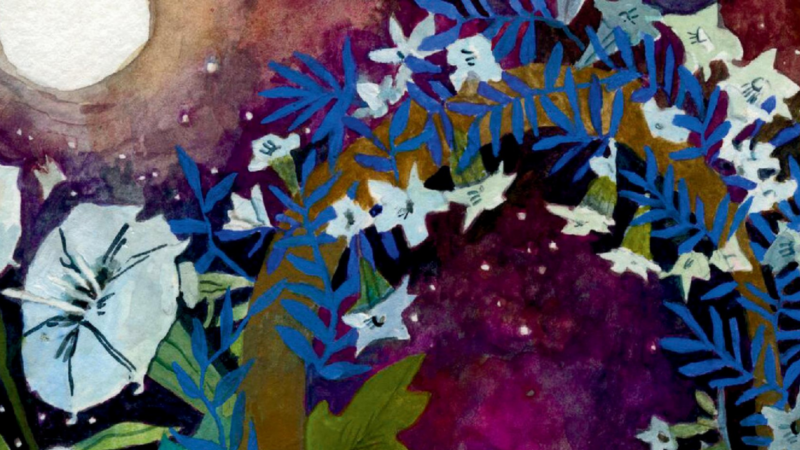
What does the moon have to do with flower essences and ritual? As we discussed in an earlier chapter, the moon represents a time before the dominant culture came into power. While the moon has no gender, it is a metaphor for the divine feminine and a symbol for the creative, the intuitive, the unconscious, and the shadow. Before the Gregorian calendar came into use in the sixteenth century, many cycles of time were measured on a lunar basis, as are the Islamic, Chinese, and Jewish calendars today. All ancient agriculture was organized around lunar and astrological transits, which is one of the basic practices of biodynamic farming today. Many of us feel a fascination with the moon, and I feel it beckons us back to a different consciousness, where much healing potential awaits.

Creating altars or sacred spaces outdoors can be another place for ritual work. While I can’t have a moon garden in the city, I can have a few lunar plants in my windowsill to catch the moonlight.

Not all flowers bloom in the sunlight. Some plants prefer the darkness, opening to the night. Moon plants can be cultivated in any terrain. Many night bloomers are also very fragrant. I consider all plants medicinal to some degree; however, some of the moon garden plants may be more therapeutic than others. These can also be plants that you use for making your own flower essences. Or, if you like to make dried sticks of herbs to burn, you can use the plants from your moon garden, such as mugwort.

You can see the lunar signature of mugwort by observing the underside of the leaf, which is silver. The Latin name for it is Artemisia vulgaris; Artemis, if you remember, was the Greek goddess of the moon! Plants with light and white blooms work best, as well as gray and silvery leaves.

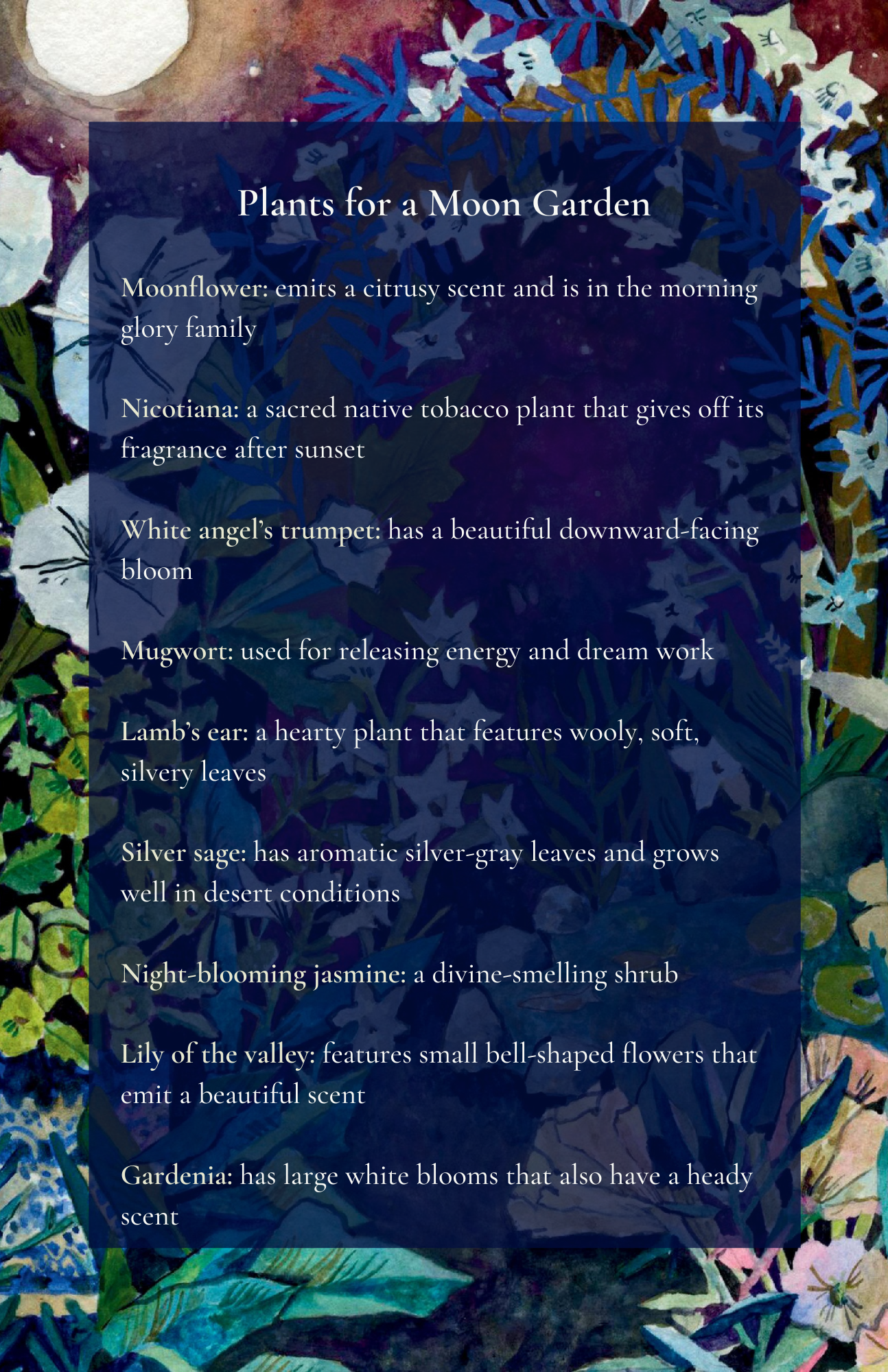
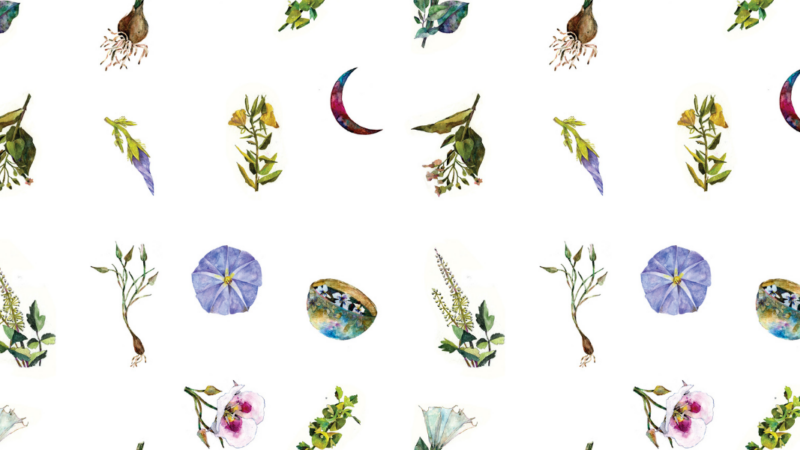
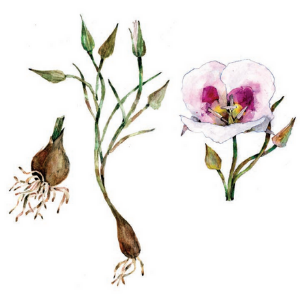
Here are some perfect moon garden plants:

plants for a moon garden


The video on how to make your own flower essence medicine can be found here.

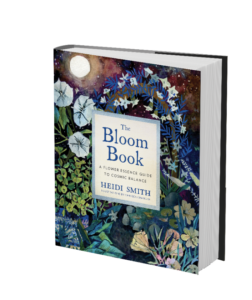
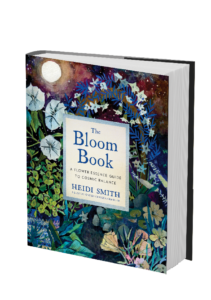
This is an excerpt from The Bloom Book: A Flower Essence Guide to Cosmic Balance by Heidi Smith.


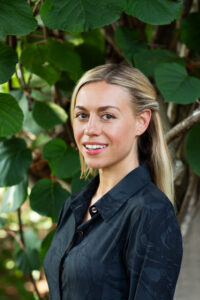
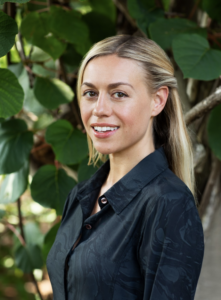
Heidi Smith, MA, RH (AHG), is a psychosomatic therapist, registered herbalist, and flower essence practitioner. Within her private practice, Moon & Bloom, Heidi works collaboratively with her clients to empower greater balance, actualization, and soul-level healing within themselves. She is passionate about engaging both the spiritual and scientific dimensions of the plant kingdom, and sees plant medicine and ritual as radical ways to promote individual, collective, and planetary healing. She lives in Brooklyn, New York, with her partner and two cats. For more, visit moonandbloom.com.
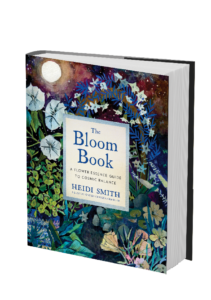


bloom book cover

Learn More

Sounds True | Amazon | Barnes & Noble | Bookshop


Heidi Smith

Heidi Smith, MA, RH (AHG), is a psychosomatic therapist, registered herbalist, and flower essence practitioner. Within her private practice, Moon & Bloom, Heidi works collaboratively with her clients to empower greater balance, actualization, and soul-level healing within themselves. She is passionate about engaging both the spiritual and scientific dimensions of the plant kingdom, and sees plant medicine and ritual as radical ways to promote individual, collective, and planetary healing. She lives in Brooklyn, NY, with her partner and two cats. For more, visit moonandbloom.com.

Author photo © Frances F Denny

Also By Author

Planting a Moon Garden

What does the moon have to do with flower essences and ritual? As we discussed in an earlier chapter, the moon represents a time before the dominant culture came into power. While the moon has no gender, it is a metaphor for the divine feminine and a symbol for the creative, the intuitive, the unconscious, and the shadow. Before the Gregorian calendar came into use in the sixteenth century, many cycles of time were measured on a lunar basis, as are the Islamic, Chinese, and Jewish calendars today. All ancient agriculture was organized around lunar and astrological transits, which is one of the basic practices of biodynamic farming today. Many of us feel a fascination with the moon, and I feel it beckons us back to a different consciousness, where much healing potential awaits.

Creating altars or sacred spaces outdoors can be another place for ritual work. While I can’t have a moon garden in the city, I can have a few lunar plants in my windowsill to catch the moonlight.

Not all flowers bloom in the sunlight. Some plants prefer the darkness, opening to the night. Moon plants can be cultivated in any terrain. Many night bloomers are also very fragrant. I consider all plants medicinal to some degree; however, some of the moon garden plants may be more therapeutic than others. These can also be plants that you use for making your own flower essences. Or, if you like to make dried sticks of herbs to burn, you can use the plants from your moon garden, such as mugwort.

You can see the lunar signature of mugwort by observing the underside of the leaf, which is silver. The Latin name for it is Artemisia vulgaris; Artemis, if you remember, was the Greek goddess of the moon! Plants with light and white blooms work best, as well as gray and silvery leaves.

Here are some perfect moon garden plants:

plants for a moon garden


The video on how to make your own flower essence medicine can be found here.

This is an excerpt from The Bloom Book: A Flower Essence Guide to Cosmic Balance by Heidi Smith.


Heidi Smith, MA, RH (AHG), is a psychosomatic therapist, registered herbalist, and flower essence practitioner. Within her private practice, Moon & Bloom, Heidi works collaboratively with her clients to empower greater balance, actualization, and soul-level healing within themselves. She is passionate about engaging both the spiritual and scientific dimensions of the plant kingdom, and sees plant medicine and ritual as radical ways to promote individual, collective, and planetary healing. She lives in Brooklyn, New York, with her partner and two cats. For more, visit moonandbloom.com.


bloom book cover

Learn More

Sounds True | Amazon | Barnes & Noble | Bookshop


The Remedy We Are Excited To Try in the New Year: Flow...

What are flower essences?

The goals of flower essence therapy include: ease in accessing higher vibratory states like joy and gratitude; enhanced mind-body-spirit balance, presence, acceptance of emotions and integration of difficult vibratory states; encouraging flow states like creativity; manifesting; supporting balance; expanding awareness of self and the Universe, ancestral connection and healing; and helping us to be of greater service to ourselves, others, and the Earth.

Flower essences work by way of the following:

  • synchronicities—helping us connect seemingly unrelated or previously unseen opportunities or happenings
  • indirect occurrences—positively affecting different environments and interpersonal dynamics
  • insights—supporting mental, emotional, physical, and/or astral awakening; new ideas, solutions, or information may present
  • physical changes—bringing up new sensations, shifts in organ/system functioning or in symptoms
  • emotional responses—bringing up new feelings or memories; stabilizing or releasing them
  • expression—inspiring artistic, verbal, and kinesthetic expression
  • dreamtime—bringing about new or recurring dreams, insights, and subconscious resolution
  • invoking intention—the more time and space you can offer, the more likely you’ll be able to feel flower essences. For example, taking them with a light meditation, a visualization, while doing yoga or some other kind of bodywork or prayer  

flower essence illustration

How to Select a Flower Essence

Flower essences can be purchased from a quality producer, or you can make your own. Here, I will discuss how to select and apply ready-made flower essence remedies. You can learn how to wildcraft your own flower essences with me in this video.

When you’re starting out with flower essences, it can be overwhelming—so many producers and so many essences! I like to encourage people to remember that it’s your relationship with the plant that is the most important thing in selection. Your relationship with the remedy is the co-creation with that plant. The more you work with flowers, the more you will be able to feel and trust this part of the process.


The following are some ways to begin exploring flower essences:

  • Depending on what issue(s) you’d like to address, begin by taking one to three essences that resonate with you. Many producers offer sets of remedies that have a particular focus. You may want to purchase a set to experiment with, such as the FES’s Range of Light, Delta Gardens’ Protection Set, Alaskan Essences, or the Bach Essences.
  • Consider flower essences that invite presence, relaxation, protection, and grounding.
  • If you want to study the essences more carefully, consider making flashcards or purchasing the flower cards (Alaskan Essences, FES, and Bach make sets).
  • If you’re curious to learn more about how a plant might connect with your ancestry, consider doing some research on how it was used historically.
  • Perhaps there’s a flower you’re curious about, or have seen in nature. Ask this plant if it would like to work with you.

flower essence


Here are five basic ways to select a flower essence:

  • Intuitively: A flower essence might come to you by way of revealing itself in nature, or appearing in a dream.
  • By dowsing: Using a tool of resonance, such a pendulum, to test for essences.
  • Through muscle testing: A simple way to muscle test is to make a ring with the index finger and thumb of your nondominant hand. If you would like to test for a yes for an essence, say the name of the plant and flick the circle with your dominant hand. If the circle holds, that’s a yes. If it breaks open, that is a no.
  • By consulting reference literature: Books, repertories, or flower affirmation cards.
  • Through blind testing: By drawing a card or randomly selecting an essence from a set. This method works well with children.

Any of these methods can be integrated into your ritual. Before making remedies for other people, it’s a good idea to spend some time with the flower essences yourself. The flowers will have much to share with you. Also, the more experience you have with the essences yourself, the better you will understand how the essences will work for others.

This is an excerpt from The Bloom Book: A Flower Essence Guide to Cosmic Balance by Heidi Smith.


Heidi Smith, MA, RH (AHG), is a psychosomatic therapist, registered herbalist, and flower essence practitioner. Within her private practice, Moon & Bloom, Heidi works collaboratively with her clients to empower greater balance, actualization, and soul-level healing within themselves. She is passionate about engaging both the spiritual and scientific dimensions of the plant kingdom, and sees plant medicine and ritual as radical ways to promote individual, collective, and planetary healing. She lives in Brooklyn, New York, with her partner and two cats. For more, visit moonandbloom.com.


Learn More

Sounds True | Amazon | Barnes & Noble | Bookshop


DIY Rose Essence and Heart Breathing Ritual

The heart chakra is the central integrating chamber of the chakra system. Through the healing power of love, all things eventually find their way to connection and wholeness. 

ANODEA JUDITH

Heart Medicine Rituals

The greatest lesson I have learned so far is to exist within my heart. This is a lifelong practice for me because, like many, I was not taught to inhabit my heart space. On a physical level, the general collective is not doing so well in our hearts. This is evidenced by the stark reality that heart disease is the leading cause of death worldwide. This high incidence of disease points to a deeper situation of the heart, but in order to be open to the possibility that more profound heart healing is necessary and possible, we must open our minds to a more metaphysical or energetic interpretation of what the heart is and what it does. Ancestrally, the heart held a much higher evolutionary significance, and as our consciousness split, we moved from inhabiting our hearts to glorifying our minds. Perhaps this disconnect can illuminate some clues for us to consider to reclaim more balance within our hearts, ourselves, and our world. 

Vibrationally, the heart contains the strongest electromagnetic field of any organ in the body. Transference of heart energy can occur in close proximity with another human or animal; and if you apply the theories of quantum entanglement and wave function collapse, transference of heart energy can resonate beyond space or time. Plants and the elements, too, can have a positive entrainment effect on the heart, reiterating the interconnectedness of all life and the organic balance nature engenders. In both traditional Chinese and Tibetan medicines, the heart is the mind. In TCM, grief is stored in the lungs and closely related to the heart. The Hopi defined harmony as one’s heartbeat in resonance with others and the Earth.

Our liberation is tied to the heart. The cost of liberation is unique to every person and is cosmically linked to each of us. The price of liberation varies for each individual, but we are given choices: in what we think, what we feel, what we believe, how we want to be. The inability to see choice is the unconsciousness of the fear-based toxic masculine that seeks to keep us disconnected and disempowered. 

Image 1

Our liberation depends largely on our ability to love unconditionally. Unconditional love means loving without circumstance or codependence. This can take different forms, from exiting a toxic relationship to taking more care of yourself. And it doesn’t stop there. If you want to get really free, you have to love yourself no matter what, and love all beings no matter what. Tall order? Yes. Impossible? No! While humans are conditioned to be in separation, plants (and animals) hold only unconditional love for all life. There are people on this Earth who radiate unconditional love, and when you are in their company, your heart is completely relaxed and open. For instance, my heart feels completely free when I am with people and animals who love me unconditionally. My heart also feels free in this way when I am in nature. Can you think of anyone who loves you unconditionally? Or perhaps it’s easier to think of an animal or pet? What if you loved yourself and everyone like that? What if you loved all your uncomfortable parts, illnesses, and neuroses like that?

EXERCISE: Making a Rose Essence and Heart Breathing Exercise

There are a few plants whose application is almost universal, and the rose is one such flower. Roses hold the frequency of unconditional love and have an affinity for the heart chakra. This ritual works best with either a wild growing or organically cultivated rose; it can be any species within the Rosa genus. Some of the lower vibratory states that can be addressed with rose include grief, loss, heartbreak, depression, and panic. 

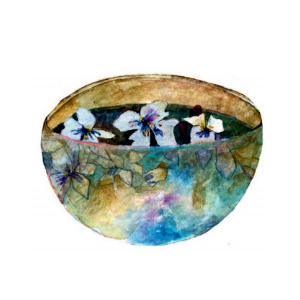
This ritual is very simple. You’re going to combine the process for making your own medicine (see a simple how-to video here) using the rose of your choice, with the heart breathing exercise that follows. The heart breathing can be done while the flowers are in the water, working their magic. The heart energy you engage during the medicine-making process will become part of the energetic signature of your flower essence. After you bottle it and make the dosage bottle, take a few drops and see what you notice around your heart. Be sure to notate your findings. You now have a rose flower essence for your apothecary whenever you or someone else needs it. 

HEART BREATHING RITUAL

After you have placed the flowers in the bowl with the water, sit comfortably on the ground, if possible. Close your eyes or set your gaze low. Place both hands over your heart and begin to breathe into the heart space. Visualize the rose you are working with. Notice how the breath moves in and out of the heart—not forcing the air, just allowing it to move. See if you can sense into how the heart is feeling—in the front, in the back, all sides. Be sure to breathe into the back of the heart space. Notice how the heart feels when you place your awareness on it. See if it’s okay to allow whatever is arising, witnessing without judgment. 

After a few minutes, begin to bring the heart back into a neutral position. Thank your heart and the spirit of rose for sharing with you. Feel your body making contact with the Earth, deepen the breath, and slowly open your eyes.

The video on how to make your own flower essence medicine can be found here.

This is an excerpt from The Bloom Book: A Flower Essence Guide to Cosmic Balance by Heidi Smith.

Heidi Smith Bio

Bloom Book

Heidi Smith, MA, RH (AHG), is a psychosomatic therapist, registered herbalist, and flower essence practitioner. Within her private practice, Moon & Bloom, Heidi works collaboratively with her clients to empower greater balance, actualization, and soul-level 

healing within themselves. She is passionate about engaging both the spiritual and scientific dimensions of the plant kingdom, and sees plant medicine and ritual as radical ways to promote individual, collective, and planetary healing. She lives in Brooklyn, New York, with her partner and two cats. For more, visit moonandbloom.com.
 

Learn More

Sounds True | Amazon | Barnes & Noble | Bookshop

You Might Also Enjoy

Laurie Nealon: “Energy Healing with Help From the Ot...

What if you were never working alone—and neither was anyone you were trying to help?

This week, Tami Simon speaks with Laurie Nealon, an intuitive energy healer, medium, and educator whose work is profiled on the Sounds True podcast Phenomena: The Science and Stories of Energy Healing. Seventeen years ago, Laurie began seeing and hearing those who had passed—not in dreams, but in the middle of her waking life. She resisted it. Then she built a practice around it.

Join Tami and Laurie to explore:

  • What Laurie actually perceives when someone who has died “appears”—and how she learned to filter it
  • Integrated Energy Therapy (IET), attunement, and why she calls the practitioner a facilitator rather than a healer
  • The “spiritual support group”: angels, guides, ascended masters, and loved ones she says fill the room during a session
  • A guided practice—rolling the energy—you can do in two minutes before you get out of bed
  • The screen technique: how to stay open to love without carrying everyone else’s journey
  • Why “lightening someone’s load” may actually dishonor their path
  • Entity energy, imprints, and what clearing a block really means
  • Tami’s hardest question: what about the people who did everything right and still died?
  • A closing prayer Laurie offers for every listener

Laurie’s conviction is that none of this is exotic. Everyone, she says, should be trained in energy healing the way everyone is trained in CPR—and everyone has the capacity to open to their own gifts.

Listen now, and find out who else is in the room. →

This conversation offers genuine transmission, not just concepts about awakening, but the palpable presence of realized teachers exploring the growing edge of spiritual understanding together, and originally aired on Sounds True One.

Michelle Wadleigh: “I Demand to Be Me”

“You have to want the freedom more than you want to be right about it.”

That’s what Reverend Dr. Michelle Wadleigh offers to anyone who has tried forgiveness and found that it didn’t take. Not a technique. A decision.

This week, Tami Simon speaks with Wadleigh—ordained minister in Centers for Spiritual Living, retreat facilitator, co-founder of the Planned Happiness Institute, and author of Forgiveness, Shadow Work, and the new Dance Like Nobody’s Watching: The Soul’s Journey to Courage, Authenticity, and Self-Love—about what it actually takes to stop living at the mercy of our own stories.

Join Tami and Michelle to explore:

  • Why forgiveness practices fail when they skip the body and the subconscious—and what to do instead
  • How shadow work and forgiveness depend on each other, and why projection drives so much of the divisiveness we see
  • “Functioning on top of dysfunction”: our addictions to being nice and being liked, and how they train us to dumb ourselves down
  • The 15 to 20 minutes before sleep, when the mind turns porous—and how Michelle guards that window
  • Fire walking, cold plunges, and the discovery that fear is a choice rather than an automatic
  • What it means to demand to be me without excuses—and who, exactly, that demand is addressed to
  • Why a book about bold self-expression closes with instructions for a solo silent retreat
  • Presence as a practice, learned while walking beside a dying husband

Michelle speaks throughout from the middle of her own hardest passage, which gives everything she says about buoyancy, beauty, and determination a weight it would not otherwise carry.

Listen now. →

This conversation offers genuine transmission, not just concepts about awakening, but the palpable presence of realized teachers exploring the growing edge of spiritual understanding together, and originally aired on Sounds True One.

Insights at the Edge is supported by Omega Institute, a global gathering hub for lifelong learning and spiritual exploration. Located in upstate New York’s beautiful Hudson Valley, Omega offers weekend workshops, special events, rest and rejuvenation retreats, professional trainings, online learning, and more.

Special Offer – Sounds True community members enjoy 10% off any workshop registration at Omega Institute. Discover what calls to you at eomega.org/true. Use code TRUE at checkout.

Insights at the Edge is supported by Magic Hour, whose ceremonial teas carry more presence, beauty, and ritual into ordinary days. Magic Hour draws its leaves and botanicals from regenerative small farms around the world, in blends made to nourish the body and open the mind.

Explore their teas, matchas, and herbal rituals at clubmagichour.com. Get 20% off your first order with the code TRUE.

What Is Brainspotting? David Grand on Using Eye Positi...

What happens when healing needs to go deeper than words can reach? For many people, the most profound emotional experiences resist easy articulation. Brainspotting is a therapeutic approach developed by David Grand that uses specific eye positions to access what the brain and body hold onto, even when language falls short.

At Sounds True, we’ve spent more than 40 years sharing trusted teachings from therapists, authors, and spiritual teachers whose work nurtures healing, personal growth, and lasting transformation. From online courses and in-depth programs to podcasts and digital resources, we bring the voices that matter most directly to you.

We cover what brainspotting is, how David Grand developed the approach, the role of eye position in trauma therapy, and how brainspotting compares with EMDR.

Key Takeaways:

  • Healing Beyond Words: Brainspotting uses specific eye positions to access unresolved trauma and emotional experiences stored in the brain and body, creating a path forward that doesn’t require verbal storytelling alone.
  • David Grand’s Path to Healing: David Grand developed brainspotting after observing that a client’s eye position reflected deeper emotional processing during trauma treatment, giving rise to an approach built around the brain’s natural capacity to heal.
  • EMDR vs. Brainspotting: While both approaches help people process trauma, brainspotting and EMDR differ in structure and session style. The right fit depends on your history, goals, and therapeutic relationship.

Discover the Power of Daily Meditation and Inner Stillness

What Is Brainspotting?

Brainspotting is designed to help people access and process unresolved trauma through focused attention on specific eye positions. The method rests on the idea that where a person looks can correspond to where difficult experiences are stored in the brain and body. Staying with a brainspot while remaining aware of physical sensations and emotions, people can work through material that language alone might not reach.

Since David Grand developed this approach, brainspotting therapy has been applied broadly, with athletes, artists, business leaders, and survivors of large-scale events, among others. Grand also offers an online course through Sounds True that walks through the core principles behind brainspotting therapy, available to those who want to learn directly from the source.

His insights align with the conversations we host on the Insights at the Edge Podcast, where therapists, teachers, and practitioners share what healing really looks like from the inside out.

David Grand and the Development of Brainspotting Therapy

Brainspotting therapy came out of a significant clinical observation. During trauma treatment, David Grand noticed that a client’s eye position seemed to shift when deeper emotional material surfaced. That moment became the foundation for a method built around the brain’s own capacity to process and release what it has long held in place.

Since its introduction, brainspotting therapy has been used by clinicians around the world to help people facing trauma, anxiety, grief, chronic stress, and performance-related challenges. Grand’s work continues to shape the field by drawing attention to the connection between the brain, the body, and emotional healing.

Sounds True is home to teachers like David Grand alongside hundreds of other practitioners, healers, and visionaries whose work spans a wide range of healing traditions. Those who want to trace that full breadth can visit our All Teachers & Authors collection, where every teacher’s body of work is gathered in one place.

Trauma Therapy Eye Position and the Brain-Body Connection

Trauma therapy eye position describes the relationship between where someone directs their gaze and what emotional or physical experiences become accessible as a result. During a session, a therapist guides the client to a specific visual point and invites them to notice what arises in the body as they hold that focus. Sensations, emotions, and memories can surface as the nervous system begins to process material it has held in place for years.

The body carries what the mind sometimes can’t articulate. A shift in eye position can open access to experiences held below conscious awareness, gently creating conditions for the nervous system to complete what was once interrupted. Healing, in this way, becomes a process the whole person takes part in, not just the thinking mind.

The teachers and practitioners gathered in our Health & Healing collection share this same orientation: that real healing often begins when we learn to listen to what the body already knows.

How the Brainspotting Technique Uses Eye Position to Access Trauma

The brainspotting technique begins with identifying an eye position linked to an emotional or physical response. From there, the therapist invites the client to rest their attention on that visual point while remaining aware of what arises in the body. The process creates space for the nervous system to do what it naturally knows how to do, without demanding that memories surface on command.

A concrete example might be this: someone working through anxiety tied to an experience might start by calling that experience to mind. As the therapist slowly moves a pointer across their field of vision, the client notices a position where a physical sensation intensifies, perhaps tightness in the chest or a change in breath. That’s the brainspot. The session then focuses there while the client tracks what unfolds internally, allowing the nervous system to process what it has previously stored.

Awaken Your Inner Healing Power: Your Wellness Journey Starts Now

EMDR vs Brainspotting: Understanding the Key Differences

EMDR follows a standardized eight-phase protocol and uses bilateral stimulation, typically through guided eye movements, sounds, or tapping, to help the brain reprocess traumatic memories. Brainspotting focuses on identifying one significant eye position and following the client’s internal experience from there. Sessions tend to be more open-ended, allowing the individual’s nervous system to lead.

Neither method is universally better than the other. A qualified therapist can help determine which fits a person’s history, goals, and comfort level. Many clinicians receive training in both and draw on each as the situation calls for it.

Those who want to go deeper into trauma healing and related practices can find immersive learning through our In-Depth Programs, where experienced practitioners bring both clinical knowledge and heart to each course.

Discover how your mind really works

Final Thoughts

Brainspotting offers a distinctive perspective on trauma healing, one that trusts the body’s capacity to know where attention is needed. Working with eye position rather than narration alone, this approach creates conditions for healing to happen at the body’s own pace.

As David Grand has shown through decades of clinical work, healing is often less about forcing change and more about creating the conditions for it to unfold. That belief is at the heart of what we do at Sounds True. We share the work of practitioners and teachers who honor the full range of human experience, including the places where language falls short, and the body quietly holds the way forward.

Frequently Asked Questions About Brainspotting

Is brainspotting backed by research?

Brainspotting is supported by a growing body of clinical research and case studies. While research continues to evolve, many mental health professionals use it as part of trauma-informed care for emotional and psychological concerns.

Who can benefit from brainspotting?

Brainspotting may benefit adults and adolescents experiencing trauma, anxiety, grief, stress, or performance-related challenges. A qualified mental health professional can determine whether it is an appropriate approach for an individual’s needs.

Do I have to talk about my trauma during brainspotting?

Not necessarily. While some people choose to discuss their experiences, brainspotting can also focus on physical sensations and emotions, allowing processing without requiring detailed verbal storytelling.

Can brainspotting be combined with other therapies?

Yes. Many therapists integrate brainspotting with other evidence-based approaches, such as cognitive behavioral therapy, mindfulness practices, or somatic therapies, to create a personalized treatment plan.

Is brainspotting only used for trauma?

No. Although it is widely recognized for trauma treatment, brainspotting is also used to support people dealing with anxiety, creative blocks, chronic stress, and performance enhancement in sports, music, and public speaking.

What should I expect after a brainspotting session?

Some people feel calm or relieved after a session, while others may continue processing emotions or physical sensations for a short time. Therapists often recommend rest, hydration, and self-reflection between sessions.

Is brainspotting suitable for everyone?

Brainspotting may not be the best fit for every individual or situation. A licensed therapist can evaluate your mental health history and recommend the most appropriate treatment approach.

Michelle Cassandra Johnson is an author, activist, spiritual teacher, racial equity consultant, and intuitive healer. She is the author of six books, including Skill in Action and Finding Refuge. Amy Burtaine is a leadership coach and racial equity trainer. With Robin DiAngelo, she is the coauthor of The Facilitator's Guide for White Affinity Groups. For more, visit https://www.michellecjohnson.com/wisdom-of-the-hive.

Leave a Reply

Your email address will not be published. Required fields are marked *