DIY Rose Essence and Heart Breathing Ritual

    —
September 25, 2020

The heart chakra is the central integrating chamber of the chakra system. Through the healing power of love, all things eventually find their way to connection and wholeness. 

ANODEA JUDITH

Heart Medicine Rituals

The greatest lesson I have learned so far is to exist within my heart. This is a lifelong practice for me because, like many, I was not taught to inhabit my heart space. On a physical level, the general collective is not doing so well in our hearts. This is evidenced by the stark reality that heart disease is the leading cause of death worldwide. This high incidence of disease points to a deeper situation of the heart, but in order to be open to the possibility that more profound heart healing is necessary and possible, we must open our minds to a more metaphysical or energetic interpretation of what the heart is and what it does. Ancestrally, the heart held a much higher evolutionary significance, and as our consciousness split, we moved from inhabiting our hearts to glorifying our minds. Perhaps this disconnect can illuminate some clues for us to consider to reclaim more balance within our hearts, ourselves, and our world. 

Vibrationally, the heart contains the strongest electromagnetic field of any organ in the body. Transference of heart energy can occur in close proximity with another human or animal; and if you apply the theories of quantum entanglement and wave function collapse, transference of heart energy can resonate beyond space or time. Plants and the elements, too, can have a positive entrainment effect on the heart, reiterating the interconnectedness of all life and the organic balance nature engenders. In both traditional Chinese and Tibetan medicines, the heart is the mind. In TCM, grief is stored in the lungs and closely related to the heart. The Hopi defined harmony as one’s heartbeat in resonance with others and the Earth.

Our liberation is tied to the heart. The cost of liberation is unique to every person and is cosmically linked to each of us. The price of liberation varies for each individual, but we are given choices: in what we think, what we feel, what we believe, how we want to be. The inability to see choice is the unconsciousness of the fear-based toxic masculine that seeks to keep us disconnected and disempowered. 
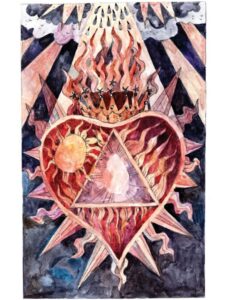
Image 1

Our liberation depends largely on our ability to love unconditionally. Unconditional love means loving without circumstance or codependence. This can take different forms, from exiting a toxic relationship to taking more care of yourself. And it doesn’t stop there. If you want to get really free, you have to love yourself no matter what, and love all beings no matter what. Tall order? Yes. Impossible? No! While humans are conditioned to be in separation, plants (and animals) hold only unconditional love for all life. There are people on this Earth who radiate unconditional love, and when you are in their company, your heart is completely relaxed and open. For instance, my heart feels completely free when I am with people and animals who love me unconditionally. My heart also feels free in this way when I am in nature. Can you think of anyone who loves you unconditionally? Or perhaps it’s easier to think of an animal or pet? What if you loved yourself and everyone like that? What if you loved all your uncomfortable parts, illnesses, and neuroses like that?

EXERCISE: Making a Rose Essence and Heart Breathing Exercise

There are a few plants whose application is almost universal, and the rose is one such flower. Roses hold the frequency of unconditional love and have an affinity for the heart chakra. This ritual works best with either a wild growing or organically cultivated rose; it can be any species within the Rosa genus. Some of the lower vibratory states that can be addressed with rose include grief, loss, heartbreak, depression, and panic. 

This ritual is very simple. You’re going to combine the process for making your own medicine (see a simple how-to video here) using the rose of your choice, with the heart breathing exercise that follows. The heart breathing can be done while the flowers are in the water, working their magic. The heart energy you engage during the medicine-making process will become part of the energetic signature of your flower essence. After you bottle it and make the dosage bottle, take a few drops and see what you notice around your heart. Be sure to notate your findings. You now have a rose flower essence for your apothecary whenever you or someone else needs it. 

HEART BREATHING RITUAL

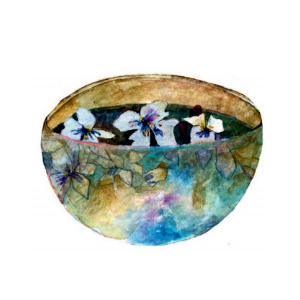
After you have placed the flowers in the bowl with the water, sit comfortably on the ground, if possible. Close your eyes or set your gaze low. Place both hands over your heart and begin to breathe into the heart space. Visualize the rose you are working with. Notice how the breath moves in and out of the heart—not forcing the air, just allowing it to move. See if you can sense into how the heart is feeling—in the front, in the back, all sides. Be sure to breathe into the back of the heart space. Notice how the heart feels when you place your awareness on it. See if it’s okay to allow whatever is arising, witnessing without judgment. 

After a few minutes, begin to bring the heart back into a neutral position. Thank your heart and the spirit of rose for sharing with you. Feel your body making contact with the Earth, deepen the breath, and slowly open your eyes.

The video on how to make your own flower essence medicine can be found here.

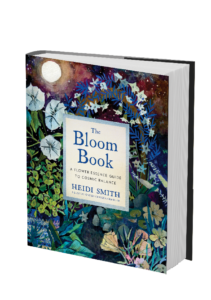
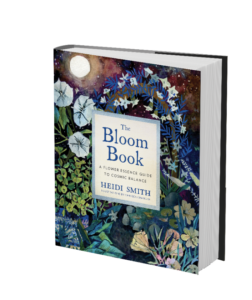
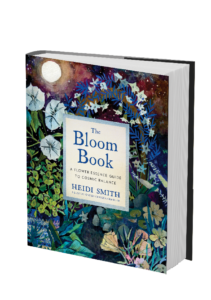
This is an excerpt from The Bloom Book: A Flower Essence Guide to Cosmic Balance by Heidi Smith.
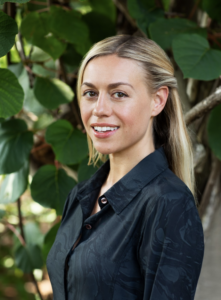
Heidi Smith Bio

Bloom Book

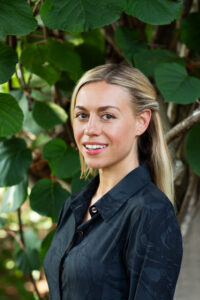
Heidi Smith, MA, RH (AHG), is a psychosomatic therapist, registered herbalist, and flower essence practitioner. Within her private practice, Moon & Bloom, Heidi works collaboratively with her clients to empower greater balance, actualization, and soul-level 

healing within themselves. She is passionate about engaging both the spiritual and scientific dimensions of the plant kingdom, and sees plant medicine and ritual as radical ways to promote individual, collective, and planetary healing. She lives in Brooklyn, New York, with her partner and two cats. For more, visit moonandbloom.com.


Learn More

Sounds True | Amazon | Barnes & Noble | Bookshop

Heidi Smith

Heidi Smith, MA, RH (AHG), is a psychosomatic therapist, registered herbalist, and flower essence practitioner. Within her private practice, Moon & Bloom, Heidi works collaboratively with her clients to empower greater balance, actualization, and soul-level healing within themselves. She is passionate about engaging both the spiritual and scientific dimensions of the plant kingdom, and sees plant medicine and ritual as radical ways to promote individual, collective, and planetary healing. She lives in Brooklyn, NY, with her partner and two cats. For more, visit moonandbloom.com.

Author photo © Frances F Denny

Also By Author

Planting a Moon Garden

What does the moon have to do with flower essences and ritual? As we discussed in an earlier chapter, the moon represents a time before the dominant culture came into power. While the moon has no gender, it is a metaphor for the divine feminine and a symbol for the creative, the intuitive, the unconscious, and the shadow. Before the Gregorian calendar came into use in the sixteenth century, many cycles of time were measured on a lunar basis, as are the Islamic, Chinese, and Jewish calendars today. All ancient agriculture was organized around lunar and astrological transits, which is one of the basic practices of biodynamic farming today. Many of us feel a fascination with the moon, and I feel it beckons us back to a different consciousness, where much healing potential awaits.

Creating altars or sacred spaces outdoors can be another place for ritual work. While I can’t have a moon garden in the city, I can have a few lunar plants in my windowsill to catch the moonlight.

Not all flowers bloom in the sunlight. Some plants prefer the darkness, opening to the night. Moon plants can be cultivated in any terrain. Many night bloomers are also very fragrant. I consider all plants medicinal to some degree; however, some of the moon garden plants may be more therapeutic than others. These can also be plants that you use for making your own flower essences. Or, if you like to make dried sticks of herbs to burn, you can use the plants from your moon garden, such as mugwort.

You can see the lunar signature of mugwort by observing the underside of the leaf, which is silver. The Latin name for it is Artemisia vulgaris; Artemis, if you remember, was the Greek goddess of the moon! Plants with light and white blooms work best, as well as gray and silvery leaves.

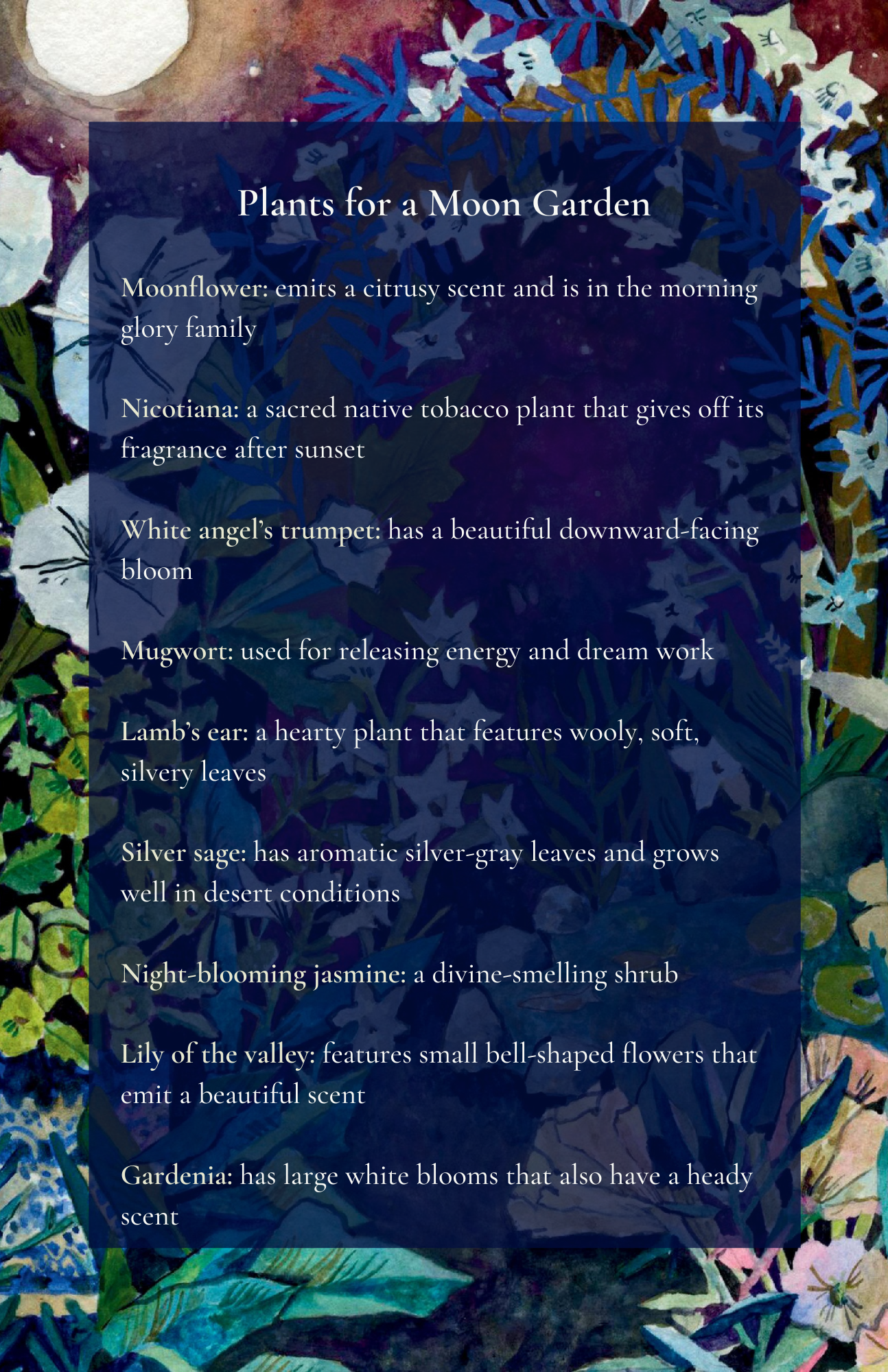
Here are some perfect moon garden plants:

plants for a moon garden


The video on how to make your own flower essence medicine can be found here.

This is an excerpt from The Bloom Book: A Flower Essence Guide to Cosmic Balance by Heidi Smith.
 

Heidi Smith, MA, RH (AHG), is a psychosomatic therapist, registered herbalist, and flower essence practitioner. Within her private practice, Moon & Bloom, Heidi works collaboratively with her clients to empower greater balance, actualization, and soul-level healing within themselves. She is passionate about engaging both the spiritual and scientific dimensions of the plant kingdom, and sees plant medicine and ritual as radical ways to promote individual, collective, and planetary healing. She lives in Brooklyn, New York, with her partner and two cats. For more, visit moonandbloom.com.



bloom book cover

Learn More

Sounds True | Amazon | Barnes & Noble | Bookshop


The Remedy We Are Excited To Try in the New Year: Flow...

What are flower essences?

The goals of flower essence therapy include: ease in accessing higher vibratory states like joy and gratitude; enhanced mind-body-spirit balance, presence, acceptance of emotions and integration of difficult vibratory states; encouraging flow states like creativity; manifesting; supporting balance; expanding awareness of self and the Universe, ancestral connection and healing; and helping us to be of greater service to ourselves, others, and the Earth.

Flower essences work by way of the following:

  • synchronicities—helping us connect seemingly unrelated or previously unseen opportunities or happenings
  • indirect occurrences—positively affecting different environments and interpersonal dynamics
  • insights—supporting mental, emotional, physical, and/or astral awakening; new ideas, solutions, or information may present
  • physical changes—bringing up new sensations, shifts in organ/system functioning or in symptoms
  • emotional responses—bringing up new feelings or memories; stabilizing or releasing them
  • expression—inspiring artistic, verbal, and kinesthetic expression
  • dreamtime—bringing about new or recurring dreams, insights, and subconscious resolution
  • invoking intention—the more time and space you can offer, the more likely you’ll be able to feel flower essences. For example, taking them with a light meditation, a visualization, while doing yoga or some other kind of bodywork or prayer  

flower essence illustration

How to Select a Flower Essence

Flower essences can be purchased from a quality producer, or you can make your own. Here, I will discuss how to select and apply ready-made flower essence remedies. You can learn how to wildcraft your own flower essences with me in this video.

When you’re starting out with flower essences, it can be overwhelming—so many producers and so many essences! I like to encourage people to remember that it’s your relationship with the plant that is the most important thing in selection. Your relationship with the remedy is the co-creation with that plant. The more you work with flowers, the more you will be able to feel and trust this part of the process.


The following are some ways to begin exploring flower essences:

  • Depending on what issue(s) you’d like to address, begin by taking one to three essences that resonate with you. Many producers offer sets of remedies that have a particular focus. You may want to purchase a set to experiment with, such as the FES’s Range of Light, Delta Gardens’ Protection Set, Alaskan Essences, or the Bach Essences.
  • Consider flower essences that invite presence, relaxation, protection, and grounding.
  • If you want to study the essences more carefully, consider making flashcards or purchasing the flower cards (Alaskan Essences, FES, and Bach make sets).
  • If you’re curious to learn more about how a plant might connect with your ancestry, consider doing some research on how it was used historically.
  • Perhaps there’s a flower you’re curious about, or have seen in nature. Ask this plant if it would like to work with you.

flower essence


Here are five basic ways to select a flower essence:

  • Intuitively: A flower essence might come to you by way of revealing itself in nature, or appearing in a dream.
  • By dowsing: Using a tool of resonance, such a pendulum, to test for essences.
  • Through muscle testing: A simple way to muscle test is to make a ring with the index finger and thumb of your nondominant hand. If you would like to test for a yes for an essence, say the name of the plant and flick the circle with your dominant hand. If the circle holds, that’s a yes. If it breaks open, that is a no.
  • By consulting reference literature: Books, repertories, or flower affirmation cards.
  • Through blind testing: By drawing a card or randomly selecting an essence from a set. This method works well with children.

Any of these methods can be integrated into your ritual. Before making remedies for other people, it’s a good idea to spend some time with the flower essences yourself. The flowers will have much to share with you. Also, the more experience you have with the essences yourself, the better you will understand how the essences will work for others.

This is an excerpt from The Bloom Book: A Flower Essence Guide to Cosmic Balance by Heidi Smith.


Heidi Smith, MA, RH (AHG), is a psychosomatic therapist, registered herbalist, and flower essence practitioner. Within her private practice, Moon & Bloom, Heidi works collaboratively with her clients to empower greater balance, actualization, and soul-level healing within themselves. She is passionate about engaging both the spiritual and scientific dimensions of the plant kingdom, and sees plant medicine and ritual as radical ways to promote individual, collective, and planetary healing. She lives in Brooklyn, New York, with her partner and two cats. For more, visit moonandbloom.com.


Learn More

Sounds True | Amazon | Barnes & Noble | Bookshop


DIY Rose Essence and Heart Breathing Ritual

The heart chakra is the central integrating chamber of the chakra system. Through the healing power of love, all things eventually find their way to connection and wholeness. 

ANODEA JUDITH

Heart Medicine Rituals

The greatest lesson I have learned so far is to exist within my heart. This is a lifelong practice for me because, like many, I was not taught to inhabit my heart space. On a physical level, the general collective is not doing so well in our hearts. This is evidenced by the stark reality that heart disease is the leading cause of death worldwide. This high incidence of disease points to a deeper situation of the heart, but in order to be open to the possibility that more profound heart healing is necessary and possible, we must open our minds to a more metaphysical or energetic interpretation of what the heart is and what it does. Ancestrally, the heart held a much higher evolutionary significance, and as our consciousness split, we moved from inhabiting our hearts to glorifying our minds. Perhaps this disconnect can illuminate some clues for us to consider to reclaim more balance within our hearts, ourselves, and our world. 

Vibrationally, the heart contains the strongest electromagnetic field of any organ in the body. Transference of heart energy can occur in close proximity with another human or animal; and if you apply the theories of quantum entanglement and wave function collapse, transference of heart energy can resonate beyond space or time. Plants and the elements, too, can have a positive entrainment effect on the heart, reiterating the interconnectedness of all life and the organic balance nature engenders. In both traditional Chinese and Tibetan medicines, the heart is the mind. In TCM, grief is stored in the lungs and closely related to the heart. The Hopi defined harmony as one’s heartbeat in resonance with others and the Earth.

Our liberation is tied to the heart. The cost of liberation is unique to every person and is cosmically linked to each of us. The price of liberation varies for each individual, but we are given choices: in what we think, what we feel, what we believe, how we want to be. The inability to see choice is the unconsciousness of the fear-based toxic masculine that seeks to keep us disconnected and disempowered. 

Image 1

Our liberation depends largely on our ability to love unconditionally. Unconditional love means loving without circumstance or codependence. This can take different forms, from exiting a toxic relationship to taking more care of yourself. And it doesn’t stop there. If you want to get really free, you have to love yourself no matter what, and love all beings no matter what. Tall order? Yes. Impossible? No! While humans are conditioned to be in separation, plants (and animals) hold only unconditional love for all life. There are people on this Earth who radiate unconditional love, and when you are in their company, your heart is completely relaxed and open. For instance, my heart feels completely free when I am with people and animals who love me unconditionally. My heart also feels free in this way when I am in nature. Can you think of anyone who loves you unconditionally? Or perhaps it’s easier to think of an animal or pet? What if you loved yourself and everyone like that? What if you loved all your uncomfortable parts, illnesses, and neuroses like that?

EXERCISE: Making a Rose Essence and Heart Breathing Exercise

There are a few plants whose application is almost universal, and the rose is one such flower. Roses hold the frequency of unconditional love and have an affinity for the heart chakra. This ritual works best with either a wild growing or organically cultivated rose; it can be any species within the Rosa genus. Some of the lower vibratory states that can be addressed with rose include grief, loss, heartbreak, depression, and panic. 

This ritual is very simple. You’re going to combine the process for making your own medicine (see a simple how-to video here) using the rose of your choice, with the heart breathing exercise that follows. The heart breathing can be done while the flowers are in the water, working their magic. The heart energy you engage during the medicine-making process will become part of the energetic signature of your flower essence. After you bottle it and make the dosage bottle, take a few drops and see what you notice around your heart. Be sure to notate your findings. You now have a rose flower essence for your apothecary whenever you or someone else needs it. 

HEART BREATHING RITUAL

After you have placed the flowers in the bowl with the water, sit comfortably on the ground, if possible. Close your eyes or set your gaze low. Place both hands over your heart and begin to breathe into the heart space. Visualize the rose you are working with. Notice how the breath moves in and out of the heart—not forcing the air, just allowing it to move. See if you can sense into how the heart is feeling—in the front, in the back, all sides. Be sure to breathe into the back of the heart space. Notice how the heart feels when you place your awareness on it. See if it’s okay to allow whatever is arising, witnessing without judgment. 

After a few minutes, begin to bring the heart back into a neutral position. Thank your heart and the spirit of rose for sharing with you. Feel your body making contact with the Earth, deepen the breath, and slowly open your eyes.

The video on how to make your own flower essence medicine can be found here.

This is an excerpt from The Bloom Book: A Flower Essence Guide to Cosmic Balance by Heidi Smith.

Heidi Smith Bio

Bloom Book

Heidi Smith, MA, RH (AHG), is a psychosomatic therapist, registered herbalist, and flower essence practitioner. Within her private practice, Moon & Bloom, Heidi works collaboratively with her clients to empower greater balance, actualization, and soul-level 

healing within themselves. She is passionate about engaging both the spiritual and scientific dimensions of the plant kingdom, and sees plant medicine and ritual as radical ways to promote individual, collective, and planetary healing. She lives in Brooklyn, New York, with her partner and two cats. For more, visit moonandbloom.com.
 

Learn More

Sounds True | Amazon | Barnes & Noble | Bookshop

You Might Also Enjoy

Kimberly Ann Johnson: “Becoming a Sexual Alchemi...

What if aging isn’t the slow closing of your erotic life, but the doorway into its most alive season?

This week, Tami Simon speaks with Kimberly Ann Johnson—sexological body worker, somatic experiencing practitioner, birth doula, and author of the new Sounds True book Erotic Seasons: Tuning In to the Rhythms of Women’s Sexuality and Spirituality—about what she calls erotic sovereignty, and the sentence that closes her book: the female body is its own spiritual path.

Join Tami and Kimberly to explore:

  • Erotic sovereignty—your relationship to your own life force, and why it stays with you across every season
  • Why the goal isn’t a more regulated nervous system, but a more responsive one, and what it means to run more charge
  • The four erotic seasons—maiden, mother, virgin, crone—and the surprising reason virgin comes after mother
  • Why hormonal transitions are “wet clay”: golden opportunities for repatterning that our culture teaches us to rush past
  • Menopause as a death rehearsal, and the life review that arrives decades before we expect it
  • Hot sex and warm sex—widening the range beyond adrenaline, and learning the language of the pause
  • “Hormones are gods”: the collective endocrine system, and why living intergenerationally may be the original hormone therapy
  • Becoming a sexual alchemist—arousal as healing energy, and why care is the whole ethic

Whether you are 25 or 75, Kimberly offers a map for meeting your body’s changes as thresholds rather than losses.

Please note: this episode includes candid discussion of sexual abuse and sexual wounding, including Kimberly Ann Johnson’s own experience.

Listen now, and meet your body as the path. →

This conversation offers genuine transmission, not just concepts about awakening, but the palpable presence of realized teachers exploring the growing edge of spiritual understanding together, and it originally aired on Sounds True One.

Get a FREE month of membership at https://bit.ly/STOne-Free-Month.

The Point of Insight | Our Medicine Lives in the Wound


What if the very thing that wounded you is the source of the medicine you’re here to give?

In this month’s Point of Insight, Tami Simon shares a personal story: minutes before going live with an archetypal astrologer, she was told—correctly, and within seconds—that she carried “the mother of all mother wounds.” That single moment became the culmination of a much longer, gradual unfolding: a lifetime’s worth of “drops,” from a mentor she called the Queen of the Reframe, to an interview with yoga teacher and activist Seane Corn titled “Your Pain Is Your Purpose,” to an email from a business coach whose four simple words reframed everything—your karma is your dharma.

Join Tami as she reflects on:

  • How a lifelong feeling of not belonging became the soil for a life’s work helping others feel connected
  • The difference between sudden insight and the slow, gradual “boiling water” of a tipping point
  • Why real breakthrough requires going all the way through pain, not around it
  • Joanna Macy’s question—”What breaks your heart?”—and how grief and care become fuel for service
  • Why “never turn away” may be one of the most important spiritual instructions there is

This is a shorter, solo reflection from Tami—released once a month on the Insights at the Edge feed—on where our deepest wounds and our clearest purpose meet.

Listen now. →

Find the original Insights at the Edge episodes here: “Seane Corn: Your Pain Is Your Purpose“

Reverend angel Kyodo williams: Warrior Spirit

Most people come to meditation looking for a break, a few quiet minutes away from a world that rarely slows down on its own. Reverend angel Kyodo williams spends much of this conversation gently taking apart that assumption, suggesting that real stillness was never about leaving the world behind at all. It’s a small shift in framing that ends up changing everything about how the rest of her teaching lands.

Rev. angel is an ordained Zen priest, activist, and founder of the Center for Transformative Change, recognized as the world’s second female Zen teacher of African descent and the author of Being Black and Radical Dharma. 

Sounds True has featured her teaching across our Meditation Summit and A Year of Mindfulness precisely because she refuses to separate inner practice from outer justice, treating the two as a single continuous act rather than competing priorities. What follows traces her case for a warrior spirit built on presence rather than escape, and the meditation practice she offers as its foundation.

Key Takeaways:

  • Retreat Isn’t the Goal: Learn why angel Kyodo williams reframes meditation as engagement, not escape.
  • Effort Meets Release: Understand the meditation practice she developed for people doing social change work.
  • A Different Kind of Fearlessness: See what warrior spirit means when it’s rooted in love rather than force.

Retreat Is Not What It Looks Like From Outside

Rev. angel opens by naming something many practitioners feel but rarely say aloud: the pull toward meditation often comes wrapped in a longing to retreat from an overwhelming world. She doesn’t dismiss that longing, but she does redirect it, suggesting that genuine practice engages our inner fullness rather than fleeing from outer noise. What looks like withdrawal from the outside, she argues, is closer to a deepening than a departure, a distinction that reframes the entire purpose of sitting down to practice in the first place.

Learn Practices for Self-Compassion with Sounds True.

Effort and Release Meditation: A Practice Born From Movement Work

Rev. angel developed a specific meditation practice she calls Effort and Release after years spent working alongside people doing demanding social change work. The practice blends deliberate effort with intentional letting go, addressing a pattern she noticed constantly among activists and organizers: a strong pull toward doing, accomplishing, and pushing that rarely leaves room for rest. She describes meditation and social change as inseparable, since the way a person relates to their own mind directly shapes what they find themselves willing to engage with in the wider world.

  • Naming the Pattern: Many changemakers carry a constant urgency that outlasts any single campaign, even during rest.
  • Effort With Purpose: The practice doesn’t reject action, only unconscious, exhausting overdrive.
  • Release as Skill: Letting go is treated as an active discipline, not passive collapse or avoidance.

Hear the complete teaching in her episode, Reverend angel Kyodo williams: Warrior Spirit

Inner Life and Outer World as One Continuous Fabric

A central thread running through Rev. Angel’s teaching rejects any hard line between internal awareness and external action. She describes our self-talk, the noise level of our minds, and our capacity for presence as directly shaping how we show up for others and what we find acceptable in the wider world. This isn’t a metaphor for her; it’s closer to a working principle behind everything she teaches, from meditation instruction to movement strategy. 

What we tolerate in the world outside us, she suggests, tends to trace directly back to what we’ve grown accustomed to tolerating within our own minds first, which is why she treats internal clarity as a precondition for meaningful external change rather than a separate, optional pursuit.

Warrior Spirit Rooted in Fearlessness, Not Force

The phrase “warrior spirit,” drawn from her earlier book Being Black, describes something quite different from combativeness or aggression directed outward at the world. For Rev. Angel, this spirit is built on truth-telling and responsibility, a foundation for genuine happiness rather than a posture of defensiveness. It asks practitioners to stay engaged with difficulty, including the difficulty of racism, patriarchy, and other inherited harms, rather than looking away or numbing out. This framing has resonated widely since the book’s original publication, offering readers across many backgrounds a way to hold fearlessness and tenderness together rather than treating them as opposites.

  • Truth Before Comfort: Warrior spirit requires naming what’s actually happening, even when it’s unwelcome.
  • Grace Alongside Fearlessness: Strength and tenderness are treated as complementary, not opposites.
  • Responsibility as Practice: Taking ownership of one’s own patterns becomes part of the discipline itself.

Build Relationships That Nourish and Sustain.

Bridging Personal Transformation and Collective Justice

Rev. angel has spent more than fifteen years shaping what she calls Transformative Social Change, a field built on the belief that lasting justice work requires equally serious inner work. She resists treating meditation as a private escape hatch separate from activism, instead framing contemplative practice as fuel for sustained, clear-eyed engagement with collective harm. Burnout among organizers, in her view, often stems from skipping this inner dimension entirely, treating stillness as optional rather than structural to the work itself. She has described this field as one she helped name and shape, watching it grow from a personal conviction into a recognized approach embraced across activist and spiritual communities alike.

What Radical Dharma Adds to This Conversation

Rev. Angel’s later book, Radical Dharma, co-written with Lama Rod Owens and Jasmine Syedullah, extends this same warrior spirit into a direct examination of race, love, and liberation within Buddhist communities themselves. The book argues that spiritual communities are not exempt from the patterns of harm found elsewhere in society, and that genuine awakening has to include an honest reckoning with those patterns rather than a spiritual bypass around them. This willingness to hold institutions, including her own tradition, accountable runs consistently through everything she teaches, from her earliest writing through her more recent contributions to Sounds True’s programming.

Awaken Your Inner Healing Power

Final Thoughts

Reverend angel Kyodo williams doesn’t offer meditation as a rest stop from the world’s demands. She offers it as a training ground for staying present with those demands without losing ourselves inside them. That distinction, subtle but significant, may be exactly what separates spiritual bypass from spiritual maturity, and it’s the thread that ties her meditation teaching to her justice work without contradiction. Listeners who come looking for a quick escape often leave with something more durable instead: a practice for staying rooted precisely where things are hardest. 

Sounds True continues sharing her teaching because our mission to wake up the world has never meant looking away from what’s hardest to face, and few teachers hold that tension as steadily as she does. Her books and audio programs remain in our library for anyone ready to bring the same steadiness into their own life and work.

Frequently Asked Questions About angel Kyodo williams

Who is Reverend angel Kyodo williams?

She is an ordained Zen priest, activist, author, and founder of the Center for Transformative Change.

What books has she written?

Her books include Being Black: Zen and the Art of Living with Fearlessness and Grace and Radical Dharma.

What is the Effort and Release practice?

A meditation method blending deliberate effort with intentional letting go, developed for activists and organizers.

Is this teaching only relevant to activists?

No, her ideas on presence and inner work apply to anyone navigating stress, urgency, or burnout in daily life.

What does warrior spirit mean in her teaching?

A fearless, truth-telling posture grounded in responsibility and grace, not aggression or combativeness.

Has Sounds True featured her in other programs?

Yes, she has appeared in Sounds True’s Meditation Summit and A Year of Mindfulness series.

What is the Center for Transformative Change?

An organization she founded connecting inner personal work with large-scale social transformation.

Where can I hear more conversations like this one?

Explore our Insights at the Edge Podcast for further interviews on mindfulness, justice, and social engagement.

Michelle Cassandra Johnson is an author, activist, spiritual teacher, racial equity consultant, and intuitive healer. She is the author of six books, including Skill in Action and Finding Refuge. Amy Burtaine is a leadership coach and racial equity trainer. With Robin DiAngelo, she is the coauthor of The Facilitator's Guide for White Affinity Groups. For more, visit https://www.michellecjohnson.com/wisdom-of-the-hive.

Leave a Reply

Your email address will not be published. Required fields are marked *