Meet the Author of . . . A Healing Space

    —
November 17, 2020

The Author

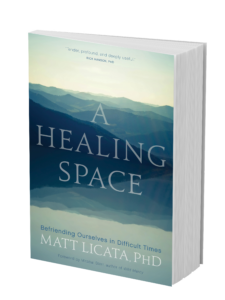
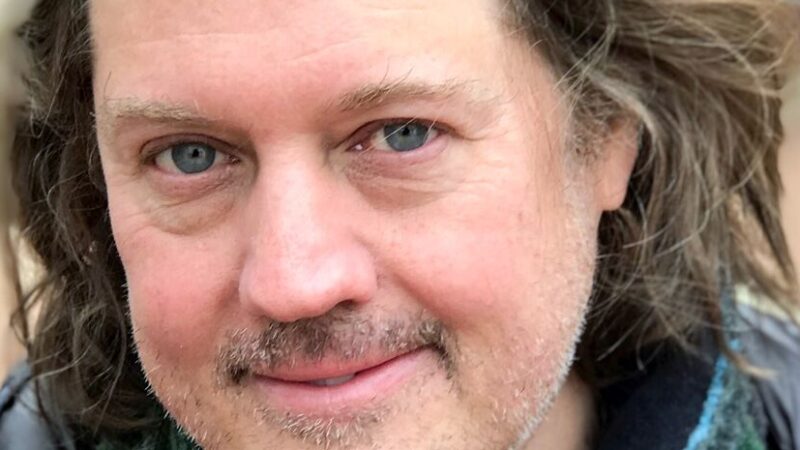
Matt Licata, PhD, is the author of A Healing Space: Befriending Ourselves in Difficult Times, coming out in November, 2020. In addition to being an author, he is a practicing psychotherapist and hosts in-person retreats. His work incorporates developmental, psychoanalytic, and depth psychologies, as well as contemplative, meditative, and mindfulness-based approaches for transformation and healing. He co-facilitates a monthly online membership community called Befriending Yourself, is author of The Path Is Everywhere, and is the creator of the blog A Healing Space. He lives in Boulder, Colorado. For more, visit mattlicataphd.com.
Healing Space Book Cover

The Book

Is healing a matter of solving a problem, curing a sickness, or making our wounds disappear? “In my experience,” writes depth psychotherapist and meditation teacher Matt Licata, “true healing is not a state where we become liberated from uncomfortable feelings, but one in which we are free and flexible to welcome our complete experience—whether happy or difficult—more fully.” With A Healing Space, Dr. Licata invites us to explore a more vital sense of wellness—one that does not put us in opposition to life’s hardship, but instead welcomes all experience as part of the soul’s majestic vastness.


Are you learning any new tricks or skills during this time (COVID)? Has your book taken on a new meaning in the world’s current circumstances? Is there anything you would have included in your book if you were writing it now?

One thing I’ve been struck by in this time of COVID is just how formative, powerful, and challenging solitude can be for each of us, and how through confronting our aloneness we will inevitably meet parts of ourselves that we had lost contact with in times of status quo. As relational beings, wired to connect and co-regulate with one another, it can be so counter-instinctive to be alone, for there to be an absence of “good others” in our lives, and how much we take this for granted.

What has become a lot clearer to me is how we can call on these “internal others” who, through many moments of kindness, attunement, empathy, and compassion, reside as an “internal network” within us, and how important this can be in times of physical separation—and how truly available they are, even from afar, in ways that might surprise us. 

I’m happy that A Healing Space is coming out during this time as it is centered around the art and practice of “befriending” and what that might mean in our contemporary world. Had I known that we would be sheltering in place and social distancing as we are, I would have more explicitly addressed the unique ways that isolation, solitude, and even loneliness can serve as actual allies on the path of awakening and healing, portals or doorways to a more merciful, wise, and compassionate relationship with ourselves and others.

What is one unexpected thing or habit that inspires your writing practice? 

So much of my writing comes out of conversations I have with others—friends, family, students, clients, and even strangers. I often find myself deeply curious and even in awe at how others find meaning in their experience, make sense of it, and organize it in ways that are similar—and also at times quite different—to my own. 

There’s something about being in conversation that opens me to another person’s heart, to their soul, to their psyche, and I often leave a conversation with new ideas, lenses, or reality tunnels, which I tend to explore via image and language. 

It’s sometimes not easy for me to “sit down and write” in a general and abstract way. It requires live interaction with another human being or with the natural world in order to flow. It’s almost like I wait to hear a certain whisper or inner song that arises from conversation and quickly scramble to be the scribe for that to come into the world.

If there is a book that started your spiritual journey, what was it? How old were you, and how did you discover it? How would you describe its impact?

The Razor's Edge

The first overt “spiritual” book I remember reading was in my senior year of high school: The Razor’s Edge, by W. Somerset Maugham. I would have been 17 at the time and had always been a bit of a dreamer with a vivid imagination and deep curiosity and wonder as to whether I really belonged in this place. 

It was an identification with the protagonist, Larry Darrell, that catalyzed a certain longing in me, a knowing that there was more to this life than it appeared. To this day, I can return to some of those feelings I felt at the time, an opening or crack in reality, you might say, that invited me into a life of deeper meaning, magic, and aliveness. 

I reread the book while traveling in India in my early 20s and continued my connection with Maugham and with Darrell, especially with Larry’s journeys in India himself. I had a kindred spirit out there somewhere and I remember that meaning a lot to me at the time, that there was at least one other person who wondered and wandered in the same way that I did.

Healing Space Book Cover

Learn More

Sounds True | Amazon | Barnes&Noble | Bookshop | Indiebound

Matt Licata

Matt Licata, PhD, is a practicing psychotherapist and hosts in-person retreats. His work incorporates developmental, psychoanalytic, and depth psychologies, as well as contemplative, meditative, and mindfulness-based approaches for transformation and healing. He co-facilitates a monthly online membership community called Befriending Yourself, is author of The Path Is Everywhere, and is the creator of the blog A Healing Space. He lives in Boulder, Colorado. For more, visit mattlicataphd.com.

Author photo © Krista Marleena

Listen to Tami Simon's in-depth audio podcast interview with Matt Licata:

The Alchemy Of Befriending Ourselves In Difficult Times  »

Also By Author

The Simple Magic of a Book

One of the gifts of isolation, solitude, and social distancing is the opportunity to reconnect with pieces of soul and strands of vision that have become lost in the busyness of our ordinary lives.

Reading for many has become a lost art. We can become so used to turning on the news, scrolling through Facebook, becoming lost in hours of YouTube or Netflix, or fused with one electronic device or another. Nothing wrong with any of these, but at times an alternative portal will open.

To take a book and find a place within your home or under a tree or out in the park and go on a pilgrimage with it. Ask the stars to help you to find a place to just be for a while and open to revelation.

It need not be a “spiritual” book, though of course those are fine, too. A book of poetry, a novel, a book of art history, or of mythology.

Allow its images to come alive, its metaphors, its characters… step into the poetic landscape with the figures and enter a state of receptivity and play. Sense what they are sensing, feel what they are feeling as these correspond with the internal others dancing within you.

healing space blog graphic

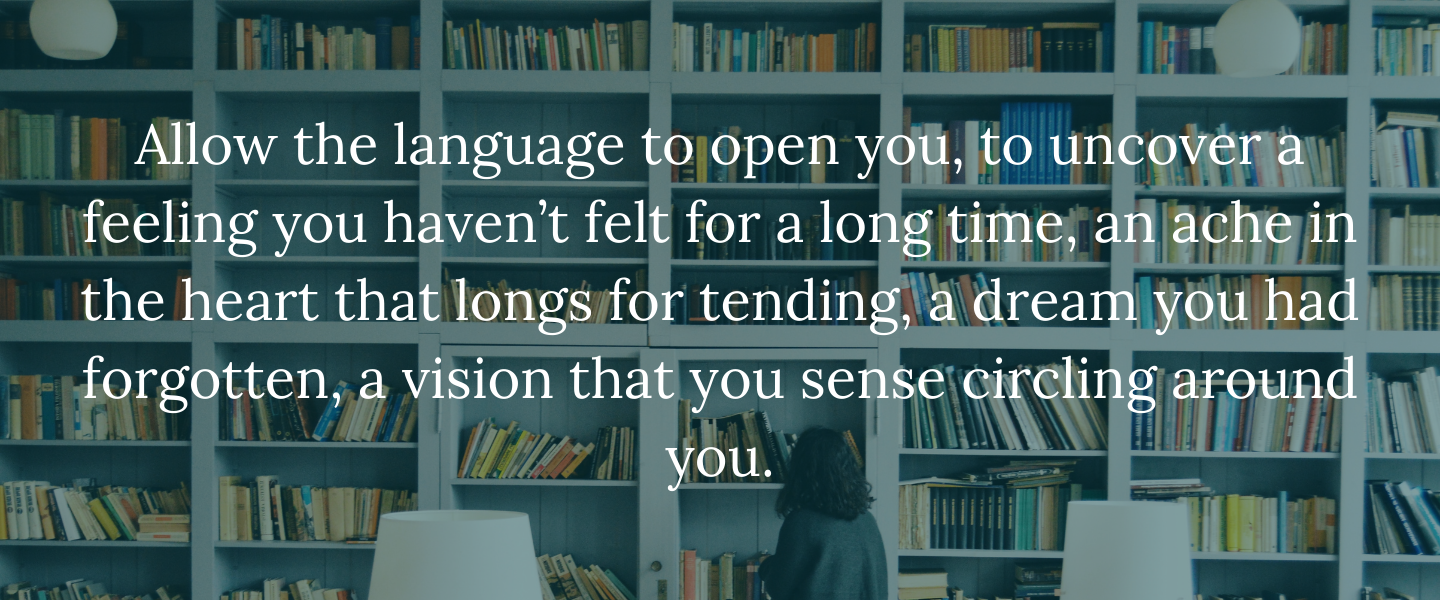
Not necessarily reading for “information,” but for communion. Allow the language to open you, to uncover a feeling you haven’t felt for a long time, an ache in the heart that longs for tending, a dream you had forgotten, a vision that you sense circling around you.

Read a paragraph or two and close the book. Enter the interactional field – with the natural world, with the visions, figures, moods, feelings, and images that seek your attention, your curiosity, your care, and just a moment of your being-ness.

We can so easily forget the magic of this place, of the imaginal realms, of those liminal places in between the physical world of matter and the transcendental realm of pure spirit. In the liminal we can dance and play and see and perceive and sense and intuit something holy.

A good book can help us do this, can serve as a companion as we step into uncharted territory.

Reading has been such an important part of my life. My books are my friends, lovers, allies, guides, and they also challenge me, break me open, tenderize and marinate me in the Unknown. They reveal how little I know about this world, this soul, this heart, this place, and the unique opportunity to be here. I find this so lifegiving.

I fantasize that perhaps in other worlds there are no books. That is sad to think about. For me, at least.

This blog post originally appeared on Matt Licata’s blog, A Healing Space. Redistributed with permission.

matt licataMatt Licata, PhD, is a practicing psychotherapist and hosts in-person retreats. His work incorporates developmental, psychoanalytic, and depth psychologies, as well as contemplative, meditative, and mindfulness-based approaches for transformation and healing. He co-facilitates a monthly online membership community called Befriending Yourself, is author of The Path Is Everywhere, and is the creator of the blog A Healing Space. He lives in Boulder, Colorado. For more, visit mattlicataphd.com.


Healing Space

Learn More

Sounds True | Amazon | Barnes & Noble | Bookshop | Indiebound

Why We Need To Live the Full Spectrum of Human Experie...

Metabolizing Experience

In order to know and befriend ourselves at the deepest levels, one of the core foundations for true healing, we must cultivate a new way of relating with ourselves that allows even our most difficult and challenging experience to disclose its meaning, intelligence, and purpose in our lives. To do this, we have to slow down and shift our relationship from one of thinking about our experience to fully embodying it. We have to allow ourselves to truly touch it and be touched by it rather than merely orbiting around it, where we are sure to continue to feel some degree of disconnection. Just as we must properly digest the food we eat to absorb its nutrients, we must also assimilate our experience to receive the wisdom and sacred data within it. All through the day and night, we are receiving impressions—through our mental, emotional, somatic (i.e., body-based), imaginal, and spiritual bodies. Life is a constant stream of experience—conversations with friends, caring for our kids, cooking a meal, wandering in nature, practicing yoga or meditation, engaging our work and creative projects, reading a book, shopping for groceries, running errands. But to what degree are we experiencing all of this? How present are we to our moment-to-moment experience, embodied and engaged, allowing it to penetrate us, where it can become true experience and not just some passing event? To what degree are we on autopilot as we make our way through the day, only partially connecting with our friends and family and engaging the sensory reality of what we see, hear, smell, taste, and touch?

I’m pointing toward a way of “metabolizing” our experience that allows us to touch and engage it at the most subtle levels, where it is able to disclose its qualities, intelligence, and purpose. By evoking “metabolization,” I am making use of a biological process in a metaphorical way to refer to working through and integrating our experience, especially those thoughts, feelings, sensations, and parts of ourselves that historically we have pushed away. Other words from the biological sciences, for example “digestion,” “absorption,” or “assimilation” can be used to point to the same idea, indicating that it requires concentration, attention, and a certain fire or warmth to “make use” of our experience and mine the “nutrients” contained within it.

Just because we “have” an experience does not mean we properly digest and absorb it. If our emotional and sensory experience remain partly processed, they become leaky (a psychic version, if you will, of “leaky gut syndrome”) and unable to provide the fuel required to live a life of intimacy, connection, and spontaneity. This inner psychic situation is analogous to not properly chewing and breaking down the food we eat and thus not being able to mine the energy and nutrients our bodies need to function optimally.

Although the desire for change and transformation is natural, noble, and worthy of our honor and attention, if we are not careful, it can serve as a powerful reminder and expression of the painful realities of materialism and self-abandonment. One of the shadow sides of spiritual seeking and the (seemingly) endless project of self-improvement is that we never slow down enough to digest what we have already been given, often much more than we consciously realize. In some sense, most of us have been given everything in terms of the basic alchemical prima materia required to live a life of integrity and inner richness, but not the “everything” the mind thinks it needs to be happy and fulfilled, found by way of a journey of internal and external consumerism. And not the “everything” that conforms to our hopes, fears, and dreams of power and control and that keeps us consistently safe and protected from the implications of what it means to have a tender (and breakable) human heart, but the “everything” already here as part of our true nature, the raw materials for a life of inner contentment and abundance, revealed by way of slowness and humility, not unconscious acquisition.

It is important to remember that for most of us, healing happens gradually, slowly, over time when we begin to perceive ourselves and our lives in a new way. Each micro-moment of new insight, understanding, and perspective must be integrated and digested on its own, honored and tended to with curiosity, care, and attention. Before we “move forward” to the next moment, we must fully apprehend and open our hearts to this one; this slow tending (metabolization) is one of the true essences of a lasting, transformative, and deep healing. If we are not able to metabolize even our most intense and disturbing experience, we will remain in opposition to it, at subtle war with it, and not able to be in relationship with it as a healing ally.

In Tibetan tradition, there is an image of the hungry ghost, a figure of the imaginal realms with a large, distended belly and tiny mouth. No matter how much food (experience) is consumed, there is a deep ache and longing for more. Regardless of how much is taken in, the ghost retains an insatiable hunger. Because this one is not able to digest, make use of, or enjoy what is given, a primordial hole is left behind that can never seem to be filled. One invitation, as this image appears in our own lives, is to slow way down and send awareness and compas- sion directly into the hole, infusing it with presence and warmth, and finally tend to what is already here, not what is missing and might come one day in the future by way of further procurement.

Just as with food—choosing wisely, chewing mindfully, allowing ourselves to taste the bounty of what is being offered, and stopping before we are full—we can honor the validity, workability, and intelligence of our inner experience, even if it is difficult or disturbing. The willingness to fully digest our own vulnerability, tenderness, confusion, and suffering is an act of love and fierce, revolutionary kindness. There are soul nutrients buried in the food of our embodied experience that yearn to be integrated, metabolized, and assimilated in the flame of the heart. But this digestion requires the enzymes of presence, embodi- ment, compassion, and curiosity about what is here now.

Let us slow down and become mindful of the ways we seek to fill the empty hole in the center, whether it be with food when we’re not hungry or experience when we are already full. And in this way, we can walk lightly together in this world, on this precious planet, not as hungry ghosts desperate to be fed but as kindred travelers of interior wealth, richness, and meaning.

This is an excerpt from A Healing Space: Befriending Ourselves in Difficult Times by Matt Licata, PhD.

Matt LicataMatt Licata, PhD, is a practicing psychotherapist and hosts in-person retreats. His work incorporates developmental, psychoanalytic, and depth psychologies, as well as contemplative, meditative, and mindfulness-based approaches for transformation and healing. He co-facilitates a monthly online membership community called Befriending Yourself, is author of The Path Is Everywhere, and is the creator of the blog A Healing Space. He lives in Boulder, Colorado. For more, visit mattlicataphd.com.


Healing Space

Learn More

Sounds True | Amazon | Barnes & Noble | Bookshop | Indiebound

Matt Licata, PhD: The Alchemy of Befriending Ourselves...

Matt Licata is a practicing psychotherapist, a co-facilitator of a monthly online membership community called Befriending Yourself, and the author of The Path Is Everywhere. With Sounds True, he has written a new book titled, A Healing Space: Befriending Ourselves in Difficult Times. In this episode of Insights at the Edge, Tami Simon speaks with Matt about what it is to be a healing space, that is to hold space for ourselves and others, as well as how we can feel held by something greater than ourselves during challenging experiences. They also explore our inner wounds and self-abandonment, spiritual bypassing and the ways in which many practices allow us to gloss over the real healing needed, and how coming into an embodied state can open us to greater inner depths. Finally, Tami and Matt discuss becoming an alchemist of your own life, discovering the inner gold that each of us has within, and befriending all of ourselves.

You Might Also Enjoy

Wim Hof on Cold as a Noble Force: How Cold Exposure Re...

Many people spend their lives avoiding discomfort. Cold weather sends us indoors, stress pushes us toward distraction, and physical tension becomes something we ignore until it feels impossible to avoid. Wim Hof approaches discomfort differently. Through cold exposure and breathwork, he teaches that moments of intensity can become opportunities to reconnect with the body, calm the mind, and build greater resilience. His methods have sparked global interest because they encourage people to experience awareness directly rather than simply think about it.

At Sounds True, we have spent decades sharing transformational teachings from respected spiritual teachers, wellness experts, and visionaries who help people deepen self awareness and reconnect with meaningful practices for inner growth. Conversations with voices like Wim Hof continue that mission by offering grounded approaches to resilience, presence, and the connection between body and mind.

Here, we discuss Wim Hof method benefits, the role of cold exposure and breathwork, and how these practices may support resilience, focus, and emotional balance.

Key Takeaways:

  • Nervous System Response: Learn how cold exposure and conscious breathing may influence stress regulation and emotional resilience.
  • Mind-Body Awareness: Understand how the Wim Hof method encourages greater presence, focus, and connection with physical sensations.
  • Adaptation Through Discomfort: See how controlled cold exposure can help strengthen mental steadiness and the body’s natural adaptability.

Discover the Power of Daily Meditation and Inner Stillness

Why Wim Hof Calls Cold a Noble Force

Wim Hof sees cold as a way to reconnect with the body and sharpen awareness. The moment people encounter cold, breathing changes, attention focuses, and distractions fade. He believes modern comfort has weakened the body’s natural resilience, while cold exposure helps restore that connection. For Hof, learning to stay calm in the cold can also help people respond to stress and discomfort with greater steadiness in everyday life.

Wim Hof Method Benefits for Body and Mind

The Wim Hof method combines conscious breathing, cold exposure, and mental focus. Together, these practices are designed to strengthen the connection between body and mind while encouraging resilience under stress. Many people are drawn to the method because it feels deeply experiential rather than theoretical.

Before discussing specific benefits, it helps to understand that the method is rooted in adaptation. The body constantly responds to its environment, and Hof believes intentional exposure to manageable stress can help restore physical and emotional balance.

Physical Energy and Nervous System Support

One of the most discussed Wim Hof method benefits is increased energy and mental clarity. Many people report feeling more alert and refreshed after cold exposure practices. Cold immersion also activates the nervous system, encouraging people to regulate their breathing instead of reacting automatically to stress. Over time, this may support better focus, emotional steadiness, and recovery from stress.

Emotional Resilience Through Discomfort

The emotional side of the Wim Hof method is just as important as the physical practice. Through controlled discomfort, people learn to notice fear and stress without immediately reacting to them. By focusing on the breath and staying present, many practitioners develop greater emotional resilience and feel calmer during stressful situations in daily life. 

How Wim Hof Breathing Supports Mental Clarity and Focus

Wim Hof breathing forms the foundation of the method and serves as a bridge between physical sensation and mental awareness. The breathing exercises involve deep rhythmic breathing followed by periods of breath retention, creating noticeable shifts within the body and mind.

For many people, breathing becomes shallow and unconscious during stressful moments. Tension accumulates quietly, and the nervous system remains in a reactive state without conscious awareness. Hof’s breathing practices encourage people to reconnect with the breath in a more intentional way.

How Conscious Breathing Influences Stress

The breath has a direct relationship with the body’s stress response. Rapid, shallow breathing can reinforce anxiety and tension, while slower and more deliberate breathing often encourages relaxation and stability.

Wim Hof breathing teaches people to become aware of those patterns rather than remaining trapped inside them unconsciously. During the breathing exercises, many people experience a sense of release as physical tension softens and attention becomes more grounded in the present moment.

This shift may help support emotional regulation throughout daily life. When stressful situations arise, conscious breathing can become an anchor that creates space between reaction and response.

Breathwork as a Practice of Presence

Breathwork also supports greater awareness and presence in everyday life and relationships. Many people describe Wim Hof breathing as both calming and energizing because it encourages deeper attention to the body, emotions, and mental patterns. Rather than avoiding discomfort, the breath becomes a tool for moving through it with greater awareness and steadiness.

Cold Exposure Benefits for Stress and Emotional Resilience

Cold exposure benefits extend beyond physical endurance or athletic recovery. Many people become interested in cold showers or ice baths because of the emotional and psychological effects associated with the practice.

Building Calm During Intensity

Stepping into cold water immediately activates the body’s stress response. Muscles tighten, breathing becomes rapid, and the mind often searches for escape. Hof teaches people to notice these reactions without becoming consumed by them.

By consciously slowing the breath and remaining present, practitioners begin training the nervous system to stay calmer under stress. This practice may gradually influence emotional resilience outside the cold itself. Situations that once triggered panic or overwhelm can begin to feel less consuming.

The experience also encourages patience and trust. Instead of reacting impulsively, people learn how to remain steady within intensity.

Reconnecting With Bodily Awareness

Cold exposure also creates a stronger relationship with physical awareness. Many people move through daily life disconnected from bodily sensation, carrying stress without fully recognizing it.

Cold immersion interrupts that disconnection. The body becomes impossible to ignore, and attention naturally returns to breathing, sensation, and presence. For many practitioners, this creates a renewed appreciation for the body’s intelligence and adaptability.

Awaken Your Inner Healing Power: Your Wellness Journey Starts Now

Ice Bath Benefits Beyond Physical Recovery

Ice bath benefits are often associated with athletic recovery, but the practice can influence mental and emotional well being as well.

  • Ice baths may support circulation and physical recovery after intense activity.
  • Many people report increased alertness and energy following cold immersion.
  • Ice baths encourage awareness of breathing and stress patterns.
  • Cold exposure creates opportunities to practice calmness under pressure.
  • Some practitioners describe greater emotional steadiness through regular practice.
  • Ice baths may strengthen resilience by teaching the body and mind to adapt together.

Although the physical effects often receive the most attention, many people continue the practice because of the emotional clarity it creates. Ice baths become less about endurance and more about awareness, patience, and presence.

The Wim Hof Method and the Science of Adaptation

A central principle within the Wim Hof method is that the human body is naturally designed to adapt. Hof often speaks about modern comfort as something that has weakened this connection with innate resilience.

Controlled exposure to cold challenges the body in manageable ways, encouraging adaptation without overwhelming the system. This process reflects a broader truth about human growth. People often become stronger not by avoiding difficulty entirely, but by learning how to remain present within challenge.

The method encourages a different relationship with stress. Instead of treating discomfort as something purely negative, practitioners begin viewing it as an opportunity for awareness and transformation.

How Wim Hof Breathing and Cold Exposure Benefits Work Together

Breathing exercises and cold exposure are deeply connected within Hof’s teachings. The breath prepares the body and mind for intensity, while the cold creates an immediate environment in which those tools can be practiced.

Together, these methods encourage people to slow reactive patterns and remain grounded during stress. Breathwork supports nervous system regulation, while cold exposure strengthens the ability to apply that regulation in real situations.

Many practitioners describe this combination as empowering because it creates direct experience rather than abstract theory. The lessons are felt physically, emotionally, and mentally all at once.

Bringing Wim Hof Method Benefits Into Everyday Life

Wim Hof often emphasizes that transformation does not require extreme challenges. Small, consistent practices can create meaningful shifts over time. Brief cold showers, intentional breathing exercises, and moments of conscious stillness during stressful situations may gradually strengthen resilience in everyday life.

The Wim Hof method invites people to become more aware of how they relate to discomfort, stress, and uncertainty. Rather than immediately resisting difficult experiences, the practices encourage curiosity, presence, and adaptability.

For many people, the deeper value of the method is not simply enduring cold temperatures. It is learning how to remain connected to awareness during moments that would normally trigger fear, tension, or emotional reactivity. Through breath and cold, people may begin developing a steadier relationship with both the body and the mind.

Discover how your mind really works

Final Thoughts

Wim Hof’s teachings invite people to reconsider their relationship with discomfort, stress, and the body itself. Through conscious breathing and cold exposure, the Wim Hof method encourages greater awareness, resilience, and presence in everyday life. What begins as a physical practice often becomes something deeper: a reminder that the body and mind are capable of far more balance, adaptability, and inner strength than many people realize.

Frequently Asked Questions About Wim Hof Method Benefits

Is the Wim Hof method meant only for athletes?

No. While athletes often use cold exposure for recovery, the Wim Hof method is practiced by people from many different backgrounds who are interested in stress management, focus, and overall well being.

How long does it take to feel Wim Hof method benefits?

Some people notice increased alertness or energy after a single session, while others experience more gradual changes over several weeks of consistent practice.

Can beginners practice the Wim Hof method at home?

Yes. Many beginners start with short cold showers and simple breathing exercises before progressing to longer or more advanced practices.

Does Wim Hof breathing require special equipment?

No. Wim Hof breathing can be practiced without equipment, though it should always be done in a safe environment and never in water or while driving.

Why do people feel energized after cold exposure?

Cold exposure activates the body’s alertness response, which may increase circulation and create a feeling of heightened energy afterward.

Can the Wim Hof method help with daily stress?

Many practitioners use the method to support emotional balance and stress management by learning how to regulate breathing and remain calmer during challenging situations.

What makes ice baths mentally challenging?

Ice baths trigger an immediate stress response in the body, including rapid breathing and tension. Learning to stay calm within that discomfort is part of the practice.

Is the Wim Hof method connected to mindfulness?

Yes. The method encourages awareness of breathing, bodily sensation, and mental reactions, which aligns with many mindfulness-based practices.

How cold should beginners start with cold exposure?

Beginners are often encouraged to begin gradually with cool or cold showers rather than extreme temperatures, allowing the body to adapt slowly.

Can cold exposure improve focus and concentration?

Some people report improved mental clarity after cold exposure because the experience requires immediate attention and presence.

Michelle Cassandra Johnson is an author, activist, spiritual teacher, racial equity consultant, and intuitive healer. She is the author of six books, including Skill in Action and Finding Refuge. Amy Burtaine is a leadership coach and racial equity trainer. With Robin DiAngelo, she is the coauthor of The Facilitator's Guide for White Affinity Groups. For more, visit https://www.michellecjohnson.com/wisdom-of-the-hive.

Thomas Hubl on Healing Collective Trauma: How Intergen...

Many people carry emotional patterns they cannot fully explain. Anxiety, fear, and emotional distance can sometimes be rooted in experiences passed down through generations. Thomas Hübl’s teachings on collective trauma healing bring awareness to how unresolved pain continues shaping families, communities, and human connection.

At Sounds True, we have spent decades sharing transformational teachings that support mindfulness, healing, and conscious living. Thomas Hübl’s work on intergenerational trauma and collective wound work offers a compassionate perspective on inherited emotional pain and healing.

Here, we discuss how intergenerational wounds are passed down and how awareness can support collective trauma healing.

Key Takeaways:

  • Trauma Transmission: Collective and intergenerational trauma can influence emotional patterns, relationships, and nervous system responses across generations.
  • Healing Through Presence: Thomas Hübl’s teachings emphasize awareness, emotional regulation, and compassionate connection as essential parts of healing.
  • Collective Repair: Healing inherited wounds involves both personal reflection and shared conversations that restore trust, empathy, and human connection.

Discover how your mind really works

Collective Trauma Healing and the Hidden Patterns We Inherit

Collective trauma healing begins with recognizing that unresolved pain can continue shaping families and communities across generations. Thomas Hübl teaches that inherited emotional patterns, fear, and disconnection often stem from trauma that was never fully processed. Healing starts with awareness, compassion, and the willingness to acknowledge difficult experiences without turning away from them. 

How Intergenerational Trauma Shapes Families and Communities

Intergenerational trauma is often passed down through emotional patterns, behaviors, and nervous system responses that children absorb long before they fully understand language or history. Families communicate survival strategies in countless unconscious ways, including silence, emotional withdrawal, hypervigilance, or fear around intimacy and trust.

Emotional Patterns Learned Through Survival

Children are highly sensitive to the emotional states of caregivers. When parents or grandparents carry unresolved trauma, younger generations frequently adapt themselves around those conditions. A child may become overly responsible in response to instability within the home. Another may learn to suppress emotion because vulnerability feels unsafe within the family system.

Thomas Hübl teaches that trauma transmission often occurs not only through direct experiences but through emotional environments. Unspoken grief, unresolved fear, or chronic stress can quietly shape a child’s nervous system over time. These inherited responses may continue into adulthood, affecting relationships, work, communication, and emotional regulation.

The Community Impact of Intergenerational Trauma

Intergenerational trauma also appears collectively within communities shaped by historical suffering. Entire groups may carry inherited distrust, shame, or disconnection after generations of violence, discrimination, or displacement. These experiences can influence educational systems, economic opportunities, social structures, and cultural identity.

Hübl’s work encourages people to understand trauma through both personal and collective lenses. Healing becomes more meaningful when individuals recognize they are not isolated from larger social and historical experiences. Awareness creates the possibility for compassion rather than judgment, both toward oneself and toward others carrying visible or invisible pain.

Thomas Hübl Teachings on Trauma, Presence, and Emotional Repair

Thomas Hübl’s teachings often focus on the relationship between awareness, embodiment, and healing. Rather than approaching trauma as something to quickly fix or overcome, he encourages people to develop the inner capacity to remain present with difficult emotions and sensations.

Presence as a Foundation for Healing

According to Hübl, healing begins with the ability to stay connected to the present moment without becoming overwhelmed. Trauma frequently disrupts this capacity by pulling people into cycles of emotional reactivity, numbness, or dissociation. Developing presence allows individuals to observe these patterns with greater clarity and steadiness.

Practices such as meditation, conscious breathing, and relational dialogue can support nervous system regulation while helping people reconnect with parts of themselves that may have been suppressed for survival. Hübl emphasizes that healing is not about perfection. It is about increasing one’s ability to remain connected during moments of discomfort or vulnerability.

Why Emotional Repair Requires Connection

Hübl also speaks about the importance of relational healing. Trauma often creates separation, both internally and between people. Emotional repair becomes possible through authentic connection, compassionate witnessing, and shared humanity.

This perspective challenges the idea that healing happens entirely alone. While personal reflection matters, collective healing also requires supportive relationships and communities where people feel emotionally safe enough to tell the truth about their experiences. Through open dialogue and mindful listening, individuals begin rebuilding trust in themselves and others.

Ancestral Trauma Healing and the Stories Carried Through Generations

Ancestral trauma healing involves recognizing that emotional pain can move through generations in ways that are both visible and invisible. Families often carry stories of migration, loss, violence, or survival that continue shaping descendants long after the original events occurred.

How Ancestral Trauma Lives in the Body

Many people experience inherited trauma physically before they fully understand it intellectually. Chronic anxiety, emotional shutdown, tension, or heightened stress responses may reflect nervous system adaptations connected to earlier generations. Hübl teaches that the body often carries unfinished emotional experiences that were never fully processed.

This understanding helps people approach healing with greater compassion. Instead of viewing emotional struggles as personal failures, individuals can begin recognizing the deeper historical and relational contexts influencing their experiences.

Reconnecting With Compassion and Awareness

Ancestral trauma healing does not require romanticizing the past or becoming trapped in it. Instead, it invites people to acknowledge inherited pain while developing the awareness needed to respond differently in the present.

Thomas Hübl encourages practices that support reflection, emotional honesty, and embodied awareness. Through conscious attention, people can begin interrupting inherited cycles of fear, shame, or disconnection. This process creates space for healthier forms of connection that future generations may continue building upon.

Discover the Power of Daily Meditation and Inner Stillness

Why Collective Wound Work Requires Nervous System Awareness

Collective wound work asks people to engage trauma without becoming consumed by it. Thomas Hübl frequently highlights the importance of nervous system awareness because healing cannot happen when individuals remain in constant overwhelm or emotional shutdown.

Key elements of nervous system awareness within collective wound work include:

  • Recognizing physical signs of stress, such as tension, rapid breathing, or emotional numbness
  • Learning to pause before reacting impulsively during emotionally charged conversations
  • Developing practices that support grounding and emotional regulation
  • Building the capacity to stay present with discomfort instead of immediately avoiding it
  • Creating relationships and communities where emotional honesty feels safer
  • Understanding how unresolved trauma can shape perception, communication, and behavior
  • Allowing moments of rest and integration throughout the healing process

Hübl’s teachings remind people that collective wound work is not about endlessly revisiting pain. The goal is to create enough internal stability for difficult emotions and historical realities to be acknowledged without causing further fragmentation. Nervous system awareness supports this balance by helping individuals remain connected to themselves while engaging in meaningful healing work.

Thomas Hübl on Healing Silence, Grief, and Historical Trauma

Silence often becomes one of trauma’s most enduring legacies. Families and communities may avoid speaking about painful experiences because the emotions connected to them feel overwhelming or unresolved. Thomas Hübl teaches that what remains unspoken does not disappear. Instead, silence can deepen disconnection across generations.

Historical trauma frequently leaves emotional gaps where stories should exist. Children may sense grief or fear within a family system without fully understanding its origins. This uncertainty can create confusion, anxiety, or emotional distance that persists over time. Hübl encourages compassionate dialogue as a way of bringing awareness to these hidden dynamics while honoring the emotional weight they carry.

Grief also plays a central role in healing. Many collective wounds remain unresolved because people were never given the space or support needed to process profound loss. Allowing grief to be acknowledged collectively can help restore connection and humanity within communities shaped by suffering.

Collective Trauma Healing Through Connection and Shared Humanity

Collective trauma healing becomes more possible when people move beyond isolation and reconnect through honest conversation, compassionate presence, and shared humanity. Thomas Hübl’s teachings remind us that healing happens through connection, helping individuals, families, and communities rebuild trust and emotional understanding together. 

Intergenerational Trauma, Collective Wound Work, and the Path Forward

Intergenerational trauma and collective wound work require awareness, compassion, and presence. Thomas Hübl’s teachings help people understand how inherited pain shapes individuals and communities while offering a path toward healing. Through honest reflection and meaningful connection, collective trauma healing can help restore relationships and reconnect people with their shared humanity. 

Awaken Your Inner Healing Power: Your Wellness Journey Starts Now

Final Thoughts

Thomas Hübl’s teachings remind us that healing does not happen in isolation. The emotional wounds carried through families, communities, and cultures ask for awareness, compassion, and presence. By recognizing the ways intergenerational trauma shapes human experience, collective trauma healing becomes an opportunity to create a deeper connection with ourselves and with one another. Through conscious attention and shared humanity, it becomes possible to interrupt inherited cycles of pain and move toward greater understanding, resilience, and repair.

Frequently Asked Questions About Collective Trauma Healing

What is the difference between collective trauma and personal trauma?

Personal trauma relates to distressing experiences affecting an individual directly, while collective trauma impacts larger groups such as families, communities, or entire cultures. Collective trauma often shapes shared emotional patterns and social behaviors over time.

Can intergenerational trauma affect people who did not experience the original event?

Yes. Emotional responses, survival behaviors, and nervous system patterns can be passed down through generations, even when descendants did not directly experience the original trauma.

Why are people becoming more aware of ancestral trauma healing?

Many people are beginning to recognize connections between inherited emotional patterns and unresolved family histories. Increased awareness around mental health and nervous system regulation has also expanded conversations around ancestral trauma healing.

How does Thomas Hübl describe the role of the nervous system in healing?

Thomas Hübl teaches that the nervous system plays a central role in how people process stress, connection, and emotional experiences. Healing often involves developing greater capacity to remain grounded and present during difficult emotions.

Can collective wound work happen without revisiting painful memories?

Collective wound work does not always require reliving traumatic experiences in detail. Many healing approaches focus on creating safety, awareness, and emotional regulation while acknowledging the impact of past events.

What are some signs of unresolved intergenerational trauma?

Signs may include chronic anxiety, emotional numbness, difficulty trusting others, intense fear responses, people-pleasing behaviors, or patterns of emotional avoidance repeated within families.

How can mindfulness support collective trauma healing?

Mindfulness practices can help people become more aware of emotional reactions, physical stress responses, and unconscious patterns. This awareness creates space for more intentional responses instead of automatic survival behaviors.

Why is community important in trauma healing?

Supportive relationships can help restore a sense of safety and connection. Healing often deepens when people feel seen, heard, and emotionally supported within healthy communities.

Is collective trauma healing connected to social change?

Yes. Greater awareness of collective trauma can influence how societies approach justice, education, mental health, and community care. Healing often involves both personal transformation and broader cultural awareness.

How does Thomas Hübl’s teachings approach emotional accountability?

Thomas Hübl encourages people to meet emotional pain with honesty, presence, and compassion. His teachings focus on recognizing inherited patterns while taking responsibility for how individuals respond and grow in the present.

Michelle Cassandra Johnson is an author, activist, spiritual teacher, racial equity consultant, and intuitive healer. She is the author of six books, including Skill in Action and Finding Refuge. Amy Burtaine is a leadership coach and racial equity trainer. With Robin DiAngelo, she is the coauthor of The Facilitator's Guide for White Affinity Groups. For more, visit https://www.michellecjohnson.com/wisdom-of-the-hive.

Making Sense of Menopause: A Holistic Guide to Midlife...

Many women enter menopause expecting physical symptoms like hot flashes, sleep changes, or mood swings. What often comes as a surprise is how deeply this stage can affect emotional well being, identity, and spiritual awareness. Midlife can bring long ignored feelings to the surface while also creating space for reflection, healing, and personal growth. For some women, menopause feels less like an ending and more like a transition into a wiser and more grounded version of themselves.

At Sounds True, we have spent decades sharing spiritual wisdom and transformational teachings that support people through life’s most meaningful transitions. Through conversations with respected teachers, authors, and practitioners, we continue to create space for deeper understanding, emotional honesty, mindfulness, and healing during seasons of change.

This guide discusses the menopause spiritual transition and how a holistic approach can support emotional well being, self trust, and personal growth during midlife.

Key Takeaways:

  • Spiritual Shift: Menopause spiritual transition can reshape identity, emotional awareness, and personal purpose during midlife.
  • Holistic Support: A menopause holistic approach encourages emotional care, mindful practices, and deeper connection with the body.
  • Inner Wisdom: Perimenopause wisdom often helps women strengthen intuition, boundaries, and self trust through life changes.

Awaken Your Inner Healing Power: Your Wellness Journey Starts Now

Understanding the Menopause Spiritual Transition

Menopause is often viewed through physical symptoms and aging, yet many women experience it as a deeper emotional and spiritual shift. This transition can reshape identity, relationships, creativity, and purpose while encouraging greater self trust and reflection. As familiar routines and roles begin to change, many women find themselves questioning what truly matters and how they want to move through the next stage of life.

Many spiritual traditions recognize midlife as a meaningful turning point. Menopause often invites women to slow down, listen inward, and reconnect with their emotional and physical needs. Fatigue, mood changes, and heightened sensitivity can become signals that the mind, body, and spirit are closely connected during this stage of life. Rather than viewing these experiences as something to resist, many women begin seeing them as invitations to rest, heal, and reconnect with themselves more honestly and compassionately.

Why a Menopause Holistic Approach Supports Whole-Person Healing

A menopause holistic approach recognizes that healing does not happen through physical care alone. Emotional health, spiritual connection, lifestyle habits, and supportive personal relationships all shape the experience of midlife transition and emotional well being.

Honoring the Emotional Landscape

Menopause can intensify emotions that have remained hidden beneath years of responsibility and routine. Instead of treating these feelings as problems to eliminate, holistic healing invites women to approach them with curiosity and compassion.

Journaling, therapy, meditation, and honest conversations can create space for emotional processing. Many women find that this stage encourages stronger boundaries and a clearer understanding of personal needs.

Supporting the Body With Gentle Practices

The body benefits from nourishment that feels sustainable and supportive during menopause. Restorative movement, mindful nutrition, hydration, and stress reduction practices can help women reconnect with physical balance.

A holistic approach also encourages women to listen closely to changing energy levels instead of forcing themselves into exhausting routines. The body is not failing during menopause. It is adapting and communicating new needs that deserve attention and care.

Perimenopause Wisdom and the Body’s Changing Inner Landscape

Perimenopause wisdom often begins long before menopause officially arrives. During this stage, women may notice irregular cycles, emotional shifts, changes in focus, or increased sensitivity. These experiences can feel confusing when viewed only through a medical lens, yet they also carry important insight about the body’s evolving rhythms.

Learning to Listen Instead of Override

Many women spend decades overriding exhaustion and emotional discomfort in order to meet expectations at work, within family life, or in relationships. Perimenopause interrupts that pattern. The body begins asking for deeper attention.

This transition can teach women how to pause and respond differently to their own needs. Slowing down, resting, and creating moments of stillness are ways of building a more honest relationship with the body and nervous system.

Reframing Change as Inner Growth

Perimenopause wisdom also invites women to reconsider long held beliefs about aging and identity. Society often portrays midlife as decline, yet many women describe this stage as a time of awakening. Priorities become clearer. Relationships shift. Creative energy returns in unexpected ways.

Women may begin releasing roles or expectations that no longer reflect who they are becoming. That process can feel emotional, but it also opens space for greater authenticity and self respect.

Menopause as Initiation Into a New Season of Life

Across cultures and spiritual traditions, rites of passage have long marked important transitions in human life. Menopause as initiation offers a similar perspective. Instead of viewing menopause as an ending alone, it can be understood as an entry into a new phase of wisdom, clarity, and inner authority.

Letting Go of Earlier Roles

Midlife often invites women to reevaluate the identities they have carried for years. Caregiver roles, professional expectations, and social conditioning may no longer fit in the same way. Menopause can bring a growing awareness that constant self sacrifice is unsustainable.

Letting go of old roles is not always comfortable. Yet this process also creates room for a more grounded and truthful sense of self to emerge over time.

Claiming a More Authentic Voice

As women move through menopause, many describe feeling less interested in pleasing others or shrinking themselves to maintain harmony. A stronger inner voice begins to take shape. Women may speak more honestly, protect their energy more carefully, and trust their instincts more deeply.

This stage of initiation often carries a quiet sense of liberation. The desire to live with greater alignment becomes stronger than the pressure to perform or conform.

Discover the Power of Daily Meditation and Inner Stillness

Emotional Shifts and Identity Changes During a Midlife Spiritual Transition

A midlife spiritual transition can bring emotional and psychological changes that reshape daily life and relationships.

  • Increased emotional sensitivity and stronger intuitive awareness
  • A desire for more meaningful relationships and honest communication
  • Grief connected to aging, changing family roles, or unrealized dreams
  • A growing need for solitude, reflection, and personal space
  • Frustration with social expectations that no longer feel authentic
  • Renewed creativity and interest in spiritual or contemplative practices
  • A stronger connection to personal values and inner truth

These shifts can feel overwhelming without support or understanding. Many women question whether they are becoming unfamiliar versions of themselves. In reality, menopause often strips away patterns that were built around obligation instead of authenticity.

During a midlife spiritual transition, relationships may also evolve. Women sometimes recognize that certain dynamics no longer support their well being. While change can create discomfort, it can also deepen emotional honesty and connection over time.

Reclaiming Intuition and Purpose Through Menopause Spiritual Transition

The menopause spiritual transition often awakens a stronger relationship with intuition. Many women begin noticing an inner voice that feels clearer and more direct than before. Decisions that once depended heavily on external approval may begin to arise from a deeper sense of inner knowing.

Creativity frequently returns during this stage as well. Some women feel drawn toward artistic expression, spiritual study, writing, teaching, or time in nature. Others begin questioning careers, relationships, or routines that no longer reflect their values.

Purpose during menopause does not need to appear as a dramatic reinvention. Sometimes it emerges quietly through small daily choices that honor rest, truth, connection, and presence.

Daily Rituals and Reflection Practices for a Menopause Holistic Approach

A menopause holistic approach often becomes more sustainable when supported by simple daily rituals. Small moments of reflection can help women feel more grounded during periods of emotional and physical change. Practices such as meditation, mindful breathing, journaling, gentle movement, and quiet time in nature can create a greater sense of steadiness and connection.

Many women also benefit from creating intentional pauses throughout the day. A few moments of silence before work, an evening walk, or reflective writing before sleep can help calm the nervous system while strengthening self awareness.

Community can also play an important role during menopause. Conversations with trusted friends, support groups, or spiritual communities can reduce feelings of isolation and remind women that this transition is deeply human and widely shared.

How Perimenopause Wisdom Can Deepen Self-Trust and Presence

Perimenopause wisdom often teaches women to trust themselves more deeply. As the body changes, external expectations may lose their influence, creating space for greater honesty, presence, and self awareness.

This transition encourages women to reconnect with what truly supports their mind, body, and spirit. Rather than becoming someone new, menopause often reveals parts of the self that were hidden beneath years of responsibility and routine. Through reflection and self compassion, this stage can lead to greater authenticity, inner peace, and a more grounded relationship with oneself.

Discover how your mind really works

Final Thoughts

Menopause is more than a physical transition. It is a deeply personal and spiritual passage that invites women to reconnect with themselves in honest and meaningful ways. Through self awareness, reflection, and compassionate care, this season of life can become a source of wisdom, clarity, and renewed purpose. Rather than resisting change, many women find strength in meeting this transition with presence, curiosity, and trust in their own inner guidance.

Frequently Asked Questions About Menopause Spiritual Transition

Can menopause affect spiritual awareness?

Yes. Many women report feeling more reflective, intuitive, or emotionally sensitive during menopause. This stage can increase the desire for meaning, inner peace, and spiritual connection.

Why do some women feel emotionally disconnected during menopause?

Hormonal changes, stress, and identity shifts can create feelings of emotional distance or confusion. This experience is common and may signal the need for rest, reflection, and support.

Is there a connection between menopause and personal transformation?

Menopause often coincides with reevaluating priorities, relationships, and long term goals. Many women experience it as a period of emotional growth and renewed self understanding.

How can mindfulness help during menopause?

Mindfulness practices can reduce stress, improve emotional awareness, and help women stay grounded during physical and emotional changes associated with menopause.

What role does sleep play in menopause wellness?

Sleep is deeply connected to mood, cognitive function, and overall well being. Prioritizing rest during menopause can support emotional balance and physical recovery.

Can menopause influence relationships?

Yes. Menopause may change communication patterns, emotional needs, and personal boundaries. Some relationships deepen through honesty, while others may require reevaluation.

Why do many women seek solitude during midlife?

Periods of solitude can provide emotional clarity and mental rest. Many women feel drawn toward quieter environments that support reflection and self awareness.

How does stress affect menopause symptoms?

Stress can intensify symptoms such as fatigue, irritability, brain fog, and sleep disturbances. Gentle stress management practices may help support overall balance.

What is the difference between perimenopause and menopause?

Perimenopause is the transition leading up to menopause, when hormonal fluctuations begin causing symptoms. Menopause is officially reached after twelve consecutive months without a menstrual cycle.

Can creative practices support emotional well being during menopause?

Creative activities such as writing, painting, music, or movement can help process emotions and strengthen self expression during times of transition.

Michelle Cassandra Johnson is an author, activist, spiritual teacher, racial equity consultant, and intuitive healer. She is the author of six books, including Skill in Action and Finding Refuge. Amy Burtaine is a leadership coach and racial equity trainer. With Robin DiAngelo, she is the coauthor of The Facilitator's Guide for White Affinity Groups. For more, visit https://www.michellecjohnson.com/wisdom-of-the-hive.

Leave a Reply

Your email address will not be published. Required fields are marked *