The Simple Magic of a Book

    —
December 16, 2020

One of the gifts of isolation, solitude, and social distancing is the opportunity to reconnect with pieces of soul and strands of vision that have become lost in the busyness of our ordinary lives.

Reading for many has become a lost art. We can become so used to turning on the news, scrolling through Facebook, becoming lost in hours of YouTube or Netflix, or fused with one electronic device or another. Nothing wrong with any of these, but at times an alternative portal will open.

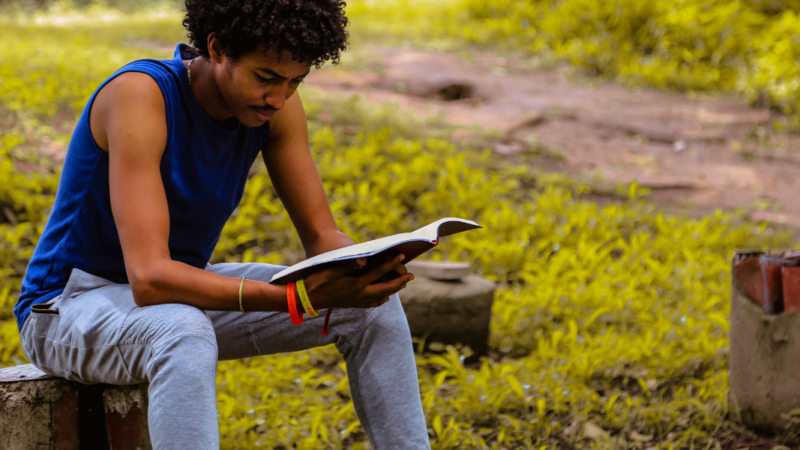
To take a book and find a place within your home or under a tree or out in the park and go on a pilgrimage with it. Ask the stars to help you to find a place to just be for a while and open to revelation.

It need not be a “spiritual” book, though of course those are fine, too. A book of poetry, a novel, a book of art history, or of mythology.

Allow its images to come alive, its metaphors, its characters… step into the poetic landscape with the figures and enter a state of receptivity and play. Sense what they are sensing, feel what they are feeling as these correspond with the internal others dancing within you.

healing space blog graphic

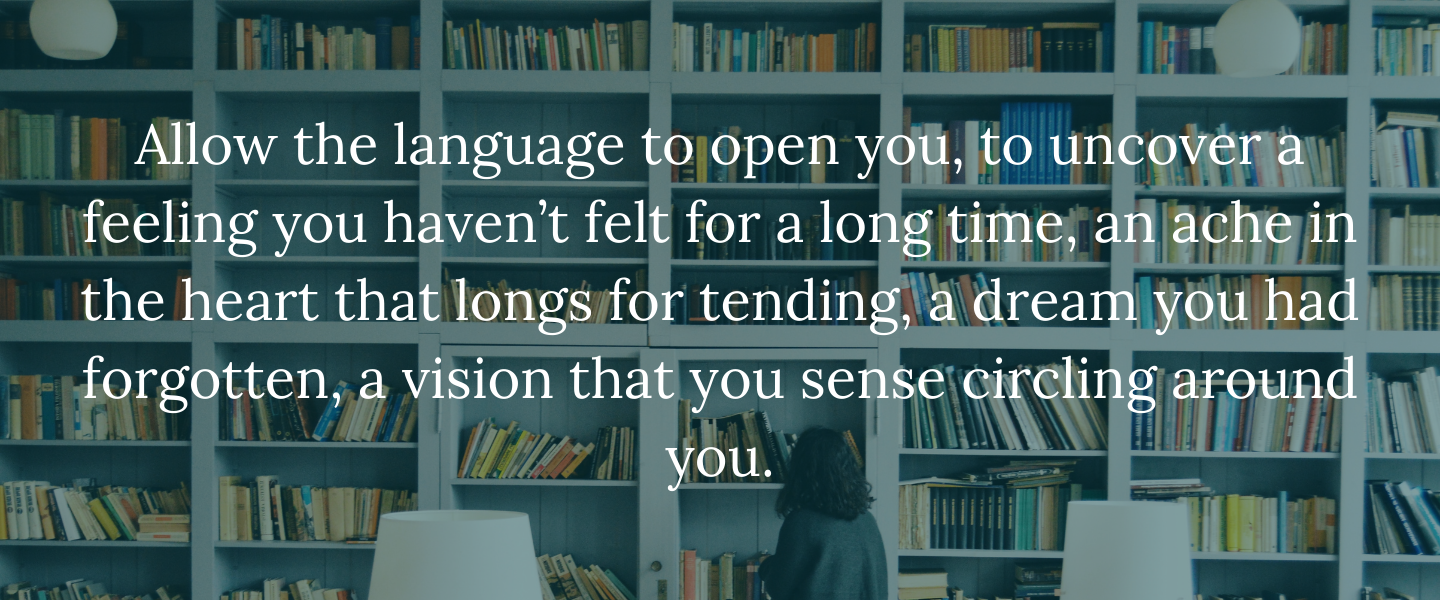
Not necessarily reading for “information,” but for communion. Allow the language to open you, to uncover a feeling you haven’t felt for a long time, an ache in the heart that longs for tending, a dream you had forgotten, a vision that you sense circling around you.

Read a paragraph or two and close the book. Enter the interactional field – with the natural world, with the visions, figures, moods, feelings, and images that seek your attention, your curiosity, your care, and just a moment of your being-ness.

We can so easily forget the magic of this place, of the imaginal realms, of those liminal places in between the physical world of matter and the transcendental realm of pure spirit. In the liminal we can dance and play and see and perceive and sense and intuit something holy.

A good book can help us do this, can serve as a companion as we step into uncharted territory.

Reading has been such an important part of my life. My books are my friends, lovers, allies, guides, and they also challenge me, break me open, tenderize and marinate me in the Unknown. They reveal how little I know about this world, this soul, this heart, this place, and the unique opportunity to be here. I find this so lifegiving.

I fantasize that perhaps in other worlds there are no books. That is sad to think about. For me, at least.

This blog post originally appeared on Matt Licata’s blog, A Healing Space. Redistributed with permission.

matt licataMatt Licata, PhD, is a practicing psychotherapist and hosts in-person retreats. His work incorporates developmental, psychoanalytic, and depth psychologies, as well as contemplative, meditative, and mindfulness-based approaches for transformation and healing. He co-facilitates a monthly online membership community called Befriending Yourself, is author of The Path Is Everywhere, and is the creator of the blog A Healing Space. He lives in Boulder, Colorado. For more, visit mattlicataphd.com.


Healing Space

Learn More

Sounds True | Amazon | Barnes & Noble | Bookshop | Indiebound

Matt Licata

Matt Licata, PhD, is a practicing psychotherapist and hosts in-person retreats. His work incorporates developmental, psychoanalytic, and depth psychologies, as well as contemplative, meditative, and mindfulness-based approaches for transformation and healing. He co-facilitates a monthly online membership community called Befriending Yourself, is author of The Path Is Everywhere, and is the creator of the blog A Healing Space. He lives in Boulder, Colorado. For more, visit mattlicataphd.com.

Author photo © Krista Marleena

Listen to Tami Simon's in-depth audio podcast interview with Matt Licata:

The Alchemy Of Befriending Ourselves In Difficult Times  »

Also By Author

The Simple Magic of a Book

One of the gifts of isolation, solitude, and social distancing is the opportunity to reconnect with pieces of soul and strands of vision that have become lost in the busyness of our ordinary lives.

Reading for many has become a lost art. We can become so used to turning on the news, scrolling through Facebook, becoming lost in hours of YouTube or Netflix, or fused with one electronic device or another. Nothing wrong with any of these, but at times an alternative portal will open.

To take a book and find a place within your home or under a tree or out in the park and go on a pilgrimage with it. Ask the stars to help you to find a place to just be for a while and open to revelation.

It need not be a “spiritual” book, though of course those are fine, too. A book of poetry, a novel, a book of art history, or of mythology.

Allow its images to come alive, its metaphors, its characters… step into the poetic landscape with the figures and enter a state of receptivity and play. Sense what they are sensing, feel what they are feeling as these correspond with the internal others dancing within you.

healing space blog graphic

Not necessarily reading for “information,” but for communion. Allow the language to open you, to uncover a feeling you haven’t felt for a long time, an ache in the heart that longs for tending, a dream you had forgotten, a vision that you sense circling around you.

Read a paragraph or two and close the book. Enter the interactional field – with the natural world, with the visions, figures, moods, feelings, and images that seek your attention, your curiosity, your care, and just a moment of your being-ness.

We can so easily forget the magic of this place, of the imaginal realms, of those liminal places in between the physical world of matter and the transcendental realm of pure spirit. In the liminal we can dance and play and see and perceive and sense and intuit something holy.

A good book can help us do this, can serve as a companion as we step into uncharted territory.

Reading has been such an important part of my life. My books are my friends, lovers, allies, guides, and they also challenge me, break me open, tenderize and marinate me in the Unknown. They reveal how little I know about this world, this soul, this heart, this place, and the unique opportunity to be here. I find this so lifegiving.

I fantasize that perhaps in other worlds there are no books. That is sad to think about. For me, at least.

This blog post originally appeared on Matt Licata’s blog, A Healing Space. Redistributed with permission.

matt licataMatt Licata, PhD, is a practicing psychotherapist and hosts in-person retreats. His work incorporates developmental, psychoanalytic, and depth psychologies, as well as contemplative, meditative, and mindfulness-based approaches for transformation and healing. He co-facilitates a monthly online membership community called Befriending Yourself, is author of The Path Is Everywhere, and is the creator of the blog A Healing Space. He lives in Boulder, Colorado. For more, visit mattlicataphd.com.


Healing Space

Learn More

Sounds True | Amazon | Barnes & Noble | Bookshop | Indiebound

Why We Need To Live the Full Spectrum of Human Experie...

Metabolizing Experience

In order to know and befriend ourselves at the deepest levels, one of the core foundations for true healing, we must cultivate a new way of relating with ourselves that allows even our most difficult and challenging experience to disclose its meaning, intelligence, and purpose in our lives. To do this, we have to slow down and shift our relationship from one of thinking about our experience to fully embodying it. We have to allow ourselves to truly touch it and be touched by it rather than merely orbiting around it, where we are sure to continue to feel some degree of disconnection. Just as we must properly digest the food we eat to absorb its nutrients, we must also assimilate our experience to receive the wisdom and sacred data within it. All through the day and night, we are receiving impressions—through our mental, emotional, somatic (i.e., body-based), imaginal, and spiritual bodies. Life is a constant stream of experience—conversations with friends, caring for our kids, cooking a meal, wandering in nature, practicing yoga or meditation, engaging our work and creative projects, reading a book, shopping for groceries, running errands. But to what degree are we experiencing all of this? How present are we to our moment-to-moment experience, embodied and engaged, allowing it to penetrate us, where it can become true experience and not just some passing event? To what degree are we on autopilot as we make our way through the day, only partially connecting with our friends and family and engaging the sensory reality of what we see, hear, smell, taste, and touch?

I’m pointing toward a way of “metabolizing” our experience that allows us to touch and engage it at the most subtle levels, where it is able to disclose its qualities, intelligence, and purpose. By evoking “metabolization,” I am making use of a biological process in a metaphorical way to refer to working through and integrating our experience, especially those thoughts, feelings, sensations, and parts of ourselves that historically we have pushed away. Other words from the biological sciences, for example “digestion,” “absorption,” or “assimilation” can be used to point to the same idea, indicating that it requires concentration, attention, and a certain fire or warmth to “make use” of our experience and mine the “nutrients” contained within it.

Just because we “have” an experience does not mean we properly digest and absorb it. If our emotional and sensory experience remain partly processed, they become leaky (a psychic version, if you will, of “leaky gut syndrome”) and unable to provide the fuel required to live a life of intimacy, connection, and spontaneity. This inner psychic situation is analogous to not properly chewing and breaking down the food we eat and thus not being able to mine the energy and nutrients our bodies need to function optimally.

Although the desire for change and transformation is natural, noble, and worthy of our honor and attention, if we are not careful, it can serve as a powerful reminder and expression of the painful realities of materialism and self-abandonment. One of the shadow sides of spiritual seeking and the (seemingly) endless project of self-improvement is that we never slow down enough to digest what we have already been given, often much more than we consciously realize. In some sense, most of us have been given everything in terms of the basic alchemical prima materia required to live a life of integrity and inner richness, but not the “everything” the mind thinks it needs to be happy and fulfilled, found by way of a journey of internal and external consumerism. And not the “everything” that conforms to our hopes, fears, and dreams of power and control and that keeps us consistently safe and protected from the implications of what it means to have a tender (and breakable) human heart, but the “everything” already here as part of our true nature, the raw materials for a life of inner contentment and abundance, revealed by way of slowness and humility, not unconscious acquisition.

It is important to remember that for most of us, healing happens gradually, slowly, over time when we begin to perceive ourselves and our lives in a new way. Each micro-moment of new insight, understanding, and perspective must be integrated and digested on its own, honored and tended to with curiosity, care, and attention. Before we “move forward” to the next moment, we must fully apprehend and open our hearts to this one; this slow tending (metabolization) is one of the true essences of a lasting, transformative, and deep healing. If we are not able to metabolize even our most intense and disturbing experience, we will remain in opposition to it, at subtle war with it, and not able to be in relationship with it as a healing ally.

In Tibetan tradition, there is an image of the hungry ghost, a figure of the imaginal realms with a large, distended belly and tiny mouth. No matter how much food (experience) is consumed, there is a deep ache and longing for more. Regardless of how much is taken in, the ghost retains an insatiable hunger. Because this one is not able to digest, make use of, or enjoy what is given, a primordial hole is left behind that can never seem to be filled. One invitation, as this image appears in our own lives, is to slow way down and send awareness and compas- sion directly into the hole, infusing it with presence and warmth, and finally tend to what is already here, not what is missing and might come one day in the future by way of further procurement.

Just as with food—choosing wisely, chewing mindfully, allowing ourselves to taste the bounty of what is being offered, and stopping before we are full—we can honor the validity, workability, and intelligence of our inner experience, even if it is difficult or disturbing. The willingness to fully digest our own vulnerability, tenderness, confusion, and suffering is an act of love and fierce, revolutionary kindness. There are soul nutrients buried in the food of our embodied experience that yearn to be integrated, metabolized, and assimilated in the flame of the heart. But this digestion requires the enzymes of presence, embodi- ment, compassion, and curiosity about what is here now.

Let us slow down and become mindful of the ways we seek to fill the empty hole in the center, whether it be with food when we’re not hungry or experience when we are already full. And in this way, we can walk lightly together in this world, on this precious planet, not as hungry ghosts desperate to be fed but as kindred travelers of interior wealth, richness, and meaning.

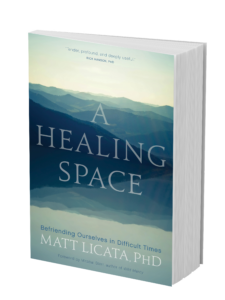
This is an excerpt from A Healing Space: Befriending Ourselves in Difficult Times by Matt Licata, PhD.
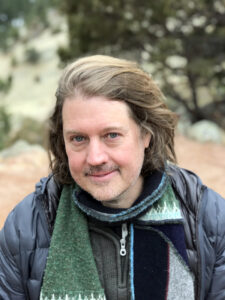
Matt LicataMatt Licata, PhD, is a practicing psychotherapist and hosts in-person retreats. His work incorporates developmental, psychoanalytic, and depth psychologies, as well as contemplative, meditative, and mindfulness-based approaches for transformation and healing. He co-facilitates a monthly online membership community called Befriending Yourself, is author of The Path Is Everywhere, and is the creator of the blog A Healing Space. He lives in Boulder, Colorado. For more, visit mattlicataphd.com.


Healing Space

Learn More

Sounds True | Amazon | Barnes & Noble | Bookshop | Indiebound

Matt Licata, PhD: The Alchemy of Befriending Ourselves...

Matt Licata is a practicing psychotherapist, a co-facilitator of a monthly online membership community called Befriending Yourself, and the author of The Path Is Everywhere. With Sounds True, he has written a new book titled, A Healing Space: Befriending Ourselves in Difficult Times. In this episode of Insights at the Edge, Tami Simon speaks with Matt about what it is to be a healing space, that is to hold space for ourselves and others, as well as how we can feel held by something greater than ourselves during challenging experiences. They also explore our inner wounds and self-abandonment, spiritual bypassing and the ways in which many practices allow us to gloss over the real healing needed, and how coming into an embodied state can open us to greater inner depths. Finally, Tami and Matt discuss becoming an alchemist of your own life, discovering the inner gold that each of us has within, and befriending all of ourselves.

You Might Also Enjoy

Phenomena Finale: Not a Machine but a Flame [Takeover]

What is the “energy” in energy healing? Healers channel it. Patients reach for it. Ancient healing traditions built entire systems around it, and modern researchers are working to study it. But what is energy, biologically, physically, measurably…but also spiritually, and how does it move through the body to influence health and healing?

In this special feed takeover, we’re bringing you the season finale of Phenomena: The Science and Stories of Energy Healing, in which host Ivy Ross brings together three renowned scientists whose visions, taken together, begin to answer that question:

  • Martin Picard, PhD, of Columbia University, has spent his career studying mitochondria, the body’s cellular power sources, and has found them far more connected to our inner experience and consciousness than biomedicine ever assumed, and likely far more central to how we heal.
  • Richard Hammerschlag, PhD, co-authored the paper that helped define the modern science of the biofield: the organizing fields of energy and information that operate within the body and extend outward from it, echoing the nested qi fields of older healing traditions.
  • Neil Theise, MD, of NYU, helped identify the interstitium, a major recent discovery of a fluid-filled network running throughout the body that may explain how signals fundamental to health and healing actually travel.

Together, these three voices offer a compelling, deeply human vision of the body and mind not as a machine, but as a dynamic energetic ecosystem.

To close out the season, Ivy and researcher Meredith Sprengel also welcome special guest Jonathan Cohen, co-creator and executive producer of Mayim Bialik’s Breakdown, to help land these big ideas about energy, healing, and life.

This episode marks the finale of Phenomena‘s first season. To continue the journey and explore the full docuseries, visit phenomenahealing.com. →

Just One Question | Martha Beck: What Do I Do At Three...


Three in the morning. Brain already running. Every unfinished thing in your life suddenly very urgent. Sound familiar?

We pulled this week’s question because when Tami asked Martha Beck what to actually do in that moment, her answer was genuinely not what we were expecting. No breathwork protocol. No journaling prompt. What Martha offers is something way simpler — and honestly, kind of revolutionary in how low the bar is.

Martha Beck is a Harvard-trained sociologist, bestselling author, and one of the sharpest minds out there on anxiety and how we actually heal it. She’s been working through her own anxiety since childhood, and she’s arrived somewhere really good. (Spoiler: it involves audiobooks, furry blankets, and thinking like a golden retriever.)

Here’s some of what she gets into:

  • Why she plays Sounds True audiobooks at half-speed in the middle of the night — and why slowing down is the whole point
  • The self-kindness practice she uses when her brain won’t quit, including the exact question she asks herself
  • A story from Liz Gilbert’s Eat, Pray, Love about a two-word message that Martha keeps coming back to — it’s a good one
  • How decades of anxiety can actually rewire into something peaceful, and why what fires together really does wire together

Honestly, this one left us wanting to go take a nap. In the best way.

Taken from the full Insights at the Edge conversation with Martha Beck. Find the complete interview in this feed or at soundstrue.com.

This episode is sponsored by Omega Institute, a global gathering hub for lifelong learning and spiritual exploration. Omega offers weekend workshops, special events, rest and rejuvenation retreats, professional training, online learning, and more. Discover what calls to you at eomega.org/true.

Wim Hof on Cold as a Noble Force: How Cold Exposure Re...

Many people spend their lives avoiding discomfort. Cold weather sends us indoors, stress pushes us toward distraction, and physical tension becomes something we ignore until it feels impossible to avoid. Wim Hof approaches discomfort differently. Through cold exposure and breathwork, he teaches that moments of intensity can become opportunities to reconnect with the body, calm the mind, and build greater resilience. His methods have sparked global interest because they encourage people to experience awareness directly rather than simply think about it.

At Sounds True, we have spent decades sharing transformational teachings from respected spiritual teachers, wellness experts, and visionaries who help people deepen self awareness and reconnect with meaningful practices for inner growth. Conversations with voices like Wim Hof continue that mission by offering grounded approaches to resilience, presence, and the connection between body and mind.

Here, we discuss Wim Hof method benefits, the role of cold exposure and breathwork, and how these practices may support resilience, focus, and emotional balance.

Key Takeaways:

  • Nervous System Response: Learn how cold exposure and conscious breathing may influence stress regulation and emotional resilience.
  • Mind-Body Awareness: Understand how the Wim Hof method encourages greater presence, focus, and connection with physical sensations.
  • Adaptation Through Discomfort: See how controlled cold exposure can help strengthen mental steadiness and the body’s natural adaptability.

Discover the Power of Daily Meditation and Inner Stillness

Why Wim Hof Calls Cold a Noble Force

Wim Hof sees cold as a way to reconnect with the body and sharpen awareness. The moment people encounter cold, breathing changes, attention focuses, and distractions fade. He believes modern comfort has weakened the body’s natural resilience, while cold exposure helps restore that connection. For Hof, learning to stay calm in the cold can also help people respond to stress and discomfort with greater steadiness in everyday life.

Wim Hof Method Benefits for Body and Mind

The Wim Hof method combines conscious breathing, cold exposure, and mental focus. Together, these practices are designed to strengthen the connection between body and mind while encouraging resilience under stress. Many people are drawn to the method because it feels deeply experiential rather than theoretical.

Before discussing specific benefits, it helps to understand that the method is rooted in adaptation. The body constantly responds to its environment, and Hof believes intentional exposure to manageable stress can help restore physical and emotional balance.

Physical Energy and Nervous System Support

One of the most discussed Wim Hof method benefits is increased energy and mental clarity. Many people report feeling more alert and refreshed after cold exposure practices. Cold immersion also activates the nervous system, encouraging people to regulate their breathing instead of reacting automatically to stress. Over time, this may support better focus, emotional steadiness, and recovery from stress.

Emotional Resilience Through Discomfort

The emotional side of the Wim Hof method is just as important as the physical practice. Through controlled discomfort, people learn to notice fear and stress without immediately reacting to them. By focusing on the breath and staying present, many practitioners develop greater emotional resilience and feel calmer during stressful situations in daily life. 

How Wim Hof Breathing Supports Mental Clarity and Focus

Wim Hof breathing forms the foundation of the method and serves as a bridge between physical sensation and mental awareness. The breathing exercises involve deep rhythmic breathing followed by periods of breath retention, creating noticeable shifts within the body and mind.

For many people, breathing becomes shallow and unconscious during stressful moments. Tension accumulates quietly, and the nervous system remains in a reactive state without conscious awareness. Hof’s breathing practices encourage people to reconnect with the breath in a more intentional way.

How Conscious Breathing Influences Stress

The breath has a direct relationship with the body’s stress response. Rapid, shallow breathing can reinforce anxiety and tension, while slower and more deliberate breathing often encourages relaxation and stability.

Wim Hof breathing teaches people to become aware of those patterns rather than remaining trapped inside them unconsciously. During the breathing exercises, many people experience a sense of release as physical tension softens and attention becomes more grounded in the present moment.

This shift may help support emotional regulation throughout daily life. When stressful situations arise, conscious breathing can become an anchor that creates space between reaction and response.

Breathwork as a Practice of Presence

Breathwork also supports greater awareness and presence in everyday life and relationships. Many people describe Wim Hof breathing as both calming and energizing because it encourages deeper attention to the body, emotions, and mental patterns. Rather than avoiding discomfort, the breath becomes a tool for moving through it with greater awareness and steadiness.

Cold Exposure Benefits for Stress and Emotional Resilience

Cold exposure benefits extend beyond physical endurance or athletic recovery. Many people become interested in cold showers or ice baths because of the emotional and psychological effects associated with the practice.

Building Calm During Intensity

Stepping into cold water immediately activates the body’s stress response. Muscles tighten, breathing becomes rapid, and the mind often searches for escape. Hof teaches people to notice these reactions without becoming consumed by them.

By consciously slowing the breath and remaining present, practitioners begin training the nervous system to stay calmer under stress. This practice may gradually influence emotional resilience outside the cold itself. Situations that once triggered panic or overwhelm can begin to feel less consuming.

The experience also encourages patience and trust. Instead of reacting impulsively, people learn how to remain steady within intensity.

Reconnecting With Bodily Awareness

Cold exposure also creates a stronger relationship with physical awareness. Many people move through daily life disconnected from bodily sensation, carrying stress without fully recognizing it.

Cold immersion interrupts that disconnection. The body becomes impossible to ignore, and attention naturally returns to breathing, sensation, and presence. For many practitioners, this creates a renewed appreciation for the body’s intelligence and adaptability.

Awaken Your Inner Healing Power: Your Wellness Journey Starts Now

Ice Bath Benefits Beyond Physical Recovery

Ice bath benefits are often associated with athletic recovery, but the practice can influence mental and emotional well being as well.

  • Ice baths may support circulation and physical recovery after intense activity.
  • Many people report increased alertness and energy following cold immersion.
  • Ice baths encourage awareness of breathing and stress patterns.
  • Cold exposure creates opportunities to practice calmness under pressure.
  • Some practitioners describe greater emotional steadiness through regular practice.
  • Ice baths may strengthen resilience by teaching the body and mind to adapt together.

Although the physical effects often receive the most attention, many people continue the practice because of the emotional clarity it creates. Ice baths become less about endurance and more about awareness, patience, and presence.

The Wim Hof Method and the Science of Adaptation

A central principle within the Wim Hof method is that the human body is naturally designed to adapt. Hof often speaks about modern comfort as something that has weakened this connection with innate resilience.

Controlled exposure to cold challenges the body in manageable ways, encouraging adaptation without overwhelming the system. This process reflects a broader truth about human growth. People often become stronger not by avoiding difficulty entirely, but by learning how to remain present within challenge.

The method encourages a different relationship with stress. Instead of treating discomfort as something purely negative, practitioners begin viewing it as an opportunity for awareness and transformation.

How Wim Hof Breathing and Cold Exposure Benefits Work Together

Breathing exercises and cold exposure are deeply connected within Hof’s teachings. The breath prepares the body and mind for intensity, while the cold creates an immediate environment in which those tools can be practiced.

Together, these methods encourage people to slow reactive patterns and remain grounded during stress. Breathwork supports nervous system regulation, while cold exposure strengthens the ability to apply that regulation in real situations.

Many practitioners describe this combination as empowering because it creates direct experience rather than abstract theory. The lessons are felt physically, emotionally, and mentally all at once.

Bringing Wim Hof Method Benefits Into Everyday Life

Wim Hof often emphasizes that transformation does not require extreme challenges. Small, consistent practices can create meaningful shifts over time. Brief cold showers, intentional breathing exercises, and moments of conscious stillness during stressful situations may gradually strengthen resilience in everyday life.

The Wim Hof method invites people to become more aware of how they relate to discomfort, stress, and uncertainty. Rather than immediately resisting difficult experiences, the practices encourage curiosity, presence, and adaptability.

For many people, the deeper value of the method is not simply enduring cold temperatures. It is learning how to remain connected to awareness during moments that would normally trigger fear, tension, or emotional reactivity. Through breath and cold, people may begin developing a steadier relationship with both the body and the mind.

Discover how your mind really works

Final Thoughts

Wim Hof’s teachings invite people to reconsider their relationship with discomfort, stress, and the body itself. Through conscious breathing and cold exposure, the Wim Hof method encourages greater awareness, resilience, and presence in everyday life. What begins as a physical practice often becomes something deeper: a reminder that the body and mind are capable of far more balance, adaptability, and inner strength than many people realize.

Frequently Asked Questions About Wim Hof Method Benefits

Is the Wim Hof method meant only for athletes?

No. While athletes often use cold exposure for recovery, the Wim Hof method is practiced by people from many different backgrounds who are interested in stress management, focus, and overall well being.

How long does it take to feel Wim Hof method benefits?

Some people notice increased alertness or energy after a single session, while others experience more gradual changes over several weeks of consistent practice.

Can beginners practice the Wim Hof method at home?

Yes. Many beginners start with short cold showers and simple breathing exercises before progressing to longer or more advanced practices.

Does Wim Hof breathing require special equipment?

No. Wim Hof breathing can be practiced without equipment, though it should always be done in a safe environment and never in water or while driving.

Why do people feel energized after cold exposure?

Cold exposure activates the body’s alertness response, which may increase circulation and create a feeling of heightened energy afterward.

Can the Wim Hof method help with daily stress?

Many practitioners use the method to support emotional balance and stress management by learning how to regulate breathing and remain calmer during challenging situations.

What makes ice baths mentally challenging?

Ice baths trigger an immediate stress response in the body, including rapid breathing and tension. Learning to stay calm within that discomfort is part of the practice.

Is the Wim Hof method connected to mindfulness?

Yes. The method encourages awareness of breathing, bodily sensation, and mental reactions, which aligns with many mindfulness-based practices.

How cold should beginners start with cold exposure?

Beginners are often encouraged to begin gradually with cool or cold showers rather than extreme temperatures, allowing the body to adapt slowly.

Can cold exposure improve focus and concentration?

Some people report improved mental clarity after cold exposure because the experience requires immediate attention and presence.

Michelle Cassandra Johnson is an author, activist, spiritual teacher, racial equity consultant, and intuitive healer. She is the author of six books, including Skill in Action and Finding Refuge. Amy Burtaine is a leadership coach and racial equity trainer. With Robin DiAngelo, she is the coauthor of The Facilitator's Guide for White Affinity Groups. For more, visit https://www.michellecjohnson.com/wisdom-of-the-hive.

Leave a Reply

Your email address will not be published. Required fields are marked *