6 Tips for Empaths to Survive the Holidays

    —
October 25, 2017


Being in crowds and around energy vampires can be very challenging, almost overwhelming for empaths. During times of stress their ability to be emotional sponges heightens, which overrides their sublime capacity to absorb positive emotions and all that is beautiful. If empaths are around peace and love, their bodies assimilate these and flourish. Crowds or negativity, though, often feel assaultive, exhausting.

For empaths to fully enjoy the holiday gatherings with family and friends, they must learn to protect their sensitivity and find balance. Since I’m an empath, I want to help them cultivate this capacity and be comfortable with it.

I’ve always been hyper-attuned to other people’s moods, good and bad. Before I learned to protect my energy, I felt them lodge in my body. After being in crowds I would leave feeling anxious, depressed, or tired. When I got home, I’d just crawl into bed, yearning for peace and quiet.

Here are six strategies to help you manage empathy more effectively and stay centered without absorbing negative energies.

1. Move away. When possible, distance yourself by at least twenty feet from the suspected source. See if you feel relief. Don’t err on the side of not wanting to offend anyone. At the gathering try not to sit next to the identified energy vampire. Physical closeness increases empathy.

2. Surrender to your breath. If you suspect you are picking up someone else’s energies, concentrate on your breath for a few minutes. This is centering and connects you to your power. In contrast, holding your breath keeps negativity lodged in your body. To purify fear and pain, exhale stress and inhale calm. Picture unwholesome emotions as a gray fog lifting from your body, and wellness as a clear light entering it. This can produce quick results.

3. Practice Guerilla Meditation. Be sure to meditate before the gathering, centering yourself, connecting to spirit, feeling your heart. Get strong. If you counter emotional or physical distress while at an event, act fast and meditate for a few minutes. You can do this by taking refuge in the bathroom or an empty room. If it’s public, close the stall. Meditate there. Calm yourself. Focus on positivity and love. This has saved me many times at social functions where I feel depleted by others.

4. Set healthy limits and boundaries. Control how much time you spend listening to stressful people, and learn to say “no.” Set clear limits and boundaries with people, nicely cutting them off at the pass if they get critical or mean. Remember, “no” is a complete sentence.

5. Visualize protection around you. Research has shown that visualization is a healing mind/body technique. A practical form of protection many people use, including health care practitioners with difficult patients, involves visualizing an envelope of white light around your entire body. Or with extremely toxic people, visualize a fierce black jaguar patrolling and protecting your energy field to keep out intruders.

6. Define and honor your empathic needs. Safeguard your sensitivities. In a calm, collected moment, make a list of your top five most emotionally rattling situations. Then formulate a plan for handling them so you don’t fumble in the moment. Here are some practical examples of what to do in situations that predictably stymie empaths. If your comfort level is three hours max for socializing–even if you adore the people — take your own car or have an alternate transportation plan so you’re not stranded. If someone asks too much of you, politely tell them “no.” It’s not necessary to explain why. As the saying goes, “No is a complete sentence.”


Looking for more great reads?


Adapted from The Empath’s Survival Guide by Dr. Judith Orloff.

Judith Orloff, MD, is the author of The Empath’s Survival Guide (Sounds True, 2017). She is a leading voice in the fields of medicine, psychiatry, and intuitive development.

Judith Orloff

Judith Orloff, MD, is a leading voice in the fields of medicine, psychiatry, empathy, and intuitive development. A member of the UCLA Psychiatric Clinical Staff, her bestselling books include The Empath’s Survival Guide, Thriving as an EmpathEmotional Freedom, Positive Energy, Dr. Judith Orloff’s Guide to Intuitive Healing, Second Sight, and The Genius of Empathy. She specializes in treating empaths and sensitive people in her private practice. Find more inspiration at Dr. Orloff’s website, drjudithorloff.com.

Author photo © Bob Riha Jr

Also By Author

Judith Orloff: The Healing Power of Empathy

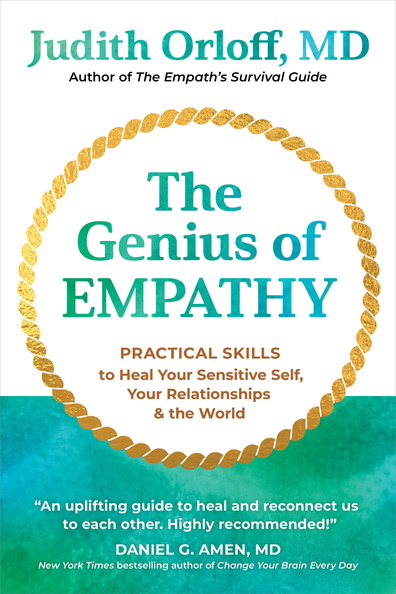
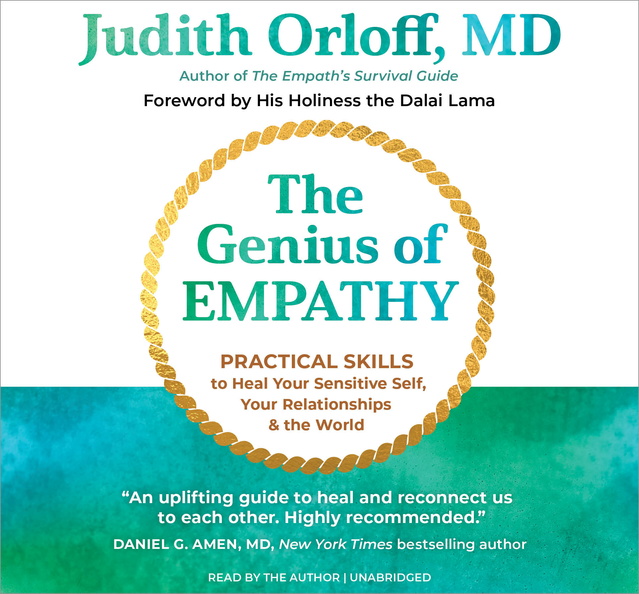
When we think about those special traits or abilities we consider to be “superpowers,” empathy isn’t usually the first thing that comes to mind. In fact, empathy is often seen as a weakness, not a strength. Through her bestselling books and her work training new psychiatrists, Dr. Judith Orloff is helping to change the narrative around empathy. In this podcast, Tami Simon speaks with Dr. Orloff about her new book, The Genius of Empathy, and how we can each begin to cultivate an empathic style that supports a thriving life. 

Tune in now for their conversation on how empathy opens the heart and fosters healing, the beauty of self-empathy and how it differs from self-compassion, empathy overwhelm, the four styles of empathy and how to identify your own, boundary-setting tools for empaths, the empathy spectrum, empathy deficiency disorders, trauma and empathy, letting go of resentment and helping it let go of you, empathic attunement, the practice of shielding, transmitting empathic love to people and places in need, observing without absorbing, and more.

Note: This episode originally aired on Sounds True One, where these special episodes of Insights at the Edge are available to watch live on video and with exclusive access to Q&As with our guests. Learn more at join.soundstrue.com.

Embracing Empathy as Your Superpower

What do I do when a loved one is suffering? How do I have empathy if I’m getting a divorce or losing my job? If my family treats me unfairly? Or if I’m emotionally overwhelmed or in chronic pain?

If you’ve ever asked yourself these questions, I’ve written The Genius of Empathy for you. It also includes a beautiful foreword by His Holiness the Dalai Lama.

In the book, I present empathy as a healing force that helps you overcome obstacles in your life with dignity, grace, and power. As a psychiatrist and empath, I draw from my insights and present techniques from my own life and from the healing journeys of my clients, students, and readers. As I say in the book, “Empathy softens the struggle, quiets the unkind voices, and lets you befriend yourself again.”

Empathy doesn’t mean being “on call” 24 hours a day for those in need. Empaths can often wear an invisible sign that says, “I can help you.” However, if you want to heal yourself, have better relationships, and contribute to healing our tumultuous world, you must learn how to set healthy boundaries and observe, not absorb, the energy of others.

To start taking a more proactive role in how much empathy you give others at any one time, I suggest that you keep in mind the following “rights.” They will help you maintain a healthy mindset and prevent or lessen any empathy overwhelm that might arise:

  • I have the right to say a loving, positive “no” or “no, thank-you.”
  • I have the right to set limits with how long I listen to people’s problems.
  • I have the right to rest and not be always available to everyone.
  • I have the right to quiet peacefulness in my home and in my heart.

Practice: Take a Sound Break to Repair Yourself

Plan periods of quiet to recover from our noisy, fast-paced world. This helps calm your nervous system and your mind, an act of self-empathy.

It’s rejuvenating to schedule at least five minutes of quiet or, even better, complete silence for an hour or more where no one can intrude. As I do, hang a Do Not Disturb sign on your office or bedroom door. During this reset period, you’ve officially escaped from the world. You’re free of demands and noxious sounds. You may also get noise canceling earbuds to block out noise.

If too much quiet is unsettling, go for a walk in a local park or a peaceful neighborhood to decompress from excessive sound stimulation. Simply focus on putting one foot in front of the other, which is called mindful walking. Nothing to do. Nothing to be. Move slowly and refrain from talking. If thoughts come, keep refocusing on your breath, each inhalation and exhalation. Just letting life settle will regenerate your body and empathic heart.

Embracing your empathy does require courage. It can feel scary. If you’re ready to discover its healing power, I would be honored to be your guide to helping you in overcoming your fears and obstacles, and enhancing this essential skill for long-term change.

Though many of us have never met, I feel connected to you. Connection is what fuels life. While empathy is what allows you to find peace. With both, we can make sense of this world together.

Book
Learn More
Amazon | Barnes & Noble | Bookshop | Sounds True

Digital Audio
Ignite empathy as a superpower for personal healing, deeper relationships, and more potent work in the world. New York Times bestselling author Dr. Judith Orloff draws on insights from neuroscience, psychology, and energy medicine to show us how to access our sensitivities, soothe our nervous systems, and embody our most fierce and authentic selves.

Learn More

5 Ways to Combat Energy Vampires This Holiday Season

For empaths and sensitive people, the holidays can be extra stressful because they are exposed to more socializing and holiday events. This means interacting with relatives, friends or acquaintances who may be energy vampires. Since empaths are emotional sponges, they tend to absorb other people’s negative energy unless they have a plan to approach the holiday season. Here are some tips from my book: Thriving as an Empath: 365 Days of Self-Care for Sensitive People.

Identify the energy vampires in your life

In your journal, write down the name of five energy vampires in your life that you may encounter over the holiday season. Then, write down what type of energy vampire they are so you know exactly how they drain your energy. For instance, The Criticizer: For instance they might say, “Oh dear, it looks like you’ve put on a few pounds!.” Or the Drama Queen, Controller, Narcissist or Passive Aggressive.

Journal about strategies to use

It’s important to pre-plan the strategies you use with these people. Write these in your journal. For instance, if you’re going to encounter a drama queen/king, tell yourself “I will not ask them how they are doing or look deeply into their eyes to encourage long stories. I will not feed into the drama queen/kings antics.” Map out your strategies so you are prepared.

Set clear boundaries

Boundaries are essential for all empaths and sensitive people to learn. Because we wear invisible signs around our necks saying “I can help you”, people flock from far and wide to tell us their life stories. Thus, it is important to set boundaries with energy vampires, and limit the time you interact with them. If necessary, escape into the bathroom for some quiet time.

No is a complete sentence

When dealing with energy vampires, such as rageaholics, it is important to learn how to say “no” to someone dumping anger on you. As an empath, anger feels toxic to me so I don’t allow it in my vicinity. If you’re going to encounter an angry person who tends to dump, be prepared to say “no” to them and politely excuse yourself to talk to someone else.

Notice your emotional triggers

We tend to be drained if our own unresolved issues are activated. So, it is healthy to examine your emotional triggers so you can’t be drained by people pushing your buttons. For instance, are you triggered by sadness, depression or anxiety? Or when someone tries to control you? Identify your triggers and begin to heal them in your private meditations or with a guide. This self-healing will help you be a more empowered empath!

Judith OrloffJudith Orloff, MD, is a leading voice in the fields of medicine, psychiatry, and intuitive development. An assistant clinical professor of psychiatry at UCLA, her bestselling books include Emotional Freedom, Positive Energy, Dr. Judith Orloff’s Guide to Intuitive Healing, and Second Sight. Find more inspiration at Dr. Orloff’s website drjudithorloff.com.


The community here at Sounds True wishes you a lovely holiday season! We are happy to collaborate with some of our Sounds True authors to offer you wisdom and practices as we move into this time together; please enjoy this blog series for your holiday season. 

To help encourage you and your loved ones to explore new possibilities this holiday season, we’re offering 40% off nearly all of our programs, books, and courses sitewide. May you find the wisdom to light your way.

EXPLORE NOW

You Might Also Enjoy

Try These Mindfulness Exercises To Ground Yourself

Mindfulness is an ancient, deeply personal practice that invites you into the present moment with compassion and awareness. And yet, for many of us, simply “being present” can feel elusive. We’re managing careers, relationships, health, and the constant pull of digital life. It’s no wonder anxiety and stress have become everyday companions. Through regular, intentional practices, we begin to notice the quiet steadiness underneath the noise. That’s where grounding lives.

For over 40 years, Sounds True has been a trusted leader in spiritual education and personal transformation, sharing the wisdom of teachers like Eckhart Tolle, Pema Chödrön, Tara Brach, and many others. As the world’s largest “living library” of transformational teachings, we’ve helped millions of people reconnect with presence, purpose, and their inner wisdom through unscripted, heart-centered resources.

In this piece, we’ll explore a series of mindfulness exercises to support your return to presence, whether you’re seeking mindfulness exercises for anxiety, tools for teens and adults, or daily mindfulness exercises for stress relief. You’ll also find soulful practices like inner rhythm meditations woven throughout to help you tune into your natural flow.

Key Takeaways:

  • Learn Audience-Specific Practices: This article offers tailored mindfulness exercises for anxiety, adults, teens, and daily stress relief.
  • Find Practical and Accessible Tools: Readers will find easy-to-implement, non-intimidating exercises they can begin using right away.
  • Integrating These Exercises into Daily Life: Meditation exercises encourage integrating mindfulness into ordinary activities for long-term emotional grounding and resilience.

Expand Your Consciousness With Sounds True.

Simple Mindfulness Exercises To Bring You Back To Center

Even the busiest mind can come back to stillness with a few moments of intention. These foundational mindfulness exercises are designed to be accessible, grounding, and easy to integrate into daily life.

Breathe For One Minute

This micro-practice is a gentle reminder that your breath is always available as an anchor. Set a timer for just 60 seconds. Sit or stand comfortably. Close your eyes if you’d like. Bring all of your awareness to the sensation of breathing, how the air enters and leaves your body, and how your chest rises and falls. Don’t change anything. Just notice. One minute of conscious breathing can create space between stimulus and response, making it a beautiful starting point for mindfulness exercises for anxiety or moments of stress.

Ground Through The Five Senses

When your thoughts are racing or your emotions feel overwhelming, coming back to your senses, literally, can reset your nervous system. To practice this, look around and quietly name five things you can see, four things you can touch, three things you can hear, two things you can smell, and one thing you can taste. This kind of sensory awareness anchors your attention in the here and now, making it one of the most reliable mindfulness exercises for stress relief.

Notice Without Fixing

Mindfulness isn’t about making anything go away. It’s about seeing clearly. Try sitting in silence for a few minutes, simply noticing your thoughts, sensations, and emotions without trying to change or solve them. Let everything be as it is. This witnessing awareness is central to many mindfulness exercises for adults, a reminder that your worth isn’t based on productivity, performance, or emotional “control.” Instead, it’s grounded in the simple act of being present.

Mindfulness Exercises For Anxiety And Overwhelm

Anxiety often pulls us into the future, into what-ifs, worst-case scenarios, and mental loops that feel impossible to exit. Mindfulness brings us back to now. These exercises aren’t about eliminating anxiety, but about meeting it with gentleness, spaciousness, and embodied awareness.

Anchor To The Present With Touch

When anxiety feels like it’s spiraling, physical touch can be incredibly grounding. Place one hand on your chest and one on your belly. Feel the rise and fall of your breath beneath your hands. You don’t need to breathe in any special way, just notice the contact. This creates a direct, calming feedback loop that reminds the body it’s safe to soften. Practices like this are especially helpful when exploring mindfulness exercises for anxiety that are simple and body-centered.

Name What’s True In This Moment

A powerful way to interrupt anxious thoughts is to name what is real right now. Quietly say to yourself: “Right now, I am sitting on a chair. My feet are on the floor. I am breathing. I am safe.” You can add more statements based on your environment or sensations. This kind of mindful self-talk offers the brain a stable narrative to hold onto when anxiety is trying to pull you elsewhere. It’s a core part of how many people approach mindfulness exercises for stress relief as well.

Return To Ritual

When anxiety is chronic or persistent, creating small, daily routines can provide a sense of continuity. This might be lighting a candle before meditation, washing your hands slowly and with full attention, or taking a short mindful walk at the same time each day. These are quiet acts of devotion that bring structure to emotional chaos. For many adults, integrating mindfulness exercises helps create a sense of calm and inner order.

For a deeper experience of this rhythm-based approach, practices like inner rhythm meditations can support a more attuned, embodied return to presence.

Awaken Your Inner Healing Power With Sound True.

How Adults Can Use Mindfulness To Reconnect

Adulthood often brings a gradual disconnection from inner life. The constant push to do more, fix more, and be more can drown out the quiet voice within. Mindfulness gives adults a way to return, to presence, to embodiment, and to what matters most. It’s less about adding something new and more about softening into what’s already here.

Practices like breath tracking, gentle movement, or body scanning help rebuild that inner relationship. These mindfulness exercises for adults aren’t about achieving calm; they’re about creating space for honesty and self-awareness. Even simple routines like morning stillness or mindful transitions between tasks can foster deep reconnection.

Supporting Teens With Mindfulness Tools

Teenagers today are navigating an overwhelming mix of stimulation, pressure, and emotional intensity, often without the tools to process it all. Mindfulness can offer teens a way to slow down, feel what they’re feeling, and build emotional resilience from the inside out.

Unlike adults, teens often benefit from shorter, more tactile practices that meet them where they are. Movement-based mindfulness, breath-focused exercises, or even mindful listening with music can help create moments of pause without feeling forced or overly formal. These mindfulness exercises for teens aren’t about “fixing” behavior, but rather they’re about helping young people relate to themselves and their experiences with more kindness and awareness.

Meditation can also be incredibly empowering for teens to choose their own practice. Whether it’s a brief body scan before school or a silent check-in before sleep, creating space for autonomy makes mindfulness feel like a supportive resource rather than another rule to follow. Integrating accessible resources like inner rhythm meditations can also help teens begin to understand their emotional patterns and physical rhythms in a more grounded, compassionate way.

Daily Mindfulness Exercises for Stress Relief

Stress thrives on momentum. It builds, layer by layer, until we’re no longer responding to life; we’re reacting to it. Mindfulness breaks that cycle. Through small, intentional practices, we create pockets of stillness that allow the nervous system to reset and the body to soften.

Daily mindfulness exercises for stress relief don’t need to be elaborate. A few minutes of conscious breathing before checking your phone, taking a mindful walk after lunch, or simply pausing to feel your feet on the floor between meetings can shift your entire internal state. These moments act like pressure valves, gently releasing stored tension before it accumulates.

Repetition is key. The more frequently you return to yourself, the more familiar that calm becomes. Over time, the body begins to recognize presence as its home base, not stress. For those who feel especially drained or dysregulated, incorporating inner rhythm meditations can help guide you back to your body’s natural flow and restore balance from within.

Whether you’re navigating a high-stress job or simply feeling emotionally stretched, these simple yet consistent practices can anchor you in a steadier way of being and offer a meaningful alternative to burnout.

Explore Teachings From World-Renowned Psychologists And Researchers On Trauma, Mindfulness, Resilience, And Cognitive Growth.

Final Thoughts

More than something to master, mindfulness is something you remember as time goes on. A gentle return, over and over again, to the breath, the body, and the moment you’re living right now. These practices don’t promise a life free from stress or anxiety. Instead, they offer a way to meet life with more presence, compassion, and steadiness.

Whether you’re exploring mindfulness exercises for anxiety, integrating mindfulness into adult life, supporting a teen, or simply seeking stress relief, the power lies in consistency. Even the smallest pause, repeated with care, can rewire your relationship to the world around you, and within you. Above all, mindfulness is not a task to accomplish but rather it’s a path to walk, one breath at a time. Every time you return, you deepen your connection to yourself, and that is where healing begins.

Read More:

Frequently Asked Questions About Mindfulness Exercises

What are the core components of a mindfulness exercise?

A mindfulness exercise typically includes intention, focused attention (often on the breath, body, or senses), non-judgmental awareness, and a return to the present moment. These elements work together to train the mind in presence and compassion.

How long should I practice mindfulness each day?

Even 5–10 minutes daily can be effective. The key is consistency. Start small and gradually extend the time as it feels natural. Mindfulness is about presence, not perfection.

Are mindfulness exercises religious?

No. While mindfulness has roots in contemplative traditions like Buddhism, modern mindfulness practices are secular and adaptable to all belief systems.

Can mindfulness exercises help improve sleep?

Yes, practicing mindfulness before bed can help calm racing thoughts, ease physical tension, and prepare the nervous system for restful sleep.

Is it normal to feel distracted during mindfulness practice?

Absolutely. Distraction is part of the process. The goal isn’t to stop thoughts, but to notice when the mind wanders and gently bring it back to your point of focus.

How do I know if mindfulness is working?

Results are often subtle at first, like feeling slightly calmer, more aware, or less reactive. Over time, many notice improved emotional regulation and clarity.

Can children benefit from mindfulness exercises too?

Yes, children can benefit greatly from age-appropriate mindfulness tools, as these help them recognize emotions, improve focus, and develop emotional resilience early on.

What’s the difference between meditation and mindfulness?

Mindfulness is a way of being present in daily life, while meditation is a formal practice that often cultivates mindfulness. You can practice mindfulness without meditating.

Do I need to sit still to practice mindfulness?

Not at all. Walking, stretching, eating, and even washing dishes can all become mindfulness exercises when done with full attention and presence.

Can mindfulness help with physical pain?

Yes, mindfulness can change your relationship to pain by reducing resistance, softening tension, and increasing awareness without judgment. It doesn’t eliminate pain, but can make it more manageable.

Michelle Cassandra Johnson is an author, activist, spiritual teacher, racial equity consultant, and intuitive healer. She is the author of six books, including Skill in Action and Finding Refuge. Amy Burtaine is a leadership coach and racial equity trainer. With Robin DiAngelo, she is the coauthor of The Facilitator's Guide for White Affinity Groups. For more, visit https://www.michellecjohnson.com/wisdom-of-the-hive.

[ENCORE EPISODE] Jon Kabat-Zinn: Befriending Pain

**SPECIAL ENCORE PRESENTATION**

Current statistics tell us that 20% of the US population has some form of chronic pain, defined as severe discomfort that has continued for six months or more. That’s more than 50 million people. Jon Kabat-Zinn has received international acclaim for his leading work in bringing the life-changing practices of meditation and mindfulness into the mainstream of medicine and society. In this inspiring podcast, Tami Simon speaks with Jon about his empowering new book, Mindfulness Meditation for Pain Relief, and how we can greatly improve our lives (and our entire world) by reframing the way we relate to our thoughts, our minds, and the sensations of our bodies.

Listen in as they discuss the epidemic of chronic pain and the power of mindfulness to ease suffering of all kinds, the myth of the “good meditator,” the body as the starting point for practice, exploring your “emotionally freighted thoughts,” our longing to be who we really are, working with the mind and learning to inhabit a space of embodied awareness, the refuge that is meditation practice, letting go of our stories, befriending the sensory field of what we call pain, the miracle of life on Earth, the Buddha’s teaching on mindfulness as the direct path to liberation, surfing the waves of your own experience, unity within diversity and the arising of compassion, focusing on what’s right instead of what’s wrong, how we are all on a growth curve on life’s journey, and more.

Note: This episode originally aired on Sounds True One, where these special episodes of Insights at the Edge are available to watch live on video and with exclusive access to Q&As with our guests. Learn more at join.soundstrue.com.

This episode is sponsored by BetterHelp. Listeners of Insights At The Edge get 10% off their first month at

www.betterhelp.com/soundstrue

What Is Guided Meditation? A Beginner’s Path to ...

Explore mindfulness vs meditation and discover how each can uplift your mental health. Unravel the benefits, and start your transformative journey today!

  • Kristin says:

    Omg you just described the me I didn’t know what to call me. This is the first year I told my parents I’d see them the day after Christmas.

  • >
    Share via
    Copy link
    Powered by Social Snap