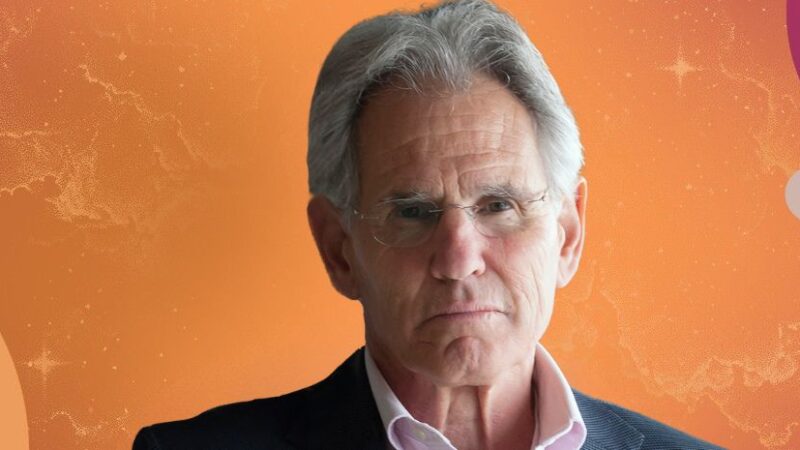


Tami Simon started Sounds True at the age of 22 with a dream and a tape recorder. Though she had no experience running a business and only a vague idea of what she wanted the company to be, Tami had her guiding principle strongly in place: to disseminate spiritual wisdom. Over its 36-year history, Sounds True has grown into a multimedia publisher that has produced over 6,000 titles, has been included twice in the Inc. 500 list of the fastest-growing companies, and is North America’s leading publisher of spoken-word spiritual teachings.
One of the world’s very first organizations to focus on multiple bottom lines as part of its founding mandate, Sounds True has expanded steadily over the years while staying true to its original mission. Partnering with the leading spiritual teachers of our time, Sounds True now has a successful book publishing program (distributed by Macmillan) and has grown to produce events, certification programs, and transformational online learning experiences.
Tami hosts the popular Sounds True podcast, Insights at the Edge, which has now been downloaded more than 20 million times. She is also the founder of the Sounds True Foundation, which is dedicated to bringing spiritual education to people who would otherwise not have access. She lives in Boulder, Colorado, and in British Columbia with her wife, Julie Kramer, and their two spoodles, Raspberry and Bula.
Author photo © Jason Elias
In this special reflection episode of Insights at the Edge host Tami Simon looks back on her seven-part series exploring reincarnation and the gap between lives. Drawing from personal experience and deep spiritual inquiry, Tami shares the motivations behind the series, the key questions that guided her journey, and the profound insights that emerged. Listeners are invited to consider new perspectives on identity, the continuity of consciousness, and the intersection of science and spirituality, while reflecting on their own most meaningful questions about life, death, and what may lie beyond.
Note: This interview originally aired on Sounds True One, where these special episodes of Insights at the Edge are available to watch live on video and with exclusive access to Q&As with our guests. Learn more at join.soundstrue.com.
Each of us has a somewhat mysterious inner power that could be called a “soul force.” In my experience, our soul force feels unstoppable, and it carries with it our uniqueness and what we care the most about. You could say it is the most essential part of us, that which we cannot be “talked out of,” that which demands expression.
Many people believe that this soul force, if it even exists, is not necessarily related to our work in the world. I am proposing just the opposite: that if we are to find our deepest fulfillment at work and achieve the highest potential in our career, in whatever field that might be, we need to engage and unleash this power.
What does it feel like to “work from our soul”? In my experience, there is a sense of drawing on a source of pure potential that is self-renewing and feels electrically charged. I don’t feel like I am working from a thin and limited layer of thoughts or strategy, but instead, there is a sense of being tapped into a charged energetic system of support and creativity.
Your Belly, Heart, and Head
For many years, I practiced somatic meditation, a type of meditation where we practice (among other things) inhabiting the inner space of the body and developing what’s known as interoception (being aware of internal bodily sensations). One of the things I discovered was the felt experience of three energy centers—the belly, heart, and head—that are referenced in many different systems of spiritual practice, and how these three centers can help us in engaging our soul force at work.
This might sound esoteric, but I actually think these three inner energy centers (called the “three brains” or “tan tiens” in Chinese medicine or “elixir fields” in certain types of qigong) are very discoverable and accessible to people who start to turn their attention inward.
To say more, when our belly center is open and energy is flowing through it in an unimpeded way, we can feel a sense of grounded power. We feel anchored and sense that we can weather the storms of life like a strong tree that is rooted deeply in the earth.
When our heart center is open, we can feel a sense of love streaming from us in every direction. This stream carries with it our care and concern for others. You could even say that we sense a stream of well wishes pouring out from our heart. Our work becomes imbued with a motivation to be of service to others and our world.
And when the center of our head is open, energy and information flow in through the top of our head in a way that often feels, at least in my experience, quite mysterious. New ideas come to us that can feel sparkly, such that even we are surprised by what is occurring to us. We become endlessly innovative in our work.
The Power of Letting Go
What does it take to awaken the intelligence of these three “inner brains” and allow the full power of our soul force to stream through these three energy centers? In my experience, what is required is not what you might expect. We don’t need to add anything to us. What is needed is a whole lot of letting go.
What are we letting go of? All of the ways we block ourselves, all of the ways we hold back. We are letting go of all of the ways we seek approval and are twisted up trying to appeal to others to be liked by them, the many ways we try to find acceptance and success via the unspoken and sometimes spoken rules of the status quo. We let go of twisting ourselves to fit a norm that doesn’t fit the truth of who we are. We let go of the mental construct of who we are so we can be the unique expression of the truth of who we are.
One year at Sounds True, we decided to give T-shirts out to the staff as part of our holiday gifting. Not a particularly original idea, but something we thought people would like. And our creative director put this slogan on the T-shirt: “Sounds True: Here for the Weird.” And I loved it.
Now, not everyone likes the word “weird”… but I do. A chapter was once written about me for a book on bringing your whole self to work, and the authors called it “Tami Simon: Flying Her Freak Flag.” I didn’t mind the use of the word “freak” either. The reason is that these are just words in popular culture that mean someone is willing to be themselves in all of their uniqueness and eccentricities. And that courage to step forward and be a brave truth-teller is something that I value.
Recently, I was in a discussion with a spiritual teacher about how interesting it is that we don’t become a blob of paste-like oneness when we drop deeply into what some people refer to as the “field of being,” the boundless, awake awareness that we share. Instead, we often become more uniquely expressive and can even appear a bit quirky. He shared his observation that it is our ego-construct, the veneer of “I’ve got it together,” that keeps us looking like copycats of others. When we allow that ego construct to lose its presentational grip, and perhaps even drop away, we make room for the emergence of our soul force, the innermost part of ourselves, to shine forth. We liberate our own “weird.”
As a leader of an organization, one of the things I have noticed is that when I present and speak from this innermost place without a lot of self-censorship, it naturally invites others to do the same. It is as if a “permission field” has been established. The company founder is telling it like it is—talking about what she learned in therapy this week, or something that occurred when talking with her wife (of the same sex), or a discovery that came through a sleepless night—and this sets up a new norm. This organization is actually a place where I don’t need to wear a mask at work; my truth-telling and uniqueness are welcome here. And this liberates a tremendous amount of energy and, dare I say, “soul power.”
What’s Your Genius Zone?
Several years ago, as the CEO at Sounds True, I found myself having difficulty figuring out how to best structure our organization (as our direct-to-consumer digital business began to grow rapidly with a different set of infrastructure needs from our traditional publishing business). I decided to hire an organizational consultant, Lex Sisney, the founder of Organizational Physics, whose expertise is helping midsize companies design to scale.
To my surprise, Lex started his assessment of Sounds True’s structural needs by having me do a deep-dive review of whether or not I was working in what he calls one’s “genius zone.” As I have come to understand Lex’s approach, part of what he believes contributes to organizational flourishing (and the ability to scale) is when people are in job functions that make the best use of their natural capacities and passions.
In a way, this seems utterly obvious. Like any good sporting team, you want people in the positions where they have the most natural affinity and talent. And when you have a whole team of people working in their genius zones, you have a much greater likelihood of having a winning team.
And yet as a founder, I have always had the attitude of “I will do whatever it takes. This isn’t about being in a ‘genius zone’; this is about getting done what needs to be done. All work is not enjoyable anyway, and just buck up and do the next thing needed.” This sounds very dutiful, and it is, but it is not the stance that creates the most high-functioning team, nor the most joy, nor the most soul engagement at work.
About a year and a half ago, I did an exercise where I went through my calendar for several weeks in a row and numbered every scheduled meeting on a 1-to-10 scale in terms of how excited I was for the meeting to take place. A very obvious pattern emerged: about half of the meetings in my calendar received the number 2 or 3, and about half of the meetings were an 8 or a 9 or even a 10.
The events in the calendar that received a high score related to interviews I was hosting, new partnerships that were being formed, and working directly with authors on new projects. The meetings that received a low score had to do with the business’s strategic execution in terms of finance, operations, and the coordination of various departments. This simple exercise presented a clear picture: I needed to shift my role and pass on a whole set of responsibilities so I could be free to focus on and expand the parts of my work that were exciting to me.
We have this notion that we need to trade what we really care about in order to make money. In a conversation with Rha Goddess, author of the book The Calling, I asked her about this. She said something to the effect of, “Why wouldn’t you earn the most money in your career doing what you are uniquely good at, what you excel at, what you uniquely have the ability to contribute?”
Her words landed. What if our greatest career achievement can only come from working in our area of natural genius, from letting go of all the ways we hold ourselves back and bringing our full soul force to work?
I believe that when we do, we find fulfillment at work. And also in life. And then, when our days come to an end, we find ourselves at peace, hands open and empty. We gave away all that we were given.
In support of your journey,
Tami Simon

Tami Simon is the founder of Sounds True and the Sounds True Foundation, and cofounder of the Inner MBA online immersion learning program and conscious business community created in partnership with LinkedIn and Wisdom 2.0.

The Inner MBA program connects a global community from more than 90 countries. It includes teachings from conscious business leaders, influential CEOs, spiritual luminaries, and faculty from leading universities. Together, we engage in the inner work of growth and transformation, empowering ourselves and our organizations to contribute powerfully to our collective good.
Dear Sounds True friend,
At this time of thanks-giving, I want to thank you, a beloved member of our extended Sounds True community of listeners, readers, authors, and learners worldwide.
Thank you for your interest and willingness to be an explorer of your inner world.
Thank you for your perseverance, your willingness to be here, with all of life’s great joys and terrible griefs and sorrows. Thank you for being ”on the journey,” with all of the ways life breaks open our hearts and asks us to expand and hold a larger space of love.
Thank you for your courage to be you, beloved and singular, the you that carries a unique gift, some special look, a cry and a laugh never heard before, a contribution we need. Thank you for being yourself and extending yourself to others, even in small ways, which often turn out to be huge.
My own prayer this Thanksgiving is to remain steadfast and true. Please know that here at Sounds True we remain so—and we love doing so in connection with you. We are here because you are here. This thanks-giving, I bow to the strength and goodness of our human hearts.
With you on the journey,
Tami
P.S. Here is a thanks-giving offering, a classic poem from Mary Oliver:
Praying
It doesn’t have to be
the blue iris, it could be
weeds in a vacant lot, or a few
small stones; just
pay attention, then patch
a few words together and don’t try
to make them elaborate, this isn’t
a contest but the doorway
into thanks, and a silence, in which
another voice may speak.
Mary Oliver, Thirst
Mindfulness is an ancient, deeply personal practice that invites you into the present moment with compassion and awareness. And yet, for many of us, simply “being present” can feel elusive. We’re managing careers, relationships, health, and the constant pull of digital life. It’s no wonder anxiety and stress have become everyday companions. Through regular, intentional practices, we begin to notice the quiet steadiness underneath the noise. That’s where grounding lives.
For over 40 years, Sounds True has been a trusted leader in spiritual education and personal transformation, sharing the wisdom of teachers like Eckhart Tolle, Pema Chödrön, Tara Brach, and many others. As the world’s largest “living library” of transformational teachings, we’ve helped millions of people reconnect with presence, purpose, and their inner wisdom through unscripted, heart-centered resources.
In this piece, we’ll explore a series of mindfulness exercises to support your return to presence, whether you’re seeking mindfulness exercises for anxiety, tools for teens and adults, or daily mindfulness exercises for stress relief. You’ll also find soulful practices like inner rhythm meditations woven throughout to help you tune into your natural flow.
Even the busiest mind can come back to stillness with a few moments of intention. These foundational mindfulness exercises are designed to be accessible, grounding, and easy to integrate into daily life.
This micro-practice is a gentle reminder that your breath is always available as an anchor. Set a timer for just 60 seconds. Sit or stand comfortably. Close your eyes if you’d like. Bring all of your awareness to the sensation of breathing, how the air enters and leaves your body, and how your chest rises and falls. Don’t change anything. Just notice. One minute of conscious breathing can create space between stimulus and response, making it a beautiful starting point for mindfulness exercises for anxiety or moments of stress.
When your thoughts are racing or your emotions feel overwhelming, coming back to your senses, literally, can reset your nervous system. To practice this, look around and quietly name five things you can see, four things you can touch, three things you can hear, two things you can smell, and one thing you can taste. This kind of sensory awareness anchors your attention in the here and now, making it one of the most reliable mindfulness exercises for stress relief.
Mindfulness isn’t about making anything go away. It’s about seeing clearly. Try sitting in silence for a few minutes, simply noticing your thoughts, sensations, and emotions without trying to change or solve them. Let everything be as it is. This witnessing awareness is central to many mindfulness exercises for adults, a reminder that your worth isn’t based on productivity, performance, or emotional “control.” Instead, it’s grounded in the simple act of being present.
Anxiety often pulls us into the future, into what-ifs, worst-case scenarios, and mental loops that feel impossible to exit. Mindfulness brings us back to now. These exercises aren’t about eliminating anxiety, but about meeting it with gentleness, spaciousness, and embodied awareness.
When anxiety feels like it’s spiraling, physical touch can be incredibly grounding. Place one hand on your chest and one on your belly. Feel the rise and fall of your breath beneath your hands. You don’t need to breathe in any special way, just notice the contact. This creates a direct, calming feedback loop that reminds the body it’s safe to soften. Practices like this are especially helpful when exploring mindfulness exercises for anxiety that are simple and body-centered.
A powerful way to interrupt anxious thoughts is to name what is real right now. Quietly say to yourself: “Right now, I am sitting on a chair. My feet are on the floor. I am breathing. I am safe.” You can add more statements based on your environment or sensations. This kind of mindful self-talk offers the brain a stable narrative to hold onto when anxiety is trying to pull you elsewhere. It’s a core part of how many people approach mindfulness exercises for stress relief as well.
When anxiety is chronic or persistent, creating small, daily routines can provide a sense of continuity. This might be lighting a candle before meditation, washing your hands slowly and with full attention, or taking a short mindful walk at the same time each day. These are quiet acts of devotion that bring structure to emotional chaos. For many adults, integrating mindfulness exercises helps create a sense of calm and inner order.
For a deeper experience of this rhythm-based approach, practices like inner rhythm meditations can support a more attuned, embodied return to presence.

Adulthood often brings a gradual disconnection from inner life. The constant push to do more, fix more, and be more can drown out the quiet voice within. Mindfulness gives adults a way to return, to presence, to embodiment, and to what matters most. It’s less about adding something new and more about softening into what’s already here.
Practices like breath tracking, gentle movement, or body scanning help rebuild that inner relationship. These mindfulness exercises for adults aren’t about achieving calm; they’re about creating space for honesty and self-awareness. Even simple routines like morning stillness or mindful transitions between tasks can foster deep reconnection.
Teenagers today are navigating an overwhelming mix of stimulation, pressure, and emotional intensity, often without the tools to process it all. Mindfulness can offer teens a way to slow down, feel what they’re feeling, and build emotional resilience from the inside out.
Unlike adults, teens often benefit from shorter, more tactile practices that meet them where they are. Movement-based mindfulness, breath-focused exercises, or even mindful listening with music can help create moments of pause without feeling forced or overly formal. These mindfulness exercises for teens aren’t about “fixing” behavior, but rather they’re about helping young people relate to themselves and their experiences with more kindness and awareness.
Meditation can also be incredibly empowering for teens to choose their own practice. Whether it’s a brief body scan before school or a silent check-in before sleep, creating space for autonomy makes mindfulness feel like a supportive resource rather than another rule to follow. Integrating accessible resources like inner rhythm meditations can also help teens begin to understand their emotional patterns and physical rhythms in a more grounded, compassionate way.
Stress thrives on momentum. It builds, layer by layer, until we’re no longer responding to life; we’re reacting to it. Mindfulness breaks that cycle. Through small, intentional practices, we create pockets of stillness that allow the nervous system to reset and the body to soften.
Daily mindfulness exercises for stress relief don’t need to be elaborate. A few minutes of conscious breathing before checking your phone, taking a mindful walk after lunch, or simply pausing to feel your feet on the floor between meetings can shift your entire internal state. These moments act like pressure valves, gently releasing stored tension before it accumulates.
Repetition is key. The more frequently you return to yourself, the more familiar that calm becomes. Over time, the body begins to recognize presence as its home base, not stress. For those who feel especially drained or dysregulated, incorporating inner rhythm meditations can help guide you back to your body’s natural flow and restore balance from within.
Whether you’re navigating a high-stress job or simply feeling emotionally stretched, these simple yet consistent practices can anchor you in a steadier way of being and offer a meaningful alternative to burnout.
More than something to master, mindfulness is something you remember as time goes on. A gentle return, over and over again, to the breath, the body, and the moment you’re living right now. These practices don’t promise a life free from stress or anxiety. Instead, they offer a way to meet life with more presence, compassion, and steadiness.
Whether you’re exploring mindfulness exercises for anxiety, integrating mindfulness into adult life, supporting a teen, or simply seeking stress relief, the power lies in consistency. Even the smallest pause, repeated with care, can rewire your relationship to the world around you, and within you. Above all, mindfulness is not a task to accomplish but rather it’s a path to walk, one breath at a time. Every time you return, you deepen your connection to yourself, and that is where healing begins.
Read More:
A mindfulness exercise typically includes intention, focused attention (often on the breath, body, or senses), non-judgmental awareness, and a return to the present moment. These elements work together to train the mind in presence and compassion.
Even 5–10 minutes daily can be effective. The key is consistency. Start small and gradually extend the time as it feels natural. Mindfulness is about presence, not perfection.
No. While mindfulness has roots in contemplative traditions like Buddhism, modern mindfulness practices are secular and adaptable to all belief systems.
Yes, practicing mindfulness before bed can help calm racing thoughts, ease physical tension, and prepare the nervous system for restful sleep.
Absolutely. Distraction is part of the process. The goal isn’t to stop thoughts, but to notice when the mind wanders and gently bring it back to your point of focus.
Results are often subtle at first, like feeling slightly calmer, more aware, or less reactive. Over time, many notice improved emotional regulation and clarity.
Yes, children can benefit greatly from age-appropriate mindfulness tools, as these help them recognize emotions, improve focus, and develop emotional resilience early on.
Mindfulness is a way of being present in daily life, while meditation is a formal practice that often cultivates mindfulness. You can practice mindfulness without meditating.
Not at all. Walking, stretching, eating, and even washing dishes can all become mindfulness exercises when done with full attention and presence.
Yes, mindfulness can change your relationship to pain by reducing resistance, softening tension, and increasing awareness without judgment. It doesn’t eliminate pain, but can make it more manageable.

Michelle Cassandra Johnson is an author, activist, spiritual teacher, racial equity consultant, and intuitive healer. She is the author of six books, including Skill in Action and Finding Refuge. Amy Burtaine is a leadership coach and racial equity trainer. With Robin DiAngelo, she is the coauthor of The Facilitator’s Guide for White Affinity Groups. For more, visit https://www.michellecjohnson.com/wisdom-of-the-hive.
**SPECIAL ENCORE PRESENTATION**
Current statistics tell us that 20% of the US population has some form of chronic pain, defined as severe discomfort that has continued for six months or more. That’s more than 50 million people. Jon Kabat-Zinn has received international acclaim for his leading work in bringing the life-changing practices of meditation and mindfulness into the mainstream of medicine and society. In this inspiring podcast, Tami Simon speaks with Jon about his empowering new book, Mindfulness Meditation for Pain Relief, and how we can greatly improve our lives (and our entire world) by reframing the way we relate to our thoughts, our minds, and the sensations of our bodies.
Listen in as they discuss the epidemic of chronic pain and the power of mindfulness to ease suffering of all kinds, the myth of the “good meditator,” the body as the starting point for practice, exploring your “emotionally freighted thoughts,” our longing to be who we really are, working with the mind and learning to inhabit a space of embodied awareness, the refuge that is meditation practice, letting go of our stories, befriending the sensory field of what we call pain, the miracle of life on Earth, the Buddha’s teaching on mindfulness as the direct path to liberation, surfing the waves of your own experience, unity within diversity and the arising of compassion, focusing on what’s right instead of what’s wrong, how we are all on a growth curve on life’s journey, and more.
Note: This episode originally aired on Sounds True One, where these special episodes of Insights at the Edge are available to watch live on video and with exclusive access to Q&As with our guests. Learn more at join.soundstrue.com.
This episode is sponsored by BetterHelp. Listeners of Insights At The Edge get 10% off their first month at
**SPECIAL ENCORE PRESENTATION IN SUPPORT OF WORLD MENTAL HEALTH DAY**
Anne Lamott is the celebrated author of many books of fiction, essays, and memoirs. Her works include Bird by Bird, Hallelujah Anyway, and Crooked Little Heart. In this special edition of Insights at the Edge originally recorded for The Self-Acceptance Summit, Tami Simon speaks with Anne about acts of “radical self-care” and how they are essential for anyone’s well-being. Anne talks about self-acceptance as an inherently feminist concept, especially around issues of body image and self-esteem. Finally, Anne and Tami discuss how it is necessary to fully accept oneself before being able to show up for others, and why modern society often argues the opposite.
Note: This episode originally aired on Sounds True One, where these special episodes of Insights at the Edge are available to watch live on video and with exclusive access to Q&As with our guests. Learn more at join.soundstrue.com.
This episode is sponsored by BetterHelp. Listeners of Insights At The Edge get 10% off their first month at www.betterhelp.com/soundstrue.

Session expired
Please log in again. The login page will open in a new tab. After logging in you can close it and return to this page.