Compassion is the magic ingredient that turns our personal “compost” into personal evolution.
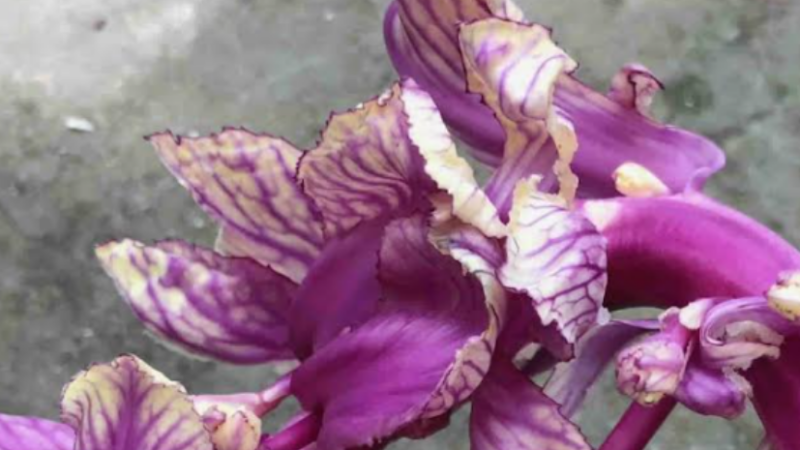
Some time ago, I found a strange bloom in the kitchen. It was elegantly twisted, like a dragon at a Chinese New Year celebration. It was frilled, purple, and pungent. This exquisite thing grew out of a chunk of purple cabbage that I’d put under the sink to go out for compost. Instead of fading quietly however, it burst into new life in the dark grotto of my cabinetry. It blossomed into something unexpected, unusual, and fiercely beautiful.
Reflecting on the discovery of this “flower” in the shadows, I’m reminded of, and heartened by, the fertility of dark times. Many people are feeling a collective spiritual darkness now, exhausted and frustrated, maybe also angry and scared. Having compassion for ourselves and others is especially important in times of literal and metaphorical darkness. How can we do this if we already feel overloaded?
Nature is our ultimate model and guide—in the light, in the dark, and in the most surprising and gorgeous ways. Cue the weird, glorious cabbage flower which came to life in the dark. What was being shown there?
There is the clear compost metaphor. Compost is the stuff we reject, the moldy, wilted, too hard, too soft, nasty bits that don’t make it to the table. It’s also the leftovers from delicious things we appreciate and enjoy, silky mango skins, green tea leaves, dark coffee grounds.
It all transforms into a rich sloop that eventually nourishes future plants. Our personal work includes processing our own “dark” sides, the parts we’d like to hide or discard. Self-compassion (and compassion for others) holds both the rejected and respected parts of who we are. Like composting, it isn’t always pretty, but it’s potent. Research shows self-compassion helps us stay present and kindhearted without sinking into absorptive empathy, which can lead to overload and burnout. This meditation is part of the toolkit in the audio course Shining Bright Without Burning Out.
The cycles of the natural world, into which we are interwoven, take time. It’s hard to be patient, to let everything, both scorned and enjoyed, stew in our symbolic personal compost piles. The speed with which that brew changes from nasty to nourishing varies widely with the internal and external conditions. Sometimes all those different elements take a long time to dissolve and break down. Sometimes it turns around faster than we think possible, like time-lapse photography of a log rotting on the forest floor with new green shoots springing to life overnight.Compassion is the magic ingredient that turns our personal “compost” into personal evolution.
The dark supports transformation. Times of literal darkness are needed for regeneration. Roots, seeds, and bulbs prepare. People and animals sleep. Times of symbolic darkness are also helpful. In darkness, transformative processes happen without spectators, often below the level of our conscious awareness. These are periods of catharsis, healing after trauma, cocooning in preparation for the next version of ourselves and our world.
We sometimes feel hopeless and helpless in the dark. Our society avoids sinking into it. Instead, we gravitate towards purveyors of easy “love and light!” spirituality, shying away from the deep, gooey work that happens to the larval versions of ourselves (and those around us) when we’re in the darkness of the cocoon. Self-compassion is most needed when we’re a mess.
The dark is a vital part of the wheel of our days, our years, our lifetimes. We need it to survive and be healthy in the long term. So, let’s embrace it, explore it, and be gentle with ourselves as we confront our fear of it. From this darkness we are nourished to bloom into the light.
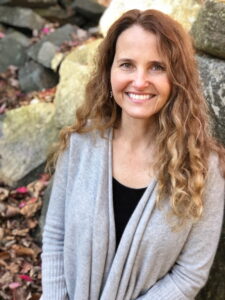
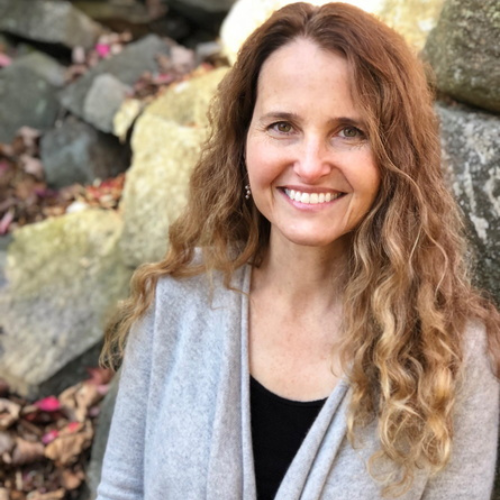
Mara Bishop has over 25 years of experience helping people find spiritual health and well-being. Her Personal Evolution Counseling™ method blends shamanism, psychology, intuition, energy healing, and nature-based practices. She lives in Durham, NC with a beloved family of people, animals, and plants.
Mara Bishop is a shamanic practitioner, intuitive consultant, teacher, author, and artist. In private practice, she uses her Personal Evolution Counseling™ method to provide an integrated approach to spiritual healing, personal growth, and emotional well-being. Her books Shamanism for Every Day: 365 Journeys and Inner Divinity: Crafting Your Life with Sacred Intelligence are resource guides for spiritual practice. She resides in Durham, North Carolina. For more, visit wholespirit.com.
Are you exhausted, anxious, or overwhelmed? Maybe your life is challenging. Or perhaps the state of the world and others’ suffering feels unbearable. If your life is going well, but you still feel miserable, maybe you have some guilt or shame. You are not alone. You may be suffering from empathic distress.
Most of us have been taught that empathy is wholly positive and should be fostered in children and revered in adults. This idea is partly correct. The absence of empathy is clearly problematic. When the ability to sense or care about others’ feelings or pain is missing, we edge into sociopathy. However, empathy is experiencing another person’s pain as our own. In small doses and for short periods, it allows us a deeper understanding of our fellow beings. But it can also make it harder to help, because the pain is spread around, not diminished. If your friend breaks their leg and you experience genuine empathy, it might feel like your leg is broken too. This makes it harder for you to function and definitely harder for you to help them.
Empathy can make us sick, overwhelmed, and burned out.
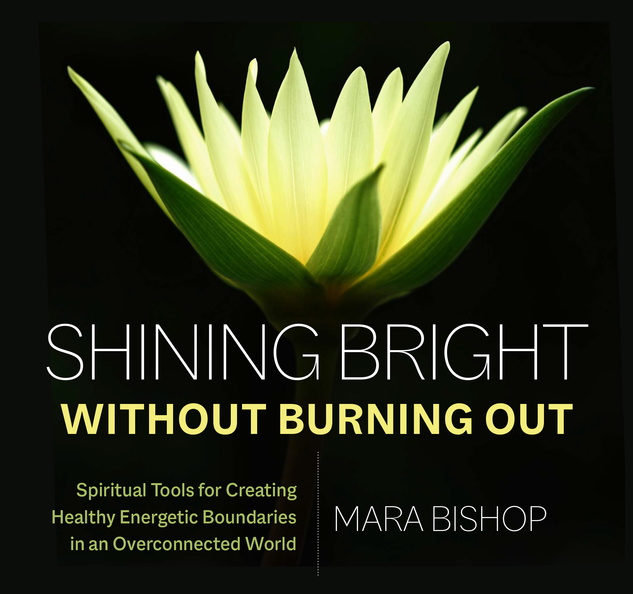
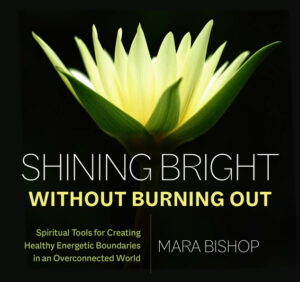
Many people feel helpless in the face of the magnitude of suffering in the world today. It can result in what appears to be apathy at first but is actually empathic distress, which means “hurting for others while feeling unable to help.” An op-ed in the New York Times titled “That Numbness You’re Feeling? There’s a Word for It” described this phenomenon and cited some of the research I used to create the Sounds True audio course Shining Bright Without Burning Out: Spiritual Tools for Creating Healthy Energetic Boundaries in an Overconnected World.
The Research
Neuroscientists Olga Klimecki and Tania Singer identified empathy as a contributing factor to burnout, primarily but not exclusively, among healthcare workers and therapists. The older term compassion fatigue is a “misnomer.” Compassion and empathy have distinctly different impacts on our bodies and psyches. Compassion is witnessing and being willing to help when possible and appropriate. Empathy is taking on others’ pain as our own. Empathy often creates “more distress.” It is a huge distinction.
Empathy is overrated and fatiguing. Compassion is what we need. Unfortunately, we often confuse the two. This dynamic is one reason why developing healthy energetic boundaries is essential.
Decreasing Empathic Distress
Being unable to adjust between compassion and empathy is a big reason many people feel drained and overwhelmed. Research about the critical difference between compassion and empathy aligns with many spiritual concepts of energetic boundaries. It also challenges some. One of the ways we inadvertently make things difficult for ourselves is when we believe that to be good, kind, “spiritual” people, we must always be wide open. We must be at one with the universe, be open to everyone, and say yes to everything. There is a paradox here. We are all one on some level, but we need to embrace the ability to differentiate ourselves from others at times to steward our own health.
We have reached a tipping point with empathic distress; it is a crisis within the crises.
Klimecki and Singer focus on how training in compassion meditation can help reduce empathic distress, shifting from an experience of absorbing others’ energy to a state of kindness toward others with clear self-differentiation. The distinction between empathy and compassion is one of the first things we cover in Shining Bright Without Burning Out: Spiritual Tools for Creating Healthy Energetic Boundaries in an Overconnected World. The course also includes a full set of tools for addressing empathic distress from the perspective of energetic boundaries.
Here are a few additional steps you can take today to begin reducing empathic distress:
Be clear about your direct responsibilities and what is not yours.
Pause before entering new situations: conversations, appointments with clients, meetings, etc. Take a moment to reset yourself with a breath and an intention for how you want to engage.
Pay attention to how you feel after interactions with people, places, and media. Note over time when your mood or body feels drained so that you can prepare more thoroughly in the future, consider how to minimize those interactions if they are optional, and take time to reset after engaging.
Mara Bishop
Mara Bishop is a shamanic practitioner, intuitive consultant, teacher, author, and artist. In private practice, she uses her Personal Evolution Counseling™ method to provide an integrated approach to spiritual healing, personal growth, and emotional well-being. Her books Shamanism for Every Day: 365 Journeys and Inner Divinity: Crafting Your Life with Sacred Intelligence are resource guides for spiritual practice. She resides in Durham, North Carolina. For more, visit wholespirit.com.
Mara Bishop is a shamanic practitioner, intuitive consultant, teacher, author, and artist. In private practice, she uses her Personal Evolution Counseling™ method to provide an integrated approach to spiritual healing, personal growth, and emotional well-being. She is the author of the books Shamanism for Every Day: 365 Journeys and Inner Divinity: Crafting Your Life with Sacred Intelligence, and, with Sounds True, she is the author of the audio learning program Shining Bright Without Burning Out: Spiritual Tools for Creating Healthy Energetic Boundaries in an Overconnected World.
In this podcast, Mara speaks with Sounds True’s founder, Tami Simon, about how in today’s world we can learn to value our sensitivity instead of feeling overwhelmed and exhausted. Mara and Tami also discuss shamanism as a path of direct revelation, accessing non-ordinary consciousness for insight and healing, the three phases of creating healthy energetic boundaries, the difference between “just plain stress” and burnout, discovering your energy personality archetypes, understanding your energy ecosystems and how they interact, working on yourself and bringing light to the shadow aspects of your personality, the difference between compassion and empathy, energetic cleansing methods, the paradox of “one and all one,” Mara’s concept of “powering on” to amplify and shine our inner light, how our world has become “overconnected” and how to avoid the burnout this can create, the shamanic practitioner as someone who can “see through the eyes of the heart,” and more.
Compassion is the magic ingredient that turns our personal “compost” into personal evolution.
Some time ago, I found a strange bloom in the kitchen. It was elegantly twisted, like a dragon at a Chinese New Year celebration. It was frilled, purple, and pungent. This exquisite thing grew out of a chunk of purple cabbage that I’d put under the sink to go out for compost. Instead of fading quietly however, it burst into new life in the dark grotto of my cabinetry. It blossomed into something unexpected, unusual, and fiercely beautiful.
Reflecting on the discovery of this “flower” in the shadows, I’m reminded of, and heartened by, the fertility of dark times. Many people are feeling a collective spiritual darkness now, exhausted and frustrated, maybe also angry and scared. Having compassion for ourselves and others is especially important in times of literal and metaphorical darkness. How can we do this if we already feel overloaded?
Nature is our ultimate model and guide—in the light, in the dark, and in the most surprising and gorgeous ways. Cue the weird, glorious cabbage flower which came to life in the dark. What was being shown there?
There is the clear compost metaphor. Compost is the stuff we reject, the moldy, wilted, too hard, too soft, nasty bits that don’t make it to the table. It’s also the leftovers from delicious things we appreciate and enjoy, silky mango skins, green tea leaves, dark coffee grounds.
It all transforms into a rich sloop that eventually nourishes future plants. Our personal work includes processing our own “dark” sides, the parts we’d like to hide or discard. Self-compassion (and compassion for others) holds both the rejected and respected parts of who we are. Like composting, it isn’t always pretty, but it’s potent. Research shows self-compassion helps us stay present and kindhearted without sinking into absorptive empathy, which can lead to overload and burnout. This meditation is part of the toolkit in the audio course Shining Bright Without Burning Out.
The cycles of the natural world, into which we are interwoven, take time. It’s hard to be patient, to let everything, both scorned and enjoyed, stew in our symbolic personal compost piles. The speed with which that brew changes from nasty to nourishing varies widely with the internal and external conditions. Sometimes all those different elements take a long time to dissolve and break down. Sometimes it turns around faster than we think possible, like time-lapse photography of a log rotting on the forest floor with new green shoots springing to life overnight.Compassion is the magic ingredient that turns our personal “compost” into personal evolution.
The dark supports transformation. Times of literal darkness are needed for regeneration. Roots, seeds, and bulbs prepare. People and animals sleep. Times of symbolic darkness are also helpful. In darkness, transformative processes happen without spectators, often below the level of our conscious awareness. These are periods of catharsis, healing after trauma, cocooning in preparation for the next version of ourselves and our world.
We sometimes feel hopeless and helpless in the dark. Our society avoids sinking into it. Instead, we gravitate towards purveyors of easy “love and light!” spirituality, shying away from the deep, gooey work that happens to the larval versions of ourselves (and those around us) when we’re in the darkness of the cocoon. Self-compassion is most needed when we’re a mess.
The dark is a vital part of the wheel of our days, our years, our lifetimes. We need it to survive and be healthy in the long term. So, let’s embrace it, explore it, and be gentle with ourselves as we confront our fear of it. From this darkness we are nourished to bloom into the light.
Mara Bishop has over 25 years of experience helping people find spiritual health and well-being. Her Personal Evolution Counseling™ method blends shamanism, psychology, intuition, energy healing, and nature-based practices. She lives in Durham, NC with a beloved family of people, animals, and plants.
Most people come to meditation looking for a break, a few quiet minutes away from a world that rarely slows down on its own. Reverend angel Kyodo williams spends much of this conversation gently taking apart that assumption, suggesting that real stillness was never about leaving the world behind at all. It’s a small shift in framing that ends up changing everything about how the rest of her teaching lands.
Rev. angel is an ordained Zen priest, activist, and founder of the Center for Transformative Change, recognized as the world’s second female Zen teacher of African descent and the author of Being Black and Radical Dharma.
Sounds True has featured her teaching across our Meditation Summit and A Year of Mindfulness precisely because she refuses to separate inner practice from outer justice, treating the two as a single continuous act rather than competing priorities. What follows traces her case for a warrior spirit built on presence rather than escape, and the meditation practice she offers as its foundation.
Key Takeaways:
Retreat Isn’t the Goal: Learn why angel Kyodo williams reframes meditation as engagement, not escape.
Effort Meets Release: Understand the meditation practice she developed for people doing social change work.
A Different Kind of Fearlessness: See what warrior spirit means when it’s rooted in love rather than force.
Retreat Is Not What It Looks Like From Outside
Rev. angel opens by naming something many practitioners feel but rarely say aloud: the pull toward meditation often comes wrapped in a longing to retreat from an overwhelming world. She doesn’t dismiss that longing, but she does redirect it, suggesting that genuine practice engages our inner fullness rather than fleeing from outer noise. What looks like withdrawal from the outside, she argues, is closer to a deepening than a departure, a distinction that reframes the entire purpose of sitting down to practice in the first place.
Effort and Release Meditation: A Practice Born From Movement Work
Rev. angel developed a specific meditation practice she calls Effort and Release after years spent working alongside people doing demanding social change work. The practice blends deliberate effort with intentional letting go, addressing a pattern she noticed constantly among activists and organizers: a strong pull toward doing, accomplishing, and pushing that rarely leaves room for rest. She describes meditation and social change as inseparable, since the way a person relates to their own mind directly shapes what they find themselves willing to engage with in the wider world.
Naming the Pattern: Many changemakers carry a constant urgency that outlasts any single campaign, even during rest.
Effort With Purpose: The practice doesn’t reject action, only unconscious, exhausting overdrive.
Release as Skill: Letting go is treated as an active discipline, not passive collapse or avoidance.
Inner Life and Outer World as One Continuous Fabric
A central thread running through Rev. Angel’s teaching rejects any hard line between internal awareness and external action. She describes our self-talk, the noise level of our minds, and our capacity for presence as directly shaping how we show up for others and what we find acceptable in the wider world. This isn’t a metaphor for her; it’s closer to a working principle behind everything she teaches, from meditation instruction to movement strategy.
What we tolerate in the world outside us, she suggests, tends to trace directly back to what we’ve grown accustomed to tolerating within our own minds first, which is why she treats internal clarity as a precondition for meaningful external change rather than a separate, optional pursuit.
Warrior Spirit Rooted in Fearlessness, Not Force
The phrase “warrior spirit,” drawn from her earlier book Being Black, describes something quite different from combativeness or aggression directed outward at the world. For Rev. Angel, this spirit is built on truth-telling and responsibility, a foundation for genuine happiness rather than a posture of defensiveness. It asks practitioners to stay engaged with difficulty, including the difficulty of racism, patriarchy, and other inherited harms, rather than looking away or numbing out. This framing has resonated widely since the book’s original publication, offering readers across many backgrounds a way to hold fearlessness and tenderness together rather than treating them as opposites.
Truth Before Comfort: Warrior spirit requires naming what’s actually happening, even when it’s unwelcome.
Grace Alongside Fearlessness: Strength and tenderness are treated as complementary, not opposites.
Responsibility as Practice: Taking ownership of one’s own patterns becomes part of the discipline itself.
Bridging Personal Transformation and Collective Justice
Rev. angel has spent more than fifteen years shaping what she calls Transformative Social Change, a field built on the belief that lasting justice work requires equally serious inner work. She resists treating meditation as a private escape hatch separate from activism, instead framing contemplative practice as fuel for sustained, clear-eyed engagement with collective harm. Burnout among organizers, in her view, often stems from skipping this inner dimension entirely, treating stillness as optional rather than structural to the work itself. She has described this field as one she helped name and shape, watching it grow from a personal conviction into a recognized approach embraced across activist and spiritual communities alike.
What Radical Dharma Adds to This Conversation
Rev. Angel’s later book, Radical Dharma, co-written with Lama Rod Owens and Jasmine Syedullah, extends this same warrior spirit into a direct examination of race, love, and liberation within Buddhist communities themselves. The book argues that spiritual communities are not exempt from the patterns of harm found elsewhere in society, and that genuine awakening has to include an honest reckoning with those patterns rather than a spiritual bypass around them. This willingness to hold institutions, including her own tradition, accountable runs consistently through everything she teaches, from her earliest writing through her more recent contributions to Sounds True’s programming.
Final Thoughts
Reverend angel Kyodo williams doesn’t offer meditation as a rest stop from the world’s demands. She offers it as a training ground for staying present with those demands without losing ourselves inside them. That distinction, subtle but significant, may be exactly what separates spiritual bypass from spiritual maturity, and it’s the thread that ties her meditation teaching to her justice work without contradiction. Listeners who come looking for a quick escape often leave with something more durable instead: a practice for staying rooted precisely where things are hardest.
Sounds True continues sharing her teaching because our mission to wake up the world has never meant looking away from what’s hardest to face, and few teachers hold that tension as steadily as she does. Her books and audio programs remain in our library for anyone ready to bring the same steadiness into their own life and work.
Frequently Asked Questions About angel Kyodo williams
Who is Reverend angel Kyodo williams?
She is an ordained Zen priest, activist, author, and founder of the Center for Transformative Change.
What books has she written?
Her books include Being Black: Zen and the Art of Living with Fearlessness and Grace and Radical Dharma.
What is the Effort and Release practice?
A meditation method blending deliberate effort with intentional letting go, developed for activists and organizers.
Is this teaching only relevant to activists?
No, her ideas on presence and inner work apply to anyone navigating stress, urgency, or burnout in daily life.
What does warrior spirit mean in her teaching?
A fearless, truth-telling posture grounded in responsibility and grace, not aggression or combativeness.
Has Sounds True featured her in other programs?
Yes, she has appeared in Sounds True’s Meditation Summit and A Year of Mindfulness series.
What is the Center for Transformative Change?
An organization she founded connecting inner personal work with large-scale social transformation.
Where can I hear more conversations like this one?
Explore our Insights at the Edge Podcast for further interviews on mindfulness, justice, and social engagement.
Michelle Cassandra Johnson is an author, activist, spiritual teacher, racial equity consultant, and intuitive healer. She is the author of six books, including Skill in Action and Finding Refuge. Amy Burtaine is a leadership coach and racial equity trainer. With Robin DiAngelo, she is the coauthor of The Facilitator’s Guide for White Affinity Groups. For more, visit https://www.michellecjohnson.com/wisdom-of-the-hive.
What happens when the world around you feels like it has lost its grip on truth, and you’re left wondering how to hold onto faith anyway? That question sits at the heart of the exchange between Tami Simon and Iyanla Vanzant, one of the most trusted voices in personal empowerment today.
Over 40 years, we at Sounds True have been devoted to bringing you the living wisdom of teachers like Iyanla Vanzant, an author of five New York Times bestsellers and a familiar face to millions as the host of Iyanla: Fix My Life. As the world’s largest living library of transformational teachings, and home to Tami Simon’s Insights at the Edge, we exist to preserve these conversations in their true, unscripted form.
What Iyanla and Tami uncovered reaches into territory many of us have been quietly longing to name: intimacy with the divine, the erosion of trust and integrity, and the calling that shapes who you really are.
Key Takeaways:
Faith Is a Practice, Not a Belief: Intimacy with the divine is a relationship you return to daily. Iyanla Vanzant reminds us that faith in difficult times is the practice that keeps you grounded when certainty runs out and the path forward feels unclear.
Reclaiming Values We’ve Lost: Integrity, accountability, and trust are slipping quietly from modern life. Iyanla Vanzant and Tami Simon reflect on what this costs us personally and collectively, and what it takes to reclaim these values through honest daily living.
Your Calling Reveals Your True Self: Rather than searching for purpose separately from identity, Iyanla Vanzant teaches that answering your calling is what gives birth to your most authentic self, with truth as the light that makes the path visible.
Cultivating Intimacy With The Divine
At the heart of what Iyanla Vanzant shares is something many of us long for but rarely name aloud: an intimate, ongoing relationship with God. A living connection you return to daily, the way you would a trusted friend. This is where everything else begins.
Iyanla Vanzant reminds us that faith is lived, returned to moment by moment, a practice built most steadily through the very times when doubt feels easier than trust. That distinction matters more than it might first appear. Trying times reveal whether your faith is a story you tell about yourself or a relationship you live inside, moment by moment, choice by choice.
We invite you to sit with that difference for a moment. Where in your life are you being asked to move from believing in something to actually leaning into it, even when the outcome is not yet clear, and even when trust feels like the harder path?
Values We’re Losing And Why They Matter
Beyond the personal work of faith, Iyanla Vanzant and Tami Simon turn their attention outward to something both women see slipping away in modern life. It is a quiet loss, the kind that shows up in small daily interactions long before it becomes a headline. Their conversation names three specific casualties worth sitting with:
Integrity
Iyanla Vanzant speaks to integrity as something deeper than simply telling the truth. The alignment between what you say, what you believe, and how you show up in the world each day. When that alignment breaks down, even in small ways, something essential within a community begins to quietly erode. A person who values honesty but withholds difficult truths from the people they love is already living out of alignment.
Accountability
Accountability emerges as a value that seems increasingly rare: the willingness to own your actions and their consequences without deflecting or minimizing what happened. Iyanla Vanzant and Tami Simon reflect on what it costs a society when people stop holding themselves responsible to one another and to the truth. When accountability disappears from daily life, trust erodes alongside it, and the small moments of honesty that rebuild it become more vital.
Trust
Perhaps most tender is their reflection on trust itself. Iyanla Vanzant speaks to how trust, once assumed as a baseline of human connection, now feels harder to extend and even harder to earn back. That raises an honest question about what it truly takes to rebuild something so foundational to how we relate.
Your Unique Calling And The Self It Reveals
The exchange moves toward something deeply personal: the idea that every person carries a calling that is theirs alone to discover. Iyanla Vanzant and Tami Simon treat this as a truth available to anyone willing to sit with it. Three related threads open from there:
Everyone Carries A Calling: Iyanla Vanzant speaks to the idea that a calling is not something reserved for the chosen few. It belongs to every person, waiting to be recognized rather than invented. This reframes the search for purpose as less about creating something entirely new and more about quietly uncovering what was already there within you all along.
Calling As The Birthplace Of Authenticity: Iyanla Vanzant and Tami Simon reflect on how answering your calling is what gives rise to your most authentic self. Purpose and identity are born together. The calling gradually shapes who you become, gently and surely, as you live in closer alignment with what you are here to do. Many of us spend years trying to figure out who we are before we feel ready to act.
Truth As The Light That Reveals The Path: This is where Iyanla Vanzant on Truth Is Light offers its most grounding insight: truth is the light that makes your calling visible. Living honestly, with yourself and with what you believe, is what allows your calling to come into focus, clearing away the confusion and doubt that keep it hidden.
Final Thoughts
What stays with you is a felt sense of what it means to live honestly, with yourself, with the divine, and with the people around you. Iyanla Vanzant and Tami Simon remind us that faith in difficult times is about staying in relationship with something larger than the moment you are in, even when that moment feels unresolved. The quiet challenge they leave us with is this: notice where integrity, accountability, and trust have faded in your own life, and consider what living in closer alignment with your true calling might look like.
The teachings Iyanla Vanzant brings forward are part of a larger body of work we have been honored to carry for over 40 years. At Sounds True, we believe that wisdom shared becomes wisdom lived. Wherever these ideas meet something real in you, we encourage you to keep going. Our courses, community, and programs are here to hold you as you do.
Frequently Asked Questions About Iyanla Vanzant On Truth Is Light
Who is Iyanla Vanzant?
Iyanla Vanzant is an author and television host known for five New York Times bestsellers and her role as host of Iyanla: Fix My Life, along with several audio programs created with Sounds True.
What is this Iyanla Vanzant episode about?
This episode is a conversation between Iyanla Vanzant and Tami Simon exploring intimacy with the divine, fading values like trust and integrity, and the unique calling that shapes your most authentic self.
How do I hold onto faith when life feels hard?
Iyanla Vanzant reminds us that faith is not something you simply have but something you practice daily, especially when life gives you every reason to doubt and lose your footing.
Why do integrity, accountability, and trust matter so much right now?
Iyanla Vanzant and Tami Simon reflect on these values as ones quietly fading from modern life, and what is lost personally and collectively when we stop holding each other accountable.
How do I discover my own calling?
Iyanla Vanzant teaches that your calling is uncovered through living in truth with yourself, not invented from scratch. Our online courses offer structured paths for going deeper into this kind of work.
What does it mean to cultivate intimacy with God?
For Iyanla Vanzant, intimacy with the divine means a living, ongoing connection you return to daily, much like a trusted friendship, rather than a distant faith reserved only for hard times.
Where can I listen to more conversations like this one?
You can hear the full episode on Insights at the Edge, and find more conversations like it through Sounds True One, our community membership for ongoing teachings.
Michelle Cassandra Johnson is an author, activist, spiritual teacher, racial equity consultant, and intuitive healer. She is the author of six books, including Skill in Action and Finding Refuge. Amy Burtaine is a leadership coach and racial equity trainer. With Robin DiAngelo, she is the coauthor of The Facilitator’s Guide for White Affinity Groups. For more, visit https://www.michellecjohnson.com/wisdom-of-the-hive.
Have you ever walked into a room and felt someone else’s sadness settle into your own chest before a single word was spoken? Or left a gathering so depleted that you needed hours alone just to feel like yourself again? You may already know what it means to move through the world as an empath, someone who absorbs other people’s emotions as if they were your own.
For over 40 years, we at Sounds True have been trusted stewards of spiritual education, home to the world’s largest living library of transformational teachings. Our podcast, Insights at the Edge, hosted by founder Tami Simon, has preserved real, unscripted conversations with respected spiritual teachers and healers. Here, Tami sits down with Judith Orloff, MD, a UCLA psychiatrist and leading voice on empathy, whose bestselling books have helped countless sensitive people understand themselves with more compassion.
Together, they trace the inner life of an empath, why sensitivity deserves honoring, and the grounding practices that help you stay open without losing yourself.
Key Takeaways:
What You Feel Is Real: Judith Orloff explains that empaths absorb the emotions of others as their own, which means the exhaustion you feel after being around people is a real and recognizable experience, not a personal failing.
Sensitivity Is a Form of Medicine: Judith describes empathy as a healing force, one that benefits the person who carries it and the relationships and communities they touch. Your capacity to feel deeply is part of what makes genuine connection possible.
Boundaries Keep Your Gift Alive: Grounding, rest, and the willingness to say no are not indulgences for empaths. They are what allow sensitivity to remain a strength rather than a source of burnout.
What It Means To Thrive As An Empath
Judith opened her conversation with Tami by naming something many sensitive people feel but rarely have language for: the experience of being an emotional sponge. As an empath, you carry the joy and sorrow of those around you in your own body, as though the boundary between their inner world and yours has quietly dissolved. Judith described this as a real and distinct way of being, one that reaches far beyond ordinary sensitivity.
She also drew an important distinction with Tami: there is a difference between learning empathic skills and being a natural empath, wired to take in the emotional weather of every room. For a natural empath, this isn’t an occasional technique. It’s a constant, often unfiltered channel of perception that, without understanding, can lead to exhaustion and overwhelm.
If this sounds familiar, Judith offers something valuable: permission to see your sensitivity not as a flaw, but as a legitimate way of perceiving the world.
Empathy As Medicine: Why Sensitivity Matters For Healing
Judith sees empathy as far more than an interesting personality trait. In her conversation with Tami, she framed it as something close to medicine, a healing force with the power to touch both the individual carrying it and the relationships and communities that surround them. The path of thriving as an empath begins with recognizing just how much this capacity can offer, once it is met with the right care:
Empathy As A Personal Healing Force
Judith spoke about empathy as something that, when honored rather than suppressed, becomes a source of genuine healing for the person who carries it. Rather than treating sensitivity as an obstacle to push through, she invited listeners to see it as a doorway back to themselves, one that asks for recognition and gentleness rather than resistance.
Empathy’s Role In Relationships
In her discussion with Tami, Judith described how empathy shapes the quality of our closest connections. When you can truly feel what another person is experiencing, relationships deepen in ways that surface-level understanding never allows. This kind of attunement, she noted, is part of what makes empaths such meaningful presences in other people’s lives.
Empathy As Medicine For Community
Judith extended this idea outward, describing empathy as a vital medicine not just for individuals but for communities as a whole. In a world that feels fractured, she suggested that empaths carry a quiet but essential role, helping to knit connection back into relationships and groups that have grown distant or strained.
Empath Self Care: Grounding Tools To Prevent Burnout
Knowing what it means to be an empath is only the beginning. Judith and Tami also spent real time on the practical side of this conversation, the everyday tools that help you stay steady when the world around you feels overwhelming. Sensitivity without support can tip quickly into exhaustion. With that in mind, Judith offered several grounding tools for empath self care as you move through a world that can feel loud and demanding:
Grounding As A Daily Practice
Judith spoke about grounding as an essential, ongoing practice for empaths rather than something reserved for moments of crisis. Staying connected to your own body and breath throughout the day helps create a kind of internal steadiness, so you’re less likely to be pulled entirely into the emotional current of everyone around you.
Setting Loving Boundaries
A recurring theme in Judith’s conversation with Tami was the importance of boundaries. For empaths, saying no is not unkind. It’s an act of self-respect that protects your energy so you can show up fully for the people and situations that matter most, rather than depleting yourself for everyone who asks.
Making Self-Care Non-Negotiable
Judith was clear that self-care is foundational for empaths. Without regular time to recover and replenish, sensitivity can quickly tip into overwhelm. She encouraged listeners to treat rest and quiet as essential parts of a sustainable, thriving life, not indulgences to fit in when there’s time left over.
Final Thoughts
What emerges most clearly from this conversation is a simple but freeing idea: your sensitivity was never something to fix. Judith Orloff’s conversation with Tami Simon offers a gentler way of understanding what it means to move through the world feeling everything so fully, and a reminder that a fuller, steadier life as an empath is possible once you learn to honor your own nervous system as carefully as you honor everyone else’s.
We invite you to spend time with the full depth of this exchange. Listen to Judith Orloff on How to Thrive as an Empath to take in the warmth and nuance that only a real, unscripted conversation can carry. Our online courses offer more ways to deepen this work alongside teachers who know this path from the inside.
Frequently Asked Questions About Judith Orloff On How To Thrive As An Empath
What is an empath, according to Judith Orloff?
Judith Orloff describes an empath as someone who doesn’t just sympathize with others’ emotions but absorbs them, often feeling them in their own body as though the feelings were their own.
How is a natural empath different from someone practicing empathy as a skill?
Judith draws a clear distinction between people learning empathic skills and natural empaths, who are wired from the start to take in the emotional atmosphere of every room, making their sensitivity a constant part of daily life.
Why do empaths get so easily drained by other people?
Because empaths absorb emotions as their own, spending time around intense feelings, whether joyful or difficult, can leave them depleted in a way that others may not experience in the same situations.
Can this kind of steadiness really be learned?
Judith’s conversation with Tami offers real encouragement here, showing that with grounding, boundaries, and consistent self-care, empaths can move from feeling overwhelmed to feeling genuinely at home in their sensitivity.
How does empathy help heal relationships and communities?
Judith describes empathy as a kind of medicine, one that deepens personal connections and helps knit communities back together, especially in a world that can often feel disconnected.
What role do boundaries play in an empath’s well-being?
Boundaries are essential, not optional. Judith emphasizes that a loving no is an act of self-respect that protects an empath’s energy so they can show up fully for what matters most.
Where can I learn more from teachers like Judith Orloff?
Our online courses offer more ways to explore this kind of work, and our Sounds True One membership connects you with a wider community learning alongside teachers just like her.
Michelle Cassandra Johnson is an author, activist, spiritual teacher, racial equity consultant, and intuitive healer. She is the author of six books, including Skill in Action and Finding Refuge. Amy Burtaine is a leadership coach and racial equity trainer. With Robin DiAngelo, she is the coauthor of The Facilitator’s Guide for White Affinity Groups. For more, visit https://www.michellecjohnson.com/wisdom-of-the-hive.

 Order Shining Bright Without Burning Out now!