Emotions are Vital Aspects of Thinking, Acting, and Working
People once believed that emotions were the opposite of rationality, or that they were lower than or inferior to our allegedly logical processes. But decades of research on emotions and the brain have overturned those outdated beliefs, and we understand now that emotions are indispensable parts of rationality, logic, and consciousness itself. In fact, emotions contain their own internal logic, and they help us orient ourselves successfully within our social environments. Emotions help us attach meaning to data, they help us understand ourselves and others, and they help us identify problems and opportunities. Emotions don’t get in the way of rationality; they lead the way, because they’re vital to everything we think and everything we do. Emotions aren’t the problem; they’re pointing to the problem, and they’re trying to bring us the precise intelligence and energy we need to deal with the problem.
In [The Power of Emotions at Work], we’ll learn how to listen to emotions as uniquely intelligent carriers of information, and how to build healthy and effective social and emotional environments at work – not by ignoring or silencing emotions (you can’t), but by listening to them closely, learning their language, and creating a communal set of emotional skills that everyone can rely on. This work is not difficult at all, but it can be unusual in an environment that wrongly treats emotions as soft, irrational, or unprofessional.
The serious problems we’ve baked into the workplace don’t come from any specific management style or ideology, so I won’t focus on managers or leaders as if they’re uniquely powerful or uniquely to blame. These problems also aren’t limited to specific occupations or income brackets (though low-wage work is regularly dehumanizing and hazardous); these are long-term, widespread problems based on a failed workplace model – and on an outdated social and emotional approach that does not support (or in many cases, even comprehend) human relationships and human needs.
This book is the result of decades of exploration and study into how the workplace got to be so unworkable, plus decades of experience in how to access the existing genius in people’s emotional responses (in surprisingly simple ways once you understand how emotions and empathy work). With the help of the genius in our emotions, we can create emotionally well-regulated and worthwhile places for all of us to earn our living and spend our lives.
Luckily, we don’t have to do anything special to welcome emotions into the workplace, or even to make room for them, because emotions are and always have been in the workplace. They’re in the responses people have to workplace abuses; they’re in disengaged workers; they’re in workers seeking other jobs while on the job; they’re in workers who rightly avoid communicating upward about serious problems; they’re in low-wage workers who learn how to survive in hellscapes like call centers, fast-food restaurants, gig work, and robot-like warehouse jobs; they’re in living-wage workers who tolerate unhealthy workplaces because they can’t afford to leave their health insurance behind; and they’re in high-wage workers who may have to bow down to their superiors and compete with their colleagues to be seen as “winners” – and whose experiences of workplace abuse may not be taken seriously because they make so much money and therefore have no right to complain.
We can also see the emotions in our responses to workplace successes; in our healthy working relationships; in the ways we gather together to solve problems; in the ways empathic workers and leaders empower everyone around them; in the ways our colleagues support us when we’re struggling; in the ways businesses step up in times of loss; in the ways we create open communication and humane workflows; in the ways we teach each other; in the benefits, support, flexibility, and living wages we provide for our workers; in the honest sharing of business difficulties or financial losses; and in the laughter we share on great days and rotten days.
Emotions are everywhere in the workplace because emotions are a central feature of human nature. They aren’t removable, and in fact, trying to remove them is a huge part of what created the failed workplace model we have today. Emotions are crucial to everything we do and to every aspect of our work; therefore, we’ll learn how to listen to emotions, work with them, and respect their intelligence. And in so doing, we’ll build a better workplace – and a better world – from the ground up.
Karla McLaren, M.Ed.

Karla McLaren, M.Ed., is an award-winning author, social science researcher, and empathy innovator. Explore her books and audios on the power of emotion and creativity here.

This is part of a Conscious Business series brought to you by The Inner MBA®. You can learn more about the program at Innermbaprogram.com
Karla McLaren, M.Ed., is an award-winning author, social science researcher, and empathy innovator. She is CEO of Emotion Dynamics, developer of Dynamic Emotional Integration®, and creator of EmpathyAcademy.org. Karla is the author of Embracing Anxiety, The Dynamic Emotional Integration Workbook, The Art of Empathy, The Power of Emotions at Work, and the multimedia online course Emotional Flow: Becoming Fluent in the Language of Emotions. For more, visit karlamclaren.com.
Emotions are Vital Aspects of Thinking, Acting, and Working
People once believed that emotions were the opposite of rationality, or that they were lower than or inferior to our allegedly logical processes. But decades of research on emotions and the brain have overturned those outdated beliefs, and we understand now that emotions are indispensable parts of rationality, logic, and consciousness itself. In fact, emotions contain their own internal logic, and they help us orient ourselves successfully within our social environments. Emotions help us attach meaning to data, they help us understand ourselves and others, and they help us identify problems and opportunities. Emotions don’t get in the way of rationality; they lead the way, because they’re vital to everything we think and everything we do. Emotions aren’t the problem; they’re pointing to the problem, and they’re trying to bring us the precise intelligence and energy we need to deal with the problem.
In this book, we’ll learn how to listen to emotions as uniquely intelligent carriers of information, and how to build healthy and effective social and emotional environments at work – not by ignoring or silencing emotions (you can’t), but by listening to them closely, learning their language, and creating a communal set of emotional skills that everyone can rely on. This work is not difficult at all, but it can be unusual in an environment that wrongly treats emotions as soft, irrational, or unprofessional.
The serious problems we’ve baked into the workplace don’t come from any specific management style or ideology, so I won’t focus on managers or leaders as if they’re uniquely powerful or uniquely to blame. These problems also aren’t limited to specific occupations or income brackets (though low-wage work is regularly dehumanizing and hazardous); these are long-term, widespread problems based on a failed workplace model – and on an outdated social and emotional approach that does not support (or in many cases, even comprehend) human relationships and human needs.
This book is the result of decades of exploration and study into how the workplace got to be so unworkable, plus decades of experience in how to access the existing genius in people’s emotional responses (in surprisingly simple ways once you understand how emotions and empathy work). With the help of the genius in our emotions, we can create emotionally well-regulated and worthwhile places for all of us to earn our living and spend our lives.
Luckily, we don’t have to do anything special to welcome emotions into the workplace, or even to make room for them, because emotions are and always have been in the workplace. They’re in the responses people have to workplace abuses; they’re in disengaged workers; they’re in workers seeking other jobs while on the job; they’re in workers who rightly avoid communicating upward about serious problems; they’re in low-wage workers who learn how to survive in hellscapes like call centers, fast-food restaurants, gig work, and robot-like warehouse jobs; they’re in living-wage workers who tolerate unhealthy workplaces because they can’t afford to leave their health insurance behind; and they’re in high-wage workers who may have to bow down to their superiors and compete with their colleagues to be seen as “winners” – and whose experiences of workplace abuse may not be taken seriously because they make so much money and therefore have no right to complain.
We can also see the emotions in our responses to workplace successes; in our healthy working relationships; in the ways we gather together to solve problems; in the ways empathic workers and leaders empower everyone around them; in the ways our colleagues support us when we’re struggling; in the ways businesses step up in times of loss; in the ways we create open communication and humane workflows; in the ways we teach each other; in the benefits, support, flexibility, and living wages we provide for our workers; in the honest sharing of business difficulties or financial losses; and in the laughter we share on great days and rotten days.
Emotions are everywhere in the workplace because emotions are a central feature of human nature. They aren’t removable, and in fact, trying to remove them is a huge part of what created the failed workplace model we have today. Emotions are crucial to everything we do and to every aspect of our work; therefore, we’ll learn how to listen to emotions, work with them, and respect their intelligence. And in so doing, we’ll build a better workplace – and a better world – from the ground up.
Karla McLaren, M.Ed.
Karla McLaren, M.Ed., is an award-winning author, social science researcher, and empathy innovator. Explore her books and audios on the power of emotion and creativity here.
This is part of a Conscious Business series brought to you by The Inner MBA®. You can learn more about the program at Innermbaprogram.com

Lorem ipsum dolor sit amet, consectetur adipiscing elit. Ut elit tellus, luctus nec ullamcorper mattis, pulvinar dapibus leo.
Karla McLaren, M.Ed., is an award-winning author, social science researcher, and empathy innovator. She is CEO of Emotion Dynamics Inc., developer of Dynamic Emotional Integration®, and creator of EmpathyAcademy.org. Karla is the author of Embracing Anxiety, The Dynamic Emotional Integration Workbook, The Art of Empathy, The Power of Emotions at Work, and the multimedia online course Emotional Flow: Becoming Fluent in the Language of Emotions. For more, visit karlamclaren.com.
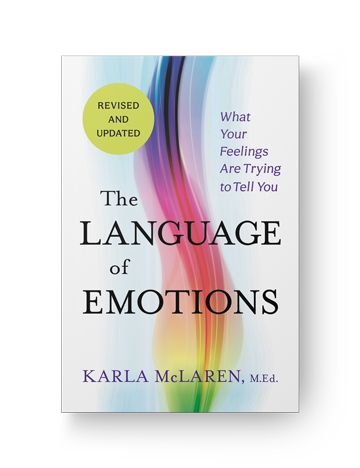
Karla McLaren is an award-winning author, social science researcher, and renowned expert in emotions and empathy. Her work focuses on her grand unified theory of emotions, which reconsiders how we think of “negative” emotions and opens new pathways into self-awareness, communication, and empathy. With Sounds True, Karla is the author of the landmark book The Language of Emotions, a book on The Art of Empathy, and a new book called The Power of Emotions at Work: Accessing the Vital Intelligence in Your Workplace. In this episode of Insights at the Edge, Tami Simon speaks with Karla about why the full range of emotions is necessary for us to bring forth our best thinking. They discuss the “toxic positivity bias” that has become the norm in the contemporary workplace, how this leads to widespread suffering and dysfunction, and how we can achieve an “emotionally well-regulated” workplace that works for all of us.
How do you hold true to your convictions to be good in a world that’s on fire?
This week, Tami Simon speaks with Lodro Rinzler—Buddhist meditation teacher, founder of the Basic Goodness Collective, and author of seven books including the international bestseller The Buddha Walks into a Bar—about his new book, You Are Good. You Are Enough: Free Yourself from the Trap of Doubt and Return to Basic Goodness. Together, they move through the book’s three arcs: seeing the goodness in ourselves, in others, and in society itself.
Join Tami and Lodro to explore:
The concept of basic goodness—what it actually means, where it comes from in the Tibetan Buddhist tradition, and why you don’t have to be a Buddhist to recognize it in yourself
How capitalism profits from the lie of not-enoughness—and what it would mean to collectively stop believing it
The “trap of doubt”: that insidious inner voice that keeps us striving, comparing, and withholding self-acceptance
How to extend compassion toward people who drive us crazy—including world-threatening politicians—without excusing harm or collapsing into Pollyanna thinking
The parrot and the forest fire: a jataka tale about what it means to name what’s broken and show up anyway
Chögyam Trungpa Rinpoche’s teaching that seeing the phenomenal world as sacred is “the first and last practice of all”
A closing guided meditation to help listeners touch basic goodness in their own direct experience
Whether you’ve been carrying shame for decades or are simply exhausted by a world that feels on fire, Lodro offers something rare: not a pep talk, but a genuine shift in view.
Listen now and find your way back to what was always there. →
This conversation offers genuine transmission—not just concepts about awakening, but the palpable presence of realized teachers exploring the growing edge of spiritual understanding together. Originally aired on Sounds True One.
Many people come to meditation hoping to quiet the mind, only to find themselves facing more thoughts than ever. This can feel discouraging, especially when it seems like the practice is not working. Yet the real challenge may not be the presence of thoughts, but the belief that they should not be there at all. Sally Kempton offers a perspective that shifts this assumption and opens the door to a more natural way of meditating.
At Sounds True, we have spent decades sharing the living wisdom of trusted spiritual teachers, preserving their teachings in a way that keeps their depth, warmth, and authenticity alive. Through voices like Sally Kempton’s, we continue to support a more compassionate and honest approach to inner practice.
Here, we look at Sally Kempton’s perspective on meditation for love of it, why trying to quiet the mind can create struggle, and how effortless meditation invites a different experience of awareness.
Key Takeaways:
Approach Shift: Meditation for love of it replaces control with curiosity and allows awareness to unfold naturally
Mindset Change: You can’t quiet mind meditation by force, but you can change your relationship to thoughts
Core Insight: Effortless meditation and Kashmir Shaivism meditation both point to awareness as already present
Meditation for Love of It: Why Effortless Meditation Changes the Approach
Sally Kempton offers a way of understanding meditation that moves away from control and toward relationship. Meditation for love of it is not about fixing the mind, but about being drawn to presence itself.
This shift changes how practice feels. Thoughts and emotions no longer need to be treated as distractions. Effortless meditation allows experience to unfold without forcing the mind into silence.
Over time, it becomes clear that awareness does not depend on controlling thought. Instead of striving for stillness, meditation becomes a recognition of the awareness already present within every moment.
Why “Can’t Quiet Mind Meditation” Is a Misleading Goal
Many people believe meditation is about stopping thoughts, which can make the practice feel frustrating from the start. Sally Kempton reframes this by showing that the issue is not a busy mind, but the expectation that it should always be quiet.
The Problem with Trying to Silence the Mind
Trying to force the mind into stillness creates tension. The more we resist thoughts, the more persistent they become, turning meditation into a struggle and reinforcing frustration within the practice over time.
A More Supportive Way to Relate to Thought
Instead of stopping thoughts, we can allow them and simply notice them. This softens the experience and lets the mind settle naturally over time with greater ease and acceptance, without unnecessary effort.
Sally Kempton on Meditation for Love of It and Letting Thoughts Be
Sally Kempton’s teaching carries a sense of permission that many practitioners find deeply relieving. Instead of striving for an ideal state, she encourages a return to a more natural and compassionate way of practicing.
Letting Meditation Be Enjoyable
Meditation for love of it begins with enjoyment. This does not mean every session feels peaceful or pleasant. It means there is a genuine interest in being present. The practice is no longer driven by obligation or self-improvement alone.
When enjoyment is present, meditation becomes something we return to willingly. It feels like a space of connection rather than effort. This changes consistency in a meaningful way. We sit not because we should, but because something in us is drawn to the experience.
Allowing Thoughts Without Judgment
Another essential aspect of this teaching is the ability to allow thoughts without judgment. Thoughts arise on their own. They do not need to be evaluated or corrected at the moment.
When we stop judging our thoughts, we begin to notice them differently. There is more space between awareness and the thinking process. This space allows awareness itself to become more apparent. The practitioner begins to sense that they are not defined by the constant movement of the mind.
Effortless Meditation According to Sally Kempton
Effortless meditation is not the absence of attention. It is a refined form of attention that does not rely on strain. Sally Kempton describes it as a way of being with experience that feels both engaged and relaxed.
Effort Without Strain
There is still a form of effort in meditation, but it is gentle and responsive. When attention wanders, it is brought back without criticism. This creates a rhythm that feels supportive rather than demanding.
This kind of effort respects the nature of the mind. It allows for movement while gently guiding attention toward awareness. Over time, this builds a sense of stability that does not depend on controlling every thought.
Trusting the Process of Awareness
Trust plays a central role in effortless meditation. Awareness has its own intelligence. It does not need to be constantly directed. When we relax the impulse to correct every experience, something deeper begins to reveal itself.
This trust allows the practitioner to rest more fully in awareness. Instead of constantly adjusting the mind, there is a sense of allowing. This creates the conditions for a more natural and sustainable meditation practice.
Kashmir Shaivism Meditation and the Nature of Awareness
Kashmir Shaivism meditation offers a perspective that supports this approach by recognizing awareness as the essence of all experience.
Awareness is understood as the foundation of everything we perceive, including thoughts and emotions
Thoughts are not obstacles but expressions of consciousness itself
The aim of practice is recognition of awareness, not control of the mind
Every experience is included within the same field of awareness
Meditation is not separate from life but part of a continuous unfolding
Through this lens, the need to quiet the mind begins to soften. The practitioner is no longer trying to change what arises. Instead, there is a growing recognition that awareness is already present, holding every experience.
This understanding brings a sense of ease into meditation. It aligns naturally with meditation for love of it, where the focus is on connection and presence rather than effort and correction.
What Sally Kempton Says About Can’t Quiet Mind Meditation
Sally Kempton offers reassurance to those who feel discouraged by an active mind. She emphasizes that thinking is not a sign of failure. It is part of the field of awareness that meditation reveals.
When we notice that we are thinking, something important has already happened. Awareness has recognized the activity of the mind. This moment of recognition is itself a form of meditation. It does not need to last long to be meaningful.
Rather than trying to eliminate thoughts, Kempton encourages a gentle return. Each return to awareness strengthens familiarity with presence. Over time, this builds confidence in the practice. The mind may still be active, but the relationship to it begins to change.
Practicing Effortless Meditation Through Kashmir Shaivism Meditation
When effortless meditation is combined with the insights of Kashmir Shaivism meditation, practice becomes both simple and profound. There is no need to create a special state. Awareness is already here.
One way to practice is to notice the space in which thoughts arise. Instead of focusing on the content of thought, attention shifts to the awareness that is observing. This shift can happen at any moment, not only during formal meditation.
As this becomes more familiar, meditation begins to extend into daily life. Moments of awareness appear in ordinary activities. Walking, listening, or pausing between tasks can all become part of the practice.
This continuity changes how meditation is experienced. It is no longer limited to a specific time or posture. It becomes an ongoing relationship with awareness itself.
Living Meditation for Love of It Without Trying to Quiet the Mind
Living meditation for love of it means allowing this relationship with awareness to move into everyday life. There is less emphasis on achieving stillness and more emphasis on staying connected to presence.
Thoughts and emotions continue to arise, as they always have. The difference is in how they are met. There is more space, more patience, and a deeper sense of allowing. This creates a quiet that is not forced but naturally emerges from acceptance.
Over time, this way of relating begins to influence how we experience ourselves and the world around us. Meditation is no longer something we do only when we sit down. It becomes part of how we live, moment by moment, grounded in awareness and guided by a genuine sense of care for the experience itself.
Final Thoughts
Sally Kempton’s teaching reminds us that meditation is not about mastering the mind but about changing our relationship to it. When we practice meditation for love of it, the pressure to quiet every thought begins to fall away. What remains is a more natural awareness, one that includes everything rather than pushing anything aside.
In this way, effortless meditation becomes less about doing and more about allowing. Awareness is already present, steady and open, meeting each moment as it is.
Frequently Asked Questions About Meditation for Love of It
What does meditation for love of it actually mean?
Meditation for love of it means practicing without trying to achieve a specific outcome. The focus is on being present and engaged with the experience itself, rather than improving or fixing the mind.
Is it okay if my mind stays busy during meditation?
Yes. A busy mind does not prevent meditation from being meaningful. What matters is your awareness of what is happening, not the absence of thought.
How is effortless meditation different from traditional meditation?
Effortless meditation places less emphasis on control and more on allowing. It invites a softer attention that works with the mind rather than trying to direct it forcefully.
Can beginners practice meditation for love of it?
Yes. This approach can be especially helpful for beginners because it removes pressure and encourages curiosity instead of performance.
Does this approach improve focus over time?
Yes. While focus is not forced, it often develops naturally as the mind becomes less resistant and more settled through consistent practice.
What role does awareness play in meditation?
Awareness is the foundation of meditation. It is the capacity to notice thoughts, sensations, and emotions without becoming fully identified with them.
Do I still need a technique for meditation?
Techniques can be helpful, but they are not the center of this approach. They serve as gentle supports rather than strict rules to follow.
How long should I meditate using this method?
You can start with a few minutes and gradually extend your practice. The quality of attention matters more than the length of time.
Can this style of meditation reduce stress?
Yes. By changing how you relate to thoughts and emotions, this approach can create a sense of ease that supports emotional balance.
Is meditation for love of it connected to spiritual traditions?
Yes. It is influenced by teachings such as Kashmir Shaivism meditation, which emphasize awareness and the inclusion of all experience.
Michelle Cassandra Johnson is an author, activist, spiritual teacher, racial equity consultant, and intuitive healer. She is the author of six books, including Skill in Action and Finding Refuge. Amy Burtaine is a leadership coach and racial equity trainer. With Robin DiAngelo, she is the coauthor of The Facilitator’s Guide for White Affinity Groups. For more, visit https://www.michellecjohnson.com/wisdom-of-the-hive.
Many of us move through daily life caught in thought, with little awareness of the body. This disconnect can lead to tension and emotional overwhelm. Kim Eng’s teaching on presence through movement offers a grounded way back. Through practices like yin yoga presence and qi gong healing, attention shifts into the body, allowing awareness to be felt through sensation, breath, and subtle energy.
We have spent decades sharing transformational teachings from trusted voices like Eckhart Tolle and Kim Eng, preserving their guidance in a way that feels immediate, honest, and deeply human. Our work centers on helping people connect with embodied presence and navigate the pain body with clarity and compassion.
Here, we look at Kim Eng’s presence through movement and how yin yoga presence and qi gong healing support embodied presence while softening the pain body.
Key Takeaways:
Embodied Awareness: Presence through movement shifts attention from thinking into direct bodily experience.
Pain Body Insight: Awareness helps soften emotional patterns described in pain body Eckhart Tolle teachings.
Integrated Practice: Yin yoga presence and qi gong healing support a balanced path of stillness and movement.
Kim Eng Presence Through Movement and Embodied Presence in Practice
Awareness can feel distant when the mind takes over and the body moves on autopilot. Kim Eng’s presence through movement brings attention back into the body, where awareness becomes a lived experience. Through simple, conscious movement, sensing begins to replace thinking.
Instead of trying to control the body, attention shifts inward. Movement becomes meditation in motion, revealing a quiet aliveness and a recognition that presence is already here.
Understanding the Pain Body Eckhart Tolle Teaches Through Presence
The pain body, as described by Eckhart Tolle, refers to stored emotional patterns that can surface in everyday life. Through presence, these patterns can be recognized without becoming overwhelming, creating space for awareness and change.
What Is the Pain Body According to Eckhart Tolle
The pain body is accumulated emotional energy from the past that arises as reactions like anger, sadness, or tension. When we are unaware, it can shape how we think and respond without us realizing it.
How Presence Begins to Transform the Pain Body
Presence allows us to observe these emotions instead of identifying with them. By staying with the sensations in the body, the intensity softens, and the energy begins to shift naturally.
Dissolving the Pain Body Eckhart Tolle Describes Through Movement
Working with the pain body does not always require stillness. Movement offers another way to remain present while allowing emotions to unfold. Kim Eng’s approach highlights how conscious movement can create a supportive environment for transformation.
Movement as a Bridge Between Awareness and Emotion
When movement is slow and intentional, it becomes a bridge between inner experience and conscious awareness. Each gesture carries attention into the body. The mind has less room to wander, and the body becomes the focal point. This creates a sense of stability, even when emotions are active.
As awareness follows movement, sensations begin to shift. There may be warmth, tingling, or subtle releases of tension. These changes reflect a deeper process unfolding within. The body is not being forced to change. It is being given the space to reorganize itself through presence.
Allowing Energy to Move and Release
The pain body often holds energy in fixed patterns. Through movement, these patterns can begin to loosen. Gentle stretches, rotations, and flowing motions encourage energy to circulate. This circulation supports a natural release.
There is no need to analyze what is happening. The emphasis remains on feeling. As attention stays with the body, the experience unfolds in its own way. Some moments may feel expansive, others more dense. Both are part of the process. Presence allows each experience to be included without resistance.
Yin Yoga Presence as a Path to Embodied Presence
Yin yoga presence offers a quiet and receptive way to deepen awareness within the body. By slowing down and holding postures, attention is invited inward. This creates the conditions for embodied presence to emerge more fully.
Slowing Down to Sense the Inner Body
In yin yoga, stillness becomes a teacher. As the body settles into a posture, the initial impulse to adjust or escape begins to fade. Attention turns toward sensation. Layers of feeling that are often overlooked start to reveal themselves.
This slowing down allows for a more refined awareness. The breath becomes more noticeable. Subtle shifts in the body come into focus. There is a growing sense of intimacy with the present moment. Awareness is no longer scattered. It gathers within the body.
Meeting Sensation Without Resistance
Holding a posture can bring up discomfort, both physical and emotional. Yin yoga presence encourages a different response. Instead of resisting, there is an invitation to stay and feel. This does not mean pushing beyond limits. It means listening carefully and allowing experience to unfold.
As resistance softens, something else becomes possible. Sensations that once felt intense begin to change. There may be a sense of opening or release. More importantly, there is a growing trust in the ability to remain present with whatever arises. This trust supports a stable sense of embodied presence.
Qi Gong Healing and Embodied Presence in Motion
Qi gong healing introduces a flowing and rhythmic approach to cultivating presence within the body. Each movement is guided by attention, breath, and an openness to sensing energy directly.
Slow, continuous movements invite awareness to spread evenly throughout the body, creating a sense of integration.
Breath and motion work together, helping to regulate internal rhythms and bring a natural sense of ease.
Repetitive sequences allow the mind to settle, making it easier to remain present with subtle sensations.
Attention is directed inward, encouraging a felt sense of energy moving through the body rather than focusing on external form.
The overall experience supports a gentle unwinding of tension while maintaining a steady awareness.
Through qi gong healing, movement becomes fluid and continuous. Presence is not held in one place but moves with the body. This creates a dynamic stillness, where awareness remains steady even as the body shifts and flows.
Combining Yin Yoga Presence and Qi Gong Healing for Deeper Awareness
Yin yoga presence and qi gong healing offer distinct yet complementary pathways into embodied presence. One emphasizes stillness, the other movement. Together, they create a balanced approach that supports both depth and flow.
In stillness, there is an opportunity to meet what is present without distraction. In movement, there is a chance to explore how awareness can remain steady while the body changes. Moving between these two modes helps cultivate flexibility in attention. Presence becomes less dependent on conditions and more rooted in direct experience.
This combination can also support a more complete relationship with the body. Stillness reveals subtle layers of sensation, while movement allows energy to circulate and release. Together, they create a rhythm that feels both grounding and alive.
Kim Eng Presence Through Movement with Yin Yoga Presence and Qi Gong Healing
Kim Eng’s teaching brings these practices together through a shared foundation of awareness. Rather than focusing on technique alone, the emphasis remains on the quality of attention brought to each moment. Whether the body is still or in motion, the invitation is the same: to feel from within.
Yin yoga presence and qi gong healing become expressions of this deeper intention. They offer different entry points into the same experience of embodied presence. This makes the practice accessible and adaptable. It can meet individuals where they are, supporting both beginners and those with an established practice.
Over time, this approach encourages a more continuous sense of presence. It is no longer limited to formal practice. It begins to extend into everyday movements, simple actions, and quiet moments throughout the day.
Transforming the Pain Body Eckhart Tolle Explores Through Embodied Presence
As embodied presence deepens, the way the pain body is experienced begins to change. What once felt overwhelming becomes something that can be met with awareness. There is less identification and more space.
The teachings of Eckhart Tolle come alive through this direct experience. Presence is not something to achieve. It is something to recognize within the body. Movement, stillness, breath, and sensation all become pathways into this recognition.
Over time, the pain body loses its intensity as it is no longer reinforced by unconscious patterns. What remains is a growing sense of clarity and ease. There is a deeper connection to the present moment, and a quiet confidence in the ability to stay with experience as it unfolds.
Final Thoughts
Presence through movement brings awareness back into the body in a simple, grounded way. Through yin yoga presence and qi gong healing, embodied presence becomes something we can feel directly.
As we meet the pain body with awareness instead of resistance, space opens for natural change. Over time, presence begins to extend beyond practice and into everyday life, supporting a steadier and more connected way of being.
Frequently Asked Questions About Kim Eng Presence Through Movement
What makes Kim Eng’s approach to presence through movement different from traditional yoga or meditation?
Kim Eng’s approach emphasizes awareness over technique. The focus is not on achieving poses or quieting the mind, but on sensing the body from within while moving, allowing presence to arise naturally.
Can beginners practice presence through movement without prior experience?
Yes, the practices are accessible to all levels. The emphasis on gentle movement and inner awareness makes it approachable, even for those new to yoga, qi gong, or meditation.
How often should someone practice presence through movement to feel its effects?
Consistency matters more than duration. Even short, regular sessions can support a deeper connection to the body and a growing sense of awareness over time.
Is there a specific time of day that works best for yin yoga presence or qi gong healing?
These practices can be done at any time. Some prefer mornings for grounding the day, while others find evenings supportive for unwinding and reconnecting after daily activity.
Can presence through movement support emotional well-being?
Yes, bringing awareness into the body can help create space around emotional experiences, allowing them to be felt without becoming overwhelming.
Do you need a quiet environment to practice embodied presence?
A quiet space can be helpful, but it is not required. With practice, embodied presence can be accessed even in everyday environments with distractions.
How does breath play a role in qi gong healing and movement practices?
Breath acts as an anchor for attention and supports the flow of energy. Coordinating breath with movement helps deepen awareness and create a sense of ease.
Can presence through movement be integrated into daily routines?
Yes, simple actions like walking, stretching, or even standing can become opportunities to practice awareness in the body.
Is it normal to feel discomfort when practicing yin yoga presence?
Some discomfort can arise as awareness deepens. The practice encourages listening to the body and adjusting as needed, rather than pushing through pain.
How long does it take to notice changes in embodied presence?
Experiences vary, but many notice subtle shifts early on, such as increased calm or body awareness. Deeper changes often develop with ongoing practice.
Michelle Cassandra Johnson is an author, activist, spiritual teacher, racial equity consultant, and intuitive healer. She is the author of six books, including Skill in Action and Finding Refuge. Amy Burtaine is a leadership coach and racial equity trainer. With Robin DiAngelo, she is the coauthor of The Facilitator’s Guide for White Affinity Groups. For more, visit https://www.michellecjohnson.com/wisdom-of-the-hive.