We are facing what is perhaps the greatest civilizational crisis of our time, the global ecological emergency. If the underlying challenge to climate change (and other systemic social problems) can be traced to human disrelation—a state of being out of accordance with nature, ourselves, and other humans—then I propose it to be a fundamentally spiritual problem, as much as an environmental, scientific, technological, cultural, psychological, economic, or historical one. At the root of this spiritual problem is collective trauma.
My work as a teacher over the past 20 years has focused on the integration of science and mysticism. Over time, as my training programs and retreats developed what emerged was a clear need to address collective trauma.
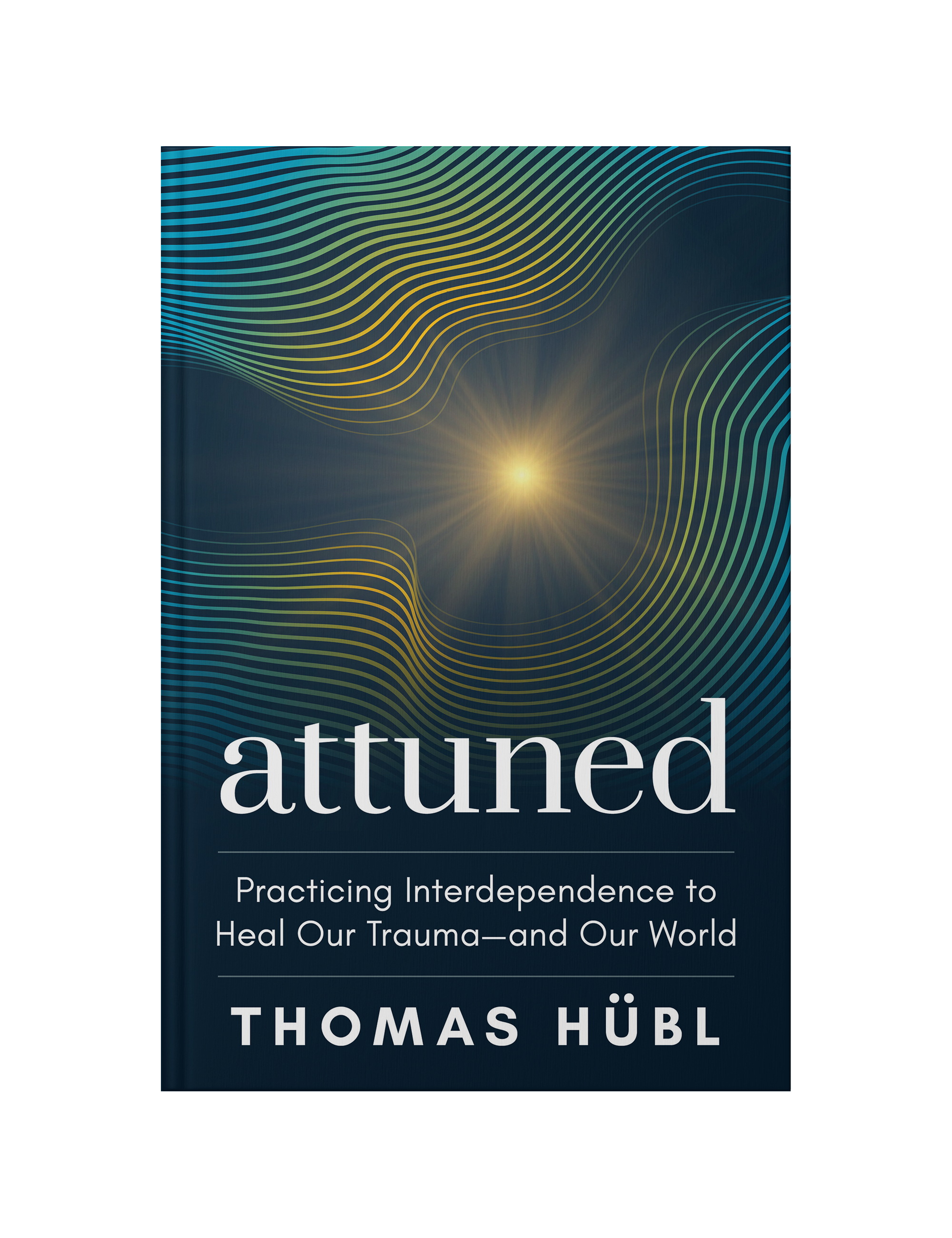
Attuned: Practicing Interdependence to Heal Our Trauma—and Our Worldis a guide for anyone committed to the healing of our struggling world. With practical instruction on reducing stress and building resilience, along with practices such as transparent communication, my book is intended to support each of us and our communities in embracing our interdependence. As you learn to attune to others, you begin to refine your capacity to relate — and to walk the profound journey of healing individual, ancestral, and collective trauma.
The complexity of challenges we face in the 21st century demands a new level of human collaboration. To respond with creativity and innovation to these challenges, we must think holistically. In this way, we awaken our most intrinsic biological gifts: the powers of our soul’s intelligence – that which inside us knows how to heal and restore.
Perhaps, rather than finding ourselves alive in a time of exponential, unstoppable decline, we will discover the power to access the evolutionary gifts that appear dormant in us. To accomplish this, I believe we must do it together—not separately, but in relation, as communities dedicated to healing our collectives.
It may take only a small number of us to establish a new level of collective coherence—to share our light, heal our wounds, and realize the unawakened potential of our world. Will you join me on this journey of attunement?
With gratitude,
Thomas Hübl
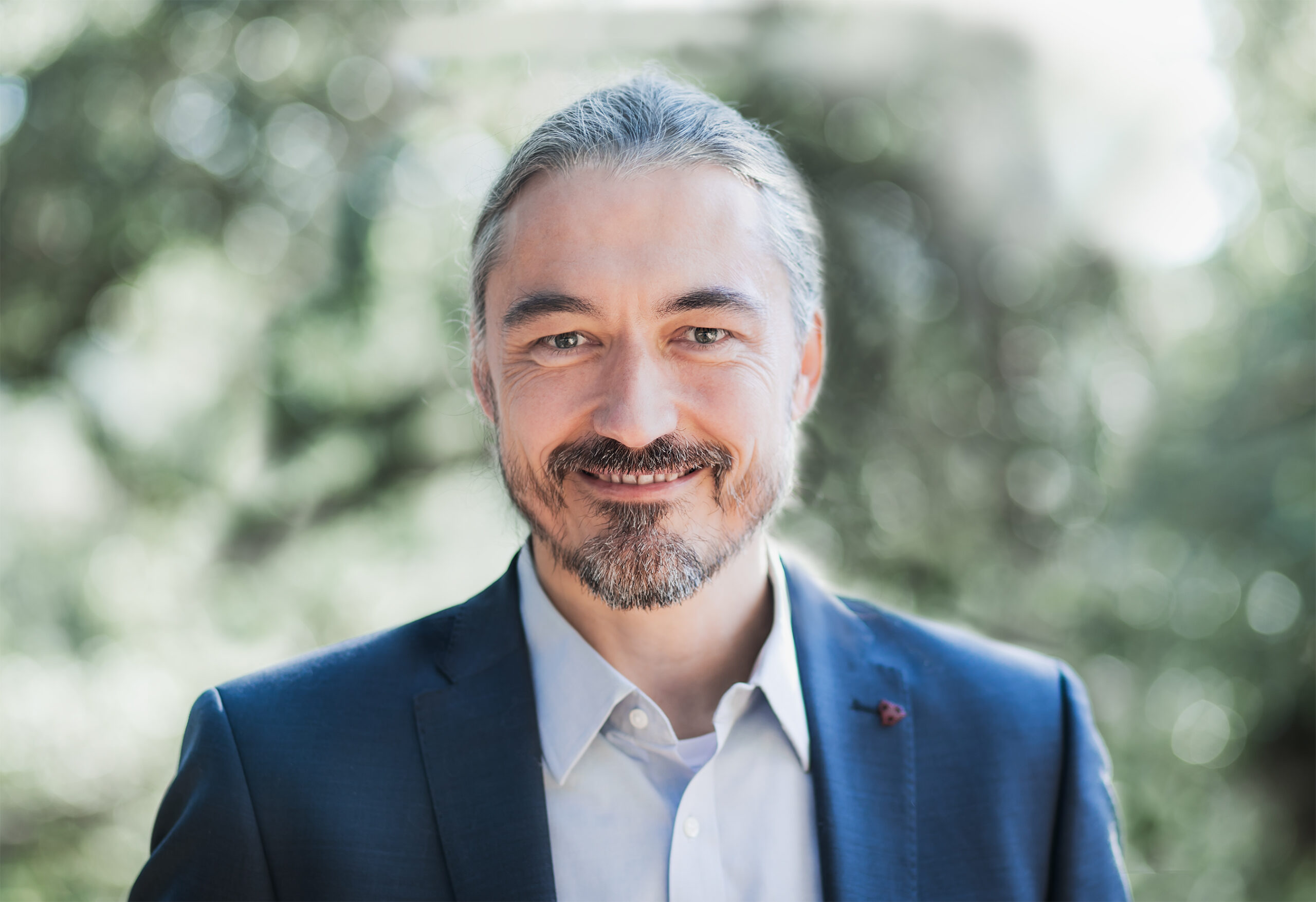
Thomas Hübl, PhD, is a renowned teacher, author, and international facilitator who works within the complexity of systems and cultural change by integrating modern science with the insights of humanity’s wisdom traditions. Since the early 2000s, he has led large-scale events on the healing of collective trauma, with a special focus on the shared history of Israelis and Germans, and facilitated healing and dialogue around racism, oppression, colonialism, and genocide, among other topics. He is the author of Healing Collective Trauma and Attuned (both with Julie Jordan Avritt). He has served as an advisor and guest faculty for universities and organizations, and he is currently a visiting scholar at Harvard University’s Wyss Institute. For more, visit www.attunedbook.com.
Thomas Hübl, PhD, is a renowned teacher, author, and international facilitator who works within the complexity of systems and cultural change by integrating modern science with the insights of humanity’s wisdom traditions. Since the early 2000s, he has led large-scale events on the healing of collective trauma, with a special focus on the shared history of Israelis and Germans, and facilitated healing and dialogue around racism, oppression, colonialism, and genocide, among other topics. He is the author of Healing Collective Trauma and Attuned (both with Julie Jordan Avritt). He has served as an advisor and guest faculty for universities and organizations, and he is currently a visiting scholar at Harvard University’s Wyss Institute.
Visionary teacher Thomas Hübl is leading the way toward a new era of trauma healing on the individual, ancestral, and collective levels. In this podcast, Tami Simon speaks with Hübl about his new book, Attuned: Practicing Interdependence to Heal Our Trauma—and Our World, and his unique synthesis of mysticism, science, and the world’s wisdom traditions.
Give a listen to this deeply inspiring, deep-end conversation exploring: Presence and the alchemy of the past in the now; the concept of relational coherence; post-traumatic learning; avoiding presence as a way to protect oneself; attunement versus numbness; our interconnected nervous systems; ethical development; privilege and responsibility; increasing our ability to remain grounded; the power of feeling met; global witnessing groups; bringing love to the edge of a conscious universe; the three-sync process for becoming more aware of your body, emotions, and mind; and more.
Note: This episode originally aired on Sounds True One, where these special episodes of Insights at the Edge are available to watch live on video and with exclusive access to Q&As with our guests. Learn more at join.soundstrue.com.
We are facing what is perhaps the greatest civilizational crisis of our time, the global ecological emergency. If the underlying challenge to climate change (and other systemic social problems) can be traced to human disrelation—a state of being out of accordance with nature, ourselves, and other humans—then I propose it to be a fundamentally spiritual problem, as much as an environmental, scientific, technological, cultural, psychological, economic, or historical one. At the root of this spiritual problem is collective trauma.
My work as a teacher over the past 20 years has focused on the integration of science and mysticism. Over time, as my training programs and retreats developed what emerged was a clear need to address collective trauma.
Attuned: Practicing Interdependence to Heal Our Trauma—and Our World is a guide for anyone committed to the healing of our struggling world. With practical instruction on reducing stress and building resilience, along with practices such as transparent communication, my book is intended to support each of us and our communities in embracing our interdependence. As you learn to attune to others, you begin to refine your capacity to relate — and to walk the profound journey of healing individual, ancestral, and collective trauma.
The complexity of challenges we face in the 21st century demands a new level of human collaboration. To respond with creativity and innovation to these challenges, we must think holistically. In this way, we awaken our most intrinsic biological gifts: the powers of our soul’s intelligence – that which inside us knows how to heal and restore.
Perhaps, rather than finding ourselves alive in a time of exponential, unstoppable decline, we will discover the power to access the evolutionary gifts that appear dormant in us. To accomplish this, I believe we must do it together—not separately, but in relation, as communities dedicated to healing our collectives.
It may take only a small number of us to establish a new level of collective coherence—to share our light, heal our wounds, and realize the unawakened potential of our world. Will you join me on this journey of attunement?
With gratitude,
Thomas Hübl
Thomas Hübl, PhD, is a renowned teacher, author, and international facilitator who works within the complexity of systems and cultural change by integrating modern science with the insights of humanity’s wisdom traditions. Since the early 2000s, he has led large-scale events on the healing of collective trauma, with a special focus on the shared history of Israelis and Germans, and facilitated healing and dialogue around racism, oppression, colonialism, and genocide, among other topics. He is the author of Healing Collective Trauma and Attuned (both with Julie Jordan Avritt). He has served as an advisor and guest faculty for universities and organizations, and he is currently a visiting scholar at Harvard University’s Wyss Institute. For more, visit www.attunedbook.com.
Thomas Hübl is an Austrian-born contemporary spiritual teacher and the founder of the Academy of Inner Science.With Sounds True, he has recorded the audio training The Power of We: Awakening in the Relational Field and written a book titled Healing Collective Trauma: A Process for Integrating Our Intergenerational and Cultural Wounds. In this episode of Insights at the Edge, Tami Simon speaks with Thomas about healing collective trauma as the work of our time. They discuss how we can feel and are affected by major traumas of the past, even if we didn’t directly experience them, and the ways in which this contributes to our collective separation. Thomas also explains the concept of “retrocausality,” or the potential for the healing we undertake in our lifetimes to benefit our entire family lines. At a time when so much ancestral trauma, multigenerational trauma, and cultural trauma is in our midst, Thomas invites us to turn toward it and join together to heal and integrate the pain of the past as we create a different future.
What if aging isn’t the slow closing of your erotic life, but the doorway into its most alive season?
This week, Tami Simon speaks with Kimberly Ann Johnson—sexological body worker, somatic experiencing practitioner, birth doula, and author of the new Sounds True book Erotic Seasons: Tuning In to the Rhythms of Women’s Sexuality and Spirituality—about what she calls erotic sovereignty, and the sentence that closes her book: the female body is its own spiritual path.
Join Tami and Kimberly to explore:
Erotic sovereignty—your relationship to your own life force, and why it stays with you across every season
Why the goal isn’t a more regulated nervous system, but a more responsive one, and what it means to run more charge
The four erotic seasons—maiden, mother, virgin, crone—and the surprising reason virgin comes after mother
Why hormonal transitions are “wet clay”: golden opportunities for repatterning that our culture teaches us to rush past
Menopause as a death rehearsal, and the life review that arrives decades before we expect it
Hot sex and warm sex—widening the range beyond adrenaline, and learning the language of the pause
“Hormones are gods”: the collective endocrine system, and why living intergenerationally may be the original hormone therapy
Becoming a sexual alchemist—arousal as healing energy, and why care is the whole ethic
Whether you are 25 or 75, Kimberly offers a map for meeting your body’s changes as thresholds rather than losses.
Please note: this episode includes candid discussion of sexual abuse and sexual wounding, including Kimberly Ann Johnson’s own experience.
Listen now, and meet your body as the path. →
This conversation offers genuine transmission, not just concepts about awakening, but the palpable presence of realized teachers exploring the growing edge of spiritual understanding together, and it originally aired on Sounds True One.
What if the very thing that wounded you is the source of the medicine you’re here to give?
In this month’s Point of Insight, Tami Simon shares a personal story: minutes before going live with an archetypal astrologer, she was told—correctly, and within seconds—that she carried “the mother of all mother wounds.” That single moment became the culmination of a much longer, gradual unfolding: a lifetime’s worth of “drops,” from a mentor she called the Queen of the Reframe, to an interview with yoga teacher and activist Seane Corn titled “Your Pain Is Your Purpose,” to an email from a business coach whose four simple words reframed everything—your karma is your dharma.
Join Tami as she reflects on:
How a lifelong feeling of not belonging became the soil for a life’s work helping others feel connected
The difference between sudden insight and the slow, gradual “boiling water” of a tipping point
Why real breakthrough requires going all the way through pain, not around it
Joanna Macy’s question—”What breaks your heart?”—and how grief and care become fuel for service
Why “never turn away” may be one of the most important spiritual instructions there is
This is a shorter, solo reflection from Tami—released once a month on the Insights at the Edge feed—on where our deepest wounds and our clearest purpose meet.
Most people come to meditation looking for a break, a few quiet minutes away from a world that rarely slows down on its own. Reverend angel Kyodo williams spends much of this conversation gently taking apart that assumption, suggesting that real stillness was never about leaving the world behind at all. It’s a small shift in framing that ends up changing everything about how the rest of her teaching lands.
Rev. angel is an ordained Zen priest, activist, and founder of the Center for Transformative Change, recognized as the world’s second female Zen teacher of African descent and the author of Being Black and Radical Dharma.
Sounds True has featured her teaching across our Meditation Summit and A Year of Mindfulness precisely because she refuses to separate inner practice from outer justice, treating the two as a single continuous act rather than competing priorities. What follows traces her case for a warrior spirit built on presence rather than escape, and the meditation practice she offers as its foundation.
Key Takeaways:
Retreat Isn’t the Goal: Learn why angel Kyodo williams reframes meditation as engagement, not escape.
Effort Meets Release: Understand the meditation practice she developed for people doing social change work.
A Different Kind of Fearlessness: See what warrior spirit means when it’s rooted in love rather than force.
Retreat Is Not What It Looks Like From Outside
Rev. angel opens by naming something many practitioners feel but rarely say aloud: the pull toward meditation often comes wrapped in a longing to retreat from an overwhelming world. She doesn’t dismiss that longing, but she does redirect it, suggesting that genuine practice engages our inner fullness rather than fleeing from outer noise. What looks like withdrawal from the outside, she argues, is closer to a deepening than a departure, a distinction that reframes the entire purpose of sitting down to practice in the first place.
Effort and Release Meditation: A Practice Born From Movement Work
Rev. angel developed a specific meditation practice she calls Effort and Release after years spent working alongside people doing demanding social change work. The practice blends deliberate effort with intentional letting go, addressing a pattern she noticed constantly among activists and organizers: a strong pull toward doing, accomplishing, and pushing that rarely leaves room for rest. She describes meditation and social change as inseparable, since the way a person relates to their own mind directly shapes what they find themselves willing to engage with in the wider world.
Naming the Pattern: Many changemakers carry a constant urgency that outlasts any single campaign, even during rest.
Effort With Purpose: The practice doesn’t reject action, only unconscious, exhausting overdrive.
Release as Skill: Letting go is treated as an active discipline, not passive collapse or avoidance.
Inner Life and Outer World as One Continuous Fabric
A central thread running through Rev. Angel’s teaching rejects any hard line between internal awareness and external action. She describes our self-talk, the noise level of our minds, and our capacity for presence as directly shaping how we show up for others and what we find acceptable in the wider world. This isn’t a metaphor for her; it’s closer to a working principle behind everything she teaches, from meditation instruction to movement strategy.
What we tolerate in the world outside us, she suggests, tends to trace directly back to what we’ve grown accustomed to tolerating within our own minds first, which is why she treats internal clarity as a precondition for meaningful external change rather than a separate, optional pursuit.
Warrior Spirit Rooted in Fearlessness, Not Force
The phrase “warrior spirit,” drawn from her earlier book Being Black, describes something quite different from combativeness or aggression directed outward at the world. For Rev. Angel, this spirit is built on truth-telling and responsibility, a foundation for genuine happiness rather than a posture of defensiveness. It asks practitioners to stay engaged with difficulty, including the difficulty of racism, patriarchy, and other inherited harms, rather than looking away or numbing out. This framing has resonated widely since the book’s original publication, offering readers across many backgrounds a way to hold fearlessness and tenderness together rather than treating them as opposites.
Truth Before Comfort: Warrior spirit requires naming what’s actually happening, even when it’s unwelcome.
Grace Alongside Fearlessness: Strength and tenderness are treated as complementary, not opposites.
Responsibility as Practice: Taking ownership of one’s own patterns becomes part of the discipline itself.
Bridging Personal Transformation and Collective Justice
Rev. angel has spent more than fifteen years shaping what she calls Transformative Social Change, a field built on the belief that lasting justice work requires equally serious inner work. She resists treating meditation as a private escape hatch separate from activism, instead framing contemplative practice as fuel for sustained, clear-eyed engagement with collective harm. Burnout among organizers, in her view, often stems from skipping this inner dimension entirely, treating stillness as optional rather than structural to the work itself. She has described this field as one she helped name and shape, watching it grow from a personal conviction into a recognized approach embraced across activist and spiritual communities alike.
What Radical Dharma Adds to This Conversation
Rev. Angel’s later book, Radical Dharma, co-written with Lama Rod Owens and Jasmine Syedullah, extends this same warrior spirit into a direct examination of race, love, and liberation within Buddhist communities themselves. The book argues that spiritual communities are not exempt from the patterns of harm found elsewhere in society, and that genuine awakening has to include an honest reckoning with those patterns rather than a spiritual bypass around them. This willingness to hold institutions, including her own tradition, accountable runs consistently through everything she teaches, from her earliest writing through her more recent contributions to Sounds True’s programming.
Final Thoughts
Reverend angel Kyodo williams doesn’t offer meditation as a rest stop from the world’s demands. She offers it as a training ground for staying present with those demands without losing ourselves inside them. That distinction, subtle but significant, may be exactly what separates spiritual bypass from spiritual maturity, and it’s the thread that ties her meditation teaching to her justice work without contradiction. Listeners who come looking for a quick escape often leave with something more durable instead: a practice for staying rooted precisely where things are hardest.
Sounds True continues sharing her teaching because our mission to wake up the world has never meant looking away from what’s hardest to face, and few teachers hold that tension as steadily as she does. Her books and audio programs remain in our library for anyone ready to bring the same steadiness into their own life and work.
Frequently Asked Questions About angel Kyodo williams
Who is Reverend angel Kyodo williams?
She is an ordained Zen priest, activist, author, and founder of the Center for Transformative Change.
What books has she written?
Her books include Being Black: Zen and the Art of Living with Fearlessness and Grace and Radical Dharma.
What is the Effort and Release practice?
A meditation method blending deliberate effort with intentional letting go, developed for activists and organizers.
Is this teaching only relevant to activists?
No, her ideas on presence and inner work apply to anyone navigating stress, urgency, or burnout in daily life.
What does warrior spirit mean in her teaching?
A fearless, truth-telling posture grounded in responsibility and grace, not aggression or combativeness.
Has Sounds True featured her in other programs?
Yes, she has appeared in Sounds True’s Meditation Summit and A Year of Mindfulness series.
What is the Center for Transformative Change?
An organization she founded connecting inner personal work with large-scale social transformation.
Where can I hear more conversations like this one?
Explore our Insights at the Edge Podcast for further interviews on mindfulness, justice, and social engagement.
Michelle Cassandra Johnson is an author, activist, spiritual teacher, racial equity consultant, and intuitive healer. She is the author of six books, including Skill in Action and Finding Refuge. Amy Burtaine is a leadership coach and racial equity trainer. With Robin DiAngelo, she is the coauthor of The Facilitator’s Guide for White Affinity Groups. For more, visit https://www.michellecjohnson.com/wisdom-of-the-hive.