Making the darkness conscious

    —
January 12, 2015

Much is being said these days about spiritual awakening, and the causeless joy, clarity, and peace that are inevitable milestones of the inner journey. Not all that much is mentioned, however, about the disappointment of awakening, or of the ways it can break our hearts, cracking us open to the reality of the crucifixion, the resurrection, *and* the transfiguration we are likely to encounter along the way. In the full embrace of life—right inside the yucky, messy, shadowy nether regions of the heart—we are invited to meet the wholeness of what we are, which includes the dark *and* the light, the movement of separation *and* union, and the entirety of what it means to be an embodied human being.

As Carl Jung so poignantly reminds us, we do not become enlightened by “imagining figures of light, but by making the darkness conscious.” He went on to say that the integral journey of the dark *and* the light is one that is often “disagreeable” and thus would never be popular. I believe Jung is offering very important guidance for us and the voyage of the heart in contemporary times.

The ancient path of love may never conform to our hopes, fears, dreams, and fantasies, for it is emerging in the here and now as an emissary of the unknown itself. Let us rest in the aching truth that one of the primary roles of the beloved is to seed deflation in the field of separation. Yes, awakening may always be a disappointment, from the perspective of egoic organization. In this sense, the journey is eternally hopeless, but it is in the creation of a home for our hopelessness—and allowing it to be illuminated within us—that we are finally able to step into a world beyond our wildest imagination.

As we journey together as fellow travelers, let us find a way to embrace both the joy *and* the heartbreak of spiritual awakening, and bear witness to the wisdom shining out of our immediate experience, whether it appears as sadness, bliss, despair, or great joy. It is true that grace will appear in both sweet *and* fierce forms, but regardless of its particular manifestation, it is still grace, sent from beyond to open us to the radiant fullness of being.

– Matt Licata, from the Preface to the forthcoming, It’s Okay to Be Broken: Embracing the Joy and Heartbreak of Spiritual Awakening.

sunset_itsokay

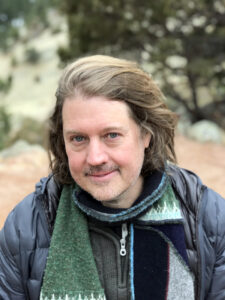
Matt Licata

Matt Licata, PhD, is a practicing psychotherapist and hosts in-person retreats. His work incorporates developmental, psychoanalytic, and depth psychologies, as well as contemplative, meditative, and mindfulness-based approaches for transformation and healing. He co-facilitates a monthly online membership community called Befriending Yourself, is author of The Path Is Everywhere, and is the creator of the blog A Healing Space. He lives in Boulder, Colorado. For more, visit mattlicataphd.com.

Author photo © Krista Marleena

Listen to Tami Simon's in-depth audio podcast interview with Matt Licata:

The Alchemy Of Befriending Ourselves In Difficult Times  »

Also By Author

The Simple Magic of a Book

One of the gifts of isolation, solitude, and social distancing is the opportunity to reconnect with pieces of soul and strands of vision that have become lost in the busyness of our ordinary lives.

Reading for many has become a lost art. We can become so used to turning on the news, scrolling through Facebook, becoming lost in hours of YouTube or Netflix, or fused with one electronic device or another. Nothing wrong with any of these, but at times an alternative portal will open.

To take a book and find a place within your home or under a tree or out in the park and go on a pilgrimage with it. Ask the stars to help you to find a place to just be for a while and open to revelation.

It need not be a “spiritual” book, though of course those are fine, too. A book of poetry, a novel, a book of art history, or of mythology.

Allow its images to come alive, its metaphors, its characters… step into the poetic landscape with the figures and enter a state of receptivity and play. Sense what they are sensing, feel what they are feeling as these correspond with the internal others dancing within you.

healing space blog graphic

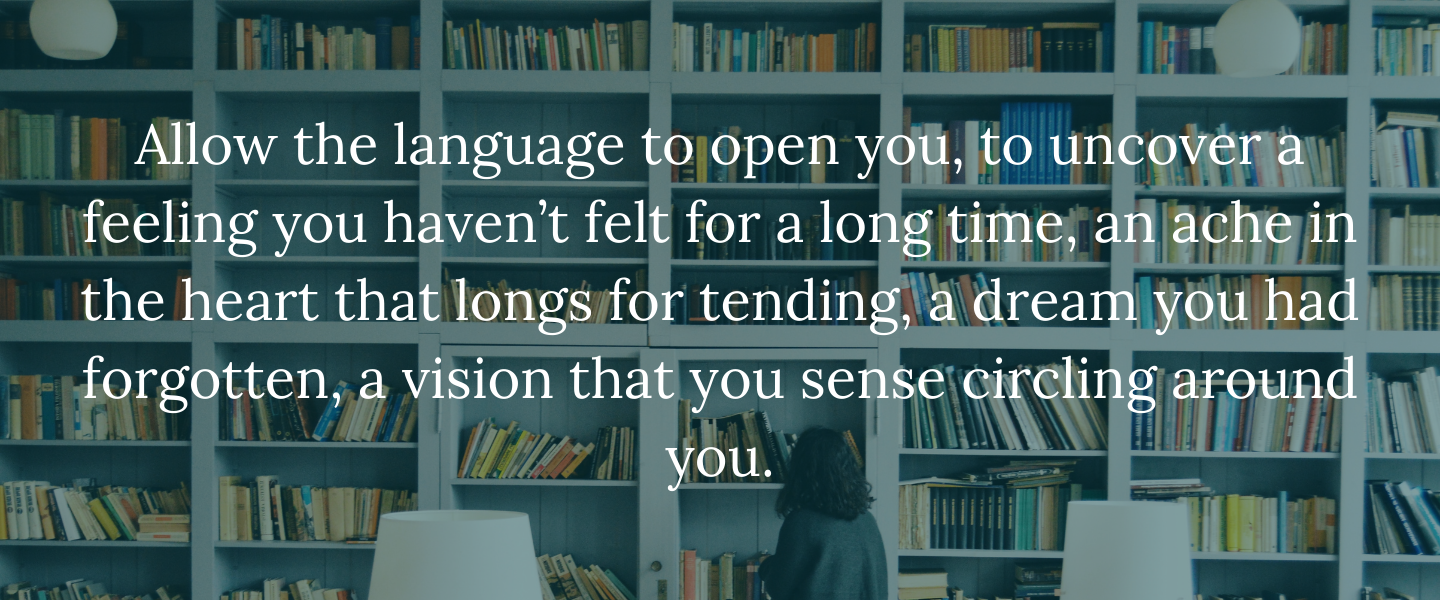
Not necessarily reading for “information,” but for communion. Allow the language to open you, to uncover a feeling you haven’t felt for a long time, an ache in the heart that longs for tending, a dream you had forgotten, a vision that you sense circling around you.

Read a paragraph or two and close the book. Enter the interactional field – with the natural world, with the visions, figures, moods, feelings, and images that seek your attention, your curiosity, your care, and just a moment of your being-ness.

We can so easily forget the magic of this place, of the imaginal realms, of those liminal places in between the physical world of matter and the transcendental realm of pure spirit. In the liminal we can dance and play and see and perceive and sense and intuit something holy.

A good book can help us do this, can serve as a companion as we step into uncharted territory.

Reading has been such an important part of my life. My books are my friends, lovers, allies, guides, and they also challenge me, break me open, tenderize and marinate me in the Unknown. They reveal how little I know about this world, this soul, this heart, this place, and the unique opportunity to be here. I find this so lifegiving.

I fantasize that perhaps in other worlds there are no books. That is sad to think about. For me, at least.

This blog post originally appeared on Matt Licata’s blog, A Healing Space. Redistributed with permission.

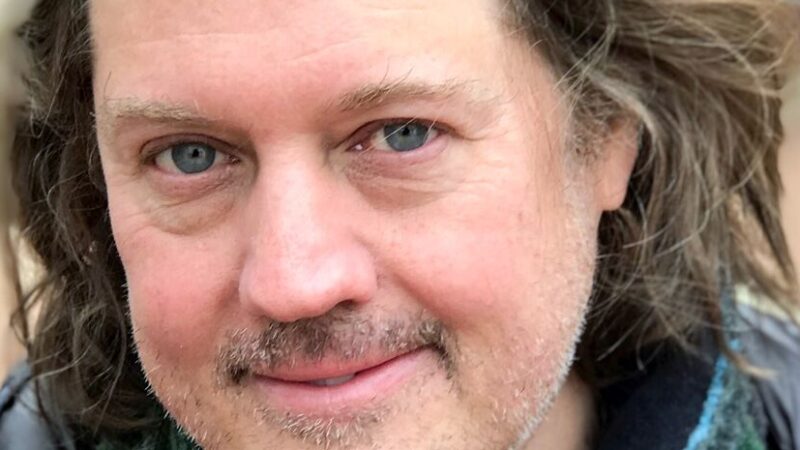
matt licataMatt Licata, PhD, is a practicing psychotherapist and hosts in-person retreats. His work incorporates developmental, psychoanalytic, and depth psychologies, as well as contemplative, meditative, and mindfulness-based approaches for transformation and healing. He co-facilitates a monthly online membership community called Befriending Yourself, is author of The Path Is Everywhere, and is the creator of the blog A Healing Space. He lives in Boulder, Colorado. For more, visit mattlicataphd.com.


Healing Space

Learn More

Sounds True | Amazon | Barnes & Noble | Bookshop | Indiebound

Why We Need To Live the Full Spectrum of Human Experie...

Metabolizing Experience

In order to know and befriend ourselves at the deepest levels, one of the core foundations for true healing, we must cultivate a new way of relating with ourselves that allows even our most difficult and challenging experience to disclose its meaning, intelligence, and purpose in our lives. To do this, we have to slow down and shift our relationship from one of thinking about our experience to fully embodying it. We have to allow ourselves to truly touch it and be touched by it rather than merely orbiting around it, where we are sure to continue to feel some degree of disconnection. Just as we must properly digest the food we eat to absorb its nutrients, we must also assimilate our experience to receive the wisdom and sacred data within it. All through the day and night, we are receiving impressions—through our mental, emotional, somatic (i.e., body-based), imaginal, and spiritual bodies. Life is a constant stream of experience—conversations with friends, caring for our kids, cooking a meal, wandering in nature, practicing yoga or meditation, engaging our work and creative projects, reading a book, shopping for groceries, running errands. But to what degree are we experiencing all of this? How present are we to our moment-to-moment experience, embodied and engaged, allowing it to penetrate us, where it can become true experience and not just some passing event? To what degree are we on autopilot as we make our way through the day, only partially connecting with our friends and family and engaging the sensory reality of what we see, hear, smell, taste, and touch?

I’m pointing toward a way of “metabolizing” our experience that allows us to touch and engage it at the most subtle levels, where it is able to disclose its qualities, intelligence, and purpose. By evoking “metabolization,” I am making use of a biological process in a metaphorical way to refer to working through and integrating our experience, especially those thoughts, feelings, sensations, and parts of ourselves that historically we have pushed away. Other words from the biological sciences, for example “digestion,” “absorption,” or “assimilation” can be used to point to the same idea, indicating that it requires concentration, attention, and a certain fire or warmth to “make use” of our experience and mine the “nutrients” contained within it.

Just because we “have” an experience does not mean we properly digest and absorb it. If our emotional and sensory experience remain partly processed, they become leaky (a psychic version, if you will, of “leaky gut syndrome”) and unable to provide the fuel required to live a life of intimacy, connection, and spontaneity. This inner psychic situation is analogous to not properly chewing and breaking down the food we eat and thus not being able to mine the energy and nutrients our bodies need to function optimally.

Although the desire for change and transformation is natural, noble, and worthy of our honor and attention, if we are not careful, it can serve as a powerful reminder and expression of the painful realities of materialism and self-abandonment. One of the shadow sides of spiritual seeking and the (seemingly) endless project of self-improvement is that we never slow down enough to digest what we have already been given, often much more than we consciously realize. In some sense, most of us have been given everything in terms of the basic alchemical prima materia required to live a life of integrity and inner richness, but not the “everything” the mind thinks it needs to be happy and fulfilled, found by way of a journey of internal and external consumerism. And not the “everything” that conforms to our hopes, fears, and dreams of power and control and that keeps us consistently safe and protected from the implications of what it means to have a tender (and breakable) human heart, but the “everything” already here as part of our true nature, the raw materials for a life of inner contentment and abundance, revealed by way of slowness and humility, not unconscious acquisition.

It is important to remember that for most of us, healing happens gradually, slowly, over time when we begin to perceive ourselves and our lives in a new way. Each micro-moment of new insight, understanding, and perspective must be integrated and digested on its own, honored and tended to with curiosity, care, and attention. Before we “move forward” to the next moment, we must fully apprehend and open our hearts to this one; this slow tending (metabolization) is one of the true essences of a lasting, transformative, and deep healing. If we are not able to metabolize even our most intense and disturbing experience, we will remain in opposition to it, at subtle war with it, and not able to be in relationship with it as a healing ally.

In Tibetan tradition, there is an image of the hungry ghost, a figure of the imaginal realms with a large, distended belly and tiny mouth. No matter how much food (experience) is consumed, there is a deep ache and longing for more. Regardless of how much is taken in, the ghost retains an insatiable hunger. Because this one is not able to digest, make use of, or enjoy what is given, a primordial hole is left behind that can never seem to be filled. One invitation, as this image appears in our own lives, is to slow way down and send awareness and compas- sion directly into the hole, infusing it with presence and warmth, and finally tend to what is already here, not what is missing and might come one day in the future by way of further procurement.

Just as with food—choosing wisely, chewing mindfully, allowing ourselves to taste the bounty of what is being offered, and stopping before we are full—we can honor the validity, workability, and intelligence of our inner experience, even if it is difficult or disturbing. The willingness to fully digest our own vulnerability, tenderness, confusion, and suffering is an act of love and fierce, revolutionary kindness. There are soul nutrients buried in the food of our embodied experience that yearn to be integrated, metabolized, and assimilated in the flame of the heart. But this digestion requires the enzymes of presence, embodi- ment, compassion, and curiosity about what is here now.

Let us slow down and become mindful of the ways we seek to fill the empty hole in the center, whether it be with food when we’re not hungry or experience when we are already full. And in this way, we can walk lightly together in this world, on this precious planet, not as hungry ghosts desperate to be fed but as kindred travelers of interior wealth, richness, and meaning.

This is an excerpt from A Healing Space: Befriending Ourselves in Difficult Times by Matt Licata, PhD.
Matt LicataMatt Licata, PhD, is a practicing psychotherapist and hosts in-person retreats. His work incorporates developmental, psychoanalytic, and depth psychologies, as well as contemplative, meditative, and mindfulness-based approaches for transformation and healing. He co-facilitates a monthly online membership community called Befriending Yourself, is author of The Path Is Everywhere, and is the creator of the blog A Healing Space. He lives in Boulder, Colorado. For more, visit mattlicataphd.com.
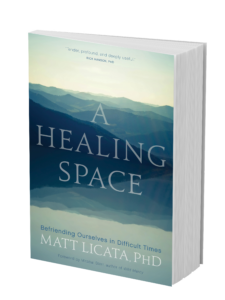


Healing Space

Learn More

Sounds True | Amazon | Barnes & Noble | Bookshop | Indiebound

Matt Licata, PhD: The Alchemy of Befriending Ourselves...

Matt Licata is a practicing psychotherapist, a co-facilitator of a monthly online membership community called Befriending Yourself, and the author of The Path Is Everywhere. With Sounds True, he has written a new book titled, A Healing Space: Befriending Ourselves in Difficult Times. In this episode of Insights at the Edge, Tami Simon speaks with Matt about what it is to be a healing space, that is to hold space for ourselves and others, as well as how we can feel held by something greater than ourselves during challenging experiences. They also explore our inner wounds and self-abandonment, spiritual bypassing and the ways in which many practices allow us to gloss over the real healing needed, and how coming into an embodied state can open us to greater inner depths. Finally, Tami and Matt discuss becoming an alchemist of your own life, discovering the inner gold that each of us has within, and befriending all of ourselves.

You Might Also Enjoy

Jasper Young Bear: “Prophecies for This Time: Wh...


Something is shifting in the world—and the Indigenous peoples of Turtle Island have seen it coming for generations.

This week, Tami Simon speaks with Jasper Young Bear—wisdom keeper, storyteller, founder of the Medicine Lodge Confederacy, and member of the Mandan, Hidatsa, and Arikara Nation—about the sacred oral teachings he was entrusted to carry, and why he has chosen this urgent moment to share them with the world. Jasper is the featured teacher in a new medicine film and four-part audio series, The Creation Story, available to watch and listen to for free at thecreationstory.co.

Join Tami and Jasper to explore:

  • The Seventh Generation prophecy—and why we are living inside its fulfillment right now
  • The Prophecy of the Eagle and the Condor, and what the reunification of North and South means for the human family
  • Why the greatest preparation for coming change is spiritual and emotional—not physical
  • The sacred laws woven into Indigenous creation stories, and what whole-to-part perception makes possible
  • The importance of forgiving the unforgivable—and how it opens the frequency of true freedom
  • Ceremony as living technology: sweat lodges, sacred instruments, and star knowledge as tools of consciousness
  • Why Jasper believes love—not systems, not ideology—is ultimately what will heal the human family

This interview is unlike most. Tami listens more than she asks. And what Jasper Young Bear offers is truly a transmission: a vision of where we are, where we’re headed, and what each of us can do to become a worthy ancestor for the generations yet to come.

Watch and listen to The Creation Story for free at thecreationstory.co.

This conversation offers genuine transmission—not just concepts about awakening, but the palpable presence of realized teachers exploring the growing edge of spiritual understanding together. Originally aired on Sounds True One.

Andrew Holecek: Stop, Drop, and Be Held in the Dark


What if the most transformative place you could go isn’t a retreat center or a therapist’s office—but complete and total darkness?

This week, Tami Simon speaks with Andrew Holecek—interdisciplinary scholar, longtime practitioner of Tibetan Buddhism, and author of the new Sounds True book Total Eclipse of the Mind: Unleashing the Power of Darkness for Creativity, Healing, and Transformation—about the practice of dark retreat: full immersion in sealed, lightless environments used by yogis for centuries to accelerate inner transformation.

Holecek calls it the single most transformative practice of his fifty years of meditation, psychedelic exploration, and three-year Tibetan retreat—and in this interview, he explains why.

Join Tami and Andrew to explore:

  • What actually happens to the mind in extended darkness—and the neurological science behind why it’s so transformative
  • The descent of the mind through conscious, subconscious, and collective unconscious layers—and what waits at the bottom
  • Dark retreat as a “sober psychedelic”: how the brain generates its own endogenous DMT in extended darkness
  • The practice of enantiodromia—when extreme contraction suddenly flips into extraordinary openness
  • How to work with panic, trauma, and unwanted experience using the “reverse meditation” principle: feel it, but don’t feed it
  • Why appearances don’t matter in the dark—and why so many people emerge in tears, feeling safe and held for the first time
  • The four-step process for integrating darkness into daily life, from sleep masks to dedicated dark rooms

This interview was recorded with both Tami and Andrew wearing blackout masks—making it one of the most immersive listening experiences in Insights at the Edge history.

Listen now and discover what’s been waiting in the dark. →

This conversation offers genuine transmission—not just concepts about awakening, but the palpable presence of realized teachers exploring the growing edge of spiritual understanding together. Originally aired on Sounds True One.

This episode is sponsored by Omega Institute, a global gathering hub for lifelong learning and spiritual exploration. Located in upstate New York’s beautiful Hudson Valley, Omega offers weekend workshops, special events, rest and rejuvenation retreats, professional trainings, online learning, and more. Discover what calls to you at eomega.org/true.

Serene older woman in nature with hand on heart

What does it mean to listen to the soul when it feels most exposed? In Marion Woodman’s teachings, moments of vulnerability are not interruptions but invitations to pay attention. Soul vulnerability often shows up through the body, through emotion, or through a quiet sense that something within us is asking to be heard. When we stay present, these experiences begin to reveal deeper meaning through the Jungian feminine, aging wisdom, and Jungian psychology depth.

For decades, we have been devoted to sharing the living wisdom of transformative teachers, preserving their voices in ways that remain true to their depth and presence. Our work brings forward teachings from leading spiritual visionaries, offering guidance that supports inner growth, emotional honesty, and a more embodied way of being .

Here, we look at Marion Woodman on the soul’s vulnerability and how listening to our deepest wisdom can guide a more grounded and aware life.

Key Takeaways:

  • Embodied Wisdom: Soul vulnerability reveals insight through the body, emotions, and inner experience.
  • Feminine Awareness: The Jungian feminine supports deeper listening, intuition, and connection to the psyche.
  • Aging Insight: Aging wisdom deepens reflection and helps integrate life experiences with greater clarity.

Discover the Hidden Power of Daily Meditation

Marion Woodman on Soul Vulnerability, Jungian Feminine, Aging Wisdom, and Jungian Psychology Depth

What does it mean to truly listen to the soul, especially in moments when we feel most exposed or uncertain? In the teachings of Marion Woodman, soul vulnerability is not something to avoid or overcome. It is a vital expression of the psyche asking for our attention. At Sounds True, we have long been devoted to sharing living wisdom in the authentic voices of transformative teachers, preserving insights that invite us into deeper presence and self-understanding. Woodman’s work within Jungian psychology offers a compassionate and embodied path toward this kind of listening. She reminds us that the Jungian feminine lives not in abstraction but in the body, in feeling, and in the rhythms of lived experience. As we grow and change, aging wisdom begins to shape how we meet our vulnerability. Rather than turning away, we are invited to stay, to sense, and to trust that something meaningful is unfolding within us.

Understanding Soul Vulnerability Through Jungian Feminine, Aging Wisdom, and Jungian Psychology Depth

Soul vulnerability often appears at the edges of our comfort. It may arise through loss, illness, transition, or moments when our usual ways of coping no longer hold. Within Jungian psychology, these moments are not seen as failures. They are invitations into a deeper relationship with the psyche.

Soul Vulnerability as an Opening to the Jungian Feminine

The Jungian feminine speaks in a language that is often quiet and symbolic. It is present in dreams, in bodily sensations, and in the subtle shifts of emotion that move through us. When we allow ourselves to experience soul vulnerability, we begin to soften the barriers that keep us disconnected from this inner voice. Woodman taught that the body is not separate from the psyche. It carries memory, truth, and intelligence. When we listen closely, we begin to recognize how the Jungian feminine guides us toward wholeness through feeling and presence rather than force or control.

Aging Wisdom and the Deepening of Jungian Psychology Depth

With time, our relationship to vulnerability changes. Aging wisdom brings perspective, allowing us to see how earlier experiences have shaped our inner life. Within Jungian psychology, this is part of the individuation process, a gradual unfolding of the self. Soul vulnerability becomes less overwhelming and more meaningful. We begin to trust that even difficult experiences carry insight. This trust does not remove pain, but it creates space for reflection and integration.

Soul Vulnerability and the Jungian Feminine in Aging Wisdom and Jungian Psychology Depth

As these elements come together, we begin to sense a different way of being with ourselves. There is less urgency to fix and more willingness to understand.

The Body as a Guide in Soul Vulnerability

Woodman’s work consistently returns to the body as a source of wisdom. Physical sensations, fatigue, or tension can reflect deeper emotional truths. When we approach these experiences with curiosity, we open a pathway into soul vulnerability. The Jungian feminine supports this process by inviting us to feel rather than analyze. Aging wisdom allows us to recognize patterns and respond with greater care. Over time, we learn that the body is not an obstacle but a guide.

Integrating Experience Through Jungian Psychology Depth

Integration within Jungian psychology depth involves holding complexity. We are not asked to eliminate contradiction but to remain present with it. Soul vulnerability allows us to acknowledge both strength and fragility. The Jungian feminine encourages us to stay connected to our inner experience, while aging wisdom reminds us that understanding unfolds gradually. This integration creates a sense of groundedness that supports authentic living.

Exploring Soul Vulnerability, Jungian Feminine, Aging Wisdom, and Jungian Psychology Depth

There is a natural rhythm to inner work that cannot be rushed. Woodman’s teachings invite us to honor that rhythm and to trust the unfolding process of the psyche.

The Role of Relationship in Soul Vulnerability

Relationships often bring our vulnerability into focus. They reflect aspects of ourselves that may remain hidden when we are alone. Through connection, we encounter both our capacity for love and our fears of being seen. The Jungian feminine encourages openness in these moments, while aging wisdom helps us respond with patience and understanding. Within Jungian psychology, depth and relationships are understood as essential to growth, offering mirrors that reveal where healing is needed.

Trusting the Unfolding of the Psyche

The psyche moves in cycles rather than straight lines. There are times of clarity and times of uncertainty. Soul vulnerability is part of this movement. The Jungian feminine invites us to remain present with what is emerging, even when it feels unclear. Aging wisdom supports a longer view, helping us recognize that meaning often appears over time. Within Jungian psychology, this unfolding is part of becoming more fully ourselves.

Learn How your Mind Really Works with Sounds True

The Jungian Feminine, Soul Vulnerability, Aging Wisdom, and Jungian Psychology Depth in Practice

Bringing these insights into daily life can begin with small, intentional shifts in attention. We do not need to change everything at once. We can begin by listening more closely.

  • Take time for quiet reflection each day, allowing space for inner awareness to arise naturally
  • Notice bodily sensations without judgment, recognizing them as expressions of the psyche
  • Record dreams or images that stay with you, honoring their symbolic meaning
  • Engage in creative practices that allow feeling and imagination to take form
  • Reflect on life experiences and how they have contributed to your growing aging wisdom

These practices are gentle invitations. They support a relationship with soul vulnerability that is rooted in care rather than pressure. Over time, they help cultivate a deeper connection to the Jungian feminine and the insights of Jungian psychology depth.

Aging Wisdom, Soul Vulnerability, Jungian Feminine, and Jungian Psychology Depth in Inner Work

Inner work asks for honesty and patience. It is not always comfortable, yet it is deeply meaningful. Aging wisdom brings a willingness to reflect rather than react. Soul vulnerability becomes a guide, pointing toward areas that call for attention. The Jungian feminine supports a compassionate approach, one that honors both the body and the emotions that arise. Within the depth of Jungian psychology, this work is essential to individuation. It invites us to engage with unconscious material and bring it into awareness. As we do so, we begin to experience a sense of coherence within ourselves. We are no longer divided between what we show and what we hide. Instead, we move toward a more integrated way of being.

Soul Vulnerability and Aging Wisdom Through the Lens of Jungian Feminine and Jungian Psychology Depth

As we continue to listen to the soul, vulnerability begins to feel less threatening. It becomes a source of guidance. Aging wisdom allows us to recognize patterns and approach them with greater openness. The Jungian feminine deepens our connection to feeling and intuition, helping us navigate the complexities of inner life. Within Jungian psychology, this transformation reflects a growing relationship with the self. Soul vulnerability is no longer something to resist. It is something to honor.

Integrating Soul Vulnerability, Jungian Feminine, Aging Wisdom, and Jungian Psychology Depth

Integration is a living process that unfolds over time. It asks for attention, patience, and a willingness to remain open. Soul vulnerability remains at the center, inviting us to stay connected to our experience. The Jungian feminine offers a way of understanding the body, emotion, and imagination as sources of wisdom. Aging wisdom deepens our capacity to reflect and integrate what we have lived. Within Jungian psychology depth, this movement toward wholeness is ongoing. As we continue to listen, we begin to sense a quiet alignment within ourselves. It is not something we force. It emerges through presence, through care, and through a growing trust in the intelligence of the soul.

Awaken Your Inner Healing Power with Guided Practices by Sounds True

Final Thoughts

Soul vulnerability invites us to stay present with our inner experience, even when it feels uncertain. Through the lens of the Jungian feminine, aging wisdom, and Jungian psychology depth, we begin to recognize this vulnerability as a source of insight rather than something to overcome.

Over time, this way of listening deepens our connection to ourselves, shaping a more grounded and attentive way of being.

Frequently Asked Questions About Marion Woodman and Soul Vulnerability

What is Marion Woodman best known for in spiritual psychology?

Marion Woodman is known for her work in analytical psychology, particularly her focus on embodiment, the feminine psyche, and the relationship between psyche and soma.

How does Marion Woodman define the soul in her teachings?

She often describes the soul as a living presence expressed through the body, dreams, and emotions rather than something abstract or separate from daily life.

What role does the body play in Jungian psychology depth?

The body is seen as an essential messenger of the unconscious, offering signals that reflect deeper psychological and emotional realities.

How is the Jungian feminine different from traditional ideas of femininity?

The Jungian feminine refers to an archetypal energy present in all people, emphasizing receptivity, intuition, and connection to inner life rather than gender roles.

Why is aging wisdom important in inner development?

Aging wisdom brings perspective, helping individuals reflect on life experiences and integrate lessons that support emotional and spiritual maturity.

How can someone begin studying Jungian psychology depth?

Many begin through books, guided courses, therapy, or lectures that introduce core concepts like archetypes, dreams, and the unconscious.

What makes Marion Woodman’s teachings relevant today?

Her emphasis on embodiment and emotional honesty resonates in a time when many feel disconnected from their inner lives and physical experience.

Can soul vulnerability support creative expression?

Yes, being open to vulnerability often allows deeper emotional material to surface, which can enrich creative practices like writing, art, or movement.

How do dreams relate to soul vulnerability?

Dreams can reveal hidden emotions and symbolic messages, offering insight into areas where the psyche seeks attention or healing.

Is Jungian psychology’s depth connected to spiritual practice?

While rooted in psychology, it often intersects with spirituality by addressing meaning, purpose, and the experience of the inner self.

Michelle Cassandra Johnson is an author, activist, spiritual teacher, racial equity consultant, and intuitive healer. She is the author of six books, including Skill in Action and Finding Refuge. Amy Burtaine is a leadership coach and racial equity trainer. With Robin DiAngelo, she is the coauthor of The Facilitator's Guide for White Affinity Groups. For more, visit https://www.michellecjohnson.com/wisdom-of-the-hive.

Leave a Reply

Your email address will not be published. Required fields are marked *