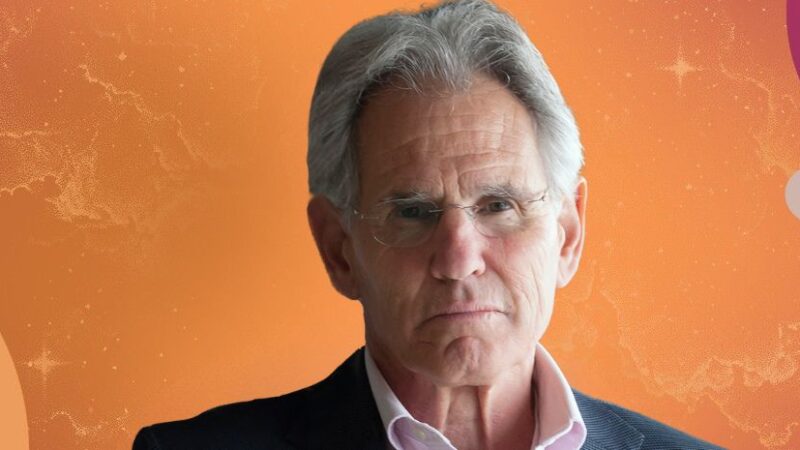
On The Mindfulness Revolution and Our Fear of Authenticity (with Jon Kabat-Zinn)

    —
November 8, 2019

The Mindfulness Revolution Header Image

Deepen your personal healing practice with guided meditations, audio presentations, and learning intensives by Jon Kabat-Zinn on Sounds True »

Have you ever wondered who coined the term ‘mindfulness’? That was Dr. Jon Kabat-Zinn. He describes it as “paying attention on purpose with a non-judgmental attitude.”

“I take an enormous amount of pleasure in actually not trying to get anywhere” —Jon Kabat-Zinn

Partly because of his work and research, this concept of ‘mindfulness’ has become mainstream. We see it at colleges, small businesses and large corporations, and—perhaps most notably—in medicine (Kabat-Zinn also founded the Stress Reduction Clinic at the University of Massachusetts Medical School).

In Tami’s interview with Kabat-Zinn on Insights at the Edge, the two begin asking: Why is mindfulness gaining popularity in the first place? In the process, they explore what’s simple, profound, and relatable about it.

AGE OF MINDFULNESS

mindfulness revolution woman

“Once you realize that we are completely embedded in an interconnected world … the only real response is a sense of profound appreciation or affection for the fact that we are not separate” 

Mindfulness has always been a part of humanity. It has been called different names and interpreted by different lenses, but the concept of some greater unity of which we are all a part—that doesn’t seem to be going anywhere.

So, even if it’s a trend, couldn’t there be more to it? In a way, mindfulness seems to take on the breath of intuition, not necessarily logic or reason. It is truly the air of possibility.

YOU ARE NOT YOUR THOUGHTS

mindfulness revolution thoughts

You cannot get rid of your thoughts. But when you create distance between yourself and your thoughts, you can let them wash through you. You do not have to fight to maintain them or believe them. And, you do not have to fight to let them go.

“Suppose the sky is awareness. If a bird flew through, then the sky would know it. … [The sky] has its own sort of ground condition of just being the sky, just being awareness”

He describes this awareness not as a state of being, but as a shift in seeing. There was always space there. We just needed to rotate a lens.

Have you ever retreated your vision while meditating, so that you were gazing out from between your two closed eyes? Like that. That field of awareness stretches infinitely—as conscious beings, it weaves us together.

This feeling is both humbling and terrifying in its awesomeness. When the sky is so big, we don’t know what we are. But we can accept this uncertainty. Our minds, our egos, our bodies—can expand with it.

WE ARE ALL GENIUSES

mindfulness revolution connected

Homo sapien sapien literally translates from Latin to “the species that knows and knows that it knows.”

In the episode, Jon and Tami talk beautifully about mindfulness’s fundamental humanness. There is an utter connection between our feet grounded on this Earth, and the spaces we don’t understand.

“There is something about mindfulness that is absolutely core to our humanity … the final common pathway of what makes us human”

Sometimes, meditation helps us feel the truth of this. Once we know this awareness is there, we can integrate it into the ways we think and make decisions.

FEAR OF AUTHENTICITY

mindfulness revolution authenticityWe reach for purpose; we wish to understand our place in the universe. (It isn’t weird for us to do this. If I were an alien, and I heard humans were doing this, I would be like, well, yeah.)

Yet, we are afraid to be ourselves. We don’t want ourselves to disappear. So we keep inside our deepest sorrows, anxieties, and emotions.

The parts of us we try and protect so carefully end up banging on the walls inside of us, stuck.

“It’s not like we can never suppress that shadow side … but if we can come to understand it in a deeper way, then I think there is a potential … [to] elevate what is most beautiful and good about all human beings”

What if we gave all of it—ourselves, and our connection to the world—the space to breathe?

(And the possibilities begin to shimmer.)


ABOUT JON KABAT-ZINN

Jon Kabat-Zinn Author Photo

Jon Kabat-Zinn, PhD, is professor of medicine emeritus at the University of Massachusetts Medical School, where he founded the Center for Mindfulness in Medicine, Health Care, and Society in 1995, and its world-renowned Mindfulness-Based Stress Reduction (MBSR) Clinic in 1979. His trailblazing research has helped bring mindfulness meditation into mainstream medicine. He is the author of 10 books, including the bestsellers Full Catastrophe Living; Wherever You Go, There You Are; and Mindfulness for Beginners.

Take a look at Jon Kabat-Zinn’s book and accompanying CD of guided practices, Mindfulness for Beginners, published by Sounds True!

★★★★★ Easy to read and informative as well as inspiring. —gus c
★★★★★ In my opinion, a must-read for all humans. —Yves N

ABOUT THE AUTHORDani Ferrara Blogger Author Photo

When she isn’t writing, playing music or teaching, Dani Ferrara blogs at Sounds True and researches the alchemy of healing. Explore her art at daniferrarapoet.com.


Jon Kabat-Zinn

Jon Kabat-Zinn, PhD, is professor of medicine emeritus at the University of Massachusetts Medical School and the founder and director of its renowned Mindfulness-Based Stress Reduction Clinic. His clinic was featured in 1993 in the public television series Healing and the Mind with Bill Moyers. Jon Kabat-Zinn is the author of 15 books, in print in over 45 languages. These include Full Catastrophe LivingWherever You Go, There You Are; Coming to Our Senses; and Mindfulness for Beginners.

Author photo © Jaume Cosialls

Also By Author

[ENCORE EPISODE] Jon Kabat-Zinn: Befriending Pain

**SPECIAL ENCORE PRESENTATION**

Current statistics tell us that 20% of the US population has some form of chronic pain, defined as severe discomfort that has continued for six months or more. That’s more than 50 million people. Jon Kabat-Zinn has received international acclaim for his leading work in bringing the life-changing practices of meditation and mindfulness into the mainstream of medicine and society. In this inspiring podcast, Tami Simon speaks with Jon about his empowering new book, Mindfulness Meditation for Pain Relief, and how we can greatly improve our lives (and our entire world) by reframing the way we relate to our thoughts, our minds, and the sensations of our bodies.

Listen in as they discuss the epidemic of chronic pain and the power of mindfulness to ease suffering of all kinds, the myth of the “good meditator,” the body as the starting point for practice, exploring your “emotionally freighted thoughts,” our longing to be who we really are, working with the mind and learning to inhabit a space of embodied awareness, the refuge that is meditation practice, letting go of our stories, befriending the sensory field of what we call pain, the miracle of life on Earth, the Buddha’s teaching on mindfulness as the direct path to liberation, surfing the waves of your own experience, unity within diversity and the arising of compassion, focusing on what’s right instead of what’s wrong, how we are all on a growth curve on life’s journey, and more.

Note: This episode originally aired on Sounds True One, where these special episodes of Insights at the Edge are available to watch live on video and with exclusive access to Q&As with our guests. Learn more at join.soundstrue.com.

This episode is sponsored by BetterHelp. Listeners of Insights At The Edge get 10% off their first month at

www.betterhelp.com/soundstrue

Jon Kabat-Zinn: Befriending Pain

Current statistics tell us that 20% of the US population has some form of chronic pain, defined as severe discomfort that has continued for six months or more. That’s more than 50 million people. Jon Kabat-Zinn has received international acclaim for his leading work in bringing the life-changing practices of meditation and mindfulness into the mainstream of medicine and society. In this inspiring podcast, Tami Simon speaks with Jon about his empowering new book, Mindfulness Meditation for Pain Relief, and how we can greatly improve our lives (and our entire world) by reframing the way we relate to our thoughts, our minds, and the sensations of our bodies. 

Listen in as they discuss the epidemic of chronic pain and the power of mindfulness to ease suffering of all kinds, the myth of the “good meditator,” the body as the starting point for practice, exploring your “emotionally freighted thoughts,” our longing to be who we really are, working with the mind and learning to inhabit a space of embodied awareness, the refuge that is meditation practice, letting go of our stories, befriending the sensory field of what we call pain, the miracle of life on Earth, the Buddha’s teaching on mindfulness as the direct path to liberation, surfing the waves of your own experience, unity within diversity and the arising of compassion, focusing on what’s right instead of what’s wrong, how we are all on a growth curve on life’s journey, and more.

Note: This episode originally aired on Sounds True One, where these special episodes of Insights at the Edge are available to watch live on video and with exclusive access to Q&As with our guests. Learn more at join.soundstrue.com.

On The Mindfulness Revolution and Our Fear of Authenti...

The Mindfulness Revolution Header Image

Deepen your personal healing practice with guided meditations, audio presentations, and learning intensives by Jon Kabat-Zinn on Sounds True »

Have you ever wondered who coined the term ‘mindfulness’? That was Dr. Jon Kabat-Zinn. He describes it as “paying attention on purpose with a non-judgmental attitude.”

“I take an enormous amount of pleasure in actually not trying to get anywhere” —Jon Kabat-Zinn

Partly because of his work and research, this concept of ‘mindfulness’ has become mainstream. We see it at colleges, small businesses and large corporations, and—perhaps most notably—in medicine (Kabat-Zinn also founded the Stress Reduction Clinic at the University of Massachusetts Medical School).

In Tami’s interview with Kabat-Zinn on Insights at the Edge, the two begin asking: Why is mindfulness gaining popularity in the first place? In the process, they explore what’s simple, profound, and relatable about it.

AGE OF MINDFULNESS

mindfulness revolution woman

“Once you realize that we are completely embedded in an interconnected world … the only real response is a sense of profound appreciation or affection for the fact that we are not separate” 

Mindfulness has always been a part of humanity. It has been called different names and interpreted by different lenses, but the concept of some greater unity of which we are all a part—that doesn’t seem to be going anywhere.

So, even if it’s a trend, couldn’t there be more to it? In a way, mindfulness seems to take on the breath of intuition, not necessarily logic or reason. It is truly the air of possibility.

YOU ARE NOT YOUR THOUGHTS

mindfulness revolution thoughts

You cannot get rid of your thoughts. But when you create distance between yourself and your thoughts, you can let them wash through you. You do not have to fight to maintain them or believe them. And, you do not have to fight to let them go.

“Suppose the sky is awareness. If a bird flew through, then the sky would know it. … [The sky] has its own sort of ground condition of just being the sky, just being awareness”

He describes this awareness not as a state of being, but as a shift in seeing. There was always space there. We just needed to rotate a lens.

Have you ever retreated your vision while meditating, so that you were gazing out from between your two closed eyes? Like that. That field of awareness stretches infinitely—as conscious beings, it weaves us together.

This feeling is both humbling and terrifying in its awesomeness. When the sky is so big, we don’t know what we are. But we can accept this uncertainty. Our minds, our egos, our bodies—can expand with it.

WE ARE ALL GENIUSES

mindfulness revolution connected

Homo sapien sapien literally translates from Latin to “the species that knows and knows that it knows.”

In the episode, Jon and Tami talk beautifully about mindfulness’s fundamental humanness. There is an utter connection between our feet grounded on this Earth, and the spaces we don’t understand.

“There is something about mindfulness that is absolutely core to our humanity … the final common pathway of what makes us human”

Sometimes, meditation helps us feel the truth of this. Once we know this awareness is there, we can integrate it into the ways we think and make decisions.

FEAR OF AUTHENTICITY

mindfulness revolution authenticityWe reach for purpose; we wish to understand our place in the universe. (It isn’t weird for us to do this. If I were an alien, and I heard humans were doing this, I would be like, well, yeah.)

Yet, we are afraid to be ourselves. We don’t want ourselves to disappear. So we keep inside our deepest sorrows, anxieties, and emotions.

The parts of us we try and protect so carefully end up banging on the walls inside of us, stuck.

“It’s not like we can never suppress that shadow side … but if we can come to understand it in a deeper way, then I think there is a potential … [to] elevate what is most beautiful and good about all human beings”

What if we gave all of it—ourselves, and our connection to the world—the space to breathe?

(And the possibilities begin to shimmer.)


ABOUT JON KABAT-ZINN

Jon Kabat-Zinn Author Photo

Jon Kabat-Zinn, PhD, is professor of medicine emeritus at the University of Massachusetts Medical School, where he founded the Center for Mindfulness in Medicine, Health Care, and Society in 1995, and its world-renowned Mindfulness-Based Stress Reduction (MBSR) Clinic in 1979. His trailblazing research has helped bring mindfulness meditation into mainstream medicine. He is the author of 10 books, including the bestsellers Full Catastrophe Living; Wherever You Go, There You Are; and Mindfulness for Beginners.

Take a look at Jon Kabat-Zinn’s book and accompanying CD of guided practices, Mindfulness for Beginners, published by Sounds True!

★★★★★ Easy to read and informative as well as inspiring. —gus c
★★★★★ In my opinion, a must-read for all humans. —Yves N

ABOUT THE AUTHORDani Ferrara Blogger Author Photo

When she isn’t writing, playing music or teaching, Dani Ferrara blogs at Sounds True and researches the alchemy of healing. Explore her art at daniferrarapoet.com.


You Might Also Enjoy

Try These Mindfulness Exercises To Ground Yourself

Mindfulness is an ancient, deeply personal practice that invites you into the present moment with compassion and awareness. And yet, for many of us, simply “being present” can feel elusive. We’re managing careers, relationships, health, and the constant pull of digital life. It’s no wonder anxiety and stress have become everyday companions. Through regular, intentional practices, we begin to notice the quiet steadiness underneath the noise. That’s where grounding lives.

For over 40 years, Sounds True has been a trusted leader in spiritual education and personal transformation, sharing the wisdom of teachers like Eckhart Tolle, Pema Chödrön, Tara Brach, and many others. As the world’s largest “living library” of transformational teachings, we’ve helped millions of people reconnect with presence, purpose, and their inner wisdom through unscripted, heart-centered resources.

In this piece, we’ll explore a series of mindfulness exercises to support your return to presence, whether you’re seeking mindfulness exercises for anxiety, tools for teens and adults, or daily mindfulness exercises for stress relief. You’ll also find soulful practices like inner rhythm meditations woven throughout to help you tune into your natural flow.

Key Takeaways:

  • Learn Audience-Specific Practices: This article offers tailored mindfulness exercises for anxiety, adults, teens, and daily stress relief.
  • Find Practical and Accessible Tools: Readers will find easy-to-implement, non-intimidating exercises they can begin using right away.
  • Integrating These Exercises into Daily Life: Meditation exercises encourage integrating mindfulness into ordinary activities for long-term emotional grounding and resilience.
Expand Your Consciousness With Sounds True.

Simple Mindfulness Exercises To Bring You Back To Center

Even the busiest mind can come back to stillness with a few moments of intention. These foundational mindfulness exercises are designed to be accessible, grounding, and easy to integrate into daily life.

Breathe For One Minute

This micro-practice is a gentle reminder that your breath is always available as an anchor. Set a timer for just 60 seconds. Sit or stand comfortably. Close your eyes if you’d like. Bring all of your awareness to the sensation of breathing, how the air enters and leaves your body, and how your chest rises and falls. Don’t change anything. Just notice. One minute of conscious breathing can create space between stimulus and response, making it a beautiful starting point for mindfulness exercises for anxiety or moments of stress.

Ground Through The Five Senses

When your thoughts are racing or your emotions feel overwhelming, coming back to your senses, literally, can reset your nervous system. To practice this, look around and quietly name five things you can see, four things you can touch, three things you can hear, two things you can smell, and one thing you can taste. This kind of sensory awareness anchors your attention in the here and now, making it one of the most reliable mindfulness exercises for stress relief.

Notice Without Fixing

Mindfulness isn’t about making anything go away. It’s about seeing clearly. Try sitting in silence for a few minutes, simply noticing your thoughts, sensations, and emotions without trying to change or solve them. Let everything be as it is. This witnessing awareness is central to many mindfulness exercises for adults, a reminder that your worth isn’t based on productivity, performance, or emotional “control.” Instead, it’s grounded in the simple act of being present.

Mindfulness Exercises For Anxiety And Overwhelm

Anxiety often pulls us into the future, into what-ifs, worst-case scenarios, and mental loops that feel impossible to exit. Mindfulness brings us back to now. These exercises aren’t about eliminating anxiety, but about meeting it with gentleness, spaciousness, and embodied awareness.

Anchor To The Present With Touch

When anxiety feels like it’s spiraling, physical touch can be incredibly grounding. Place one hand on your chest and one on your belly. Feel the rise and fall of your breath beneath your hands. You don’t need to breathe in any special way, just notice the contact. This creates a direct, calming feedback loop that reminds the body it’s safe to soften. Practices like this are especially helpful when exploring mindfulness exercises for anxiety that are simple and body-centered.

Name What’s True In This Moment

A powerful way to interrupt anxious thoughts is to name what is real right now. Quietly say to yourself: “Right now, I am sitting on a chair. My feet are on the floor. I am breathing. I am safe.” You can add more statements based on your environment or sensations. This kind of mindful self-talk offers the brain a stable narrative to hold onto when anxiety is trying to pull you elsewhere. It’s a core part of how many people approach mindfulness exercises for stress relief as well.

Return To Ritual

When anxiety is chronic or persistent, creating small, daily routines can provide a sense of continuity. This might be lighting a candle before meditation, washing your hands slowly and with full attention, or taking a short mindful walk at the same time each day. These are quiet acts of devotion that bring structure to emotional chaos. For many adults, integrating mindfulness exercises helps create a sense of calm and inner order.

For a deeper experience of this rhythm-based approach, practices like inner rhythm meditations can support a more attuned, embodied return to presence.

Awaken Your Inner Healing Power With Sound True.

How Adults Can Use Mindfulness To Reconnect

Adulthood often brings a gradual disconnection from inner life. The constant push to do more, fix more, and be more can drown out the quiet voice within. Mindfulness gives adults a way to return, to presence, to embodiment, and to what matters most. It’s less about adding something new and more about softening into what’s already here.

Practices like breath tracking, gentle movement, or body scanning help rebuild that inner relationship. These mindfulness exercises for adults aren’t about achieving calm; they’re about creating space for honesty and self-awareness. Even simple routines like morning stillness or mindful transitions between tasks can foster deep reconnection.

Supporting Teens With Mindfulness Tools

Teenagers today are navigating an overwhelming mix of stimulation, pressure, and emotional intensity, often without the tools to process it all. Mindfulness can offer teens a way to slow down, feel what they’re feeling, and build emotional resilience from the inside out.

Unlike adults, teens often benefit from shorter, more tactile practices that meet them where they are. Movement-based mindfulness, breath-focused exercises, or even mindful listening with music can help create moments of pause without feeling forced or overly formal. These mindfulness exercises for teens aren’t about “fixing” behavior, but rather they’re about helping young people relate to themselves and their experiences with more kindness and awareness.

Meditation can also be incredibly empowering for teens to choose their own practice. Whether it’s a brief body scan before school or a silent check-in before sleep, creating space for autonomy makes mindfulness feel like a supportive resource rather than another rule to follow. Integrating accessible resources like inner rhythm meditations can also help teens begin to understand their emotional patterns and physical rhythms in a more grounded, compassionate way.

Daily Mindfulness Exercises for Stress Relief

Stress thrives on momentum. It builds, layer by layer, until we’re no longer responding to life; we’re reacting to it. Mindfulness breaks that cycle. Through small, intentional practices, we create pockets of stillness that allow the nervous system to reset and the body to soften.

Daily mindfulness exercises for stress relief don’t need to be elaborate. A few minutes of conscious breathing before checking your phone, taking a mindful walk after lunch, or simply pausing to feel your feet on the floor between meetings can shift your entire internal state. These moments act like pressure valves, gently releasing stored tension before it accumulates.

Repetition is key. The more frequently you return to yourself, the more familiar that calm becomes. Over time, the body begins to recognize presence as its home base, not stress. For those who feel especially drained or dysregulated, incorporating inner rhythm meditations can help guide you back to your body’s natural flow and restore balance from within.

Whether you’re navigating a high-stress job or simply feeling emotionally stretched, these simple yet consistent practices can anchor you in a steadier way of being and offer a meaningful alternative to burnout.
Explore Teachings From World-Renowned Psychologists And Researchers On Trauma, Mindfulness, Resilience, And Cognitive Growth.

Final Thoughts

More than something to master, mindfulness is something you remember as time goes on. A gentle return, over and over again, to the breath, the body, and the moment you’re living right now. These practices don’t promise a life free from stress or anxiety. Instead, they offer a way to meet life with more presence, compassion, and steadiness.

Whether you’re exploring mindfulness exercises for anxiety, integrating mindfulness into adult life, supporting a teen, or simply seeking stress relief, the power lies in consistency. Even the smallest pause, repeated with care, can rewire your relationship to the world around you, and within you. Above all, mindfulness is not a task to accomplish but rather it’s a path to walk, one breath at a time. Every time you return, you deepen your connection to yourself, and that is where healing begins.

Read More:

Frequently Asked Questions About Mindfulness Exercises

What are the core components of a mindfulness exercise?

A mindfulness exercise typically includes intention, focused attention (often on the breath, body, or senses), non-judgmental awareness, and a return to the present moment. These elements work together to train the mind in presence and compassion.

How long should I practice mindfulness each day?

Even 5–10 minutes daily can be effective. The key is consistency. Start small and gradually extend the time as it feels natural. Mindfulness is about presence, not perfection.

Are mindfulness exercises religious?

No. While mindfulness has roots in contemplative traditions like Buddhism, modern mindfulness practices are secular and adaptable to all belief systems.

Can mindfulness exercises help improve sleep?

Yes, practicing mindfulness before bed can help calm racing thoughts, ease physical tension, and prepare the nervous system for restful sleep.

Is it normal to feel distracted during mindfulness practice?

Absolutely. Distraction is part of the process. The goal isn’t to stop thoughts, but to notice when the mind wanders and gently bring it back to your point of focus.

How do I know if mindfulness is working?

Results are often subtle at first, like feeling slightly calmer, more aware, or less reactive. Over time, many notice improved emotional regulation and clarity.

Can children benefit from mindfulness exercises too?

Yes, children can benefit greatly from age-appropriate mindfulness tools, as these help them recognize emotions, improve focus, and develop emotional resilience early on.

What’s the difference between meditation and mindfulness?

Mindfulness is a way of being present in daily life, while meditation is a formal practice that often cultivates mindfulness. You can practice mindfulness without meditating.

Do I need to sit still to practice mindfulness?

Not at all. Walking, stretching, eating, and even washing dishes can all become mindfulness exercises when done with full attention and presence.

Can mindfulness help with physical pain?

Yes, mindfulness can change your relationship to pain by reducing resistance, softening tension, and increasing awareness without judgment. It doesn’t eliminate pain, but can make it more manageable.

Michelle Cassandra Johnson is an author, activist, spiritual teacher, racial equity consultant, and intuitive healer. She is the author of six books, including Skill in Action and Finding Refuge. Amy Burtaine is a leadership coach and racial equity trainer. With Robin DiAngelo, she is the coauthor of The Facilitator's Guide for White Affinity Groups. For more, visit https://www.michellecjohnson.com/wisdom-of-the-hive.

[ENCORE EPISODE] Jon Kabat-Zinn: Befriending Pain

**SPECIAL ENCORE PRESENTATION**

Current statistics tell us that 20% of the US population has some form of chronic pain, defined as severe discomfort that has continued for six months or more. That’s more than 50 million people. Jon Kabat-Zinn has received international acclaim for his leading work in bringing the life-changing practices of meditation and mindfulness into the mainstream of medicine and society. In this inspiring podcast, Tami Simon speaks with Jon about his empowering new book, Mindfulness Meditation for Pain Relief, and how we can greatly improve our lives (and our entire world) by reframing the way we relate to our thoughts, our minds, and the sensations of our bodies.

Listen in as they discuss the epidemic of chronic pain and the power of mindfulness to ease suffering of all kinds, the myth of the “good meditator,” the body as the starting point for practice, exploring your “emotionally freighted thoughts,” our longing to be who we really are, working with the mind and learning to inhabit a space of embodied awareness, the refuge that is meditation practice, letting go of our stories, befriending the sensory field of what we call pain, the miracle of life on Earth, the Buddha’s teaching on mindfulness as the direct path to liberation, surfing the waves of your own experience, unity within diversity and the arising of compassion, focusing on what’s right instead of what’s wrong, how we are all on a growth curve on life’s journey, and more.

Note: This episode originally aired on Sounds True One, where these special episodes of Insights at the Edge are available to watch live on video and with exclusive access to Q&As with our guests. Learn more at join.soundstrue.com.

This episode is sponsored by BetterHelp. Listeners of Insights At The Edge get 10% off their first month at

www.betterhelp.com/soundstrue

What Is Guided Meditation? A Beginner’s Path to ...

Explore mindfulness vs meditation and discover how each can uplift your mental health. Unravel the benefits, and start your transformative journey today!

>
Share via
Copy link
Powered by Social Snap