Though I’m fairly certain you’ve heard otherwise, emotions are a vital part of everything you are: every thought, every choice, every relationship, every dream, every failure, every triumph, every act of violence, and every act of love. When you can learn their language, you can change your life for the better.
And when we can all learn their language, we can change the world.
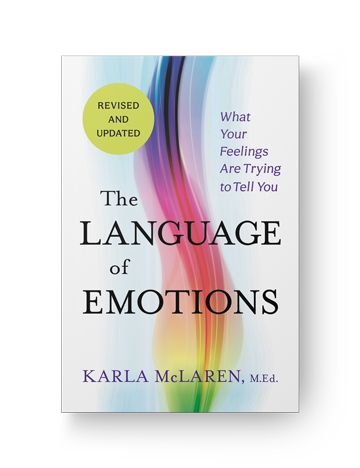
Hello! I’m Karla McLaren, and I’m excited to announce the upcoming release of the revised and updated edition of The Language of Emotions: What Your Feelings Are Trying to Tell You, which will be available in bookstores on June 27th.
Whether you’re a reader of the original Language of Emotions, or if you’re new to this work, I welcome you to this complete guide to the wisdom in every emotion you have.
The original 2010 version of The Language of Emotions was the first book to approach the emotions in terms of how they function, what they do, and how to work with them. Instead of treating emotions as problems to be solved or eradicated, I focused on them as essential aspects of meaning-making, behavior, and intelligence (which is what they truly are). I approached the emotional realm as an intelligent system that requires all of its members, including tragically disrespected emotions such as shame, anxiety, depression, jealousy, envy, panic, and the suicidal urge (among others). And in so doing, I discovered the healing messages inside all emotions.
But because most of us have been taught to distrust emotions, I was working without a net as I wrote the original version of this book, and I missed some things. Now, after more than a decade of further research and practice, and with the support and camaraderie of an international community of colleagues and friends, I’ve had the opportunity to understand the emotions more deeply.
For centuries, emotions have been repressed, idealized, distrusted, and even despised, yet they were never truly understood. I’m honored to share this updated celebration of the brilliance, ingenuity, healing power, and jaw-dropping genius of our emotions.
Welcome!
Karla McLaren, M.Ed.
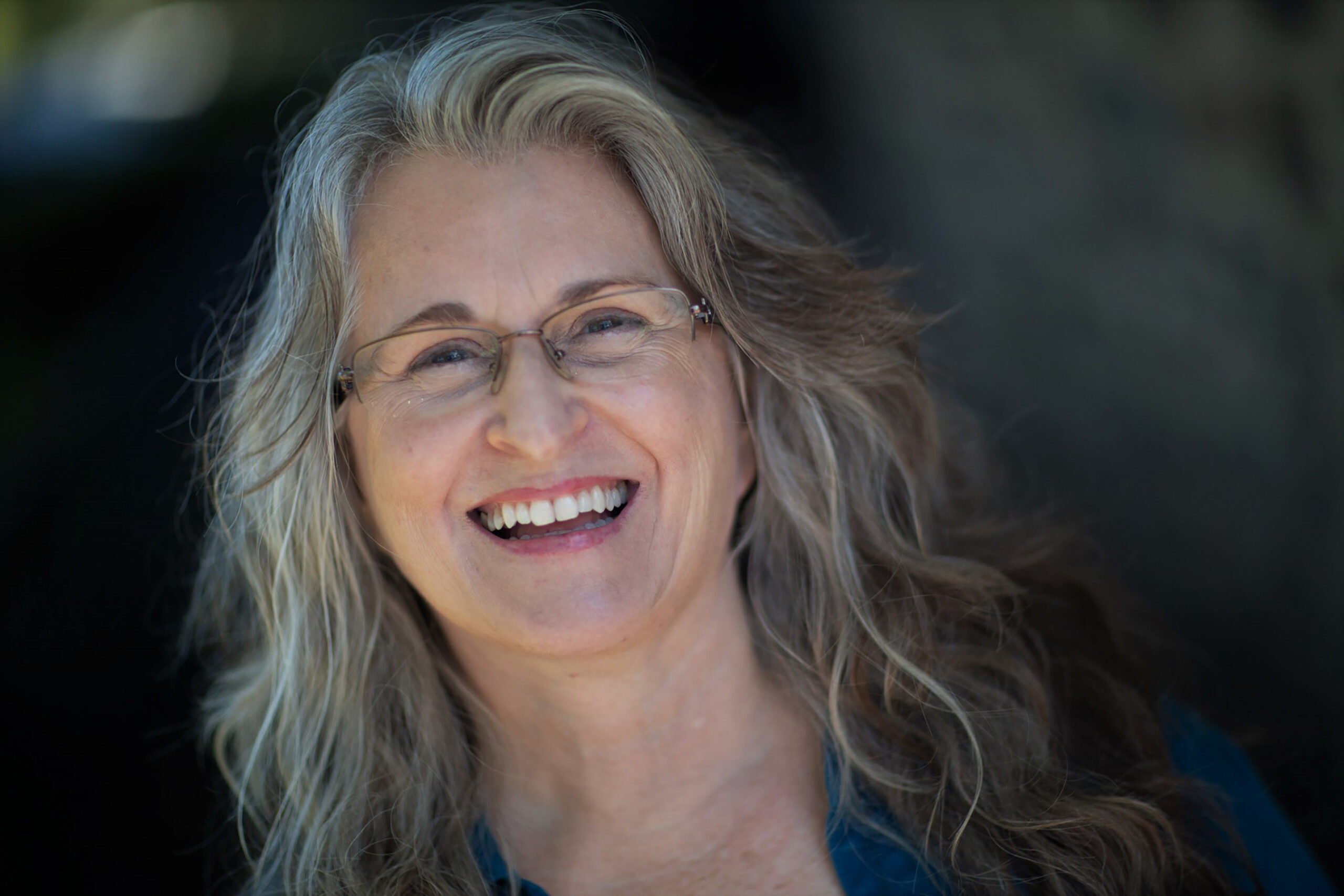
Karla McLaren, M.Ed., is an award-winning author, social science researcher, and empathy innovator. She is CEO of Emotion Dynamics Inc., developer of Dynamic Emotional Integration®, and creator of EmpathyAcademy.org. Karla is the author of Embracing Anxiety, The Dynamic Emotional Integration Workbook, The Art of Empathy, The Power of Emotions at Work, and the multimedia online course Emotional Flow: Becoming Fluent in the Language of Emotions. For more, visit karlamclaren.com.
Karla McLaren, M.Ed., is an award-winning author, social science researcher, and empathy innovator. She is CEO of Emotion Dynamics, developer of Dynamic Emotional Integration®, and creator of EmpathyAcademy.org. Karla is the author of Embracing Anxiety, The Dynamic Emotional Integration Workbook, The Art of Empathy, The Power of Emotions at Work, and the multimedia online course Emotional Flow: Becoming Fluent in the Language of Emotions. For more, visit karlamclaren.com.
Emotions are Vital Aspects of Thinking, Acting, and Working
People once believed that emotions were the opposite of rationality, or that they were lower than or inferior to our allegedly logical processes. But decades of research on emotions and the brain have overturned those outdated beliefs, and we understand now that emotions are indispensable parts of rationality, logic, and consciousness itself. In fact, emotions contain their own internal logic, and they help us orient ourselves successfully within our social environments. Emotions help us attach meaning to data, they help us understand ourselves and others, and they help us identify problems and opportunities. Emotions don’t get in the way of rationality; they lead the way, because they’re vital to everything we think and everything we do. Emotions aren’t the problem; they’re pointing to the problem, and they’re trying to bring us the precise intelligence and energy we need to deal with the problem.
In this book, we’ll learn how to listen to emotions as uniquely intelligent carriers of information, and how to build healthy and effective social and emotional environments at work – not by ignoring or silencing emotions (you can’t), but by listening to them closely, learning their language, and creating a communal set of emotional skills that everyone can rely on. This work is not difficult at all, but it can be unusual in an environment that wrongly treats emotions as soft, irrational, or unprofessional.
The serious problems we’ve baked into the workplace don’t come from any specific management style or ideology, so I won’t focus on managers or leaders as if they’re uniquely powerful or uniquely to blame. These problems also aren’t limited to specific occupations or income brackets (though low-wage work is regularly dehumanizing and hazardous); these are long-term, widespread problems based on a failed workplace model – and on an outdated social and emotional approach that does not support (or in many cases, even comprehend) human relationships and human needs.
This book is the result of decades of exploration and study into how the workplace got to be so unworkable, plus decades of experience in how to access the existing genius in people’s emotional responses (in surprisingly simple ways once you understand how emotions and empathy work). With the help of the genius in our emotions, we can create emotionally well-regulated and worthwhile places for all of us to earn our living and spend our lives.
Luckily, we don’t have to do anything special to welcome emotions into the workplace, or even to make room for them, because emotions are and always have been in the workplace. They’re in the responses people have to workplace abuses; they’re in disengaged workers; they’re in workers seeking other jobs while on the job; they’re in workers who rightly avoid communicating upward about serious problems; they’re in low-wage workers who learn how to survive in hellscapes like call centers, fast-food restaurants, gig work, and robot-like warehouse jobs; they’re in living-wage workers who tolerate unhealthy workplaces because they can’t afford to leave their health insurance behind; and they’re in high-wage workers who may have to bow down to their superiors and compete with their colleagues to be seen as “winners” – and whose experiences of workplace abuse may not be taken seriously because they make so much money and therefore have no right to complain.
We can also see the emotions in our responses to workplace successes; in our healthy working relationships; in the ways we gather together to solve problems; in the ways empathic workers and leaders empower everyone around them; in the ways our colleagues support us when we’re struggling; in the ways businesses step up in times of loss; in the ways we create open communication and humane workflows; in the ways we teach each other; in the benefits, support, flexibility, and living wages we provide for our workers; in the honest sharing of business difficulties or financial losses; and in the laughter we share on great days and rotten days.
Emotions are everywhere in the workplace because emotions are a central feature of human nature. They aren’t removable, and in fact, trying to remove them is a huge part of what created the failed workplace model we have today. Emotions are crucial to everything we do and to every aspect of our work; therefore, we’ll learn how to listen to emotions, work with them, and respect their intelligence. And in so doing, we’ll build a better workplace – and a better world – from the ground up.
Karla McLaren, M.Ed.
Karla McLaren, M.Ed., is an award-winning author, social science researcher, and empathy innovator. Explore her books and audios on the power of emotion and creativity here.
This is part of a Conscious Business series brought to you by The Inner MBA®. You can learn more about the program at Innermbaprogram.com
Lorem ipsum dolor sit amet, consectetur adipiscing elit. Ut elit tellus, luctus nec ullamcorper mattis, pulvinar dapibus leo.
Karla McLaren, M.Ed., is an award-winning author, social science researcher, and empathy innovator. She is CEO of Emotion Dynamics Inc., developer of Dynamic Emotional Integration®, and creator of EmpathyAcademy.org. Karla is the author of Embracing Anxiety, The Dynamic Emotional Integration Workbook, The Art of Empathy, The Power of Emotions at Work, and the multimedia online course Emotional Flow: Becoming Fluent in the Language of Emotions. For more, visit karlamclaren.com.
Karla McLaren is an award-winning author, social science researcher, and renowned expert in emotions and empathy. Her work focuses on her grand unified theory of emotions, which reconsiders how we think of “negative” emotions and opens new pathways into self-awareness, communication, and empathy. With Sounds True, Karla is the author of the landmark book The Language of Emotions, a book on The Art of Empathy, and a new book called The Power of Emotions at Work: Accessing the Vital Intelligence in Your Workplace. In this episode of Insights at the Edge, Tami Simon speaks with Karla about why the full range of emotions is necessary for us to bring forth our best thinking. They discuss the “toxic positivity bias” that has become the norm in the contemporary workplace, how this leads to widespread suffering and dysfunction, and how we can achieve an “emotionally well-regulated” workplace that works for all of us.
What if aging isn’t about decline, but about becoming brighter—like a meteor that grows more luminous even as it falls through the atmosphere?
Tami Simon speaks with beloved poet-philosopher Mark Nepo about his deeply moving new book, The Fifth Season: Creativity in the Second Half of Life. Drawing from Chinese wisdom traditions and his own journey through chronic pain and back surgery, Mark illuminates aging as the “heavenly pivot” (love that phrase) which is the transformative shift from living outwardly to inhabiting life from the inside out.
Join Mark and Tami for this episode to explore:
The meteor metaphor: how we grow brighter as our outer casing flakes away • “Entering time” versus moving through it—and why slowing down opens the eternal moment • The paradox of limitation: how loss simultaneously deepens and expands us • Breaking through to joy as the depth of being that holds all the waves • Why the heart, not the mind, must lead in the second half of life • Living with chronic pain and learning to let beauty in while suffering • The difference between being victims of life versus initiates into life • How grief changes everything and why we don’t get over it, we get under it • Being swift of heart—living without hesitation from the inside out
Mark’s wisdom arises from decades of spiritual practice, surviving cancer, and facing the inevitable losses that come with a long life—essential listening for anyone navigating aging, chronic pain, loss, or simply seeking to live more fully present to the life they have.
Listen now to discover how the second half of life can be your most luminous yet.
This conversation offers genuine transmission—not just concepts about awakening, but the palpable presence of realized teachers exploring the growing edge of spiritual understanding together. Originally aired on Sounds True One.
How do we move beyond fear and separation to experience our true divine nature—especially in times of collective upheaval and uncertainty?
This week, Tami Simon welcomes Paul Selig, a channeler, author, and teacher who has brought through 13 extraordinary books from non-physical guides he describes as teaching from “the upper room.” Born an atheist and trained at Yale, Paul experienced a spontaneous kundalini awakening in 1987 that left him clairvoyant and fundamentally changed his understanding of reality. Since then, he has served as what he calls a “spoken stenographer” for teachings on consciousness, awakening, and our capacity to align with the divine.
Join Tami and Paul to explore:
Paul’s dramatic awakening experience and emergence as a channel
What it feels like to receive and transmit channeled wisdom
The “upper room”—a vibrational state beyond fear and separation
How to recognize when we’re acting from fear versus divine knowing
The clearing process that accompanies spiritual awakening
Why this particular time calls for radical transformation of old structures
The powerful attunement: “I am in God, I am of God, I am with God”
How to maintain trust and openness when part of us still holds back
Practical ways to realign with source amidst chaos and uncertainty
If you’re navigating this time of collective change and seeking a deeper connection to your divine nature, this conversation offers both inspiration and practical guidance for claiming the upper room—that aspect of consciousness where we already dwell in union with all that is.
This conversation offers genuine transmission—not just concepts about awakening, but the palpable presence of realized teachers exploring the growing edge of spiritual understanding together. Originally aired on Sounds True One.
What truly matters when we face the end of life? After decades of sitting at the bedside of hundreds of dying people, Frank Ostaseski has distilled the deepest human concerns into two essential questions: Am I loved? Have I loved well?
This week on Insights at the Edge, Tami welcomes Frank Ostaseski—co-founder of America’s first Buddhist hospice, the Zen Hospice Project, founder of the Metta Institute, and author of The Five Invitations: Discovering What Death Can Teach Us About Living Fully. Frank brings extraordinary wisdom from his pioneering work in compassionate end-of-life care, along with profound personal insights from his own encounters with heart surgery, strokes, and the transformative vulnerability of being “on the other side of the sheets.”
Join Tami and Frank to explore:
The two essential questions that arise when facing death—and what they reveal about living fully now
Why emotional flexibility is the true condition for healing and transformation
How to meet our own fear and pain without abandoning ourselves or others
The practice of “allowing” as a path to both wisdom and compassion
What happens in the dying process: surrender, reconstitution, and coming home
Why Frank is allergic to the notion of a “good death”
The indestructible love that emerges when we keep our hearts open through pain
How to practice dying by paying attention to everyday endings
This conversation is for anyone grappling with loss, change, or the fundamental questions of existence—offering not prescriptive answers, but the profound medicine of honest presence and the recognition that our vulnerability itself is one of our most beautiful human qualities.
This conversation offers genuine transmission—not just concepts about awakening, but the palpable presence of realized teachers exploring the growing edge of spiritual understanding together. Originally aired on Sounds True One.
Session expired
Please log in again.
The login page will open in a new tab. After logging in you can close it and return to this page.