
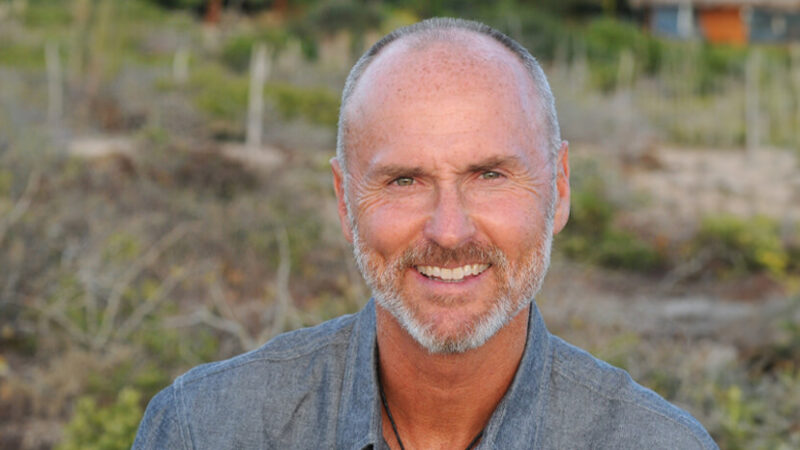
Chip Conley

Chip Conley is on a midlife mission. After disrupting the hospitality industry twice, first as the founder of Joie de Vivre Hospitality, the second-largest operator of boutique hotels in the U.S., and then as Airbnb’s Head of Global Hospitality and Strategy, leading a worldwide revolution in travel, Conley co-founded MEA (Modern Elder Academy) in January 2018 in Baja California, Mexico. Inspired by his experience of intergenerational mentoring as a ‘modern elder’ at Airbnb, where his guidance was instrumental to the company’s extraordinary transformation from fast-growing start-up to the world’s most valuable hospitality brand, MEA is the world's first ‘midlife wisdom school’ and has a campus opening on a 2,600-acre regenerative horse ranch in Santa Fe, New Mexico in early 2024. Dedicated to reframing the concept of aging, MEA supports students to navigate midlife with a renewed sense of purpose and possibility. A New York Times bestselling author, Conley's 7th book "Learning to Love Midlife: 12 Reasons Why Life Gets Better with Age" is about rebranding midlife to help people understand the upside of this often-misunderstood life stage and he was asked to give a 2023 TED talk on the “midlife chrysalis.”

Also By Author

Chip Conley: Midlife: From Crisis to Chrysalis

Midlife has a bad reputation, often paired with the word “crisis” or seen as the “over the hill” phase of our journey. As the founder of the Modern Elder Academy (the worlds’ first midlife wisdom school), Chip Conley is changing this negative narrative to one that reclaims our middle years as a time of incredible regenerative possibilities. In this podcast, Tami Simon sits down with Chip to talk about his new book, Learning to Love Midlife, and how those of us amidst this phase can activate our capacities for renewal and “let our souls lead the dance.” 

Tune in for a very honest and hope-giving podcast on: The phoenix phenomenon; the anatomy of transition; the metaphor of the chrysalis; cultivating a growth mindset; the components of high “TQ” (or transitional IQ); creating space for something new; the great midlife edit; the dark night of the ego; radically shifting how you want to live your life; vulnerability and accepting help; “dancing backwards in high heels”; developing a friendship with your body; letting go—but also welcoming in; the alchemy of curiosity and wisdom; goosebumps as a sign you’re on the right path; and more.

Note: This episode originally aired on Sounds True One, where these special episodes of Insights at the Edge are available to watch live on video and with exclusive access to Q&As with our guests. Learn more at join.soundstrue.com.
Chip Conley: A Modern Elder at Work

Chip Conley is an entrepreneur and the New York Times bestselling author of Peak and Wisdom at Work. He will present during Sounds True’s upcoming Inner MBA program, a nine-month training program for bringing your full, authentic self to your workplace and career. In this episode of Insights at the Edge, Tami Simon speaks with Chip about socially responsible entrepreneurship and the movement toward making workplaces into spiritually fulfilling spaces. They talk about the modern business obsession with short-term profit and why this attitude does damage to both our culture and environment. Chip and Tami also consider what it is to pursue meaning rather than profit, as well as how to create “collective effervescence” within a work culture. Finally, Chip explains his lifelong habit of journaling each week’s accomplishments and tells the story of the biggest risk he’s ever taken.  (73 minutes)

You Might Also Enjoy

Cecily Mak: “My Life Is Better Clear”

What if sobriety isn’t the point? Tami Simon talks with Cecily Mak, founder of the ClearLife Movement, about the spontaneous thirty-day break from drinking that began at Burning Man and never really ended. They explore why “alcohol-free” became a more honest word for her than “sober,” and what it looks like to face what we’re really avoiding when we reach for a drink, a distraction, or anything that dims our life.

Cecily Mak is the founder and visionary of the ClearLife Movement, a former attorney and Silicon Valley executive turned writer, podcast host, and co-founder of Wisdom Ventures. She is the author of Undimmed: The Eight Awarenesses for Freedom from Unwanted Habits.

In this conversation, Tami and Cecily explore:

  • The spontaneous thirty-day alcohol-free experiment that began at Burning Man, and the divorce decision behind it
  • Why Cecily chose the language “alcohol-free” over “sober,” and a therapist’s model of use, abuse, and addiction
  • The concept of dimmers: the habits, substances, and behaviors we use to soften difficult feelings
  • How to tell whether a habit is helping us grow, or helping us avoid something we already know
  • Forgiveness and letting go as an inside job, including her path toward her ex-husband and her late mother
  • Why self-compassion, not self-judgment, is often the real work underneath changing any habit
  • The sixth awareness: learning not to judge or impose our own path onto someone else’s

This conversation is for anyone questioning their relationship with alcohol or another habit, anyone doing forgiveness work with a parent or former partner, and anyone curious what it actually takes to live with more clarity and presence.

Listen now and discover what it means to live undimmed. →

This interview originally aired on Sounds True One, where you can enjoy early, ad-free access to episodes of Insights at the Edge: https://join.soundstrue.com/

Just One Question | Lama Rod Owens: How Can I Receive ...


Giving love comes easy, but can you actually receive it? Lama Rod Owens says most of us flinch at being cared for, even by something as simple as the chair we’re sitting in. In this practice from his book The New Saints, he walks us through what it takes to actually let love in.

Lama Rod Owens, a Black Buddhist Southern Queen, authorized lama in the Kagyu lineage of Tibetan Buddhism, and author of The New Saints: From Broken Hearts to Spiritual Warriors, guides Tami Simon (and all of us listening) through a short meditation on receiving care, drawn straight from the pages of his new book.

In this conversation, Tami and Lama Rod explore:

  • Feeling supported by the seat or ground beneath you
  • Recalling a time someone, or something, really loved you
  • Letting that love move through the body, including the grief it can stir up along the way
  • Imagining the whole universe wanting you safe, happy, and free
  • Gently returning to the body and closing the practice

This one’s for anyone who finds it easier to give love than to receive it, which, let’s be honest, is most of us.

Taken from the full Insights at the Edge conversation with Lama Rod Owens. Find the complete interview in this feed or at https://bit.ly/new-saint

Terri Cole: “Healing the Worthiness Wound”

Terri Cole calls it an invisible wound: the imprint left when a daughter never receives protection, presence, or emotional attunement from her father. This week, Tami Simon talks with Terri Cole—Sounds True’s own Boundary Boss—about her new book, Father Wound, and why even women with loving fathers can carry this wound without ever naming it.

Terri Cole, MSW, LCSW, is a licensed psychotherapist, relationship expert, and best-selling author who has spent nearly three decades helping people break dysfunctional patterns and build healthier relationships with themselves and others. With Sounds True, she is the author of the trilogy that began with Boundary Boss and continued with Too Much: A Guide to Breaking the Cycle of High-Functioning Codependency. Her newest book, Father Wound: Break Unhealthy Patterns to Reclaim Your Worth and Power, examines what happens when a father or father figure is absent, abusive, immature, or simply not emotionally attuned—and why daughters of patriarchy carry a version of this wound no matter what kind of father they had.

In this conversation, Tami and Terri explore:

  •  How to recognize a father wound even when “my father wasn’t that bad”
  • Why Terri defines the father wound as, at its root, a worthiness wound
  • The difference between self-parenting and re-parenting, and what healing your inner child looks like in daily decisions
  • The “father wound trance”: how old patterns resurface in adult relationships, and how to work with transference instead of being run by it
  • Mourning the Dream, Terri’s exercise for grieving the father you wished you’d had
  • Why healing this wound personally is tied to healing patriarchy at a collective, societal level

Who this episode is for: anyone doing inner child work, anyone who keeps finding themselves in the same relationship pattern and wondering why, and anyone ready to ask whether their sense of worth was shaped long before they had any say in it.

Listen now, and start reclaiming your worth. →


This interview originally aired on Sounds True One, where you can enjoy early, ad-free access to episodes of Insights at the Edge: https://join.soundstrue.com/