Cyndi Dale

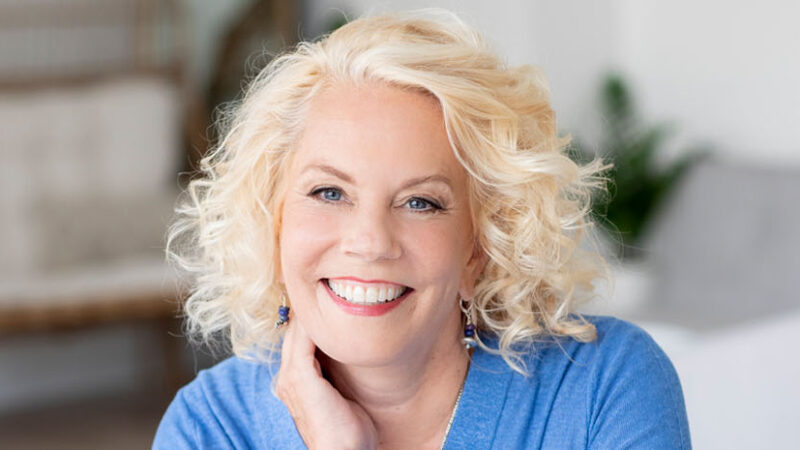
Cyndi Dale is an internationally renowned author, speaker, healer, and business consultant. She’s authored nearly 40 books on energy medicine, intuition, and spirituality, including the award-winning The Subtle Body: An Encyclopedia of Your Energetic Anatomy. She has worked with 80,000 clients and students and is known for her online trainings and yearlong apprenticeship program. She lives and teaches in Minneapolis, Minnesota. For more, visit cyndidale.com.

Cyndi Dale has received the following awards for The Subtle Body:

2010 Gold Nautilus Award - Health/Healing/Energy Medicine
2010 Silver Living Now Award - Health/Wellness
2010 Bronze IPPY - New Age (Mind-Body-Spirit)

Author photo © Allison Jagoda

Author Info for Dani Ferrara Coming Soon

Also By Author

Cyndi Dale: Becoming Your Own Best Ancestor

On the surface, it appears as though the lives we live proceed forward moment by moment in a strictly linear way. Could it be we’ve got it all wrong? Renowned energy healer and teacher Cyndi Dale offers a wildly different perspective on our human journey—a paradigm-shattering cosmology where our current, past, parallel, and future selves coexist in realms beyond the grasp of the rational mind. In her book Transforming the Legacy, Cyndi helps readers create a partnership with these energetic aspects of ourselves to identify and heal soul-based and lineage-ancestry issues. 

In this podcast, Tami Simon speaks with Cyndi about Transforming the Legacy and a broad swath of fascinating topics including: past lives and reincarnation; quantum physics and how our past, present, and future lives coexist; our two neurological systems: the (linear) digital and the (timeless) analog; the phenomenon of loop quantum gravity and how our parallel lives unfold in connection and concurrently; healing the past for empowerment here and now; the 12-chakra model; the ancestral energies we receive pre-conception; soul-level agreements we choose prior to incarnating; changing the “program” to change the person; finding your “God spot,” or your connection to divine intelligence within; combining intuition with somatic practice on the path of healing and growth; applying subtle energy work to resolve money issues; the “wild tornadoes” metaphor for the chakras; spiritual light; overcoming our psychological discomfort around making difficult changes; addressing illness and disease on both the physical and subtle levels; the practice of becoming your own good ancestor; and more.

Note: This episode originally aired on Sounds True One, where these special episodes of Insights at the Edge are available to watch live on video and with exclusive access to Q&As with our guests. Learn more at join.soundstrue.com.

Meet Your Subtle Body: Discover Cyndi Dale’s 12-Chak...

Meet Your Subtle Body Header Image


“I think [the 12-chakra system] is a good compilation to get us going so that we can be the entirety of the human that we are—the human divine being that we are.”


—Cyndi Dale

As seekers, instead of following set rules, we may set out to discover routes that feel uniquely true and right for us.

Cyndi Dale, a luminary writer on the subtle body and its connection to the physical world, works with a unique 12-chakra system in her healing practice.

Cyndi’s 12-chakra vision helps her pinpoint feelings and where wounds are emanating from the invisible, spiritual self.

Chakras Infographic

from Enlightened Energetics

WHAT IS THE SUBTLE BODY?

Each of us have both a physical body and a subtle body. The physical is what we think of normally: our shape, our volume, and that which we can touch. The subtle body arises from a different place: the intuition. 

The subtle body seems to be some sort of underground pathway for our physical one. It is invisible not because it doesn’t exist, but because it’s sub-observable to the five senses we normally use. I might even argue that she sees the intuition as the 6th sense, and that the creative nature of our spirits gives us the ability to wield this power for healing.

Just like quantum physicists are starting to say, our world (or, at least, some dimension of our world) is not physical at all, but actually consists of “immaterial energy waves.” These waves somehow come together and entangle to create the material world.

As I listened to Cyndi’s interview with Tami, I was struck by the idea that healers like her use the subtle body every day. In the interview, she really helps you comprehend how that’s possible by guiding you through an exercise that’s less about understanding and way more about feeling. (It made me whisper, “whoa!” out loud.)

Here’s an exercise from that part of the interview if you want to try it:

Rub your hands together until you create some friction, and then put your hands palms facing each other about three or four inches apart. You’ll feel that there’s still an energy in between those hands—because there’s chakras in the hands and because there’s fields of energy emanating from the hands.

If you start patting your hands, not touching them, but kind of patting that energy ball. Again, you can bring your consciousness into your hands and pour more energy into that ball that’s being created. All of a sudden, you’re going to feel like your hands are moving farther away from each other. If you turn the spigot down, your hands—in order to feel that friction or the energy between them—are going to move closer together. Then a really fun thing to do is imagine or turn that energy red—it’s not clear anymore; it’s red—and get a sense of how that red energy field can have a certain reaction to red, especially in comparison to blue . . . as we’re now going to turn that energy blue. It’s really different, isn’t it?

About energy workers and healers she says: “They’re consciously kind of deciding what type of energy might be useful, what might be helpful for them, for somebody else, and they’re sending that.” 

THE 12-CHAKRA SYSTEM

According to Cyndi, the western tradition of the 7-chakra system is based on a book by Sir Arthur Avalon. 

Chakras are eddies of light and sound. They interact, dance, rotate and orbit us like our very own planets.

7 Chakras Infographicfrom MindBodyGreen

THE 12 CHAKRAS

1. Root

The root chakra is about spirituality, purpose and connection, as well as our relationship to Mother Nature and the Earth. It is associated with the underlying structures (both intuitive and ordered) of our minds. It is associated with pheremones and our sense of smell

2. Sacral

This is a chakra of motion and flow, representing the water element in the body. It bears a relationship to reproduction and fertility, joy and desire, and the kind of rest that encourages immune system recovery. It is associated with our sense of taste.

3. Solar Plexus

The solar plexus is a fiery center for our unique powers and gifts. When it’s in balance, we can feel like our lives are autonomous and in harmony with our value system. It helps define the energy that guides our motivations, disposition and mood, and it expands our idea of what’s possible when we are inspired by it.

4. Heart 

The heart chakra is related to our personal and romantic relationships. When it is in balance, we might be immersed in feelings of joy and real freedom. It is strengthened through trust, non-manipulative communication, and authentic respect for ourselves and others. It is also strengthened by the exploration and implementation of personal boundaries. With the heart, we send and receive our gifts.

5. Throat 

Here is our center for speaking and listening. The throat enables expression and facilitates spiritual dawnings of both rational and emotional understanding. Balancing the throat chakra can help prevent burnout. If you have writer’s block, it can be helpful to check with this chakra.

6. Third Eye

The third eye is associated with the pineal gland and rules telepathic ability. A vortex of sublimation, it is empowered by critical thinking, especially when we seek to release fear and guilt. Through the third eye, we can become more lucid, deepening our understanding that duality is an illusion. Opening it helps us to understand symbols and receive messages in both dreams and waking life.

7. Crown

The crown chakra is related to your nervous system and brain. Tap into its power by becoming present in the body through meditation, visualization and relaxation. It can look like a circle of light around your head, and is an expansion into space where you connect with the rest of the universe. It is related to transcendence & wisdom.

8. Soul/Shaman

Located a few inches above the head, this chakra encompasses past lives and your memories of other dimensions. From Cyndi’s description, it is a beautiful, mysterious chakra that connects our physical body to our soul’s experience in its totality. It empowers our ability to transcend spacetime and engage with “the sphere of potentialities in the making.” When it’s in harmony, it becomes easier to communicate with beings in other realms, like your spirit guides.

9. Luminary

This chakra is about an arm’s length above the top of your head. Lift your hand all the way up to connect with where it is. Cyndi sees this chakra as gold, related to our connection to the divine. It is the space of the greater spirit, the “seat of the soul,” which can act as a doorway into your divine self and your archetypal patternings.

10. Earth

This chakra blooms from beneath your feet. It is how your body connects to the earth, a cord that goes through the legs and feet into the ground. It is associated with nature and the cosmos in their simple essence, and the memories that arise from it can be related to ancestral lessons and inherited traumas. Substantial healing can arise from relationship with this chakra.

11. Supernatural

This chakra is “actually around the body. It’s like this lovely rose film, like way out in our energy field, but it’s collected around the hands and the feet.” Through this chakra, you can discover your inherent connection with both natural and supernatural forces. In this part of the interview, Cyndi mentions that chakras are located in multiple dimensions, existing in different places at the same time. She observes this chakra, which is responsible for our ability to move energy, as energy balls around the hands and feet.

12. Auric

This chakra surrounds the auric field of the body like a halo. Cyndi says, “I think of [it] as the outer bounds of our own unique essence or our own spirit.” She emphasizes the uniqueness of this chakra—its defining characteristic is you, and your individual purpose as a spiritual being. There is a connection between this chakra and the ability to envision, create and become, alongside the truth of universal unity.

*

Listen to Tami’s full interview with Cyndi Dale here on Insights at the Edge.


ABOUT CYNDI

Cyndi Dale is an internationally renowned author, speaker, intuitive healer, and visionary who has taught thousands of students to access their spiritual gifts through her books and workshops. She has authored several groundbreaking books and audio programs on energy healing and the chakras, including The Subtle Body, The Subtle Body Practice Manual, Advanced Chakra Healing, Energy Clearing, Attracting Prosperity Through the Chakras, and New Chakra Healing. Her work has been translated into nine languages.

*
*
*

ABOUT THE AUTHOR

When she isn’t writing poetry or music, Dani Ferrara blogs for Sounds True and seeks to learn more about healing alchemy. Learn more about her art at daniferrarapoet.com.

Cyndi Dale: Discovering Your Subtle Body

Cyndi Dale is a renowned intuitive healer, bestselling author, and recognized expert on energy healing. With Sounds True, Cyndi has published the seminal The Subtle Body: An Encyclopedia of Your Energetic Anatomy and The Subtle Body Practice Manual: A Comprehensive Guide to Energy Healing. Sounds True will also be hosting Cyndi’s upcoming online course The Subtle Body Online Training Program. In this episode of Insights at the Edge, Tami Simon speaks with Cyndi about the many extraordinary experiences and important lessons that brought Cyndi to energy healing. They discuss the basic structures of the subtle anatomy and how physical ailments often have energetic causes. Cyndi explains her understanding of the chakras and details how people can maintain their personal energetic boundaries. Finally, Cyndi leads listeners in an exercise for recognizing their own subtle energetic field and talks to Tami about the “energy egg” that surrounds each of us. (70 minutes)

You Might Also Enjoy

Frank Ostaseki: “I’m Allergic to the Notion of a G...

What truly matters when we face the end of life? After decades of sitting at the bedside of hundreds of dying people, Frank Ostaseski has distilled the deepest human concerns into two essential questions: Am I loved? Have I loved well?

This week on Insights at the Edge, Tami welcomes Frank Ostaseski—co-founder of America’s first Buddhist hospice, the Zen Hospice Project, founder of the Metta Institute, and author of The Five Invitations: Discovering What Death Can Teach Us About Living Fully. Frank brings extraordinary wisdom from his pioneering work in compassionate end-of-life care, along with profound personal insights from his own encounters with heart surgery, strokes, and the transformative vulnerability of being “on the other side of the sheets.”

Join Tami and Frank to explore:

  • The two essential questions that arise when facing death—and what they reveal about living fully now
  • Why emotional flexibility is the true condition for healing and transformation
  • How to meet our own fear and pain without abandoning ourselves or others
  • The practice of “allowing” as a path to both wisdom and compassion
  • What happens in the dying process: surrender, reconstitution, and coming home
  • Why Frank is allergic to the notion of a “good death”
  • The indestructible love that emerges when we keep our hearts open through pain
  • How to practice dying by paying attention to everyday endings

This conversation is for anyone grappling with loss, change, or the fundamental questions of existence—offering not prescriptive answers, but the profound medicine of honest presence and the recognition that our vulnerability itself is one of our most beautiful human qualities.

For more with Frank Ostaseski:

Year to Live Course (Spirit Rock Meditation Center)

Spirit of Service (Upaya Zen Center)

Awareness in Action: The Role of Love (Upaya Zen Center, Frank Ostaseski & Sharon Salzberg)

This conversation offers genuine transmission—not just concepts about awakening, but the palpable presence of realized teachers exploring the growing edge of spiritual understanding together. Originally aired on Sounds True One.

Steven Washington: “My Recovery Is Non-Negotiabl...

How do we remain committed to staying sober when grief strikes, when stress becomes overwhelming, or when shame threatens to pull us back into old patterns?

This week on Insights at the Edge, Tami Simon welcomes Steven Washington, a former professional Broadway dancer who has transformed his 23-year recovery journey into a powerful practice of embodied healing. Steven is the author of Recovering You: Soul Care and Mindful Movement for Overcoming Addiction and creator of the SWE Studio, an online community offering movement and meditation support for people in recovery.

In this deeply personal interview, Tami and Steven explore:

  • Why recovery must be “non-negotiable”—with no conditions attached, regardless of life’s challenges 
  • How shame operates as the linchpin of addiction and the healing power of sharing it with trusted others
  • The connection between sensitivity and addiction, and how to transform sensitivity from vulnerability into strength
  • Practical tools for creating a trigger plan that works for both small daily stressors and major life crises
  • How Qigong and embodied practices help regulate the nervous system and process emotions held in the body
  • The journey from inherited shame to self-compassion and authentic self-worth
  • Why asking for help—practiced with small things—prepares us for life’s biggest challenges
  • Developing a personal relationship with a higher power that feels authentic rather than inherited

If you’re navigating recovery, supporting someone who is, or seeking to understand the connection between embodiment and transformation, Steven offers both practical wisdom and profound compassion for the journey.

Note: This interview originally aired on Sounds True One, where these special episodes of Insights at the Edge are available to watch live on video and with exclusive access to Q&As with our guests. Learn more at https://www.join.soundstrue.com

Healing From The Inside Out: How Yoga Cultivates Emoti...

Finding mental peace can feel difficult when life keeps pulling your attention in a dozen directions. Your emotions may swing between high and low, and clarity can feel out of reach. Yoga offers more than physical postures, it offers a practice of slowing down, tuning in, and tending to what’s within. Whether you’re struggling with stress, feeling emotionally off balance, or simply needing space to breathe, yoga can support a deeper kind of healing that unfolds from the inside out.

For over 40 years, Sounds True has served as a trusted source for spiritual education and personal growth. We share practices that are rooted in authentic wisdom and designed for real, everyday lives. Our collection of digital courses, audio programs, and teachings from renowned guides such as Tara Brach, Eckhart Tolle, and Pema Chödrön reflect a living library of transformation, created to support your journey back to wholeness.

Key Takeaways:

  • Practice & Presence: Yoga offers tools to process emotions and calm the mind through movement, breath, and awareness.
  • Science & Soul: Evidence supports yoga’s ability to reduce stress while honoring its deeper spiritual roots in healing.
  • Sustainable Healing: Ongoing, compassionate practice encourages emotional resilience and lasting mental clarity.

How Yoga Supports Mental And Emotional Well-Being

Yoga’s influence goes far beyond the physical body. For many, it serves as an anchor through emotional storms and mental overwhelm. To understand how yoga for mental health can become part of your healing journey, let’s explore its core contributions:

A Holistic Practice That Meets You Where You Are

Yoga isn’t just movement, it’s a conversation with your inner world. It brings together the breath, body, and mind to create space for awareness, without pressure to perform or change. In that space, emotional patterns can soften, revealing clarity beneath the noise.

Scientific Support For Emotional And Mental Relief

Research continues to affirm what many practitioners intuitively feel. Regular yoga practice has been shown to reduce stress hormones, increase calming brain chemicals like GABA, and regulate the nervous system. This makes it a gentle, sustainable approach to both yoga and mental health.

Emotional Balance Begins With Compassionate Awareness

One of the most powerful aspects of yoga for emotional balance is its ability to foster self-compassion. When we step onto the mat with whatever emotions are present: anxiety, grief, joy, or numbness, yoga teaches us how to stay connected without judgment. Over time, this builds emotional resilience rooted in presence rather than resistance.

From Temporary Relief To Lasting Inner Stability

The effects of yoga can feel subtle at first, but they ripple outward. A consistent practice doesn’t just offer short-term calm; it strengthens your ability to self-regulate and respond, not react. This is how inner healing yoga supports transformation from within, one breath at a time.

Discover The Power Of Daily Meditation With Sounds True.

The Science And Spirit Of Yoga For Mental Health

Yoga’s unique power lies in its ability to bridge ancient wisdom with modern understanding. While it has spiritual roots that invite deep introspection, it also holds measurable benefits for mental health. To fully appreciate the role of yoga in emotional and psychological well-being, it helps to look at both perspectives side by side:

What Modern Research Reveals

Scientific studies continue to explore the mental health benefits of yoga. Results point to improved mood, reduced anxiety and depression, and enhanced emotional regulation. These outcomes support the growing use of yoga for mental health in therapeutic settings, including trauma recovery and stress management.

Why The Subtle Body Matters

In yogic philosophy, healing isn’t limited to the physical or even the psychological. The concept of prana, or life force, helps explain why movement and breath can shift emotional states. Practices that work with subtle energy including inner healing yoga, help release stored tension and clear emotional blockages.

Balancing Effort And Surrender

Yoga invites a delicate interplay between strength and softness. In doing so, it mirrors the healing process itself: part discipline, part letting go. This balance nurtures the experience of mental clarity through yoga, creating the conditions for stillness to arise naturally.

Explore Further With Embodied Resources

If you’re curious to deepen your connection to body and breath in a supported way, Sounds True offers a wide range of practices through yoga and movement. These digital programs are led by teachers who blend somatic wisdom with grounded guidance, meeting you right where you are.

Cultivating Emotional Balance Through Movement And Breath

Our emotions live in the body. They’re not just mental states but physical experiences, tightness in the chest, heaviness in the limbs, or fluttering in the gut. Yoga helps us move these feelings through instead of holding them in:

The Body As A Gateway To Emotional Awareness

Movement can unlock what words cannot. Through intentional poses, especially those that open the hips, heart, and spine, yoga supports the release of stored emotions. This is why yoga for emotional balance feels less like escape and more like a homecoming.

The Breath As Regulator And Messenger

Breathwork, or pranayama, is a powerful tool for emotional regulation. By consciously slowing the breath, we calm the nervous system and shift our state of mind. Over time, this supports both yoga and mental health by creating internal space for reflection rather than reaction.

Rhythmic Practice Builds Emotional Resilience

Consistency is key. Even short, daily practices help build the emotional strength needed to navigate life’s ups and downs. This steady rhythm reinforces the benefits of inner healing yoga, creating a supportive foundation for deeper personal work.

Supportive Tools For Emotional Healing

For those looking for gentle guidance, the yoga for your mood deck offers intuitive prompts and accessible poses to meet you where you are emotionally. It’s a helpful companion for days when you’re not sure how to begin but know you need something.

Build Relationships That Nourish And Sustain.

Accessing Mental Clarity Through Yogic Presence

Mental clarity often feels just out of reach in a noisy world. Yoga creates the internal conditions that allow clarity to surface, not by forcing it, but by slowing things down. When the body is calm and the breath is steady, the mind can begin to clear:

Slowing Down To See Clearly

Yoga encourages us to pause and notice. Whether you’re holding a posture or sitting in stillness, these moments of mindful presence quiet the mental chatter. This process is central to experiencing mental clarity through yoga, where insights arise not from thinking harder but from thinking less.

Meditation And Stillness As Deep Practices

While movement helps discharge tension, meditation helps us see beneath it. Even a few minutes of seated awareness can reveal thought patterns and emotional loops we didn’t realize were there. These practices are integral to both yoga for mental health and long-term emotional wellness.

The Restorative Power Of Rest

Rest is not a luxury, it’s essential for mental clarity and nervous system repair. Deep rest practices like Yoga Nidra offer profound restoration. For an accessible entry point, explore yoga nidra—the sleep yoga, which gently guides you into deep states of awareness without effort.

Clarity As A Byproduct, Not A Goal

Yoga doesn’t chase clarity. It invites you to create the right internal environment and let clarity arise in its own time. Over time, this approach nurtures both inner healing yoga and sustainable mental clarity rooted in presence.

Inner Healing Yoga As A Path To Wholeness

Healing is not always about fixing what’s broken. Often, it’s about remembering what has always been whole beneath the layers of stress, pain, and disconnection. Inner healing yoga invites this remembering through intentional practice and self-inquiry:

Creating A Safe Space Within

The mat becomes a mirror. Each posture, breath, and moment of stillness offers a chance to meet yourself with honesty and care. This safe internal space nurtures the emotional awareness essential for lasting transformation.

The Power Of Self-Compassion

Yoga teaches us that healing is not linear. There will be days when the mind is foggy, the body is tense, or emotions feel overwhelming. Returning to your practice anyway builds trust, in yourself, and in the process of yoga for emotional balance.

Integration Beyond The Mat

The most meaningful shifts often happen after practice, in how we speak to ourselves, how we move through relationships, and how we respond to life. This is the deeper work of yoga and mental health, where practice becomes a lived experience of wholeness.

An Ongoing Invitation To Go Deeper

Inner healing is not a destination. It’s a continuous invitation to be in relationship with yourself as you are right now. As your awareness grows, so does your capacity for mental clarity through yoga, clarity rooted in self-understanding, not perfection.

Expand Your Consciousness With Sounds True.

Final Thoughts

Yoga invites a return to ourselves. It doesn’t demand that we change who we are, but gently guides us to remember what already lives within us, clarity, calm, and connection. Whether you’re seeking stillness, release, or simply a moment to breathe, yoga offers the tools to support your healing from the inside out.

As you continue exploring the path of yoga for mental health, you may find that what once felt like emotional chaos begins to soften into something more spacious. With consistent practice, both yoga for emotional balance and inner healing yoga can become steady companions in your life. The clarity that arises is not forced but welcomed, cultivated through each breath, each pause, each mindful moment.

To deepen your experience, you might consider joining the global celebration of yoga through the international day of yoga offerings by Sounds True. These resources, created by trusted teachers and rooted in heart-centered wisdom, are here to support your personal journey, one that honors where you are and gently points toward where you’re going.

Read Also:

Frequently Asked Questions About Yoga For Mental Health

What type of yoga is best for mental health?

Gentle, breath-focused styles like Hatha, Yin, and Restorative Yoga are especially beneficial for mental health, as they calm the nervous system and promote inner stillness.

Can yoga replace therapy or medication for mental health conditions?

Yoga can be a powerful complement to therapy or medication, but it is not a substitute. Always consult a healthcare provider for individualized treatment plans.

How often should I practice yoga for mental health benefits?

Even 10 to 20 minutes daily can support mental and emotional wellness. Consistency matters more than intensity when it comes to cultivating inner balance.

Is it normal to feel emotional during or after yoga practice?

Yes, emotions can rise during yoga as physical movement and breathwork unlock stored tension. This is part of the body’s natural release and healing process.

Can beginners benefit from yoga for mental clarity and emotional healing?

Absolutely. No advanced skill is needed to start. Breath awareness, simple movements, and mindful rest can offer noticeable benefits, even for beginners.

What role does community play in yoga for mental health?

Practicing in community, whether in-person or online, can enhance feelings of support and connection. Shared practice helps reduce isolation and deepens healing.

How does yoga support nervous system regulation?

Yoga helps activate the parasympathetic nervous system through slow breathing and mindful movement, promoting a state of rest, recovery, and emotional stability.

Michelle Cassandra Johnson is an author, activist, spiritual teacher, racial equity consultant, and intuitive healer. She is the author of six books, including Skill in Action and Finding Refuge. Amy Burtaine is a leadership coach and racial equity trainer. With Robin DiAngelo, she is the coauthor of The Facilitator's Guide for White Affinity Groups. For more, visit https://www.michellecjohnson.com/wisdom-of-the-hive.

>