Customer Favorites

Brainwave Entrainment

Tami Simon speaks with Dr. Jeffrey Thompson, one of the foremost researchers studying sound and its effect on the brain and body. Based on his discoveries of how specific frequency patterns can create health benefits, Dr. Thompson has created dozens of popular brainwave entrainment audio programs, including Brainwave Suite, Alpha Relaxation System, and Delta Sleep System. In this episode, Tami speaks with Dr. Thompson about the science behind brainwave entrainment and how it can affect our physiology, the discovery of the gamma brainwave state that occurs during periods of deep meditation, and the power of what Dr. Thompson calls primordial sounds. (75 minutes)

Exploring Out of Body Experiences

Tami Simon speaks with William Buhlman, an expert in teaching people techniques so they can have an out-of-body experience. For the past six years, he has surveyed more than 16,000 participants in 32 countries about their out-of-body experiences. He is also a regular lecturer at the Monroe Institute. William is the author of the new Sounds True audio learning program, How to Have an Out-Of-Body Experience. William discusses what he calls “spiritual essence”, eliminating the fear of death, multiple energy-bodies, and how to use the knowledge gained from out-of-body experiences. For more information about William Buhlman, visit astralinfo.org. (48 minutes)

The Modern Science of Nostalgia

In the first two decades of this new century, the science of nostalgia has exploded. There are now hundreds of published scientific studies exploring a wide range of questions about how humans experience nostalgia and the different roles it plays in daily life. Scholars from all over the world are now conducting diverse studies about the ways nostalgia influences our lives.

Keeping in mind the history of nostalgia, it’s amazing what we are now learning. Nostalgia is certainly not a disease and it’s far more than just a source of entertainment. By using the gold standard of science—experiments in which research participants are randomly assigned to different treatment conditions—we’ve been able to answer a number of key questions. What causes people to experience nostalgia? How does nostalgia impact how people feel about their current lives? Does nostalgia influence our interests, goals, and behavior? If so, in what ways? Do the effects of nostalgia differ from person to person?

In addition to experimental studies, we have now conducted rigorous survey studies observing how nostalgia naturally occurs and what psychological characteristics, life experiences, and behaviors it tends to be associated with. This has helped us answer other intriguing questions. Are some individuals naturally more nostalgic than others? Is there a nostalgic personality type? Are people more or less nostalgic at different ages? Are people more or less nostalgic when experiencing different life changes such as moving away from home, starting a new career, facing personal tragedy and loss, or experiencing major life disruptions such as a global pandemic?

Over the last two decades, we have asked thousands of people to document their nostalgic memories. This has given us a great deal of insight into the more qualitative experience of nostalgia, which has in turn helped us develop a more complete picture of what happens inside a person’s mind when they take a nostalgic trip down memory lane. These personal stories have guided a lot of my research questions on the topic.

Combining these different approaches to researching nostalgia, mycolleagues and I have made a number of discoveries that cast this old emotional experience in a brand-new light. We’ve put nostalgia under the microscope, and what we’ve discovered is that nostalgia doesn’t cause problems as proposed by past scholars, physicians, and psychologists. On the contrary, problems cause nostalgia.

When people are down because they feel sad, lonely, meaningless, uncertain, or even just bored, they often turn to nostalgia. Nostalgia lifts our spirits and offers stability and guidance when life becomes chaotic and the future feels uncertain. Even though nostalgia contains sentiments of loss, it ultimately makes people feel happier, more authentic and self-confident, more loved and supported, and more likely to perceive life as meaningful. In addition, nostalgia inspires action. Nostalgia starts with people self-reflecting on cherished memories, but it also drives people to look outside of themselves, help others, create, and innovate.

Though I’ve been researching nostalgia for a couple of decades now, I’ve remained excited about the topic because there is still so much to learn and so many ways to apply the knowledge we’ve gained to helping people improve their lives and the world we all share.

Journal Prompts:

Get out a pen or pencil and a piece of paper; or use a digital device, such as a phone, tablet, or computer. Briefly jot down your reactions to the following questions: 

  • How would you define nostalgia?
  • Do you consider yourself to be highly nostalgic, moderately nostalgic, or rarely nostalgic? 
  • Do you think the activities in which you engage in the present—from your work to your personal hobbies—are meaningfully influenced by nostalgia? 
  • Do you think nostalgia can help you pursue your current goals and make plans for the future? Finally, what is a nostalgic memory that really stands out as special to you? Describe this memory and how it makes you feel. 

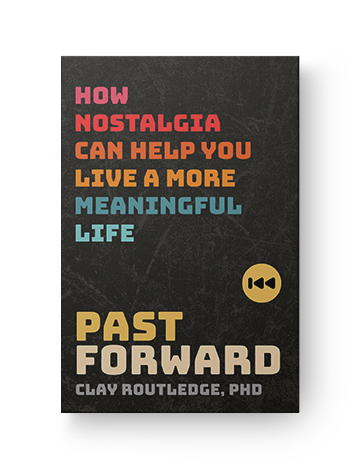
Excerpted from Past Forward: How Nostalgia Can Help You Live a More Meaningful Life by Clay Routledge, PhD.

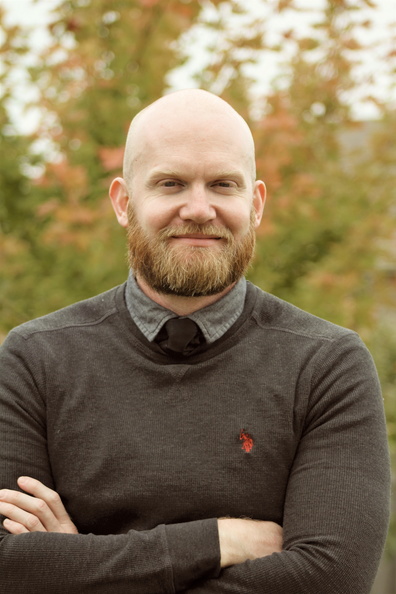
Clay Routledge, PhD, is a leading expert in existential psychology. His work has been featured inn the New York Times, the Wall Street Journal, the Washington Post, the Guardian, the Atlantic, The New Yorker, Wired, Forbes, and more. He is the vice president of research and director of the Human Flourishing Lab at the Archbridge Institute. For more, visit clayroutledge.com.

Past Forward

Learn More

Amazon | Barnes & Noble | Bookshop | Sounds True

Nate Klemp: Open, Expansive, and Free

It’s not just you. Millions upon millions of people today are feeling more stressed, anxious, and overwhelmed than ever before. As a result, explains philosopher and writer Dr. Nate Klemp, a lot of us are contracting ourselves—closing our minds in an effort to shield ourselves from the constant noise of the 21st century. With his new book, Open, Nate explores possible solutions to help us shift into a life of expansiveness, creativity, and wonder. 

Press the play button and join Tami Simon in conversation with this innovative and inspiring thinker, discussing: breaking free from screen addiction; the drivers of closure; the concept of “feast practice”; our need for novelty; an experiment that may shock you; the practice of staying; shifting from a wandering mind to “meta awareness”; how an open mind is synonymous with an open heart; overcoming separateness; noticing your “closure cues”; skillful closing; the intent to win versus the intent to understand; the portal of bliss and the portal of suffering; getting unstuck; letting go; and more.

Note: This episode originally aired on Sounds True One, where these special episodes of Insights at the Edge are available to watch live on video and with exclusive access to Q&As with our guests. Learn more at join.soundstrue.com.

Just One Question | Rev angel Kyodo williams: How Do W...

Reverend angel Kyodo williams has spent decades bridging Zen practice and social change, and she doesn’t offer the version of spirituality where relief is waiting somewhere down the road. She told Tami Simon that our joy lives at the center of our suffering, and Tami, to her credit, pushed back. Really? Right in the middle of my deep suffering and the world’s deep suffering?

Reverend angel’s answer is why this segment felt so powerful and transformative to us. She argues we’ve been handed a spiritual life that lives in a box: well-maintained, kept in good order, scheduled for Tuesday evenings from 6:30 to 8:30. Real practice, she says, pulls the lens all the way back to take in a whole life: the trauma, the history, the parts we’ve been trained to walk around. And when we refuse to touch our own suffering, we don’t contain it. We leave it behind us like roadkill, in how we treat each other and in what we let stand: patriarchy, racism, xenophobia.

In this episode:

  • Why “radical” means whole rather than extreme, and what a complete dharma asks of us
  • The cold-water method—entering your suffering ankle-deep, then further
  • What joy actually is, and why it isn’t an ice cream cone in the middle of the mess
  • The question Reverend angel keeps returning to in her own practice: where have I not yet looked?
  • Why fearlessness isn’t something you choose, but something that surfaces once the path is clear

Taken from the full Insights at the Edge conversation with Reverend angel Kyodo williams. Find the complete interview here: Reverend angel Kyodo williams: Warrior Spirit.

Mark Nepo: Authentic Expression is Heart-Based

“All my work is about devotion to the messy, magnificent human journey”

—Mark Nepo

Every day, we learn. We take in more of the new. And yet, we can only respond to situations based on what we know already. We rely on the old.

Mark Nepo seems to be asking about the space between. What does it mean to grow and change with grace? What does it mean to have faith in that process? And what does this have to do with writing and expression?

We are constantly tasked to face the unknown using tools that may have only worked for us in the past (and that is freaking scary).

I believe that asking questions is elemental to human nature. But, it is impossible to truly know any of the answers.

For Mark, there is no one right way forward. There is no way out of fear. There is only a sensibility that can be adopted: that is, the willingness to listen. 

In other words, there are no objectives. There are no end products. The “answer” is in letting go of resistance to what we know, have, and are.

That way, the invisible can make itself known.

WITNESSING

“How do we talk about the things that matter that you really can’t see?”

—Mark Nepo

The ephemeral connection between ourselves and the world of essence exists within our hearts. With this practice—this practice of inner trust, perhaps even surrender—we can begin to gesture at expressing the unsayable.

What’s clear about Mark Nepo is that he is first and foremost a writer. However, his ideas can be applied to any form of expression.

To bear witness in writing, Mark advises giving full attention to whatever is in front of you, then describing it in as much detail as possible. It’s important not to make it seem magnificent or assign it “a bunch of meaning.”

Don’t evaluate it.

We are the observers and not yet the translators.

There is another part to it. Look inward. Feel what is moving through you at that moment. “Paint” that feeling with words. Don’t judge. Don’t bother with meaning. This disposition is inherently freeing. 

In this state (and I fall in and out of it even as I write this), reality moves up to our eyes like a mirror. We can look at it and hear it, be part of it.

THE INVISIBLE WORLD

“You can’t see light except for what it illuminates. All the forces that hold us and support us are invisible”

—Mark Nepo

We name things all the time. We have to. It keeps chaos at bay.

But, naming things tends to keep us separate from them. That is this and I am this and you are there and I am here.

In his Insights at the Edge episode with Tami, Mark mentions that we are accustomed to listening in this way.

We immediately assign names, places, spaces, reasons, meaning and significance to everything we see and feel. We judge and assume (partly because it is efficient; partly because we are so used to doing it).

This is in stark contrast to the “essence of wholehearted presence, however and whenever that appears.”

IMMERSION

“The truth is, I barely understand half of what comes through me. The other half leads me”

—Mark Nepo

Immersion is a different kind of listening.

Rather than naming, one engages in a mutual conversation with the world. Discovery and creation unite as the byproduct of participation in oneness.

For Mark, immersion is a way to stop resisting our naturalness and be… whatever it is we were meant to be, as humans.

When he talks about “the things that matter,” what he seems to mean is the invisible world, “that which holds us together.” In immersion, we have the chance to interact with the invisible source of our unity.

Like the fiery and untouchable sun from which our individual experiences emanate.

WHOLEHEARTEDNESS

“It’s a gift that we can’t reach what we’re trying to say or what we see, because of all that it gives us”

—Mark Nepo

In his interview, Mark says to Tami about art-making, “What matters more is our wholeheartedness than whether we do it well.”

Tami’s response struck me. “I notice, as you offer that answer, there’s a part of me that really softens.”

Creation can be a meeting place. Rather than prescribing, you meet something somewhere, and then you embrace whatever happens. You accept what is present—and in return, you are accepted just as you are.

Wholeheartedness: letting go of expectation for the sake of the unsayable.

SELF-EXPRESSION

“Just because I write it doesn’t mean that I have the meaning of it all”

—Mark Nepo

As a writing teacher, I often tell my students that if they’re stuck, they may not be empty of ideas. In fact, they may be too full.

Creating space for the heart allows the bubbles to rise up. Like attracts like. We see what we see.

“If you’re not quite there, go back to the heart of whatever the expression is about, and get closer, and get stiller, and put your defenses down, and get closer. … Go back and have a more open heart, and see what comes then.”

Sometimes, it’s unpleasant.

Sometimes, it’s utterly nonsensical.

Poetry, as one possible example of this art, has long emptied itself of pragmatic purpose and precise meaning for the sake of beauty and potentiality.

You may end up with something that you don’t understand for years. You may just take that thing out later and realize what you meant. Authentic expression is not a product. It’s a message from you to you, from the universe to the universe.

And it is always miraculous.