Customer Favorites

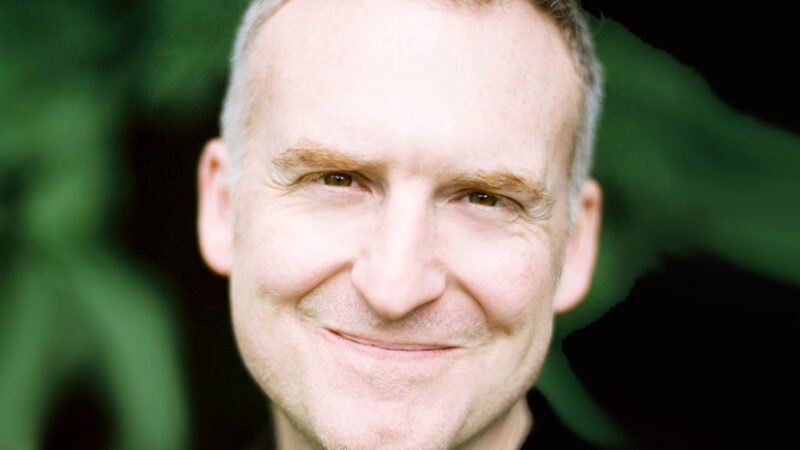
Matt Licata, PhD: The Alchemy of Befriending Ourselves...

Matt Licata is a practicing psychotherapist, a co-facilitator of a monthly online membership community called Befriending Yourself, and the author of The Path Is Everywhere. With Sounds True, he has written a new book titled, A Healing Space: Befriending Ourselves in Difficult Times. In this episode of Insights at the Edge, Tami Simon speaks with Matt about what it is to be a healing space, that is to hold space for ourselves and others, as well as how we can feel held by something greater than ourselves during challenging experiences. They also explore our inner wounds and self-abandonment, spiritual bypassing and the ways in which many practices allow us to gloss over the real healing needed, and how coming into an embodied state can open us to greater inner depths. Finally, Tami and Matt discuss becoming an alchemist of your own life, discovering the inner gold that each of us has within, and befriending all of ourselves.

Elizabeth Stanley: Trauma-Sensitive Mindfulness

Elizabeth Stanley is a Georgetown University professor and the creator of Mindfulness-based Mind Fitness Training (MMFT)®, an approach taught to thousands in civilian and military high stress environments. A U.S. Army veteran with service in Asia and Europe, she holds degrees from Yale, Harvard, and MIT. She is the author of the book, Widen the Window: Training Your Brain and Body to Thrive During Stress and Recover from Trauma. In this podcast, Tami Simon speaks with Elizabeth Stanley about her 8-session online course, Mindfulness-Based Mind Fitness Training: A Trauma-Sensitive Online Course to Build Resilience and Thrive During Stress. They also discuss why MMFT is a practice we can all benefit from; the value of expanding our “window of tolerance”; the relationship between personal agency and trauma; the “thinking” brain versus the “survival” brain; when stress becomes trauma; the importance of recovery from stressful situations; and more.

The Trauma Response is Never Wrong

We have been tricked to believe that the trauma response is a sign of weakness and disorder. What science shows us is that the trauma response is in fact a sign of strength and proof of an inherent human drive to survive. We need society to catch up with science, and fast. We are no longer living in an era where we can assume that trauma impacts a minority of the population. Trauma impacts us all. This has always been true, but we can no longer pretend otherwise.

Unbroken is a book about the miracle of the trauma response, the importance of acceptance and self-compassion, and the transformative healing potential that lies within us all. Drawing on my experience as a trauma researcher, coach, as well as my own personal journey of healing, this book offers a new perspective on trauma that emphasizes the wisdom of the body and the resilience of the human spirit.

If you’re struggling with the after-effects of trauma, Unbroken can help you understand your experience in a new light. You’ll learn how trauma impacts the brain, the body, and the spirit, and how you can use this knowledge to start your journey of healing. You’ll discover practical tools and strategies for managing trauma triggers, regulating your emotions, and cultivating self-compassion. Most importantly, you’ll learn that the trauma response is never wrong – it’s a natural and adaptive response to a difficult situation.

One of the most important lessons of Unbroken is that the trauma response is never wrong. This means that even if you’re struggling with symptoms like anxiety, depression, or dissociation, your body is doing exactly what it needs to do to protect you. By embracing this truth, you can start to shift from a place of shame and self-blame to a place of self-compassion and empowerment. The book is chock full of tools that will help you understand and appreciate your trauma response and how to intervene when that response is tripped off unnecessarily. I can’t wait for you to dig in and I can’t wait to hear how this book changes you. It certainly changed me.

MaryCatherine McDonald, PhD, is a research professor and life coach who specializes in the psychology and philosophy of trauma. She has been researching, lecturing, and publishing on the neuroscience, psychology, and lived experience of trauma since the beginning of her PhD in 2009. She’s published two academic books and many research papers, and she is the creator of a trauma-based curriculum designed to serve previously incarcerated folks and veterans

Learn More
Amazon | Barnes & Noble | Bookshop | Sounds True

Sarah Taylor: Neurodivergent People Are Wired for Awak...

Are certain individuals more inclined to awaken spiritually? Do some of us have a natural proclivity to experience spiritual states of oneness? Welcome to the first episode in our new podcast series, Being Open: Spirituality and the Neurodivergent Mind. In this illuminating conversation, Tami Simon speaks with intuitive energy healer and awakening trail guide Sarah Taylor about the empowering revelations and approaches she has discovered throughout the course of her life—including the late-in-life realization that she has both autism and ADHD. 

Give a listen to this compelling and informative dialogue on: waking up to our interconnection; the shift from “head awakening” to “heart awakening”; Dzogchen and “the one taste”; the receptivity and porousness of neurodivergent people; the healing power of integration and embodiment; the critical importance of downtime and self-care; experiencing equanimity; unraveling the adaption strategies that no longer serve you; living with a high level of “raw sensitivity”; owning your truths—instead of masking your wants, needs, and authenticity; the misunderstood habit of “stimming” (or self-stimulation); the concept of samskaras (or energetic blockages in your subtle anatomy); reckoning with grief; the futility and harm of self-labeling; reframing limitations as gifts; managing your energy and seeking support when you need it; the connection between our increased understanding of the neurodivergent brain and the collective evolution of humanity; and more.

Note: This episode originally aired on Sounds True One, where these special episodes of Insights at the Edge are available to watch live on video and with exclusive access to Q&As with our guests. Learn more at join.soundstrue.com. 

Let Us Make Sanctuary

Bayo Akomolafe, PhD, was born in Nigeria and steeped in Yoruba teachings as well as Western academia. Trained in clinical psychology, he refers to himself as a “renegade academic” and is globally recognized for his poetic, unconventional, and soul-stirring views on our current global crisis and the opportunities we now have for social change. 

In this podcast, Sounds True founder Tami Simon speaks with Dr. Akomolafe about how sanctuary is where slowing down and healing happens. They discuss: how the function of slowing down in urgent times is not about simply resting so that we can continue forward in the same direction, but about how to engage in deep inquiry about where we are going; pouring drink to earth—an African spiritual technology that expresses our indebtedness to our ancestors and all that makes life possible; standing at the crossroads—how the ground underneath us is going through a seismic shift that is allowing the unsaid to now be spoken and intelligible; the invitation of the slave ship as a place of spiritual contemplation and as a site of renewing our connections with grief, loss, trauma, and tragedy; grieving as a form of activism; and more.

Spencer Sherman: The Inner Mastery of Money

Spencer Sherman was named one of the top wealth advisors in the United States, has an MBA from Wharton School, and is the founder of a sustainable financial firm with Buddhist values. With Sounds True, Spencer is the coauthor of The Money and Spirit Workshop. He also is bringing his work on the inner mastery of money to the Inner MBA program, a nine-month training program Sounds True is producing in partnership with LinkedIn, Wisdom 2.0, and MindfulNYU. In this podcast, Sounds True founder Tami Simon speaks with Spencer about how we can shift from having a neurotic, confused, or highly charged relationship with money to enjoying a wise, healthy, and uncharged relationship. Spencer introduces the iceberg metaphor, sharing how our financial literacy doesn’t actually drive our money behaviors as much as our fixed, unconscious beliefs and emotions do. Tami and Spencer also discuss the connections between money and Buddhism, exploring self-worth, fear, generosity, equanimity, and more.