Customer Favorites

Mark Nepo: Writing Is Listening with Your Heart and Ta...

Mark Nepo is a New York Times bestselling author, poet, and philosopher whose many books include The Book of Awakening, Things That Join the Sea and the Sky, and The One Life We’re Given. Most recently, he has partnered with Sounds True to publish Drinking from the River of Light: The Life of Expression. In this episode of Insights at the Edge, Tami Simon speaks with Mark about about our collective notions around creativity and the societal role of art. Mark details how his own ideas about creative expression have shifted over the decades, as well as why we should try to separate creation from commerce. Mark and Tami talk about the “messy, magnificent journey” of being human and why art must be a “witness to what is.” Finally, they discuss the necessity of holding nothing back during the creative process and why the pursuit of art is also the pursuit of timelessness.(71 minutes)

The Basics of Natural Awareness 101: Relaxing Effort

The Basics of Natural Awareness: Relaxing Effort Header Image

There are three deliberate mental shifts you can make during classical mindfulness meditation that can help point you toward natural awareness: relaxing effort, broadening attention, and dropping objects.

Relaxing Effort

Using effort in classical mindfulness meditation typically means working to bring our attention back to whatever is the present-moment experience. We rigorously and faithfully return our attention to our main focus, typically our breathing. The moment we notice we’ve gotten lost in thought, we deliberately redirect our attention back to our breathing. It can be very hard work. I’ve seen meditators covered in sweat, straining to be aware.

This type of overexertion in meditation is too extreme. In classical mindfulness meditation, we need to be balanced between effort that leads to clear seeing and too much effort that doesn’t really serve us. Some meditators experience a lot of self-judgment, believing that they’re not trying hard enough.

Classical mindfulness meditators typically report that focusing gets easier over time. They can stay aware of their breathing for extended periods, or they find that they return their attention to their breath more quickly when it wanders away. Some people call this ease effortless effort—an experience in our meditation practice where we are making an effort, but it doesn’t seem hard to do at all.

Relaxing effort to shift into natural awareness is a little different. It means that we rein in the tendency to try to put our attention on our breath or other objects, and instead we just be with the objects as they arise.

I think a common concern of many meditators is that if they stop trying, then nothing will happen. Meditators also worry that their mind will wander all over the place if they are not making any effort to do something with it. Well, just sitting down and not doing anything wouldn’t be natural awareness practice; it would be sitting down and doing nothing. So that’s not what we’re trying to do here. Dropping or relaxing effort is very different in that we are tuning in to the awareness that is already present, without trying hard to get there. We also don’t necessarily have a wandering mind because we relax effort on the heels of having worked hard to pay attention.

Think of shifting into natural awareness like riding a bicycle. Often we pedal really hard, but at a certain point, we stop pedaling and begin coasting. The bike stays upright, and we continue to head wherever we’re going, but we’re not working so hard. In fact, it’s usually quite exhilarating to coast on a bicycle. The coasting is dependent upon the earlier pedaling stage, just like effortlessness in meditation is dependent upon the effort you made earlier—particularly the effort to concentrate your mind.

So what does relaxing effort feel like in meditation? It feels like stopping the attempt to wrestle with your unruly mind, to bring it effortfully back to the present, and instead resting, relaxing, and exploring the awareness that is already present. It often feels like things are just happening on their own, and we’re witnessing them. It can feel immensely relaxing and joyful to stop the struggle. We may lose the effortlessness, and then it takes a bit of effort to return to it (such as deliberately returning our attention to our breath for a few moments—or, to return to our bicycle analogy, pedaling for a block or two), but for the most part we are coasting, not pedaling. This relaxing of effort is one way to access a natural awareness.

Try it now:

Relaxing Effort Practice

Start your meditation session by closing your eyes, if you wish, and taking about ten minutes to develop focus and calm by rigorously paying attention to your breathing. When your attention wanders, bring it back to your breathing with regularity and precision.

After ten minutes, see if you can simply pause the effort you are making. Relax a bit (and that may include relaxing your body), and notice what is happening without you trying to be aware. Is awareness present? Are you naturally aware of what is happening in your body or mind, without deliberately placing your attention on the object? Can you sense the way awareness is happening, kind of on its own, and how you are present without having to work at it?

If you notice yourself getting lost in thoughts, then make an effort to come back to your breath for a while. But then stop making an effort again and see what happens.

Continue reading the next steps, Broadening Attention and Dropping Objects.

This is excerpted from The Little Book of Being: Practices and Guidance for Uncovering Your Natural Awareness by Diana Winston.


Little Book of Being

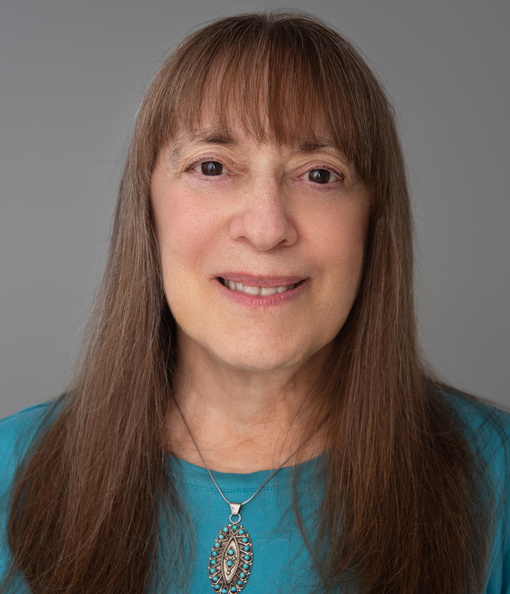
Diana Winston headshot

Diana Winston is the director of Mindfulness Education at UCLA Semel Institute’s Mindful Awareness Research Center (MARC) and the coauthor, with Dr. Susan

Smalley, of Fully Present: The Science, Art, and Practice of Mindfulness. She is a well‑known teacher and speaker who brings mindful awareness practices to the general public to promote health and well‑being. Called by the LA Times “one of the nation’s best‑known teachers of mindfulness,” she has taught mindfulness since 1993 in a variety of settings, including hospitals, universities, corporations, nonprofits, schools in the US and Asia, and online. She developed the evidence‑based Mindful Awareness Practices (MAPS) curriculum and the Training in Mindfulness Facilitation, which trains mindfulness teachers worldwide.

Her work has been mentioned or she has been quoted in the New York Times; O, The Oprah Magazine; Newsweek; the Los Angeles Times; Allure; Women’s Health; and in a variety of magazines, books, and journals. She is also the author of Wide Awake: A Buddhist Guide for Teens, the audio program Mindful Meditations, and has published numerous articles on mindfulness. Diana is a member of the Teacher’s Council at Spirit Rock Meditation Center in Northern California. She has been practicing mindfulness meditation since 1989, including a year as a Buddhist nun in Burma. Currently, Diana’s most challenging and rewarding practice involves trying to mindfully parent an eight‑year‑old. She lives in Los Angeles.

For more information, visit dianawinston.com and marc.ucla.edu.

Buy your copy of The Little Book of Being at your favorite bookseller!

Sounds True | Amazon | Barnes & Noble | Indiebound


The Basics of Natural Awareness: Relaxing Effort Pinterest

Cynthia Bourgealt: Encountering the Wisdom Jesus

Tami Simon speaks with Cynthia Bourgeault, an Episcopal priest, author, and teacher of prayer in the contemplative Christian tradition. She is the principle teacher and advisor to the Contemplative Society and the founding director of the Aspen Wisdom School. Cynthia is the author of The Wisdom Way of Knowing: Centering Prayer and Inner Awakening, and with Sounds True she has created the audio learning course Encountering the Wisdom Jesus and the audio program Singing the Psalms. In this episode, Tami and Cynthia speak about “kenosis,” or self-emptying, as the center point of Jesus’ message, how we can understand Jesus’ life as a sacrament, and how love lives on beyond death. (53 minutes)

Elissa Epel: The Stress Prescription

How can we live without the sense that our value is measured by achievements and productivity? What kind of attitude and skills are needed today to deal with the stress so many are feeling? In a nutshell, what does it mean to be human right now? 

In this podcast, Tami Simon speaks with bestselling author and stress expert Dr. Elissa Epel about the inextricable connection between the mind and the body and how we each have the capacity to protect our health and well-being even in times of volatile uncertainty. 

Take a break, relax, and breathe, as you listen to this hopeful conversation on breaking free from toxic cultural imperatives; changing our minds, bodies, and environment; aging and the telomere effect; understanding the types of stress, such as acute, chronic, and restorative; cryotherapy and the benefits of cold exposure; deep rest, and how to get more of it; shifting the messages to our cells from “stay vigilant” to “I’m safe”; developing awareness and choosing your response; nervous system regulation; planting safety cues and secluded breaks into your day; befriending the body; “turning from gazelle to lion” in the midst of stress; seeing the beauty in each day; and more.

Note: This episode originally aired on Sounds True One, where these special episodes of Insights at the Edge are available to watch live on video and with exclusive access to Q&As with our guests. Learn more at join.soundstrue.com.

A Path to Embodied Nonduality

We find ourselves in a time that is rich with paths toward spiritual awakening, especially that pinnacle of awakening called “nonduality.”

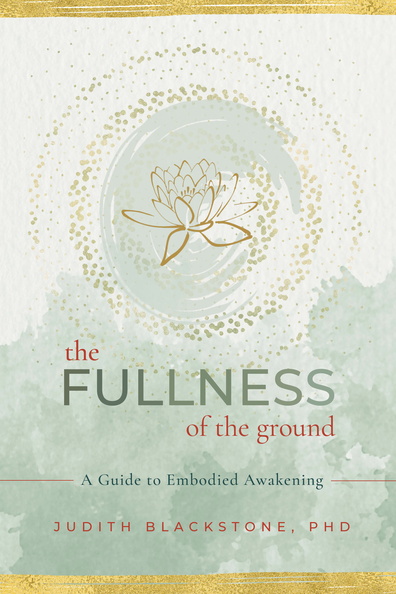
The Fullness of the Ground is my contribution to that abundance. It describes in detail the lived experience of nondual realization.

In the book, I offer a series of gentle attunement practices, called the Realization Process, for uncovering and knowing ourselves as a fundamental, undivided dimension of consciousness, pervading our whole body and environment. Pervading our body, fundamental consciousness is experienced as the authentic ground of our individual being. Pervading our body and environment, it is the basis of our oneness with everyone and everything around us. This means that we become whole as individuals at the same time as we transcend our individuality and experience unity with our surroundings.

As a longtime spiritual teacher and psychotherapist, I feel that there is not enough emphasis in some of the nonduality teachings about how this realization enriches our lives. I have been particularly concerned about teachings that encourage people to disconnect from themselves as individuals or to suppress their emotional responses to the world around them. In this book, I instead offer a path to nondual realization that is deeply embodied and that matures us as individuals, at the same time that it opens us to self–other oneness. Far from erasing us as individuals, nondual realization enhances our experience of our own unique existence. It deepens all of our human capacities, including our ability to feel, to think, and to enjoy our lives. It can help heal and enhance our relationships with other people by enabling us to experience deep contact with others without losing inward contact with ourselves.

Central to the method in this book is the important difference between being aware of the body and inhabiting the body. So I often begin with this simple exercise for experiencing this distinction:

Sit upright with your hands in your lap.

Take a moment to become aware of your hands. You may notice how warm or cold they are or how tense or relaxed they are. This is becoming aware of your hands.

Now enter into your hands. Experience yourself as present, living within your hands. This is inhabiting your hands.

You can go on to inhabiting different parts of your body and, finally, your body as a whole. See if you can feel present everywhere within your body, rather than aware of it from the outside.

In the Realization Process, we go through several steps, taking around 30 minutes, to reach this next part. But, for a very shortened version, if you can feel that you are living within your body, then next find the space outside of your body, the space in your environment.

Let yourself experience that the space inside and outside of your body is the same undivided space. Without leaving your body, experience that the space that pervades your body also pervades your whole environment. This is the spacious expanse of fundamental consciousness.

Judith Blackstone, PhD

Judith Blackstone, PhD, is a psychotherapist and innovative teacher in contemporary spirituality. She developed the Realization Process®, an embodied approach to personal and relational healing and nondual realization. She is the author of Trauma and the Unbound Body, Belonging Here, The Intimate Life, The Enlightenment Process, and The Empathic Ground.

Amazon | Barnes & Noble | Bookshop | Sounds True

Elizabeth Lesser: When Women Are the Storytellers, the...

Elizabeth Lesser is cofounder of the Omega Institute and a bestselling author. Her books include Marrow, The Seeker’s Guide, and the New York Times bestseller Broken Open. Her newest book is Cassandra Speaks: When Women Are the Storytellers, the Human Story Changes. In this episode of Insights at the Edge, Tami Simon speaks with Elizabeth about her experience in the early days of the Omega Institute, redefining “power,” and the ways that patriarchy is subtly, and not so subtly, embedded in our culture—how we can become more aware of it, and how we can make changes on the outside and inside so that in the future we can tell a different story, a story that equally embraces the power of women as well as men.