Customer Favorites

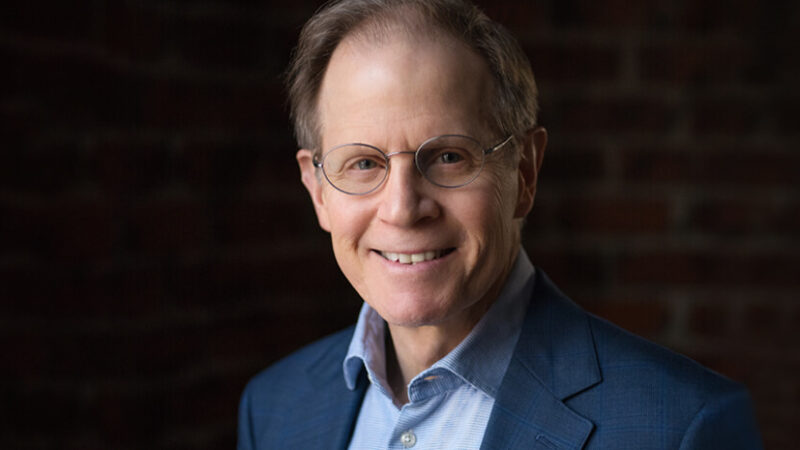
Diana Fosha: The Transformational Therapist

Diana Fosha is the developer of AEDP—Accelerated Experiential Dynamic Psychotherapy—a transformational psychotherapy model that grows and changes according to the latest findings in attachment theory, neuroplasticity, and interpersonal neurobiology. She is one of the featured presenters for Sounds True’s second annual Psychotherapy 2.0 online summit, which will take place September 7–13, 2016. In this episode of Insights at the Edge, Diana and Tami Simon discuss the central concepts of AEDP and its flexibility as a therapeutic approach. They speak on the role of transformational therapy in modern society, and how AEDP helps clients “undo aloneness.” Finally, Diana and Tami consider in full AEDP’s motto, “Stay with it and stay with me.”
(68 minutes)

The New Science of Empathy and Empaths

Dear friends,

The Dalai Lama says, “Empathy is the most precious human quality.” During these stressful times, it’s easy to get overwhelmed. I feel passionately that empathy is the medicine the world needs right now.

Empathy doesn’t make you a sentimental softy without discernment. It allows you to keep your heart open to foster tolerance and understanding. In my new book The Empath’s Survival Guide, I discuss the following intriguing scientific explanations of empathy and empaths. These will help us more deeply understand the power of empathy so we can utilize and honor it in our lives.

  1. The Mirror Neuron System

Researchers have discovered a specialized group of brain cells that are responsible for compassion. These cells enable everyone to mirror emotions—to share another person’s pain, fear, or joy. Because empaths are thought to have hyper-responsive mirror neurons, we deeply resonate with other people’s feelings.


  1. Electromagnetic Fields

The second finding is based on the fact that both the brain and the heart generate electromagnetic fields. According to the HeartMath Institute, these fields transmit information about people’s thoughts and emotions. Empaths may be particularly sensitive to this input and tend to become overwhelmed by it.


  1. Emotional Contagion

Research has shown that many people pick up the emotions of those around them. For instance, one crying infant will set off a wave of crying in a hospital ward. Or one person loudly expressing anxiety in the workplace can spread it to other workers. People commonly catch other people’s feelings in groups.


  1. Increased Dopamine Sensitivity

The fourth finding involves dopamine, a neurotransmitter that increases the activity of neurons and is associated with the pleasure response. Research has shown that introverted empaths tend to have a higher sensitivity to dopamine than extroverts. Basically, they need less dopamine to feel happy.


  1. Synesthesia

The fifth finding, which I find particularly compelling, is the extraordinary state called “mirror-touch synesthesia.” Synesthesia is a neurological condition in which two different senses are paired in the brain. For instance, you see colors when you hear a piece of music or you taste words. Famous synesthetics include Isaac Newton, Billy Joel, and violinist Itzhak Perlman. However, with mirror-touch synesthesia, people can actually feel the emotions and sensations of others in their own bodies as if these were their own.

Studies show that one out of every five people is highly sensitive. It is my heartfelt wish that you or someone you love will benefit from The Empath’s Survival Guide and gain the tools to cherish your precious sensitivities. Get your free chapter and download bonus gifts.

With gratitude,

Dr. Judith Orloff

Daniel J. Siegel: IntraConnected: Discovering MWe (Me ...

We may have a mental understanding that all of life is one inseparable whole, yet how do we actually feel into this reality? And how do we relate to others and the world from this felt awareness? Dr. Daniel J. Siegel is a visionary creative thinker, professor, and founder of the field of interpersonal neurobiology. With Sounds True, he has authored numerous audio programs and courses, and his internationally bestselling books offer us an empowering new understanding of our bodies, our minds, and our mutual interdependence. 

In this podcast, Tami Simon speaks with Dr. Siegel about his book IntraConnected: MWe (Me + We) as the Integration of Self, Identity, and Belonging. Listen now as they explore the direct experience of being the whole of life; interconnection versus intraconnection; honoring the inner, the inter, and the intra; E. O. Wilson’s concept of consilience; the promotion of “linkages” as the basis of well-being; quantum physics and the study of energy; the Wheel of Awareness practice; the three-pillar practice of focused attention, opening awareness, and building kind intention; the power of wandering and “relaxing the flimsy fantasy of certainty”; our survival instincts and the investment in being separate; how mindfulness practice interrupts the “anticipatory brain” and brings us back to presence; the multiple pandemics of our time, and the lie that our identity is only in the “solo self”; how the tapestry of reality is of love and connection; seeing yourself as a verb instead of a noun; pervasive leadership, and how we’re all called to assist in “the Great Turning”; and more.

Note: This episode originally aired on Sounds True One, where these special episodes of Insights at the Edge are available to watch live on video and with exclusive access to Q&As with our guests. Learn more at join.soundstrue.com.

When Pain is the Doorway – with Pema Chödrön

Friends, I wanted to let you know about a new audio program we just released from our dear friend Pema Chödrön. In my experience, Pema has a real gift at skillfully guiding a person into the heart of their immediate embodied experience, which is often right into those scary places that are so easily avoided. This work of embodied immediacy is so simple, really, yet not easy; in fact it actually requires everything we have… and a bit more.

Listen to a free audio sample/ learn more about our lovely new audio program with Pema, entitled When Pain is the Doorway.

What if the full sense of our aliveness were only to be found amidst our most challenging times and difficult experiences? In pain and crisis, teaches Pema, there lies a hidden doorway to freedom that appears to us only when we’re sure that there is no way out.

In these intimate audio learning sessions, Pema helps us distinguish the triggers or external events that we blame for our suffering from the deeper habitual patterns that feed our anger, fear, or sadness. From this understanding, we learn how to free ourselves from our propensity to suffer through the transformative awareness of impermanence—the dynamic and ever-shifting nature of both joy and suffering, self and selflessness—and the absolute and eternal flow from which all of it arises.

What is causing my pain? What will happen if I simply lean in, keep company with it, hold it with tenderness? Moment by moment, Pema supports and encourages listeners to bring an openhearted sense of curiosity and welcoming to our apparently impossible situations or unbearable relationships—to discover the deeper freedom available just beneath the surface.

For those experiencing emotional crisis, When Pain Is the Doorway provides expert guidance to help us stop, stay present, and enter into a more welcoming, spacious place of being that is our true home.

whenpain


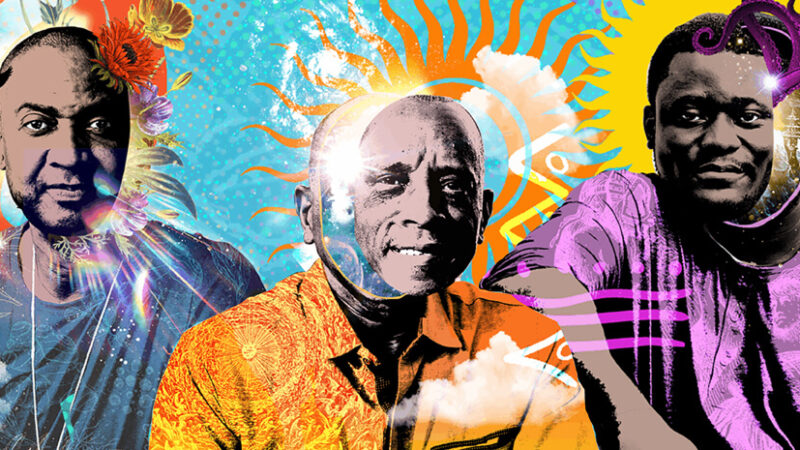
Three Black Men

We know that we’re living in a critical time in human history. We know that we can no longer say, “It’s not my responsibility.” What is it that this time begs us to see? In this podcast, Tami Simon joins visionary leaders Bayo Akomolafe, Orland Bishop, and Resmaa Menakem for a compelling conversation about the intersection of past, present, and future and the creation of new rituals and pathways for healing, equity, and belonging for all people.

Tune in as Bayo, Orland, and Resmaa discuss with Tami: “facing the monstrous” and reconciling that which we’ve chosen to avoid; how transformation is inevitably disabling; stopping the propagation of violence and fear in the human psyche; the metaphor of the fissure in the road; the power of ritual to foster inclusion and “metabolize” trauma; initiating the shift from the profane to the sacred; tapping the generative energies awaiting expression; imaginal cells and the analogy of the caterpillar and the butterfly; the evolution of music and trusting the maturation of creative acts; the Trickster archetype, and how oppression is never complete; getting out of the habit of predicting what comes next; and more.

Note: This episode originally aired on Sounds True One, where these special episodes of Insights at the Edge are available to watch live on video and with exclusive access to Q&As with our guests. Learn more at join.soundstrue.com.

The Way of the Feminine to Save the World

You feel special. Sometimes this feels like a curse. Like no one will understand you. Ever. Like you will always be an alien walking among regular humans, pretending to blend in. You have learned to live with this gulf, but what you really crave is community. You long to belong to the human family. To Mother Earth.

Participating in the human condition can be bewildering. It is just not always cozy and easy—rather, it’s humbling at best, downright humiliating when it is not flowing. It can seem so much simpler to ride solo, slaying your own dragons and singing the ballads you wrote about yourself. Collaboration can be tedious, and the prevailing masculine value system may have conditioned you to feel like you are giving away your power when you share it with others.

So what? Give it away. The time of the singular sage bestowing his unique wisdom is over. That was a method devised by the men in charge who sought to regulate wisdom. They taught us to suffer alone in the desert for forty years, collecting our insights in a secret box called “Esoteric Knowledge.” Then, we were supposed to dispense those insights stingily to those who proved themselves worthy by also suffering alone for the requisite forty years in the desert.

It turns out that the world is filled with special beings, grappling our way through the anxiety of solitary conundrums and tasting the occasional reprieve of connection. When you realize this, your body lets out its breath and relaxes. The curse lifts. You come in from the cold. You hold out your cup, and some other special being fills it with sweet, milky tea spiced with fragrant herbs. You drink.

Our way, the way of the feminine, is to find out what everyone is good at and praise them for it and get them to teach it to one another. Maybe you know something about the hidden meaning of the Hebrew letters, or how to build a sustainable home from recycled tires and rammed soil, or loving-kindness meditation. You, the one who knows the Islamic call to prayer, climb this minaret and call us all to prayer. You, the one who knows how to sit quietly at the bedside of the dying, show us the way to bear witness. You, the one who knows how to get us to wake up to the shadow of privilege, please wake us the #*#@ up. It will be chaotic, all this community building, but your cooperation will save the world.

Besides, it will be fun.