Just One Question | Osho Zenju Earthlyn Manuel: How Can We Accept Darkness?

July 23, 2026

Just One Question | Osho Zenju Earthlyn Manuel: How Can We Accept Darkness?

Zenju Earthlyn Manuel July 23, 2026

When we heard Osho Zenju Earthlyn Manuel share her story of a terrifying night she couldn’t breathe, it was eerily similar to a personal experience—and helpful too. We knew we had to share this moment from her conversation with Tami Simon on Insights at the Edge, in which she tells the story of the night she nearly died from a severe anaphylactic reaction and how she got through it not by searching for light at the end of the tunnel, but by staying present with the darkness itself. 

Zenju, a poet and ordained Zen Buddhist priest, challenges the instinct most of us have to fear darkness, rush out of it, or wait for a gift on the other side. Instead, she describes an experience of profound non-struggle — a moment of near-death where she wasn’t afraid, didn’t fight, and somehow found a way to keep breathing by trusting her body completely.

Key themes from this episode:

  • Why darkness — and even light — may be far more unknown and unknowable than we assume
  • How struggling against a frightening experience can make it worse, while staying present with it can be transformative
  • A firsthand account of surviving a full-blown anaphylactic shock without fear
  • Rethinking our cultural instinct to rush ourselves and others out of difficult emotional or physical states
  • Why “the absence of light” might be less about despair and more about a different kind of awakening

Taken from the full Insights at the Edge conversation with Zenju Earthlyn Manuel “Opening to Darkness,” which is also the title of her book. Find the complete interview in this feed or at soundstrue.com.

This episode is sponsored by Omega Institute, a global gathering hub for lifelong learning and spiritual exploration. Omega offers weekend workshops, special events, rest and rejuvenation retreats, professional training, online learning, and more. Discover what calls to you at eomega.org/true.

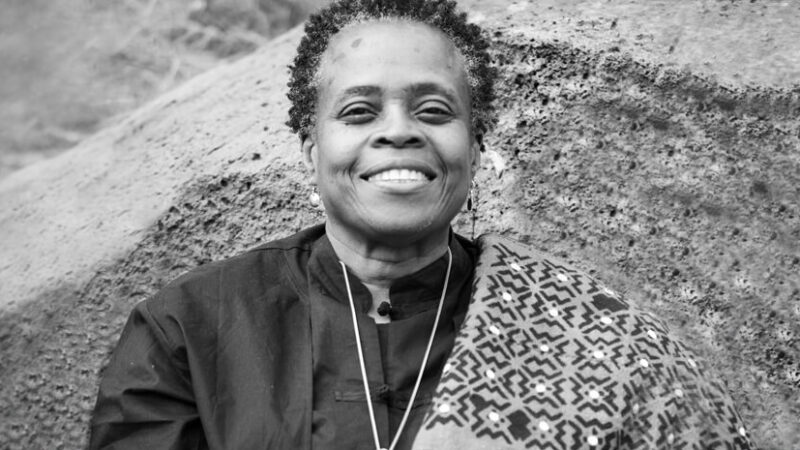
Osho Zenju Earthlyn Manuel, PhD, is an author, poet, ordained Zen Buddhist priest, teacher, and artist, whose diverse background, education, and experience all provide a unique integral and cultural perspective within the space of religion and spirituality. She is the author of The Shamanic Bones of ZenThe Way of TendernessThe Deepest Peace, and more. Manuel is a native of California and now resides in New Mexico. Learn more at zenju.org.

Author photo © Vaschelle André

600 Podcasts and Counting…

Subscribe to Insights at the Edge to hear all of Tami’s interviews (transcripts available too!), featuring Eckhart Tolle, Caroline Myss, Tara Brach, Jack Kornfield, Adyashanti, and many more.

Meet Your Host: Tami Simon

Founded Sounds True in 1985 as a multimedia publishing house with a mission to disseminate spiritual wisdom. She hosts a popular weekly podcast called Insights at the Edge, where she has interviewed many of today's leading teachers. Tami lives with her wife, Julie M. Kramer, and their two spoodles, Rasberry and Bula, in Boulder, Colorado.

Photo © Jason Elias

Also By Author

Just One Question | Osho Zenju Earthlyn Manuel: How Ca...

When we heard Osho Zenju Earthlyn Manuel share her story of a terrifying night she couldn’t breathe, it was eerily similar to a personal experience—and helpful too. We knew we had to share this moment from her conversation with Tami Simon on Insights at the Edge, in which she tells the story of the night she nearly died from a severe anaphylactic reaction and how she got through it not by searching for light at the end of the tunnel, but by staying present with the darkness itself. 

Zenju, a poet and ordained Zen Buddhist priest, challenges the instinct most of us have to fear darkness, rush out of it, or wait for a gift on the other side. Instead, she describes an experience of profound non-struggle — a moment of near-death where she wasn’t afraid, didn’t fight, and somehow found a way to keep breathing by trusting her body completely.

Key themes from this episode:

  • Why darkness — and even light — may be far more unknown and unknowable than we assume
  • How struggling against a frightening experience can make it worse, while staying present with it can be transformative
  • A firsthand account of surviving a full-blown anaphylactic shock without fear
  • Rethinking our cultural instinct to rush ourselves and others out of difficult emotional or physical states
  • Why “the absence of light” might be less about despair and more about a different kind of awakening

Taken from the full Insights at the Edge conversation with Zenju Earthlyn Manuel “Opening to Darkness,” which is also the title of her book. Find the complete interview in this feed or at soundstrue.com.

This episode is sponsored by Omega Institute, a global gathering hub for lifelong learning and spiritual exploration. Omega offers weekend workshops, special events, rest and rejuvenation retreats, professional training, online learning, and more. Discover what calls to you at eomega.org/true.

Zenju Earthlyn Manuel: Opening to Darkness


Darkness is an inseparable part of life. Yet instead of resisting it or trying to eradicate it, as society would often have us do, how can we use darkness as fodder for our growth and evolution? In this podcast, Tami Simon speaks with poet, Zen Buddhist priest, and artist Zenju Earthlyn Manuel about her new book, Opening to Darkness: Eight Gateways for Being with the Absence of Light in Unsettling Times, and how we can begin to change the way we relate to darkness and blackness. 

We invite you to turn off the lights and close your eyes (assuming you’re not driving), as you listen to this insightful and provocative conversation exploring “zenju,” or complete tenderness; our longing for light and the call to “enter our caves”; the connection between the bias toward light and the oppression of Black-bodied people; the evolutionary force of blackness; creativity and darkness; the notion of “the absence of light”; the price we pay by avoiding darkness at all costs; how we can’t really know but can only experience light or darkness; the teacher of darkness called death, and the willingness to look at something beyond our control; the inner capacities to stay with darkness; recognizing the spiritual component to darkness; building an intuition and going beyond what is taught and learned about darkness and blackness; being with suffering; silence and darkness; and more.

Note: This episode originally aired on Sounds True One, where these special episodes of Insights at the Edge are available to watch live on video and with exclusive access to Q&As with our guests. Learn more at join.soundstrue.com.

Growing through the Peak of Your Pain

A doctor of Chinese medicine who was a famous bonesetter in China once said to me with a heavy accent, “Here, you [meaning Americans] don’t like to feel pain. You don’t like to suffer.” He said this as he wrung my neck as one would a chicken’s, snapping it back and forth in a way I had never experienced. I screamed as if he were breaking my bones.

For a month prior, I hadn’t been able to move my head to the left or right. My left arm was nearly immobile. I had just started a new job that probably should have ended the moment my body locked up. I went for acupuncture, then pain pills; used ice and hot water bottles. I went to medical doctors, and they X-rayed the area and gave me more pills and a brace to keep my head still—the kind used for whiplash. I later tried one of the best chiropractors in the city, and she gave me the number of a neurosurgeon, thinking I had a herniated disk and would need surgery. I did not seek out the surgeon and stayed in pain for weeks. Finally, a friend from my job gave me the number of her doctor, the famous bonesetter mentioned above. I called him at 10:00 pm that night. That’s how much pain I was in. To my surprise, he answered the phone. He said, “Come in. I wait for you.”

I said, “Now?”

“Yes!” he said. “You have pain, come now.”

Wow, I thought. Now that’s a healer. It didn’t matter that it was the middle of the night.

My partner at the time drove me across the Bay Bridge to San Francisco, and I met my friend from work at the healer’s office. She had come to translate from Mandarin to English. The place was tiny, with photos on the wall of city dignitaries and other famous people who were his clients.

“Hi.” The bonesetter smiled like a boy. “I’m Dr. Fu.”

I sat down in his small room and showed him my X-ray. He threw it on the floor without looking at it. He took the brace off my neck and threw that on the floor, too, right next to the X-ray. Then he twisted me into a pretzel. I howled, yelped, screamed, and hollered.

All of it. No wonder he had me come when no other patients were there. He told me to breathe, and I did my best. Suddenly, at the peak of the pain, I felt my muscles release in my neck, shoulders, and back. It was in fact a miracle to me. I had suffered so long.

I carried my brace and X-ray out in my hands. It was as if I had never been in pain or unable to move. The night sky filled with stars made me feel like I was on another planet. I was in bliss. When I returned to work, everyone was shocked. Was it a miracle, or was it the ability to withstand a greater amount pain to be free of the pain? I would have never imagined that I needed to go deeper into the pain, deeper into the darkness of it. All I had wanted was out.

We are averse to pain and suffering and understandably so, given our American sensibility. We have access to a large market of remedies, products, spiritual paths, and, yes, gateways to the freedom from suffering. I wonder how many times we have diverted our own freedom when we have discovered there is more pain, more trouble, more darkness ahead and we keep adding on remedies. What is the mindset, along with fear and terror, that causes us to avoid our suffering rather than go deeper into seeing what is there? Yes, I should have quit that job on the spot when the pain started, even though I had been there for only a few weeks. I didn’t know at the time, but the pain that was deep inside was because I wanted something different for my life than the job I had accepted. The pain was my impatience, and it was at the same time physical pain in real time. I didn’t wait to allow that“something different” to be revealed in the darkness.

Since all paths—religious, spiritual, or without name—intersect in the place of darkness, darkness is the place where the mind is forced to detach itself from whatever it has grabbed onto in life. And in that nothingness, in that dark place, we awaken.

What of darkness terrorizes us so that we run from it, rather than go deeper into it? How can we bear dark times, or, more explicitly, horrifying times, with the skill of an awakened one? Misery, struggle, and sorrow are not the sole intentions of this life. Yet we can respect our interrelationship with everything in the world, including the suffering in, around, and between us. Is there a way to live in unsettling times that we have forgotten?

Excerpted from Opening to Darkness: Eight Gateways for Being with the Absence of Light in Unsettling Times by Zenju Earthlyn Manuel.

Osho Zenju Earthlyn Manuel, PhD, is an author, poet, ordained Zen Buddhist priest, teacher, and artist, whose diverse background, education, and experience all provide a unique integral and cultural perspective within the space of religion and spirituality. She is the author of The Shamanic Bones of Zen, The Way of Tenderness, The Deepest Peace, and more. Manuel is a native of California and now resides in New Mexico. Learn more at zenju.org.

You Might Also Enjoy

Just One Question | Osho Zenju Earthlyn Manuel: How Ca...

When we heard Osho Zenju Earthlyn Manuel share her story of a terrifying night she couldn’t breathe, it was eerily similar to a personal experience—and helpful too. We knew we had to share this moment from her conversation with Tami Simon on Insights at the Edge, in which she tells the story of the night she nearly died from a severe anaphylactic reaction and how she got through it not by searching for light at the end of the tunnel, but by staying present with the darkness itself. 

Zenju, a poet and ordained Zen Buddhist priest, challenges the instinct most of us have to fear darkness, rush out of it, or wait for a gift on the other side. Instead, she describes an experience of profound non-struggle — a moment of near-death where she wasn’t afraid, didn’t fight, and somehow found a way to keep breathing by trusting her body completely.

Key themes from this episode:

  • Why darkness — and even light — may be far more unknown and unknowable than we assume
  • How struggling against a frightening experience can make it worse, while staying present with it can be transformative
  • A firsthand account of surviving a full-blown anaphylactic shock without fear
  • Rethinking our cultural instinct to rush ourselves and others out of difficult emotional or physical states
  • Why “the absence of light” might be less about despair and more about a different kind of awakening

Taken from the full Insights at the Edge conversation with Zenju Earthlyn Manuel “Opening to Darkness,” which is also the title of her book. Find the complete interview in this feed or at soundstrue.com.

This episode is sponsored by Omega Institute, a global gathering hub for lifelong learning and spiritual exploration. Omega offers weekend workshops, special events, rest and rejuvenation retreats, professional training, online learning, and more. Discover what calls to you at eomega.org/true.

Michael A. Singer: The Pain That Ends All Pain


What if the pain you’ve been avoiding is actually the thing that could set you free?

This week, Tami Simon speaks with Michael A. Singer, beloved wisdom teacher, founder of the Temple of the Universe, and author of The Untethered Soul, The Surrender Experiment, Living Untethered, and his newest book, Wisdom Untethered: The Time for Questions. Drawn from 1,200 reader questions distilled into 200 essential ones, the conversation keeps returning to a single teaching Michael once received from a saint: “It’s the pain that ends all pain.”

Join Tami and Michael to explore:

  • Why “letting go” is an inner practice, not spiritual bypassing or passivity
  • What samskaras are, and why blocked energy, not memory, is the real source of inner darkness
  • Why the willingness to feel disturbance, rather than suppress it, is the actual path of purification
  • The practice of “falling behind” resistance, and other techniques for letting stuck energy move and release
  • The difference between preferences and fears, and why the Buddha named preference as the root of suffering
  • How to face real-world injustice with clarity instead of ego-driven reactivity
  • Why the true motive of spiritual practice is simply to let go of what’s in the way

Whether you’ve read The Untethered Soul a dozen times or are new to Michael’s teachings, this conversation offers both the practical tools and the felt experience of what it means to stop blocking the shakti that’s already flowing within you.

Listen now, and discover why the pain you’ve been running from might be exactly what ends it. →

This conversation offers genuine transmission, not just concepts about awakening, but the palpable presence of realized teachers exploring the growing edge of spiritual understanding together, and originally aired on Sounds True One.

Insights at the Edge is supported by Magic Hour, whose ceremonial teas carry more presence, beauty, and ritual into ordinary days. Magic Hour draws its leaves and botanicals from regenerative small farms around the world, in blends made to nourish the body and open the mind.

Explore their teas, matchas, and herbal rituals at clubmagichour.com. Get 20% off your first order with the code TRUE.

Just One Question | Connie Zweig: What Does It Mean to...

You know the object of your addiction is bad for you. So why can’t you stop? Dr. Connie Zweig has spent decades working with people who feel stuck in exactly that gap between knowing and changing.

Zweig is a retired Jungian therapist and the author of the newly republished Meeting the Shadow and Romancing the Shadow — the books that helped launch the shadow-work movement, and the reason a new generation is now discovering it on TikTok.

In this clip, she walks Tami through her method step by step, using the story of a client who couldn’t stop eating ice cream every night while waiting for an unavailable boyfriend to call. Awareness alone, Zweig explains, is never enough. You have to name the shadow character, trace it back to where it was first modeled, and uncover the valid need hiding underneath it.

What you’ll take away from this clip:

  • Why awareness of a compulsive pattern rarely changes it on its own
  • How to identify a “shadow character” through its recurring thoughts, feelings, and body sensations
  • Why every addictive or compulsive behavior is protecting a valid, hidden need
  • Zweig’s own story of discovering her “judge” shadow character — inherited from her father

This clip is taken from the full Insights at the Edge conversation with Connie Zweig: “Meeting One of the World’s Leading Experts on the Shadow.” 

This episode is sponsored by Omega Institute, a global gathering hub for lifelong learning and spiritual exploration. Omega offers weekend workshops, special events, rest and rejuvenation retreats, professional training, online learning, and more. Discover what calls to you at eomega.org/true.