Trusting the Gold

    —
November 30, 2021

Trusting the Gold

Tara Brach November 30, 2021

Tara Brach has been practicing and teaching meditation since 1975, as well as leading workshops and meditation retreats throughout North America and Europe. She has a PhD in clinical psychology, is the founder of the Insight Meditation Community of Washington (IMCW), and is the author of Radical Acceptance, True Refuge, Radical Compassion, and most recently, Trusting the Gold

In this podcast, Tara Brach speaks with Sounds True founder Tami Simon about rediscovering the inner “gold” of our intrinsic goodness, love, and purity. In addition, they discuss Tara’s teachings on the “trance of unworthiness” and how we can break free from it; recognizing the secret beauty in others and mirroring it back; relaxation for the go-getters; working with difficult emotions; how shame can become a portal to freedom; the RAIN practice for self-compassion; the power of the phrase “this belongs”; the practice of “softening” in response to contractions of fear or anger; and seeing the sacredness in all things.

Tara Brach has been practicing and teaching meditation since 1975, as well as leading workshops and meditation retreats at centers throughout North America and Europe. She has a PhD in clinical psychology, is the founder of the Insight Meditation Community of Washington (IMCW), and is the author of Radical Acceptance, True Refuge, Radical Compassion, and Trusting the Gold. Tara’s weekly podcasts of talks and meditations are downloaded more than three million times each month. For more, visit tarabrach.com.

Author photo © Jonathan Foust

600 Podcasts and Counting…

Subscribe to Insights at the Edge to hear all of Tami’s interviews (transcripts available too!), featuring Eckhart Tolle, Caroline Myss, Tara Brach, Jack Kornfield, Adyashanti, and many more.

Meet Your Host: Tami Simon

Founded Sounds True in 1985 as a multimedia publishing house with a mission to disseminate spiritual wisdom. She hosts a popular weekly podcast called Insights at the Edge, where she has interviewed many of today's leading teachers. Tami lives with her wife, Julie M. Kramer, and their two spoodles, Rasberry and Bula, in Boulder, Colorado.

Photo © Jason Elias

Also By Author

“Showing Up For Each Other” | Tami Simon & Ta...

Join Tami Simon and renowned meditation teacher and clinical psychologist Tara Brach for this special episode of Insights At The Edge as they explore the intersection of spirituality and therapeutic practices and thank the many therapists of the world who accompany us on these deeply meaningful journeys within.

This episode is sponsored by BetterHelp. Listeners of Insights At The Edge get 10% off their first month at www.betterhelp.com/soundstrue

Trusting the Gold

Tara Brach has been practicing and teaching meditation since 1975, as well as leading workshops and meditation retreats throughout North America and Europe. She has a PhD in clinical psychology, is the founder of the Insight Meditation Community of Washington (IMCW), and is the author of Radical Acceptance, True Refuge, Radical Compassion, and most recently, Trusting the Gold

In this podcast, Tara Brach speaks with Sounds True founder Tami Simon about rediscovering the inner “gold” of our intrinsic goodness, love, and purity. In addition, they discuss Tara’s teachings on the “trance of unworthiness” and how we can break free from it; recognizing the secret beauty in others and mirroring it back; relaxation for the go-getters; working with difficult emotions; how shame can become a portal to freedom; the RAIN practice for self-compassion; the power of the phrase “this belongs”; the practice of “softening” in response to contractions of fear or anger; and seeing the sacredness in all things.

Tara Brach: True Refuge

Tara Brach is an author, clinical psychologist, and the founder and senior teacher of the Insight Meditation Community of Washington. A longtime Sounds True collaborator, Tara is one of the creators and main teachers for the in-depth Mindfulness Meditation Teacher Certification Program. In this episode of Insights at the Edge, Tami Simon speaks with Tara about “the Trance of Unworthiness”—a state in which we believe that we are too inadequate, incomplete, and broken to love ourselves. Tara explains why we are so tough on ourselves and the steps needed to cultivate self-compassion. Tami and Tara also discuss how we can find refuges within no matter our current difficulties. Finally, they talk about the need for mental health professionals to understand contemplative practices such as mindfulness. (56 minutes)

You Might Also Enjoy

Kristin Neff & Caverly Morgan: Self-Compassion as...

Can the simple act of being kind to yourself actually be a doorway to awakening?

In this special episode of Insights at the Edge, Tami Simon brings together two remarkable teachers whose friendship has sparked a revolutionary approach to inner transformation. Kristin Neff—the researcher who first measured self-compassion and author of Fierce Self-Compassion—joins Caverly Morgan, a meditation teacher and former Zen monk, to explore how self-compassion practices can become what they call “a lifeboat” to our deepest nature.

Together, they reveal why self-compassion isn’t just a psychological tool for feeling better—it’s a direct path to recognizing who we really are beyond our limited sense of self.

In this interview, Tami, Kristin, and Caverly explore:

  • Why every moment of self-compassion is a moment of “letting go of identification with the small, separate, limited self”
  • The difference between witnessing awareness and embodied loving awareness—and why it matters
  • How gender conditioning shapes our relationship to both compassion and awakening practices
  • The power of “relational dharma” and why we sometimes need another person to help us access self-compassion
  • A guided practice for moving from suffering into the “stance-less stance” of presence

If you’ve practiced self-compassion but sensed there’s something deeper available, or if awakening teachings have felt too abstract or disembodied, this conversation offers a bridge between heart and awareness that could transform your practice.

This conversation offers genuine transmission—not just concepts about awakening, but the palpable presence of realized teachers exploring the growing edge of spiritual understanding together. Originally aired on Sounds True One.

[ENCORE EPISODE] Anne Lamott: Radical Self-Care Change...

**SPECIAL ENCORE PRESENTATION IN SUPPORT OF WORLD MENTAL HEALTH DAY**

Anne Lamott is the celebrated author of many books of fiction, essays, and memoirs. Her works include Bird by BirdHallelujah Anyway, and Crooked Little Heart. In this special edition of Insights at the Edge originally recorded for The Self-Acceptance Summit, Tami Simon speaks with Anne about acts of “radical self-care” and how they are essential for anyone’s well-being. Anne talks about self-acceptance as an inherently feminist concept, especially around issues of body image and self-esteem. Finally, Anne and Tami discuss how it is necessary to fully accept oneself before being able to show up for others, and why modern society often argues the opposite.

Note: This episode originally aired on Sounds True One, where these special episodes of Insights at the Edge are available to watch live on video and with exclusive access to Q&As with our guests. Learn more at join.soundstrue.com.

This episode is sponsored by BetterHelp. Listeners of Insights At The Edge get 10% off their first month at www.betterhelp.com/soundstrue.

Take Your Inner Child on Playdates

Have you ever been ice-skating before? It sounds like a fun winter activity (especially if you enjoy the cold, like I do), but it can be frustrating and even downright scary if you’re new to it.

Picture this: I took my nephew ice-skating for the first time, full of excitement to see him experience some joy. At twelve years of age, he was already taller than me and had size thirteen feet thanks to his six-foot-eight-inch-tall dad (my brother). The biggest rental skates they had came with worn-out laces rather than the secure plastic bindings all of the other skates had. I could see that they were a little loose around the ankle, but we tied them as best we could and hit the ice.

If you’ve ever seen a newborn deer figuring out how to walk for the first time, you can picture my nephew’s first time on ice skates. His ankles kept knocking in, and he was reaching to hold onto anything for dear life as he wobbled around the perimeter of the rink. It was difficult to watch, not because it was embarrassing, but because I know how hard he is on himself when he’s not immediately good at new things. I wanted to see him having fun, and instead I saw him frustrated and discouraged as all he could do was attempt to remain vertical.

I figured it couldn’t get worse, so I suggested that we trade in his skates for a smaller pair with the more secure plastic buckles to see if that made any difference. He went along with it, probably just to humor me, and we stuffed his feet into some size twelves and made sure his ankle support was good as could be. When I tell you it was a night and day difference, I’m not exaggerating. Suddenly he was speeding around the ice like a pro, lapping past me and his sisters with the biggest smile on his face. He circled the rink over and over again; as his confidence grew, so did his joy, and he even began to try tricks and spins. All he had needed was one little adjustment to his foundation, and he suddenly felt safe enough to have fun.

Here’s the thing: most of us go around in our lives on rickety old skates with worn-out laces. When your only focus is doing your best to remain upright, there’s not much room for joy or play. The big shame in that is that play often is the medicine we most need.

In my experience, the crux of inner child work is reconnecting to the part of you who knows how to play. Sometimes you may first need to make some adjustments that allow you to feel safe enough to play, like practicing nervous system regulation and self-soothing. Once you’ve done that, though, your goal is to invite in as much play as possible. And not adult versions of play that are really just a facade for dissociative behaviors, but real, childlike wonder.

Invite in curiosity and awe and silliness and uninhibited joy. Start by returning to the things you loved to do when you were a kid. Maybe that means setting aside time each weekend for arts and crafts. Maybe it means participating in physical activities that feel like play, such as dancing, swimming, sports, or jumping on a trampoline. Maybe it just means giving yourself permission to skip while you walk or sing while you drive.

The point is, when you bring those younger versions of you into your present-day life, you not only have more fun, but you also experience more healing. We were never meant to lose touch with our inner child. Yes, it’s important to learn how to be self-sufficient and responsible, and aging is inevitable. But it’s equally important not to take yourself too seriously along the way.

Try This

Your homework is to set regular playdates with your inner child. Do things that sound like fun, even if they don’t make logical sense. Allow yourself to be as carefree and openhearted as possible, without judging the things that bring you joy. The sillier it feels, the more on point you likely are. Here are some examples to consider:

  • Take an afternoon off of work and go to an amusement park.
  • Schedule an evening of watching your favorite childhood movies.
  • Spend the weekend out in nature, frolicking with your imagination.
  • Try something brand new, like rock climbing or ice-skating, to tap into that feeling of beginner’s mind.

Play is an important part of our overall well-being. Consistently making time to get into that creative flow state will help you deepen your relationship with your inner child . . . and your adult self. I suggest checking in at least once per month, if not weekly, to see where you can fit more play into your life.

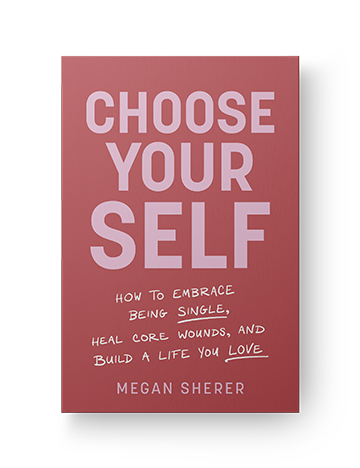
Excerpted from Choose Your Self: How to Embrace Being Single, Heal Core Wounds, and Build a Life You Love.

Megan Sherer


Megan Sherer is a certified somatic therapist and licensed hypnotherapist whose mission is to help others build healthy and fulfilling relationships, starting with self. She hosts the Well, Then podcast and founded the women’s therapy app The Self Care Space. For more, visit megansherer.com.

Choose Your Self

Learn More
Amazon | Barnes & Noble | Bookshop | Sounds True

>
Share via
Copy link
Powered by Social Snap