Just One Question | James Hollis: Why Am I Here?

    —
August 13, 2026

Just One Question | James Hollis: Why Am I Here?

James Hollis — August 13, 2026

Tami came to Living with Borrowed Dust wanting to talk about the abyss — the chapter that held her attention most. James Hollis offers Heidegger’s framing of it: not the pit that swallows you, but the openness of being.

Then he does something guests rarely do here. He takes the question back. The abyss opens, he says, every time we ask a truly radical question — radical from radix, root — and there is none more radical than “Why am I here?”

He answers it from inside a hospital bed. Two serious spinal surgeries, real doubt about whether he’d come through, and what he describes feeling is not despair but something closer to adventure. He thanked his surgeon on the way into the operating room. Fear is normal, he says, and anxiety is real — but neither one has to be the thing that decides how you live.

In this episode:

  • Heidegger’s abyss as the openness of being, and how that reframe exposed Hollis’s own defenses
  • The patterns we build against the unknown: power over small things, staying out of harm’s way, narcissistic inflation
  • Why mortality is the one statistic with no uncertainty in it, and what that should free us to do
  • Keep walking — if you’re in the middle of the forest, you’re halfway through
  • Dignity over pride, and the one thing nobody can take from you unless you give it away

Taken from the full Insights at the Edge conversation with James Hollis. Find the complete interview in this feed or at soundstrue.com

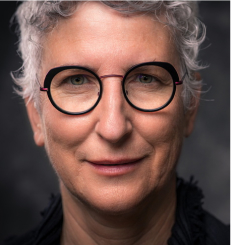
James Hollis, PhD, is a licensed Jungian analyst in private practice in Washington, DC. Originally from Springfield, Illinois, he graduated from Manchester University in 1962 and Drew University in 1967. He taught humanities for 26 years in various colleges and universities before retraining as a Jungian analyst at the Jung Institute of Zürich, Switzerland (1977–82). He served as executive director of the Jung Educational Center in Houston, Texas, for many years. He was executive director of the Jung Society of Washington until 2019, and now serves on its board of directors. He is a retired senior training analyst for the Inter-Regional Society of Jungian Analysts, was first director of training of the Philadelphia Jung Institute, and is vice-president emeritus of the Philemon Foundation. Additionally, he was a professor of Jungian Studies for Saybrook University of San Francisco.

He has written 20 books, available in translations around the world, including Living Between Worlds, What Matters Most, and Living an Examined Life. He lives with his wife, Jill, an artist and retired therapist, near Washington, DC. Together they have three living children and eight grandchildren. For more, visit jameshollis.net.

Author photo © Oxana Holtmann 

900 Episodes and Counting…

Subscribe to Insights at the Edge to hear all of Tami’s interviews (transcripts available too!), featuring Eckhart Tolle, Caroline Myss, Tara Brach, Jack Kornfield, Adyashanti, and many more.

Meet Your Host: Tami Simon

Each week on Insights at the Edge, Tami Simon interviews leading voices in the Mind/Body/Spirit space about a vast spectrum of fascinating ideas. Since 2009, Tami and her guests have been exploring the edge of understanding, nearly 1,000 episodes on the honest work of change, including spiritual discovery, awakening, intuition, purpose, trauma, and grief.

Photo © Jason Elias

Also By Author

Just One Question | James Hollis: Why Am I Here?

Tami came to Living with Borrowed Dust wanting to talk about the abyss — the chapter that held her attention most. James Hollis offers Heidegger’s framing of it: not the pit that swallows you, but the openness of being.

Then he does something guests rarely do here. He takes the question back. The abyss opens, he says, every time we ask a truly radical question — radical from radix, root — and there is none more radical than “Why am I here?”

He answers it from inside a hospital bed. Two serious spinal surgeries, real doubt about whether he’d come through, and what he describes feeling is not despair but something closer to adventure. He thanked his surgeon on the way into the operating room. Fear is normal, he says, and anxiety is real — but neither one has to be the thing that decides how you live.

In this episode:

  • Heidegger’s abyss as the openness of being, and how that reframe exposed Hollis’s own defenses
  • The patterns we build against the unknown: power over small things, staying out of harm’s way, narcissistic inflation
  • Why mortality is the one statistic with no uncertainty in it, and what that should free us to do
  • Keep walking — if you’re in the middle of the forest, you’re halfway through
  • Dignity over pride, and the one thing nobody can take from you unless you give it away

Taken from the full Insights at the Edge conversation with James Hollis. Find the complete interview in this feed or at soundstrue.com

[ENCORE EPISODE] James Hollis: What Is Wanting to Find...

**SPECIAL ENCORE PRESENTATION IN SUPPORT OF WORLD MENTAL HEALTH DAY THIS OCTOBER**

Dr. James Hollis is a Jungian analyst, a former director of the Jung Society of Washington, DC, and a professor of Jungian Studies for Saybrook University of San Francisco/Houston. He is the author of The Middle Passage, Living an Examined Life, Through the Dark Wood, and Living Between Worlds, among many others. With Sounds True, he’s released the expansive audio program A Life of Meaning: Exploring Our Deepest Questions and Motivations.

In this episode of Insights at the Edge, Tami Simon speaks with James about the journey for personal fulfillment—how it starts, what it demands, and how it changes your life. James explains what it really means to take responsibility for your life’s path, as well as how you can rediscover and reclaim your innate authority. Tami and James discuss how childhood experiences shape our present behavior and what it takes to live fearlessly. Finally, they talk about overcoming lethargy and the joy of becoming comfortable with mysteries.

This episode is sponsored by BetterHelp. Listeners of Insights At The Edge get 10% off their first month at www.betterhelp.com/soundstrue.

James Hollis: “Find What You Love and Let It Kill Yo...


By what lights do you live your journey? What fires your imagination? What stirs your curiosity? What asks of you something that is so deep within you that perhaps it hurts, but you can’t let go of it because it won’t let go of you? These are some of the “large questions” explored by Tami Simon and her guest, Jungian teacher and author James Hollis. Hollis is one of those authors who’s beloved by everyone who works at Sounds True—especially those of us who’ve entered the second half of life—and in this podcast, you’ll discover why. 

Listen now as Tami and Jim discuss his new book, Living with Borrowed Dust, sharing thought-provoking insights about: the evanescence of our human journey; making your life luminous; asking large questions, and how we lose contact with the inquiries that serve our individuation; fate versus destiny; the independence of the psyche; the ego’s need for control; dreams as “health correctives” and an avenue to the numinous; showing up for your “appointment” in life; trusting the wisdom of nature; how psychoanalysis helps us rewrite the self-limiting narratives that hold us back; the worst damage of trauma: identifying who we are with what happened to us; why we can’t solve certain problems, but we can outgrow them; courage and perseverance; paying close attention to your inner life; living in a culture of distraction; dialoguing with your soul; the paradox of passion; facing the abyss; taking advantage of the precious moments; learning to live with ambiguity; and more.

Note: This episode originally aired on Sounds True One, where these special episodes of Insights at the Edge are available to watch live on video and with exclusive access to Q&As with our guests. Learn more at join.soundstrue.com.

You Might Also Enjoy

Just One Question | Adyashanti: Is It an Awakening If ...

Is a spiritual awakening only real if it completely rearranges your life? That’s the question Tami Simon puts to Adyashanti in this episode, and his answer digs into something a lot of seekers wrestle with: the gap between a powerful glimpse of clarity and the ongoing work of actually living from it.

Adya, the American-born teacher behind books like The End of Your World and Falling into Grace, walks through why those temporary tastes of awakening are real, even when they fade, and offers a surprisingly practical way to hold onto what they revealed without grasping at them. Then he does something rare: he tells the story of his own first major awakening, a moment he describes as feeling like a nuclear explosion going off inside him.

Here’s what we cover:

  • Why a fleeting shift still counts as a real awakening, even if it doesn’t stick
  • The two (seemingly contradictory) pieces of advice Adya gives people chasing a past peak experience
  • How the first awakening can feel like a “freebie,” while everything after asks you to participate consciously
  • Adya’s own account of the night everything fell away and the still, small voice that told him, “This isn’t all of it. Keep going.”

And there’s so much more. Listen to the entire conversation from this Insights At the Edge episode, “Waking Up: What Does It Really Mean?” 

Kimberly Ann Johnson: “Becoming a Sexual Alchemi...

What if aging isn’t the slow closing of your erotic life, but the doorway into its most alive season?

This week, Tami Simon speaks with Kimberly Ann Johnson—sexological body worker, somatic experiencing practitioner, birth doula, and author of the new Sounds True book Erotic Seasons: Tuning In to the Rhythms of Women’s Sexuality and Spirituality—about what she calls erotic sovereignty, and the sentence that closes her book: the female body is its own spiritual path.

Join Tami and Kimberly to explore:

  • Erotic sovereignty—your relationship to your own life force, and why it stays with you across every season
  • Why the goal isn’t a more regulated nervous system, but a more responsive one, and what it means to run more charge
  • The four erotic seasons—maiden, mother, virgin, crone—and the surprising reason virgin comes after mother
  • Why hormonal transitions are “wet clay”: golden opportunities for repatterning that our culture teaches us to rush past
  • Menopause as a death rehearsal, and the life review that arrives decades before we expect it
  • Hot sex and warm sex—widening the range beyond adrenaline, and learning the language of the pause
  • “Hormones are gods”: the collective endocrine system, and why living intergenerationally may be the original hormone therapy
  • Becoming a sexual alchemist—arousal as healing energy, and why care is the whole ethic

Whether you are 25 or 75, Kimberly offers a map for meeting your body’s changes as thresholds rather than losses.

Please note: this episode includes candid discussion of sexual abuse and sexual wounding, including Kimberly Ann Johnson’s own experience.

Listen now, and meet your body as the path. →

This conversation offers genuine transmission, not just concepts about awakening, but the palpable presence of realized teachers exploring the growing edge of spiritual understanding together, and it originally aired on Sounds True One.

Get a FREE month of membership at https://bit.ly/STOne-Free-Month.

The Point of Insight | Our Medicine Lives in the Wound


What if the very thing that wounded you is the source of the medicine you’re here to give?

In this month’s Point of Insight, Tami Simon shares a personal story: minutes before going live with an archetypal astrologer, she was told—correctly, and within seconds—that she carried “the mother of all mother wounds.” That single moment became the culmination of a much longer, gradual unfolding: a lifetime’s worth of “drops,” from a mentor she called the Queen of the Reframe, to an interview with yoga teacher and activist Seane Corn titled “Your Pain Is Your Purpose,” to an email from a business coach whose four simple words reframed everything—your karma is your dharma.

Join Tami as she reflects on:

  • How a lifelong feeling of not belonging became the soil for a life’s work helping others feel connected
  • The difference between sudden insight and the slow, gradual “boiling water” of a tipping point
  • Why real breakthrough requires going all the way through pain, not around it
  • Joanna Macy’s question—”What breaks your heart?”—and how grief and care become fuel for service
  • Why “never turn away” may be one of the most important spiritual instructions there is

This is a shorter, solo reflection from Tami—released once a month on the Insights at the Edge feed—on where our deepest wounds and our clearest purpose meet.

Listen now. →

Find the original Insights at the Edge episodes here: “Seane Corn: Your Pain Is Your Purpose“