Black Tara Who Destroys All Negativities

    —
December 17, 2020

In the fall of 2010, our monthly Tara practice began at sundown at the end of Rosh Hashanah, the beginning of the Jewish new year, 5771. The days between Rosh Hashanah and Yom Kippur are known as the Days of Awe. During these ten days, observant practitioners reflect on the past year to repair harm they may have inflicted on friends, family, or members of the greater family of the planet. They apologize to others and seek to do t’shuvah to make amends if possible. People work consciously to repair and let go of past negativity and set intentions for the coming year to prevent further mischief.

Black Tara Who Destroys All Negativities was on the calendar for that night. We appreciated the synchronistic timing of the two events. I noted that Tara protects us from negativity, internal and external, and helps us release the effects of negative energies we’ve encountered or generated. This protection occurs in part from remembering our connection to the Whole—that we are nurtured and contained by a multilayered universe. When we help another, we are helped. If we harm another, we harm ourselves. Perhaps harder to grasp—if we harm ourselves, we harm the whole universe.

The teaching centered around the meaning of the mantra, which refers explicitly to ingrained behaviors operating outside of consciousness that wreak havoc in interpersonal relationships. Negative energies transferred from one individual to another are potent and destructive, and often have lasting effects.

Tara’s Appearance

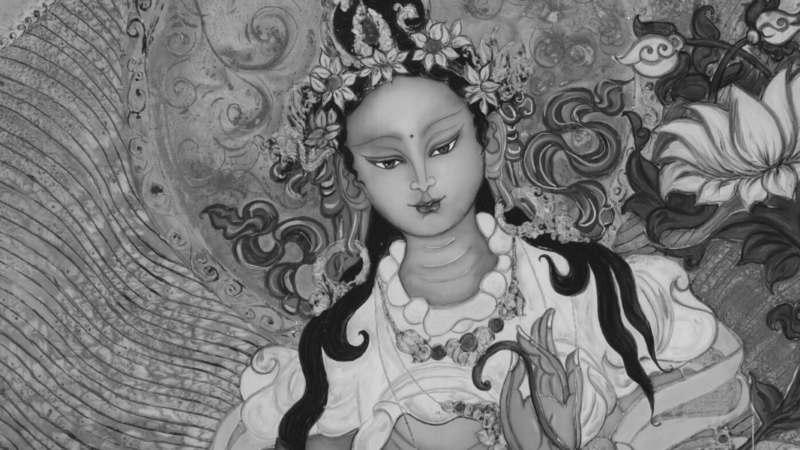
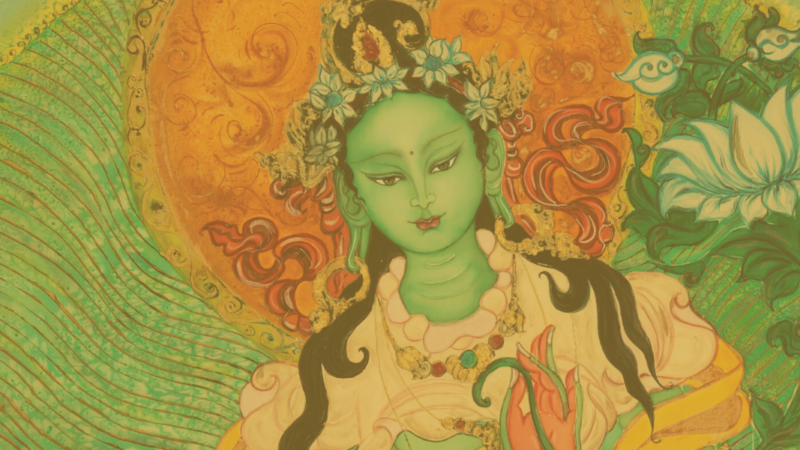
Black Tara appears with her mouth wide open in a fierce expression. Like all the wrathful emanations, she sits on a fiery sun disc, which rests in the center of her lotus throne. The sun disc replaces the usual soothing moon disc. She holds a black vase, which contains the power to overcome even the most destructive and negative powers. In this aspect, Tara is known as the Destroyer of All Negativities.

The Mantra

Om Tare Tuttare Ture Sarva Vidya Avarana Ye Bhye Phat Soha!

“Ohm Tahray Tootahray Tooray Sarwah Veedyah Ahvahrahnah Yay Bay Peyt Soha!”

This mantra sheds more light on the meaning of the practice, when you might need to use it, and how to align your own intentions with those of Tara. It insists that Tara remove mental obstacles that block insight into your complexes or the emotional forces that obscure your understanding. Avarana refers to the causes underlying negative tendencies in yourself or others. These instincts, imprints, or potencies are ingrained, influencing behavior outside of awareness. They are unconscious, unquestioned, and unprocessed. They have been denied, repressed, or avoided. You or others around you might struggle to bring them to consciousness or have no wish to do that whatsoever.

As with many words in Sanskrit, vidya has multiple meanings depending on the context. Vidya often means “wisdom”; in this instance, it means “intentions,” particularly negative intentions. Bhye phat urges Tara to destroy these obstacles or difficulties!

The mantra asks Tara to overcome the negative intentions of the enemy. Use it when you want her complete protection in order to fully grasp the difficulties in your situation. Watch for signs that you are being infected or possessed by internal negativity, which would be a natural response to the energy coming at you. Don’t be naive about actual outer dangers you might be facing; you have to remove yourself from harmful situations.

The Practice

Visualize the entire mandala of the twenty-one Taras arising out of vast space in front of you. Green Tara appears in the center in her radiant body of green light. Imagine your teachers surrounding her and all her other emanations in the background behind them. Finally, invite your friends and supporters and all beings you wish to receive the blessings of your practice. Recite the preliminary prayers. Then imagine that Black Tara Who Destroys All Negativities moves into the foreground, seated on her lotus throne with a sun disc in the center. She holds a black vase, which contains the power to destroy even the most virulent forces in the universe. See light streaming out of her heart and from her seed syllable Tam (“Tahm”) standing on a moon disc inside the vase. Just as a seed contains the entire essence of the plant it will become, the seed syllable Tam contains the entire essence of Tara’s infinite powers.

tam

If visualizing a Tibetan syllable proves difficult initially, simply visualize light streaming out instead. The light destroys all malice and negativity.

Invite Black Tara to protect you from the negative intentions and actions of others. Set your own intentions to release the shock of the impact of such energies on your body, psyche, and spirit. Ofer Tara all of your dark emotions; ask her to protect you inside and out as you engage with our imperfect world in which aggression and hatred are too easily encountered.

Recite the mantra, Om Tare Tuttare Ture Sarva Vidya Avarana Ye Bhye Phat Soha, at least 21 times or 108 times whenever possible. Then rest in the subtle vibration created by the mantra recitation. Notice the qualities of the energy around you. Remember and be grateful for the inherent goodness in the universe that is continuously giving birth to positive impulses inside of you and other beings in the world.

Black Tara brings you back to the radiant spaciousness at the core of your being. As she dissolves obstacles created by negativity, try to identify the signs of true knowing versus the cynical and damaging commentary of the complex. Learn to distinguish what’s coming from inside, what’s coming at you from outside, and how the two are related. Reach out to the cosmic Mother Protector in the form of Tara. Reach inward to her indwelling presence and open yourself to access wisdom and compassion, which offers the greatest protection no matter the circumstances.

As you bring the meditation to a close, visualize Black Tara receding into the background among all the other emanations. See the light streaming out of the entire mandala and then allow the mandala with all its beings to dissolve into space. The light flows into your body and heart, vivifying and stabilizing the essence of Tara within you, and then disperses into the universe. Dedicate the positive potential of the practice to the healing and awakening of all beings everywhere, with no exceptions.

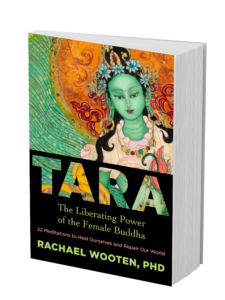
This is an adapted excerpt from Tara: The Liberating Power of the Female Buddha by Dr. Rachael Wooten.

rachael wooten

Rachael Wooten, PhD, is a Zürich—trained Jungian analyst and psychologist who has been in private practice as a therapist for more than 40 years. An enthusiastic interfaith activist, she has studied and practiced in Buddhist, Jewish, Christian, and indigenous traditions throughout her adult life.

Rachael has been mentored by spiritual teachers such as her Tibetan root guru Lodrö Tulku Rinpoche and Rabbi Zalman Schachter-Shalomi. She has taught Tara practices under the authorization of Lodrö Rinpoche for more than 20 years. Rachael has offered Tara workshops through the Resource Center for Women and Ministry in the South, ALEPH: Alliance for Jewish Renewal, and C. G. Jung Society of the Triangle. She currently teaches a monthly Tara meditation group at Pullen Memorial Baptist Church in her hometown of Raleigh, North Carolina. To learn more, visit rachaelwootenauthor.com.


tara 3d cover

Learn More

Sounds True | Amazon | Barnes & Noble | Bookshop | Indiebound

Rachael Wooten

Rachael Wooten, PhD, is a Zürich—trained Jungian analyst and psychologist who has been in private practice as a therapist for more than 40 years. An enthusiastic interfaith activist, she has studied and practiced in Buddhist, Jewish, Christian, and indigenous traditions throughout her adult life.

Rachael has been mentored by spiritual teachers such as her Tibetan root guru Lodrö Tulku Rinpoche and Rabbi Zalman Schachter-Shalomi. She has taught Tara practices under the authorization of Lodrö Rinpoche for more than 20 years. Rachael has offered Tara workshops through the Resource Center for Women and Ministry in the South, ALEPH: Alliance for Jewish Renewal, and C. G. Jung Society of the Triangle. She currently teaches a monthly Tara meditation group at Pullen Memorial Baptist Church in her hometown of Raleigh, North Carolina. To learn more, visit rachaelwootenauthor.com.

Author photo © Teresa Porter

Listen to Tami Simon's in-depth audio podcast interviews with Dr. Rachael Wooten:
The Liberating Power of Tara >>

Also By Author

Golden Tara to Who Helps Manifest and Fulfill Purpose

Meditating on Golden Tara shifts your sense of identity away from the smaller self that experiences itself as a separate being. When you identify with Tara in meditation and throughout the day, you realize that you are always in relationship with a fantastic, complex universe. Your energy increases because you no longer feel alone. You have Tara’s help, the help of friends, and countless other beings as well.

On the one hand, you are an infinitesimally tiny part of the grand whole. On the other hand, you have a role to play in the continuing creation of this complex universe. As you deepen and stabilize your inner Tara consciousness, your actions are imbued with love and compassion, arising from your understanding that you are an integral part of whatever you seek to change.

Remembering Tara also helps preserve your energies when you encounter unexpected obstacles; her golden light reveals the treasures hidden in the unwelcome stumbling blocks of life. Difficult challenges hold keys to awakening. Tara helps you approach problems as an inherent part of the journey, supporting you as you move toward them to uncover wisdom they might offer. They often provide a wake-up call to send you in a new direction, offering greater clarity about your life purpose.

This inclusive attitude creates more health in your personal ecosystem as well as the universal ecosystem. Ask Golden Tara to transform your challenging emotions into love and to increase your energy for discovering meaning and purpose in your life.

Tara’s Appearance

Golden Tara appears as the life-giving female buddha in a body of radiant golden light. She embodies the light of life itself. The vase in Golden Tara’s hand contains the power to increase our life energy, power, and material and spiritual resources. These resources support us in times of ease and times of difficulty, enabling us to discover and fulfill the purposes of our life on a moment-to-moment basis and over the arc of our lives.

For centuries, artists have created statues and thangka paintings of Tara, always adorned with jewelry. These sacred paintings, usually done on fabric and surrounded by brocade, portray the qualities of their subjects and convey teachings as well. Thus we take special note of Tara’s adornments. A crown rests atop her head. Necklaces of varying lengths cascade from her neck to her waist. Bracelets encircle her wrists. All have been crafted from gold with deep red and blue jewels woven into the designs.

Gold has been the preferred precious metal of jewelry makers for thousands of years. Gold is malleable; gold doesn’t tarnish. Golden light is associated with increasing life-force, healing, and holiness. Holy people of many faiths are often painted in an aura of golden radiance.

Many years ago, I heard a teaching that Tara’s jewels represent her experiences over lifetimes on her way to enlightenment and buddhahood. Profound understanding of the Buddhist teachings and her experiences as a woman led Wisdom Moon to vow to attain enlightenment as a woman and to persevere toward her goal. Tara’s life events were surely difficult and awe-inspiring, ordinary and phenomenal. All of them were precious contributions to her journey, which has benefited countless beings over hundreds of years.

The Mantra

Om Tare Tuttare Ture Sarva Ayur Punye Pushtam Kuru Soha!

“Ohm Tahray Tootahray Tooray Sarwah Ahyoor Poonyay Pushtahm Kooroo Soha!”

When you recite the mantra of Golden Tara, you are urging (kuru) Tara to increase (pushtam) your life energies (ayur) and merit (punye), your contributions to adding positive energy to beings around the world, near and far. Mantra recitations need not be limited to formal practice. Use them throughout the day to slow down and focus on whatever task is at hand.

The Practice

First, visualize the entire mandala of Green Tara emerging into the space in front of you. You are surrounded by your friends, loved ones, and supporters, and she is surrounded by your teachers and all the twenty-one emanations. After the opening prayers, imagine Golden Tara coming into the foreground of the mandala. Recall her praise while visualizing golden rays of light streaming from her heart as well as the golden vase in her right hand, which rests on her right knee, palm open in the gesture of supreme giving.

As you recite her mantra, Om Tare Tuttare Ture Sarva Ayur Punye Pushtam Kuru Soha, imagine that you are absorbing this light and that other beings and other places are receiving the light of Tara as well.

Kuru, which appears in seven of the Tara mantras, carries a particularly bold tone. You’re not meekly asking Tara to help—you’re putting your whole heart and body into this request. “Tara, please do this for me. Remove blockages so more energy flows into my life and work! I’m counting on you!” The same tasks that feel overwhelming in one moment seem entirely possible in the next.

Tara can help you discern the wisdom inherent in the obstacles you encounter in your life and practice. Meditate on the continuity in your life—the joyful moments, the extremely painful moments, and everything in between. Your experiences are not meaningless fragments. Imagine a mosaic forming as you piece the fragments together into a beautiful coherent pattern. Invoke Tara’s wisdom to give you greater clarity about your life purpose and the means to fulfill it.

Recite the mantra at least 21 times or 108 times whenever possible. Then rest in the vibrational field created by your chanting. Allow frustration and doubt to dissolve, releasing energy for healing. You become richer in inner resources, which leads to enriched outer resources as well, both material and spiritual. Affirm your connection to all life forms in the universe. Know that the benefits of your heartfelt wishes and efforts will flow from you into the world.

As you bring the session to a close, visualize Golden Tara receding into her place among the twenty-one emanations. See the whole mandala dissolve into radiant light, which flows into you and merges with your inner light. Dedicate the merit or positive potential generated by the practice to the healing of all beings—with no exceptions.

This is an adapted excerpt from Tara: The Liberating Power of the Female Buddha by Dr. Rachael Wooten.


rachael wooten

Rachael Wooten, PhD, is a Zürich—trained Jungian analyst and psychologist who has been in private practice as a therapist for more than 40 years. An enthusiastic interfaith activist, she has studied and practiced in Buddhist, Jewish, Christian, and indigenous traditions throughout her adult life.

Rachael has been mentored by spiritual teachers such as her Tibetan root guru Lodrö Tulku Rinpoche and Rabbi Zalman Schachter-Shalomi. She has taught Tara practices under the authorization of Lodrö Rinpoche for more than 20 years. Rachael has offered Tara workshops through the Resource Center for Women and Ministry in the South, ALEPH: Alliance for Jewish Renewal, and C. G. Jung Society of the Triangle. She currently teaches a monthly Tara meditation group at Pullen Memorial Baptist Church in her hometown of Raleigh, North Carolina. To learn more, visit rachaelwootenauthor.com.


book cover

Learn More

Sounds True | Amazon | Barnes & Noble | Bookshop | Indiebound
Black Tara Who Destroys All Negativities

In the fall of 2010, our monthly Tara practice began at sundown at the end of Rosh Hashanah, the beginning of the Jewish new year, 5771. The days between Rosh Hashanah and Yom Kippur are known as the Days of Awe. During these ten days, observant practitioners reflect on the past year to repair harm they may have inflicted on friends, family, or members of the greater family of the planet. They apologize to others and seek to do t’shuvah to make amends if possible. People work consciously to repair and let go of past negativity and set intentions for the coming year to prevent further mischief.

Black Tara Who Destroys All Negativities was on the calendar for that night. We appreciated the synchronistic timing of the two events. I noted that Tara protects us from negativity, internal and external, and helps us release the effects of negative energies we’ve encountered or generated. This protection occurs in part from remembering our connection to the Whole—that we are nurtured and contained by a multilayered universe. When we help another, we are helped. If we harm another, we harm ourselves. Perhaps harder to grasp—if we harm ourselves, we harm the whole universe.

The teaching centered around the meaning of the mantra, which refers explicitly to ingrained behaviors operating outside of consciousness that wreak havoc in interpersonal relationships. Negative energies transferred from one individual to another are potent and destructive, and often have lasting effects.

Tara’s Appearance

Black Tara appears with her mouth wide open in a fierce expression. Like all the wrathful emanations, she sits on a fiery sun disc, which rests in the center of her lotus throne. The sun disc replaces the usual soothing moon disc. She holds a black vase, which contains the power to overcome even the most destructive and negative powers. In this aspect, Tara is known as the Destroyer of All Negativities.

The Mantra

Om Tare Tuttare Ture Sarva Vidya Avarana Ye Bhye Phat Soha!

“Ohm Tahray Tootahray Tooray Sarwah Veedyah Ahvahrahnah Yay Bay Peyt Soha!”

This mantra sheds more light on the meaning of the practice, when you might need to use it, and how to align your own intentions with those of Tara. It insists that Tara remove mental obstacles that block insight into your complexes or the emotional forces that obscure your understanding. Avarana refers to the causes underlying negative tendencies in yourself or others. These instincts, imprints, or potencies are ingrained, influencing behavior outside of awareness. They are unconscious, unquestioned, and unprocessed. They have been denied, repressed, or avoided. You or others around you might struggle to bring them to consciousness or have no wish to do that whatsoever.

As with many words in Sanskrit, vidya has multiple meanings depending on the context. Vidya often means “wisdom”; in this instance, it means “intentions,” particularly negative intentions. Bhye phat urges Tara to destroy these obstacles or difficulties!

The mantra asks Tara to overcome the negative intentions of the enemy. Use it when you want her complete protection in order to fully grasp the difficulties in your situation. Watch for signs that you are being infected or possessed by internal negativity, which would be a natural response to the energy coming at you. Don’t be naive about actual outer dangers you might be facing; you have to remove yourself from harmful situations.

The Practice

Visualize the entire mandala of the twenty-one Taras arising out of vast space in front of you. Green Tara appears in the center in her radiant body of green light. Imagine your teachers surrounding her and all her other emanations in the background behind them. Finally, invite your friends and supporters and all beings you wish to receive the blessings of your practice. Recite the preliminary prayers. Then imagine that Black Tara Who Destroys All Negativities moves into the foreground, seated on her lotus throne with a sun disc in the center. She holds a black vase, which contains the power to destroy even the most virulent forces in the universe. See light streaming out of her heart and from her seed syllable Tam (“Tahm”) standing on a moon disc inside the vase. Just as a seed contains the entire essence of the plant it will become, the seed syllable Tam contains the entire essence of Tara’s infinite powers.

tam

If visualizing a Tibetan syllable proves difficult initially, simply visualize light streaming out instead. The light destroys all malice and negativity.

Invite Black Tara to protect you from the negative intentions and actions of others. Set your own intentions to release the shock of the impact of such energies on your body, psyche, and spirit. Ofer Tara all of your dark emotions; ask her to protect you inside and out as you engage with our imperfect world in which aggression and hatred are too easily encountered.

Recite the mantra, Om Tare Tuttare Ture Sarva Vidya Avarana Ye Bhye Phat Soha, at least 21 times or 108 times whenever possible. Then rest in the subtle vibration created by the mantra recitation. Notice the qualities of the energy around you. Remember and be grateful for the inherent goodness in the universe that is continuously giving birth to positive impulses inside of you and other beings in the world.

Black Tara brings you back to the radiant spaciousness at the core of your being. As she dissolves obstacles created by negativity, try to identify the signs of true knowing versus the cynical and damaging commentary of the complex. Learn to distinguish what’s coming from inside, what’s coming at you from outside, and how the two are related. Reach out to the cosmic Mother Protector in the form of Tara. Reach inward to her indwelling presence and open yourself to access wisdom and compassion, which offers the greatest protection no matter the circumstances.

As you bring the meditation to a close, visualize Black Tara receding into the background among all the other emanations. See the light streaming out of the entire mandala and then allow the mandala with all its beings to dissolve into space. The light flows into your body and heart, vivifying and stabilizing the essence of Tara within you, and then disperses into the universe. Dedicate the positive potential of the practice to the healing and awakening of all beings everywhere, with no exceptions.

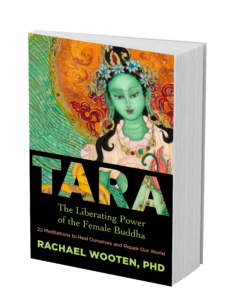
This is an adapted excerpt from Tara: The Liberating Power of the Female Buddha by Dr. Rachael Wooten.

rachael wooten

Rachael Wooten, PhD, is a Zürich—trained Jungian analyst and psychologist who has been in private practice as a therapist for more than 40 years. An enthusiastic interfaith activist, she has studied and practiced in Buddhist, Jewish, Christian, and indigenous traditions throughout her adult life.

Rachael has been mentored by spiritual teachers such as her Tibetan root guru Lodrö Tulku Rinpoche and Rabbi Zalman Schachter-Shalomi. She has taught Tara practices under the authorization of Lodrö Rinpoche for more than 20 years. Rachael has offered Tara workshops through the Resource Center for Women and Ministry in the South, ALEPH: Alliance for Jewish Renewal, and C. G. Jung Society of the Triangle. She currently teaches a monthly Tara meditation group at Pullen Memorial Baptist Church in her hometown of Raleigh, North Carolina. To learn more, visit rachaelwootenauthor.com.


tara 3d cover

Learn More

Sounds True | Amazon | Barnes & Noble | Bookshop | Indiebound
You Might Also Enjoy

Bridging Movement And Stillness: Exploring The Union O...

There is a moment, just after a posture ends and just before stillness settles in, where something shifts. The body softens, the breath deepens, and awareness begins to rise, not from effort, but from quiet. This is the space where yoga and meditation meet. For many of us, yoga begins with movement, and meditation begins with silence. But over time, these practices become less separate and more like two currents of the same river. Together, they help us remember what stillness feels like, not as emptiness, but as something alive and full of presence. This union is not about achieving perfect form or mastering silence. It’s about returning to yourself, again and again, through breath, movement, and listening.

For more than 40 years, Sounds True has offered a living library of spiritual wisdom, featuring the voices of teachers like Eckhart Tolle, Pema Chödrön, and Tara Brach. We were founded with a single intention: to preserve the authentic energy of spiritual transmission in real time, through courses, audio programs, podcasts, and events that honor each teacher’s unscripted voice. Our yoga and meditation offerings are crafted to support not just practice, but transformation. We don’t just deliver teachings, we invite you into an experience of awakening.

In this piece, we’ll be discussing how yoga and meditation come together as a path to inner stillness, and the deeper benefits of yoga when practiced as both movement and mindfulness.

Key Takeaways:

  • Embodied Presence: Yoga is more than movement; it’s a daily return to inner awareness and emotional grounding.
  • Union In Practice: The combination of yoga and meditation forms a spiritual path that strengthens resilience and compassion.
  • Support Through Tools: Programs like Sounds True’s Yoga for Your Mood Deck and Yoga Nidra podcast offer guided ways to deepen stillness.

The Sacred Bridge Between Movement And Stillness

In many traditions, the body is seen as a gateway, not an obstacle. Yoga invites us to meet our physical selves with presence, while meditation welcomes us inward, toward silence, awareness, and deeper being. At the heart of these practices lies the yoga and meditation union, a sacred convergence where motion softens into stillness, and stillness begins to move from within.

When we step onto the mat, we often begin with movement, stretching, strengthening, and breathing. But in time, we may notice that the external gestures echo something more subtle. The rise and fall of breath. The space between thoughts. The quiet that blooms at the end of a pose. Here, yoga is no longer just a physical practice; it becomes a preparation for entering stillness fully.

This union is not about doing more; it’s about becoming more aware. By anchoring attention in the body, we start to feel the mind settle. Through mindful movement, we open the door to a quieter interior landscape. Yoga becomes not just a practice of form, but a devotional act of listening. And meditation, once reserved for the cushion, begins to live in the body itself.

Explore Teachings From World-Renowned Psychologists And Researchers On Trauma, Mindfulness, Resilience, And Cognitive Growth.

The Profound Benefits Of Yoga As A Daily Practice

The most transformative rewards of yoga often emerge not in the big breakthroughs, but in the quiet, daily returns. When practiced consistently, yoga becomes more than a physical discipline; it becomes a gentle companion in emotional resilience, spiritual grounding, and embodied awareness:

Building Trust Through Repetition

One of the lesser-discussed benefits of yoga is the emotional steadiness that comes from simply showing up. Daily practice builds a relationship with the self, one grounded in trust, consistency, and care. Over time, this rhythm strengthens our ability to remain present even when life becomes unpredictable.

Emotional Clarity And Energetic Balance

Yoga gently creates space for emotion to move through the body. It offers practices that can stabilize energy, soften emotional turbulence, and restore clarity. Tools like the Yoga for your mood deck provide inspiration and support for selecting postures and breathwork based on how you’re feeling, making the practice deeply personal and responsive.

The Power Of A Yoga Mindfulness Practice

At its heart, yoga is a mindfulness practice, a way to train both body and attention to exist in the same moment. Through this integrated awareness, we learn to witness our experience with kindness and curiosity. It becomes easier to feel the breath without chasing it, to notice thoughts without becoming entangled in them, and to trust the body’s wisdom as a source of inner guidance.

How Meditation Deepens The Yoga Mindfulness Practice

Yoga and meditation are often seen as separate tracks on the same path, but when they meet, something profound shifts. Together, they become a mirror for awareness itself. This section explores how meditation enriches what we experience on the mat, transforming yoga from movement alone into a fuller field of conscious presence:

Refining Attention Through Breath And Stillness

Meditation invites us to notice what we might otherwise rush past, the pause at the top of the inhale, the subtle tension in a shoulder, the moment before the mind wanders. When we bring this quiet observation into yoga, the practice slows down and deepens. This is the essence of the yoga mindfulness practice: using the body as a ground for present-moment awareness.

The Meditation And Yoga Connection As Inner Listening

At a certain point, movement becomes internal. The meditation and yoga connection reveals itself most clearly in these moments, when breath leads movement, and movement dissolves into silence. By practicing this connection regularly, we begin to listen more deeply to the body’s cues and the heart’s quieter truths.

Rest As Integration

Sometimes, the deepest breakthroughs in practice happen during rest. Practices like Yoga Nidra, available through Sounds True’s Yoga Nidra —The Sleep Yoga podcast, offer a doorway into the subtler layers of awareness. As the body softens, the mind learns to settle without effort. Meditation, here, becomes less about doing and more about receiving.

Awaken Your Inner Healing Power With Sound True.

Discovering Inner Stillness Through Yoga And Breath

The breath is both a guide and a gateway. As we follow it inward, we begin to discover a spaciousness that doesn’t depend on external conditions. This is where inner stillness through yoga reveals itself, not as a goal to chase, but as something we return to, breath by breath:

Breath As Anchor For Inner Awareness

In yoga, the breath is more than a physiological process. It becomes a teacher, helping us soften the edges of our thinking and rest in the present moment. Inner stillness through yoga begins here, in the pause between inhales and exhales, in the soft surrender that comes when we allow the breath to lead the way.

Stillness Is Not Absence, But Presence

Often, we confuse stillness with emptiness. But what yoga reveals is that true stillness is rich with awareness. It is not the absence of thought, but the presence of quiet attention. By practicing regularly, we start to sense the aliveness beneath the surface of stillness itself.

A Collective Invitation To Pause

While this journey inward is deeply personal, it is also shared. Events like the International Day of Yoga remind us that stillness, too, can be a communal act. Practicing together, even across distances, strengthens our sense of belonging, not only to each other but to the silence we all carry within.

Embracing The Meditation And Yoga Connection In Daily Life

For many, yoga and meditation remain practices reserved for specific times, on the mat, or on the cushion. But their deepest transformation unfolds when we carry them with us into the ordinary. The meditation and yoga connection becomes not just a routine, but a rhythm that lives in how we walk, listen, and respond:

Making Practice A Living Presence

It’s one thing to practice mindfulness in stillness; it’s another to remain present in motion. By embracing the meditation and yoga connection throughout the day, we turn waiting in line into a breath practice, or a difficult conversation into an opportunity to stay rooted in awareness. Over time, these moments create a quiet thread of groundedness that runs through our daily life.

Mindfulness In Everyday Movements

The yoga mindfulness practice doesn’t require a studio. Washing dishes, walking the dog, or opening a window to feel the breeze, all of these can become invitations into embodied awareness. Through consistent attention, even the most routine acts can reconnect us with the inner calm we cultivate on the mat.

A Path That Meets You Where You Are

This isn’t about perfection. It’s about remembering. Returning. Whether you’re moving through grief, joy, or uncertainty, both yoga and meditation offer you something steady to lean on, a breath, a pause, a small space of stillness that reminds you you’re not alone.

Honoring The Yoga And Meditation Union As A Spiritual Path

Over time, the practice shifts. What may have begun as a way to relieve stress or stretch the body slowly becomes something deeper, something sacred. The yoga and meditation union reveals itself not just as a blend of techniques, but as a path of devotion, inquiry, and awakening:

A Practice Of Listening To The Heart

The more we listen within, the more we discover how movement and stillness serve the same purpose: to bring us home to ourselves. The yoga and meditation union makes this return possible. It invites us to slow down, to hear the quiet voice beneath thought, and to respond with compassion.

Inner Stillness Through Yoga As Devotion

In this context, inner stillness through yoga is not a performance or achievement. It becomes a devotional act, an offering of attention, breath, and presence. By meeting ourselves in this space day after day, we begin to recognize the sacred not as something outside of us, but as something we touch through awareness.

Deepening The Journey With Sounds True

For those ready to explore this path more fully, Sounds True offers a rich selection of teachings through their Yoga and Movement programs. These offerings support the spiritual dimension of practice, guiding seekers toward a more integrated and heart-centered experience of body and being.

Learn To Treat Yourself With The Care You Offer Others

Final Thoughts

Stillness is not a destination; it’s a remembering. A return. The practices of yoga and meditation continue to call us back to that quiet center within, no matter how far we may feel from it.

Whether through movement, breath, or silence, we learn that the real gifts of practice live in the subtleties: the way we respond to discomfort, the gentleness we offer ourselves, the breath we return to when words fall short. These are the moments that change us, not suddenly, but steadily.

And in these moments, we discover inner stillness through yoga as something that doesn’t need to be chased or earned. It is already here, waiting in the pause, the exhale, the soft opening of presence.

Read also:

Frequently Asked Questions About Bridging Movement And Stillness

What are the mental benefits of yoga for older adults?

Yoga supports memory, focus, and emotional regulation in older adults. It also reduces stress-related cognitive fog by calming the nervous system.

Can I experience the benefits of yoga without being flexible?

Yes. Flexibility is not a prerequisite. The benefits of yoga arise from breath awareness, consistency, and alignment with your current body and abilities.

How long does it take to feel the benefits of yoga?

Some effects, like reduced tension or improved mood, can be felt after one session. Deeper benefits, such as resilience and self-awareness, build over weeks or months.

Is it better to do yoga before or after meditation?

It depends on your intention. Yoga before meditation can prepare the body to sit comfortably; meditation before yoga can help anchor presence in movement.

What role does breath play in experiencing the benefits of yoga?

Breath links body and mind. Conscious breathing enhances circulation, soothes anxiety, and grounds attention, deepening the impact of each posture.

How does yoga affect emotional healing?

Yoga creates space for emotional release through mindful movement and breathwork. It supports trauma healing by restoring a sense of agency and inner safety.

Can yoga replace other forms of exercise?

For many, yes. Yoga can improve strength, flexibility, and cardiovascular health. However, it can also complement other activities like walking or swimming.

What type of yoga is best for cultivating stillness?

Gentle styles such as Hatha, Yin, or Restorative Yoga are ideal for cultivating inner stillness. These styles emphasize slow movement and extended holds.

Are there specific yoga poses that support better meditation?

Yes. Poses that open the hips, lengthen the spine, and stabilize the pelvis, like Sukhasana, Padmasana, or supported forward folds, can enhance seated meditation.

Can the benefits of yoga be maintained without daily practice?

Absolutely. While consistency helps, even a few mindful sessions per week can maintain key benefits. The body and mind remember intentional presence.

Michelle Cassandra Johnson is an author, activist, spiritual teacher, racial equity consultant, and intuitive healer. She is the author of six books, including Skill in Action and Finding Refuge. Amy Burtaine is a leadership coach and racial equity trainer. With Robin DiAngelo, she is the coauthor of The Facilitator's Guide for White Affinity Groups. For more, visit https://www.michellecjohnson.com/wisdom-of-the-hive.

1 Minute Meditation Techniques For Busy Minds And Busy...

In a culture that celebrates busyness, stillness is often mistaken for inaction, but a brief pause, even just sixty seconds of presence, can be a profound act of self-remembering. One minute of meditation isn’t about escaping life. It’s about touching into it more directly. This is where 1 minute meditation becomes not only possible, but powerful. These short practices meet you exactly where you are: in the car, between meetings, in moments of stress or transition; offering a doorway back into the body, the breath, and the now.

For more than 40 years, Sounds True has been a trusted guide for those seeking spiritual depth, emotional clarity, and inner transformation. Our archive includes teachings from some of the most respected voices in mindfulness and meditation, including Pema Chödrön, Tara Brach, Eckhart Tolle, and many others. We don’t just share practices; we preserve living wisdom in its most authentic, human form.

In this piece, we’ll be sharing simple 1 minute meditation techniques designed for busy minds and full lives. You’ll learn how to use these micro-practices to anchor yourself throughout the day, and how a 1 minute guided meditation can offer ease and clarity in just a few breaths. Along the way, we’ll also point you toward inner rhythm meditations for deeper exploration.

Key Takeaways:

  • Finding the Right Technique: Micro-practices like breath awareness or sound focus offer fast, meaningful relief from stress without needing extra time or space.
  • Forming Habits That Suit Your Needs: Even brief daily meditations can improve focus, reduce reactivity, and deepen your connection to the present moment.
  • How Meditation Can Support You: 1 minute guided meditation and resources like inner rhythm meditations help build structure and trust in your practice.

Why Even One Minute Of Meditation Matters

We often think of meditation as something that requires silence, time, and the right environment. While extended sessions can deepen awareness, the truth is that presence does not follow a timer. A single minute of grounded attention can open the door to calm, clarity, and reconnection.

Scientific studies continue to show that even brief periods of mindful breathing can regulate the nervous system, reduce stress hormones, and improve focus. Just sixty seconds of intentional stillness can create space between stimulus and response. This is not about “doing it perfectly” but about remembering what it feels like to return to yourself.

In those short windows of time, before a phone call, after reading a difficult message, or while waiting for your coffee, a 1 minute meditation can shift your relationship to the moment. The more you practice dropping in, the more accessible this state becomes. You begin to carry presence with you, rather than seeking it only when things are quiet.

Practices like the 1 minute guided meditation can be especially helpful in creating structure and ease for beginners. These offer a soft voice to anchor your attention when your own feels scattered. And for those drawn to more intuitive forms, inner rhythm meditations offer spacious, heart-centered guidance for returning home to yourself.

Expand Your Consciousness With Sounds True.

How To Prepare For A 1 Minute Meditation

The beauty of 1 minute meditation lies in its simplicity, but a little intentionality can help make each short practice more impactful. Preparing your body, space, and mindset, even briefly, helps you drop into presence faster. Here’s how to gently set yourself up before your next one-minute pause:

Ground Yourself In The Body

Before beginning, take a moment to feel your body’s connection to the earth. Notice your feet on the floor, the weight of your body, and any physical sensations. This awareness brings you out of the mental space and into a place of embodied presence.

Settle Into The Breath

Without needing to control or deepen it, turn your attention to your breath. Observe the natural flow of the inhale and exhale. This simple awareness is often enough to slow your thoughts and bring you into the now.

Create A Gentle Cue

Choose a reminder to pause during your day, this could be a phone notification, a visual cue like a sticky note, or a transition point such as closing your laptop. These moments of pause can become powerful invitations to return to presence. You begin to associate the cue with a shift in awareness.

Release The Need For Perfection

Let go of the idea that meditation must be quiet, deep, or spiritually profound. Even a slightly distracted minute of stillness offers value. The key is consistency, not performance.

Choose A Simple Anchor

Decide in advance what you’ll focus on for the next minute: your breath, a word, or a short 1 minute guided meditation. Knowing your anchor helps you enter the practice quickly and stay with it. Over time, this familiar starting point becomes a doorway to ease.

Try This 1 Minute Guided Meditation for Instant Calm

Sometimes the mind is too busy to guide itself, and that’s when a gentle voice can help us settle more easily. A 1 minute guided meditation offers a simple, accessible way to reconnect with the body and breath without overthinking the process. Here’s how to experience its benefits with ease:

Choose a Supportive Space

You don’t need a perfectly quiet environment, but selecting a space where you feel relatively safe and undisturbed helps set the tone. Sit or stand comfortably, keeping your spine upright without tension. Even if you’re on a short break, a few feet of space and a moment of privacy can make a difference.

Close or Soften Your Eyes

Letting your eyes close or lowering your gaze helps reduce distractions. This small shift draws awareness inward and supports a more focused experience. If keeping your eyes open feels more grounding, find a still point to rest your attention.

Follow a Simple Verbal Prompt

Many 1 minute guided meditations begin with breath awareness. You might hear prompts such as, “Inhale calm, exhale release,” or “Notice the rise and fall of your breath.” These verbal cues invite you into a slower rhythm without needing to think your way there.

Anchor with Touch or Visualization

Some guided meditations include a gentle physical gesture like placing a hand on the heart or belly. Others guide you to visualize a peaceful place or imagine warmth spreading through the body. These techniques help settle the nervous system and deepen the feeling of connection.

End with a Moment of Stillness

As the voice fades, take a final breath and notice how you feel. This closing pause helps integrate the experience, even if it was brief. You may feel more calm, clear, or simply more present than before.

Discover The Power Of Daily Meditation With Sounds True.

Making Micro-Meditation A Daily Habit

Lasting change doesn’t come from intensity, but from consistency. A 1 minute meditation may feel small in the moment, yet when practiced regularly, it becomes a thread of awareness woven through your day. Here are three grounded ways to begin making micro-meditation a natural part of your daily rhythm:

Bookend Your Day With Presence

Start your morning with just one minute of mindful breathing before checking your phone or stepping into the day. In the evening, take another minute to settle your body and release the noise of your thoughts. These small anchors at the beginning and end of your day create a sense of spaciousness and intention.

Use Daily Cues As Invitations To Pause

Moments of waiting in traffic, in line, or during transitions are ideal opportunities for a 1 minute meditation. Pairing these short practices with existing habits builds consistency without needing to add something new. With time, these cues become familiar openings to reconnect with yourself.

Support Yourself With Guided Practice

If you’re not sure where to begin, a 1 minute guided meditation can help you stay focused and grounded. These brief audio prompts give structure and presence, especially on hectic days. You can explore more short and supportive practices through inner rhythm meditations, created to meet your inner world with compassion and clarity.

Explore More With Inner Rhythm Meditations

Meditation becomes more meaningful when it’s aligned with your natural energy and emotional flow. Inner rhythm practices are not about doing it right, they’re about returning to your own pace and presence. Here are a few ways inner rhythm meditations can support your daily practice:

Practices That Meet You Where You Are

These meditations are designed to fit into real-life moments, the messy, busy, and emotional ones included. Whether you’re feeling calm, scattered, or somewhere in between, you’ll find a practice that honors that state without needing to change it.

Guidance That Feels Personal And Intuitive

Rather than rigid instructions, inner rhythm meditations offer gentle prompts that help you listen more deeply to yourself. The tone is supportive, spacious, and grounded in compassion. This kind of guidance helps you develop trust in your own presence.

A Rhythm You Can Return To Anytime

Because many of these meditations are brief, you can revisit them throughout your day. One minute here or there becomes a rhythm of return, a quiet thread that connects you to stillness within motion. Over time, this rhythm becomes a part of how you move through life.

Build Relationships That Nourish And Sustain.

Final Thoughts

Stillness doesn’t require silence, extra time, or a perfect setting, as it’s something you can access in the middle of your day, in between tasks, or during a moment of overwhelm. A 1 minute meditation offers a doorway back to yourself, not as an escape from life, but as a way to meet it with more presence.

These small, consistent pauses remind you that peace isn’t distant but rather it’s available now, in your breath and in your awareness. Whether you begin with a simple practice or a 1 minute guided meditation, you’re cultivating a rhythm of returning. When you feel ready to go deeper, inner rhythm meditations offer further support rooted in compassion and real-life presence.

Read More:

Frequently Asked Questions About 1 Minute Mediation

What is the difference between 1 minute meditation and traditional meditation?

Traditional meditation often involves sitting for extended periods with a set structure or lineage-based technique. A 1 minute meditation is a brief, informal practice focused on grounding or awareness in real-time moments. While it’s not meant to replace deeper practice, these practices can help support mindfulness throughout the day.

Can 1 minute meditation actually reduce anxiety or stress?

Yes, research shows that even short breathing practices can help regulate the nervous system and reduce cortisol levels. While it may not resolve chronic anxiety, it offers immediate relief in moments of tension or overwhelm.

Do I need a guide or teacher for 1 minute meditation to be effective?

Not necessarily. Many people benefit from a 1 minute guided meditation to help build consistency or overcome mental distraction. However, once you become familiar with simple techniques, self-led moments can be just as powerful.

Is 1 minute meditation suitable for children or teenagers?

Absolutely. Its short length makes it ideal for younger people with shorter attention spans. It can also serve as a valuable emotional regulation tool in school or home settings.

How often should I practice 1 minute meditation to see results?

Practicing two to three times per day can create noticeable shifts in focus, mood, and reactivity within a few weeks. Even once a day can help build the habit of presence.

Can I do a 1 minute meditation while walking or moving?

Of course! Walking meditations, breath awareness during movement, or tuning into sensory experiences can all be forms of active 1 minute meditation. The key is focused attention, not stillness.

How do I know if my 1 minute meditation is working?

You might feel more grounded, less reactive, or simply more aware of your breath. The benefits can be subtle at first but tend to build with consistency. Remember that there’s no need to measure your progress, just notice how you feel afterward.

Michelle Cassandra Johnson is an author, activist, spiritual teacher, racial equity consultant, and intuitive healer. She is the author of six books, including Skill in Action and Finding Refuge. Amy Burtaine is a leadership coach and racial equity trainer. With Robin DiAngelo, she is the coauthor of The Facilitator's Guide for White Affinity Groups. For more, visit https://www.michellecjohnson.com/wisdom-of-the-hive.

Find Your Center In Just Five Minutes

Meditation doesn’t have to be long to be life-changing. While many assume that deep spiritual practice requires extended silence or hours of dedication, the truth is that 5 intentional minutes can offer profound shifts. Whether you’re pausing between meetings, sitting at the edge of your bed, or simply needing a moment to breathe, a 5 minute meditation can become a sacred space, a chance to return to yourself.

For more than 40 years, Sounds True has been a trusted source of spiritual wisdom, offering teachings from some of the world’s most respected voices in mindfulness, personal growth, and embodied awakening, including Eckhart Tolle, Pema Chödrön, and Tara Brach. Our digital courses and audio programs are created to guide people not just to information but to a direct experience of presence, peace, and inner transformation.

We live in a culture that celebrates doing, often at the expense of being. But even amidst the noise, your breath remains, and within it, the doorway to stillness. This piece explores how brief, heart-centered practices like a 5 minute guided meditation can ease anxiety, set the tone for your day, support sleep, and provide grounding in moments of stress.

In this piece, we will explore the power and purpose of 5 minute meditations and how you can make them part of your daily life.

Key Takeaways:

  • Debunking Misconceptions: You don’t need long sessions to feel the benefits of meditation because presence begins the moment you pause intentionally.
  • Practicality of Quick Meditation Sessions: Whether you’re waking up, winding down, or overwhelmed at your desk, five-minute meditations are often all you need to return to center.
  • Boosting Sessions With Extra Support: While the journey can be stressful, know that you’re not alone. Guided audio, breathwork prompts, and inner rhythm meditations offer structure and support to help you build your practice.

Why Five Minutes Is Enough

The idea that meditation has to be long or formal keeps many people from starting. But the truth is, presence doesn’t take hours, it takes willingness. Here’s why a 5 minute meditation can be more than enough:

Depth Over Duration

A moment of stillness can hold just as much power as a long session. When you enter a 5 minute guided meditation with focus, your awareness deepens quickly, helping you shift out of autopilot and into presence.

Interrupting The Cycle Of Overwhelm

A short pause can stop stress in its tracks. Practicing a 5 minute meditation for anxiety or a 5 minute meditation for stress helps reset your system and return to your breath, especially during chaotic or triggering moments.

Consistency Builds Connection

It’s not about how long, it’s about how often. A consistent 5 minute morning meditation creates a rhythm that supports emotional steadiness and spiritual grounding. Inner rhythm meditations are designed to help you build that kind of daily connection, short, intentional, and deeply supportive.

Gentle Support When You Need It Most

Not every moment calls for silence. A soothing 5 minute guided meditation meets you where you are, offering comfort, structure, and support without feeling like another task on your to-do list.

Explore Teachings From World-Renowned Psychologists And Researchers On Trauma, Mindfulness, Resilience, And Cognitive Growth.

A Gentle Invitation To Presence

Presence isn’t a performance. Presence doesn’t ask you to be still in a perfect way; it simply asks you to show up. A quiet moment, an open breath, a willingness to pause. That’s all it takes to begin again.

When you give yourself even a 5 minute meditation, you’re reclaiming something essential: the ability to be here, now. This short practice can become a sacred threshold, one where doing gives way to being. And in that space, something softens. The breath deepens. The nervous system begins to settle.

You may notice tension loosening its grip or emotions coming forward with less urgency. With practice, these small moments of stillness create a home within, not one you escape to, but one you live from. Whether it’s a pause between tasks or a gentle 5 minute morning meditation to set your tone for the day, this invitation to presence can quietly reshape how you move through the world.

Your Breath As A Bridge: A Simple 5 Minute Meditation

The breath is always here, steady, faithful, and quiet. It doesn’t demand anything from us. And yet, when we return to it, even for a few minutes, we return to something much deeper than air; we return to ourselves. Here’s how to use the breath as a simple and sacred practice:

Begin Where You Are

There’s no need to prepare or perfect anything. Just find a comfortable seat at home and notice your breathing. Feel the rise and fall, and let your awareness rest there, even if just for a few moments.

Follow The Rhythm

Let the breath guide you, slow, steady, and natural. If your attention wanders, gently return to the inhale and the exhale. A short, guided practice can help you stay connected without needing to focus too hard.

Anchor The Day Or Release It

Some days begin best in stillness. A few minutes of mindful breathing in the morning can create space before the day pulls you outward. In the evening, those same few minutes help soften the edges and guide you gently toward rest.

Let It Be Enough

Five minutes of breath awareness may seem small, but it can shift your inner landscape. The more often you return to this simple practice, the more it becomes a familiar path back to peace. You might find that inner rhythm meditations offer just the right structure to support that return, gently, consistently, and with care.

Meeting Anxiety With Compassion

Anxiety often arrives without warning, in the breath, the body, the tightening of thought. When it does, the invitation isn’t to push it away but to meet it gently, with presence and care. A short meditation can become a sacred pause in the swirl of overwhelm:

Begin With Grounding

Start by connecting to your physical body, your feet on the floor, the sensation of sitting, the rhythm of your breath. This small act of awareness can shift your state from spiraling to steady.

Let The Breath Lead

The breath is a natural regulator. A soft inhale, a slow exhale. In a guided practice, this rhythm becomes a refuge, one that allows the nervous system to begin settling without pressure or performance.

Welcome What’s With You

Rather than resisting the anxious energy, notice it. Let it be seen. A few minutes of stillness gives the mind and heart space to respond instead of react, not to fix, but to witness.

Repeat With Kindness

Relief often comes not from doing more, but from returning often. A simple five-minute practice, repeated daily, creates an inner rhythm that’s more steady than reactive, more open than overwhelmed.

Learn To Treat Yourself With The Care You Offer Others

Beginning Your Day With Stillness

The way you begin your day shapes everything that follows. Before the noise, before the lists and the screens, there is a quiet space where you can choose how to meet the world. A few minutes of stillness each morning becomes more than a habit; it becomes a foundation.

A 5 minute morning meditation doesn’t have to be complex. Simply sitting in silence with your breath, placing a hand on your heart, or listening to a soft, guided voice can create a gentle transition from sleep into wakefulness. These early moments of awareness help you move forward with more clarity, intention, and care.

Over time, this simple practice builds trust with yourself, the kind of trust that says, “I will make space for what matters.” Even five minutes each morning can anchor you in your values before the outside world asks you to be everything else.

Releasing The Day And Resting Into Sleep

The transition into night is an opportunity to gently let go of expectations, of effort, of thought. Before sleep, a few minutes of stillness can offer a kind of closure that helps the heart exhale. Here’s how a short practice can support deep rest:

Create Space To Unwind

Before reaching for sleep, pause to acknowledge your inner state. A 5 minute meditation for sleep can create a buffer between your day and your rest, allowing tension to settle and your breath to slow.

Let Go Without Forcing Sleep

Meditation doesn’t need to “make” you sleep but rather it simply invites unravel and rest. A 5 minute guided meditation with gentle imagery or body scanning can help quiet mental loops and soften physical tightness.

Trust The Process Of Unwinding

Not every night will be easy, but consistency builds safety. A few minutes of presence at the end of the day becomes a signal to the body that it’s okay to release, to be still, to receive rest.

Awaken Your Inner Healing Power With Sound True.

Final Thoughts

You don’t need hours of stillness to find peace. Even a few minutes of mindful attention can help you reconnect with what’s real and steady within you. When you slow down long enough to breathe, listen, and feel, the noise of the world begins to soften, and the heart remembers its own rhythm.

At the end of the day, a 5 minute meditation goes beyond achieving perfection and focuses on what matters: returning to presence. Some days will feel easy, and others may feel scattered, but keep returning to your daily practice, and it’ll greet you with kindness. Every time you pause to breathe, you’re strengthening your relationship with stillness and allowing yourself to be met by it.

Over time, this simple act of presence becomes a way of living and a quiet devotion to the truth of who you are. However you choose to practice, let it be gentle, kind, and real. For continued support and inspiration, inner rhythm meditations offer thoughtful, short practices that meet you exactly where you are.

Read More:

Frequently Asked Questions About 5 Minute Meditation

What can I expect to feel after a 5 minute meditation?

Even in just five minutes, you may notice subtle shifts like a calmer breath, less tension, or more clarity. It’s not always dramatic, but often deeply grounding.

Can a 5 minute meditation actually reduce anxiety long-term?

While five minutes won’t resolve anxiety permanently, consistent short sessions can retrain your nervous system to respond with more calm and awareness over time.

Is a 5 minute meditation enough for beginners?

Yes. It’s often the best way to begin. Five minutes allows you to build consistency without feeling overwhelmed, which is essential for developing a long-term practice.

Do I need complete silence for a 5 minute meditation to work?

Not at all. Life isn’t always quiet. The key is attention, not silence. You can meditate with background noise by gently anchoring your focus to the breath or a guided voice.

What’s the best time of day for a 5 minute meditation?

There’s no “best” time because what works for you and your rhythm is enough. Morning meditations set the tone for the day, while evening ones support winding down.

How do I know if I’m doing it right in just five minutes?

There’s no perfect way. If you showed up, breathed, and gave yourself the space to be present, even for a moment, that’s the practice you should be focusing on.

Can I combine multiple 5 minute meditations throughout the day?

Absolutely. In fact, spacing them out can create natural moments of reconnection before a meeting, after a commute, or whenever you need to return to yourself.

Michelle Cassandra Johnson is an author, activist, spiritual teacher, racial equity consultant, and intuitive healer. She is the author of six books, including Skill in Action and Finding Refuge. Amy Burtaine is a leadership coach and racial equity trainer. With Robin DiAngelo, she is the coauthor of The Facilitator's Guide for White Affinity Groups. For more, visit https://www.michellecjohnson.com/wisdom-of-the-hive.

>
Share via
Copy link
Powered by Social Snap