Express Your Creativity to Jump-Start Vitality

    —
September 23, 2021

Have you ever felt like you lost a part of yourself? 

Sometimes it happens. Life changes, and we change with it. It could be a move, job change, marriage, kids, taking care of elders, or any sort of transition. Sometimes it’s not even a difficult transition that makes us lose a part of ourselves but a decision we make to keep on with some things and release the rest. And yet, we might regret leaving that part of us behind. Often, the part of ourselves we leave behind is a creative part of ourselves that we might think, in today’s world, is less important or less valued. 

This certainly happened to me—for about fifteen years. Basically, I lost my voice. As much as I loved singing, for reasons I could not fully understand, I knew part of my path was to continue in my study of healing. Unfortunately, when I chose graduate school, I also decided there was no point in singing anymore if I was not “serious.” Not only did I relinquish my opportunity to prepare for a professional career in classical western opera singing—I simply stopped singing altogether. And by making that black-and-white decision, based more in perfectionism than in feeding my heart and soul, I lost a huge part of myself for more than fifteen years. Singing was a gift I was given to bring me back to my own creative bliss—but I had been blind to its purpose for most of my life. And a part of me literally felt like I had died.

I’ll bet many of you can relate. External circumstances seem to shift the tides of our lives so that sometimes we lose parts of ourselves society doesn’t necessarily directly reward. If we enjoyed art, dance, music, or other areas of creative expression when we were young, unless we pursued these passions as professional artists, we might have lost sight of them over the years. We often think we have to leave creative pursuits behind in our process of “adulting”—making money, providing for a family, and pursuing a career. However, losing that creative juice comes with real costs—we can end up losing our ability to innovate, our fluidity, and a great deal of our joy.

Thankfully, our creativity is never really lost. In my case, I found the joy of singing again spontaneously while singing to my kids when they were young. When they got a bit older, I decided to reclaim the fun of singing for myself. Out of the blue, I created a Guns N’ Roses cover band called Nuns N Moses. I searched for musicians and convinced them (all straight males) to dress as nuns while I dressed as Moses for part of the show, changing lyrics and singing songs from Moses’s perspective. It was hilarious fun while paying homage to one of my favorite childhood rock ‘n’ roll bands with excellent musicians. Soon after, I was asked to front an Iron Maiden tribute band called Up the Irons. The music was amazing, and the band was a hit, with thousands of fans and a busy gig schedule at the best venues in Southern California. I found myself blissfully singing my heart out—and I had more energy than I ever had in my life.

I share this personal story with you for two reasons. One is to remind you that the parts of you that you think are forgotten actually live on inside of you—particularly the creative parts of you. These are the parts that long for authentic expression, in whatever ways they are able to manifest. They do not die, and when we give them voice, we actually provide healing for ourselves—an ability to bring us to a greater sense of self-awareness, self expression, connection, and ultimately transcendence. The second reason is to challenge you to consider ways you can step out into a more authentic expression of yourself—even if it feels risky to you. The best thing you can do is to break the false idol of yourself. Creative expression gives you the tools to connect with yourself beyond your cultural and social conditioning and to connect with others in true heart and soul expression. Nothing can be more freeing and more healing.

PUTTING CREATIVITY INTO PRACTICE

Fostering Our Flow

How do we begin to jump-start our experience of creativity and its links to flow, improved mood, and vitality to augment our own deeper, more authentic expression of ourselves and our healing? Following is an easy guide:

First, recognize that you are a creative being. The more you identify yourself as a creator, the easier it will be for you to create in different settings, even at work. Even the scientific data suggest this. 

Start simple. Remember that no one defines what is creative except you. Is there a particular creative activity that draws you to it? It does not matter whether you have prior experience with 

  1. It does not need to be a specific art form, either (putting creative outfits together or improvising a meal without a recipe are examples). Pick something easy for you to engage in at least once a week for six weeks, and do something that you can easily fit into your day or week. (Singing in the car or dancing around the house for fifteen minutes a day counts!)

Go beyond judgment. Suspend your and others’ judgment, and move beyond your discomfort. Believe me, I know what it’s like when the kids beg you to stop singing in the car! You will encounter a whole slew of judgmental statements, most of them likely from yourself. As Nike loves to say, “Just Do It.” (In my case, when encountering my children’s complaints, I keep singing, but I do it more softly so as not to irritate their eardrums beyond belief.) When feeling uncomfortable, do it anyway and tap into the bodily, energetic feeling that you have when you are being creative. That will help you break through those negative self-judgments and clear those vrittis, or mind disturbances!

Observe, persist, and enjoy. Notice how you feel after engaging in your creative act. Be your own scientist. Explore how you feel after the first time, and then the second time, and so on. How did the rest of your day go after you allowed yourself some time for creativity? Keep at it, and even try your hand at something new. You might feel more comfortable working with an art form you have learned in the past. However, remember that your goal is not perfection—it is connecting with the energy of creativity. There is something to be said for examining an art form with “beginner’s mind.” Keep honing your creativity by focusing on both things you know and things you don’t know, and see what insights come to you as a result.

author photo

Shamini Jain, PhD, is the founder and CEO of the Consciousness and Healing Initiative (CHI), a nonprofit collaborative that leads humanity to heal ourselves. Dr. Jain is an Ivy League-trained clinical psychologist and an award-winning research scientist in psychoneuroimmunology (PNI) and integrative medicine. She is a sought-after speaker and teacher in mind-body-spirit healing. Dr. Jain is also adjunct faculty at UC San Diego. For more, visit shaminijain.com.

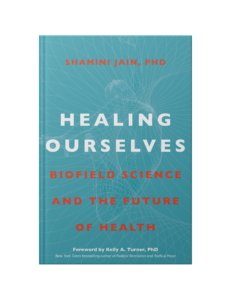
an image of a book

Learn More

Amazon | Barnes & Noble | IndieBound | Bookshop | Sounds True

Shamini Jain

Shamini Jain, PhD, is the founder and CEO of the Consciousness and Healing Initiative (CHI), a nonprofit collaborative that leads humanity to heal ourselves. Dr. Jain is an Ivy League-trained clinical psychologist and an award-winning research scientist in psychoneuroimmunology (PNI) and integrative medicine. She is a sought-after speaker and teacher in mind-body-spirit healing. Dr. Jain is also adjunct faculty at UC San Diego. For more, visit shaminijain.com.
Author photo © Namuun Bat

Also By Author

Shamini Jain: Healing Ourselves at This Time — T...

What is the future of health and healing? In this podcast, Tami Simon speaks with Dr. Shamini Jain about her vision of the medicine of tomorrow, where not only the physical aspects of who we are but also our emotions, energy, and spirit are all vital considerations in the prevention and treatment of illness. 

Tune in to this illuminating conversation with the author of the book, Healing Ourselves: Biofield Science and the Future of Health, for a glimpse ahead to an emerging, universal flourishing of humanity. Tami and Dr. Jain explore: the body as a garden, the field of psychoneuroimmunology and the link between mind and body, subtle energy and the biofield, the “benevolent challenge” facing humanity at this time, using vibration and sound to work with difficult emotions, energy healing and preventative care practices, a guided biofield vocal toning exercise, the movement toward “whole-person health” in an interconnected world, the neuroscience of social pain and empathy, extending healing to others, surrender and trust, giving ourselves permission to be everything that we want, and more.

Note: This episode originally aired on Sounds True One, where these special episodes of Insights at the Edge are available to watch live on video and with exclusive access to Q&As with our guests. Learn more at join.soundstrue.com.

Express Your Creativity to Jump-Start Vitality

Have you ever felt like you lost a part of yourself?

Sometimes it happens. Life changes, and we change with it. It could be a move, job change, marriage, kids, taking care of elders, or any sort of transition. Sometimes it’s not even a difficult transition that makes us lose a part of ourselves but a decision we make to keep on with some things and release the rest. And yet, we might regret leaving that part of us behind. Often, the part of ourselves we leave behind is a creative part of ourselves that we might think, in today’s world, is less important or less valued.

This certainly happened to me—for about fifteen years. Basically, I lost my voice. As much as I loved singing, for reasons I could not fully understand, I knew part of my path was to continue in my study of healing. Unfortunately, when I chose graduate school, I also decided there was no point in singing anymore if I was not “serious.” Not only did I relinquish my opportunity to prepare for a professional career in classical western opera singing—I simply stopped singing altogether. And by making that black-and-white decision, based more in perfectionism than in feeding my heart and soul, I lost a huge part of myself for more than fifteen years. Singing was a gift I was given to bring me back to my own creative bliss—but I had been blind to its purpose for most of my life. And a part of me literally felt like I had died.

I’ll bet many of you can relate. External circumstances seem to shift the tides of our lives so that sometimes we lose parts of ourselves society doesn’t necessarily directly reward. If we enjoyed art, dance, music, or other areas of creative expression when we were young, unless we pursued these passions as professional artists, we might have lost sight of them over the years. We often think we have to leave creative pursuits behind in our process of “adulting”—making money, providing for a family, and pursuing a career. However, losing that creative juice comes with real costs—we can end up losing our ability to innovate, our fluidity, and a great deal of our joy.

Thankfully, our creativity is never really lost. In my case, I found the joy of singing again spontaneously while singing to my kids when they were young. When they got a bit older, I decided to reclaim the fun of singing for myself. Out of the blue, I created a Guns N’ Roses cover band called Nuns N Moses. I searched for musicians and convinced them (all straight males) to dress as nuns while I dressed as Moses for part of the show, changing lyrics and singing songs from Moses’s perspective. It was hilarious fun while paying homage to one of my favorite childhood rock ‘n’ roll bands with excellent musicians. Soon after, I was asked to front an Iron Maiden tribute band called Up the Irons. The music was amazing, and the band was a hit, with thousands of fans and a busy gig schedule at the best venues in Southern California. I found myself blissfully singing my heart out—and I had more energy than I ever had in my life.

I share this personal story with you for two reasons. One is to remind you that the parts of you that you think are forgotten actually live on inside of you—particularly the creative parts of you. These are the parts that long for authentic expression, in whatever ways they are able to manifest. They do not die, and when we give them voice, we actually provide healing for ourselves—an ability to bring us to a greater sense of self-awareness, self expression, connection, and ultimately transcendence. The second reason is to challenge you to consider ways you can step out into a more authentic expression of yourself—even if it feels risky to you. The best thing you can do is to break the false idol of yourself. Creative expression gives you the tools to connect with yourself beyond your cultural and social conditioning and to connect with others in true heart and soul expression. Nothing can be more freeing and more healing.

PUTTING CREATIVITY INTO PRACTICE

Fostering Our Flow

How do we begin to jump-start our experience of creativity and its links to flow, improved mood, and vitality to augment our own deeper, more authentic expression of ourselves and our healing? Following is an easy guide:

First, recognize that you are a creative being. The more you identify yourself as a creator, the easier it will be for you to create in different settings, even at work. Even the scientific data suggest this.

Start simple. Remember that no one defines what is creative except you. Is there a particular creative activity that draws you to it? It does not matter whether you have prior experience with

  1. It does not need to be a specific art form, either (putting creative outfits together or improvising a meal without a recipe are examples). Pick something easy for you to engage in at least once a week for six weeks, and do something that you can easily fit into your day or week. (Singing in the car or dancing around the house for fifteen minutes a day counts!)

Go beyond judgment. Suspend your and others’ judgment, and move beyond your discomfort. Believe me, I know what it’s like when the kids beg you to stop singing in the car! You will encounter a whole slew of judgmental statements, most of them likely from yourself. As Nike loves to say, “Just Do It.” (In my case, when encountering my children’s complaints, I keep singing, but I do it more softly so as not to irritate their eardrums beyond belief.) When feeling uncomfortable, do it anyway and tap into the bodily, energetic feeling that you have when you are being creative. That will help you break through those negative self-judgments and clear those vrittis, or mind disturbances!

Observe, persist, and enjoy. Notice how you feel after engaging in your creative act. Be your own scientist. Explore how you feel after the first time, and then the second time, and so on. How did the rest of your day go after you allowed yourself some time for creativity? Keep at it, and even try your hand at something new. You might feel more comfortable working with an art form you have learned in the past. However, remember that your goal is not perfection—it is connecting with the energy of creativity. There is something to be said for examining an art form with “beginner’s mind.” Keep honing your creativity by focusing on both things you know and things you don’t know, and see what insights come to you as a result.

author photo

Shamini Jain, PhD, is the founder and CEO of the Consciousness and Healing Initiative (CHI), a nonprofit collaborative that leads humanity to heal ourselves. Dr. Jain is an Ivy League-trained clinical psychologist and an award-winning research scientist in psychoneuroimmunology (PNI) and integrative medicine. She is a sought-after speaker and teacher in mind-body-spirit healing. Dr. Jain is also adjunct faculty at UC San Diego. For more, visit shaminijain.com.

an image of a book

Learn More

Amazon | Barnes & Noble | IndieBound | Bookshop | Sounds True

The Biofield: The Missing Link Between Healing and Con...

Dr. Shamini Jain is a clinical psychologist, researcher, public speaker, and the founder of the nonprofit Consciousness and Healing Initiative. With Sounds True, she’s released the new book Healing Ourselves: Biofield Science and the Future of Health. In this episode of Insights at the Edge, Tami Simon has a conversation with Shamini about the interconnections between human consciousness, the biological world, and our ability to heal. Shamini explains “the biofield” and how it relates to both our physical and spiritual selves. She and Tami discuss already existing healing modalities that work with the biofield (such as Reiki and qigong), as well as recent scientific discoveries that support and expand those fields. Finally, Tami and Shamini talk about the essential step of surrendering to the healing process, the mystery and potential of the placebo effect, and our fundamental connection to all of life.  

You Might Also Enjoy

Frank Ostaseki: “I’m Allergic to the Notion of a G...

What truly matters when we face the end of life? After decades of sitting at the bedside of hundreds of dying people, Frank Ostaseski has distilled the deepest human concerns into two essential questions: Am I loved? Have I loved well?

This week on Insights at the Edge, Tami welcomes Frank Ostaseski—co-founder of America’s first Buddhist hospice, the Zen Hospice Project, founder of the Metta Institute, and author of The Five Invitations: Discovering What Death Can Teach Us About Living Fully. Frank brings extraordinary wisdom from his pioneering work in compassionate end-of-life care, along with profound personal insights from his own encounters with heart surgery, strokes, and the transformative vulnerability of being “on the other side of the sheets.”

Join Tami and Frank to explore:

  • The two essential questions that arise when facing death—and what they reveal about living fully now
  • Why emotional flexibility is the true condition for healing and transformation
  • How to meet our own fear and pain without abandoning ourselves or others
  • The practice of “allowing” as a path to both wisdom and compassion
  • What happens in the dying process: surrender, reconstitution, and coming home
  • Why Frank is allergic to the notion of a “good death”
  • The indestructible love that emerges when we keep our hearts open through pain
  • How to practice dying by paying attention to everyday endings

This conversation is for anyone grappling with loss, change, or the fundamental questions of existence—offering not prescriptive answers, but the profound medicine of honest presence and the recognition that our vulnerability itself is one of our most beautiful human qualities.

For more with Frank Ostaseski:

Year to Live Course (Spirit Rock Meditation Center)

Spirit of Service (Upaya Zen Center)

Awareness in Action: The Role of Love (Upaya Zen Center, Frank Ostaseski & Sharon Salzberg)

This conversation offers genuine transmission—not just concepts about awakening, but the palpable presence of realized teachers exploring the growing edge of spiritual understanding together. Originally aired on Sounds True One.

Steven Washington: “My Recovery Is Non-Negotiabl...

How do we remain committed to staying sober when grief strikes, when stress becomes overwhelming, or when shame threatens to pull us back into old patterns?

This week on Insights at the Edge, Tami Simon welcomes Steven Washington, a former professional Broadway dancer who has transformed his 23-year recovery journey into a powerful practice of embodied healing. Steven is the author of Recovering You: Soul Care and Mindful Movement for Overcoming Addiction and creator of the SWE Studio, an online community offering movement and meditation support for people in recovery.

In this deeply personal interview, Tami and Steven explore:

  • Why recovery must be “non-negotiable”—with no conditions attached, regardless of life’s challenges 
  • How shame operates as the linchpin of addiction and the healing power of sharing it with trusted others
  • The connection between sensitivity and addiction, and how to transform sensitivity from vulnerability into strength
  • Practical tools for creating a trigger plan that works for both small daily stressors and major life crises
  • How Qigong and embodied practices help regulate the nervous system and process emotions held in the body
  • The journey from inherited shame to self-compassion and authentic self-worth
  • Why asking for help—practiced with small things—prepares us for life’s biggest challenges
  • Developing a personal relationship with a higher power that feels authentic rather than inherited

If you’re navigating recovery, supporting someone who is, or seeking to understand the connection between embodiment and transformation, Steven offers both practical wisdom and profound compassion for the journey.

Note: This interview originally aired on Sounds True One, where these special episodes of Insights at the Edge are available to watch live on video and with exclusive access to Q&As with our guests. Learn more at https://www.join.soundstrue.com

Healing From The Inside Out: How Yoga Cultivates Emoti...

Finding mental peace can feel difficult when life keeps pulling your attention in a dozen directions. Your emotions may swing between high and low, and clarity can feel out of reach. Yoga offers more than physical postures, it offers a practice of slowing down, tuning in, and tending to what’s within. Whether you’re struggling with stress, feeling emotionally off balance, or simply needing space to breathe, yoga can support a deeper kind of healing that unfolds from the inside out.

For over 40 years, Sounds True has served as a trusted source for spiritual education and personal growth. We share practices that are rooted in authentic wisdom and designed for real, everyday lives. Our collection of digital courses, audio programs, and teachings from renowned guides such as Tara Brach, Eckhart Tolle, and Pema Chödrön reflect a living library of transformation, created to support your journey back to wholeness.

Key Takeaways:

  • Practice & Presence: Yoga offers tools to process emotions and calm the mind through movement, breath, and awareness.
  • Science & Soul: Evidence supports yoga’s ability to reduce stress while honoring its deeper spiritual roots in healing.
  • Sustainable Healing: Ongoing, compassionate practice encourages emotional resilience and lasting mental clarity.

How Yoga Supports Mental And Emotional Well-Being

Yoga’s influence goes far beyond the physical body. For many, it serves as an anchor through emotional storms and mental overwhelm. To understand how yoga for mental health can become part of your healing journey, let’s explore its core contributions:

A Holistic Practice That Meets You Where You Are

Yoga isn’t just movement, it’s a conversation with your inner world. It brings together the breath, body, and mind to create space for awareness, without pressure to perform or change. In that space, emotional patterns can soften, revealing clarity beneath the noise.

Scientific Support For Emotional And Mental Relief

Research continues to affirm what many practitioners intuitively feel. Regular yoga practice has been shown to reduce stress hormones, increase calming brain chemicals like GABA, and regulate the nervous system. This makes it a gentle, sustainable approach to both yoga and mental health.

Emotional Balance Begins With Compassionate Awareness

One of the most powerful aspects of yoga for emotional balance is its ability to foster self-compassion. When we step onto the mat with whatever emotions are present: anxiety, grief, joy, or numbness, yoga teaches us how to stay connected without judgment. Over time, this builds emotional resilience rooted in presence rather than resistance.

From Temporary Relief To Lasting Inner Stability

The effects of yoga can feel subtle at first, but they ripple outward. A consistent practice doesn’t just offer short-term calm; it strengthens your ability to self-regulate and respond, not react. This is how inner healing yoga supports transformation from within, one breath at a time.

Discover The Power Of Daily Meditation With Sounds True.

The Science And Spirit Of Yoga For Mental Health

Yoga’s unique power lies in its ability to bridge ancient wisdom with modern understanding. While it has spiritual roots that invite deep introspection, it also holds measurable benefits for mental health. To fully appreciate the role of yoga in emotional and psychological well-being, it helps to look at both perspectives side by side:

What Modern Research Reveals

Scientific studies continue to explore the mental health benefits of yoga. Results point to improved mood, reduced anxiety and depression, and enhanced emotional regulation. These outcomes support the growing use of yoga for mental health in therapeutic settings, including trauma recovery and stress management.

Why The Subtle Body Matters

In yogic philosophy, healing isn’t limited to the physical or even the psychological. The concept of prana, or life force, helps explain why movement and breath can shift emotional states. Practices that work with subtle energy including inner healing yoga, help release stored tension and clear emotional blockages.

Balancing Effort And Surrender

Yoga invites a delicate interplay between strength and softness. In doing so, it mirrors the healing process itself: part discipline, part letting go. This balance nurtures the experience of mental clarity through yoga, creating the conditions for stillness to arise naturally.

Explore Further With Embodied Resources

If you’re curious to deepen your connection to body and breath in a supported way, Sounds True offers a wide range of practices through yoga and movement. These digital programs are led by teachers who blend somatic wisdom with grounded guidance, meeting you right where you are.

Cultivating Emotional Balance Through Movement And Breath

Our emotions live in the body. They’re not just mental states but physical experiences, tightness in the chest, heaviness in the limbs, or fluttering in the gut. Yoga helps us move these feelings through instead of holding them in:

The Body As A Gateway To Emotional Awareness

Movement can unlock what words cannot. Through intentional poses, especially those that open the hips, heart, and spine, yoga supports the release of stored emotions. This is why yoga for emotional balance feels less like escape and more like a homecoming.

The Breath As Regulator And Messenger

Breathwork, or pranayama, is a powerful tool for emotional regulation. By consciously slowing the breath, we calm the nervous system and shift our state of mind. Over time, this supports both yoga and mental health by creating internal space for reflection rather than reaction.

Rhythmic Practice Builds Emotional Resilience

Consistency is key. Even short, daily practices help build the emotional strength needed to navigate life’s ups and downs. This steady rhythm reinforces the benefits of inner healing yoga, creating a supportive foundation for deeper personal work.

Supportive Tools For Emotional Healing

For those looking for gentle guidance, the yoga for your mood deck offers intuitive prompts and accessible poses to meet you where you are emotionally. It’s a helpful companion for days when you’re not sure how to begin but know you need something.

Build Relationships That Nourish And Sustain.

Accessing Mental Clarity Through Yogic Presence

Mental clarity often feels just out of reach in a noisy world. Yoga creates the internal conditions that allow clarity to surface, not by forcing it, but by slowing things down. When the body is calm and the breath is steady, the mind can begin to clear:

Slowing Down To See Clearly

Yoga encourages us to pause and notice. Whether you’re holding a posture or sitting in stillness, these moments of mindful presence quiet the mental chatter. This process is central to experiencing mental clarity through yoga, where insights arise not from thinking harder but from thinking less.

Meditation And Stillness As Deep Practices

While movement helps discharge tension, meditation helps us see beneath it. Even a few minutes of seated awareness can reveal thought patterns and emotional loops we didn’t realize were there. These practices are integral to both yoga for mental health and long-term emotional wellness.

The Restorative Power Of Rest

Rest is not a luxury, it’s essential for mental clarity and nervous system repair. Deep rest practices like Yoga Nidra offer profound restoration. For an accessible entry point, explore yoga nidra—the sleep yoga, which gently guides you into deep states of awareness without effort.

Clarity As A Byproduct, Not A Goal

Yoga doesn’t chase clarity. It invites you to create the right internal environment and let clarity arise in its own time. Over time, this approach nurtures both inner healing yoga and sustainable mental clarity rooted in presence.

Inner Healing Yoga As A Path To Wholeness

Healing is not always about fixing what’s broken. Often, it’s about remembering what has always been whole beneath the layers of stress, pain, and disconnection. Inner healing yoga invites this remembering through intentional practice and self-inquiry:

Creating A Safe Space Within

The mat becomes a mirror. Each posture, breath, and moment of stillness offers a chance to meet yourself with honesty and care. This safe internal space nurtures the emotional awareness essential for lasting transformation.

The Power Of Self-Compassion

Yoga teaches us that healing is not linear. There will be days when the mind is foggy, the body is tense, or emotions feel overwhelming. Returning to your practice anyway builds trust, in yourself, and in the process of yoga for emotional balance.

Integration Beyond The Mat

The most meaningful shifts often happen after practice, in how we speak to ourselves, how we move through relationships, and how we respond to life. This is the deeper work of yoga and mental health, where practice becomes a lived experience of wholeness.

An Ongoing Invitation To Go Deeper

Inner healing is not a destination. It’s a continuous invitation to be in relationship with yourself as you are right now. As your awareness grows, so does your capacity for mental clarity through yoga, clarity rooted in self-understanding, not perfection.

Expand Your Consciousness With Sounds True.

Final Thoughts

Yoga invites a return to ourselves. It doesn’t demand that we change who we are, but gently guides us to remember what already lives within us, clarity, calm, and connection. Whether you’re seeking stillness, release, or simply a moment to breathe, yoga offers the tools to support your healing from the inside out.

As you continue exploring the path of yoga for mental health, you may find that what once felt like emotional chaos begins to soften into something more spacious. With consistent practice, both yoga for emotional balance and inner healing yoga can become steady companions in your life. The clarity that arises is not forced but welcomed, cultivated through each breath, each pause, each mindful moment.

To deepen your experience, you might consider joining the global celebration of yoga through the international day of yoga offerings by Sounds True. These resources, created by trusted teachers and rooted in heart-centered wisdom, are here to support your personal journey, one that honors where you are and gently points toward where you’re going.

Read Also:

Frequently Asked Questions About Yoga For Mental Health

What type of yoga is best for mental health?

Gentle, breath-focused styles like Hatha, Yin, and Restorative Yoga are especially beneficial for mental health, as they calm the nervous system and promote inner stillness.

Can yoga replace therapy or medication for mental health conditions?

Yoga can be a powerful complement to therapy or medication, but it is not a substitute. Always consult a healthcare provider for individualized treatment plans.

How often should I practice yoga for mental health benefits?

Even 10 to 20 minutes daily can support mental and emotional wellness. Consistency matters more than intensity when it comes to cultivating inner balance.

Is it normal to feel emotional during or after yoga practice?

Yes, emotions can rise during yoga as physical movement and breathwork unlock stored tension. This is part of the body’s natural release and healing process.

Can beginners benefit from yoga for mental clarity and emotional healing?

Absolutely. No advanced skill is needed to start. Breath awareness, simple movements, and mindful rest can offer noticeable benefits, even for beginners.

What role does community play in yoga for mental health?

Practicing in community, whether in-person or online, can enhance feelings of support and connection. Shared practice helps reduce isolation and deepens healing.

How does yoga support nervous system regulation?

Yoga helps activate the parasympathetic nervous system through slow breathing and mindful movement, promoting a state of rest, recovery, and emotional stability.

Michelle Cassandra Johnson is an author, activist, spiritual teacher, racial equity consultant, and intuitive healer. She is the author of six books, including Skill in Action and Finding Refuge. Amy Burtaine is a leadership coach and racial equity trainer. With Robin DiAngelo, she is the coauthor of The Facilitator’s Guide for White Affinity Groups. For more, visit https://www.michellecjohnson.com/wisdom-of-the-hive.

>
Share via
Copy link
Powered by Social Snap