What does it take to “Be the change you want to see in the world”?

    —
January 26, 2024

Excerpted from Becoming Gandhi: My Experiment Living the Mahatma’s 6 Moral Truths in Immoral Times by Perry Garfinkel.

Let the Journey Begin

By reading this preface, you have just joined what will hopefully be the experiment of a lifetime that will change both of our lives.

Let me set the ground rules, parameters, frameworks, timelines, caveats, excuses, permissions, and other details that will help you navigate your way—if not to be Gandhi, then to become a person who leads a more ethical, principled, spiritually and morally based, truth-full life.

As you will read in chapter 1, I first thought to undertake this effort more than a decade ago. It took me another twelve years to build up the confidence, belief in my commitment, and, frankly, the funding to actually begin this arduous journey, both inner and outer, including travel to three countries plus my own US. Little did I know how much it would change me, how many miles I would travel, how many inspirational people I would meet, and how many disappointments I would encounter, both in the world and in myself.

I began to take it seriously in the summer of 2019. That was when I started finding and  contacting knowledgeable sources in each country. As a dogged reporter who prides himself in finding the email and phone number for anyone anywhere in the world, that deep dive, which necessarily required a lot of reading and googling, was a relatively easy and very enjoyable and informative exercise. You may also want to research anything additional to what I write here and experiment with your own ways to follow the six principles. I can’t speak for Gandhi, but you have my wholehearted permission and encouragement to think outside the box and off this page.

The Big Goal here was to see if, in the face of a sociocultural climate that appears bereft of moral integrity, one could follow Gandhi’s moral compass, on the one hand, and on the other, to travel to countries where he spent considerable time to see how much had changed in the years since he left them. In other words, did he leave an enduring footprint that others followed or were Gandhi’s tracks swept away and forgotten by time and human nature? In these times of questionable ethical values, of increased violence and rampant lying, I was prepared to admit such evidence might be hard to find. In fact, one too-current example of the failure of the nonviolent movement, which was one of Gandhi’s primary pillars, is occurring as I’m writing this: CNN is reporting that thirty-nine mass shootings have taken place in the United States in the first three weeks of 2023 alone, killing more than sixty people, per the Gun Violence Archives.

I knew the hard part of this goal would be living these principles day in and day out on a personal level. There would be a lot of inner work, mental adjustments, a veritable paradigmatic shift of attitude. I would have to change my mind in the most fundamental ways. Change my habits, modes of thinking, daily actions.

The ground rules were simple: try to rigorously follow the six principles on a daily basis, keeping them in mind through the day, whether hanging out with friends and family, alone in my apartment, or out there in the world. But also to give myself some slack. If I “fell off the wagon,” I would forgive myself quickly and get right back on it. The latter would happen with frequency, as you will read. But I realized very soon that once engaged in this experiment, even when I fell off, there would be no turning back. Once the veil is lifted, it’s hard not to see the world for what it is, and see yourself for who you are, who you are not, and who you aspire to be.

People started wondering how long this experiment would last and asking me when or if I would drop vegetarianism and return to eating meat as soon as it ended. I had planned to dedicate one full year to this project. It expanded to some eighteen months of strict adherence 

to all of the principles, and even some that Gandhi didn’t consider in the course of things. I admit I slacked after that but, as I said, once you know which way the compass is pointing, you can’t completely turn back; you always return to your true north. You find the balance that suits you best, or at least better than before you started.

I frame this journey and this book around the six principles. Some sources list up to eleven Gandhi principles. I chose only six; already you can call me lazy.

Truth. In practice, truth is simply telling the truth, but Gandhi meant it to mean more. He said, “God is Truth,” later changing it to “Truth is God.” He coined the term satyagraha—loosely translated as “insistence on and holding firm to truth”—as a form of nonviolent resistance. I take this on, first focusing on practicing truth in thoughts, words, and actions, with particular attention to lies I tell myself. I look at how society views truth now.

Nonviolence. Although Gandhi was not the originator of nonviolence, he was the first to apply it as a strategy to move the dial in the direction of justice, as a peaceful weapon to protest social wrongdoings. His motto: “An eye for an eye makes the whole world blind.” Taking it from the political to the personal, I look at how we all act out psychological violence—in passive-aggressive behaviors, in road rage, in clenched jaws, in couched (and not-so-couched) language—that sabotages our best interests. I myself am guilty: I was once a featured guest on The Phil Donahue Show, speaking about my own passive-aggressive behavior in my previous marriage.

Vegetarianism. Vegetarianism is deeply ingrained in Hindu and Jain traditions, the setting in which Gandhi was raised. In his London years as a law student, he embraced it more seriously to not only satisfy the requirements of the body and his religious beliefs but also to save money by not buying expensive meats. His book The Moral Basis of Vegetarianism, along with articles he wrote for the London Vegetarian Society’s publication, became my personal diet book. I was a meat-and-potatoes kind of kid, just like my father. I became a macrobiotic many years ago, had defaulted to meat in recent years, but an Ayurvedic diet I went on last fall convinced me I need to clean up my eating habits. Don’t we all?

Simplicity. Giving up unnecessary spending is the simple maxim Gandhi had in mind, and because this concept flies in the face of conspicuous consumers on spending sprees in shopping malls, it also has ramifications for our gluttonous nature, which thinks that more of anything automatically provides more satisfaction. But Gandhi also had a political motive in his so-called Swadeshi movement: by making their own clothes using a spinning wheel (charkha), Indians would deal an economic blow to the British establishment in India. These days consumers boycott various brands and stores to protest their company policy, a Gandhian spin. The contemporary “voluntary simplicity movement” draws directly from this Gandhian principle. I will closely examine my spending patterns and make budget slashes. Gandhi called it “reducing himself to zero.”

Faith. Gandhi meant belief in a higher power, no matter what religion. He wrote, “Mine is a broad faith which does not oppose Christians . . . not even the most fanatical Mussalman. I refuse to abuse a man for his fanatical deeds, because I try to see them from his point of view.” It’s the ability to see things from the point of view of someone from another faith that tests the faith of mankind. How are we doing with that? Not so good. The majority of wars in the world are religious wars. My challenge will be to find some balance between my practice of Buddhism, the religion of no God, and Judaism, the religion that invented the One God. I will test the boundaries of my acceptance of faiths I don’t believe in.

Celibacy. Called brahmacharya in Hindi, sexual abstinence was a spiritual path to achieving purity, according to Gandhi, who took the vow of chastity at the age of thirty-eight. Some people question whether Gandhi himself actually adhered to this, with stories and allegations he slept next to teenage girls to test his restraint. Celibacy is not for everyone. Is it for me? I will endeavor to find out, keeping copious notes on my fallings in and out. With my luck, the woman of my dreams will walk into my life and fall in love with me. What will I do . . . or, more precisely, not do?

I never intended this book to be categorized in the how-to or self help genre. I think or hope you can help yourself without my telling you how. Nonetheless, as I made my way around the world, around my mind, and finally around this book, I realized it would be helpful to at least sum up each chapter with what I learned, some tips for your (and my own) benefit. I call these end-of-chapter sections “How to Gandhi.”

With these guidelines and to-dos and with no further ado, here we go. Next stop: becoming the change.
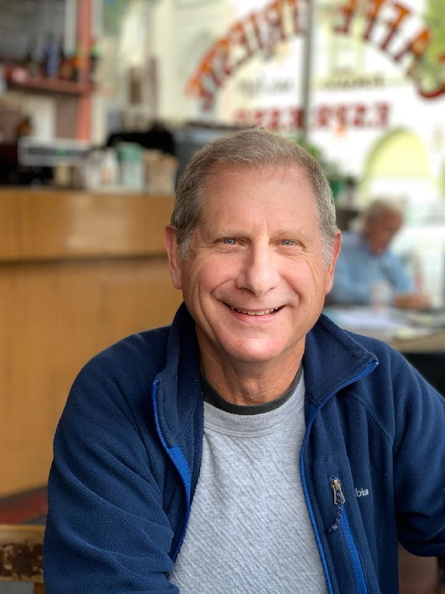
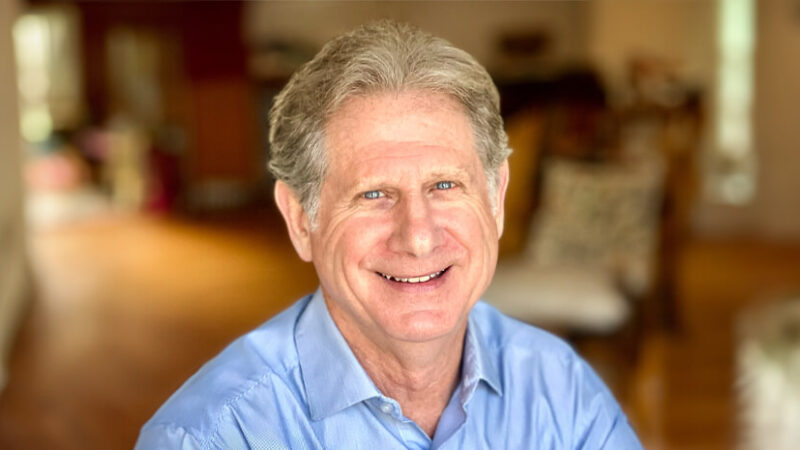
Perry Garfinkel is a veteran journalist, editor, frequent speaker, and author of the bestselling Buddha or Bust. He has contributed to many sections of the New York Times since 1986 and has written for National Geographic magazine, AARP The Magazine, the Huffington Post, the LA Times, and others. He has appeared on CNN and CBS This Morning. He is a frequent guest on WCBS-NY radio’s Health & Well-Being Report.
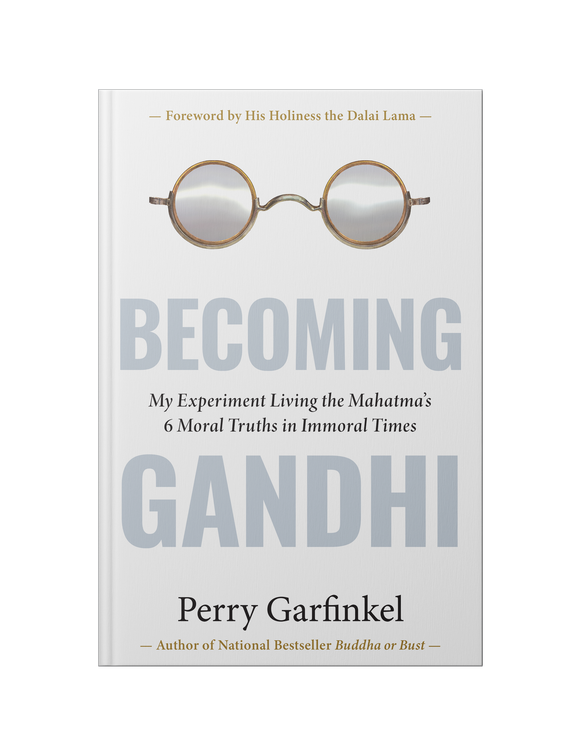
Perry Garfinkel

Perry Garfinkel is a veteran journalist, editor, frequent speaker, and author of the bestselling Buddha or Bust. He has contributed to many sections of the New York Times since 1986 and has written for National Geographic magazine, the Los Angeles Times, the Huffington Post, and others. He has appeared on CNN and CBS This Morning. He is a frequent guest on WCBS-NY radio’s Health & Well-Being Report.

Author photo © Mikkel Aaland

Also By Author

Perry Garfinkel: Experimenting with Becoming Gandhi

In a confessional reflection on writing his new book, Becoming Gandhi, acclaimed journalist and bestselling author Perry Garfinkel says, “It was so difficult I almost gave up twice. I thought, ‘I can’t write this book. It’s too big a subject. Who am I to try to become Gandhi?’” Garfinkel persevered, and in this podcast Tami Simon speaks with him about what he discovered along the journey—and how practicing (not perfecting) six universal principles of the Mahatma can transform each one of us. 

Tune in to this highly aspirational yet very down-to-earth conversation on the poignance of the human condition and the elixir of laughter; the Tao of Gandhi; satyagraha, an insistence on and holding firm to the truth; considering “how to Gandhi” a situation you’re faced with; the notion of “good enough”; nonviolence in thought, word, and deed; the connection between words and feelings, and the step-by-step process of personal transformation; simplicity; faith as the driver of our moral compass; celibacy and making love; Gandhi’s life as his message—and making peace with his imperfections; and more.

You Might Also Enjoy

Jasper Young Bear: “Prophecies for This Time: Wh...

Something is shifting in the world—and the Indigenous peoples of Turtle Island have seen it coming for generations.

This week, Tami Simon speaks with Jasper Young Bear—wisdom keeper, storyteller, founder of the Medicine Lodge Confederacy, and member of the Mandan, Hidatsa, and Arikara Nation—about the sacred oral teachings he was entrusted to carry, and why he has chosen this urgent moment to share them with the world. Jasper is the featured teacher in a new medicine film and four-part audio series, The Creation Story, available to watch and listen to for free at thecreationstory.co.

Join Tami and Jasper to explore:

  • The Seventh Generation prophecy—and why we are living inside its fulfillment right now
  • The Prophecy of the Eagle and the Condor, and what the reunification of North and South means for the human family
  • Why the greatest preparation for coming change is spiritual and emotional—not physical
  • The sacred laws woven into Indigenous creation stories, and what whole-to-part perception makes possible
  • The importance of forgiving the unforgivable—and how it opens the frequency of true freedom
  • Ceremony as living technology: sweat lodges, sacred instruments, and star knowledge as tools of consciousness
  • Why Jasper believes love—not systems, not ideology—is ultimately what will heal the human family

This interview is unlike most. Tami listens more than she asks. And what Jasper Young Bear offers is truly a transmission: a vision of where we are, where we’re headed, and what each of us can do to become a worthy ancestor for the generations yet to come.

Watch and listen to The Creation Story for free at thecreationstory.co.

This conversation offers genuine transmission—not just concepts about awakening, but the palpable presence of realized teachers exploring the growing edge of spiritual understanding together. Originally aired on Sounds True One.

Andrew Holecek: Stop, Drop, and Be Held in the Dark

What if the most transformative place you could go isn’t a retreat center or a therapist’s office—but complete and total darkness?

This week, Tami Simon speaks with Andrew Holecek—interdisciplinary scholar, longtime practitioner of Tibetan Buddhism, and author of the new Sounds True book Total Eclipse of the Mind: Unleashing the Power of Darkness for Creativity, Healing, and Transformation—about the practice of dark retreat: full immersion in sealed, lightless environments used by yogis for centuries to accelerate inner transformation.

Holecek calls it the single most transformative practice of his fifty years of meditation, psychedelic exploration, and three-year Tibetan retreat—and in this interview, he explains why.

Join Tami and Andrew to explore:

  • What actually happens to the mind in extended darkness—and the neurological science behind why it’s so transformative
  • The descent of the mind through conscious, subconscious, and collective unconscious layers—and what waits at the bottom
  • Dark retreat as a “sober psychedelic”: how the brain generates its own endogenous DMT in extended darkness
  • The practice of enantiodromia—when extreme contraction suddenly flips into extraordinary openness
  • How to work with panic, trauma, and unwanted experience using the “reverse meditation” principle: feel it, but don’t feed it
  • Why appearances don’t matter in the dark—and why so many people emerge in tears, feeling safe and held for the first time
  • The four-step process for integrating darkness into daily life, from sleep masks to dedicated dark rooms

This interview was recorded with both Tami and Andrew wearing blackout masks—making it one of the most immersive listening experiences in Insights at the Edge history.

Listen now and discover what’s been waiting in the dark. →

This conversation offers genuine transmission—not just concepts about awakening, but the palpable presence of realized teachers exploring the growing edge of spiritual understanding together. Originally aired on Sounds True One.

This episode is sponsored by Omega Institute, a global gathering hub for lifelong learning and spiritual exploration. Located in upstate New York’s beautiful Hudson Valley, Omega offers weekend workshops, special events, rest and rejuvenation retreats, professional trainings, online learning, and more. Discover what calls to you at eomega.org/true.

Serene older woman in nature with hand on heart

What does it mean to listen to the soul when it feels most exposed? In Marion Woodman’s teachings, moments of vulnerability are not interruptions but invitations to pay attention. Soul vulnerability often shows up through the body, through emotion, or through a quiet sense that something within us is asking to be heard. When we stay present, these experiences begin to reveal deeper meaning through the Jungian feminine, aging wisdom, and Jungian psychology depth.

For decades, we have been devoted to sharing the living wisdom of transformative teachers, preserving their voices in ways that remain true to their depth and presence. Our work brings forward teachings from leading spiritual visionaries, offering guidance that supports inner growth, emotional honesty, and a more embodied way of being .

Here, we look at Marion Woodman on the soul’s vulnerability and how listening to our deepest wisdom can guide a more grounded and aware life.

Key Takeaways:

  • Embodied Wisdom: Soul vulnerability reveals insight through the body, emotions, and inner experience.
  • Feminine Awareness: The Jungian feminine supports deeper listening, intuition, and connection to the psyche.
  • Aging Insight: Aging wisdom deepens reflection and helps integrate life experiences with greater clarity.

Discover the Hidden Power of Daily Meditation

Marion Woodman on Soul Vulnerability, Jungian Feminine, Aging Wisdom, and Jungian Psychology Depth

What does it mean to truly listen to the soul, especially in moments when we feel most exposed or uncertain? In the teachings of Marion Woodman, soul vulnerability is not something to avoid or overcome. It is a vital expression of the psyche asking for our attention. At Sounds True, we have long been devoted to sharing living wisdom in the authentic voices of transformative teachers, preserving insights that invite us into deeper presence and self-understanding. Woodman’s work within Jungian psychology offers a compassionate and embodied path toward this kind of listening. She reminds us that the Jungian feminine lives not in abstraction but in the body, in feeling, and in the rhythms of lived experience. As we grow and change, aging wisdom begins to shape how we meet our vulnerability. Rather than turning away, we are invited to stay, to sense, and to trust that something meaningful is unfolding within us.

Understanding Soul Vulnerability Through Jungian Feminine, Aging Wisdom, and Jungian Psychology Depth

Soul vulnerability often appears at the edges of our comfort. It may arise through loss, illness, transition, or moments when our usual ways of coping no longer hold. Within Jungian psychology, these moments are not seen as failures. They are invitations into a deeper relationship with the psyche.

Soul Vulnerability as an Opening to the Jungian Feminine

The Jungian feminine speaks in a language that is often quiet and symbolic. It is present in dreams, in bodily sensations, and in the subtle shifts of emotion that move through us. When we allow ourselves to experience soul vulnerability, we begin to soften the barriers that keep us disconnected from this inner voice. Woodman taught that the body is not separate from the psyche. It carries memory, truth, and intelligence. When we listen closely, we begin to recognize how the Jungian feminine guides us toward wholeness through feeling and presence rather than force or control.

Aging Wisdom and the Deepening of Jungian Psychology Depth

With time, our relationship to vulnerability changes. Aging wisdom brings perspective, allowing us to see how earlier experiences have shaped our inner life. Within Jungian psychology, this is part of the individuation process, a gradual unfolding of the self. Soul vulnerability becomes less overwhelming and more meaningful. We begin to trust that even difficult experiences carry insight. This trust does not remove pain, but it creates space for reflection and integration.

Soul Vulnerability and the Jungian Feminine in Aging Wisdom and Jungian Psychology Depth

As these elements come together, we begin to sense a different way of being with ourselves. There is less urgency to fix and more willingness to understand.

The Body as a Guide in Soul Vulnerability

Woodman’s work consistently returns to the body as a source of wisdom. Physical sensations, fatigue, or tension can reflect deeper emotional truths. When we approach these experiences with curiosity, we open a pathway into soul vulnerability. The Jungian feminine supports this process by inviting us to feel rather than analyze. Aging wisdom allows us to recognize patterns and respond with greater care. Over time, we learn that the body is not an obstacle but a guide.

Integrating Experience Through Jungian Psychology Depth

Integration within Jungian psychology depth involves holding complexity. We are not asked to eliminate contradiction but to remain present with it. Soul vulnerability allows us to acknowledge both strength and fragility. The Jungian feminine encourages us to stay connected to our inner experience, while aging wisdom reminds us that understanding unfolds gradually. This integration creates a sense of groundedness that supports authentic living.

Exploring Soul Vulnerability, Jungian Feminine, Aging Wisdom, and Jungian Psychology Depth

There is a natural rhythm to inner work that cannot be rushed. Woodman’s teachings invite us to honor that rhythm and to trust the unfolding process of the psyche.

The Role of Relationship in Soul Vulnerability

Relationships often bring our vulnerability into focus. They reflect aspects of ourselves that may remain hidden when we are alone. Through connection, we encounter both our capacity for love and our fears of being seen. The Jungian feminine encourages openness in these moments, while aging wisdom helps us respond with patience and understanding. Within Jungian psychology, depth and relationships are understood as essential to growth, offering mirrors that reveal where healing is needed.

Trusting the Unfolding of the Psyche

The psyche moves in cycles rather than straight lines. There are times of clarity and times of uncertainty. Soul vulnerability is part of this movement. The Jungian feminine invites us to remain present with what is emerging, even when it feels unclear. Aging wisdom supports a longer view, helping us recognize that meaning often appears over time. Within Jungian psychology, this unfolding is part of becoming more fully ourselves.

Learn How your Mind Really Works with Sounds True

The Jungian Feminine, Soul Vulnerability, Aging Wisdom, and Jungian Psychology Depth in Practice

Bringing these insights into daily life can begin with small, intentional shifts in attention. We do not need to change everything at once. We can begin by listening more closely.

  • Take time for quiet reflection each day, allowing space for inner awareness to arise naturally
  • Notice bodily sensations without judgment, recognizing them as expressions of the psyche
  • Record dreams or images that stay with you, honoring their symbolic meaning
  • Engage in creative practices that allow feeling and imagination to take form
  • Reflect on life experiences and how they have contributed to your growing aging wisdom

These practices are gentle invitations. They support a relationship with soul vulnerability that is rooted in care rather than pressure. Over time, they help cultivate a deeper connection to the Jungian feminine and the insights of Jungian psychology depth.

Aging Wisdom, Soul Vulnerability, Jungian Feminine, and Jungian Psychology Depth in Inner Work

Inner work asks for honesty and patience. It is not always comfortable, yet it is deeply meaningful. Aging wisdom brings a willingness to reflect rather than react. Soul vulnerability becomes a guide, pointing toward areas that call for attention. The Jungian feminine supports a compassionate approach, one that honors both the body and the emotions that arise. Within the depth of Jungian psychology, this work is essential to individuation. It invites us to engage with unconscious material and bring it into awareness. As we do so, we begin to experience a sense of coherence within ourselves. We are no longer divided between what we show and what we hide. Instead, we move toward a more integrated way of being.

Soul Vulnerability and Aging Wisdom Through the Lens of Jungian Feminine and Jungian Psychology Depth

As we continue to listen to the soul, vulnerability begins to feel less threatening. It becomes a source of guidance. Aging wisdom allows us to recognize patterns and approach them with greater openness. The Jungian feminine deepens our connection to feeling and intuition, helping us navigate the complexities of inner life. Within Jungian psychology, this transformation reflects a growing relationship with the self. Soul vulnerability is no longer something to resist. It is something to honor.

Integrating Soul Vulnerability, Jungian Feminine, Aging Wisdom, and Jungian Psychology Depth

Integration is a living process that unfolds over time. It asks for attention, patience, and a willingness to remain open. Soul vulnerability remains at the center, inviting us to stay connected to our experience. The Jungian feminine offers a way of understanding the body, emotion, and imagination as sources of wisdom. Aging wisdom deepens our capacity to reflect and integrate what we have lived. Within Jungian psychology depth, this movement toward wholeness is ongoing. As we continue to listen, we begin to sense a quiet alignment within ourselves. It is not something we force. It emerges through presence, through care, and through a growing trust in the intelligence of the soul.

Awaken Your Inner Healing Power with Guided Practices by Sounds True

Final Thoughts

Soul vulnerability invites us to stay present with our inner experience, even when it feels uncertain. Through the lens of the Jungian feminine, aging wisdom, and Jungian psychology depth, we begin to recognize this vulnerability as a source of insight rather than something to overcome.

Over time, this way of listening deepens our connection to ourselves, shaping a more grounded and attentive way of being.

Frequently Asked Questions About Marion Woodman and Soul Vulnerability

What is Marion Woodman best known for in spiritual psychology?

Marion Woodman is known for her work in analytical psychology, particularly her focus on embodiment, the feminine psyche, and the relationship between psyche and soma.

How does Marion Woodman define the soul in her teachings?

She often describes the soul as a living presence expressed through the body, dreams, and emotions rather than something abstract or separate from daily life.

What role does the body play in Jungian psychology depth?

The body is seen as an essential messenger of the unconscious, offering signals that reflect deeper psychological and emotional realities.

How is the Jungian feminine different from traditional ideas of femininity?

The Jungian feminine refers to an archetypal energy present in all people, emphasizing receptivity, intuition, and connection to inner life rather than gender roles.

Why is aging wisdom important in inner development?

Aging wisdom brings perspective, helping individuals reflect on life experiences and integrate lessons that support emotional and spiritual maturity.

How can someone begin studying Jungian psychology depth?

Many begin through books, guided courses, therapy, or lectures that introduce core concepts like archetypes, dreams, and the unconscious.

What makes Marion Woodman’s teachings relevant today?

Her emphasis on embodiment and emotional honesty resonates in a time when many feel disconnected from their inner lives and physical experience.

Can soul vulnerability support creative expression?

Yes, being open to vulnerability often allows deeper emotional material to surface, which can enrich creative practices like writing, art, or movement.

How do dreams relate to soul vulnerability?

Dreams can reveal hidden emotions and symbolic messages, offering insight into areas where the psyche seeks attention or healing.

Is Jungian psychology’s depth connected to spiritual practice?

While rooted in psychology, it often intersects with spirituality by addressing meaning, purpose, and the experience of the inner self.

Michelle Cassandra Johnson is an author, activist, spiritual teacher, racial equity consultant, and intuitive healer. She is the author of six books, including Skill in Action and Finding Refuge. Amy Burtaine is a leadership coach and racial equity trainer. With Robin DiAngelo, she is the coauthor of The Facilitator’s Guide for White Affinity Groups. For more, visit https://www.michellecjohnson.com/wisdom-of-the-hive.

Leave a Reply

Your email address will not be published. Required fields are marked *