
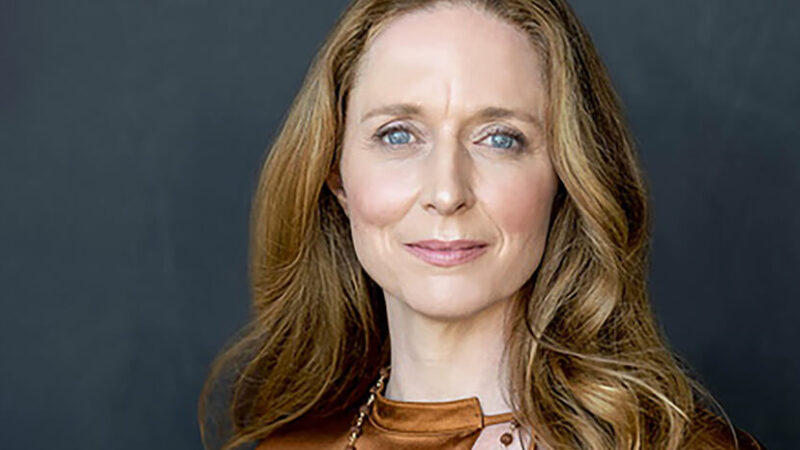
Caverly Morgan

Caverly Morgan was named one of 2025's powerful women of the mindfulness movement, Caverly Morgan is a spiritual teacher, nonprofit founder, speaker, and writer whose practice began in 1995 and has included eight years of training in a silent Zen monastery. She is the author of “The Heart of Who We Are: Realizing Freedom Together” as well as “A Kids Book About Mindfulness.” Caverly is the founder of Peace in Schools, a nonprofit that created the nation’s first for-credit mindfulness class in public high schools. She is also the founder of Realizing Freedom Together, a nonprofit organization dedicated to making practices that lead to liberation for all, accessible to all. Caverly leads meditation retreats, workshops, and online classes internationally. Learn more at caverlymorgan.org.

Kristin Neff

Dr. Kristin Neff is an Associate Professor of Educational Psychology at the University of Texas at Austin. She is a pioneer in the field of self-compassion research, conducting the first empirical studies on self-compassion more than twenty years ago. She has been recognized as one of the most influential researchers in psychology worldwide. Kristin runs the Self-Compassion Community, an online learning platform where people can learn the skill of self-compassion with the help of others. She is author of the bestselling books Self-Compassion and Fierce Self-Compassion. Along with her colleague Chris Germer, she developed the empirically-supported Mindful Self-Compassion program and co-founded the Center for Mindful Self-Compassion. They co-wrote the best-selling “The Mindful Self-Compassion Workbook” and have a new book called “Mindful Self-Compassion for Burnout” coming out in Fall 2024. For more info go to self-compassion.org.

Also By Author

Kristin Neff & Caverly Morgan: Self-Compassion as...

Can the simple act of being kind to yourself actually be a doorway to awakening?

In this special episode of Insights at the Edge, Tami Simon brings together two remarkable teachers whose friendship has sparked a revolutionary approach to inner transformation. Kristin Neff—the researcher who first measured self-compassion and author of Fierce Self-Compassion—joins Caverly Morgan, a meditation teacher and former Zen monk, to explore how self-compassion practices can become what they call “a lifeboat” to our deepest nature.

Together, they reveal why self-compassion isn’t just a psychological tool for feeling better—it’s a direct path to recognizing who we really are beyond our limited sense of self.

In this interview, Tami, Kristin, and Caverly explore:

  • Why every moment of self-compassion is a moment of “letting go of identification with the small, separate, limited self”
  • The difference between witnessing awareness and embodied loving awareness—and why it matters
  • How gender conditioning shapes our relationship to both compassion and awakening practices
  • The power of “relational dharma” and why we sometimes need another person to help us access self-compassion
  • A guided practice for moving from suffering into the “stance-less stance” of presence

If you’ve practiced self-compassion but sensed there’s something deeper available, or if awakening teachings have felt too abstract or disembodied, this conversation offers a bridge between heart and awareness that could transform your practice.

This conversation offers genuine transmission—not just concepts about awakening, but the palpable presence of realized teachers exploring the growing edge of spiritual understanding together. Originally aired on Sounds True One.
Caverly Morgan: The Heart of Who We Are

When Caverly Morgan reentered society after eight years as a Zen monk, she was confronted with a question many of us are asking these days: Considering the enormity of the problems before us, how can one individual’s spiritual practice make a tangible difference in our world? 

In this podcast, Tami Simon speaks with Caverly about her new book, The Heart of Who We Are, and the connection between self-realization and collective transformation. Tune in as they explore these topics and more: the difference between the absolute and the relative; introducing teens to inquiry practice; self-improvement vs. self-realization; the core experience of who we are in our depths; the power of community; meeting our deepest needs; “changing costumes within the dance of suffering”; connecting with others “essence to essence”; broadening public access to contemplative practices; escaping the trap of perfectionism; letting go of our conditioning, individually and collectively; egoic behaviors versus “acts of being.”

This episode first aired live and on video on Sounds True One. To watch Insights at the Edge episodes live and on video, and to access additional bonus Q&A, please visit join.soundstrue.com to learn more.

You Might Also Enjoy

Shinzen Young’s Algorithmic Approach to Mindfuln...

Meditation can sometimes feel mysterious, but Shinzen Young offers a practical way to see it differently. Through his systematic approach to mindfulness, he shows how thoughts, emotions, and sensations can be observed with greater clarity, helping people untangle habitual patterns and move toward a deeper sense of freedom.

At Sounds True, we have spent more than 40 years bringing the authentic teachings of respected wisdom teachers to life through digital courses, audio programs, and podcasts. Shinzen Young’s work reflects our commitment to making transformative wisdom both accessible and applicable to everyday life.

Here, we cover his algorithmic approach to mindfulness, how meditation works, the science of enlightenment, and the core principles of unified mindfulness.

Key Takeaways:

  • Algorithmic Mindfulness: Learn how Shinzen Young uses a mindfulness algorithm to make meditation more systematic, observable, and accessible.
  • Core Practice Skills: Sensory clarity, concentration, and equanimity work together to build a more balanced and present relationship with whatever life brings.
  • Everyday Application: See how unified mindfulness can be integrated into daily life to reduce reactivity and support greater emotional freedom.

Center Yourself With Meditative Teachings by Sounds True

Shinzen Young and the Science of Enlightenment

Shinzen Young’s path to mindfulness teaching began with a PhD program in Buddhist Studies at the University of Wisconsin. He later traveled to Asia and completed training across three Buddhist traditions: Vajrayana, Zen, and Vipassana. That cross-tradition depth became the foundation for his well-known interactive, algorithmic approach to mindfulness, a system designed for use in pain management, recovery support, and addition to psychotherapy.

Rather than presenting enlightenment as something distant or abstract, Shinzen invites practitioners to observe how suffering is created moment by moment. Through careful attention, people begin to identify the habits, reactions, and mental patterns that keep them feeling stuck. As awareness deepens, those patterns lose their grip.

Much of this inquiry lives at the heart of the teachings and programs we carry in our Meditation & Mindfulness collection, where we gather practical guidance for cultivating presence and self-awareness across many traditions.

How Meditation Works According to Shinzen Young

One of the central questions Shinzen addresses is how meditation works. For many people, the practice seems simple on the surface, yet its effects can feel hard to explain. His framework helps make the process more understandable.

According to his approach, meditation trains awareness to recognize experience more clearly. Thoughts, emotions, and physical sensations continue to arise, but practitioners learn to observe them without becoming immediately entangled. This shift creates space between an experience and the reaction that often follows.

Shinzen has shared many of these ideas through conversations on our Insights at the Edge Podcast, where wisdom teachers break down the mechanics of mindfulness in ways that feel grounded, lived, and real.

What the Algorithm Does

The word “algorithm” can sound technical, but Shinzen uses it to mean something very human: a clear, repeatable process for working with experience. Just as a recipe breaks cooking into steps, his mindfulness algorithm breaks awareness down into observable parts that anyone can practice.

Here is a practical example: someone sits with a wave of anxiety. Rather than labeling it broadly as “stress,” Shinzen’s system guides them to notice where the feeling lives in the body, whether mental imagery is attached to it, and what internal dialogue surrounds it. That level of precision transforms an overwhelming experience into something workable. 

Awaken Something Greater Within You. Find Teachings that Speak to You With Sounds True.

Sensory Clarity, Concentration, and Equanimity as Core Mindfulness Skills

At the heart of Shinzen Young’s system are three foundational skills. As they develop, many practitioners find they become less reactive and more able to respond skillfully to life’s challenges. Our Online Courses bring together structured study with teachers who have devoted their lives to this kind of work, making these skills reachable no matter where someone is on their path.

Sensory Clarity

Sensory clarity is the ability to distinguish the elements of experience as they arise. A practitioner learning to separate a physical tension in the chest from the mental story attached to it is exercising sensory clarity directly. That distinction alone can reduce the sense of being overwhelmed by what might otherwise feel like one undifferentiated wave of distress.

Concentration

Concentration is the capacity to direct and sustain attention. This skill allows practitioners to stay present with experience rather than drifting into mental commentary. A meditator who keeps returning gently to a breath sensation, again and again, is building this capacity in real time.

Equanimity

Equanimity is the ability to allow experiences to come and go without resistance. This does not mean becoming passive or indifferent. It is a quality of openness that can be felt when someone sits with discomfort without needing to fix or escape it immediately. A practitioner who meets an uncomfortable emotion with steadiness rather than reactivity is practicing equanimity in action.

Applying Unified Mindfulness in Everyday Life

One of the most compelling aspects of Shinzen’s work is how applicable it is beyond the meditation cushion. The principles of unified mindfulness can be practiced during conversations, in professional settings, during family interactions, and in moments of everyday stress.

Mindfulness in Difficult Conversations

A difficult conversation is one of the richest places to practice. Rather than reacting from old patterns, unified mindfulness offers a way to observe emotional reactions as they arise, noticing where tension shows up in the body, what thoughts are running in the background, and what the urge to respond feels like before acting on it. That quality of presence makes a person more capable of navigating it with care.

Stress as a Practice Ground

Stressful situations are not obstacles to mindfulness. They are where the practice becomes real. When pressure rises, unified mindfulness encourages practitioners to stay with the sensations of stress rather than suppressing them. A deadline at work, a long commute, or an unexpected setback each becomes a chance to strengthen equanimity. 

Awareness in Ordinary Moments

Even simple daily moments, like washing dishes, walking outside, or waiting in line, hold real value as mindfulness practice. When attention is brought to the sensory experience of an ordinary activity, the mind has a chance to settle and clarify. Many people who practice this way begin to notice patterns they could not previously see, and reactions that once felt automatic start to reveal a little more space.

The breadth of teachers we bring together at Sounds True reflects how many different ways there are into the same essential waking up. From Shinzen Young’s algorithmic approach to teachers like Rupert Spira, who draws from Advaita Vedanta and non-duality teachings to address questions of the nature of consciousness and the self, our All Teachers & Authors page is a way to find the teacher and the path that speaks to where you are right now.

Meet Your Sorrow with Kindness. Learn Practices for Self-Compassion with Sounds True.

Final Thoughts

Shinzen Young’s approach shows that mindfulness does not have to stay abstract or mysterious. By seeing how meditation works through the lens of the science of enlightenment, practitioners gain practical tools for navigating their inner world with greater awareness. Through sensory clarity, concentration, and equanimity, unified mindfulness offers a clear path toward untangling habitual patterns and cultivating greater freedom in everyday life. 

We are honored to carry Shinzen Young’s teachings as part of our living library at Sounds True, and we invite you to find the path that speaks to you. 

Frequently Asked Questions About Shinzen Young’s Algorithmic Approach to Mindfulness

Who is Shinzen Young?

Shinzen Young is a mindfulness teacher, meditation researcher, and author known for combining contemplative traditions with scientific language and practical meditation techniques.

What makes Shinzen Young’s teachings different from other mindfulness approaches?

His teachings emphasize precise observation of experience and use structured methods that help practitioners identify and work with thoughts, emotions, and physical sensations in real time.

Is Shinzen Young’s mindfulness algorithm based on a specific spiritual tradition?

His approach draws from several contemplative traditions, including Buddhist practices, while presenting mindfulness in a way that is accessible to people from diverse backgrounds and belief systems.

Can beginners practice Shinzen Young’s mindfulness methods?

Yes. His framework is designed to be approachable for beginners while offering enough depth to support experienced meditators seeking a more refined practice.

Why does Shinzen Young use scientific language when discussing meditation?

Scientific language helps make mindfulness concepts easier to understand, measure, and communicate for people who prefer practical explanations over philosophical descriptions.

Can mindfulness help with stress management?

Many practitioners use mindfulness to better understand their reactions to stress. Increased awareness can create more space between challenging situations and habitual responses.

What role does curiosity play in mindfulness practice?

Curiosity encourages practitioners to investigate experience openly rather than judging or resisting it. This attitude often supports deeper insight and learning.

Michelle Cassandra Johnson is an author, activist, spiritual teacher, racial equity consultant, and intuitive healer. She is the author of six books, including Skill in Action and Finding Refuge. Amy Burtaine is a leadership coach and racial equity trainer. With Robin DiAngelo, she is the coauthor of The Facilitator's Guide for White Affinity Groups. For more, visit https://www.michellecjohnson.com/wisdom-of-the-hive.

Robert Thurman on Tibetan Buddhism and the Revolutiona...

Robert Thurman spent more than five decades translating the language and logic of Tibetan Buddhism for a Western audience, and he passed away this year, leaving behind one of the most substantial bodies of work in that field. He was the first American ordained as a Tibetan Buddhist monk and later became the first person to hold an endowed chair in Buddhist studies anywhere in the West.

At Sounds True, we return to his teachings because few scholars managed to make a concept as difficult as emptiness feel both rigorous and useful. In this piece, we look at his life, his central ideas, and the legacy he leaves for students still working through his contributions to the tradition.

In this piece, we will look at his life, his central ideas, and the legacy he leaves for students still working through his books and translations.

Key Takeaways:

  • A Life Built for Teaching: Thurman became the first American Tibetan Buddhist monk and the first Western scholar to hold an endowed Buddhist studies chair, dedicating his career to making ancient teachings accessible to modern readers.
  • Emptiness as Full Belonging: Sunyata does not mean nothingness. Thurman taught that emptiness points to radical interdependence, the recognition that everything, including the self, arises in relationship.
  • The Revolution That Starts Within: The inner revolution Thurman described is not a retreat from the world. That recognition becomes the realization that inner freedom carries real social weight and opens the door to genuine compassion.

Build Relationships That Nourish And Sustain

Who Was Robert Thurman?

Thurman was ordained by the Dalai Lama in 1965, becoming the first Western Tibetan Buddhist monk, before later disrobing, marrying, and raising a family while continuing his scholarship. He earned a PhD in Sanskrit and Indo-Tibetan studies from Harvard in 1972 and went on to hold the Jey Tsong Khapa Professorship at Columbia, the first endowed Buddhist studies chair in the West. He also co-founded Tibet House US to help preserve Tibetan culture and teaching.

Over the course of his career, Thurman authored and translated nearly twenty works, including original texts on Tibetan philosophy that introduced Buddhist psychology to readers with no prior background in the tradition. His writing built a bridge that made these teachings widely accessible to Western minds.

His voice is among the many remarkable teachers we are honored to carry. Alongside Thurman, you can learn from a wide range of wisdom teachers through our All Teachers & Authors, where lineage and lived teaching come together in one place.

What Sunyata Really Means 

Thurman’s doctoral dissertation focused on Sunyata, the Sanskrit term usually translated as emptiness, and he spent much of his career correcting a common misreading. In his teachings, emptiness does not mean nothingness or absence. Instead, the concept points to the truth that nothing exists independently, that everything, including the self, arises through relationship and interdependence. 

Where Emptiness Meets Suchness

In Tibetan Buddhism, sunyata and suchness, called tathata in the tradition, are two ways of pointing at the same truth. 

Emptiness names the absence of fixed, independent existence. Suchness names what that freedom reveals: the world as it actually is, vivid, present, and unobstructed by our projections onto it. Thurman illustrated this with everyday examples rather than abstract philosophy, arguing that once people grasp interdependence, rigid ideas about identity and separation soften on their own.

This is also where emptiness opens into possibility. Nothing is fixed, and nothing is closed off from change. The same conditions that make our habits feel permanent are the very conditions that make genuine growth accessible.

Meet Your Sorrow with Kindness. Learn Practices for Self-Compassion with Sounds True.

How Inner Revolution Leads to Compassion 

In his most widely read work, Thurman argued for what he called the inner revolution, the idea that cultivating inner freedom is a direct challenge to materialism and oppression, not a private retreat from them. He positioned enlightenment as an active force in the world, not a personal achievement disconnected from politics or society.

The thread back to sunyata and emptiness is direct. When the illusion of a fixed, separate self begins to loosen, compassion arises in its place. On compassion, the Dalai Lama and Thurman were in full agreement: recognizing our shared interdependence is not a comfort. That recognition becomes a responsibility, one that asks us to re-enter the world with clearer eyes and a more open heart.

Living These Teachings Every Day

The practices Thurman introduced to Western readers have always been meant as lived tools, not only as philosophical frameworks. Tibetan Buddhism has long emphasized direct application: how we meet conflict, face uncertainty, and remain present even when things feel fixed and unresolvable. 

A daily sitting practice, even a brief one, can become the space for noticing when the grip of a fixed identity tightens and gently releasing it. Contemplative inquiry, the simple act of resting with a question without immediately grasping for an answer, mirrors what Thurman described as the fruit, or the meat, of emptiness work.

Those ready to bring this kind of practice into daily life will find our Meditation & Mindfulness collection brings together programs from teachers who have spent years making these ideas deeply livable.

Honoring His Academic and Cultural Legacy

Beyond his own writing, Thurman’s influence shows up in the institutions and honors that followed him. 

Time named him one of the twenty-five most influential Americans in 1997, and in 2020, he received India’s Padma Shri Award, one of the country’s highest civilian honors, for his contributions to education and literature. Also, The New York Times described him as the leading interpreter of Tibetan Buddhism in the West, a reputation built through his classroom teaching at Columbia. He also served as editor of the Treasury of the Buddhist Sciences series, overseeing scholarly translations meant to outlast any single career.

Likewise, his teachings on the bardo, the Tibetan concept for the states of consciousness encountered between one experience and the next, are among his most powerful contributions. His recording on liberation upon hearing in the between draws from this tradition, reminding practitioners that presence is possible even in the most disorienting transitions of everyday life. Anyone deepening a mindfulness practice will find these teachings open a doorway worth stepping through.

Conversations on lineage, lived practice, and the teachers who carry wisdom forward are part of what we explore on our Insights at the Edge Podcast. Those drawn to the broader tradition Thurman spent his life explaining will find our Spirituality & Awakening collection holds courses and programs rooted in similar questions about consciousness, interdependence, and meaning.

Awaken Something Greater Within You. Find Teachings that Speak to You With Sounds True.

Final Thoughts

Robert Thurman’s work asked readers to take an unfamiliar idea seriously enough to let it change how they saw themselves and their relationships to everyone around them. Emptiness, in his hands, became less an abstract puzzle and more an invitation toward compassion grounded in interdependence.

At Sounds True, our mission has always been to wake up the world. The teachers we carry, Thurman among them, offer a portal to presence through teachings that are both ancient and immediately relevant. We are grateful to have shared in carrying his work forward, and we hope revisiting it here offers something worth sitting with.

Frequently Asked Questions About Robert Thurman

What does sunyata or emptiness mean in Tibetan Buddhism?

It refers to interdependence, the idea that nothing exists independently, rather than nothingness or absence.

What is Robert Thurman’s Inner Revolution about?

The work argues that personal spiritual transformation is a form of resistance to materialism and social oppression. Thurman believed that the inner work of loosening a fixed sense of self is what makes compassion and social engagement possible. 

What was Robert Thurman’s connection to the Dalai Lama?

They shared a close friendship spanning over fifty years, rooted in shared teaching and cultural advocacy work.

What is Robert Thurman best known for academically?

Holding Columbia’s first endowed Buddhist studies chair and translating major Tibetan texts into English.

Did Robert Thurman receive any major honors?

Yes, including Time’s list of influential Americans and India’s Padma Shri Award for education and literature.

Where can I learn more about Robert Thurman’s teachings?

Sounds True features books, podcasts, and programs from Robert Thurman and other respected Buddhist teachers.

Michelle Cassandra Johnson is an author, activist, spiritual teacher, racial equity consultant, and intuitive healer. She is the author of six books, including Skill in Action and Finding Refuge. Amy Burtaine is a leadership coach and racial equity trainer. With Robin DiAngelo, she is the coauthor of The Facilitator's Guide for White Affinity Groups. For more, visit https://www.michellecjohnson.com/wisdom-of-the-hive.

Inner Alchemy: Zulma Reyo On The Path Of Mastery And T...

For years, a young woman split her time between formal psychotherapy training and long journeys across South America, India, and Europe, gathering pieces of a practice that didn’t yet have a name. That practice eventually became Inner Alchemy, and its founder, Zulma Reyo, has spent decades refining it into one of the more distinctive voices in contemporary spiritual teaching.

At Sounds True, we’ve long championed teachers who blend rigorous inner work with genuine warmth, and Zulma’s approach reflects exactly that balance. Here, we’ll take a closer look at who Zulma Reyo is, what her path of mastery actually involves, and how consciousness development connects to a more heart-centered way of living.

Key Takeaways:

  • Transformation Begins With The Personality: Zulma Reyo teaches that inner alchemy starts by working through the personality before a deeper sense of self can emerge.
  • Mastery Unfolds Through Consistent Practice: The path of mastery is not a single destination but a gradual unfolding shaped by sustained, patient inner work.
  • Let The Heart Lead You: Heart-centered spirituality asks us to lead with love and radiance, meeting our wounds with compassion as the heart opens. 

Who Is Zulma Reyo? A Life Devoted To Inner Alchemy

Zulma Reyo’s teaching draws from a wide range of sources: Gestalt therapy, psychosynthesis, bioenergetics, energy balancing, and psychic arts, alongside Esoteric Christianity, Zen, Sufism, Taoism, Theosophy, and Tantra. She wove these threads together into what she calls Inner Alchemy, a systematic approach to raising the vibratory quality of the self, without anchoring the work to any single tradition or belief system.

As the founder of the Zulma Reyo School of Consciousness, she leads a five-year program built entirely around these principles, working from the belief that personal transformation is the foundation for lasting change in the wider world. Her teachings speak to something we return to often in our Spirituality & Awakening collection: the idea that authentic teaching emerges slowly, shaped by years of direct experience.

Inner Alchemy maps a rich inner landscape. Key concepts include chakras, the seven rays, dimensional and astral realms, karma, the role of dreams in spiritual development, and the practice of gratitude as an active spiritual force, each offering students a clear framework for the inner journey ahead.

Your Wellness Journey Starts Here At Sounds True

What Consciousness Development Asks From Us

Zulma Reyo often speaks about the three energy bodies of the personality as a framework for understanding how physical, emotional, and mental patterns shape our experience. Consciousness development, in her view, requires working with all three together.

Working With The Three Energy Bodies

Each energy body carries its own kind of conditioning, and addressing one without the others tends to produce only partial change. Zulma treats the body, emotions, and mind as interconnected systems that need coordinated attention. In practice, this might look like somatic awareness exercises to release held physical tension, emotional processing practices to move stuck grief or fear, and mindfulness techniques that train the mind to observe its own patterns without immediately reacting.

This kind of subtle inner work is something we explore across our Subtle Energy collection, where teachings on energy anatomy, chakra work, and somatic awareness open complementary pathways into the same territory.

Meet Your Sorrow with Kindness. Learn Practices for Self-Compassion with Sounds True.

Bringing Energetic Work Into Daily Life

One of the most grounding aspects of Zulma Reyo’s teaching as a spiritual teacher alchemy practitioner is that this work is meant to live in ordinary life, not only in formal practice. She offers several principles that translate directly into the daily rhythm:

  • Turning attention from the personality to the deeper self: When we notice ourselves reacting from old patterns, habitual defenses, or conditioned emotions, the practice is to pause and ask what lies beneath. This might mean sitting quietly for five minutes after a frustration arises and witnessing the emotion without identifying with it.
  • Finding community support: Transformation deepens when held in relationship. Being witnessed by others and witnessing them in return accelerates growth in ways that solitary practice rarely can. A spiritual practice group, a trusted circle of friends, or programs led by teachers you resonate with all serve this function.

Honesty, Service, And The Inner Life

  • Seeing the purity within others: Zulma teaches that each person carries an essential self beneath their wounds and conditioning. Training ourselves to look for that purity in daily interactions, even difficult ones, softens the heart and shifts how we move through the world.
  • Humility and self-honesty: The path of mastery asks us to see ourselves clearly, without harsh judgment, but without self-deception either. Practices like reflective journaling or letter writing, one of Zulma’s own recommended tools, give the inner life a place to surface and be heard.

Working on oneself becomes, in this framework, a form of service. The more we clear our own patterns, the less we project onto others, and the more fully we can show up for them. Zulma is one of many teachers whose devoted practice you can find in our All Teachers & Authors directory.

Heart Centered Spirituality And The Radiant Sun Within

In her Sounds True conversation on the Insights at the Edge podcast, Zulma Reyo and Tami Simon explore what it means to access an inner radiance that lives beneath layers of conditioning and self-protection.

The conversation covers the gift of etheric sight, a kind of expanded perception that becomes available as the personality grows quieter. Tami and Zulma also discuss the relationship between the personality and the soul, and what happens when the ego begins to release its grip through what Zulma calls ego death, not a destruction but a gradual loosening of the false self so the deeper self can step forward.

This heart-centered spirituality doesn’t ask us to bypass difficulty. Instead, the practice asks us to meet our own wounds with enough compassion that the heart can soften and open again. Much of this involves working through emotional patterns many of us carry from childhood, including learning to offer ourselves the love and acceptance we may not have received early on.

Build Relationships That Nourish And Sustain

Final Thoughts

Zulma Reyo’s decades of work suggest that real transformation asks more of us than insight alone. Real transformation requires patient attention to the personality, a willingness to feel what we’ve avoided feeling, and a steady return to the heart as a source of guidance. 

Explored through Zulma’s teachings or through the many other voices we carry at Sounds True, the path of mastery remains open to anyone willing to begin. We believe the inner work each person does ripples outward, and we’re honored to walk alongside you on that path. 

Frequently Asked Questions About Zulma Reyo

Who is Zulma Reyo?

Zulma Reyo is an educator, writer, and spiritual teacher who developed Inner Alchemy, a practice blending psychotherapy, energy work, and mystical traditions from both Eastern and Western sources.

What is Inner Alchemy?

Inner Alchemy is Zulma Reyo’s system for raising the vibratory quality of the self through sustained inner work, blending psychological and spiritual approaches to personal transformation.

What does the path of mastery involve?

The path of mastery involves an ongoing process of clearing stuck emotional patterns and redirecting attention from personality-driven behavior toward a deeper sense of self.

What are the three energy bodies Zulma Reyo discusses?

They refer to physical, emotional, and mental patterns of conditioning that Zulma Reyo suggests must be addressed together for meaningful consciousness development to occur.

Is Inner Alchemy connected to a specific religion?

No. Zulma Reyo draws from many traditions, including Esoteric Christianity, Zen, Sufism, and Taoism, without requiring students to follow any single belief system.

What does heart-centered spirituality mean in this context?

It refers to approaching spiritual growth by softening toward one’s own wounds with compassion, allowing love and radiance to guide the process rather than intellect alone.

Where can I hear Zulma Reyo speak about her own path?

Sounds True’s Insights at the Edge podcast features a full conversation between Tami Simon and Zulma Reyo, including a guided alchemical alignment practice.

Michelle Cassandra Johnson is an author, activist, spiritual teacher, racial equity consultant, and intuitive healer. She is the author of six books, including Skill in Action and Finding Refuge. Amy Burtaine is a leadership coach and racial equity trainer. With Robin DiAngelo, she is the coauthor of The Facilitator's Guide for White Affinity Groups. For more, visit https://www.michellecjohnson.com/wisdom-of-the-hive.
