
Caverly Morgan

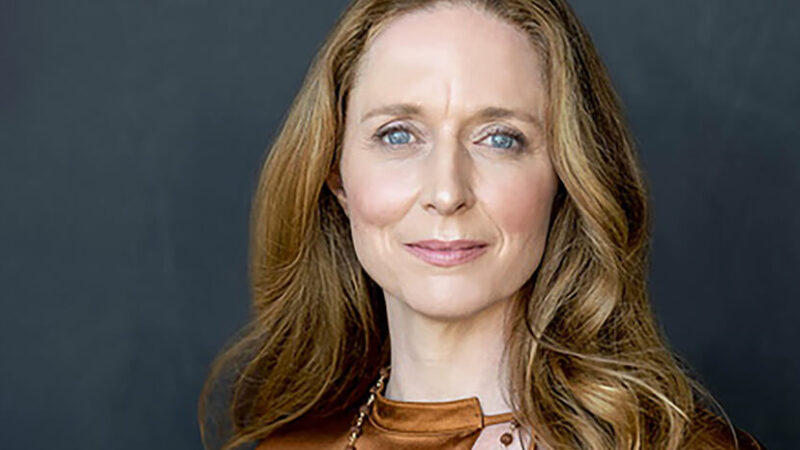
Caverly Morgan was named one of 2025's powerful women of the mindfulness movement, Caverly Morgan is a spiritual teacher, nonprofit founder, speaker, and writer whose practice began in 1995 and has included eight years of training in a silent Zen monastery. She is the author of “The Heart of Who We Are: Realizing Freedom Together” as well as “A Kids Book About Mindfulness.” Caverly is the founder of Peace in Schools, a nonprofit that created the nation’s first for-credit mindfulness class in public high schools. She is also the founder of Realizing Freedom Together, a nonprofit organization dedicated to making practices that lead to liberation for all, accessible to all. Caverly leads meditation retreats, workshops, and online classes internationally. Learn more at caverlymorgan.org.

Kristin Neff

Dr. Kristin Neff is an Associate Professor of Educational Psychology at the University of Texas at Austin. She is a pioneer in the field of self-compassion research, conducting the first empirical studies on self-compassion more than twenty years ago. She has been recognized as one of the most influential researchers in psychology worldwide. Kristin runs the Self-Compassion Community, an online learning platform where people can learn the skill of self-compassion with the help of others. She is author of the bestselling books Self-Compassion and Fierce Self-Compassion. Along with her colleague Chris Germer, she developed the empirically-supported Mindful Self-Compassion program and co-founded the Center for Mindful Self-Compassion. They co-wrote the best-selling “The Mindful Self-Compassion Workbook” and have a new book called “Mindful Self-Compassion for Burnout” coming out in Fall 2024. For more info go to self-compassion.org.

Also By Author

Kristin Neff & Caverly Morgan: Self-Compassion as...

Can the simple act of being kind to yourself actually be a doorway to awakening?

In this special episode of Insights at the Edge, Tami Simon brings together two remarkable teachers whose friendship has sparked a revolutionary approach to inner transformation. Kristin Neff—the researcher who first measured self-compassion and author of Fierce Self-Compassion—joins Caverly Morgan, a meditation teacher and former Zen monk, to explore how self-compassion practices can become what they call “a lifeboat” to our deepest nature.

Together, they reveal why self-compassion isn’t just a psychological tool for feeling better—it’s a direct path to recognizing who we really are beyond our limited sense of self.

In this interview, Tami, Kristin, and Caverly explore:

  • Why every moment of self-compassion is a moment of “letting go of identification with the small, separate, limited self”
  • The difference between witnessing awareness and embodied loving awareness—and why it matters
  • How gender conditioning shapes our relationship to both compassion and awakening practices
  • The power of “relational dharma” and why we sometimes need another person to help us access self-compassion
  • A guided practice for moving from suffering into the “stance-less stance” of presence

If you’ve practiced self-compassion but sensed there’s something deeper available, or if awakening teachings have felt too abstract or disembodied, this conversation offers a bridge between heart and awareness that could transform your practice.

This conversation offers genuine transmission—not just concepts about awakening, but the palpable presence of realized teachers exploring the growing edge of spiritual understanding together. Originally aired on Sounds True One.
Caverly Morgan: The Heart of Who We Are

When Caverly Morgan reentered society after eight years as a Zen monk, she was confronted with a question many of us are asking these days: Considering the enormity of the problems before us, how can one individual’s spiritual practice make a tangible difference in our world? 

In this podcast, Tami Simon speaks with Caverly about her new book, The Heart of Who We Are, and the connection between self-realization and collective transformation. Tune in as they explore these topics and more: the difference between the absolute and the relative; introducing teens to inquiry practice; self-improvement vs. self-realization; the core experience of who we are in our depths; the power of community; meeting our deepest needs; “changing costumes within the dance of suffering”; connecting with others “essence to essence”; broadening public access to contemplative practices; escaping the trap of perfectionism; letting go of our conditioning, individually and collectively; egoic behaviors versus “acts of being.”

This episode first aired live and on video on Sounds True One. To watch Insights at the Edge episodes live and on video, and to access additional bonus Q&A, please visit join.soundstrue.com to learn more.

You Might Also Enjoy

Rob Bell: “The Risk of Not Becoming More YouR...


What if not doing the thing is the riskier choice?

This week, Tami Simon speaks with Rob Bell—New York Times bestselling author of 14 books and plays, host of The RobCast, and a former pastor—about what he calls his civilian phase. Rob left the role years ago. What surprised him was how long the role stayed with him afterward: “We leave an external form, and then over the years, the form begins to leave us.”

This is an unusually candid conversation. Tami goes first, admitting she didn’t feel free to fully reveal herself until she had economic security—and Rob meets her there without a tidy answer.

Join Tami and Rob to explore:

  • Why he doesn’t believe in risk versus no risk—only in risk management, and which risk is actually smaller
  • The “answer man” conditioning of a job that expected crisp soundbites about the deepest human questions—and what it did to his nervous system
  • Hiding in plain sight: how public visibility can be its own kind of concealment
  • The abyss, the void, the fallow field—learning to stop fighting the empty seasons
  • “And then I kept going”: the phrase that came out of pandemic sessions, and why people can’t see their own resilience
  • What shifted when a plant medicine experience dropped his head into his heart
  • Toxic positivity, a lineage that didn’t know what to do with pain, and the son who taught him it’s okay to be sad
  • Why a birch tree scatters 250 million seeds and doesn’t seem worried about efficiency
  • His father’s dementia, temporariness, and the strange way mortality heightens aliveness

Rob will lead an immersive workshop, The Ongoing Creation of Your Life, at Omega Institute, August 30–September 4.

Listen now and hear what it costs to keep standing at a distance from your own life. →

This conversation offers genuine transmission, not just concepts about awakening, but the palpable presence of realized teachers exploring the growing edge of spiritual understanding together, and originally aired on Sounds True One.

Just One Question | James Hollis: Why Am I Here?

Tami came to Living with Borrowed Dust wanting to talk about the abyss — the chapter that held her attention most. James Hollis offers Heidegger’s framing of it: not the pit that swallows you, but the openness of being.

Then he does something guests rarely do here. He takes the question back. The abyss opens, he says, every time we ask a truly radical question — radical from radix, root — and there is none more radical than “Why am I here?”

He answers it from inside a hospital bed. Two serious spinal surgeries, real doubt about whether he’d come through, and what he describes feeling is not despair but something closer to adventure. He thanked his surgeon on the way into the operating room. Fear is normal, he says, and anxiety is real — but neither one has to be the thing that decides how you live.

In this episode:

  • Heidegger’s abyss as the openness of being, and how that reframe exposed Hollis’s own defenses
  • The patterns we build against the unknown: power over small things, staying out of harm’s way, narcissistic inflation
  • Why mortality is the one statistic with no uncertainty in it, and what that should free us to do
  • Keep walking — if you’re in the middle of the forest, you’re halfway through
  • Dignity over pride, and the one thing nobody can take from you unless you give it away

Taken from the full Insights at the Edge conversation with James Hollis. Find the complete interview in this feed or at soundstrue.com

Just One Question | Rev angel Kyodo williams: How Do W...

Reverend angel Kyodo williams has spent decades bridging Zen practice and social change, and she doesn’t offer the version of spirituality where relief is waiting somewhere down the road. She told Tami Simon that our joy lives at the center of our suffering, and Tami, to her credit, pushed back. Really? Right in the middle of my deep suffering and the world’s deep suffering?

Reverend angel’s answer is why this segment felt so powerful and transformative to us. She argues we’ve been handed a spiritual life that lives in a box: well-maintained, kept in good order, scheduled for Tuesday evenings from 6:30 to 8:30. Real practice, she says, pulls the lens all the way back to take in a whole life: the trauma, the history, the parts we’ve been trained to walk around. And when we refuse to touch our own suffering, we don’t contain it. We leave it behind us like roadkill, in how we treat each other and in what we let stand: patriarchy, racism, xenophobia.

In this episode:

  • Why “radical” means whole rather than extreme, and what a complete dharma asks of us
  • The cold-water method—entering your suffering ankle-deep, then further
  • What joy actually is, and why it isn’t an ice cream cone in the middle of the mess
  • The question Reverend angel keeps returning to in her own practice: where have I not yet looked?
  • Why fearlessness isn’t something you choose, but something that surfaces once the path is clear

Taken from the full Insights at the Edge conversation with Reverend angel Kyodo williams. Find the complete interview here: Reverend angel Kyodo williams: Warrior Spirit.