
Nate Klemp: Open, Expansive, and Free

    —
February 27, 2024

Nate Klemp: Open, Expansive, and Free

Nate Klemp February 27, 2024

It’s not just you. Millions upon millions of people today are feeling more stressed, anxious, and overwhelmed than ever before. As a result, explains philosopher and writer Dr. Nate Klemp, a lot of us are contracting ourselves—closing our minds in an effort to shield ourselves from the constant noise of the 21st century. With his new book, Open, Nate explores possible solutions to help us shift into a life of expansiveness, creativity, and wonder. 

Press the play button and join Tami Simon in conversation with this innovative and inspiring thinker, discussing: breaking free from screen addiction; the drivers of closure; the concept of “feast practice”; our need for novelty; an experiment that may shock you; the practice of staying; shifting from a wandering mind to “meta awareness”; how an open mind is synonymous with an open heart; overcoming separateness; noticing your “closure cues”; skillful closing; the intent to win versus the intent to understand; the portal of bliss and the portal of suffering; getting unstuck; letting go; and more.

Note: This episode originally aired on Sounds True One, where these special episodes of Insights at the Edge are available to watch live on video and with exclusive access to Q&As with our guests. Learn more at join.soundstrue.com.

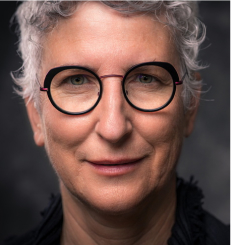
Nate Klemp, PhD, is a philosopher, writer, and mindfulness entrepreneur. He is the coauthor of the New York Times bestseller Start Here and the New York Times critics’ pick The 80/80 Marriage. His work has been featured in the LA TimesPsychology Today, the Times of London, and more, and his appearances include Good Morning America and Talks at Google. He’s a cofounder of LifeXT and founding partner at Mindful. For more, visit nateklemp.com or @Nate_Klemp on Instagram.

Author photo © Stacy Moore

600 Podcasts and Counting…

Subscribe to Insights at the Edge to hear all of Tami’s interviews (transcripts available too!), featuring Eckhart Tolle, Caroline Myss, Tara Brach, Jack Kornfield, Adyashanti, and many more.

Meet Your Host: Tami Simon

Founded Sounds True in 1985 as a multimedia publishing house with a mission to disseminate spiritual wisdom. She hosts a popular weekly podcast called Insights at the Edge, where she has interviewed many of today's leading teachers. Tami lives with her wife, Julie M. Kramer, and their two spoodles, Rasberry and Bula, in Boulder, Colorado.

Photo © Jason Elias

Also By Author

Nate Klemp: Open, Expansive, and Free

It’s not just you. Millions upon millions of people today are feeling more stressed, anxious, and overwhelmed than ever before. As a result, explains philosopher and writer Dr. Nate Klemp, a lot of us are contracting ourselves—closing our minds in an effort to shield ourselves from the constant noise of the 21st century. With his new book, Open, Nate explores possible solutions to help us shift into a life of expansiveness, creativity, and wonder. 

Press the play button and join Tami Simon in conversation with this innovative and inspiring thinker, discussing: breaking free from screen addiction; the drivers of closure; the concept of “feast practice”; our need for novelty; an experiment that may shock you; the practice of staying; shifting from a wandering mind to “meta awareness”; how an open mind is synonymous with an open heart; overcoming separateness; noticing your “closure cues”; skillful closing; the intent to win versus the intent to understand; the portal of bliss and the portal of suffering; getting unstuck; letting go; and more.

Note: This episode originally aired on Sounds True One, where these special episodes of Insights at the Edge are available to watch live on video and with exclusive access to Q&As with our guests. Learn more at join.soundstrue.com.
5 Tools to Create More Space in Your Mind

Busyness, distraction, and stress have all led to the shrinking of the modern mind.

I realize that’s a strange thing to say. Most of us don’t think of our mind as something with space in it, as a thing that can either be big or small, expensive or claustrophobic.

But just think about the last time you felt overwhelmed, stressed, or out of control. Chances are, you might not even have to think that hard. You might be experiencing that state right now as you read these words.

What happens in these moments? 

First, our mind wanders. It spins through all sorts of random thoughts about the past and the future. As a result, we lose touch with the direct experience of present time.

Second, we lose perspective. We can’t see the big picture anymore. Instead, it’s like we’re viewing life through a long and narrow tunnel. We become blind to possibility, fixated on problems.

Put these two together and you’ve got the perfect recipe for eradicating space in the mind. The landscape of the mind begins to feel like a calendar jammed with so many meetings, events, and obligations that these neon colored boxes cover-up even the smallest slivers of white space. 

So it could be nice for our partner, for our kids, and, mostly, for our ourselves to consider: how can we create more space in the mind?

Here are five tools for creating mental space. If you want to go deeper, check out my new book with Sounds True on the topic called OPEN: Living With an Expansive Mind in a Distracted World.

1. Meditation.

You’ve no doubt heard about all of the scientifically validated benefits of this practice. It reduces stress. It boosts productivity. It enhances focus.

That is all true. But here is the real benefit of meditation: it creates more space in the mind. To get started, try it out for just a few minutes a day. Use an app or guided practice to help you.

2. Movement.

So, maybe you’re not the meditating type. That’s fine. You can still create space in the mind by setting aside time for undistracted movement.

The key word here is “undistracted.” For many of us, exercise and movement have become yet another time where our headspace gets covered over by texts, podcasts, or our favorite Netflix series. 

There’s nothing wrong with this. But it can be powerful to leave the earbuds behind every once in a while and allow the mind to rest while you walk, stretch, run, bike, swim, or practice yoga.

3. Relax.

When it comes to creating headspace, we moderns, with our smartphone-flooded, overly-stimulated, minds seem to inevitably encounter a problem: we’re often too stressed, amped, and agitated to open.

Relaxation – calming the nervous system – is perhaps the best way to counter this effect and create more fertile ground for opening. When we relax – the real kind, not the Netflix or TikTok kind –  the grip of difficult emotions loosens, the speed of our whirling thoughts slows, and, most important, the sense of space in our mind begins to expand.

How can you relax? Try yoga. Try extended exhale breathing, where you inhale four counts, exhale eight counts. Try yoga nidra. Or, just treat yourself to a nap.

4. See bigger.

When life gets crazy, the mind isn’t the only thing that shrinks. The size of our visual field also gets smaller. Our eyes strain. Our peripheral vision falls out of awareness.

What’s the antidote to this tunnel vision view? See bigger.

Try it right now. With a soft gaze, allow the edges of your visual field to slowly expand. Imagine you’re seeing whatever happens to be in front of you from the top of a vast mountain peak. Now bring this more expansive, panoramic, way of seeing with you for the rest of the day.

5. Do nothing.

Now for the most advanced practice. It’s advanced because it cuts against everything our culture believes in. In a world where everyone is trying desperately to get more done, one of the most radical acts is to not do — to do nothing.

Even just a few minutes of this paradoxical practice can help you experience an expansion of space in the mind.

Lie on the floor or outside on the grass. Close your eyes. Put on your favorite music if you want. Set an alarm for a few minutes so you don’t freak out too much. 

Then, stop. Drop the technique. Drop the effort. Just allow yourself to savor this rare experience of doing absolutely nothing.

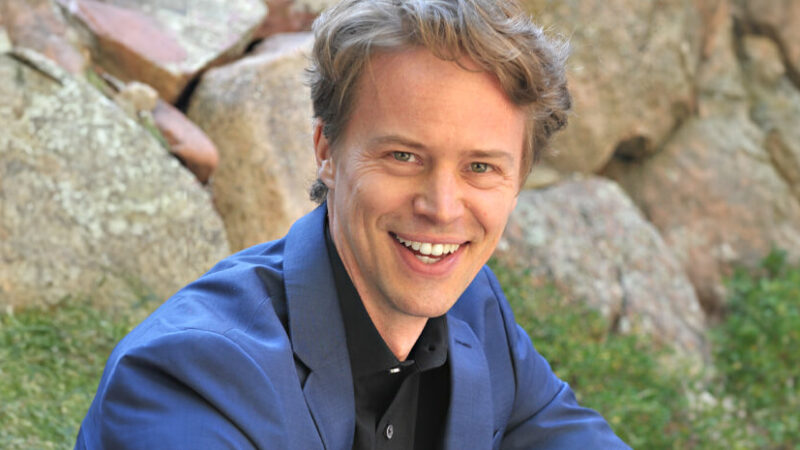
Nate Klemp, PhD, is a philosopher, writer, and mindfulness entrepreneur. He is the coauthor of the New York Times bestseller Start Here and the New York Times critics’ pick The 80/80 Marriage. His work has been featured in the LA Times, Psychology Today, the Times of London, and more, and his appearances include Good Morning America and Talks at Google. He’s a cofounder of LifeXT and founding partner at Mindful. For more, visit nateklemp.com or @Nate_Klemp on Instagram.

You Might Also Enjoy

Rob Bell: “The Risk of Not Becoming More YouR...


What if not doing the thing is the riskier choice?

This week, Tami Simon speaks with Rob Bell—New York Times bestselling author of 14 books and plays, host of The RobCast, and a former pastor—about what he calls his civilian phase. Rob left the role years ago. What surprised him was how long the role stayed with him afterward: “We leave an external form, and then over the years, the form begins to leave us.”

This is an unusually candid conversation. Tami goes first, admitting she didn’t feel free to fully reveal herself until she had economic security—and Rob meets her there without a tidy answer.

Join Tami and Rob to explore:

  • Why he doesn’t believe in risk versus no risk—only in risk management, and which risk is actually smaller
  • The “answer man” conditioning of a job that expected crisp soundbites about the deepest human questions—and what it did to his nervous system
  • Hiding in plain sight: how public visibility can be its own kind of concealment
  • The abyss, the void, the fallow field—learning to stop fighting the empty seasons
  • “And then I kept going”: the phrase that came out of pandemic sessions, and why people can’t see their own resilience
  • What shifted when a plant medicine experience dropped his head into his heart
  • Toxic positivity, a lineage that didn’t know what to do with pain, and the son who taught him it’s okay to be sad
  • Why a birch tree scatters 250 million seeds and doesn’t seem worried about efficiency
  • His father’s dementia, temporariness, and the strange way mortality heightens aliveness

Rob will lead an immersive workshop, The Ongoing Creation of Your Life, at Omega Institute, August 30–September 4.

Listen now and hear what it costs to keep standing at a distance from your own life. →

This conversation offers genuine transmission, not just concepts about awakening, but the palpable presence of realized teachers exploring the growing edge of spiritual understanding together, and originally aired on Sounds True One.

Just One Question | James Hollis: Why Am I Here?

Tami came to Living with Borrowed Dust wanting to talk about the abyss — the chapter that held her attention most. James Hollis offers Heidegger’s framing of it: not the pit that swallows you, but the openness of being.

Then he does something guests rarely do here. He takes the question back. The abyss opens, he says, every time we ask a truly radical question — radical from radix, root — and there is none more radical than “Why am I here?”

He answers it from inside a hospital bed. Two serious spinal surgeries, real doubt about whether he’d come through, and what he describes feeling is not despair but something closer to adventure. He thanked his surgeon on the way into the operating room. Fear is normal, he says, and anxiety is real — but neither one has to be the thing that decides how you live.

In this episode:

  • Heidegger’s abyss as the openness of being, and how that reframe exposed Hollis’s own defenses
  • The patterns we build against the unknown: power over small things, staying out of harm’s way, narcissistic inflation
  • Why mortality is the one statistic with no uncertainty in it, and what that should free us to do
  • Keep walking — if you’re in the middle of the forest, you’re halfway through
  • Dignity over pride, and the one thing nobody can take from you unless you give it away

Taken from the full Insights at the Edge conversation with James Hollis. Find the complete interview in this feed or at soundstrue.com

Just One Question | Rev angel Kyodo williams: How Do W...

Reverend angel Kyodo williams has spent decades bridging Zen practice and social change, and she doesn’t offer the version of spirituality where relief is waiting somewhere down the road. She told Tami Simon that our joy lives at the center of our suffering, and Tami, to her credit, pushed back. Really? Right in the middle of my deep suffering and the world’s deep suffering?

Reverend angel’s answer is why this segment felt so powerful and transformative to us. She argues we’ve been handed a spiritual life that lives in a box: well-maintained, kept in good order, scheduled for Tuesday evenings from 6:30 to 8:30. Real practice, she says, pulls the lens all the way back to take in a whole life: the trauma, the history, the parts we’ve been trained to walk around. And when we refuse to touch our own suffering, we don’t contain it. We leave it behind us like roadkill, in how we treat each other and in what we let stand: patriarchy, racism, xenophobia.

In this episode:

  • Why “radical” means whole rather than extreme, and what a complete dharma asks of us
  • The cold-water method—entering your suffering ankle-deep, then further
  • What joy actually is, and why it isn’t an ice cream cone in the middle of the mess
  • The question Reverend angel keeps returning to in her own practice: where have I not yet looked?
  • Why fearlessness isn’t something you choose, but something that surfaces once the path is clear

Taken from the full Insights at the Edge conversation with Reverend angel Kyodo williams. Find the complete interview here: Reverend angel Kyodo williams: Warrior Spirit.
