Kamilah Majied: Joyfully Just

    —
August 13, 2024

Kamilah Majied: Joyfully Just

Kamilah Majied August 13, 2024

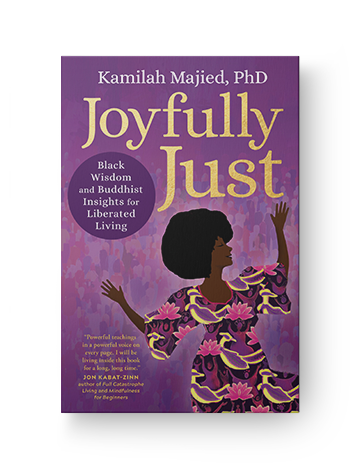
The painful injustices we see across society may seem insurmountable. Yet as therapist and author Dr. Kamilah Majied teaches, “Undoing some of the injustice that we do to ourselves and others is actually one of the most joyful things we can do.” Instilling joy into our social change work is the theme of Dr. Majied’s new book, Joyfully Just, and the subject of this inspiring conversation hosted by Tami Simon. 

Give a listen to this energizing and infectious discussion of: the power of literacy; exploring the roots of suffering; uncovering and healing our unconscious biases; the destructive limitations of our “isms”; releasing the song that wants to burst forth; using our creativity to transmute suffering into joy; making a genuine resolution to be joyful; an enlightened experience of grief; a daily mantra—“let me manifest my highest self, my greater self, my most wise, courageous self”; gratitude and growth; the freedom to create value out of suffering; living with courage; honest conversations; the concept of Black joy; resilience; the contagious nature of “undefeated joy”; respect as the act of looking again; connecting with our heritage and appreciating our interdependence; language as a meditative practice; the shift from cultural appropriation to reparative relationality; resisting despair and “suffering with determination”; self-worth; overcoming the bias of ableism; the practice of “a new moment resolution”; and more.

Note: This episode originally aired on Sounds True One, where these special episodes of Insights at the Edge are available to watch live on video and with exclusive access to Q&As with our guests. Learn more at join.soundstrue.com.

Dr. Kamilah Majied is a mental health therapist, clinical educator, researcher, and consultant on advancing equity and inclusion using meditative practices. Drawing from her decades of contemplative practice and leadership, Dr. Majied engages people in experiencing wonder, humor, and insight through transforming oppressive patterns and deepening relationships toward ever-improving individual, familial, organizational, and communal wellness. To find out more visit kamilahmajied.com.

600 Podcasts and Counting…

Subscribe to Insights at the Edge to hear all of Tami’s interviews (transcripts available too!), featuring Eckhart Tolle, Caroline Myss, Tara Brach, Jack Kornfield, Adyashanti, and many more.

Meet Your Host: Tami Simon

Founded Sounds True in 1985 as a multimedia publishing house with a mission to disseminate spiritual wisdom. She hosts a popular weekly podcast called Insights at the Edge, where she has interviewed many of today's leading teachers. Tami lives with her wife, Julie M. Kramer, and their two spoodles, Rasberry and Bula, in Boulder, Colorado.

Photo © Jason Elias

Also By Author

Kamilah Majied: Joyfully Just

The painful injustices we see across society may seem insurmountable. Yet as therapist and author Dr. Kamilah Majied teaches, “Undoing some of the injustice that we do to ourselves and others is actually one of the most joyful things we can do.” Instilling joy into our social change work is the theme of Dr. Majied’s new book, Joyfully Just, and the subject of this inspiring conversation hosted by Tami Simon. 

Give a listen to this energizing and infectious discussion of: the power of literacy; exploring the roots of suffering; uncovering and healing our unconscious biases; the destructive limitations of our “isms”; releasing the song that wants to burst forth; using our creativity to transmute suffering into joy; making a genuine resolution to be joyful; an enlightened experience of grief; a daily mantra—“let me manifest my highest self, my greater self, my most wise, courageous self”; gratitude and growth; the freedom to create value out of suffering; living with courage; honest conversations; the concept of Black joy; resilience; the contagious nature of “undefeated joy”; respect as the act of looking again; connecting with our heritage and appreciating our interdependence; language as a meditative practice; the shift from cultural appropriation to reparative relationality; resisting despair and “suffering with determination”; self-worth; overcoming the bias of ableism; the practice of “a new moment resolution”; and more.

Note: This episode originally aired on Sounds True One, where these special episodes of Insights at the Edge are available to watch live on video and with exclusive access to Q&As with our guests. Learn more at join.soundstrue.com.

Enriching Our Lives with African American Contemplativ...

My lifelong aspiration–and the goal of my new book, Joyfully Just: Black Wisdom and Buddhist Insights for Liberated Livingis to support people from all spiritual traditions and cultural backgrounds in using meditative practices to reclaim joy. Our spirits, bodies, minds, and hearts need to be buoyant to navigate the unceasing waves of grief, fear, doubt, prejudice, and devaluation that we experience internally, interpersonally, and communally. Joyfully Just is about tapping into that buoyancy, that levity, with diverse meditative practices.

In particular, Joyfully Just highlights practices, teachings, and insights from Buddhism and Black contemplative traditions. Black contemplative traditions include practices that bring forth insight and joy. You may have heard the expression “Black joy” and wondered, What is that, exactly? Black joy is self-transcendence. It is embodied resistance to shame, despair, and anything else that would limit our capacity to be just towards ourselves and those around us. It is the insistence on and expression of internal freedom despite external restrictions. Black joy is resilient creativity that creatively grows more resilience.

The Black wisdom traditions I explore in Joyfully Just include those shared through music such as Gospel, Blues, Rock, Jazz, R&B, and Hip-Hop; language and dialect practices; and dance and communicative kinesic (movement and gesture) practices. The musical genres developed by Black Americans are universally embraced because they help all people engage creatively with the joys and pains of life. As such, Black music is often a contemplative practice that can ground us in empowered well-being, even amidst our worst pain. As we sing our Blues, we invigorate our lives with joy. That joy creates spaciousness around our suffering so that we can develop insight into its meaning and value. Take a moment now and see if you can think of one song from any African American musical genre that deepens your insight, helps you navigate your suffering, or expands your joy. Write it down so that you remember that it is but one example of how listening to Black music is a contemplative practice that enriches your life.

Black contemplative practices are often misunderstood—especially when they are appropriated. Sometimes they are underestimated as simply entertainment or frivolity. In Joyfully Just, I offer practices to shed light on how much insight and guidance for wise, courageous living we can–and do–receive from Black cultural traditions.

I explore Buddhism and Black wisdom together because although the spiritual and religious traditions of Black people are diverse, as are Buddhist lineages, many secular Black wisdom traditions and overarching Buddhist principles share common insights. For example, Black musical traditions illustrate the unity of suffering and joy and the possibility for self-transcendence and enlightenment in any circumstance. The creative, lively resilience of Black life shows us, in so many ways, what enlightenment looks like in daily living.

Many African cultures, including African American culture, have rituals and practices that are uniquely contemplative and seamlessly integrated into everyday life. African dance is one example of this. African dancing is listening to the body, trusting the body to tell its story. African dance teacher Wyoma speaks of it as praying with the body.

How do you avoid cultural appropriation of Black contemplative practices? It’s simple, but not easy. When you engage with Black music, dialect, dance, or other cultural practices, reiteratively reflect on how you demonstrate or could begin to demonstrate love for and solidarity with Black people.

I invite you to ask yourself:

  • How is solidarity with and love for Black people already a part of my inner dialogue? Of my relationships? Of how I experience the world with joy?
  • How can I strengthen my connections with Black people and Black wisdom practices?

With these as lifelong inquiries, we gain insight into how Black contemplative practices enrich our lives, actualize our interdependence, and deepen our sense of connection with ourselves and the world.

Kamilah Majied

Dr. Kamilah Majied is a mental health therapist, clinical educator, researcher, and consultant on advancing equity and inclusion using meditative practices. Drawing from her decades of contemplative practice and leadership, Dr. Majied engages people in experiencing wonder, humor, and insight through transforming oppressive patterns and deepening relationships toward ever-improving individual, familial, organizational, and communal wellness. To find out more visit kamilahmajied.com.

You Might Also Enjoy

Finding Freedom Behind Bars: Spiritual Awakening in Pr...

Prison is often defined by restriction, routine, and loss of control, yet within these confines, many people encounter an unexpected invitation to turn inward. Through meditation and mindfulness, incarceration can become a setting for deep self-examination, where thoughts, emotions, and long-held patterns are met with honesty rather than avoidance.

At Sounds True, decades of sharing living wisdom from teachers who speak from direct experience have shaped everything we do. Our work centers on preserving unscripted teachings that reflect real transformation in the midst of hardship. By amplifying voices such as Fleet Maull, we remain committed to offering grounded spiritual guidance that honors accountability, compassion, and human dignity.

Let’s examine prison meditation and spiritual awakening behind bars, looking at how mindfulness, responsibility, and sustained practice support inner freedom and shared humanity, even in confinement.

Key Takeaways:

  • Freedom Is An Inside Job: Even behind bars, awareness and radical responsibility open a doorway to inner freedom that no external circumstance can close.
  • Awakening Happens One Breath at a Time: Spiritual awakening in prison grows through small, steady moments of honest attention, not one dramatic turning point.
  • Beneath Every Label, We Share the Same Humanity: Mindfulness in prison cultivates empathy, accountability, and real human connection across the divides of separation and restriction.

Prison Meditation and the Inner Work of Freedom Behind Bars

Prison meditation shifts attention from external conditions to inner experience. When freedom of movement is removed, the mind becomes the primary place where suffering and relief are encountered. Meditation offers a way to meet that reality directly, without distraction or avoidance.

Incarceration often intensifies habitual thought patterns like fear, anger, and regret. Sitting in meditation allows these patterns to be observed rather than acted out. Over time, this creates space between impulse and response, a form of inner freedom that practitioners carry with them long after a session ends.

Though it’s important to note that this practice does not deny the hardship of prison life. Instead, it supports a steady relationship with what is present. Through consistent attention to breath, sensation, and thought, meditation becomes a training in clarity and self-honesty.

At Sounds True, meditation is understood as a lived practice grounded in direct experience. The Power of Awareness offers exactly this kind of grounded, moment-to-moment guidance, emphasizing simplicity, discipline, and the steadiness of attention — qualities that carry deep weight in environments where control is limited. Within that framework, prison meditation becomes a way to reclaim dignity and agency from the inside out.

Your Next Chapter Starts Here: Explore Our Thought-Provoking Courses

Spiritual Awakening in Prison as a Lived, Moment-to-Moment Practice

Spiritual awakening in prison rarely arrives as a lightning bolt. Far more often, this awakening unfolds through repeated contact with what is present, day after day, under conditions that leave little room for looking away.

Meeting Reality Without Escape

Awakening in confinement begins with facing reality as it is, like the absence of familiar outlets brings thoughts and emotions into sharper focus. Meditation encourages staying with discomfort, restlessness, and fear rather than trying to fix or suppress them. This willingness to remain present often reveals that suffering is amplified by resistance far more than by circumstance alone.

Awakening Through Responsibility and Attention

As awareness stabilizes, responsibility naturally comes into view. Practitioners begin to notice how reactions, beliefs, and internal narratives shape their experience. This insight is not about self-blame. It reflects a growing capacity to take responsibility for one’s inner life. Living from a Place of Surrender speaks directly to this shift — the turning away from resistance and toward honest, open-hearted presence — showing how sustained attention can become a foundation for meaningful inner change.

Fleet Maull on Entering Prison Meditation Through Direct Experience

Fleet Maull’s work in prison meditation emerges from lived experience rather than theory. His teaching reflects what it means to turn toward inner life under extreme conditions and to use practice as a means of genuine transformation.

From Incarceration to Practice

Fleet Maull began meditating while serving a long prison sentence, encountering the practice not as self-improvement but as survival. In an environment shaped by control and unpredictability, meditation became a way to establish inner stability. Sitting with the breath offered a rare opportunity to observe the mind without being driven by it. That steady attention laid the groundwork for insight, discipline, and emotional regulation.

Responsibility as the Turning Point

A defining element of Maull’s teaching is the role of responsibility in awakening. Rather than framing prison solely as injustice or punishment, he emphasizes accountability for one’s internal responses. This perspective aligns with teachings like Living from a Place of Surrender, which invites practitioners to release the grip of control and meet life as it arrives — an especially resonant practice when external freedom is constrained. Through this lens, prison meditation becomes a path toward reclaiming agency, even when external freedom is limited.

Mindfulness in Prison: Learning to Stay Present When Pressure Is Constant

Mindfulness in prison is shaped by intensity. Noise, surveillance, and lack of privacy place constant demands on attention. In that environment, mindfulness is not about relaxation. Learning how to remain present when pressure is unavoidable becomes the true test.

Working with Stress and Reactivity

Daily prison life often activates the nervous system. Mindfulness practice helps create a pause between stimulus and response. By noticing sensations, thoughts, and emotional surges as they arise, practitioners learn to interrupt automatic reactions. This pause can reduce conflict and support clearer decision-making, even in charged situations.

Building Stability Through Daily Practice

Consistency is key. Mindfulness becomes effective when it is practiced repeatedly, not only during formal meditation but throughout the day. Walking, standing in line, or engaging in routine tasks all become opportunities for awareness.

The MBSR Online Course offers a structured, accessible path for developing exactly this kind of steady rhythm, providing evidence-based tools for staying present amid stress and disruption. Over time, mindfulness in prison becomes a source of groundedness that supports both emotional balance and personal responsibility.

Discover the power of daily meditation

Radical Responsibility as a Foundation for Spiritual Awakening in Prison

Radical responsibility becomes essential in prison because it brings attention back to the one place where choice still exists. While external conditions are fixed, the way experience is met internally remains flexible. This understanding sits at the heart of spiritual awakening in prison.

Responsibility Without Self-Blame

Radical Responsibility should not be about punishment or shame. Seeing clearly how thoughts, reactions, and patterns shape suffering becomes the real work. In prison meditation, this clarity helps practitioners move out of denial and into honest self-awareness. Responsibility becomes an act of dignity rather than judgment.

Awakening Through Ownership of Inner Life

As responsibility deepens, awakening becomes practical. Practitioners learn to recognize where they still have agency, even within confinement. Taking ownership of one’s inner life supports stability, accountability, and a growing sense of inner freedom that is not dependent on circumstance.

Prison Meditation as a Training Ground for Radical Responsibility

Prison meditation offers a direct, experiential way to practice responsibility under conditions that leave little room for avoidance. The structure of incarceration makes inner habits visible, turning daily life into a continuous field of practice.

  • Seeing patterns clearly: Meditation reveals habitual reactions such as anger, withdrawal, or blame as they arise. This visibility makes it possible to interrupt patterns rather than reinforce them.
  • Choosing response over reaction: In a high-pressure environment, even brief pauses matter. Prison meditation strengthens the capacity to respond intentionally instead of acting from impulse.
  • Holding accountability with compassion: Responsibility deepens when it is paired with care rather than self-judgment. Insight Meditation offers this balance directly, guiding practitioners toward clear seeing without harshness and supporting sustainable inner change.
  • Practicing consistency in constrained conditions: Regular meditation builds discipline and trust in the practice itself. Over time, responsibility becomes less about effort and more about alignment with one’s values.
  • Reclaiming agency from the inside: Each mindful choice reinforces the understanding that inner agency remains available, even when external freedom is limited.

Through repetition and reflection, prison meditation becomes far more than a coping strategy. This practice becomes a lived training in responsibility that cultivates clarity, dignity, and spiritual awakening, even within confinement.

Fleet Maull on Mindfulness in Prison and Shared Humanity

Fleet Maull’s teaching on mindfulness in prison consistently returns to the recognition of shared humanity. In an environment shaped by separation and control, mindfulness becomes a way to remember what is held in common beneath roles, labels, and histories. Practice brings attention to universal experiences like fear, remorse, longing, and the desire for dignity.

Mindfulness in prison encourages a steady relationship with the present moment, even when conditions are harsh. The MBSR Online Course supports this through structured, repeatable practices that help practitioners return to awareness amid stress and disruption. This kind of repetition strengthens emotional regulation and cultivates patience, both of which are essential for maintaining human connection in restrictive environments.

For Maull, mindfulness is not separate from ethical reflection or compassion. The Power of Awareness speaks to this directly, emphasizing sincerity and direct experience and reinforcing the understanding that awareness is not about withdrawal but engagement. As individuals learn to stay present with themselves, they become more capable of seeing others clearly and responding with respect.

Through shared practice, mindfulness restores a sense of belonging. Sitting together in silence creates a temporary suspension of hierarchy and judgment, allowing humanity to come forward. In this way, mindfulness in prison becomes both a personal discipline and a relational act, supporting inner awakening alongside collective healing.

Spiritual Awakening in Prison and Carrying the Practice Forward

Spiritual awakening in prison continues beyond confinement. The awareness cultivated through meditation often becomes a stabilizing force during transition and reentry, offering continuity in the face of change.

Practices developed behind bars tend to remain simple and direct. Attention to breath, bodily sensation, and mental patterns supports emotional regulation and helps prevent automatic reactions from taking over. The discipline learned in restrictive conditions frequently strengthens resilience in less structured environments.

Awakening also shows up in relationships. Increased awareness supports patience, accountability, and more careful listening. What begins as a response to confinement carries forward as a commitment to presence, responsibility, and shared humanity in daily life.

Ready to Go Deeper? Explore Sounds True’s Full Living Library

Final Thoughts

Prison meditation shows that inner freedom remains available, even under severe restriction. Through awareness and radical responsibility, spiritual awakening in prison becomes a lived practice rooted in honesty and presence. These teachings point to a quiet but enduring truth: when attention is cultivated with care, dignity, and shared humanity can be restored from the inside out, one breath at a time. At Sounds True, our courses are here to walk alongside anyone ready to take that first step inward, wherever they may be on the journey.

Frequently Asked Questions About Finding Freedom Behind Bars: Spiritual Awakening in Prison

What is prison meditation?

Prison meditation refers to contemplative practices adapted for incarcerated settings, often focused on breath awareness, body awareness, and observing thoughts to build stability and insight. These practices are intentionally simple and accessible, meeting people exactly where they are.

Can meditation be practiced safely in prison environments?

Yes. Many programs adapt meditation to fit safety requirements, emphasizing seated or standing practices that require minimal space and no special equipment. These adaptations make meditation genuinely accessible across a wide range of prison settings and populations.

Is spiritual awakening in prison tied to a specific religion?

No. Spiritual awakening in prison is often nonsectarian, centered on awareness, responsibility, and ethical reflection rather than belief systems or doctrine. This openness makes the practice welcoming to people from all backgrounds and traditions.

Why does meditation resonate so strongly with incarcerated individuals?

Meditation offers tools for working with intense emotions, long periods of inactivity, and lack of control, which are common features of incarceration. Many practitioners find that consistent practice gives them a renewed sense of agency and inner steadiness they did not know was possible.

How long does it take to see benefits from prison meditation?

Experiences vary. Some notice small shifts in emotional regulation early on, while deeper changes develop through consistent, long-term practice. Patience and repetition tend to be the most reliable guides on this path.

Do people continue meditating after release from prison?

Yes, many do. Practices learned in confinement often translate naturally to daily life because they rely on attention rather than ideal conditions. The simplicity of the practice tends to carry well across very different environments and circumstances.

Can prison meditation support rehabilitation efforts?

Meditation can complement rehabilitation by strengthening self-awareness, impulse control, and the ability to reflect before acting. Many practitioners find that it becomes one of the most grounding tools in their long-term growth.

Who teaches prison meditation programs?

Programs are often led by trained meditation teachers, former practitioners who were incarcerated themselves, or volunteers affiliated with mindfulness organizations. This diversity of instructors helps keep teachings grounded, relatable, and deeply human.

Is prison meditation appropriate for people new to mindfulness?

Yes. Many incarcerated practitioners begin with no prior experience, using simple, accessible techniques designed for beginners. The practice is built to meet people at the very start of their journey.

Michelle Cassandra Johnson is an author, activist, spiritual teacher, racial equity consultant, and intuitive healer. She is the author of six books, including Skill in Action and Finding Refuge. Amy Burtaine is a leadership coach and racial equity trainer. With Robin DiAngelo, she is the coauthor of The Facilitator's Guide for White Affinity Groups. For more, visit https://www.michellecjohnson.com/wisdom-of-the-hive.

Bridging Movement And Stillness: Exploring The Union O...

There is a moment, just after a posture ends and just before stillness settles in, where something shifts. The body softens, the breath deepens, and awareness begins to rise, not from effort, but from quiet. This is the space where yoga and meditation meet. For many of us, yoga begins with movement, and meditation begins with silence. But over time, these practices become less separate and more like two currents of the same river. Together, they help us remember what stillness feels like, not as emptiness, but as something alive and full of presence. This union is not about achieving perfect form or mastering silence. It’s about returning to yourself, again and again, through breath, movement, and listening.

For more than 40 years, Sounds True has offered a living library of spiritual wisdom, featuring the voices of teachers like Eckhart Tolle, Pema Chödrön, and Tara Brach. We were founded with a single intention: to preserve the authentic energy of spiritual transmission in real time, through courses, audio programs, podcasts, and events that honor each teacher’s unscripted voice. Our yoga and meditation offerings are crafted to support not just practice, but transformation. We don’t just deliver teachings, we invite you into an experience of awakening.

In this piece, we’ll be discussing how yoga and meditation come together as a path to inner stillness, and the deeper benefits of yoga when practiced as both movement and mindfulness.

Key Takeaways:

  • Embodied Presence: Yoga is more than movement; it’s a daily return to inner awareness and emotional grounding.
  • Union In Practice: The combination of yoga and meditation forms a spiritual path that strengthens resilience and compassion.
  • Support Through Tools: Programs like Sounds True’s Yoga for Your Mood Deck and Yoga Nidra podcast offer guided ways to deepen stillness.

The Sacred Bridge Between Movement And Stillness

In many traditions, the body is seen as a gateway, not an obstacle. Yoga invites us to meet our physical selves with presence, while meditation welcomes us inward, toward silence, awareness, and deeper being. At the heart of these practices lies the yoga and meditation union, a sacred convergence where motion softens into stillness, and stillness begins to move from within.

When we step onto the mat, we often begin with movement, stretching, strengthening, and breathing. But in time, we may notice that the external gestures echo something more subtle. The rise and fall of breath. The space between thoughts. The quiet that blooms at the end of a pose. Here, yoga is no longer just a physical practice; it becomes a preparation for entering stillness fully.

This union is not about doing more; it’s about becoming more aware. By anchoring attention in the body, we start to feel the mind settle. Through mindful movement, we open the door to a quieter interior landscape. Yoga becomes not just a practice of form, but a devotional act of listening. And meditation, once reserved for the cushion, begins to live in the body itself.

Explore Teachings From World-Renowned Psychologists And Researchers On Trauma, Mindfulness, Resilience, And Cognitive Growth.

The Profound Benefits Of Yoga As A Daily Practice

The most transformative rewards of yoga often emerge not in the big breakthroughs, but in the quiet, daily returns. When practiced consistently, yoga becomes more than a physical discipline; it becomes a gentle companion in emotional resilience, spiritual grounding, and embodied awareness:

Building Trust Through Repetition

One of the lesser-discussed benefits of yoga is the emotional steadiness that comes from simply showing up. Daily practice builds a relationship with the self, one grounded in trust, consistency, and care. Over time, this rhythm strengthens our ability to remain present even when life becomes unpredictable.

Emotional Clarity And Energetic Balance

Yoga gently creates space for emotion to move through the body. It offers practices that can stabilize energy, soften emotional turbulence, and restore clarity. Tools like the Yoga for your mood deck provide inspiration and support for selecting postures and breathwork based on how you’re feeling, making the practice deeply personal and responsive.

The Power Of A Yoga Mindfulness Practice

At its heart, yoga is a mindfulness practice, a way to train both body and attention to exist in the same moment. Through this integrated awareness, we learn to witness our experience with kindness and curiosity. It becomes easier to feel the breath without chasing it, to notice thoughts without becoming entangled in them, and to trust the body’s wisdom as a source of inner guidance.

How Meditation Deepens The Yoga Mindfulness Practice

Yoga and meditation are often seen as separate tracks on the same path, but when they meet, something profound shifts. Together, they become a mirror for awareness itself. This section explores how meditation enriches what we experience on the mat, transforming yoga from movement alone into a fuller field of conscious presence:

Refining Attention Through Breath And Stillness

Meditation invites us to notice what we might otherwise rush past, the pause at the top of the inhale, the subtle tension in a shoulder, the moment before the mind wanders. When we bring this quiet observation into yoga, the practice slows down and deepens. This is the essence of the yoga mindfulness practice: using the body as a ground for present-moment awareness.

The Meditation And Yoga Connection As Inner Listening

At a certain point, movement becomes internal. The meditation and yoga connection reveals itself most clearly in these moments, when breath leads movement, and movement dissolves into silence. By practicing this connection regularly, we begin to listen more deeply to the body’s cues and the heart’s quieter truths.

Rest As Integration

Sometimes, the deepest breakthroughs in practice happen during rest. Practices like Yoga Nidra, available through Sounds True’s Yoga Nidra —The Sleep Yoga podcast, offer a doorway into the subtler layers of awareness. As the body softens, the mind learns to settle without effort. Meditation, here, becomes less about doing and more about receiving.

Awaken Your Inner Healing Power With Sound True.

Discovering Inner Stillness Through Yoga And Breath

The breath is both a guide and a gateway. As we follow it inward, we begin to discover a spaciousness that doesn’t depend on external conditions. This is where inner stillness through yoga reveals itself, not as a goal to chase, but as something we return to, breath by breath:

Breath As Anchor For Inner Awareness

In yoga, the breath is more than a physiological process. It becomes a teacher, helping us soften the edges of our thinking and rest in the present moment. Inner stillness through yoga begins here, in the pause between inhales and exhales, in the soft surrender that comes when we allow the breath to lead the way.

Stillness Is Not Absence, But Presence

Often, we confuse stillness with emptiness. But what yoga reveals is that true stillness is rich with awareness. It is not the absence of thought, but the presence of quiet attention. By practicing regularly, we start to sense the aliveness beneath the surface of stillness itself.

A Collective Invitation To Pause

While this journey inward is deeply personal, it is also shared. Events like the International Day of Yoga remind us that stillness, too, can be a communal act. Practicing together, even across distances, strengthens our sense of belonging, not only to each other but to the silence we all carry within.

Embracing The Meditation And Yoga Connection In Daily Life

For many, yoga and meditation remain practices reserved for specific times, on the mat, or on the cushion. But their deepest transformation unfolds when we carry them with us into the ordinary. The meditation and yoga connection becomes not just a routine, but a rhythm that lives in how we walk, listen, and respond:

Making Practice A Living Presence

It’s one thing to practice mindfulness in stillness; it’s another to remain present in motion. By embracing the meditation and yoga connection throughout the day, we turn waiting in line into a breath practice, or a difficult conversation into an opportunity to stay rooted in awareness. Over time, these moments create a quiet thread of groundedness that runs through our daily life.

Mindfulness In Everyday Movements

The yoga mindfulness practice doesn’t require a studio. Washing dishes, walking the dog, or opening a window to feel the breeze, all of these can become invitations into embodied awareness. Through consistent attention, even the most routine acts can reconnect us with the inner calm we cultivate on the mat.

A Path That Meets You Where You Are

This isn’t about perfection. It’s about remembering. Returning. Whether you’re moving through grief, joy, or uncertainty, both yoga and meditation offer you something steady to lean on, a breath, a pause, a small space of stillness that reminds you you’re not alone.

Honoring The Yoga And Meditation Union As A Spiritual Path

Over time, the practice shifts. What may have begun as a way to relieve stress or stretch the body slowly becomes something deeper, something sacred. The yoga and meditation union reveals itself not just as a blend of techniques, but as a path of devotion, inquiry, and awakening:

A Practice Of Listening To The Heart

The more we listen within, the more we discover how movement and stillness serve the same purpose: to bring us home to ourselves. The yoga and meditation union makes this return possible. It invites us to slow down, to hear the quiet voice beneath thought, and to respond with compassion.

Inner Stillness Through Yoga As Devotion

In this context, inner stillness through yoga is not a performance or achievement. It becomes a devotional act, an offering of attention, breath, and presence. By meeting ourselves in this space day after day, we begin to recognize the sacred not as something outside of us, but as something we touch through awareness.

Deepening The Journey With Sounds True

For those ready to explore this path more fully, Sounds True offers a rich selection of teachings through their Yoga and Movement programs. These offerings support the spiritual dimension of practice, guiding seekers toward a more integrated and heart-centered experience of body and being.

Learn To Treat Yourself With The Care You Offer Others

Final Thoughts

Stillness is not a destination; it’s a remembering. A return. The practices of yoga and meditation continue to call us back to that quiet center within, no matter how far we may feel from it.

Whether through movement, breath, or silence, we learn that the real gifts of practice live in the subtleties: the way we respond to discomfort, the gentleness we offer ourselves, the breath we return to when words fall short. These are the moments that change us, not suddenly, but steadily.

And in these moments, we discover inner stillness through yoga as something that doesn’t need to be chased or earned. It is already here, waiting in the pause, the exhale, the soft opening of presence.

Read also:

Frequently Asked Questions About Bridging Movement And Stillness

What are the mental benefits of yoga for older adults?

Yoga supports memory, focus, and emotional regulation in older adults. It also reduces stress-related cognitive fog by calming the nervous system.

Can I experience the benefits of yoga without being flexible?

Yes. Flexibility is not a prerequisite. The benefits of yoga arise from breath awareness, consistency, and alignment with your current body and abilities.

How long does it take to feel the benefits of yoga?

Some effects, like reduced tension or improved mood, can be felt after one session. Deeper benefits, such as resilience and self-awareness, build over weeks or months.

Is it better to do yoga before or after meditation?

It depends on your intention. Yoga before meditation can prepare the body to sit comfortably; meditation before yoga can help anchor presence in movement.

What role does breath play in experiencing the benefits of yoga?

Breath links body and mind. Conscious breathing enhances circulation, soothes anxiety, and grounds attention, deepening the impact of each posture.

How does yoga affect emotional healing?

Yoga creates space for emotional release through mindful movement and breathwork. It supports trauma healing by restoring a sense of agency and inner safety.

Can yoga replace other forms of exercise?

For many, yes. Yoga can improve strength, flexibility, and cardiovascular health. However, it can also complement other activities like walking or swimming.

What type of yoga is best for cultivating stillness?

Gentle styles such as Hatha, Yin, or Restorative Yoga are ideal for cultivating inner stillness. These styles emphasize slow movement and extended holds.

Are there specific yoga poses that support better meditation?

Yes. Poses that open the hips, lengthen the spine, and stabilize the pelvis, like Sukhasana, Padmasana, or supported forward folds, can enhance seated meditation.

Can the benefits of yoga be maintained without daily practice?

Absolutely. While consistency helps, even a few mindful sessions per week can maintain key benefits. The body and mind remember intentional presence.

Michelle Cassandra Johnson is an author, activist, spiritual teacher, racial equity consultant, and intuitive healer. She is the author of six books, including Skill in Action and Finding Refuge. Amy Burtaine is a leadership coach and racial equity trainer. With Robin DiAngelo, she is the coauthor of The Facilitator's Guide for White Affinity Groups. For more, visit https://www.michellecjohnson.com/wisdom-of-the-hive.

1 Minute Meditation Techniques For Busy Minds And Busy...

In a culture that celebrates busyness, stillness is often mistaken for inaction, but a brief pause, even just sixty seconds of presence, can be a profound act of self-remembering. One minute of meditation isn’t about escaping life. It’s about touching into it more directly. This is where 1 minute meditation becomes not only possible, but powerful. These short practices meet you exactly where you are: in the car, between meetings, in moments of stress or transition; offering a doorway back into the body, the breath, and the now.

For more than 40 years, Sounds True has been a trusted guide for those seeking spiritual depth, emotional clarity, and inner transformation. Our archive includes teachings from some of the most respected voices in mindfulness and meditation, including Pema Chödrön, Tara Brach, Eckhart Tolle, and many others. We don’t just share practices; we preserve living wisdom in its most authentic, human form.

In this piece, we’ll be sharing simple 1 minute meditation techniques designed for busy minds and full lives. You’ll learn how to use these micro-practices to anchor yourself throughout the day, and how a 1 minute guided meditation can offer ease and clarity in just a few breaths. Along the way, we’ll also point you toward inner rhythm meditations for deeper exploration.

Key Takeaways:

  • Finding the Right Technique: Micro-practices like breath awareness or sound focus offer fast, meaningful relief from stress without needing extra time or space.
  • Forming Habits That Suit Your Needs: Even brief daily meditations can improve focus, reduce reactivity, and deepen your connection to the present moment.
  • How Meditation Can Support You: 1 minute guided meditation and resources like inner rhythm meditations help build structure and trust in your practice.

Why Even One Minute Of Meditation Matters

We often think of meditation as something that requires silence, time, and the right environment. While extended sessions can deepen awareness, the truth is that presence does not follow a timer. A single minute of grounded attention can open the door to calm, clarity, and reconnection.

Scientific studies continue to show that even brief periods of mindful breathing can regulate the nervous system, reduce stress hormones, and improve focus. Just sixty seconds of intentional stillness can create space between stimulus and response. This is not about “doing it perfectly” but about remembering what it feels like to return to yourself.

In those short windows of time, before a phone call, after reading a difficult message, or while waiting for your coffee, a 1 minute meditation can shift your relationship to the moment. The more you practice dropping in, the more accessible this state becomes. You begin to carry presence with you, rather than seeking it only when things are quiet.

Practices like the 1 minute guided meditation can be especially helpful in creating structure and ease for beginners. These offer a soft voice to anchor your attention when your own feels scattered. And for those drawn to more intuitive forms, inner rhythm meditations offer spacious, heart-centered guidance for returning home to yourself.

Expand Your Consciousness With Sounds True.

How To Prepare For A 1 Minute Meditation

The beauty of 1 minute meditation lies in its simplicity, but a little intentionality can help make each short practice more impactful. Preparing your body, space, and mindset, even briefly, helps you drop into presence faster. Here’s how to gently set yourself up before your next one-minute pause:

Ground Yourself In The Body

Before beginning, take a moment to feel your body’s connection to the earth. Notice your feet on the floor, the weight of your body, and any physical sensations. This awareness brings you out of the mental space and into a place of embodied presence.

Settle Into The Breath

Without needing to control or deepen it, turn your attention to your breath. Observe the natural flow of the inhale and exhale. This simple awareness is often enough to slow your thoughts and bring you into the now.

Create A Gentle Cue

Choose a reminder to pause during your day, this could be a phone notification, a visual cue like a sticky note, or a transition point such as closing your laptop. These moments of pause can become powerful invitations to return to presence. You begin to associate the cue with a shift in awareness.

Release The Need For Perfection

Let go of the idea that meditation must be quiet, deep, or spiritually profound. Even a slightly distracted minute of stillness offers value. The key is consistency, not performance.

Choose A Simple Anchor

Decide in advance what you’ll focus on for the next minute: your breath, a word, or a short 1 minute guided meditation. Knowing your anchor helps you enter the practice quickly and stay with it. Over time, this familiar starting point becomes a doorway to ease.

Try This 1 Minute Guided Meditation for Instant Calm

Sometimes the mind is too busy to guide itself, and that’s when a gentle voice can help us settle more easily. A 1 minute guided meditation offers a simple, accessible way to reconnect with the body and breath without overthinking the process. Here’s how to experience its benefits with ease:

Choose a Supportive Space

You don’t need a perfectly quiet environment, but selecting a space where you feel relatively safe and undisturbed helps set the tone. Sit or stand comfortably, keeping your spine upright without tension. Even if you’re on a short break, a few feet of space and a moment of privacy can make a difference.

Close or Soften Your Eyes

Letting your eyes close or lowering your gaze helps reduce distractions. This small shift draws awareness inward and supports a more focused experience. If keeping your eyes open feels more grounding, find a still point to rest your attention.

Follow a Simple Verbal Prompt

Many 1 minute guided meditations begin with breath awareness. You might hear prompts such as, “Inhale calm, exhale release,” or “Notice the rise and fall of your breath.” These verbal cues invite you into a slower rhythm without needing to think your way there.

Anchor with Touch or Visualization

Some guided meditations include a gentle physical gesture like placing a hand on the heart or belly. Others guide you to visualize a peaceful place or imagine warmth spreading through the body. These techniques help settle the nervous system and deepen the feeling of connection.

End with a Moment of Stillness

As the voice fades, take a final breath and notice how you feel. This closing pause helps integrate the experience, even if it was brief. You may feel more calm, clear, or simply more present than before.

Discover The Power Of Daily Meditation With Sounds True.

Making Micro-Meditation A Daily Habit

Lasting change doesn’t come from intensity, but from consistency. A 1 minute meditation may feel small in the moment, yet when practiced regularly, it becomes a thread of awareness woven through your day. Here are three grounded ways to begin making micro-meditation a natural part of your daily rhythm:

Bookend Your Day With Presence

Start your morning with just one minute of mindful breathing before checking your phone or stepping into the day. In the evening, take another minute to settle your body and release the noise of your thoughts. These small anchors at the beginning and end of your day create a sense of spaciousness and intention.

Use Daily Cues As Invitations To Pause

Moments of waiting in traffic, in line, or during transitions are ideal opportunities for a 1 minute meditation. Pairing these short practices with existing habits builds consistency without needing to add something new. With time, these cues become familiar openings to reconnect with yourself.

Support Yourself With Guided Practice

If you’re not sure where to begin, a 1 minute guided meditation can help you stay focused and grounded. These brief audio prompts give structure and presence, especially on hectic days. You can explore more short and supportive practices through inner rhythm meditations, created to meet your inner world with compassion and clarity.

Explore More With Inner Rhythm Meditations

Meditation becomes more meaningful when it’s aligned with your natural energy and emotional flow. Inner rhythm practices are not about doing it right, they’re about returning to your own pace and presence. Here are a few ways inner rhythm meditations can support your daily practice:

Practices That Meet You Where You Are

These meditations are designed to fit into real-life moments, the messy, busy, and emotional ones included. Whether you’re feeling calm, scattered, or somewhere in between, you’ll find a practice that honors that state without needing to change it.

Guidance That Feels Personal And Intuitive

Rather than rigid instructions, inner rhythm meditations offer gentle prompts that help you listen more deeply to yourself. The tone is supportive, spacious, and grounded in compassion. This kind of guidance helps you develop trust in your own presence.

A Rhythm You Can Return To Anytime

Because many of these meditations are brief, you can revisit them throughout your day. One minute here or there becomes a rhythm of return, a quiet thread that connects you to stillness within motion. Over time, this rhythm becomes a part of how you move through life.

Build Relationships That Nourish And Sustain.

Final Thoughts

Stillness doesn’t require silence, extra time, or a perfect setting, as it’s something you can access in the middle of your day, in between tasks, or during a moment of overwhelm. A 1 minute meditation offers a doorway back to yourself, not as an escape from life, but as a way to meet it with more presence.

These small, consistent pauses remind you that peace isn’t distant but rather it’s available now, in your breath and in your awareness. Whether you begin with a simple practice or a 1 minute guided meditation, you’re cultivating a rhythm of returning. When you feel ready to go deeper, inner rhythm meditations offer further support rooted in compassion and real-life presence.

Read More:

Frequently Asked Questions About 1 Minute Mediation

What is the difference between 1 minute meditation and traditional meditation?

Traditional meditation often involves sitting for extended periods with a set structure or lineage-based technique. A 1 minute meditation is a brief, informal practice focused on grounding or awareness in real-time moments. While it’s not meant to replace deeper practice, these practices can help support mindfulness throughout the day.

Can 1 minute meditation actually reduce anxiety or stress?

Yes, research shows that even short breathing practices can help regulate the nervous system and reduce cortisol levels. While it may not resolve chronic anxiety, it offers immediate relief in moments of tension or overwhelm.

Do I need a guide or teacher for 1 minute meditation to be effective?

Not necessarily. Many people benefit from a 1 minute guided meditation to help build consistency or overcome mental distraction. However, once you become familiar with simple techniques, self-led moments can be just as powerful.

Is 1 minute meditation suitable for children or teenagers?

Absolutely. Its short length makes it ideal for younger people with shorter attention spans. It can also serve as a valuable emotional regulation tool in school or home settings.

How often should I practice 1 minute meditation to see results?

Practicing two to three times per day can create noticeable shifts in focus, mood, and reactivity within a few weeks. Even once a day can help build the habit of presence.

Can I do a 1 minute meditation while walking or moving?

Of course! Walking meditations, breath awareness during movement, or tuning into sensory experiences can all be forms of active 1 minute meditation. The key is focused attention, not stillness.

How do I know if my 1 minute meditation is working?

You might feel more grounded, less reactive, or simply more aware of your breath. The benefits can be subtle at first but tend to build with consistency. Remember that there’s no need to measure your progress, just notice how you feel afterward.

Michelle Cassandra Johnson is an author, activist, spiritual teacher, racial equity consultant, and intuitive healer. She is the author of six books, including Skill in Action and Finding Refuge. Amy Burtaine is a leadership coach and racial equity trainer. With Robin DiAngelo, she is the coauthor of The Facilitator's Guide for White Affinity Groups. For more, visit https://www.michellecjohnson.com/wisdom-of-the-hive.

>
Share via
Copy link
Powered by Social Snap