
Megan Sherer: Being Single: An Intentional Experiment

    —
May 6, 2025

Megan Sherer: Being Single: An Intentional Experiment

Megan Sherer May 6, 2025

Have you ever found yourself in an intimate relationship that seemed great at first but quickly devolved into something extremely dissatisfying? Maybe you ignored the red flags you saw on that first date or told yourself it’s still better than being alone. Why do we do this to ourselves? How can we break the pattern? In this episode of Insights at the Edge, join Tami Simon in conversation with coach and somatic therapist Megan Sherer, sharing empowering teachings and approaches contained in the new book Choose Your Self: How to Embrace Being Single, Heal Core Wounds, and Build a Life You Love

Give a listen as Tami and Megan discuss: becoming one’s own closest friend; working with shame; overcoming our fear of loneliness; feeling your feelings (instead of intellectualizing); the inherent difficulty of the path of healing and growth; when self-love is really hard; emotional availability; separating your self-worth from your relationship status; trust in life; aligning your values and your choices; the difference between a body and a soul; creativity and purpose; somatic therapy, trauma work, and the human nervous system; the concept of “situationships”; grace in times of transition; establishing healthy boundaries; and more.

Note: This episode originally aired on Sounds True One, where these special episodes of Insights at the Edge are available to watch live on video and with exclusive access to Q&As with our guests. Learn more at join.soundstrue.com.

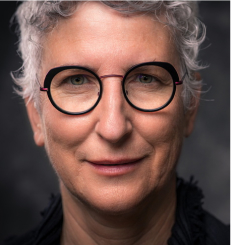
Megan Sherer is a certified somatic therapist and licensed hypnotherapist whose mission is to help others connect to their most authentic expression of love. She teaches women how to prioritize self-care to build confidence, healthy relationships, and a strong sense of purpose. She hosts the Well, Then podcast and founded the nonprofit organization Be More and the self-guided therapy app The Self Care Space. She lives in Washington and travels to lead women’s retreats. For more, visit megansherer.com.

Author photo © Light and Armour Photography

600 Podcasts and Counting…

Subscribe to Insights at the Edge to hear all of Tami’s interviews (transcripts available too!), featuring Eckhart Tolle, Caroline Myss, Tara Brach, Jack Kornfield, Adyashanti, and many more.

Meet Your Host: Tami Simon

Founded Sounds True in 1985 as a multimedia publishing house with a mission to disseminate spiritual wisdom. She hosts a popular weekly podcast called Insights at the Edge, where she has interviewed many of today's leading teachers. Tami lives with her wife, Julie M. Kramer, and their two spoodles, Rasberry and Bula, in Boulder, Colorado.

Photo © Jason Elias

Also By Author

Take Your Inner Child on Playdates

Have you ever been ice-skating before? It sounds like a fun winter activity (especially if you enjoy the cold, like I do), but it can be frustrating and even downright scary if you’re new to it.

Picture this: I took my nephew ice-skating for the first time, full of excitement to see him experience some joy. At twelve years of age, he was already taller than me and had size thirteen feet thanks to his six-foot-eight-inch-tall dad (my brother). The biggest rental skates they had came with worn-out laces rather than the secure plastic bindings all of the other skates had. I could see that they were a little loose around the ankle, but we tied them as best we could and hit the ice.

If you’ve ever seen a newborn deer figuring out how to walk for the first time, you can picture my nephew’s first time on ice skates. His ankles kept knocking in, and he was reaching to hold onto anything for dear life as he wobbled around the perimeter of the rink. It was difficult to watch, not because it was embarrassing, but because I know how hard he is on himself when he’s not immediately good at new things. I wanted to see him having fun, and instead I saw him frustrated and discouraged as all he could do was attempt to remain vertical.

I figured it couldn’t get worse, so I suggested that we trade in his skates for a smaller pair with the more secure plastic buckles to see if that made any difference. He went along with it, probably just to humor me, and we stuffed his feet into some size twelves and made sure his ankle support was good as could be. When I tell you it was a night and day difference, I’m not exaggerating. Suddenly he was speeding around the ice like a pro, lapping past me and his sisters with the biggest smile on his face. He circled the rink over and over again; as his confidence grew, so did his joy, and he even began to try tricks and spins. All he had needed was one little adjustment to his foundation, and he suddenly felt safe enough to have fun.

Here’s the thing: most of us go around in our lives on rickety old skates with worn-out laces. When your only focus is doing your best to remain upright, there’s not much room for joy or play. The big shame in that is that play often is the medicine we most need.

In my experience, the crux of inner child work is reconnecting to the part of you who knows how to play. Sometimes you may first need to make some adjustments that allow you to feel safe enough to play, like practicing nervous system regulation and self-soothing. Once you’ve done that, though, your goal is to invite in as much play as possible. And not adult versions of play that are really just a facade for dissociative behaviors, but real, childlike wonder.

Invite in curiosity and awe and silliness and uninhibited joy. Start by returning to the things you loved to do when you were a kid. Maybe that means setting aside time each weekend for arts and crafts. Maybe it means participating in physical activities that feel like play, such as dancing, swimming, sports, or jumping on a trampoline. Maybe it just means giving yourself permission to skip while you walk or sing while you drive.

The point is, when you bring those younger versions of you into your present-day life, you not only have more fun, but you also experience more healing. We were never meant to lose touch with our inner child. Yes, it’s important to learn how to be self-sufficient and responsible, and aging is inevitable. But it’s equally important not to take yourself too seriously along the way.

Try This

Your homework is to set regular playdates with your inner child. Do things that sound like fun, even if they don’t make logical sense. Allow yourself to be as carefree and openhearted as possible, without judging the things that bring you joy. The sillier it feels, the more on point you likely are. Here are some examples to consider:

  • Take an afternoon off of work and go to an amusement park.
  • Schedule an evening of watching your favorite childhood movies.
  • Spend the weekend out in nature, frolicking with your imagination.
  • Try something brand new, like rock climbing or ice-skating, to tap into that feeling of beginner’s mind.

Play is an important part of our overall well-being. Consistently making time to get into that creative flow state will help you deepen your relationship with your inner child . . . and your adult self. I suggest checking in at least once per month, if not weekly, to see where you can fit more play into your life.

Excerpted from Choose Your Self: How to Embrace Being Single, Heal Core Wounds, and Build a Life You Love.

Megan Sherer


Megan Sherer is a certified somatic therapist and licensed hypnotherapist whose mission is to help others build healthy and fulfilling relationships, starting with self. She hosts the Well, Then podcast and founded the women’s therapy app The Self Care Space. For more, visit megansherer.com.

Choose Your Self

Learn More
Amazon | Barnes & Noble | Bookshop | Sounds True

Megan Sherer: Being Single: An Intentional Experiment

Have you ever found yourself in an intimate relationship that seemed great at first but quickly devolved into something extremely dissatisfying? Maybe you ignored the red flags you saw on that first date or told yourself it’s still better than being alone. Why do we do this to ourselves? How can we break the pattern? In this episode of Insights at the Edge, join Tami Simon in conversation with coach and somatic therapist Megan Sherer, sharing empowering teachings and approaches contained in the new book Choose Your Self: How to Embrace Being Single, Heal Core Wounds, and Build a Life You Love

Give a listen as Tami and Megan discuss: becoming one’s own closest friend; working with shame; overcoming our fear of loneliness; feeling your feelings (instead of intellectualizing); the inherent difficulty of the path of healing and growth; when self-love is really hard; emotional availability; separating your self-worth from your relationship status; trust in life; aligning your values and your choices; the difference between a body and a soul; creativity and purpose; somatic therapy, trauma work, and the human nervous system; the concept of “situationships”; grace in times of transition; establishing healthy boundaries; and more.

Note: This episode originally aired on Sounds True One, where these special episodes of Insights at the Edge are available to watch live on video and with exclusive access to Q&As with our guests. Learn more at join.soundstrue.com.

You Might Also Enjoy

Michael Singer: Living Untethered

What would change if you could witness your thoughts and emotions without being consumed by them? What if the energy you seek through external circumstances has been flowing within you all along, simply waiting to be untethered?

This week, Tami Simon revisits a beloved conversation with Michael Singer—bestselling author of The Untethered Soul and its profound sequel, Living Untethered: Beyond the Human Predicament. Michael is also the author of The Surrender Experiment and the creator of Sounds True’s transformative online course Living From a Place of Surrender.

Join Tami and Michael to explore:

  • The seat of awareness and what it means to truly be “in there” • The three-ring circus of consciousness: sense perceptions, thoughts, and emotions • Shakti—the energy flow within that either expands or contracts based on our internal blockages • Samskaras: the stored impressions from past experiences that shape our present reactions • Practical techniques for letting go: positive thinking, mantra repetition, and witness consciousness • The profound process of transmutation—how blocked energy transforms into love when we stop resisting • The difference between the conditional lower heart and the boundless spiritual heart • Why “you must die to be reborn”—letting go of who you think you are to discover who you really are

If you’re ready to stop bothering yourself about the moments in front of you, to untether from patterns that no longer serve you, and to discover the inexhaustible source of energy already flowing within—this conversation offers a clear, practical roadmap home.

Listen now and discover what it means to live untethered.

Richard Rudd: The Soft Journey to the Future Human


What if the challenges we face—both personal and collective—are signs of humanity crawling up the reed, preparing for a metamorphosis as dramatic as a dragonfly’s transformation?

This week on Insights at the Edge, Tami Simon speaks with Richard Rudd—a teacher, mystic, award-winning poet, and founder of the Gene Keys. Richard shares the story of his remarkable three-day awakening at age 29, when he experienced what he now understands as glimpses through “the future human”—a state of pure light, intelligence, and complete absence of fear. This experience led him to develop the Gene Keys, a synthesis of ancient wisdom traditions with modern understanding that helps people transform shadow patterns into creative gifts.

Join Tami and Richard to explore:

  • Richard’s extraordinary awakening and memories of both past and future consciousness
  • The dragonfly as an allegory for humanity’s evolutionary metamorphosis
  • Why 2026-2027 may mark a critical turning point—”the year of the closing door”
  • The Gene Keys system: transforming 64 shadow patterns into gifts and divine attributes
  • The art of contemplation as gentle, patient transformation
  • Why fear increases as old paradigms decline—and what’s emerging beneath the surface
  • Strange attractors and signs that systems are preparing for quantum leaps • Heart intelligence versus AI and the resistance of remembering what’s real
  • How doubt, corruption, conflict, and other shadows contain hidden gifts of inquiry, equilibrium, and peace

If you’re sensing both the collapse of old structures and the emergence of something new, this conversation offers poetic wisdom for navigating the threshold between worlds.

Listen now to discover the contemplative path through transformation.

This conversation offers genuine transmission—not just concepts about awakening, but the palpable presence of realized teachers exploring the growing edge of spiritual understanding together. Originally aired on Sounds True One.

Frank Ostaseki: “I’m Allergic to the Notion of a G...

What truly matters when we face the end of life? After decades of sitting at the bedside of hundreds of dying people, Frank Ostaseski has distilled the deepest human concerns into two essential questions: Am I loved? Have I loved well?

This week on Insights at the Edge, Tami welcomes Frank Ostaseski—co-founder of America’s first Buddhist hospice, the Zen Hospice Project, founder of the Metta Institute, and author of The Five Invitations: Discovering What Death Can Teach Us About Living Fully. Frank brings extraordinary wisdom from his pioneering work in compassionate end-of-life care, along with profound personal insights from his own encounters with heart surgery, strokes, and the transformative vulnerability of being “on the other side of the sheets.”

Join Tami and Frank to explore:

  • The two essential questions that arise when facing death—and what they reveal about living fully now
  • Why emotional flexibility is the true condition for healing and transformation
  • How to meet our own fear and pain without abandoning ourselves or others
  • The practice of “allowing” as a path to both wisdom and compassion
  • What happens in the dying process: surrender, reconstitution, and coming home
  • Why Frank is allergic to the notion of a “good death”
  • The indestructible love that emerges when we keep our hearts open through pain
  • How to practice dying by paying attention to everyday endings

This conversation is for anyone grappling with loss, change, or the fundamental questions of existence—offering not prescriptive answers, but the profound medicine of honest presence and the recognition that our vulnerability itself is one of our most beautiful human qualities.

For more with Frank Ostaseski:

Year to Live Course (Spirit Rock Meditation Center)

Spirit of Service (Upaya Zen Center)

Awareness in Action: The Role of Love (Upaya Zen Center, Frank Ostaseski & Sharon Salzberg)

This conversation offers genuine transmission—not just concepts about awakening, but the palpable presence of realized teachers exploring the growing edge of spiritual understanding together. Originally aired on Sounds True One.

>
Share via
Copy link
Powered by Social Snap
