Customer Favorites

The Practice of Presence

PRACTICE ONE PRESENCE

START HERE . . .
I’m starting with love. I’m starting with breath.
I’m starting with stretching my body that carries me despite the aches.
I’m starting with a hand over my heart. I’m starting with forgiveness.
I’m starting with a clean slate.
I’m starting with a cup of tea and a crisp new page. I’m starting with a tearful release.
I’m starting with wind on my face and gratitude on my lips. I’m starting with my eyes up, not down.
Today, life is calling me to take my own path— Go at my own pace,
Stop when needed,
Notice the signs, people, and sights meant for me. Today, life is calling me to show up—
And I take this brave step by declaring . . .
Love is where I’m starting.
May it also be where I am going. Love IS the way.

Ever since I recovered Google Island, the book I wrote as a child, I’ve been making an intentional effort to connect with that younger version of me, the one I now call “my Dreamer Girl.”

This was the “me” who knew at a very early age that lovingly respond- ing to myself and those around me brought me joy. Over the past few years, I’ve spent time remembering what my Dreamer Girl was like.

She couldn’t walk by a stray cat without talking to it.

She marveled at the sounds she made with her violin and bow.

She loved the rush of the wind when she swung as high as she could go.

She freely ran through the sprinkler in her bathing suit, unhindered by her squarish body that held an abundance of freckles.

And most of all, my Dreamer Girl’s joy was found in filling spiral notebooks with observations, stories, and dreams.

I can’t pinpoint exactly when I decided these inclinations were not acceptable and therefore needed to be abandoned. I’m pretty sure it was during adolescence when I began assuming the roles that gained the world’s approval—roles like the Planner, the Go-Getter, the Accommodator, the Helper, and the Overachiever—and when accolades took precedence over pleasure.

And those roles were just the beginning. In the twenty or so years that followed, I took on so many roles and expectations that it should have come as no surprise when it all became too heavy to bear.

But it did. I can still see myself at my breaking point—the teacher, the partner, the mother, the daughter, the sister, the volunteer, the completist, the juggler, the people-pleaser, the fixer, all simultane- ously coming undone during a morning jog, my well-crafted roles unraveling so quickly I didn’t even try to hold myself together.

Fueling my breakdown was a question I got a lot: “How do you do it all?” I’d always taken it as a compliment, but not on this particular day. At thirty-eight years old, I’d reached the very frayed end of myself, and that question loomed before me, forcing me to stop and face the answer I’d been running from.

I could “do it all” because I missed out on life—I missed out on the laughing, the playing, the creating, the connecting, the memory mak- ing . . . the living . . . the loving . . . and what I missed I cannot get back.

That truth was so gut-wrenching, I was forced to stop. I collapsed to my knees and I wept for all that I’d lost and the desolate place I was in. It was then and there that I decided to tell the truth. Looking back now,

I realize the significance of that response. For once, I did not push the pain and discomfort away. I allowed myself to feel it, to let truth enlight- en me, which is why tears of despair turned into tears of relief.

I’d lost my connection with my Dreamer Girl, the tree climber, the notebook filler, the music maker, the seed planter—but she was not gone. Oh no, she was still with me, in here, hand over heart.

I just needed some time . . . space . . . and permission to reconnect with her.

Dear Soul Shift Companion, does that thought resonate with you? Because here’s the reality: as we grow further and further away from childhood, the demands and stress of life increase. We forget we have the power to say yes to what delights our heart and soul, makes us feel alive, and brings us peace. But in order to live an au- thentic, joyful, and purposeful life, we must remember how to say yes to those very things!

We can do it through the Practice of Presencean intentional choice to temporarily push away distractions and be fully present in the mo- ments of our life.

Within hours of my emotional morning run, I made this choice for myself.

I was in the middle of making lunches. My younger daughter, Avery, who was almost four years old at the time, was on the sofa watching The Lion King. My computer was open, the phone was buzzing, and I was thinking about all the things I needed to do that day. In that moment, I looked up and noticed—really noticed—my child. A clear voice inside me said, “Go be with her. There is nothing more import- ant right now.”

Without closing the bag of bread or looking at the clock, I placed the knife across the jar of peanut butter and went to hold my child.

What happened next was something no one had ever done in my whole life: my daughter brought my hand to her lips and gently kissed

the inside of my palm, as if offering a silent but powerful acknowledg- ment of my presence.

This is remarkable, I thought. Tears filled my eyes.

I was so grateful I did not miss that moment and knew I didn’t want to miss any more.

This strong desire to not miss my life is what sparked my Practice of Presence.

Of course, at the time, I did not know it would become my Practice of Presence . . . I called it “going hands free,” a term that was inspired by that kiss-on-the-hand moment.

It might sound contradictory to the process, but being a planner, I needed a plan. Realistically, I knew I could not overhaul my life, give up technology, or abandon all my duties and responsibilities, but that initial response I made to heed the inner voice demonstrated it was possible and practical for me to dedicate small increments of time to just being present.

As an experienced teacher of students with behavioral issues and low self-esteem, I knew the impact of small, achievable steps in creating new, positive pathways. Change begins with a behavioral action, and when you change your behavior, your perspective starts to shift, too.

So, I started with ten-minute periods of time during which I set aside my phone, computer, and agenda to be fully present and open to connection.

It was impossible not to notice how one choice produced a ripple of positive outcomes. For example, after opening my pop-up chair at my older daughter’s swim meet, I chose not to get out my work in an attempt to maximize the free time. Seeing my open lap and available attention, Avery asked if she could sit there. Holding her made me feel at peace and connected to her. When the meet was delayed, I did not fly off the handle because my plan was derailed. Instead, my daughters and I went and asked the coach how we could help, which he seemed to appreciate.

We got home later than expected that night, but I hadn’t yelled or felt that internal pressure . . . which resulted in my falling asleep without

the pain of regret. With one choice to be fully present, a series of mean- ingful experiences were created, lasting far beyond a solitary moment.

As I continued to practice choosing connective presence over pro- ductivity, efficiency, distraction, and control, I realized that a feeling of peace consistently came along with that choice; it was as if I was receiving an internal message of encouragement from my soul that said, This feels in line with how I want to live.

Now, does this mean that from this point on life was rainbows and

butterflies? Absolutely not. The damaging habits and beliefs I’d car- ried for decades were deeply ingrained, and life continued to deliver unexpected challenges. So, naturally, there were times when I didn’t choose a loving, compassionate, or healthy response to conflicts or big feelings. But . . . I was practicing.

And here was the difference: when I encountered a painful exter- nal clue—a wounded expression, a troubling comment, an upsetting memory, an uneasy feeling—I did not push it away. The difference was . . . I acknowledged it. I allowed myself to feel my response to the discomfort without judgment, so it could be used as information to lead and enlighten me.

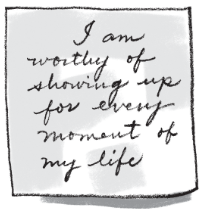
Because of this willingness to be present for it all—the remarkable moments and the mundane moments, the peaceful moments and the uncomfortable moments—I was able to move from the painful truth of I am missing my life to a new, healing truth:

Rachel Macy Stafford is the New York Times bestselling author of Hands Free Mama, Hands Free Life, Only Love Today, and Live Love Now. Rachel is a certified special education teacher whose personal strategies are universal invitations to embrace life with urgency and cultivate connection despite the distractions of our culture. Her blog and social media platform are sources of inspiration to millions. For more, visit handsfreemama.com.
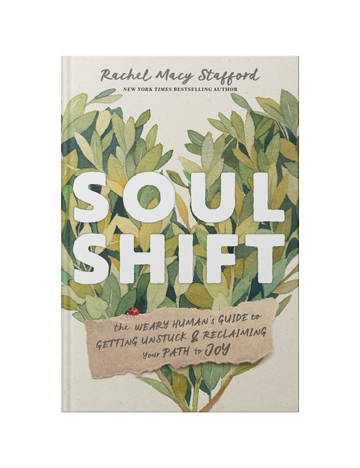
Learn More
Amazon | Barnes & Noble | IndieBound | Bookshop | Sounds True

Sandra Ingerman: Healing with Spiritual Light

Sandra Ingerman is an internationally renowned shamanic teacher and the author of many books. Her published works include The Book of Ceremony, Walking in Light, and Awakening to the Spirit World. In this episode of Insights at the Edge, Tami speaks with Sandra about the upcoming online course Healing with Spiritual Light: The Shamanic Power of Transfiguration to Heal Ourselves, Each Other, and the Earth. Specifically, Sandra comments on transfiguration as a spiritual practice, highlighting how it can be a portal to both physical and environmental healing. Tami and Sandra talk about the inherently transforming power of light, as well as some of the scientific evidence around transfiguration. Finally, Sandra emphasizes the imperative to engage with transfiguration in the face of climate change and considers the future shape of human culture. (66 minutes)

Lauren Geertsen: Cutting the Strings of the Invisible ...

Lauren Geertsen is a body connection coach, intuitive mentor, and nutritional therapy practitioner. With Sounds True, Lauren has published a book titled The Invisible Corset: Break Free from Beauty Culture and Embrace Your Radiant Self. In this episode of Insights at the Edge, Tami and Lauren discuss how we can shift from trying to dominate and control our bodies, to entering into a state of true body partnership. They explore the many layers of history and culture that have led us into our current paradigm of ownership over women’s bodies, both the obvious ways in which the beauty industry emphasizes appearance, as well as more deeply embedded and insidious societal messages. Lauren also breaks down the five key “strings” that keep the invisible corset in place, helping women recognize their own internalized oppression. Finally, Tami and Lauren talk about the power of intuition, and how taking off their corsets allows women to access their natural intuitive capacities as bodily awake, intelligent beings.

The Power of Mapping Your Emotions

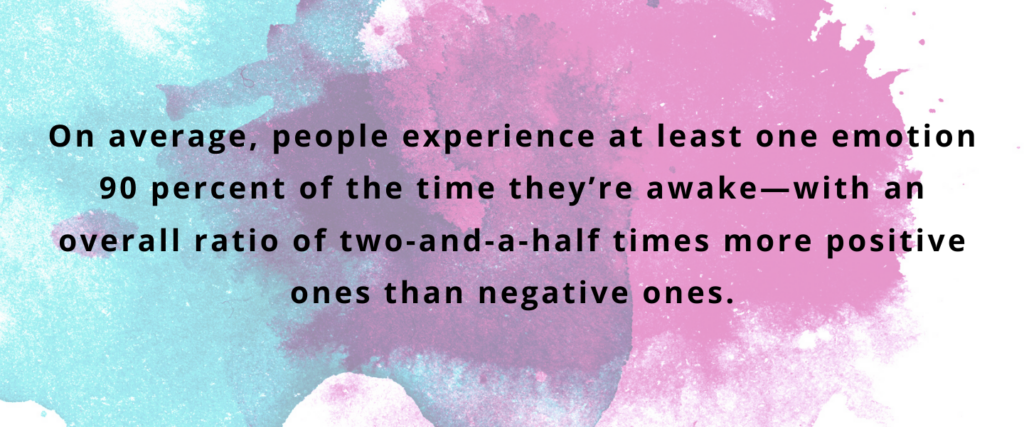
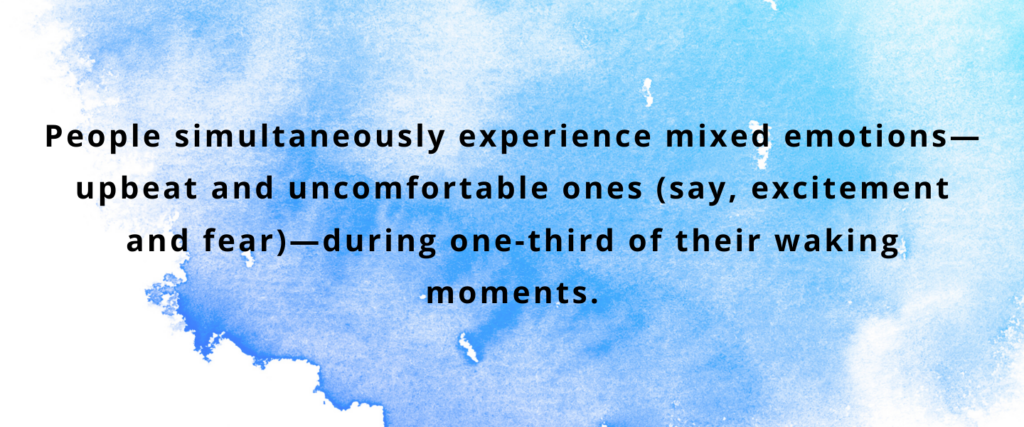
It’s in everyone’s best interest to learn to remove the emotional blinders and identify emotions accurately, both the uncomfortable and the upbeat ones. After all, unpleasant emotions are normal and natural, a fundamental part of being human. Emotions fluctuate on a daily basis, often several times in a given day. If you didn’t experience negative feelings now and then, the positive ones wouldn’t be as noteworthy or joyful; your emotional life would likely be unnaturally narrow. You would also be deprived of the opportunity to glean important insights into yourself. Feelings, both the good and the bad, are silent messages, alerting you to pay attention to something in your personal or professional life, in your behavior, or in the world around you.

Instead of separating emotions into categories such as good or bad, positive or negative, happy or sad, it’s better to view all your emotions as useful information, as “evolutionarily evolved responses that are uniquely appropriate to specific situations,” says Karla McLaren, MEd, author of The Language of Emotions. “When you stop valencing, you’ll learn to empathically respond to what’s actually going on—and you’ll learn how to observe emotions without demonizing them or glorifying them.”

Being able to recognize and express what you’re feeling helps you better understand yourself (leading to greater self-knowledge); validate your emotions and tend to your own emotional needs; and take steps to address those feelings directly by communicating and responding to them effectively. Having emotional self-awareness can motivate you to make healthy changes in your life, take action to improve the world around you, and become more psychologically resilient—that is, better able to cope with crises and rebound from setbacks.

Learning to Unpack Your Emotions

For some people, engaging in free association can clear the cobwebs from their minds, almost like opening the cellar door to a musty basement and letting in light and fresh air. To do this, you might take a break and consider how you’re feeling about what you’re doing, reading, seeing, or thinking every few hours throughout the day. If a general word comes to mind—such as stressed, anxious, or angry—dig deeper and ask yourself what other emotions you might be feeling (maybe fear or annoyance) along with it. If you do this out loud in unedited, private moments, you might find yourself blurting out what you’re really thinking or feeling, revealing the emotions that are taking a lot of energy to keep inside. This is really about unpacking your suitcase of feelings, or untangling the knot of emotions that is taking up space inside you.

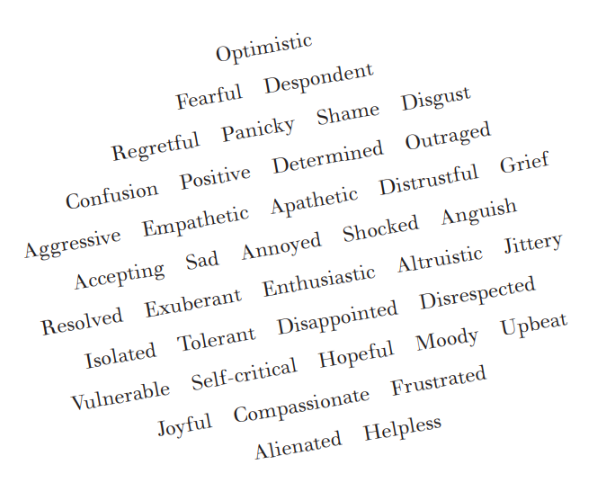
When you think about this in the abstract, it can be hard to pinpoint how you’re feeling. You may just see a swirling mass of a feeling quality such as “dread” or “foreboding” rather than recognizing the specific emotions you feel. To get to the root of your feelings, spend five minutes looking at the word cloud below—no more than five so that you don’t have time to filter your responses—and choose the emotions that resonate with your mood-state lately.

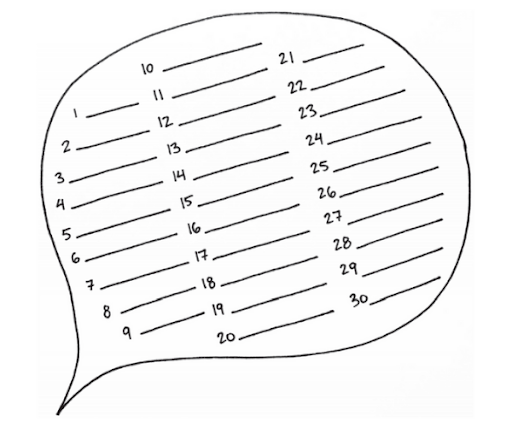
If reviewing these words evokes other feelings for you or if words or phrases that apply to you were not on this word cloud, jot these down in the blank word cloud that follows. Give yourself another five minutes to think about your recent state of mind and jot down phrases, images, or words that occur to you. This is your opportunity to personalize it without any limits or restrictions. If you feel stymied or draw a blank initially, think about your recent responses to current events or situations in your personal life or on the world stage. Try to be as honest as you can by focusing on how you’re really feeling when no one is watching—free-associate without judging, censoring, or revising what you write down.

Once you’ve finished your list, look at the order of the words you wrote down: Did they progress from all negative to increasingly hopeful? Do they portray an internal tension or friction in going back and forth between various feelings? If all the words are positive, consider the possibility that you may be in some degree of denial, focusing only on the window dressing rather than the emotions that lie beneath the surface. Also, consider this: Is there a pattern of shallow, visceral reactions that came out initially, followed by more complex thoughts and feelings? If so, think about whether you’re giving yourself enough time in your life to reflect. If you came out with highly intellectualized words or phrases first, it might suggest that you put on a bit of a facade when engaging with the world, and you might benefit from striving for a deeper engagement or familiarity with your emotions.

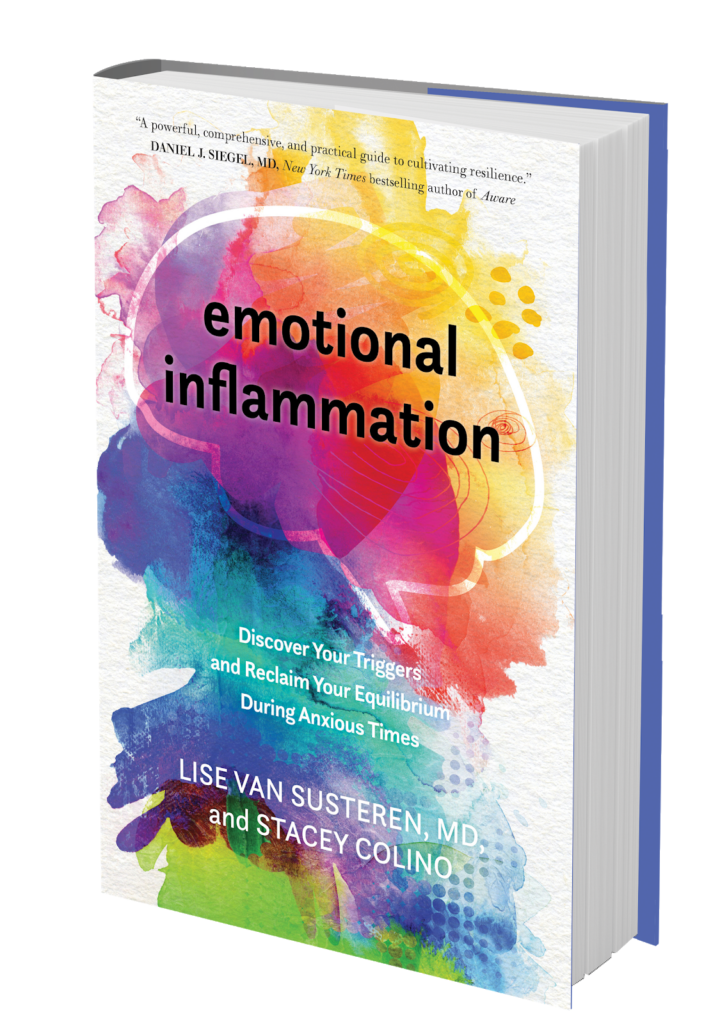
This is an excerpt from Emotional Inflammation: Discover Your Triggers and Reclaim Your Equilibrium During Anxious Times by Lise Van Susteren, MD, and Stacey Colino.

Buy your copy of Emotional Inflammation at your favorite bookseller!
Sounds True | Amazon | Barnes & Noble | Bookshop

How to Bloom in the Dark: Self-Compassion, Compost, an...

Compassion is the magic ingredient that turns our personal “compost” into personal evolution.

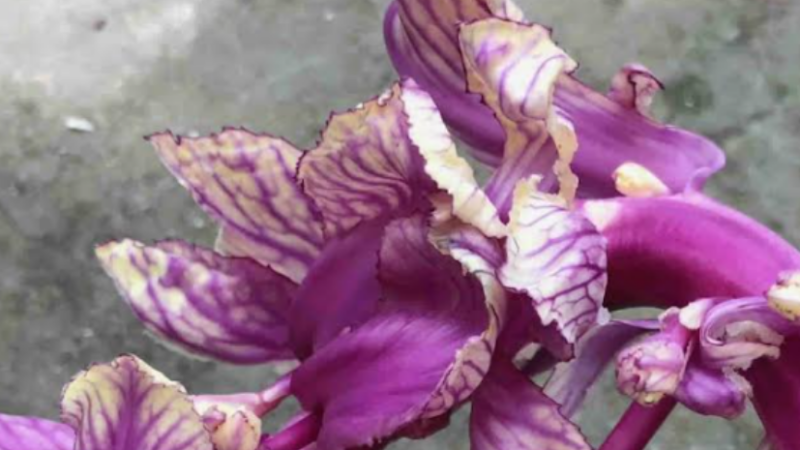
 Some time ago, I found a strange bloom in the kitchen. It was elegantly twisted, like a dragon at a Chinese New Year celebration. It was frilled, purple, and pungent. This exquisite thing grew out of a chunk of purple cabbage that I’d put under the sink to go out for compost. Instead of fading quietly however, it burst into new life in the dark grotto of my cabinetry. It blossomed into something unexpected, unusual, and fiercely beautiful.

Reflecting on the discovery of this “flower” in the shadows, I’m reminded of, and heartened by, the fertility of dark times. Many people are feeling a collective spiritual darkness now, exhausted and frustrated, maybe also angry and scared. Having compassion for ourselves and others is especially important in times of literal and metaphorical darkness. How can we do this if we already feel overloaded?

Nature is our ultimate model and guide—in the light, in the dark, and in the most surprising and gorgeous ways. Cue the weird, glorious cabbage flower which came to life in the dark. What was being shown there?

There is the clear compost metaphor. Compost is the stuff we reject, the moldy, wilted, too hard, too soft, nasty bits that don’t make it to the table. It’s also the leftovers from delicious things we appreciate and enjoy, silky mango skins, green tea leaves, dark coffee grounds.

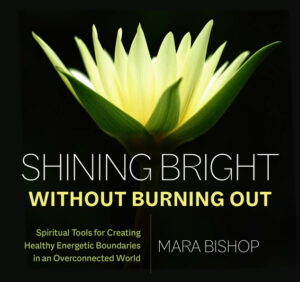
It all transforms into a rich sloop that eventually nourishes future plants. Our personal work includes processing our own “dark” sides, the parts we’d like to hide or discard. Self-compassion (and compassion for others) holds both the rejected and respected parts of who we are. Like composting, it isn’t always pretty, but it’s potent. Research shows self-compassion helps us stay present and kindhearted without sinking into absorptive empathy, which can lead to overload and burnout. This meditation is part of the toolkit in the audio course Shining Bright Without Burning Out.

The cycles of the natural world, into which we are interwoven, take time. It’s hard to be patient, to let everything, both scorned and enjoyed, stew in our symbolic personal compost piles. The speed with which that brew changes from nasty to nourishing varies widely with the internal and external conditions. Sometimes all those different elements take a long time to dissolve and break down. Sometimes it turns around faster than we think possible, like time-lapse photography of a log rotting on the forest floor with new green shoots springing to life overnight. Compassion is the magic ingredient that turns our personal “compost” into personal evolution.

The dark supports transformation. Times of literal darkness are needed for regeneration. Roots, seeds, and bulbs prepare. People and animals sleep. Times of symbolic darkness are also helpful. In darkness, transformative processes happen without spectators, often below the level of our conscious awareness. These are periods of catharsis, healing after trauma, cocooning in preparation for the next version of ourselves and our world.

We sometimes feel hopeless and helpless in the dark. Our society avoids sinking into it. Instead, we gravitate towards purveyors of easy “love and light!” spirituality, shying away from the deep, gooey work that happens to the larval versions of ourselves (and those around us) when we’re in the darkness of the cocoon. Self-compassion is most needed when we’re a mess.

The dark is a vital part of the wheel of our days, our years, our lifetimes. We need it to survive and be healthy in the long term. So, let’s embrace it, explore it, and be gentle with ourselves as we confront our fear of it. From this darkness we are nourished to bloom into the light.

@ 2021 Mara Bishop MA

Order Shining Bright Without Burning Out now! 

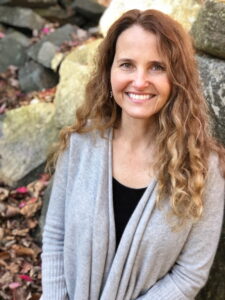
Mara Bishop has
over 25 years of experience helping people find spiritual health and
well-being. Her Personal Evolution Counseling™ method blends shamanism,
psychology, intuition, energy healing, and nature-based practices. She
lives in Durham, NC with a beloved family of people, animals, and
plants.

More information about Mara is at www.WholeSpirit.com

Terry Real: Fierce Intimacy

Terry Real is a family therapist, author, and founder of the Relational Life Institute, which hosts workshops on family and relationships throughout the country. He has written several books, including The New Rules of Marriage: What You Need to Make Love Work. Terry will be a featured presenter during Sounds True’s upcoming online training summit Psychotherapy 2.0, which will take place September 7–13. In this episode of Insights at the Edge, Tami Simon and Terry talk about the inherent challenges of being in relationship and the many approaches to addressing those challenges in couples therapy. Terry discusses how men and women relate to one another in different ways, as well as the steps necessary when couples are badly out of sync. Finally, Terry and Tami speak on the Relational Life approach to therapy and the skills we need to develop in order to take our interpersonal relationships up to “full throttle.”
(67 minutes)

>
Copy link
Powered by Social Snap