Customer Favorites

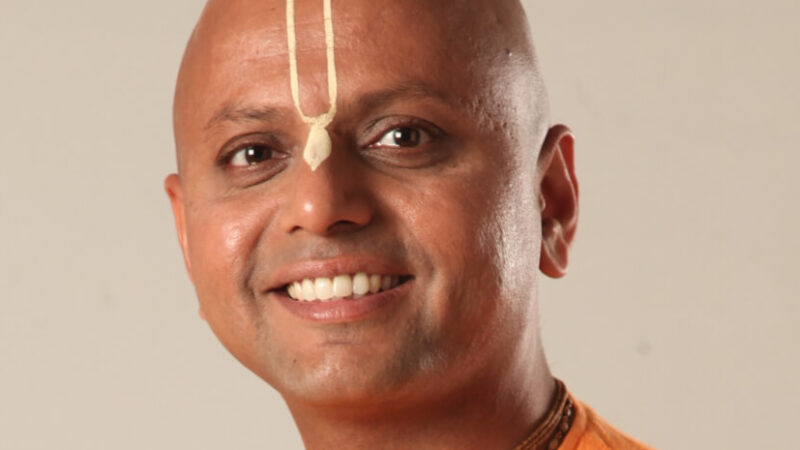
Gaur Gopal Das: Your Greatest Power

Gaur Gopal Das is a former Hewlett-Packard engineer who joined the International Society for Krishna Consciousness (ISKCON) as a monk in 1996. Since then, he has become a popular speaker and motivational coach both on YouTube and in public. In this podcast, he speaks with Sounds True founder Tami Simon about his new book, The Way of the Monk. Tami and Gaur also discuss his journey of becoming a teacher and sharing spiritual wisdom with others, the power of choosing to be positive, the practice of “feeding your faith,” and much more.

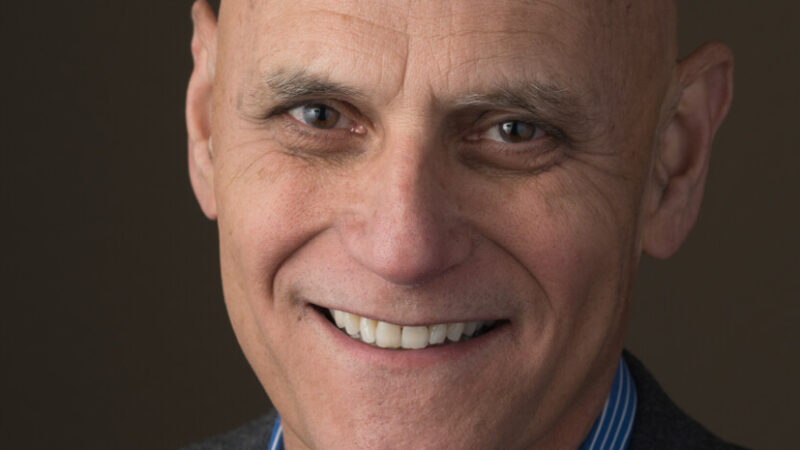
Steven Hayes PhD: Self-Acceptance and Perspective-Taki...

Steven Hayes is a professor, the chair of the Department of Psychology at the University of Nevada, and the author of more than 35 books and 500 scientific articles. The cofounder of the acclaimed Acceptance and Commitment Therapy (known as ACT), Steven is a contributor to the Sounds True book The Self Acceptance Project: How to Be Kind and Compassionate Toward Yourself in Any Situation and the author of the Sounds True audio program Acceptance and Commitment Theory. In this episode of Insights of the Edge—which previously aired as part of an interview series on self-acceptance—Tami Simon and Steven discuss his experiences living with a panic disorder at a young age, and how his own bouts with anxiety shaped his clinical studies. They talk about the practice of perspective-taking and how it can be a powerful bulwark against self-recrimination. Finally, Steven offers his perspective on spirituality and how that perspective informs the core tenets of Acceptance and Commitment Therapy.

Tools for Cultivating Supportive Friendships & Re...

Tools for Cultivating Supportive Friendships & Relationships:

CHRISTOPHE ANDRÉ:

For this toolbox I’d like to put forward a little bit of theory about how we are supported by relationships — that is, to offer an overall look at what we receive from our relationships with others.

The five benefits of relationships. Studies show that social support can be broken down into several families of benefits:

  1. Material support: Others can help us in concrete ways. If I’ve broken my leg, I will be glad if somebody will do my shopping for me. If I have to move, I will be happy to have my friends help me transport the boxes.
  2. Informational support: Others can advise us, give us useful infor- mation, and play the role of human search engines — as intelligent as Google but alive and compassionate — and they won’t resell our personal information afterward.
  3. Emotional support: Others are the source of positive emotions; they give us affection, love, friendship, trust, admiration.
  4. The support of esteem. Others can remind us of our value and good qualities, tell us what they like about us, and sustain our self-esteem at moments of uncertainty.
  5. The inspiration of their example: This is more difficult to evaluate scientifically, but it’s quite real, as we have indicated.

The four varieties of relationships. Another important point is that it is helpful to cultivate varied social relationships, just as it is important to have a varied diet. There are four families of relationships, distributed in four concentric circles:

  1. Our intimates: the people we live with, whom we touch and embrace practically every day. This means mostly our family and best friends.
  2. Our close relations: our friends and colleagues, people with whom we regularly have close and regular exchanges.
  3. Our acquaintances: the whole network of people with whom we have a connection, even occasional, and who we keep track of and who keep track of us.
  4. Unknowns: those who we might also have relationships with, depending on our character. This includes people we might speak to on the street, on public transport, in stores. They can also be sources of help or information for us, as we can for them.

Specialists in social relations remind us that it is important to draw sup- port from these four circles — not only from our intimate and close relations—and to sustain our connections with these four relational spheres by giving and receiving help, information, support, eye contact, advice, and smiles. Because the idea is not only to receive but also to give, by speaking to unknowns and maintaining warm relations with our acquaintances, neighbors, and shopkeepers, we do ourselves good. And we embellish the world, improve it, and make it more human!


MATTHIEU RICARD:

The importance of social connection. We should choose to live in an environment where people are warm, altruistic, and compassionate. If this isn’t the case in all areas of our living space, we should progressively try to establish these values or, if it’s possible, we should leave the toxic environment.

In this connection, I like to cite the case of a community on the Japanese island of Okinawa, which claims to have one of the world’s highest concentrations of people aged a hundred or over. It appears that the main factor in this exceptional longevity is not the climate or the food, but the power of this community, where people maintain particularly rich social relationships. From cradle to grave, they relate very closely with one another. The elderly people in particular get together several times a week to sing, dance, and have a good time. Almost every day they go to schools to greet the children (whether they have familial links with them or not) at the end of the school day. The elders take the children in their arms and give them treats.

Draw inspiration from the righteous, from people who, in our eyes, embody the values of impartiality, tolerance, compassion, love, and kindness. In these times of the migratory crisis, I think of all those who have taken great risks, and I remember those who protected Jewish people during the Nazi persecutions of World War II, particularly those who hid Jews in their homes. These people have since come to be called “The Righteous.” The only common point that emerges from their many accounts is a view of others based on recognition of their common human- ity. All human beings deserved to be treated with kindness. Where we saw a stranger, they saw a human being.

Meditate on altruistic love. Studies in psychology have shown that meditating on altruistic love increases people’s feelings of belonging to a community; it enhances the quality of social connections and compassionate attitudes toward unknown people, while at the same reduc- ing discrimination toward particular groups, like people of color, homeless people, and immigrants.

Draw inspiration from friends in the good and spiritual masters. I recommend that everyone see a historical documentary made in India by Arnaud Desjardins at the end of the 1960s, in which we are shown the most respected of the Tibetan masters who took refuge on the Indian slopes of the Himalayas following the Chinese invasion of their country. The film is called The Message of the Tibetans.


ALEXANDRE JOLLIEN:

The audacity to live. Existing, opening oneself to the other, is running a risk. It means dropping one’s armor, one’s protective coverings, and opening one’s eyes and daring to give oneself to the other and to the entire world. There’s no way you can invest in a relationship, so throw out your logic of profit and loss! What if we were to embark on our day without any idea of gain or of using our fellow human beings? What if we stayed attentive to all the women and men it is given to us to encoun- ter on that day, looking to find among them masters in being human? 

Identify our profound aspirations. Helping others can often amount to imposing a view of the world on them without really paying any attention to what they really want in their hearts. A man bought an elephant without giving any thought in advance to how he was going to feed it. At a loss, he was obliged to turn for help to those around him, and what he got from them was, “You never should have bought such a big animal!” What does it mean to help others? Does it mean committing completely to being there for them? Does it mean going all the way with them?

Authentic compassion. A will to power might enter into our move- ment toward the other—a thirst for recognition, a twisted attempt to redeem ourselves. Daring a true encounter means quitting the sphere of your neurosis and walking the path of freedom together. There’s no more “me,” no more “you,” but a coalescent “us,” a primordial solidarity.

Coming out of the bunker. As a result of having been burned in our relationship with another, the temptation is great to put on armor, to completely shut ourselves up in a bunker-like fortress, even to the point of suffocation. Don’t our passions, our griefs, our loves, and the fierce- ness of our desire remind us that we are essentially turned toward the other, in perpetual communication? Is there a way to live the thousand and one contacts of daily life without our ego appropriating them?

This is excerpted from the newest book from Matthieu Ricard, Christophe André, and Alexandre Jollien, Freedom For All Of Us: A Monk, A Philosopher, and a Psychiatrist on Finding Inner Freedom.
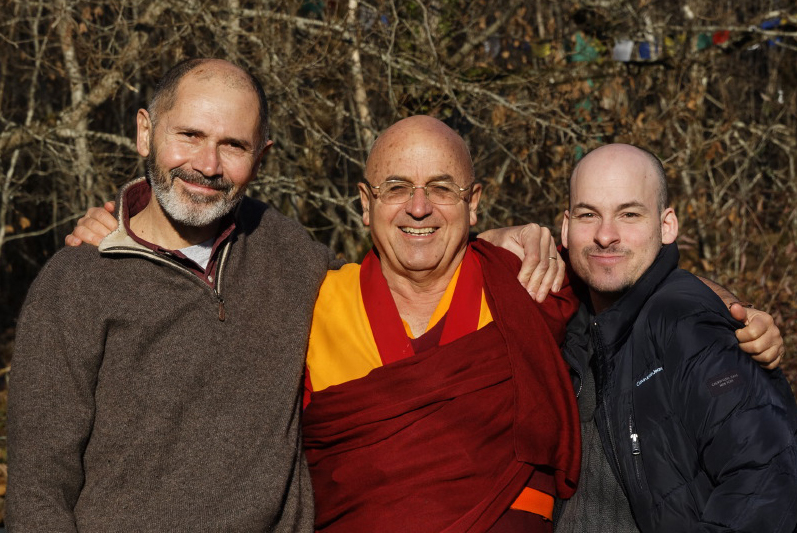
Copy of MatthieuRicard-AlexandreJollien-ChristopheAndré©PhilippeDanais2017


Matthieu Ricard is a Buddhist monk, a photographer, and a molecular geneticist who has served as an interpreter for the Dalai Lama. 

Christophe André is a psychiatrist and one of the primary French specialists in the psychology of emotions and feelings.

 Alexandre Jollien is a philosopher and a writer whose work has been attracting an ever-growing readership. Together, they are the authors of In Search of Wisdom and Freedom For All of Us.

picture of the book titles Freedom for All of Us

Learn More

Sounds True | Amazon | Barnes & Noble | Bookshop | IndieBound

 

James Hollis: A Summons to a Deeper Life

James Hollis is a licensed Jungian analyst and the author of many books on personal development and the search for meaning. His works include What Matters Most, Why Good People Do Bad Things, and Through the Dark Wood. With Sounds True, he has published Living an Examined Life: Wisdom for the Second Half of the Journey. In this episode of Insights at the Edge, Tami Simon speaks with James about what it means to “grow up” in a contemporary society that infantilizes its citizens. They talk about how to recognize the summons of our deep psyche and the steps we must take in order to answer it. James explains that the greatest obstacles to attaining spiritual maturity are fear and lethargy, and describes the inevitable periods of darkness that we will encounter along the way. Finally, James and Tami discuss why it’s important to our development that we choose meaning over happiness. (67 minutes)

The Self-Acceptance Project… a free online video...

Access the Self-Acceptance Project free of charge

Self-aggression, self-acceptance, self-love, and issues of self-worth can be challenging for contemporary spiritual practitioners, even for those who have meditated or engaged in psychotherapy for years. There are many ways we can be unkind to ourselves, often subtle and unconscious, which can affect the way we perceive and engage in our lives, especially in interpersonal and intimate relationship.

In this free, 12-week video event series, I invited 23 psychologists, psychotherapists, neuroscientists, and spiritual teachers to speak with my friend and longtime colleague, Tami Simon, to explore these areas and how we might move toward the creation of a certain kind of holding environment in which we can grow, heal, and transform together.

All episodes of the Self-Acceptance Project are now posted and can be accessed as video or audio downloads, or can be streamed at no cost from the comfort of your own home. We invite you to join us for this pioneering series and look forward to sharing our discoveries with you – and hearing what you have learned. It is our intention that you benefit deeply from this work and that it guide you along your own journey of love and awakening.

Episodes include

  • Developing Shame Resilience with Dr. Brené Brown
  • Waking Up from the Trance of Unworthiness with Dr. Tara Brach
  • Turning Towards Our Pain with Dr. Robert Augustus Masters
  • Begin Exactly Where You Are with Jeff Foster
  • Taking in the Good with Dr. Rick Hanson
  • The Human Capacity to Take Perspectives with Dr. Steven Hayes
  • What if There is Nothing Wrong with Raphael Cushnir
  • No Strangers in the Heart with Mark Nepo
  • Transforming Self-Criticism into Self-Compassion with Dr. Kelly McGonigal
  • Faith in Our Fundamental Worthiness with Sharon Salzberg
  • Developing a Wise Mind with Dr. Erin Olivo
  • Embodied Vulnerability and Non-Division with Bruce Tift
  • Perfect in Our Imperfection with Colin Tipping
  • Staying Loyal to One’s Self with Dr. Judith Blackstone
  • Compassion for the Self-Critic with Dr. Kristin Neff
  • Curiosity is the Key with Dr. Harville Hendrix
  • Kindness is the Means and End with Geneen Roth
  • Healing at the Level of the Subconscious Mind with Dr. Friedemann Schaub
  • Embracing all of Our Parts with Dr. Jay Earley
  • Understanding Empathy and Shame with Karla McLaren
  • Integrating the Shadow with Dr. Parker PalmerLetting Life Be in Charge with Cheri Huber


The Trauma-Trigger Cycle

When you are stuck with old unprocessed experiences living inside you, they can create what I call a trauma-trigger cycle because they are still very much alive in our systems.

Here’s my analogy to help you understand how this works and why it causes so much trouble. Imagine that you have a very difficult experience, for example, having to say goodbye to a sick pet. All of the details in the form of individual feelings, smells, images, sounds, and more get bundled up and deposited into a metaphorical glass trauma capsule—which gets stored in the body. It sits there with all of the old feelings we experienced at the time the event happened. While you might not be aware of it constantly, you are likely feeling those emotions at a low level all the time. When any current situation reminds you of any of those details hanging out in the capsule—either consciously or subconsciously—the old trauma gets “poked,” or reactivated. This is how we get triggered. Being triggered can bring up flashes of those memories, including images, feelings, and any sensory stimuli.

For the most part, except in certain cases of post-traumatic stress disorder (PTSD) from major life events, where sometimes the trigger is known, this trauma-trigger reaction actually happens at a subconscious level, outside of your awareness. Even in obvious situations, you may think you know what the trigger is, and try to avoid it, but it may be something totally different that got stuck in the metaphorical glass trauma capsule. Often, people come to me and say, “Nothing set this off,” “I’m depressed for no reason,” or “I suddenly started feeling terrible but nothing happened.” While this may seem true, I can bet on the fact that while the bad feelings might seem random, they are being triggered in some way that you simply haven’t yet identified. Triggers can be foods, colors, smells,sounds, weather, or anything, really! Finding and resolving triggers can become almost an entertaining game if you let it.

As you can imagine, this entire trauma-trigger dynamic is very unsettling and unpredictable—which can feel like danger to your system and keep you stuck in that freakout response. Not only that, but in this state, you can actually be excessively tuned in to your trauma, seeing reminders of it everywhere, which further traumatizes you.

I had an experience after going through a loved one’s difficult health crisis where every single place I looked, I saw reminders of the experience. And for someone who wonders if everything is some greater “sign from the Universe” (fact: not every single thing is) or my intuition is trying to get my attention because another loved one might be in danger (second fact: trauma and fear clouds intuition), it felt like torture to me. I kept meeting people who had the same illness that my loved one had had, saw posters and billboards advertising medications for the condition, and more. As a distraction while on vacation, I had deliberately picked out several seemingly lighthearted books to take—and it turned out a character in every single book had that same medical condition! I was constantly on edge and further traumatized by all of these things. This is a perfect example of what happens to us in a traumatized state: we become highly attuned to the world around us, perhaps subconsciously scanning for danger, but in the process, we see and get triggered by everyday things we’ve probably passed by a million times before. I realized that had I been tuned in to any other single thing out in the world, like peaches, I likely would have seen that everywhere. This recognition actually led to a funny mantra I used during that time to keep things light while I did the deeper healing work: Look for the peaches! But in all seriousness, what happened as I worked to release the trauma, just like you’ll be doing in this chapter, was that I stopped seeing reminders of it. I have to be honest in that this took months of using energy therapy in different ways to overcome the trauma I had experienced, like you’ll be learning soon—but it worked. Did all the people with this condition go away? Did all the billboards get taken down? No. The less traumatized I became, the less heightened my sensitivity to it was. This is a perfect example of why it’s essential to work with unprocessed experiences.

Emotional memory is stored throughout the entire body. Thanks to the work of Candace Pert, we know that “unexpressed emotions from experiences can get stuck in the body at the level of cellular memory.” This is such a simple explanation for why we feel bad when we haven’t resolved our past experiences. We are still quite literally feeling them. And even if it’s at a subtle level, it may only take a “trigger” from that metaphorical glass capsule to awaken it.

While your own unprocessed experiences may not disrupt your life in the way that clinically diagnosed PTSD does, you may relate to what it feels like to have PTSD, when one or a few memories from life takes over all of it. This is, again, why we must deal effectively and consistently with our emotions instead of suppressing them. Otherwise, we are at risk of our emotions becoming part of future unresolved experiences.

Even knowing all of this, there’s no need to panic. Again, not all experiences traumatize you. And, not all traumas will need to be dealt with in order to get you feeling better. But the ones that do need careful attention. I want you to understand that by working with trauma, we are not trying to force a positive perspective on it or make you be okay with something bad that happened to you. Not at all. What we want to do is release the stress it’s causing you, even if that stress is undetected consciously. We don’t want these traumas taking up space and energy in your body anymore or triggering you without your knowledge.

Working with unprocessed experiences will help empty the metaphorical glass trauma capsule so we stop becoming triggered by the world around us. In other words, you’ll be seeing peaches more easily instead of trauma triggers.

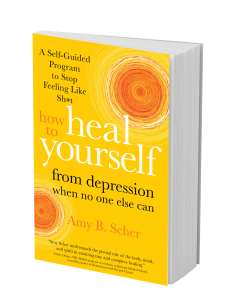
This is an excerpt from How to Heal Yourself From Depression When No One Else Can: A Self-Guided Program to Stop Feeling Like Sh*t by Amy B. Scher.


amy b scherAmy B. Scher is an energy therapist, expert in mind-body healing, and the bestselling author of How to Heal Yourself When No One Else Can and How to Heal Yourself from Anxiety When No One Else Can. She has been featured in the Times of India, CNN, HuffPost, CBS, the Washington Post, Cosmopolitan, the Los Angeles Review of Books, Curve magazine, and San Francisco Book Review. Scher was also named one of the Advocate’s “40 Under 40.” She lives in New York City. For more, visit amybscher.com.


how to heal

Learn More

Sounds True | Amazon | Barnes & Noble | Indiebound | Bookshop