Customer Favorites

Your original face

There is a famous Zen koan that asks, “What is your original face, the face you had before you were born?”

Whenever I have heard this koan, my first response is, “I have no idea how to answer that.” And of course, that is the purpose of a Zen koan, to confound the thinking mind and in so doing, wake us up to a deeper form of knowing.

One thing I have noticed is that the more I am able to sit in that not knowing state, to rest in a sense of “just being”, the more I can relax and feel what, if anything, is needed next. It is not a conceptual process; it is more like a listening. And from that listening, originality emerges (“original” meaning “from the origin” or “from the source”).

Waking up is not about copying anyone or anything. It can’t be. Because as soon as we are mimicking something, we are recycling someone else’s experience. We are one step removed from the source; we are no longer rooted in our own moment-to-moment revelatory experience.

My basic point here is that the more we discover our own Original Face, the face we had before we were born, the more confident we become in expressing ourselves in unique ways. In a sense, great spiritual teachers feel to me like great “artists of the spirit.” And like an inspired musician, poet, or painter, a spiritual artist knows that he or she must spend time in the space of not knowing and then trust the melodies, visions, words, and guidance that come through.

Sometimes people say to me that they are afraid of spiritual awakening because they are afraid of being erased, afraid that they will turn into a paste of nothingness. What I have found is that the more we drop the sense of being separate and disconnected, the more we tune to the underlying, unifying “hum” of being, the more we become plugged in to a current that begins to animate our life. And sometimes, the life force expresses through us in pretty outrageous ways. We take chances. We speak from our heart. We become a mystery to ourselves and a creative force in the world.

To take this even further, what if the more we discover our Original Face, the more our one-and-only physical face starts to express the love and beauty of the cosmos in unusual and distinctive ways? Abraham Lincoln is attributed with saying “Every man over 40 is responsible for his face.” I take this to mean that each one of us has a responsibility for the love and kindness and warmth and openness that our face communicates. What if the quality in our eyes, the shape of our mouth, the openness of our forehead, and even the character of our nose, is a direct expression of our capacity to know and rest in being?

At Sounds True, we often refer to the Wake Up Festival as a celebration of the “many faces of awakening.” And I love that phrase. I look forward to seeing each and every person’s one and only original face this August in the Rocky Mountains.

face

“Cranky” Is a Perfect Word

Dear Sounds True Friends,

“Cranky” is a perfect word. It feels like it sounds; the way it forms in your mouth fits the emotion. It’s perfect for that place between truly sad and properly angry, for times when we ought not to get so upset about trifling things, but we can’t help it. At least, not at first. 

We’re allowed to be sad when hard times come. We’re allowed to be angry in the face of real injustice. But the papercuts of life? The whacked elbows and burnt toast, the stolen parking spots and somebody-took-the-last-cookie days? Not so much. 

We’re supposed to take those moments in stride. We’re supposed to maintain our equilibrium. But moods are unruly and feelings don’t like to be bossed around. “Cranky” is the perfect word for those times when we feel resentful, irritated, and annoyed, but we know our cause isn’t especially sympathetic. When Murphy’s Law strikes, and we’re not yet ready to laugh it off. 

I’m supposed to be patient and mature at times like these, but I can be a great big Crankypants. Knowing I’m not supposed to feel cranky only makes me more cranky. Next thing you know, I’m spiraling. (I’m probably the only one …)  

cranky right now

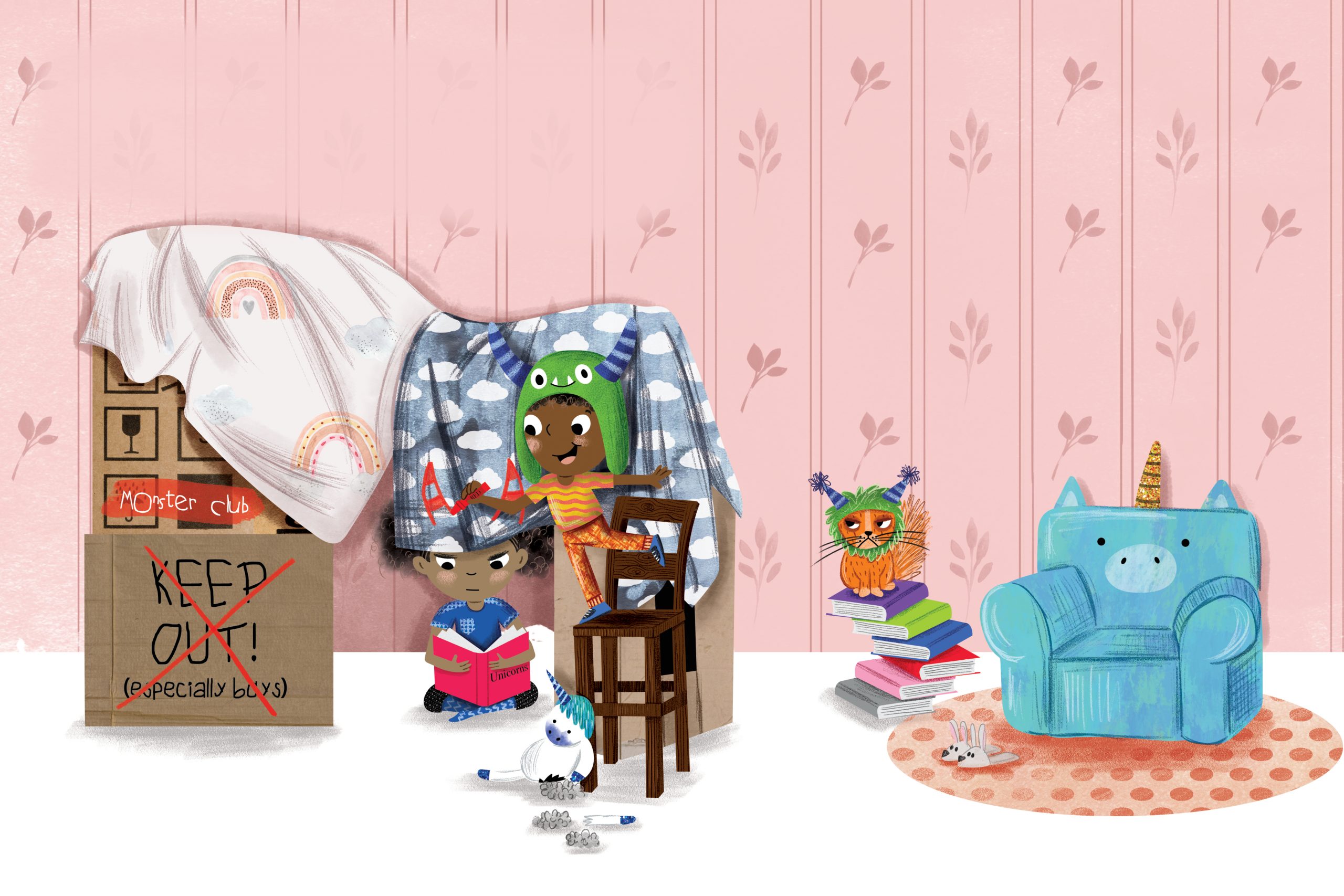
Kids are no different. Life in families presents us all with nuisances and irritations. No one escapes a school day or a trip to the store unscathed. Life jostles us, but for kids, whose time and choices are largely directed by others, those feelings of powerlessness, of being managed and judged by someone who just doesn’t get itand to be fair, sometimes we don’t get it; we weren’t there; we are quick to assumethose feelings can be maddening. 

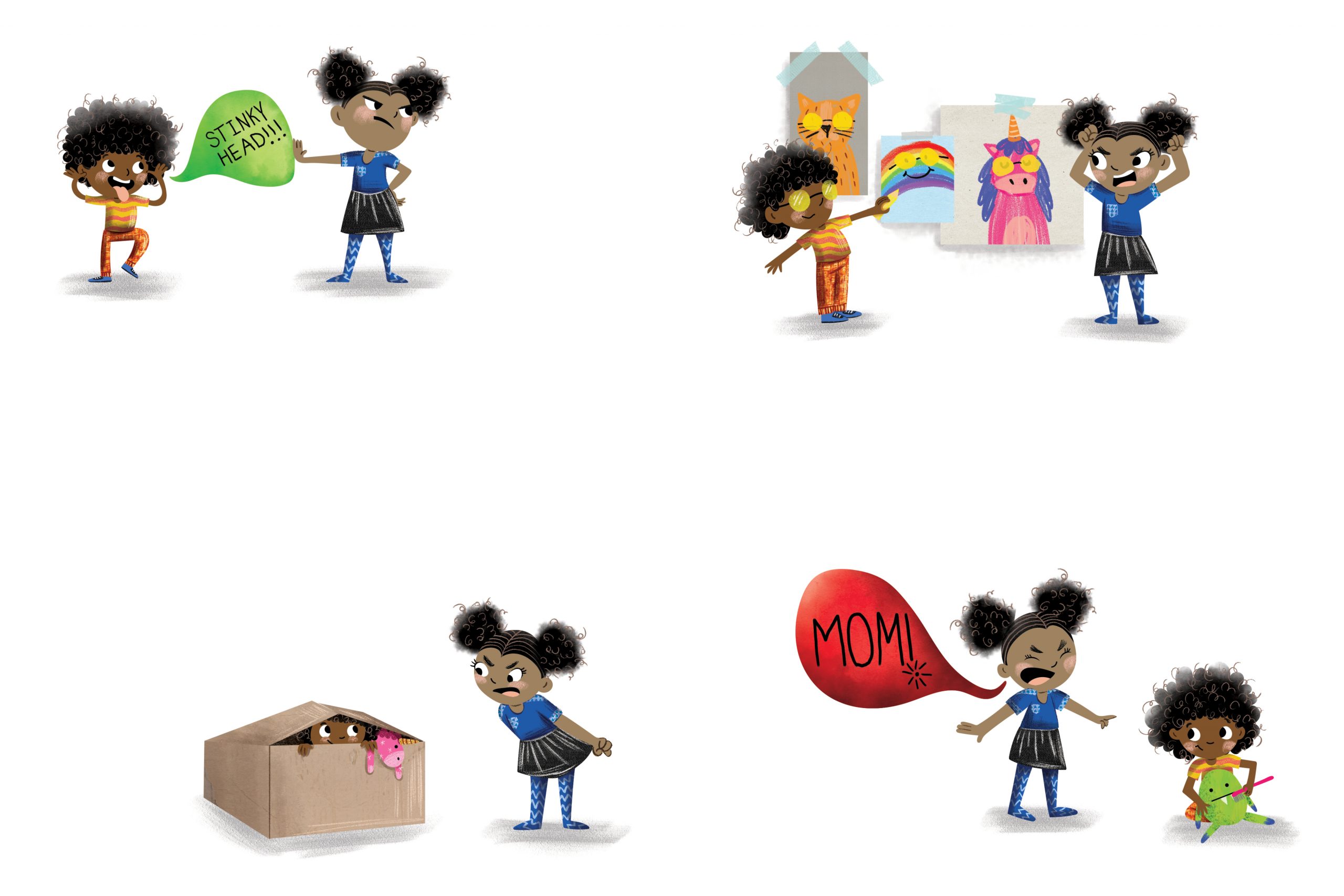
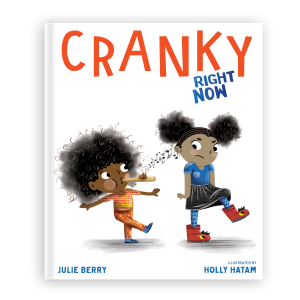
I wrote Cranky Right Now to give kids, parents, families, and teachers a way to talk about cranky times. and especially, a way to laugh about them. Illustrator extraordinaire Holly Hatam’s hilarious illustrations bring the magic. I hope you’ll giggle along with the vexed heroine of Cranky. It’s actually the first step forward. It’s easier to spot the absurdity in someone else’s cranky fit than our own, but the lessons still sink in. Humor is a powerful antidote to being a Crankypants.


cranky right now 2

Sometimes simply having that perfect word, “cranky,” in our arsenal helps. When we can recognize, “Hey, I’m not actually deeply upset right now; everything’s more or less okay; I’m just cranky right now, and it will pass,” we’re already halfway home. 

So get ready to giggle at the heroine of Cranky Right Now as she explores strategies for coping with crankiness. They may help the young people in your life. They may even help you. Not that you have a crankiness problem! Heavens, no. It’s those others around you. They started it …

Yours in absurdity,

Julie Berry


julie berry JULIE BERRY is the author of many books for children, including Wishes and Wellingtons, The Scandalous Sisterhood of Prickwillow Place, and Happy Right Now. Her novel Lovely War was a New York Times bestseller, and The Passion of Dolssa was a Printz Honor title. Three things that make Julie cranky are paperwork, chewed pens and pencils, and mornings that come too soon. She lives with her family in Southern California. Learn more at julieberrybooks.com.


cranky book cover

Learn more and buy now

Amazon | Barnes & Noble | IndieBound | Bookshop | Sounds True

E203: The Difference Between Reality and Your Experien...

While we do not create objective reality itself, we do create our personal experience of reality through the psychological filters formed by our past experiences. Every event that we resist or cling to becomes an internal impression that shapes future perceptions and strengthens the ego’s preferences about how life should unfold. Spiritual freedom comes from letting experiences pass through without resistance, and allowing consciousness to experience life directly, openly, and joyfully as it unfolds in the present moment.

© Sounds True Inc. Episodes: © 2026 Michael A. Singer. All Rights Reserved.

John Welwood: We Are Buddhas Becoming Humans as Well a...

John Welwood, PhD, was a psychotherapist and practicing Buddhist who integrated Eastern contemplative wisdom and Western science in his work. He published many books and articles, including Journey of the Heart and Toward a Psychology of Awakening. John passed away in January of 2019 at the age of 75. In honor of his amazing life, Sounds True is presenting a special episode of Insights at the Edge originally broadcast during The Psychotherapy and Spirituality Summit. In this segment, Tami Simon speaks with John about the nature of psychological suffering and the layers of meaning associated with our wounding. John comments on how spiritual practice can help therapy proceed with more awareness, and how spiritual practice benefits from the rigorous analysis of psychotherapy. Tami and John also discuss how to avoid falling into the trap of spiritual bypassing. Finally, they talk about the healing of relational wounds and the gradual spiritual awakening of the human race. (62 minutes)

Caroline Myss: Healing Beyond Reason

Caroline Myss is an internationally renowned speaker, medical intuitive, mystic, and pioneer in the field of energy medicine. She is the author of five New York Times bestsellers, as well as the Sounds True audio learning programs Energy Anatomy, Sacred Contracts, and Your Creative Soul. In this episode of Insights at the Edge, Tami Simon and Caroline discuss what it means to “heal beyond reason.” They speak on near-death experiences and the nature of the soul. Finally, Tami and Caroline talk about spiritual metamorphosis and the seven graces that can empower a person to live a richer, more authentic life. (56 minutes)

Healing Trauma

Tami Simon speaks with Peter Levine, an expert on treating stress and trauma, with over 45 years of experience in the field. He is the author of several Sounds True programs including the book/CD Healing Trauma, and an audio program designed to help guide children through traumatic events called It Won’t Hurt Forever. On September 20, 2010, Peter will be presenting Healing Trauma a course designed to teach you how to release energy from traumatic episodes and restore harmony and balance in the body. Peter speaks about his body-based approach to trauma, trauma’s connection to stress, and offers some advice on how to deal with trauma. (60 minutes)