Most Recent

Bigger Isn’t Always Better (and Other Cultural Myths...

Some of our beliefs aren’t even ours. Like old wives’ tales passed down through generations or reflected back to us through society, we inherited certain cultural and familial narratives, adopted them, and left them unquestioned as “Truth.” Sometimes these inherited narratives and beliefs manifest as unquestioned traditions. For example, when making the Thanksgiving turkey, my friend’s mother always cut the breast of the bird off and roasted it separately. This process was embedded in my friend’s view of “how to cook a turkey.” When she moved to New York and began hosting her own Thanksgivings, she also sliced the top off the turkey and cooked it separately. Naturally. 

One year a guest asked her why she didn’t cook the turkey whole, which got her to thinking. She didn’t actually know why. It’s just the way it had always been done. So she called her mother to ask about the tradition: Why do we cut the tops off our turkeys? Her mother replied that she had always taken the top off because her mother had always taken the top off; it’s just the way she had learned how to cook a turkey. Naturally curious as to where this learned behavior all began, her mother called her mother, my acquaintance’s grandmother, and asked: Why do we cut the tops off our turkeys?

The grandmother, stumped, thought for a long, hard minute. “Oh,” she remembered, “the oven in my very first apartment was too small to fit an entire turkey, so I had to cook it with the top cut off.” Sixty years later, in a city across the country, my acquaintance was still cooking turkeys as a result of an oven that was too small. This is how inherited narrative works.

Here are some of the narratives that I inherited over the years, in order from most helpful to least: You can be anything that you want to be. Money isn’t very important. It is what it is, and it can’t be changed. Men prefer pretty over smart. Asking for help means you’re weak and needy. These are the ones that I’ve managed to tease out; I’m sure there are plenty more operating in the background that I can’t see.

Part of developing a wholesome or Beneficial View is identifying the stories that we live by, where they came from, and, perhaps most importantly, whether or not they are helpful on the path of waking up to our worthiness. Shariputra, one of the Buddha’s chief disciples, described Beneficial View as the practice of identifying which of our views spring from beneficial beliefs and which spring from harmful beliefs, and then choosing which to nourish and cultivate. Sometimes this also means looking at the views of the culture that we live in.

A few times every year, I host group coaching programs for a rather large online training institute with a global reach, drawing students from a dozen countries, primarily women of varying ages. These groups offer an encouraging environment in which we can speak openly about our fears and hesitations. Over the past decade, working as a coach has revealed to me just how many of us feel a chronic sense of falling behind and a nagging suspicion that we’re not quite _________ enough. You can fill in the blank here with your own particular flavor of not-enough-ness. Not educated enough, smart enough, good-looking enough, likable enough, thin enough . . . You get the picture. A consistent element of these groups has been a gobsmacking number of women sharing that they view their capabilities as insufficient or lacking. Sometimes this feeling extends to the way that they view themselves as people. It’s said that if one fish washes up on the shore, the scientist will call it what it is: a dead fish. Nothing of note, really. However, if hundreds of fish wash up on the shore, the biologist won’t look to the fish for answers. They’ll test the water that the fish are swimming in. So what’s up with the water that we all seem to be swimming in?

In the Western hemisphere, there is a deeply embedded narrative of scarcity that is nearly invisible. I don’t know about you, but I clearly remember playing the childhood game of musical chairs. It begins as a cheerful romp around the circle, with kids squealing and running to nab a chair once the music stops. As the game progresses, however, the stakes get higher. The chairs begin to disappear. The slowest, smallest, and most accommodating kids get disqualified. And the fastest, most aggressive kids advance amidst the dwindling resource of chairs. Good, clean childhood fun. Also, a wonderful way to implicitly teach kids this prevailing myth of scarcity: There is simply not enough to go around. And you better get yours before someone else takes it.

Author, activist, and fund-raiser Lynne Twist illustrates this phenomenon exquisitely in her book The Soul of Money. She likens the scarcity narrative to a “helmet” of insufficiency that we wear throughout our day that flavors every interaction we have. For example, our first thought when getting up in the morning tends to be I didn’t get enough sleep. As we get ready for the day, we think, I don’t have enough to wear, I don’t have enough time, I don’t have enough room on the subway, I don’t have enough help to get this job done well, There aren’t enough good men or women on Tinder, I don’t have enough energy to meet up with my friends, and then our final thought before falling asleep is I didn’t get enough done. This view of not having enough is truly pervasive. It’s no wonder that the women I’ve worked with consistently communicate that they don’t feel like they can live up to their own, or society’s, expectations.

Even if we try to address the messages we might tell ourselves about what we have and don’t have, we can’t avoid them altogether. I was riding the subway to Brooklyn one day when a father and his daughter, who was all of five or six years old, entered the train and stood toward the center of the car. She was chatting to her dad about her day at school until one of the many subway ads caught her eye. In it, there were two juxtaposed photos of a blonde woman. In one photo, the woman was frowning while holding a lemon in each hand, which were hovering at chest height. In the other, she was holding two grapefruits, also at chest height, but she was grinning. “Dad, why is she happy in that one and sad in that one?” the girl asked, pointing to the ad for breast augmentation. I swear the entire subway car went silent in anticipation of how her father would respond. He awkwardly and skillfully lobbed the question back to his daughter. “Well . . . what do you think?” The girl waited a beat and then answered, “She’s happy there because she has big ones and sad there because she has small ones.”

Clearly she had understood the message this poster was communicating to us all: a message of scarcity, insufficiency, and how one might always be “better.” And in that instant I understood how conditioning works. Hello, demon of self-doubt. Just like the fish in the ocean, we’re bound to swallow the water that we swim in. When considering what it means to develop Beneficial View, and the view of our own worthiness, it can be helpful to identify why we might not feel worthy to begin with. If our cultural perspective is rooted in the myth of “not enough,” it would logically follow that we would inherit this not-so-beneficial view of ourselves. Through looking at our own mind in meditation practice, we begin to take stock of the stories and beliefs that are not serving us, unraveling this myth of “not enough,” and revealing the Beneficial View of our innate wholeness and worth.

This is an excerpt from Tea and Cake with Demons: A Buddhist Guide to Feeling Worthy by Adreanna Limbach.
 

adreanna limbachAdreanna Limbach is a personal coach and a lead meditation instructor at MNDFL, NYC’s premier drop-in meditation studio. Her teachings have been featured in the New York Times, Women’s Health, and Refinery29. She lives in New York City. For more, visit adreannalimbach.com.


tea and cake with demons

Buy your copy of Tea and Cake with Demons at your favorite bookseller!

Sounds True | Amazon | Barnes & Noble | Indiebound | Bookshop
Erin Yu-Juin McMorrow, PhD: A Regenerative Conversatio...

Dr. Erin Yu-Juin McMorrow is a certified yoga teacher, craniosacral therapist, and entrepreneur who holds a doctorate in policy planning and development from the University of Southern California. She studied political and social thought at the University of Virginia and served as the director of housing policy with the Los Angeles Coalition to End Hunger and Homelessness. With Sounds True, Dr. McMorrow has published the book Grounded: A Fierce, Feminine Guide to Connecting with the Soil and Healing from the Ground Up. In this podcast, Sounds True founder Tami Simon speaks with Erin about regenerative agriculture and the connection between healing the soil and healing our souls, understanding climate change and the carbon cycle, honoring the divine feminine, the practice of “putting your feet on the earth,” growing your own food as an act of revolution, and more.

Setting Intentions to Clear the Mind

Clear Your Mind

Do you ever feel like your brain might burst? Right this minute, my mind is simultaneously processing way too many thoughts:

Need to walk the dogs.

Text my friend back.

Tomorrow’s physics final.

College applications.

Need to make lunch.

What time do I have to wake up tomorrow?

It seems as though my mind is always on overload. But I’m not actually getting anything done. Why is this?

It’s because our brains aren’t meant to hold this much information. Science shows that we can only store a maximum of three or four things at once in our conscious mind, also known as our “working memory.” When we hold on to more than this, our brains become like messy rooms—cluttered and full of junk, so we can’t find anything. No wonder I feel so overwhelmed and disorganized.

clear final


I Intend

Another way we can be clear is by setting intentions each morning. Intentions are state- ments for how we would like to go about our day. Unlike a goal, an intention doesn’t require any steps to reach a certain objective. It’s simply a way to be.

Intentions work like magic. They affect our behavior, how our day goes, and even what things “happen” to us. Here’s how to get started:

  1. Make your intentions at a set time each day, such as right after waking up. Take a deep breath. Notice how you feel. Do you have pain anywhere in your body? What is the first thought that pops into your mind? Is your brain racing with stress or worry? Pay attention to all of it.
  2. Ask yourself, What do I want to bring into this day? Breathe and listen to your body’s answer.
  3. Roll over, grab a pen and notebook, and write down three intentions for the day. Be sure to state them all in the affirmative. (For example, “I will practice forgiveness” rather than “I will not hold a grudge.”) Here is a sample:

I will be patient with myself.

I will listen intently to others. 

I will speak out of kindness.

  1. Read over your list. Let your intentions seep in. It might help to read them out loud. When you feel satisfied, seal the practice with another deep breath. Throughout your day, whenever you feel yourself becoming overwhelmed or stressed, think back to those statements.

This is an excerpt from the chapter “Be Clear” from Whole Girl: Live Vibrantly, Love Your Entire Self, and Make Friends with Food by Sadie Radinsky.


sadie radinskySadie Radinsky is a 19-year-old blogger and recipe creator. For over six years, she has touched the lives of girls and women worldwide with her award-winning website, wholegirl.com, where she shares paleo treat recipes and advice for living an empowered life. She has published articles and recipes in national magazines and other platforms, including Paleo, Shape, Justine, mindbodygreen, and The Primal Kitchen Cookbook. She lives in the mountains of Los Angeles. For more, visit wholegirl.com.


whole girl bookSounds True | Amazon | Barnes & Noble | Bookshop | Indiebound

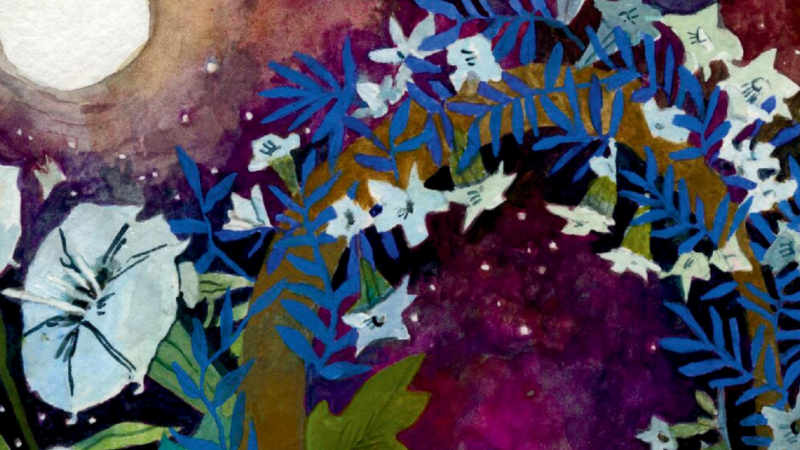
Planting a Moon Garden

What does the moon have to do with flower essences and ritual? As we discussed in an earlier chapter, the moon represents a time before the dominant culture came into power. While the moon has no gender, it is a metaphor for the divine feminine and a symbol for the creative, the intuitive, the unconscious, and the shadow. Before the Gregorian calendar came into use in the sixteenth century, many cycles of time were measured on a lunar basis, as are the Islamic, Chinese, and Jewish calendars today. All ancient agriculture was organized around lunar and astrological transits, which is one of the basic practices of biodynamic farming today. Many of us feel a fascination with the moon, and I feel it beckons us back to a different consciousness, where much healing potential awaits.

Creating altars or sacred spaces outdoors can be another place for ritual work. While I can’t have a moon garden in the city, I can have a few lunar plants in my windowsill to catch the moonlight.

Not all flowers bloom in the sunlight. Some plants prefer the darkness, opening to the night. Moon plants can be cultivated in any terrain. Many night bloomers are also very fragrant. I consider all plants medicinal to some degree; however, some of the moon garden plants may be more therapeutic than others. These can also be plants that you use for making your own flower essences. Or, if you like to make dried sticks of herbs to burn, you can use the plants from your moon garden, such as mugwort.

You can see the lunar signature of mugwort by observing the underside of the leaf, which is silver. The Latin name for it is Artemisia vulgaris; Artemis, if you remember, was the Greek goddess of the moon! Plants with light and white blooms work best, as well as gray and silvery leaves.

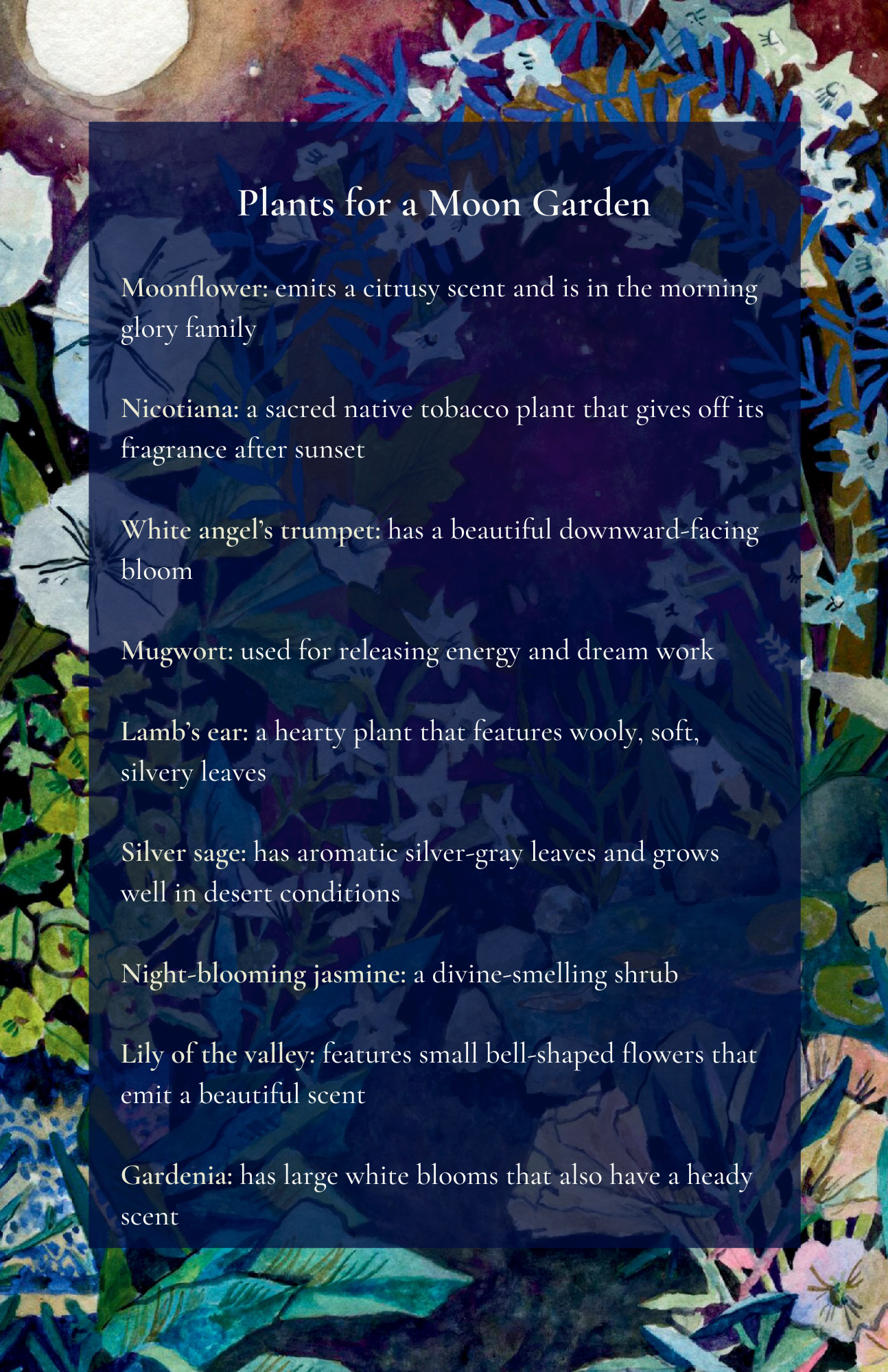
Here are some perfect moon garden plants:

plants for a moon garden


The video on how to make your own flower essence medicine can be found here.

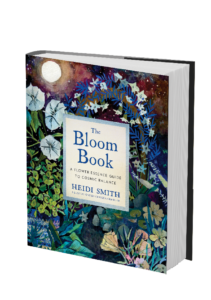
This is an excerpt from The Bloom Book: A Flower Essence Guide to Cosmic Balance by Heidi Smith.


Heidi Smith, MA, RH (AHG), is a psychosomatic therapist, registered herbalist, and flower essence practitioner. Within her private practice, Moon & Bloom, Heidi works collaboratively with her clients to empower greater balance, actualization, and soul-level healing within themselves. She is passionate about engaging both the spiritual and scientific dimensions of the plant kingdom, and sees plant medicine and ritual as radical ways to promote individual, collective, and planetary healing. She lives in Brooklyn, New York, with her partner and two cats. For more, visit moonandbloom.com.


bloom book cover

Learn More

Sounds True | Amazon | Barnes & Noble | Bookshop


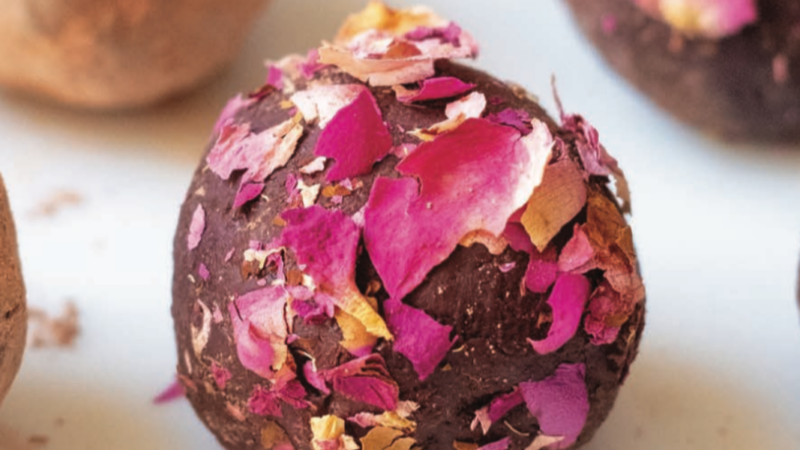
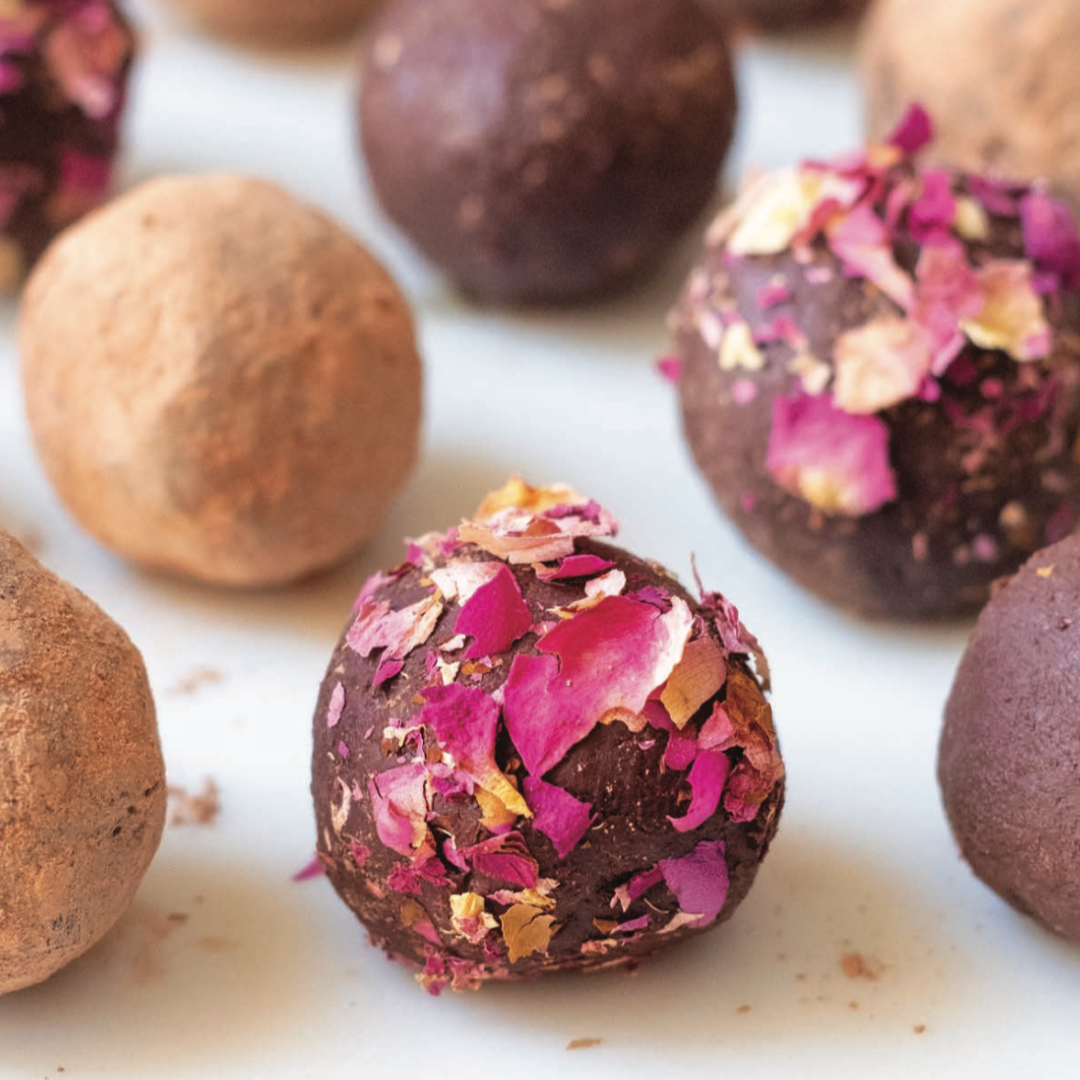
Lavender Rose Chocolate Truffles

Lavender Rose Chocolate Truffles

From the book, Whole Girl by Sadie Radinsky

INGREDIENTS:

  • 1/2 cup coconut cream, from the top of a chilled 13 1/2-ounce can of full-fat coconut milk
  • 1 1/2 cups dark chocolate chips or chopped dark chocolate
  • 2 drops food-grade pure lavender oil
  • 1/4 cup cacao powder
  • 2 Tbsp dried rose petals, crushed

INSTRUCTIONS:

  1. Scoop the coconut cream into a double boiler. Heat the coconut cream until it’s hot to the touch, then pour in the chocolate. Turn the heat down to medium-low. Stir the chocolate and coconut cream together until the chocolate is fully melted and the mixture forms a shiny ganache.
  2. Remove the ganache from heat and stir in the lavender oil. Place the bowl of ganache in the refrigerator to chill for 2 hours, or until completely solid.
  3. Line a plate with parchment paper. Scoop the chocolate mixture into 16 pieces using a tablespoon, and place on the plate. Don’t worry about forming the pieces into spheres yet. Place the plate back in the refrigerator for 10 minutes to firm up.
  4. Pour the cacao powder and crushed rose petals into 2 small separate bowls. Roll the refrigerated chocolate blobs into balls, then roll them in either cacao powder, rose petals, or leave them plain. Serve.
  5. Store leftover Lavender Rose Chocolate Truffles in an airtight container in the refrigerator for about 1 week, or freeze for up to 1 month. Defrost before serving.

chocolate truffles

This recipe is featured in the young adult book, Whole Girl: Live Vibrantly, Love Your Entire Self, and Make Friends with Food by Sadie Radinsky.


sadie radinskySadie Radinsky is a 19-year-old blogger and recipe creator. For over six years, she has touched the lives of girls and women worldwide with her award-winning website, wholegirl.com, where she shares paleo treat recipes and advice for living an empowered life. She has published articles and recipes in national magazines and other platforms, including Paleo, Shape, Justine, mindbodygreen, and The Primal Kitchen Cookbook. She lives in the mountains of Los Angeles. For more, visit wholegirl.com.


whole girl bookSounds True | Amazon | Barnes & Noble | Bookshop | Indiebound


Carley Hauck: Being Brave and Loving at Work

Carley Hauck is a learning architect, leadership development consultant, author, speaker, and coach who serves as adjunct faculty at Stanford University and UC Berkeley Haas School of Business. She has worked with hundreds of leaders in Fortune 100 companies and high-growth startups such as LinkedIn, Genentech, Pixar, Clif Bar, Intuit, and Bank of the West. With Sounds True, Carley has published the book Shine: Ignite Your Inner Game to Lead Consciously at Work and in the World. In this podcast, Carley meets with Sounds True founder Tami Simon to discuss leading in a more conscious and inclusive way, cultivating a new operating model for how we go about conducting ourselves in business, leading change when you’re not the company’s leader, maintaining well-being and the ability to flourish at work, and more.