The Wisdom in Our Emotions

    —
May 11, 2010

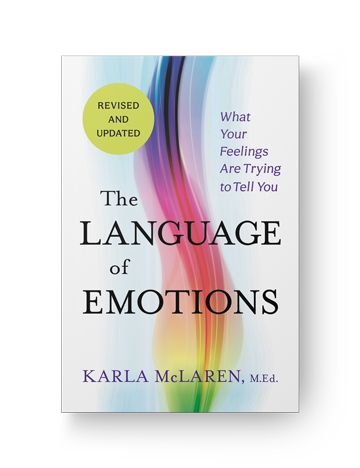
Tami Simon speaks with Karla McLaren, an award-winning author and empath whose approach to working with emotions has helped countless numbers of people heal from trauma. She is the author of The Language of Emotions: What Your Feelings Are Trying to Tell You, as well as the Sounds True audio learning series on The Language of Emotions about how to unlock and learn from the wisdom held within each of our emotions. Karla discusses what it means to be an empath, how to talk to children about their emotions, viewing emotions in terms other than positive versus negative, and learning how to listen to our emotions. (54 minutes)

Karla McLaren, M.Ed., is an award-winning author, social science researcher, and empathy innovator. She is CEO of Emotion Dynamics, developer of Dynamic Emotional Integration®, and creator of EmpathyAcademy.org. Karla is the author of Embracing AnxietyThe Dynamic Emotional Integration WorkbookThe Art of EmpathyThe Power of Emotions at Work, and the multimedia online course Emotional Flow: Becoming Fluent in the Language of Emotions. For more, visit karlamclaren.com.

Author photo © Michael Leras

600 Podcasts and Counting…

Subscribe to Insights at the Edge to hear all of Tami’s interviews (transcripts available too!), featuring Eckhart Tolle, Caroline Myss, Tara Brach, Jack Kornfield, Adyashanti, and many more.

Meet Your Host: Tami Simon

Founded Sounds True in 1985 as a multimedia publishing house with a mission to disseminate spiritual wisdom. She hosts a popular weekly podcast called Insights at the Edge, where she has interviewed many of today's leading teachers. Tami lives with her wife, Julie M. Kramer, and their two spoodles, Rasberry and Bula, in Boulder, Colorado.

Photo © Jason Elias

Also By Author

Vital Emotions at Work: An excerpt from Power of Emoti...

Emotions are Vital Aspects of Thinking, Acting, and Working

People once believed that emotions were the opposite of rationality, or that they were lower than or inferior to our allegedly logical processes. But decades of research on emotions and the brain have overturned those outdated beliefs, and we understand now that emotions are indispensable parts of rationality, logic, and consciousness itself. In fact, emotions contain their own internal logic, and they help us orient ourselves successfully within our social environments. Emotions help us attach meaning to data, they help us understand ourselves and others, and they help us identify problems and opportunities. Emotions don’t get in the way of rationality; they lead the way, because they’re vital to everything we think and everything we do. Emotions aren’t the problem; they’re pointing to the problem, and they’re trying to bring us the precise intelligence and energy we need to deal with the problem.

In [The Power of Emotions at Work], we’ll learn how to listen to emotions as uniquely intelligent carriers of information, and how to build healthy and effective social and emotional environments at work – not by ignoring or silencing emotions (you can’t), but by listening to them closely, learning their language, and creating a communal set of emotional skills that everyone can rely on. This work is not difficult at all, but it can be unusual in an environment that wrongly treats emotions as soft, irrational, or unprofessional.

The serious problems we’ve baked into the workplace don’t come from any specific management style or ideology, so I won’t focus on managers or leaders as if they’re uniquely powerful or uniquely to blame. These problems also aren’t limited to specific occupations or income brackets (though low-wage work is regularly dehumanizing and hazardous); these are long-term, widespread problems based on a failed workplace model – and on an outdated social and emotional approach that does not support (or in many cases, even comprehend) human relationships and human needs.

This book is the result of decades of exploration and study into how the workplace got to be so unworkable, plus decades of experience in how to access the existing genius in people’s emotional responses (in surprisingly simple ways once you understand how emotions and empathy work). With the help of the genius in our emotions, we can create emotionally well-regulated and worthwhile places for all of us to earn our living and spend our lives.

Luckily, we don’t have to do anything special to welcome emotions into the workplace, or even to make room for them, because emotions are and always have been in the workplace. They’re in the responses people have to workplace abuses; they’re in disengaged workers; they’re in workers seeking other jobs while on the job; they’re in workers who rightly avoid communicating upward about serious problems; they’re in low-wage workers who learn how to survive in hellscapes like call centers, fast-food restaurants, gig work, and robot-like warehouse jobs; they’re in living-wage workers who tolerate unhealthy workplaces because they can’t afford to leave their health insurance behind; and they’re in high-wage workers who may have to bow down to their superiors and compete with their colleagues to be seen as “winners” – and whose experiences of workplace abuse may not be taken seriously because they make so much money and therefore have no right to complain.

We can also see the emotions in our responses to workplace successes; in our healthy working relationships; in the ways we gather together to solve problems; in the ways empathic workers and leaders empower everyone around them; in the ways our colleagues support us when we’re struggling; in the ways businesses step up in times of loss; in the ways we create open communication and humane workflows; in the ways we teach each other; in the benefits, support, flexibility, and living wages we provide for our workers; in the honest sharing of business difficulties or financial losses; and in the laughter we share on great days and rotten days.

Emotions are everywhere in the workplace because emotions are a central feature of human nature. They aren’t removable, and in fact, trying to remove them is a huge part of what created the failed workplace model we have today. Emotions are crucial to everything we do and to every aspect of our work; therefore, we’ll learn how to listen to emotions, work with them, and respect their intelligence. And in so doing, we’ll build a better workplace – and a better world – from the ground up.

Karla McLaren, M.Ed.


Karla McLaren, M.Ed., is an award-winning author, social science researcher, and empathy innovator. Explore her books and audios on the power of emotion and creativity here.


This is part of a Conscious Business series brought to you by The Inner MBA®. You can learn more about the program at Innermbaprogram.com

What Your Feelings Are Trying to Tell You

Though I’m fairly certain you’ve heard otherwise, emotions are a vital part of everything you are: every thought, every choice, every relationship, every dream, every failure, every triumph, every act of violence, and every act of love. When you can learn their language, you can change your life for the better.

And when we can all learn their language, we can change the world.

Hello! I’m Karla McLaren, and I’m excited to announce the upcoming release of the revised and updated edition of The Language of Emotions: What Your Feelings Are Trying to Tell You, which will be available in bookstores on June 27th.

Whether you’re a reader of the original Language of Emotions, or if you’re new to this work, I welcome you to this complete guide to the wisdom in every emotion you have.

The original 2010 version of The Language of Emotions was the first book to approach the emotions in terms of how they function, what they do, and how to work with them. Instead of treating emotions as problems to be solved or eradicated, I focused on them as essential aspects of meaning-making, behavior, and intelligence (which is what they truly are). I approached the emotional realm as an intelligent system that requires all of its members, including tragically disrespected emotions such as shame, anxiety, depression, jealousy, envy, panic, and the suicidal urge (among others). And in so doing, I discovered the healing messages inside all emotions.

But because most of us have been taught to distrust emotions, I was working without a net as I wrote the original version of this book, and I missed some things. Now, after more than a decade of further research and practice, and with the support and camaraderie of an international community of colleagues and friends, I’ve had the opportunity to understand the emotions more deeply.

For centuries, emotions have been repressed, idealized, distrusted, and even despised, yet they were never truly understood. I’m honored to share this updated celebration of the brilliance, ingenuity, healing power, and jaw-dropping genius of our emotions.


Welcome!

Karla McLaren, M.Ed.

Karla McLaren, M.Ed., is an award-winning author, social science researcher, and empathy innovator. She is CEO of Emotion Dynamics Inc., developer of Dynamic Emotional Integration®, and creator of EmpathyAcademy.org. Karla is the author of Embracing Anxiety, The Dynamic Emotional Integration Workbook, The Art of Empathy, The Power of Emotions at Work, and the multimedia online course Emotional Flow: Becoming Fluent in the Language of Emotions. For more, visit karlamclaren.com.

The Power of Emotions at Work

Karla McLaren is an award-winning author, social science researcher, and renowned expert in emotions and empathy. Her work focuses on her grand unified theory of emotions, which reconsiders how we think of “negative” emotions and opens new pathways into self-awareness, communication, and empathy. With Sounds True, Karla is the author of the landmark book The Language of Emotions, a book on The Art of Empathy, and a new book called The Power of Emotions at Work: Accessing the Vital Intelligence in Your Workplace. In this episode of Insights at the Edge, Tami Simon speaks with Karla about why the full range of emotions is necessary for us to bring forth our best thinking. They discuss the “toxic positivity bias” that has become the norm in the contemporary workplace, how this leads to widespread suffering and dysfunction, and how we can achieve an “emotionally well-regulated” workplace that works for all of us.

You Might Also Enjoy

Try These Mindfulness Exercises To Ground Yourself

Mindfulness is an ancient, deeply personal practice that invites you into the present moment with compassion and awareness. And yet, for many of us, simply “being present” can feel elusive. We’re managing careers, relationships, health, and the constant pull of digital life. It’s no wonder anxiety and stress have become everyday companions. Through regular, intentional practices, we begin to notice the quiet steadiness underneath the noise. That’s where grounding lives.

For over 40 years, Sounds True has been a trusted leader in spiritual education and personal transformation, sharing the wisdom of teachers like Eckhart Tolle, Pema Chödrön, Tara Brach, and many others. As the world’s largest “living library” of transformational teachings, we’ve helped millions of people reconnect with presence, purpose, and their inner wisdom through unscripted, heart-centered resources.

In this piece, we’ll explore a series of mindfulness exercises to support your return to presence, whether you’re seeking mindfulness exercises for anxiety, tools for teens and adults, or daily mindfulness exercises for stress relief. You’ll also find soulful practices like inner rhythm meditations woven throughout to help you tune into your natural flow.

Key Takeaways:

  • Learn Audience-Specific Practices: This article offers tailored mindfulness exercises for anxiety, adults, teens, and daily stress relief.
  • Find Practical and Accessible Tools: Readers will find easy-to-implement, non-intimidating exercises they can begin using right away.
  • Integrating These Exercises into Daily Life: Meditation exercises encourage integrating mindfulness into ordinary activities for long-term emotional grounding and resilience.
Expand Your Consciousness With Sounds True.

Simple Mindfulness Exercises To Bring You Back To Center

Even the busiest mind can come back to stillness with a few moments of intention. These foundational mindfulness exercises are designed to be accessible, grounding, and easy to integrate into daily life.

Breathe For One Minute

This micro-practice is a gentle reminder that your breath is always available as an anchor. Set a timer for just 60 seconds. Sit or stand comfortably. Close your eyes if you’d like. Bring all of your awareness to the sensation of breathing, how the air enters and leaves your body, and how your chest rises and falls. Don’t change anything. Just notice. One minute of conscious breathing can create space between stimulus and response, making it a beautiful starting point for mindfulness exercises for anxiety or moments of stress.

Ground Through The Five Senses

When your thoughts are racing or your emotions feel overwhelming, coming back to your senses, literally, can reset your nervous system. To practice this, look around and quietly name five things you can see, four things you can touch, three things you can hear, two things you can smell, and one thing you can taste. This kind of sensory awareness anchors your attention in the here and now, making it one of the most reliable mindfulness exercises for stress relief.

Notice Without Fixing

Mindfulness isn’t about making anything go away. It’s about seeing clearly. Try sitting in silence for a few minutes, simply noticing your thoughts, sensations, and emotions without trying to change or solve them. Let everything be as it is. This witnessing awareness is central to many mindfulness exercises for adults, a reminder that your worth isn’t based on productivity, performance, or emotional “control.” Instead, it’s grounded in the simple act of being present.

Mindfulness Exercises For Anxiety And Overwhelm

Anxiety often pulls us into the future, into what-ifs, worst-case scenarios, and mental loops that feel impossible to exit. Mindfulness brings us back to now. These exercises aren’t about eliminating anxiety, but about meeting it with gentleness, spaciousness, and embodied awareness.

Anchor To The Present With Touch

When anxiety feels like it’s spiraling, physical touch can be incredibly grounding. Place one hand on your chest and one on your belly. Feel the rise and fall of your breath beneath your hands. You don’t need to breathe in any special way, just notice the contact. This creates a direct, calming feedback loop that reminds the body it’s safe to soften. Practices like this are especially helpful when exploring mindfulness exercises for anxiety that are simple and body-centered.

Name What’s True In This Moment

A powerful way to interrupt anxious thoughts is to name what is real right now. Quietly say to yourself: “Right now, I am sitting on a chair. My feet are on the floor. I am breathing. I am safe.” You can add more statements based on your environment or sensations. This kind of mindful self-talk offers the brain a stable narrative to hold onto when anxiety is trying to pull you elsewhere. It’s a core part of how many people approach mindfulness exercises for stress relief as well.

Return To Ritual

When anxiety is chronic or persistent, creating small, daily routines can provide a sense of continuity. This might be lighting a candle before meditation, washing your hands slowly and with full attention, or taking a short mindful walk at the same time each day. These are quiet acts of devotion that bring structure to emotional chaos. For many adults, integrating mindfulness exercises helps create a sense of calm and inner order.

For a deeper experience of this rhythm-based approach, practices like inner rhythm meditations can support a more attuned, embodied return to presence.
Awaken Your Inner Healing Power With Sound True.

How Adults Can Use Mindfulness To Reconnect

Adulthood often brings a gradual disconnection from inner life. The constant push to do more, fix more, and be more can drown out the quiet voice within. Mindfulness gives adults a way to return, to presence, to embodiment, and to what matters most. It’s less about adding something new and more about softening into what’s already here.

Practices like breath tracking, gentle movement, or body scanning help rebuild that inner relationship. These mindfulness exercises for adults aren’t about achieving calm; they’re about creating space for honesty and self-awareness. Even simple routines like morning stillness or mindful transitions between tasks can foster deep reconnection.

Supporting Teens With Mindfulness Tools

Teenagers today are navigating an overwhelming mix of stimulation, pressure, and emotional intensity, often without the tools to process it all. Mindfulness can offer teens a way to slow down, feel what they’re feeling, and build emotional resilience from the inside out.

Unlike adults, teens often benefit from shorter, more tactile practices that meet them where they are. Movement-based mindfulness, breath-focused exercises, or even mindful listening with music can help create moments of pause without feeling forced or overly formal. These mindfulness exercises for teens aren’t about “fixing” behavior, but rather they’re about helping young people relate to themselves and their experiences with more kindness and awareness.

Meditation can also be incredibly empowering for teens to choose their own practice. Whether it’s a brief body scan before school or a silent check-in before sleep, creating space for autonomy makes mindfulness feel like a supportive resource rather than another rule to follow. Integrating accessible resources like inner rhythm meditations can also help teens begin to understand their emotional patterns and physical rhythms in a more grounded, compassionate way.

Daily Mindfulness Exercises for Stress Relief

Stress thrives on momentum. It builds, layer by layer, until we’re no longer responding to life; we’re reacting to it. Mindfulness breaks that cycle. Through small, intentional practices, we create pockets of stillness that allow the nervous system to reset and the body to soften.

Daily mindfulness exercises for stress relief don’t need to be elaborate. A few minutes of conscious breathing before checking your phone, taking a mindful walk after lunch, or simply pausing to feel your feet on the floor between meetings can shift your entire internal state. These moments act like pressure valves, gently releasing stored tension before it accumulates.

Repetition is key. The more frequently you return to yourself, the more familiar that calm becomes. Over time, the body begins to recognize presence as its home base, not stress. For those who feel especially drained or dysregulated, incorporating inner rhythm meditations can help guide you back to your body’s natural flow and restore balance from within.

Whether you’re navigating a high-stress job or simply feeling emotionally stretched, these simple yet consistent practices can anchor you in a steadier way of being and offer a meaningful alternative to burnout.
Explore Teachings From World-Renowned Psychologists And Researchers On Trauma, Mindfulness, Resilience, And Cognitive Growth.

Final Thoughts

More than something to master, mindfulness is something you remember as time goes on. A gentle return, over and over again, to the breath, the body, and the moment you’re living right now. These practices don’t promise a life free from stress or anxiety. Instead, they offer a way to meet life with more presence, compassion, and steadiness.

Whether you’re exploring mindfulness exercises for anxiety, integrating mindfulness into adult life, supporting a teen, or simply seeking stress relief, the power lies in consistency. Even the smallest pause, repeated with care, can rewire your relationship to the world around you, and within you. Above all, mindfulness is not a task to accomplish but rather it’s a path to walk, one breath at a time. Every time you return, you deepen your connection to yourself, and that is where healing begins.

Read More:

Frequently Asked Questions About Mindfulness Exercises

What are the core components of a mindfulness exercise?

A mindfulness exercise typically includes intention, focused attention (often on the breath, body, or senses), non-judgmental awareness, and a return to the present moment. These elements work together to train the mind in presence and compassion.

How long should I practice mindfulness each day?

Even 5–10 minutes daily can be effective. The key is consistency. Start small and gradually extend the time as it feels natural. Mindfulness is about presence, not perfection.

Are mindfulness exercises religious?

No. While mindfulness has roots in contemplative traditions like Buddhism, modern mindfulness practices are secular and adaptable to all belief systems.

Can mindfulness exercises help improve sleep?

Yes, practicing mindfulness before bed can help calm racing thoughts, ease physical tension, and prepare the nervous system for restful sleep.

Is it normal to feel distracted during mindfulness practice?

Absolutely. Distraction is part of the process. The goal isn’t to stop thoughts, but to notice when the mind wanders and gently bring it back to your point of focus.

How do I know if mindfulness is working?

Results are often subtle at first, like feeling slightly calmer, more aware, or less reactive. Over time, many notice improved emotional regulation and clarity.

Can children benefit from mindfulness exercises too?

Yes, children can benefit greatly from age-appropriate mindfulness tools, as these help them recognize emotions, improve focus, and develop emotional resilience early on.

What’s the difference between meditation and mindfulness?

Mindfulness is a way of being present in daily life, while meditation is a formal practice that often cultivates mindfulness. You can practice mindfulness without meditating.

Do I need to sit still to practice mindfulness?

Not at all. Walking, stretching, eating, and even washing dishes can all become mindfulness exercises when done with full attention and presence.

Can mindfulness help with physical pain?

Yes, mindfulness can change your relationship to pain by reducing resistance, softening tension, and increasing awareness without judgment. It doesn’t eliminate pain, but can make it more manageable.

Michelle Cassandra Johnson is an author, activist, spiritual teacher, racial equity consultant, and intuitive healer. She is the author of six books, including Skill in Action and Finding Refuge. Amy Burtaine is a leadership coach and racial equity trainer. With Robin DiAngelo, she is the coauthor of The Facilitator's Guide for White Affinity Groups. For more, visit https://www.michellecjohnson.com/wisdom-of-the-hive.

[ENCORE EPISODE] Jon Kabat-Zinn: Befriending Pain

**SPECIAL ENCORE PRESENTATION**

Current statistics tell us that 20% of the US population has some form of chronic pain, defined as severe discomfort that has continued for six months or more. That’s more than 50 million people. Jon Kabat-Zinn has received international acclaim for his leading work in bringing the life-changing practices of meditation and mindfulness into the mainstream of medicine and society. In this inspiring podcast, Tami Simon speaks with Jon about his empowering new book, Mindfulness Meditation for Pain Relief, and how we can greatly improve our lives (and our entire world) by reframing the way we relate to our thoughts, our minds, and the sensations of our bodies.

Listen in as they discuss the epidemic of chronic pain and the power of mindfulness to ease suffering of all kinds, the myth of the “good meditator,” the body as the starting point for practice, exploring your “emotionally freighted thoughts,” our longing to be who we really are, working with the mind and learning to inhabit a space of embodied awareness, the refuge that is meditation practice, letting go of our stories, befriending the sensory field of what we call pain, the miracle of life on Earth, the Buddha’s teaching on mindfulness as the direct path to liberation, surfing the waves of your own experience, unity within diversity and the arising of compassion, focusing on what’s right instead of what’s wrong, how we are all on a growth curve on life’s journey, and more.

Note: This episode originally aired on Sounds True One, where these special episodes of Insights at the Edge are available to watch live on video and with exclusive access to Q&As with our guests. Learn more at join.soundstrue.com.

This episode is sponsored by BetterHelp. Listeners of Insights At The Edge get 10% off their first month at

www.betterhelp.com/soundstrue

What Is Guided Meditation? A Beginner’s Path to ...

Explore mindfulness vs meditation and discover how each can uplift your mental health. Unravel the benefits, and start your transformative journey today!

>
Share via
Copy link
Powered by Social Snap