
Kristin Neff: The Liberating Power of Self-Compassion

    —
November 6, 2018

Kristin Neff: The Liberating Power of Self-Compassion

Kristin Neff November 6, 2018

Dr. Kristin Neff is a professor of human development and culture at the University of Texas and a practitioner of Buddhist meditation. The book and documentary The Horse Boy chronicle Kristin and her family’s extraordinary journey to help her autistic son. With Sounds True, Kristin has created the audio program Self-Compassion Step by Step, which includes clinical evidence of the importance of self-compassion along with techniques and exercises for cultivating this pivotal quality. In this interview, Tami Simon and Kristin talk about the vital distinction between self-esteem and self-compassion, three pillars of self-compassion, ‘self-compassion breaks,’ and the importance of recognizing our common humanity during difficulties that feel unique and isolating. (68 minutes)

Tami’s Takeaway
In any moment of self-criticism or self-blame, a “go-to move” that is immediately effective and state-changing is to gently touch your arm, stroke your face, or place your hand on your heart (any form of soothing touch). This activates our mammalian “tend and befriend” system, releases oxytocin, and shifts us out of the threat-defense system. Try it next time you feel self-critical. Gently touching your body can shift your state of mind—fast!
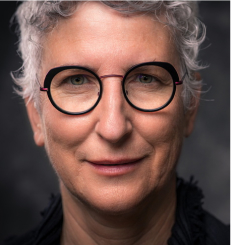
Dr. Kristin Neff is an Associate Professor of Educational Psychology at the University of Texas at Austin. She is a pioneer in the field of self-compassion research, conducting the first empirical studies on self-compassion more than twenty years ago. She has been recognized as one of the most influential researchers in psychology worldwide. Kristin runs the Self-Compassion Community, an online learning platform where people can learn the skill of self-compassion with the help of others. She is author of the bestselling books Self-Compassion and Fierce Self-Compassion. Along with her colleague Chris Germer, she developed the empirically-supported Mindful Self-Compassion program and co-founded the Center for Mindful Self-Compassion. They co-wrote the best-selling “The Mindful Self-Compassion Workbook” and have a new book called “Mindful Self-Compassion for Burnout” coming out in Fall 2024. For more info go to self-compassion.org.

600 Podcasts and Counting…

Subscribe to Insights at the Edge to hear all of Tami’s interviews (transcripts available too!), featuring Eckhart Tolle, Caroline Myss, Tara Brach, Jack Kornfield, Adyashanti, and many more.

Meet Your Host: Tami Simon

Founded Sounds True in 1985 as a multimedia publishing house with a mission to disseminate spiritual wisdom. She hosts a popular weekly podcast called Insights at the Edge, where she has interviewed many of today's leading teachers. Tami lives with her wife, Julie M. Kramer, and their two spoodles, Rasberry and Bula, in Boulder, Colorado.

Photo © Jason Elias

Also By Author

Kristin Neff & Caverly Morgan: Self-Compassion as...

Can the simple act of being kind to yourself actually be a doorway to awakening?

In this special episode of Insights at the Edge, Tami Simon brings together two remarkable teachers whose friendship has sparked a revolutionary approach to inner transformation. Kristin Neff—the researcher who first measured self-compassion and author of Fierce Self-Compassion—joins Caverly Morgan, a meditation teacher and former Zen monk, to explore how self-compassion practices can become what they call “a lifeboat” to our deepest nature.

Together, they reveal why self-compassion isn’t just a psychological tool for feeling better—it’s a direct path to recognizing who we really are beyond our limited sense of self.

In this interview, Tami, Kristin, and Caverly explore:

  • Why every moment of self-compassion is a moment of “letting go of identification with the small, separate, limited self”
  • The difference between witnessing awareness and embodied loving awareness—and why it matters
  • How gender conditioning shapes our relationship to both compassion and awakening practices
  • The power of “relational dharma” and why we sometimes need another person to help us access self-compassion
  • A guided practice for moving from suffering into the “stance-less stance” of presence

If you’ve practiced self-compassion but sensed there’s something deeper available, or if awakening teachings have felt too abstract or disembodied, this conversation offers a bridge between heart and awareness that could transform your practice.

This conversation offers genuine transmission—not just concepts about awakening, but the palpable presence of realized teachers exploring the growing edge of spiritual understanding together. Originally aired on Sounds True One.

The Yin and Yang of Self-Compassion

Yin and Yang of Self Compassion by Kristin Neff Blog Header Photo

The concept of yin and yang is a perfect metaphor for the energies of self-compassion. Most people are familiar with the circle of yin and yang, black and white halves and a dot of each in between. The yin is the dark energy; it’s supposed to be more feminine, more of a passive energy, more the “being with.” And the white⁠—or yang⁠—is supposedly the more active energy, the masculine energy, doing things that make a change. But really these energies are not male or female, these energies are in every single person and actually all life forms.

A lot of these ideas come from Chris Germer—my close colleague, who developed the Mindful Self-Compassion program with me—and the things we have been talking about for a long time. And to give him credit, Chris actually⁠ came up with the idea that the main domains of yang self-compassion are protecting ourselves, providing ourselves with what we need, and motivating ourselves. What I have been doing with this model is developing each of these ideas in more detail.

Readers may know there are three basic components of self-compassion:

  • Kindness⁠—being kind to ourselves
  • Common Humanity⁠—remembering this is part of life
  • Mindfulness⁠—being mindful of our struggle or pain

And so these three components of kindness, common humanity, and mindfulness take a different form, they feel different, and they have a different flavor depending on what form the self-compassion is taking.

For instance, when self-compassion is aimed at protecting ourselves, it feels like fierce, empowered clarity. The kindness is fierce: that’s the Momma Bear, “No! That is not OK. You will go no further.” Common humanity, that’s that “me too” feeling. We stand together with our brothers and sisters in strength, we are empowered by our connection with others. And then the mindfulness is that real sense of clarity, that “This is not OK.” So it’s a difference between loving, connected presence, and fierce, empowered clarity.

It feels different when you are providing for yourself, when you’re giving yourself what you truly, authentically need. In this case, the kindness feels very fulfilling and satisfying. When we give ourselves what we need, we feel fulfilled. With common humanity, we recognize that it’s a balanced way; in other words, we don’t just give to ourselves, and we don’t subordinate our needs to those of others, but we’re balanced. Common humanity allows us to balance our needs with others. And then mindfulness gives us a real sense of authenticity: “What do I need? Do I even know what I need?” When self-compassion is in full bloom while we are providing for our needs, it manifests as fulfilling, balanced authenticity. Again, it feels very different.

And last, if we’re motivating ourselves, kindness in motivation comes out as encouragement. It’s not kindness when someone needs to be motivated and they’re stuck, to just say, “Oh well, that’s fine.” Or to ourselves, if we aren’t feeling happy, to say, “Oh, that’s fine.” Kindness means we don’t criticize ourselves; we don’t call ourselves names, but we say “You can do it! I believe in you!” Kindness is a very encouraging quality. Common humanity kind of sees how things are related to each other. It actually comes from the bigger view of interdependence—the causes and conditions that come together to create our suffering. So, when we motivate ourselves, common humanity actually manifests as wisdom. We can see where we’re stuck, why we’re stuck, what mistakes we made—we kind of understand the bigger picture of what’s happening. And then, mindfulness, in this case, is vision. It gives us the vision to see what we need to change in order to help ourselves. So in this case, kindness, common humanity, and mindfulness feels like encouraging, wise vision.

Let me give an example of this last domain. If you care about yourself and you don’t want to suffer, you’re going to want to make needed changes. You’re going to want to reach your goals. You’re going to want to be your best self. I mean, just like a parent wants that for their child, we want that for ourselves. Also we shouldn’t beat ourselves up for beating ourselves up. Because, again, if we remember that the reason we do it, the reason maybe if you’ve ever been hard on yourself, is because you want to be safe and you want to be happy. And there’s a part of you that thinks maybe this will help. If you’re really harsh on yourself, maybe you’ll pay attention and remember and do something different. It’s natural, but it’s just not very effective, right?

So if you think about it, what voice is more effective? A voice telling you how bad you are, who’s belittling you, who’s really mean? Or a voice that’s encouraging, supportive, “You can do it”? We’re going to listen more to that encouraging and supportive voice. We’re also going to be able to take in what that voice is saying more readily than a voice who’s just shutting us down.

There’s a wisdom element, too. Self-compassion taps into constructive criticism.

What mistakes did I make?

How can I do it better next time?

That’s a caring, understanding, compassionate approach. What self-criticism tends to do, is it just gives us not very wise information. Just like, “You’re bad. You did it wrong. Do it better next time.” It doesn’t say what to do differently or how to do it differently. Or it doesn’t see the bigger picture of all the causes and conditions that led to this outcome. That’s actually pretty lousy information. Kindness, on the other hand, yields a kind of wisdom. “Oh, I see. I did this. Maybe I can try this different next time and that would lead to a better effect.” It’s actually much more informational to give wise encouragement as opposed to the belittling name-calling.

Then also, the thing about having the vision. What we know—actually you probably know this from positive psychology, is that negative emotions tend to narrow our focus. It limits what we can see. We only see what we did wrong and how we’re wrong. We can’t actually see possibilities because the negative emotion actually has the function, evolutionarily actually, of narrowing our vision. Positive emotions—kindness, safety, warmth—they have the effect of broadening our perspective so that we can have a larger vision so that we can see the possibilities so that we might get an idea of, “Oh, I can try this. This may really work better for me.” The research we’ve done really backs up that this kind of encouraging, wise voice of compassionate motivation is actually much more effective and more sustainable in motivating ourselves to change.

This is an excerpt from the Insights at the Edge podcast episode with Kristin Neff, author of The Yin and Yang of Self-Compassion: Cultivating Kindness and Strength in the Face of Difficulty.

Kristin Neff, PhD, is an associate professor at the University of Texas at Austin and a practitioner in the Insight Meditation tradition. She is the author of Self-Compassion: The Proven Power of Being Kind to Yourself. A true pioneer in the field, over 15 years ago she first identified self-compassion as a measurable trait, and now there are over 2000 published studies on its benefits. Kristin is a cofounder of the Center for Mindful Self-Compassion, and gives talks and teaches workshops on self-compassion worldwide. In addition to her research, she has developed an eight‑week program to teach self‑compassion skills called Mindful Self-Compassion. The program, co‑created with her colleague Chris Germer, has been taken by tens of thousands of people worldwide. Kristin and Chris recently co-authored The Mindful Self-Compassion Workbook, an immediate bestseller. Learn more at self-compassion.org.

Listen to The Yin and Yang of Self-Compassion today!

Sounds True | Audible | Amazon


Yin and Yang of Self-Compassion Kristin Neff Pinterest

Kristin Neff: The Yin and Yang of Self-Compassion

Kristin Neff is an associate professor at the University of Texas and the author of Self-Compassion: The Proven Power of Being Kind to Yourself. With Sounds True, she has recently published the audio program The Yin and Yang of Self-Compassion. In this episode of Insights at the Edge, Tami Simon speaks with Kristin about why it’s so difficult for so many people to treat themselves with actual compassion. Kristin explains that self-compassion is not some form of self-indulgence or excuse for bad behavior; indeed, there are actually various forms of self-compassion that arise in different situations. Tami and Kristin explore the roots of wrathful or angry self-compassion, including the mythological figures that embody this concept. Finally, they discuss the most common blocks to self-assertive compassion and the necessity of taking occasional “self-compassion breaks” to cultivate a better relationship within. (64 minutes)

You Might Also Enjoy

Laurie Nealon: “Energy Healing with Help From the Ot...

What if you were never working alone—and neither was anyone you were trying to help?

This week, Tami Simon speaks with Laurie Nealon, an intuitive energy healer, medium, and educator whose work is profiled on the Sounds True podcast Phenomena: The Science and Stories of Energy Healing. Seventeen years ago, Laurie began seeing and hearing those who had passed—not in dreams, but in the middle of her waking life. She resisted it. Then she built a practice around it.

Join Tami and Laurie to explore:

  • What Laurie actually perceives when someone who has died “appears”—and how she learned to filter it
  • Integrated Energy Therapy (IET), attunement, and why she calls the practitioner a facilitator rather than a healer
  • The “spiritual support group”: angels, guides, ascended masters, and loved ones she says fill the room during a session
  • A guided practice—rolling the energy—you can do in two minutes before you get out of bed
  • The screen technique: how to stay open to love without carrying everyone else’s journey
  • Why “lightening someone’s load” may actually dishonor their path
  • Entity energy, imprints, and what clearing a block really means
  • Tami’s hardest question: what about the people who did everything right and still died?
  • A closing prayer Laurie offers for every listener

Laurie’s conviction is that none of this is exotic. Everyone, she says, should be trained in energy healing the way everyone is trained in CPR—and everyone has the capacity to open to their own gifts.

Listen now, and find out who else is in the room. →

This conversation offers genuine transmission, not just concepts about awakening, but the palpable presence of realized teachers exploring the growing edge of spiritual understanding together, and originally aired on Sounds True One.

Michelle Wadleigh: “I Demand to Be Me”

“You have to want the freedom more than you want to be right about it.”

That’s what Reverend Dr. Michelle Wadleigh offers to anyone who has tried forgiveness and found that it didn’t take. Not a technique. A decision.

This week, Tami Simon speaks with Wadleigh—ordained minister in Centers for Spiritual Living, retreat facilitator, co-founder of the Planned Happiness Institute, and author of Forgiveness, Shadow Work, and the new Dance Like Nobody’s Watching: The Soul’s Journey to Courage, Authenticity, and Self-Love—about what it actually takes to stop living at the mercy of our own stories.

Join Tami and Michelle to explore:

  • Why forgiveness practices fail when they skip the body and the subconscious—and what to do instead
  • How shadow work and forgiveness depend on each other, and why projection drives so much of the divisiveness we see
  • “Functioning on top of dysfunction”: our addictions to being nice and being liked, and how they train us to dumb ourselves down
  • The 15 to 20 minutes before sleep, when the mind turns porous—and how Michelle guards that window
  • Fire walking, cold plunges, and the discovery that fear is a choice rather than an automatic
  • What it means to demand to be me without excuses—and who, exactly, that demand is addressed to
  • Why a book about bold self-expression closes with instructions for a solo silent retreat
  • Presence as a practice, learned while walking beside a dying husband

Michelle speaks throughout from the middle of her own hardest passage, which gives everything she says about buoyancy, beauty, and determination a weight it would not otherwise carry.

Listen now. →

This conversation offers genuine transmission, not just concepts about awakening, but the palpable presence of realized teachers exploring the growing edge of spiritual understanding together, and originally aired on Sounds True One.

Insights at the Edge is supported by Omega Institute, a global gathering hub for lifelong learning and spiritual exploration. Located in upstate New York’s beautiful Hudson Valley, Omega offers weekend workshops, special events, rest and rejuvenation retreats, professional trainings, online learning, and more.

Special Offer – Sounds True community members enjoy 10% off any workshop registration at Omega Institute. Discover what calls to you at eomega.org/true. Use code TRUE at checkout.

Insights at the Edge is supported by Magic Hour, whose ceremonial teas carry more presence, beauty, and ritual into ordinary days. Magic Hour draws its leaves and botanicals from regenerative small farms around the world, in blends made to nourish the body and open the mind.

Explore their teas, matchas, and herbal rituals at clubmagichour.com. Get 20% off your first order with the code TRUE.

Feeding Your Demons: Lama Tsultrim Allione on Turning ...

Fear, self-doubt, and emotional pain have a way of showing up uninvited, and most of us spend enormous energy trying to push them away. What would shift for you if turning toward those experiences, with curiosity and care, became the most healing thing you could do? 

At Sounds True, we have spent four decades connecting people with teachers who ask exactly that kind of question. Our library of transformational teachings, digital courses, and programs exists to help you move through life’s harder moments with greater awareness and inner strength.

We will cover the feeding your demons practice, Lama Tsultrim Allione’s approach to turning towards difficulty, the ancient roots of Machig Labdron Chod and Tibetan shadow work, and how relating to demons as teachers can open a path toward lasting inner growth.

Key Takeaways:

  • Meet Fear with Compassion: The feeding your demons practice invites us to turn toward emotional pain with openness, creating a path toward genuine self-awareness and healing.
  • Ancient Roots, Modern Healing: Rooted in the Tibetan Buddhist lineage of Machig Labdrön, this practice draws from centuries of contemplative wisdom to help transform fear into freedom.
  • Demons Become Your Greatest Teachers: Lama Tsultrim Allione’s teachings reveal that our most difficult inner struggles often hold the most important lessons about where genuine growth is possible.

Discover how your mind really works

Lama Tsultrim Allione: Turning Towards Difficulty 

Lama Tsultrim Allione is a recognized Buddhist teacher, author, and the founder of Tara Mandala, a mountain retreat center dedicated to contemplative practice and spiritual study. She has spent decades teaching within the lineage of Machig Labdrön, the 11th-century Tibetan yogini who founded the Chöd tradition, and has brought her work on Dzogchen teachings to students around the world.

When we treat challenging emotions as teachers, space opens for greater awareness, resilience, and emotional freedom. Her teachings show that turning towards difficulty is one of the most courageous acts of self-care we can practice. Her work sits alongside that of many respected voices we are proud to carry, all of whom you can find on our All Teachers & Authors page.

What Is Feeding Your Demons and Why Do We Avoid What We Fear?

Most of us instinctively turn away from difficult emotions, painful memories, or persistent inner struggles. The practice of feeding your demons offers a different path. Meeting fear, anger, or shame with curiosity and compassion, and asking what those feelings truly need, can begin to shift even the most entrenched patterns.

Lama Tsultrim Allione developed a five-step process for working with disowned emotions without becoming pulled into spirals of negativity. Rooted in both shamanic and Buddhist traditions, this approach weaves ancient practices into a form that feels accessible to modern practitioners. 

Our Spirituality & Awakening collection brings together teachings like these, spanning presence, healing, and inner exploration for those ready to go deeper. Now, let’s see what makes this practice possible.

Map Your Inner Landscape

The practice teaches you to map your demons and recognize how they interconnect. A fear of failure, for example, often links to a deeper sense of unworthiness that surfaces across professional and personal life, creating patterns that repeat until they are met with awareness and care.

Tend, Don’t Fight

One of the practice’s most compelling insights is that tending to your demons can yield real physical results. Chronic tension, restless sleep, and emotional exhaustion often ease when we begin to meet what is present with openness. Practitioners describe a quality of release that resistance alone never creates.

A Gateway to Awakening 

Working with your demons can become a potent gateway to spiritual awakening. When we stop avoiding what frightens us, those very struggles often reveal where we are clinging, where healing is needed, and what genuine growth looks like in practice. These skills help subdue fear and embrace openness, laying the groundwork for deeper spiritual engagement.

Tibetan Shadow Work and Inner Growth 

Tibetan shadow work offers a compassionate framework for working with the parts of ourselves we often reject or ignore. When we meet uncomfortable thoughts with openness, we begin to recognize them as invitations for insight and transformation. The more willing we become to face these hidden aspects, the more inner balance we can cultivate.

The feeding your demons practice is rooted in the ancient tradition of Machig Labdron Chod, a Tibetan Buddhist lineage that teaches transformation through generosity and openness. Machig Labdrön’s teachings hold that we can learn to relate to suffering in a new way, meeting it with care. Symbolically offering nourishment to our fears softens habitual avoidance and creates conditions for lasting healing.

Alongside Chöd, other exercises within this tradition draw from both shamanic and Buddhist practice, including visualization techniques, body-centered awareness, and practices that help us move toward what we would avoid. 

Addressing our demons directly is one of the most powerful commitments we can make to personal growth and transformation. Our Subtle Energy collection supports this kind of inner work, bringing together teachings on energetic awareness for those ready to go deeper.

Discover the Power of Daily Meditation and Inner Stillness

Bringing the Feeding Your Demons Practice into Everyday Life

The principles behind this practice are available in ordinary moments, during daily challenges and quiet pauses alike. When stress surfaces in a difficult conversation, when anxiety arises before something uncertain, or when a familiar pattern pulls at you, meeting what is present with kindness and curiosity can create a real shift.

Start with Simple Awareness 

Begin by noticing when a difficult emotion arises, without immediately trying to resolve it. Naming what you are experiencing, whether fear, grief, or frustration, loosens its hold and creates just enough space to respond with care. This small pause can become one of the most transformative habits.

Work with a Structured Process

Returning to Lama Tsultrim Allione’s five-step approach during moments of emotional intensity gives the practice a clear container. Working with it consistently, even briefly, builds an inner capacity that makes responding to difficulty with compassion feel more natural. Pairing this with regular meditation can deepen the effects.

Engage with Teaching and Community

Connecting with teachers who share this path makes the practice feel less solitary. Many of our teachers share this kind of practical wisdom on the Insights at the Edge Podcast, where leading spiritual voices discuss awareness, compassion, and how to bring transformation into daily life.

Demons as teachers become most vivid when we commit to meeting them consistently, with the same warmth and curiosity we bring to any other form of inner work.

Awaken Your Inner Healing Power: Your Wellness Journey Starts Now

Final Thoughts

The practice of feeding your demons reminds us that lasting transformation often begins by turning toward the parts of ourselves we would rather avoid. Through Lama Tsultrim Allione’s teachings, the wisdom of Machig Labdron Chod, and the tools of Tibetan shadow work, we can learn to meet fear with compassion and recognize demons as teachers. 

As that relationship shifts, more space opens for healing, self-awareness, and inner peace. We are here to walk alongside you in that journey, with teachings, digital courses, and a community that meets you wherever you are on the path. 

Frequently Asked Questions About Feeding Your Demons

What is the purpose of practicing how to feed your demons?

The purpose of feeding your demons is to change your relationship with fear, emotional pain, and inner conflict. Instead of trying to eliminate these experiences, the practice encourages understanding and compassion as a path toward healing.

Do I need to be Buddhist to practice “befriending my demons?”

No. Many people practice feeding their demons regardless of their religious or spiritual background. The method focuses on self-awareness and emotional healing, making it accessible to anyone interested in personal growth.

Can facing your fears head-on help with anxiety?

Many practitioners find the practice helpful for understanding anxious thoughts and emotional patterns. It is intended to complement personal growth and is not a substitute for professional mental health care.

Why are demons described as teachers?

The term “demons as teachers” reflects the idea that our greatest challenges often reveal important lessons about our fears, habits, and unmet emotional needs.

Is feeding your demons the same as shadow work?

They share similar intentions but differ in approach. Tibetan shadow work draws from Buddhist teachings and guided visualization, while other forms of shadow work may use psychological or therapeutic methods.

Can beginners learn how to face their demons through practice?

Yes. Beginners can start by learning the core principles through books, guided audio practices, workshops, or teachings from qualified instructors before developing a regular practice.

How often should I practice Lama Tsultrim Allione’s spiritual exercises?

There is no fixed schedule. Some people use the practice during periods of emotional difficulty, while others include it as part of their ongoing spiritual or mindfulness routine.

Michelle Cassandra Johnson is an author, activist, spiritual teacher, racial equity consultant, and intuitive healer. She is the author of six books, including Skill in Action and Finding Refuge. Amy Burtaine is a leadership coach and racial equity trainer. With Robin DiAngelo, she is the coauthor of The Facilitator's Guide for White Affinity Groups. For more, visit https://www.michellecjohnson.com/wisdom-of-the-hive.

Leave a Reply

Your email address will not be published. Required fields are marked *

