Kristin Neff: The Liberating Power of Self-Compassion

    —
November 6, 2018

Kristin Neff: The Liberating Power of Self-Compassion

Kristin Neff — November 6, 2018

Dr. Kristin Neff is a professor of human development and culture at the University of Texas and a practitioner of Buddhist meditation. The book and documentary The Horse Boy chronicle Kristin and her family’s extraordinary journey to help her autistic son. With Sounds True, Kristin has created the audio program Self-Compassion Step by Step, which includes clinical evidence of the importance of self-compassion along with techniques and exercises for cultivating this pivotal quality. In this interview, Tami Simon and Kristin talk about the vital distinction between self-esteem and self-compassion, three pillars of self-compassion, ‘self-compassion breaks,’ and the importance of recognizing our common humanity during difficulties that feel unique and isolating. (68 minutes)

Tami’s Takeaway
In any moment of self-criticism or self-blame, a “go-to move” that is immediately effective and state-changing is to gently touch your arm, stroke your face, or place your hand on your heart (any form of soothing touch). This activates our mammalian “tend and befriend” system, releases oxytocin, and shifts us out of the threat-defense system. Try it next time you feel self-critical. Gently touching your body can shift your state of mind—fast!
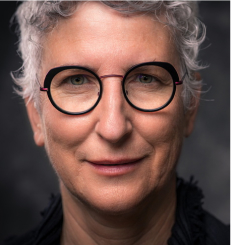
Dr. Kristin Neff is an Associate Professor of Educational Psychology at the University of Texas at Austin. She is a pioneer in the field of self-compassion research, conducting the first empirical studies on self-compassion more than twenty years ago. She has been recognized as one of the most influential researchers in psychology worldwide. Kristin runs the Self-Compassion Community, an online learning platform where people can learn the skill of self-compassion with the help of others. She is author of the bestselling books Self-Compassion and Fierce Self-Compassion. Along with her colleague Chris Germer, she developed the empirically-supported Mindful Self-Compassion program and co-founded the Center for Mindful Self-Compassion. They co-wrote the best-selling “The Mindful Self-Compassion Workbook” and have a new book called “Mindful Self-Compassion for Burnout” coming out in Fall 2024. For more info go to self-compassion.org.

900 Episodes and Counting…

Subscribe to Insights at the Edge to hear all of Tami’s interviews (transcripts available too!), featuring Eckhart Tolle, Caroline Myss, Tara Brach, Jack Kornfield, Adyashanti, and many more.

Meet Your Host: Tami Simon

Each week on Insights at the Edge, Tami Simon interviews leading voices in the Mind/Body/Spirit space about a vast spectrum of fascinating ideas. Since 2009, Tami and her guests have been exploring the edge of understanding, nearly 1,000 episodes on the honest work of change, including spiritual discovery, awakening, intuition, purpose, trauma, and grief.

Photo © Jason Elias

Also By Author

Kristin Neff & Caverly Morgan: Self-Compassion as...

Can the simple act of being kind to yourself actually be a doorway to awakening?

In this special episode of Insights at the Edge, Tami Simon brings together two remarkable teachers whose friendship has sparked a revolutionary approach to inner transformation. Kristin Neff—the researcher who first measured self-compassion and author of Fierce Self-Compassion—joins Caverly Morgan, a meditation teacher and former Zen monk, to explore how self-compassion practices can become what they call “a lifeboat” to our deepest nature.

Together, they reveal why self-compassion isn’t just a psychological tool for feeling better—it’s a direct path to recognizing who we really are beyond our limited sense of self.

In this interview, Tami, Kristin, and Caverly explore:

  • Why every moment of self-compassion is a moment of “letting go of identification with the small, separate, limited self”
  • The difference between witnessing awareness and embodied loving awareness—and why it matters
  • How gender conditioning shapes our relationship to both compassion and awakening practices
  • The power of “relational dharma” and why we sometimes need another person to help us access self-compassion
  • A guided practice for moving from suffering into the “stance-less stance” of presence

If you’ve practiced self-compassion but sensed there’s something deeper available, or if awakening teachings have felt too abstract or disembodied, this conversation offers a bridge between heart and awareness that could transform your practice.

This conversation offers genuine transmission—not just concepts about awakening, but the palpable presence of realized teachers exploring the growing edge of spiritual understanding together. Originally aired on Sounds True One.

Kristin Neff: The Yin and Yang of Self-Compassion

Kristin Neff is an associate professor at the University of Texas and the author of Self-Compassion: The Proven Power of Being Kind to Yourself. With Sounds True, she has recently published the audio program The Yin and Yang of Self-Compassion. In this episode of Insights at the Edge, Tami Simon speaks with Kristin about why it’s so difficult for so many people to treat themselves with actual compassion. Kristin explains that self-compassion is not some form of self-indulgence or excuse for bad behavior; indeed, there are actually various forms of self-compassion that arise in different situations. Tami and Kristin explore the roots of wrathful or angry self-compassion, including the mythological figures that embody this concept. Finally, they discuss the most common blocks to self-assertive compassion and the necessity of taking occasional “self-compassion breaks” to cultivate a better relationship within. (64 minutes)

Kristin Neff: The Liberating Power of Self-Compassion

Dr. Kristin Neff is a professor of human development and culture at the University of Texas and a practitioner of Buddhist meditation. The book and documentary The Horse Boy chronicle Kristin and her family’s extraordinary journey to help her autistic son. With Sounds True, Kristin has created the audio program Self-Compassion Step by Step, which includes clinical evidence of the importance of self-compassion along with techniques and exercises for cultivating this pivotal quality. In this interview, Tami Simon and Kristin talk about the vital distinction between self-esteem and self-compassion, three pillars of self-compassion, ‘self-compassion breaks,’ and the importance of recognizing our common humanity during difficulties that feel unique and isolating. (68 minutes)

Tami’s Takeaway
In any moment of self-criticism or self-blame, a “go-to move” that is immediately effective and state-changing is to gently touch your arm, stroke your face, or place your hand on your heart (any form of soothing touch). This activates our mammalian “tend and befriend” system, releases oxytocin, and shifts us out of the threat-defense system. Try it next time you feel self-critical. Gently touching your body can shift your state of mind—fast!

You Might Also Enjoy

Cecily Mak: “My Life Is Better Clear”

What if sobriety isn’t the point? Tami Simon talks with Cecily Mak, founder of the ClearLife Movement, about the spontaneous thirty-day break from drinking that began at Burning Man and never really ended. They explore why “alcohol-free” became a more honest word for her than “sober,” and what it looks like to face what we’re really avoiding when we reach for a drink, a distraction, or anything that dims our life.

Cecily Mak is the founder and visionary of the ClearLife Movement, a former attorney and Silicon Valley executive turned writer, podcast host, and co-founder of Wisdom Ventures. She is the author of Undimmed: The Eight Awarenesses for Freedom from Unwanted Habits.

In this conversation, Tami and Cecily explore:

  • The spontaneous thirty-day alcohol-free experiment that began at Burning Man, and the divorce decision behind it
  • Why Cecily chose the language “alcohol-free” over “sober,” and a therapist’s model of use, abuse, and addiction
  • The concept of dimmers: the habits, substances, and behaviors we use to soften difficult feelings
  • How to tell whether a habit is helping us grow, or helping us avoid something we already know
  • Forgiveness and letting go as an inside job, including her path toward her ex-husband and her late mother
  • Why self-compassion, not self-judgment, is often the real work underneath changing any habit
  • The sixth awareness: learning not to judge or impose our own path onto someone else’s

This conversation is for anyone questioning their relationship with alcohol or another habit, anyone doing forgiveness work with a parent or former partner, and anyone curious what it actually takes to live with more clarity and presence.

Listen now and discover what it means to live undimmed. →

This interview originally aired on Sounds True One, where you can enjoy early, ad-free access to episodes of Insights at the Edge: https://join.soundstrue.com/

Dr. Sue Morter: “The Energetic Architecture of A...

Twenty-six years ago, a chiropractor sitting in her first meditation class was transported into a field of light ten times brighter than the desert sun. Dr. Sue Morter, bestselling author of The Energy Codes, joins Tami Simon to map the energetic architecture behind that kind of awakening, and how the rest of us can build the inner circuitry to access it on purpose instead of by accident.

Dr. Sue earned her doctorate in chiropractic more than 40 years ago and has spent decades developing a body of work in bioenergetics—the study of how energy flows through, builds, and heals the body. She’s the founder of the Body Awake School of Yoga and the Morter Institute, an internationally recognized speaker, and the author of the new book The Anatomy of Awakening: The 5 Hidden Codes to Activate Self-Healing, Unlock Your Higher Consciousness, and Live Your Divine Destiny, which maps five additional energy centers beyond the familiar seven chakras.

In this conversation, Tami and Dr. Sue explore:

  • The spiritual experience that reoriented Dr. Sue’s entire career and, over time, helped resolve her lifelong scoliosis and migraines
  • Why “seeking enlightenment” misses the point, and why embodiment, not transcendence, is the real work
  • The five additional chakras beyond the traditional seven (eight through twelve), and what each one governs in our energetic architecture
  • How to build “energetic circuitry” at the site of a trigger instead of getting lost in its story
  • Spherical breathing and Mula Bandha as practical tools for grounding and stabilizing the nervous system
  • What it actually means to regulate your nervous system, and why trying too hard to do it can backfire

This episode is for anyone navigating a season of nervous system dysregulation, energy practitioners and bodyworkers, and listeners drawn to the chakra system who want a more embodied, practical approach to awakening.

Listen in for a guided practice you can use the next time you feel triggered, overwhelmed, or ungrounded.

Dr. Sue uses a number of visual aids throughout this conversation, so if you’d rather watch than just listen, you can find the video version on YouTube @SoundsTrueManyVoices or on our premium membership platform at soundstrueone.com

Just One Question | Lama Rod Owens: How Can I Receive ...


Giving love comes easy, but can you actually receive it? Lama Rod Owens says most of us flinch at being cared for, even by something as simple as the chair we’re sitting in. In this practice from his book The New Saints, he walks us through what it takes to actually let love in.

Lama Rod Owens, a Black Buddhist Southern Queen, authorized lama in the Kagyu lineage of Tibetan Buddhism, and author of The New Saints: From Broken Hearts to Spiritual Warriors, guides Tami Simon (and all of us listening) through a short meditation on receiving care, drawn straight from the pages of his new book.

In this conversation, Tami and Lama Rod explore:

  • Feeling supported by the seat or ground beneath you
  • Recalling a time someone, or something, really loved you
  • Letting that love move through the body, including the grief it can stir up along the way
  • Imagining the whole universe wanting you safe, happy, and free
  • Gently returning to the body and closing the practice

This one’s for anyone who finds it easier to give love than to receive it, which, let’s be honest, is most of us.

Taken from the full Insights at the Edge conversation with Lama Rod Owens. Find the complete interview in this feed or at https://bit.ly/new-saint

Leave a Reply

Your email address will not be published. Required fields are marked *