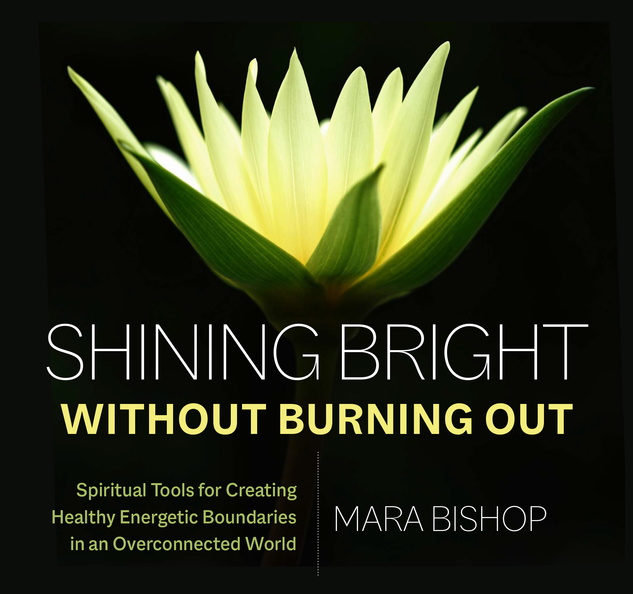
When you hear the phrase “shining bright,” what does it evoke for you? Does it mean being yourself? Is it radiance, openness, or casting your energy outward toward others? Is it being the center of attention?
For me, shining bright is about sustainable personal energy, understanding your unique spiritual makeup or energetic personality archetype. It’s about managing your energy ecosystem. It’s also about keeping the balance of what’s “coming in” and what’s “going out,” as all healthy systems do.
One of the ways I feel my “brightest” is when I’m in nature, especially in the little jungle of my backyard. As I write this, a rabbit is relentlessly distracting me by flashing its ears in my line of sight, stretching up to grab some leaves, ducking down into the ivy. Observing and immersing myself in nature keeps my energy ecosystem healthy. It helps me see the bigger picture of the earth’s systems and appreciate the extraordinary beauty that exists in our seemingly ordinary spaces. I breathe differently and feel lighter when I’m watching the creatures and plants outside.
Rabbits don’t do it for you? You may need the bright lights of the stage, deep long meaningful conversations, sweaty workouts, or something else. It’s a combination of things that blend to create ideal self-care habits, big and small routines that honor who we naturally are and help us be our most radiant.
It’s hard to shine bright when you’re burned out. Many of us are overwhelmed, facing disasters of all kinds. Even if we’re not experiencing direct trauma, the world feels chaotic. That can make it easier for us to spin out of control a little too and neglect healthy habits. Maybe, like me, you love and are rejuvenated by time in nature, but feel you must travel to far-off places to find the wild and that’s not possible right now. Maybe you’ve struggled to find a practice that suits who you are and fits into your life. Maybe you feel the experiences of those around you so keenly in your body that it’s hard to distinguish your own emotions and needs.
We’re vulnerable to burnout when we get overwhelmed and depleted when we become cynical and feel negative and ineffective about our work. We start to distance ourselves from others and detach from ourselves, our needs, and what it takes to be healthy and happy.
I have two resources to help, one is available now, and one will be available soon.
Even if you only have a few moments, making time to meditate or journey regularly can help avoid burnout. Shamanism for Every Day: 365 Journeys is a daily guide for reconnection. No pressure, not another to-do list item, but a gentle way to engage your inner wisdom and the support of the spirits around you to stay healthy. Shining Bright Without Burning Out: Spiritual Tools for Creating Healthy Energetic Boundaries in an Overconnected World is an audio course that will help you step by step to manage what comes into your energy ecosystem and what goes out. We’ll reframe how you engage the world in order to stay compassionate and present, without losing your spark or burning out, so that you can shine bright and enjoy your time here on this beautiful earth.
Mara Bishop has over 25 years of experience helping people find spiritual health and well-being. Her Personal Evolution Counseling™ method blends shamanism, psychology, intuition, energy healing, and nature-based practices. She lives in Durham, NC with a beloved family of people, animals, and plants.
Mara Bishop is a shamanic practitioner, intuitive consultant, teacher, author, and artist. In private practice, she uses her Personal Evolution Counseling™ method to provide an integrated approach to spiritual healing, personal growth, and emotional well-being. Her books Shamanism for Every Day: 365 Journeys and Inner Divinity: Crafting Your Life with Sacred Intelligence are resource guides for spiritual practice. She resides in Durham, North Carolina. For more, visit wholespirit.com.
Are you exhausted, anxious, or overwhelmed? Maybe your life is challenging. Or perhaps the state of the world and others’ suffering feels unbearable. If your life is going well, but you still feel miserable, maybe you have some guilt or shame. You are not alone. You may be suffering from empathic distress.
Most of us have been taught that empathy is wholly positive and should be fostered in children and revered in adults. This idea is partly correct. The absence of empathy is clearly problematic. When the ability to sense or care about others’ feelings or pain is missing, we edge into sociopathy. However, empathy is experiencing another person’s pain as our own. In small doses and for short periods, it allows us a deeper understanding of our fellow beings. But it can also make it harder to help, because the pain is spread around, not diminished. If your friend breaks their leg and you experience genuine empathy, it might feel like your leg is broken too. This makes it harder for you to function and definitely harder for you to help them.
Empathy can make us sick, overwhelmed, and burned out.
Many people feel helpless in the face of the magnitude of suffering in the world today. It can result in what appears to be apathy at first but is actually empathic distress, which means “hurting for others while feeling unable to help.” An op-ed in the New York Times titled “That Numbness You’re Feeling? There’s a Word for It” described this phenomenon and cited some of the research I used to create the Sounds True audio course Shining Bright Without Burning Out: Spiritual Tools for Creating Healthy Energetic Boundaries in an Overconnected World.
The Research
Neuroscientists Olga Klimecki and Tania Singer identified empathy as a contributing factor to burnout, primarily but not exclusively, among healthcare workers and therapists. The older term compassion fatigue is a “misnomer.” Compassion and empathy have distinctly different impacts on our bodies and psyches. Compassion is witnessing and being willing to help when possible and appropriate. Empathy is taking on others’ pain as our own. Empathy often creates “more distress.” It is a huge distinction.
Empathy is overrated and fatiguing. Compassion is what we need. Unfortunately, we often confuse the two. This dynamic is one reason why developing healthy energetic boundaries is essential.
Decreasing Empathic Distress
Being unable to adjust between compassion and empathy is a big reason many people feel drained and overwhelmed. Research about the critical difference between compassion and empathy aligns with many spiritual concepts of energetic boundaries. It also challenges some. One of the ways we inadvertently make things difficult for ourselves is when we believe that to be good, kind, “spiritual” people, we must always be wide open. We must be at one with the universe, be open to everyone, and say yes to everything. There is a paradox here. We are all one on some level, but we need to embrace the ability to differentiate ourselves from others at times to steward our own health.
We have reached a tipping point with empathic distress; it is a crisis within the crises.
Klimecki and Singer focus on how training in compassion meditation can help reduce empathic distress, shifting from an experience of absorbing others’ energy to a state of kindness toward others with clear self-differentiation. The distinction between empathy and compassion is one of the first things we cover in Shining Bright Without Burning Out: Spiritual Tools for Creating Healthy Energetic Boundaries in an Overconnected World. The course also includes a full set of tools for addressing empathic distress from the perspective of energetic boundaries.
Here are a few additional steps you can take today to begin reducing empathic distress:
Be clear about your direct responsibilities and what is not yours.
Pause before entering new situations: conversations, appointments with clients, meetings, etc. Take a moment to reset yourself with a breath and an intention for how you want to engage.
Pay attention to how you feel after interactions with people, places, and media. Note over time when your mood or body feels drained so that you can prepare more thoroughly in the future, consider how to minimize those interactions if they are optional, and take time to reset after engaging.
Mara Bishop
Mara Bishop is a shamanic practitioner, intuitive consultant, teacher, author, and artist. In private practice, she uses her Personal Evolution Counseling™ method to provide an integrated approach to spiritual healing, personal growth, and emotional well-being. Her books Shamanism for Every Day: 365 Journeys and Inner Divinity: Crafting Your Life with Sacred Intelligence are resource guides for spiritual practice. She resides in Durham, North Carolina. For more, visit wholespirit.com.
Mara Bishop is a shamanic practitioner, intuitive consultant, teacher, author, and artist. In private practice, she uses her Personal Evolution Counseling™ method to provide an integrated approach to spiritual healing, personal growth, and emotional well-being. She is the author of the books Shamanism for Every Day: 365 Journeys and Inner Divinity: Crafting Your Life with Sacred Intelligence, and, with Sounds True, she is the author of the audio learning program Shining Bright Without Burning Out: Spiritual Tools for Creating Healthy Energetic Boundaries in an Overconnected World.
In this podcast, Mara speaks with Sounds True’s founder, Tami Simon, about how in today’s world we can learn to value our sensitivity instead of feeling overwhelmed and exhausted. Mara and Tami also discuss shamanism as a path of direct revelation, accessing non-ordinary consciousness for insight and healing, the three phases of creating healthy energetic boundaries, the difference between “just plain stress” and burnout, discovering your energy personality archetypes, understanding your energy ecosystems and how they interact, working on yourself and bringing light to the shadow aspects of your personality, the difference between compassion and empathy, energetic cleansing methods, the paradox of “one and all one,” Mara’s concept of “powering on” to amplify and shine our inner light, how our world has become “overconnected” and how to avoid the burnout this can create, the shamanic practitioner as someone who can “see through the eyes of the heart,” and more.
Compassion is the magic ingredient that turns our personal “compost” into personal evolution.
Some time ago, I found a strange bloom in the kitchen. It was elegantly twisted, like a dragon at a Chinese New Year celebration. It was frilled, purple, and pungent. This exquisite thing grew out of a chunk of purple cabbage that I’d put under the sink to go out for compost. Instead of fading quietly however, it burst into new life in the dark grotto of my cabinetry. It blossomed into something unexpected, unusual, and fiercely beautiful.
Reflecting on the discovery of this “flower” in the shadows, I’m reminded of, and heartened by, the fertility of dark times. Many people are feeling a collective spiritual darkness now, exhausted and frustrated, maybe also angry and scared. Having compassion for ourselves and others is especially important in times of literal and metaphorical darkness. How can we do this if we already feel overloaded?
Nature is our ultimate model and guide—in the light, in the dark, and in the most surprising and gorgeous ways. Cue the weird, glorious cabbage flower which came to life in the dark. What was being shown there?
There is the clear compost metaphor. Compost is the stuff we reject, the moldy, wilted, too hard, too soft, nasty bits that don’t make it to the table. It’s also the leftovers from delicious things we appreciate and enjoy, silky mango skins, green tea leaves, dark coffee grounds.
It all transforms into a rich sloop that eventually nourishes future plants. Our personal work includes processing our own “dark” sides, the parts we’d like to hide or discard. Self-compassion (and compassion for others) holds both the rejected and respected parts of who we are. Like composting, it isn’t always pretty, but it’s potent. Research shows self-compassion helps us stay present and kindhearted without sinking into absorptive empathy, which can lead to overload and burnout. This meditation is part of the toolkit in the audio course Shining Bright Without Burning Out.
The cycles of the natural world, into which we are interwoven, take time. It’s hard to be patient, to let everything, both scorned and enjoyed, stew in our symbolic personal compost piles. The speed with which that brew changes from nasty to nourishing varies widely with the internal and external conditions. Sometimes all those different elements take a long time to dissolve and break down. Sometimes it turns around faster than we think possible, like time-lapse photography of a log rotting on the forest floor with new green shoots springing to life overnight.Compassion is the magic ingredient that turns our personal “compost” into personal evolution.
The dark supports transformation. Times of literal darkness are needed for regeneration. Roots, seeds, and bulbs prepare. People and animals sleep. Times of symbolic darkness are also helpful. In darkness, transformative processes happen without spectators, often below the level of our conscious awareness. These are periods of catharsis, healing after trauma, cocooning in preparation for the next version of ourselves and our world.
We sometimes feel hopeless and helpless in the dark. Our society avoids sinking into it. Instead, we gravitate towards purveyors of easy “love and light!” spirituality, shying away from the deep, gooey work that happens to the larval versions of ourselves (and those around us) when we’re in the darkness of the cocoon. Self-compassion is most needed when we’re a mess.
The dark is a vital part of the wheel of our days, our years, our lifetimes. We need it to survive and be healthy in the long term. So, let’s embrace it, explore it, and be gentle with ourselves as we confront our fear of it. From this darkness we are nourished to bloom into the light.
Mara Bishop has over 25 years of experience helping people find spiritual health and well-being. Her Personal Evolution Counseling™ method blends shamanism, psychology, intuition, energy healing, and nature-based practices. She lives in Durham, NC with a beloved family of people, animals, and plants.
What if the greatest battle you’ll ever face is the one happening inside your own mind?
This week, Tami Simon speaks with Shi Heng Yi—a 35th generation Shaolin master, founder of the Shaolin Temple Europe, and author of Shaolin Spirit: The Way to Self-Mastery—about what it truly means to master yourself from the inside out.
Born in Germany to Vietnamese immigrant parents, Master Shi Heng Yi began martial arts training at age four and has spent decades making the profound teachings of Shaolin Buddhism accessible to modern seekers worldwide.
Join Tami and Shi Heng Yi to explore:
What self-mastery actually means—and why it has nothing to do with control
The difference between the self and the persona, and why most suffering comes from confusing the two
The concept of elevation—how life becomes lighter when we stop grasping
How the body becomes a doorway to discovering what lies beyond it
The mind lessons hidden inside the Shaolin horse stance (mabu)
Why the heart of a Buddha and the fight of a warrior are not opposites
The yin dimension within one of the world’s most physically demanding traditions
Whether you’re carrying the weight of a heavy identity, stuck in a cycle of suffering, or simply curious about what ancient wisdom has to say to the modern world, listen in to discover the freedom that comes from turning inward.
This conversation offers genuine transmission—not just concepts about awakening, but the palpable presence of realized teachers exploring the growing edge of spiritual understanding together. Originally aired on Sounds True One.
Dreams have long stirred human curiosity. Some feel fleeting and fragmented. Others arrive with striking clarity, emotion, or insight that lingers long after waking. Across cultures and generations, people have sensed that the dream state is more than random mental activity. It can feel like a living landscape, one that invites participation. Active dreaming speaks to this invitation. It is the practice of entering our dreams with awareness and intention, learning how to navigate the inner worlds that unfold each night.
Since 1985, we have been dedicated to sharing living spiritual wisdom in the authentic voices of the teachers themselves. From audio programs and books to immersive trainings and podcasts, our work preserves the energetic transmission of transformative teachings. Through conversations with visionary leaders in meditation, psychology, and contemplative traditions, we have witnessed a deep recognition that dreaming is not peripheral to awakening. It is woven into the path itself.
Here, we will discuss active dreaming, how it relates to lucid dreaming and shamanic dreaming, and how conscious dream navigation expands our understanding of the multiverse within awareness.
Key Takeaways:
Awareness in Sleep: Active dreaming builds conscious presence within the dream state, strengthening clarity and intentional participation.
Multidimensional Consciousness: The lucid dreaming multiverse reflects layered dimensions of awareness accessible through practice.
Integration into Life: Dream navigation supports emotional insight, creativity, and continuity between waking and dreaming states.
What Is Active Dreaming and How Does It Relate to Conscious Dreaming?
Have you ever sensed that a dream was more than random imagery? That it carried presence, intelligence, or even invitation?
Active dreaming is the practice of engaging the dream world consciously and creatively. Rather than analyzing dreams only after we wake, we enter into a relationship with them. We respond, ask questions, and participate.
This approach overlaps with conscious dreaming, which refers to bringing awareness into the dream state. While lucid dreaming emphasizes recognizing that you are dreaming, active dreaming goes further. It invites dialogue with dream figures, landscapes, and symbols. The dream becomes a living field of experience rather than a puzzle to decode.
In many spiritual traditions, dreams are understood as experiences in subtle realms of reality. Active dreaming helps us move from passive observer to active participant. It is the foundation for dream navigation and for understanding what some describe as a multiverse of awareness within our own consciousness.
The Lucid Dreaming Multiverse: Expanding Our Understanding of Reality
What if the dream state opens into multiple layers of reality? The lucid dreaming multiverse points to the idea that consciousness is not limited to one world but can move through many dimensions of experience.
Lucidity as a Gateway
Lucid dreaming begins with recognition. You realize you are dreaming while the dream continues. That awareness creates stability and choice. The environment becomes responsive rather than fixed. Through practices taught in The Lucid Dreaming Training Program, we can strengthen recall, increase clarity, and remain present in the dream state. Lucidity becomes the doorway through which deeper exploration is possible.
Layers of Reality Within the Dream State
In a single night, we may move through shifting identities, symbolic landscapes, and encounters that feel deeply real. Active dreaming treats these not as random images but as meaningful dimensions of consciousness.
By bringing conscious dreaming into these experiences, we begin to sense the vastness within awareness itself. The multiverse is not somewhere else. It unfolds within the field of our own mind.
Dream Navigation: Moving Intentionally Through Inner and Outer Worlds
If dreams open into multiple dimensions of awareness, dream navigation is how we move through them with intention. It is the practice of orienting ourselves within the dream and choosing how to engage.
Orienting Within the Dream
Once awareness arises, we pause and observe. Where am I? What is unfolding? This simple reflection creates stability. The dream becomes a space we can explore rather than endure. Self-Hypnosis Online Course supports this kind of intentional inner orientation, training the mind to enter receptive states with clarity and calm — a foundation that translates naturally into conscious dream navigation.
Integrating Inner and Outer Worlds
Active dreaming does not end when we wake. Through approaches like Dreamtending, we continue the dialogue with dream images, allowing insight to deepen over time.
Dream navigation becomes a way of living, recognizing that inner and outer worlds are in constant conversation.
Shamanic Dreaming as a Pathway to Active Dreaming
Long before modern language around lucid dreaming emerged, shamanic dreaming offered a map of the inner worlds. In many indigenous traditions, dreams are understood as journeys into subtle realms where healing, guidance, and insight are available.
The Shamanic View of the Dream World
Shamanic dreaming treats the dream state as a real experience. The dreamer may travel, meet teachers, or retrieve wisdom for the community. These journeys are intentional and relational, not accidental.
This perspective aligns naturally with active dreaming. Both approaches recognize that consciousness can move beyond ordinary perception and engage directly with symbolic and spiritual dimensions.
From Journeying to Conscious Participation
In active dreaming, we cultivate the same respect and intentionality found in shamanic traditions. We enter the dream with curiosity. We listen. We respond. Revolutionary Discoveries from Non-Ordinary Realities illuminates how these dream-state encounters connect to broader dimensions of consciousness, affirming that the dream state is a living field for transformation rather than a private fantasy.
Conscious Dreaming Practices for Multiverse Awareness
If the dream state opens into layered dimensions of awareness, how do we cultivate the stability to move through them? Conscious dreaming develops through steady, grounded practice. These approaches strengthen clarity, recall, and intentional presence within the lucid dreaming multiverse.
Core Practices That Support Conscious Dreaming
Strengthen dream recall by journaling immediately upon waking. This signals to the mind that dreams matter and builds continuity of awareness.
Set clear intentions before sleep. A simple inward statement, such as “I will remain aware in my dreams,” helps orient consciousness.
Practice reality reflection during the day. Pausing to question, “Am I dreaming?” builds the habit of awareness that can carry into sleep.
Meditate regularly. A steady meditation practice supports clarity and reduces mental fragmentation in both waking and dreaming states.
Reenter meaningful dreams through imagination while awake. This deepens dream navigation and keeps the dialogue alive.
Through consistent practice, conscious dreaming becomes less about control and more about relationship. Awareness stabilizes. The multiverse within consciousness begins to feel accessible, not abstract. Active dreaming then unfolds naturally as a lived experience rather than a concept.
The Role of Imagination in Dream Navigation and Active Dreaming
Imagination is often dismissed as fantasy, yet in active dreaming it becomes a bridge between worlds. It allows us to reenter dreams, deepen their meaning, and remain in relationship with their images.
In dream navigation, imagination acts as a compass, strengthening the connection between waking and dreaming awareness. Within the lucid dreaming multiverse, it becomes a mode of perception, helping us move between layers of experience with flexibility and presence. Active dreaming is not an escape from reality but an expansion of how we participate in it.
Integrating Lucid Dreaming Multiverse Experiences into Daily Life
Experiences in the lucid dreaming multiverse gain depth when they inform how we live. Active dreaming is not confined to the night. Its insights are meant to be embodied.
Integration begins with simple reflection. After a conscious dreaming experience, we ask what qualities were present and how they can be practiced during the day. Courage, compassion, or clarity in a dream can become intentional actions in waking life. The Remote Viewing Online Training Course offers a complementary discipline here, sharpening perceptual awareness and discernment in ways that support the grounded integration of expanded inner experiences.
Rather than interpreting dreams literally, we listen for what resonates. Over time, awareness feels more continuous. The boundary between dreaming and waking softens, and active dreaming becomes a grounded spiritual practice woven into everyday reality.
The Spiritual Roots of Shamanic Dreaming and Conscious Dreaming
Active dreaming is rooted in ancient traditions that honored the dream state as sacred. Across cultures, shamanic dreaming was practiced to access guidance, healing, and insight beyond ordinary awareness.
In these traditions, the dreamer was a traveler, cultivating conscious dreaming through intention and discipline. Dreams were approached as real encounters with personal and collective wisdom.
Active dreaming carries this lineage forward, affirming that consciousness is multidimensional and that dream navigation can be a path of awakening. Over time, lucid dreaming, shamanic dreaming, and conscious dreaming converge into a deeper, continuous relationship with awareness across waking and dreaming life.
Final Thoughts
Active dreaming invites us into a living relationship with the dream world. Through lucid dreaming, shamanic dreaming, and steady conscious practice, we begin to sense the multidimensional nature of awareness itself.
The multiverse is not somewhere far away. It unfolds within consciousness, night after night. As we learn the art of dream navigation, we participate more fully in both our inner and outer worlds, grounded, curious, and awake.
Frequently Asked Questions About Active Dreaming: How to Consciously Navigate the Multiverse
What makes active dreaming different from regular dreaming?
Active dreaming involves intentional engagement with the dream state. Instead of passively experiencing dreams, the dreamer cultivates awareness and participation, both during sleep and upon waking reflection.
Is active dreaming the same as lucid dreaming?
Lucid dreaming is one component of active dreaming. Lucidity refers to knowing you are dreaming while the dream continues. Active dreaming includes lucidity but also emphasizes dialogue, integration, and an ongoing relationship with dream imagery.
Can anyone learn active dreaming?
Yes. Active dreaming is a trainable skill. With consistent practices such as intention setting, meditation, and dream recall, most people can strengthen their capacity for conscious awareness in dreams.
Does active dreaming require a spiritual belief system?
No specific belief system is required. While active dreaming has roots in spiritual traditions, it can be approached psychologically, creatively, or contemplatively. The practice adapts to the framework of the individual.
How does active dreaming relate to the idea of a multiverse?
In this context, the multiverse refers to the layered nature of consciousness. Active dreaming allows individuals to experience multiple dimensions of awareness within the dream state, expanding their sense of reality.
Is active dreaming safe?
For most people, yes. It is a practice of awareness rather than control. Those with certain mental health conditions should approach intensive dream practices with professional guidance, but for many, it supports insight and emotional integration.
How long does it take to become proficient in conscious dreaming?
Progress varies. Some people experience lucidity quickly, while others build skill gradually. Consistency matters more than speed. Even small increases in dream awareness can be meaningful.
Can active dreaming support creativity?
Yes. Many artists, writers, and innovators draw inspiration from dreams. Active dreaming strengthens access to symbolic imagery and intuitive insight, which can enrich creative work.
What role does intention play in active dreaming?
Intention acts as a guidepost. By clarifying a question or focus before sleep, the dreamer orients awareness. Intention does not force outcomes but shapes receptivity within the dream field.
How does active dreaming influence waking consciousness?
Over time, practitioners often report greater self-awareness, emotional clarity, and sensitivity to subtle experience. The continuity of awareness between sleeping and waking states can lead to a more reflective and intentional life.
Michelle Cassandra Johnson is an author, activist, spiritual teacher, racial equity consultant, and intuitive healer. She is the author of six books, including Skill in Action and Finding Refuge. Amy Burtaine is a leadership coach and racial equity trainer. With Robin DiAngelo, she is the coauthor of The Facilitator’s Guide for White Affinity Groups. For more, visit https://www.michellecjohnson.com/wisdom-of-the-hive.
Prison is often defined by restriction, routine, and loss of control, yet within these confines, many people encounter an unexpected invitation to turn inward. Through meditation and mindfulness, incarceration can become a setting for deep self-examination, where thoughts, emotions, and long-held patterns are met with honesty rather than avoidance.
At Sounds True, decades of sharing living wisdom from teachers who speak from direct experience have shaped everything we do. Our work centers on preserving unscripted teachings that reflect real transformation in the midst of hardship. By amplifying voices such as Fleet Maull, we remain committed to offering grounded spiritual guidance that honors accountability, compassion, and human dignity.
Let’s examine prison meditation and spiritual awakening behind bars, looking at how mindfulness, responsibility, and sustained practice support inner freedom and shared humanity, even in confinement.
Key Takeaways:
Freedom Is An Inside Job: Even behind bars, awareness and radical responsibility open a doorway to inner freedom that no external circumstance can close.
Awakening Happens One Breath at a Time: Spiritual awakening in prison grows through small, steady moments of honest attention, not one dramatic turning point.
Beneath Every Label, We Share the Same Humanity: Mindfulness in prison cultivates empathy, accountability, and real human connection across the divides of separation and restriction.
Prison Meditation and the Inner Work of Freedom Behind Bars
Prison meditation shifts attention from external conditions to inner experience. When freedom of movement is removed, the mind becomes the primary place where suffering and relief are encountered. Meditation offers a way to meet that reality directly, without distraction or avoidance.
Incarceration often intensifies habitual thought patterns like fear, anger, and regret. Sitting in meditation allows these patterns to be observed rather than acted out. Over time, this creates space between impulse and response, a form of inner freedom that practitioners carry with them long after a session ends.
Though it’s important to note that this practice does not deny the hardship of prison life. Instead, it supports a steady relationship with what is present. Through consistent attention to breath, sensation, and thought, meditation becomes a training in clarity and self-honesty.
At Sounds True, meditation is understood as a lived practice grounded in direct experience. The Power of Awareness offers exactly this kind of grounded, moment-to-moment guidance, emphasizing simplicity, discipline, and the steadiness of attention — qualities that carry deep weight in environments where control is limited. Within that framework, prison meditation becomes a way to reclaim dignity and agency from the inside out.
Spiritual Awakening in Prison as a Lived, Moment-to-Moment Practice
Spiritual awakening in prison rarely arrives as a lightning bolt. Far more often, this awakening unfolds through repeated contact with what is present, day after day, under conditions that leave little room for looking away.
Meeting Reality Without Escape
Awakening in confinement begins with facing reality as it is, like the absence of familiar outlets brings thoughts and emotions into sharper focus. Meditation encourages staying with discomfort, restlessness, and fear rather than trying to fix or suppress them. This willingness to remain present often reveals that suffering is amplified by resistance far more than by circumstance alone.
Awakening Through Responsibility and Attention
As awareness stabilizes, responsibility naturally comes into view. Practitioners begin to notice how reactions, beliefs, and internal narratives shape their experience. This insight is not about self-blame. It reflects a growing capacity to take responsibility for one’s inner life. Living from a Place of Surrender speaks directly to this shift — the turning away from resistance and toward honest, open-hearted presence — showing how sustained attention can become a foundation for meaningful inner change.
Fleet Maull on Entering Prison Meditation Through Direct Experience
Fleet Maull’s work in prison meditation emerges from lived experience rather than theory. His teaching reflects what it means to turn toward inner life under extreme conditions and to use practice as a means of genuine transformation.
From Incarceration to Practice
Fleet Maull began meditating while serving a long prison sentence, encountering the practice not as self-improvement but as survival. In an environment shaped by control and unpredictability, meditation became a way to establish inner stability. Sitting with the breath offered a rare opportunity to observe the mind without being driven by it. That steady attention laid the groundwork for insight, discipline, and emotional regulation.
Responsibility as the Turning Point
A defining element of Maull’s teaching is the role of responsibility in awakening. Rather than framing prison solely as injustice or punishment, he emphasizes accountability for one’s internal responses. This perspective aligns with teachings like Living from a Place of Surrender, which invites practitioners to release the grip of control and meet life as it arrives — an especially resonant practice when external freedom is constrained. Through this lens, prison meditation becomes a path toward reclaiming agency, even when external freedom is limited.
Mindfulness in Prison: Learning to Stay Present When Pressure Is Constant
Mindfulness in prison is shaped by intensity. Noise, surveillance, and lack of privacy place constant demands on attention. In that environment, mindfulness is not about relaxation. Learning how to remain present when pressure is unavoidable becomes the true test.
Working with Stress and Reactivity
Daily prison life often activates the nervous system. Mindfulness practice helps create a pause between stimulus and response. By noticing sensations, thoughts, and emotional surges as they arise, practitioners learn to interrupt automatic reactions. This pause can reduce conflict and support clearer decision-making, even in charged situations.
Building Stability Through Daily Practice
Consistency is key. Mindfulness becomes effective when it is practiced repeatedly, not only during formal meditation but throughout the day. Walking, standing in line, or engaging in routine tasks all become opportunities for awareness.
The MBSR Online Course offers a structured, accessible path for developing exactly this kind of steady rhythm, providing evidence-based tools for staying present amid stress and disruption. Over time, mindfulness in prison becomes a source of groundedness that supports both emotional balance and personal responsibility.
Radical Responsibility as a Foundation for Spiritual Awakening in Prison
Radical responsibility becomes essential in prison because it brings attention back to the one place where choice still exists. While external conditions are fixed, the way experience is met internally remains flexible. This understanding sits at the heart of spiritual awakening in prison.
Responsibility Without Self-Blame
Radical Responsibility should not be about punishment or shame. Seeing clearly how thoughts, reactions, and patterns shape suffering becomes the real work. In prison meditation, this clarity helps practitioners move out of denial and into honest self-awareness. Responsibility becomes an act of dignity rather than judgment.
Awakening Through Ownership of Inner Life
As responsibility deepens, awakening becomes practical. Practitioners learn to recognize where they still have agency, even within confinement. Taking ownership of one’s inner life supports stability, accountability, and a growing sense of inner freedom that is not dependent on circumstance.
Prison Meditation as a Training Ground for Radical Responsibility
Prison meditation offers a direct, experiential way to practice responsibility under conditions that leave little room for avoidance. The structure of incarceration makes inner habits visible, turning daily life into a continuous field of practice.
Seeing patterns clearly: Meditation reveals habitual reactions such as anger, withdrawal, or blame as they arise. This visibility makes it possible to interrupt patterns rather than reinforce them.
Choosing response over reaction: In a high-pressure environment, even brief pauses matter. Prison meditation strengthens the capacity to respond intentionally instead of acting from impulse.
Holding accountability with compassion: Responsibility deepens when it is paired with care rather than self-judgment. Insight Meditation offers this balance directly, guiding practitioners toward clear seeing without harshness and supporting sustainable inner change.
Practicing consistency in constrained conditions: Regular meditation builds discipline and trust in the practice itself. Over time, responsibility becomes less about effort and more about alignment with one’s values.
Reclaiming agency from the inside: Each mindful choice reinforces the understanding that inner agency remains available, even when external freedom is limited.
Through repetition and reflection, prison meditation becomes far more than a coping strategy. This practice becomes a lived training in responsibility that cultivates clarity, dignity, and spiritual awakening, even within confinement.
Fleet Maull on Mindfulness in Prison and Shared Humanity
Fleet Maull’s teaching on mindfulness in prison consistently returns to the recognition of shared humanity. In an environment shaped by separation and control, mindfulness becomes a way to remember what is held in common beneath roles, labels, and histories. Practice brings attention to universal experiences like fear, remorse, longing, and the desire for dignity.
Mindfulness in prison encourages a steady relationship with the present moment, even when conditions are harsh. The MBSR Online Course supports this through structured, repeatable practices that help practitioners return to awareness amid stress and disruption. This kind of repetition strengthens emotional regulation and cultivates patience, both of which are essential for maintaining human connection in restrictive environments.
For Maull, mindfulness is not separate from ethical reflection or compassion. The Power of Awareness speaks to this directly, emphasizing sincerity and direct experience and reinforcing the understanding that awareness is not about withdrawal but engagement. As individuals learn to stay present with themselves, they become more capable of seeing others clearly and responding with respect.
Through shared practice, mindfulness restores a sense of belonging. Sitting together in silence creates a temporary suspension of hierarchy and judgment, allowing humanity to come forward. In this way, mindfulness in prison becomes both a personal discipline and a relational act, supporting inner awakening alongside collective healing.
Spiritual Awakening in Prison and Carrying the Practice Forward
Spiritual awakening in prison continues beyond confinement. The awareness cultivated through meditation often becomes a stabilizing force during transition and reentry, offering continuity in the face of change.
Practices developed behind bars tend to remain simple and direct. Attention to breath, bodily sensation, and mental patterns supports emotional regulation and helps prevent automatic reactions from taking over. The discipline learned in restrictive conditions frequently strengthens resilience in less structured environments.
Awakening also shows up in relationships. Increased awareness supports patience, accountability, and more careful listening. What begins as a response to confinement carries forward as a commitment to presence, responsibility, and shared humanity in daily life.
Final Thoughts
Prison meditation shows that inner freedom remains available, even under severe restriction. Through awareness and radical responsibility, spiritual awakening in prison becomes a lived practice rooted in honesty and presence. These teachings point to a quiet but enduring truth: when attention is cultivated with care, dignity, and shared humanity can be restored from the inside out, one breath at a time. At Sounds True, our courses are here to walk alongside anyone ready to take that first step inward, wherever they may be on the journey.
Frequently Asked Questions About Finding Freedom Behind Bars: Spiritual Awakening in Prison
What is prison meditation?
Prison meditation refers to contemplative practices adapted for incarcerated settings, often focused on breath awareness, body awareness, and observing thoughts to build stability and insight. These practices are intentionally simple and accessible, meeting people exactly where they are.
Can meditation be practiced safely in prison environments?
Yes. Many programs adapt meditation to fit safety requirements, emphasizing seated or standing practices that require minimal space and no special equipment. These adaptations make meditation genuinely accessible across a wide range of prison settings and populations.
Is spiritual awakening in prison tied to a specific religion?
No. Spiritual awakening in prison is often nonsectarian, centered on awareness, responsibility, and ethical reflection rather than belief systems or doctrine. This openness makes the practice welcoming to people from all backgrounds and traditions.
Why does meditation resonate so strongly with incarcerated individuals?
Meditation offers tools for working with intense emotions, long periods of inactivity, and lack of control, which are common features of incarceration. Many practitioners find that consistent practice gives them a renewed sense of agency and inner steadiness they did not know was possible.
How long does it take to see benefits from prison meditation?
Experiences vary. Some notice small shifts in emotional regulation early on, while deeper changes develop through consistent, long-term practice. Patience and repetition tend to be the most reliable guides on this path.
Do people continue meditating after release from prison?
Yes, many do. Practices learned in confinement often translate naturally to daily life because they rely on attention rather than ideal conditions. The simplicity of the practice tends to carry well across very different environments and circumstances.
Can prison meditation support rehabilitation efforts?
Meditation can complement rehabilitation by strengthening self-awareness, impulse control, and the ability to reflect before acting. Many practitioners find that it becomes one of the most grounding tools in their long-term growth.
Who teaches prison meditation programs?
Programs are often led by trained meditation teachers, former practitioners who were incarcerated themselves, or volunteers affiliated with mindfulness organizations. This diversity of instructors helps keep teachings grounded, relatable, and deeply human.
Is prison meditation appropriate for people new to mindfulness?
Yes. Many incarcerated practitioners begin with no prior experience, using simple, accessible techniques designed for beginners. The practice is built to meet people at the very start of their journey.
Michelle Cassandra Johnson is an author, activist, spiritual teacher, racial equity consultant, and intuitive healer. She is the author of six books, including Skill in Action and Finding Refuge. Amy Burtaine is a leadership coach and racial equity trainer. With Robin DiAngelo, she is the coauthor of The Facilitator’s Guide for White Affinity Groups. For more, visit https://www.michellecjohnson.com/wisdom-of-the-hive.
Session expired
Please log in again.
The login page will open in a new tab. After logging in you can close it and return to this page.

 Preorder Shining Bright Without Burning Out now!