Gary Gach: Pause. Breathe. Smile. Spiritual Awakening as an Art Form

    —
August 14, 2018

Gary Gach: Pause. Breathe. Smile. Spiritual Awakening as an Art Form

Gary Gach August 14, 2018

Gary Gach is a writer, meditator, and mystic who draws on his diverse life experiences to inform his nonfiction and poetry offerings. He is the author of What Book!? and The Complete Idiot’s Guide to Understanding Buddhism. With Sounds True, he has most recently published Pause, Breathe, Smile: Awakening Mindfulness When Meditation Is Not Enough. In this episode of Insights at the Edge, Tami Simon speaks with Gary about the titular process of pausing, breathing, and smiling—how it can center you immediately, plant seeds of awakening, and help light the way on the path to peace. They talk about the “mouth yoga” of the half-smile and why meditation is only “part of the menu” of daily mindfulness practice. Gary and Tami also discuss what it means to exist in three kinds of awakening reality: the spaces of impermanence, interbeing, and selflessness. Finally, Gary shares his love of reading and writing haiku, offering a spontaneous haiku poem that arises in the course of the interview. (59 minutes)

Gary Gach is a writer, mystic, and lifelong meditator who has engaged in many roles: actor, bookshop clerk, dishwasher, hospital admin, office temp, stevedore, teacher, and typographer. Lay-ordained by Thich Nhat Hanh in 2008, he has authored eight previous books including The Complete Idiot’s Guide to Buddhism (Alpha, 2001). Gary lives in San Francisco. For more, visit garygach.com

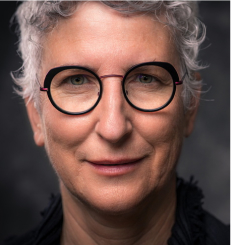
Author photo © Angela Beske

600 Podcasts and Counting…

Subscribe to Insights at the Edge to hear all of Tami’s interviews (transcripts available too!), featuring Eckhart Tolle, Caroline Myss, Tara Brach, Jack Kornfield, Adyashanti, and many more.

Meet Your Host: Tami Simon

Founded Sounds True in 1985 as a multimedia publishing house with a mission to disseminate spiritual wisdom. She hosts a popular weekly podcast called Insights at the Edge, where she has interviewed many of today's leading teachers. Tami lives with her wife, Julie M. Kramer, and their two spoodles, Rasberry and Bula, in Boulder, Colorado.

Photo © Jason Elias

Also By Author

Inspiration: 27 Vital Aspects of Breath

Pause, Breathe, Smile by Gary Gach

Have you ever paused to consider how amazing your breath is? Here’s a list of some inspirational aspects of breath. (The word inspiration itself means to breathe.) Some might already be familiar to you. You may feel drawn to appreciate some more than others. Devoting close attention to any one will lead to all the others. It’s all there – in a breath.


1  Present-ness

My mind wanders. My thoughts drift off. Sometimes, I could drown in regret, lost reviewing the past. Meanwhile, my breath is always precisely in the present moment.

2  Happiness

When we drop our worries and hurries, we can fully connect with our aliveness. Breathing with this joy on our lips, we learn a deeper, more enduring happiness. It’s our birthright. Conscious breathing can be a great relief, having nothing else to do but be – and a reminder there are enough simple reasons for happiness in this present moment.

3  Leadership

I’m a follower of my breath. Following my breath can tell me volumes about how I’m feeling and what I’m thinking; where I am and where I need to go in my life. When I notice my mind has wandered – I simply draw attention back to my breath.

4  Constant Companion

Since my birth, no one and no thing has been as close to me, without fail, rain or shine, as my breath. No sensation has been as familiar to me. When I follow my breath, I feel myself coming home, where I’ve always belonged.

5  Best Friendship

Ultimately, no one may love me as much as I do. To remain faithful to my part of the relationship, I pay utmost attention to my breath. Sometimes, I need to take time for us to get to know each other better.

6  Relational

I say, “my breath,” but I could b breathing in your out-breath. The simple implication of breath’s merging of within and around can dramatically shift my perspective.

7  Inspirational

We have many muses in our creative life. They may take the form of rituals, people, or substances. My primary inspiration is breath.

8  Nature
Through my breath, I observe my connection to Nature and her processes. The in-and-out of breath mirrors the natural cycles – the tides, the sun and moon, life and death.

9  Slowness

Nature reminds me to slow down, since my observation reveals how slowness tends to predominate our surroundings. Paying attention to breathing, it tends to deepen and slow, of its own, naturally. Living in a culture addicted to an ever-accelerating pace, slowness can feel like salvation.

10 Calm

Paying attention to breath allows it become as deep as it wishes to be. When I feel my belly soften and breath grow deep, my vestigial instincts of flight-fright-or-fight have gone away: less stress! I am aware of how calm I feel.

11  Solidity

Without calm, my strength can dissipate, disperse, and scatter. Without calm, I cannot engage in gentle inquiry into the nature of self and reality. My reserve of calm assures my presence has solidity, even in emergency. I can show up, and be present when I show up.

12  Silent

Paying attention, I notice breath is slower than thought. Nor does it obey the restrictive patterns of verbal language. I pay close attention to each quiet breath, from beginning, middle, and end – and with a blank space, in between. This silence is not blind.

13  Anonymity

My breath is totally unconcerned whether or not I am up with latest fashion, or what I look like. I don’t need to cultivate an identity. Breath accepts as I am. In that complete acceptance, I could be nobody – or anybody. This is anonymity is a passport to the undomesticated world of the wild.

14  Impermanence

Breath is a living example of the impermanence of all things – a reminder of the importance of flow. You can never breathe the same breath twice.

15  Focus of Awareness

Meditating, I could focus on sound, which is also ever-present, but I like breath best.

16  Emotional Self-Regulation

Being intimate with how a breath arises, manifests, then falls away is a transferable skill, applicable to emotions and thoughts. These too arise, take form, and pass. Besides my recognizing they’re impermanent, it’s great to also be able to catch negative thought forms and destructive feelings at their inception – before they’ve pulled us along by the nose – learning to step away from their pull on us, understand them, and heal and transform their energies.

17  Direct

Breath isn’t symbolic nor abstract. There’s no need to look behind breath, searching for hidden meaning. Beyond anyone else’s words or labels, connecting with breath is to see for one’s self, through direct experience.

18  Intentionality

Wanting to change my behavior – my thoughts, my words, and my deeds – conscious breathing is wonderful training. To be conscious of just one breath immediately sets intention into motion. Conscious breath provides a space where I can consider how to respond, rather than react.

19  Universal

Like the wind that encircles the planet, breath is everywhere. It knows no religious denominations, national boundaries, ethnic differences, or social classes. Languages vary but they all tend to point to the vital connection to life of breath.

20  Vital

Mindful of breath, I return my attention to the fountain of life. Dead people don’t breathe. Many languages equate our personal breath with a connection to something greater than ourselves.

21  Centering

Shunryu Suzuki Roshi once likened breath to a hinge between mind and body. In present-moment awareness of breath, my body and mind find each other. In the vital spaciousness of breath, body mind spirit can align as one.

22  Interconnection

Scientists tell me my breath nourishes the green world of vegetation, and vegetation nourishes my breath. I know, first-hand, such interdependent interconnection of all things through my breath. I can feel how body conditions mind … mind conditions body … breath conditions both.

23  Letting Go

Breathing out teaches me a central lesson: letting go. I can’t breathe in without breathing out.

24  Ineffable

Breath is invisible. It has no color, no shape. It’s invisible. Breath – like mind, like life – is ineffable.

25  Selflessness

Breathing out, I let my exhalation simply fall away from my body, as if as far as to the horizon. Then I wait. I am as still as a hunter waiting for a deer. I don’t summon it, nor try to will it into existence. My next breath comes, nevertheless. As if of itself. Without fixed identity, lacking any separateness, empty of ownership. In this, it is perfectly open to anything and everything, as limitless as a big clear sky. Selfless.

26  Prayer

Mindful breathing can be a form of prayer.

27  Engaged

Breath can’t be confined to a monastery. It’s actively engaged in the world.


Gary GachGary Gach hosts Zen Mindfulness Fellowship weekly in San Francisco, since 2009. He’s author of The Complete Idiot’s Guide to Buddhism and editor of What Book!? ~ Buddha Poems from Beat to Hiphop. His most recent book is PAUSE   BREATHE   SMILE ~ Awakening Mindfulness When Meditation Is Not Enough. This brings mindfulness full-circle, back to its roots as a spiritual as well as secular path for complete awakening. It’s available in both paperback and as an audio book. His work has also appeared in over 150 periodicals and a couple dozen anthologies, including The Christian Science Monitor, Harvard Divinity Bulletin, Huffington Post, In These Times, Language for a New Century, The Nation, The New Yorker, Technicians of the Sacred, and Yoga Journal.  More info : GaryGach.com.


Pause, Breathe, Smile by Gary Gach

Buy your copy of PAUSE, BREATHE, SMILE at your favorite bookseller!

Sounds True | Amazon | Barnes & Noble | Indiebound


Copyright © 2019 by Gary Gach.


MINDFULNESS 24/7: 5 Simple Everyday Practices

24/7 Mindfulness, Gary GachMindfulness can be defined as the clear and calm energy of an intelligent alertness, spacious and awakening. The good news is it’s present all the time. It’s inherent in our human inheritance. We need only to remember this. Here are five simple everyday reminders for mindful living to try for yourself.

[You don’t need to take them on all at once. As you learn to incorporate each into your daily life, gradually, any one can be a model for all the others.]

1) BREATHE, YOU ARE ALIVE!—Conscious Breathing

Vietnamese Zen Master Thich Nhat Hanh, the grandfather of modern mindfulness, gives us this brief reminder to remember: “Conscious breathing is my anchor.” This thought stops me in my tracks. With breath now as basis of my awareness, I have returned to the present moment. Even when my mind might wander elsewhere, I can feel my breath in my body is in the present moment, my underwater anchor supporting my awakening mindfulness.

Allowing body, mind, and breath (spirit) to find each other helps me live fully. Paying attention to What Is, as it manifests right in front of my nose, lets me see things as they are, rather than through colored lenses of fantasy and personal cravings, invisible filters of cultural conditioning, and frames of ideology.

Conscious breathing doesn’t require taking a full breath, or any particular kind of breath at all. Rather, just being mindful of breath can amplify concentration which can, in turn, awaken full awareness. This can even lead to the cool, lucid plateau of meta-awareness: awareness of awareness.

See for yourself. Enjoy just three conscious breaths—right now!—and feel yourself solidly grounded in moment-to-moment awareness.

2) PAUSE—Intentional Conduct

To enjoy just one conscious breath means to pause. Pausing opens up a vital space. Between stimulus and unconscious reaction, I have space to discern how I might best wisely respond to what’s at hand. What can I do, right now, that could be harmful, and what might be beneficial? This too is spiritual practice, making evident my values via concrete action.

Throughout the day, I remember to pause, return to my breath, and check intention. A wonderful reminder is to smile. Aware of your breathing, notice what happens if you also give yourself the gift of a smile. Just a faint smile can help me realize I have enough reasons to be happy in the present moment. Earth beneath me, blue sky above, air in my nostrils—life itself! My smile also arouses my sense of taking responsibility, truly being author of my life, to live the life I was meant to live.

Plus, a smile can be contagious. Here is a fulcrum, so to speak, that can facilitate deep transformation. That is, to my intentionality I add relationality. It’s my intention for myself—and for others. I know my well-being is intertwined with the well-being of everyone else. We’re all in this together.

The Dalai Lama sometimes refers to his “selfish altruism.” That’s an honest way to view relationality. Who wants to live in a world where everyone’s depressed, burnt out, and close the edge!? I recognize I am not free unless everyone else is too.

To check how I’m doing, I use my life as the clear mirror of my practice. For instance, I look in the rear-view mirror of my actions. (I consider actions, by the way, as including thoughts and words, as well as deeds.)

As the East Bay Meditation Center reminds us all, there can be a difference between intention and impact. If my actions have good intentions but are triggering destructive emotions in others, it’s a good cause for engaging in self-examination as to what I still need to work through.

3) DEEP LISTENING—Awakening the Mind of Love

Now you know the three primary reminders I engage with in my everyday life: breathing, smiling, pausing. From that base, I am glad to offer three more.

Living in an Information Age, I feel like I’m being asked to get a glass of water off an open fire hydrant. It’s this way with stimuli in general—too much. Instead, I listen to what’s really important. I hear what’s not being said, as well as what is. This way, I can connect with info more deeply.

How does this work? I listen without my interrupting what’s going on. I’m simply present, without agenda or labels.

I train this skillful listening by being aware of each breath—arising, manifesting, and falling away. My body has been breathing all my life. Now I’m learning to be intimate with it. This awareness then becomes the model for my listening to my emotions and thoughts, as they too arise, take form, and fade away into other phenomena. I pay attention to whatever’s coming up within me, openly, with a nonjudgmental, gentle curiosity.

Just this morning, I had to stop my meditation midway. Difficult emotions and thoughts were arising, and I wanted to quit. Then I remembered not to look away. After all, the only way out is in. After setting my intention to give myself enough self-care to make it through, I returned to my meditation, and listened until I soon heard the key to where I need to go next with some of the current sensitive, vulnerable, juicy, meaty stuff in my life story.  [To Be Continued.]

With the clarity of mindfulness, our heart opens to the realization we all want the same thing: an end of suffering and a life of happiness. When we liberate ourselves from our prison, the prison of the illusion of our separateness (“the skin-encapsulated ego,” as Alan Watts says), the eye in our heart can open: the eye of true love. Then we can see and hear ourselves and life around us as it is—a miracle.

4) SLOWLY, SLOWLY, STEP BY STEP—Walking Meditation

Sitting still may be the most commonly known posture of meditation in the world. You can see it in ancient South Asian statues and Mayan, alike. Yet the body has four basic postures: laying, sitting, standing, and walking. Being aware of our body, whatever position it’s in, is an everyday meditation anyone can practice.

Walking meditation is simply meditation walking. Try it—walking from a car to a door, or walking down a street. Notice your body and its posture. Is it relaxed, yet alert? Can you notice your breathing?

As you walk, notice how many steps for an in-breath; how many for an out-breath.  Maintaining awareness of present-moment breathing, I’m no longer marching, marching off into a fictive future, to attain some abstract purpose. Instead, I’m permeable to what is. As it is. Within me, and all around. With each step, I’m arriving in the present moment—the only moment ever available for me to live.

Rather than trying to get anywhere—I’m almost aimlessly experiencing the miracle of walking. Zen ancestor Rinzai tells us the miracle isn’t to walk on water, nor to walk on coals. The real miracle is to walk on this green earth.

As with sitting, formal walking meditation can take a good 20 minutes before you can feel it digging a well of peace for you to draw from throughout your day. Such formal meditation might be just walking slowly for twenty minutes, as slow as synchronizing your left step to you inhalation, and your right step to your exhalation. Remembering to smile. Being aware of what it’s like to be stepping into the unknown, with eyes born for wonder.

5) SLOW FOOD IS SOUL FOOD—Mindful Meals

I practice sitting still in the morning and evening, and walking meditation before lunch or dinner. Plus, there’s a meditation you can practice three times a day: mindful meals. When I teach this, I begin with Raisin Meditation: experiencing the whole universe in a single raisin. And mindfulness meditation is as light and common as a raisin.

Anyhoo—you might try out these five basic steps the next time you’re alone at the table for a meal.

First, pause. Look. Smell. Take it in.

As you feel your gratitude arise at the generosity this meal represents, take a moment to express it. Even if it’s just “Thanks!” or “Grace!,” “L’chaim!” or “Bismillah!”—everyone knows how to do this. (And the food knows too, and will respond by tasting better when you give thanks for it.)

Second, as you bring it to your lips, pause to regard each bite.

Third, as you chew, please consider how this is a messenger of the whole cosmos. In any slice of food is present the gift of earth, rain, air, sun, and many hands. Awaken to the marvels of the interconnectedness of all things—interbeing—enabling this meal.

Fourth, remember to put down the fork. (Don’t reach for the next mouthful while still chewing the present one.)

Fifth, from time to time, pause between bites. Be mindful of how your body knows how to perfectly extract the nutrients from food . . . exchanging enzymes and aminos . . . adding to and supporting your life and your practice of the way of awareness. (Will somebody please say, “Amen!”?)

So, whether you’re a newbie, or wish to take a deeper dive, I hope any or all of these simple practices will water your roots and extend your wingspan.

Enjoy the journey!


Gary GachGary Gach has hosted Zen Mindfulness Fellowship weekly in San Francisco since 2009. He’s author ofThe Complete Idiot’s Guide to Buddhism and editor ofWhat Book!? — Buddha Poems from Beat to Hiphop. His most recent book is PAUSE, BREATHE, SMILE: Awakening Mindfulness When Meditation Is Not Enough. This brings mindfulness full-circle, back to its roots as a spiritual as well as secular path for complete awakening. It’s available both in paperback and as an audio book. His work has also appeared in over 150 periodicals, including the Christian Science Monitor, Harvard Divinity Bulletin, the Huffington Post, In These Times, The Nation, The New Yorker, and Yoga Journal, as well as a couple dozen anthologies, including Language for a New Century, and Technicians of the Sacred. More info: GaryGach.com. Copyright © 2019 by Gary Gach. The author wishes to acknowledge Nick Aster for publishing a schematic draft of this listicle in GatherLAB.

Buy your copy of PAUSE, BREATHE, SMILE at your favorite bookseller!

Sounds True | Amazon | Barnes & Noble | Indiebound

Pause, Breathe, Smile by Gary Gach
Pin It! 24/7 Mindfulness, Gary Gach
 

Gary Gach: Pause. Breathe. Smile. Spiritual Awakening ...

Gary Gach is a writer, meditator, and mystic who draws on his diverse life experiences to inform his nonfiction and poetry offerings. He is the author of What Book!? and The Complete Idiot’s Guide to Understanding Buddhism. With Sounds True, he has most recently published Pause, Breathe, Smile: Awakening Mindfulness When Meditation Is Not Enough. In this episode of Insights at the Edge, Tami Simon speaks with Gary about the titular process of pausing, breathing, and smiling—how it can center you immediately, plant seeds of awakening, and help light the way on the path to peace. They talk about the “mouth yoga” of the half-smile and why meditation is only “part of the menu” of daily mindfulness practice. Gary and Tami also discuss what it means to exist in three kinds of awakening reality: the spaces of impermanence, interbeing, and selflessness. Finally, Gary shares his love of reading and writing haiku, offering a spontaneous haiku poem that arises in the course of the interview. (59 minutes)
You Might Also Enjoy

Jasper Young Bear: “Prophecies for This Time: Wh...


Something is shifting in the world—and the Indigenous peoples of Turtle Island have seen it coming for generations.

This week, Tami Simon speaks with Jasper Young Bear—wisdom keeper, storyteller, founder of the Medicine Lodge Confederacy, and member of the Mandan, Hidatsa, and Arikara Nation—about the sacred oral teachings he was entrusted to carry, and why he has chosen this urgent moment to share them with the world. Jasper is the featured teacher in a new medicine film and four-part audio series, The Creation Story, available to watch and listen to for free at thecreationstory.co.

Join Tami and Jasper to explore:

  • The Seventh Generation prophecy—and why we are living inside its fulfillment right now
  • The Prophecy of the Eagle and the Condor, and what the reunification of North and South means for the human family
  • Why the greatest preparation for coming change is spiritual and emotional—not physical
  • The sacred laws woven into Indigenous creation stories, and what whole-to-part perception makes possible
  • The importance of forgiving the unforgivable—and how it opens the frequency of true freedom
  • Ceremony as living technology: sweat lodges, sacred instruments, and star knowledge as tools of consciousness
  • Why Jasper believes love—not systems, not ideology—is ultimately what will heal the human family

This interview is unlike most. Tami listens more than she asks. And what Jasper Young Bear offers is truly a transmission: a vision of where we are, where we’re headed, and what each of us can do to become a worthy ancestor for the generations yet to come.

Watch and listen to The Creation Story for free at thecreationstory.co.

This conversation offers genuine transmission—not just concepts about awakening, but the palpable presence of realized teachers exploring the growing edge of spiritual understanding together. Originally aired on Sounds True One.

Andrew Holecek: Stop, Drop, and Be Held in the Dark


What if the most transformative place you could go isn’t a retreat center or a therapist’s office—but complete and total darkness?

This week, Tami Simon speaks with Andrew Holecek—interdisciplinary scholar, longtime practitioner of Tibetan Buddhism, and author of the new Sounds True book Total Eclipse of the Mind: Unleashing the Power of Darkness for Creativity, Healing, and Transformation—about the practice of dark retreat: full immersion in sealed, lightless environments used by yogis for centuries to accelerate inner transformation.

Holecek calls it the single most transformative practice of his fifty years of meditation, psychedelic exploration, and three-year Tibetan retreat—and in this interview, he explains why.

Join Tami and Andrew to explore:

  • What actually happens to the mind in extended darkness—and the neurological science behind why it’s so transformative
  • The descent of the mind through conscious, subconscious, and collective unconscious layers—and what waits at the bottom
  • Dark retreat as a “sober psychedelic”: how the brain generates its own endogenous DMT in extended darkness
  • The practice of enantiodromia—when extreme contraction suddenly flips into extraordinary openness
  • How to work with panic, trauma, and unwanted experience using the “reverse meditation” principle: feel it, but don’t feed it
  • Why appearances don’t matter in the dark—and why so many people emerge in tears, feeling safe and held for the first time
  • The four-step process for integrating darkness into daily life, from sleep masks to dedicated dark rooms

This interview was recorded with both Tami and Andrew wearing blackout masks—making it one of the most immersive listening experiences in Insights at the Edge history.

Listen now and discover what’s been waiting in the dark. →

This conversation offers genuine transmission—not just concepts about awakening, but the palpable presence of realized teachers exploring the growing edge of spiritual understanding together. Originally aired on Sounds True One.

This episode is sponsored by Omega Institute, a global gathering hub for lifelong learning and spiritual exploration. Located in upstate New York’s beautiful Hudson Valley, Omega offers weekend workshops, special events, rest and rejuvenation retreats, professional trainings, online learning, and more. Discover what calls to you at eomega.org/true.

Serene older woman in nature with hand on heart

What does it mean to listen to the soul when it feels most exposed? In Marion Woodman’s teachings, moments of vulnerability are not interruptions but invitations to pay attention. Soul vulnerability often shows up through the body, through emotion, or through a quiet sense that something within us is asking to be heard. When we stay present, these experiences begin to reveal deeper meaning through the Jungian feminine, aging wisdom, and Jungian psychology depth.

For decades, we have been devoted to sharing the living wisdom of transformative teachers, preserving their voices in ways that remain true to their depth and presence. Our work brings forward teachings from leading spiritual visionaries, offering guidance that supports inner growth, emotional honesty, and a more embodied way of being .

Here, we look at Marion Woodman on the soul’s vulnerability and how listening to our deepest wisdom can guide a more grounded and aware life.

Key Takeaways:

  • Embodied Wisdom: Soul vulnerability reveals insight through the body, emotions, and inner experience.
  • Feminine Awareness: The Jungian feminine supports deeper listening, intuition, and connection to the psyche.
  • Aging Insight: Aging wisdom deepens reflection and helps integrate life experiences with greater clarity.

Discover the Hidden Power of Daily Meditation

Marion Woodman on Soul Vulnerability, Jungian Feminine, Aging Wisdom, and Jungian Psychology Depth

What does it mean to truly listen to the soul, especially in moments when we feel most exposed or uncertain? In the teachings of Marion Woodman, soul vulnerability is not something to avoid or overcome. It is a vital expression of the psyche asking for our attention. At Sounds True, we have long been devoted to sharing living wisdom in the authentic voices of transformative teachers, preserving insights that invite us into deeper presence and self-understanding. Woodman’s work within Jungian psychology offers a compassionate and embodied path toward this kind of listening. She reminds us that the Jungian feminine lives not in abstraction but in the body, in feeling, and in the rhythms of lived experience. As we grow and change, aging wisdom begins to shape how we meet our vulnerability. Rather than turning away, we are invited to stay, to sense, and to trust that something meaningful is unfolding within us.

Understanding Soul Vulnerability Through Jungian Feminine, Aging Wisdom, and Jungian Psychology Depth

Soul vulnerability often appears at the edges of our comfort. It may arise through loss, illness, transition, or moments when our usual ways of coping no longer hold. Within Jungian psychology, these moments are not seen as failures. They are invitations into a deeper relationship with the psyche.

Soul Vulnerability as an Opening to the Jungian Feminine

The Jungian feminine speaks in a language that is often quiet and symbolic. It is present in dreams, in bodily sensations, and in the subtle shifts of emotion that move through us. When we allow ourselves to experience soul vulnerability, we begin to soften the barriers that keep us disconnected from this inner voice. Woodman taught that the body is not separate from the psyche. It carries memory, truth, and intelligence. When we listen closely, we begin to recognize how the Jungian feminine guides us toward wholeness through feeling and presence rather than force or control.

Aging Wisdom and the Deepening of Jungian Psychology Depth

With time, our relationship to vulnerability changes. Aging wisdom brings perspective, allowing us to see how earlier experiences have shaped our inner life. Within Jungian psychology, this is part of the individuation process, a gradual unfolding of the self. Soul vulnerability becomes less overwhelming and more meaningful. We begin to trust that even difficult experiences carry insight. This trust does not remove pain, but it creates space for reflection and integration.

Soul Vulnerability and the Jungian Feminine in Aging Wisdom and Jungian Psychology Depth

As these elements come together, we begin to sense a different way of being with ourselves. There is less urgency to fix and more willingness to understand.

The Body as a Guide in Soul Vulnerability

Woodman’s work consistently returns to the body as a source of wisdom. Physical sensations, fatigue, or tension can reflect deeper emotional truths. When we approach these experiences with curiosity, we open a pathway into soul vulnerability. The Jungian feminine supports this process by inviting us to feel rather than analyze. Aging wisdom allows us to recognize patterns and respond with greater care. Over time, we learn that the body is not an obstacle but a guide.

Integrating Experience Through Jungian Psychology Depth

Integration within Jungian psychology depth involves holding complexity. We are not asked to eliminate contradiction but to remain present with it. Soul vulnerability allows us to acknowledge both strength and fragility. The Jungian feminine encourages us to stay connected to our inner experience, while aging wisdom reminds us that understanding unfolds gradually. This integration creates a sense of groundedness that supports authentic living.

Exploring Soul Vulnerability, Jungian Feminine, Aging Wisdom, and Jungian Psychology Depth

There is a natural rhythm to inner work that cannot be rushed. Woodman’s teachings invite us to honor that rhythm and to trust the unfolding process of the psyche.

The Role of Relationship in Soul Vulnerability

Relationships often bring our vulnerability into focus. They reflect aspects of ourselves that may remain hidden when we are alone. Through connection, we encounter both our capacity for love and our fears of being seen. The Jungian feminine encourages openness in these moments, while aging wisdom helps us respond with patience and understanding. Within Jungian psychology, depth and relationships are understood as essential to growth, offering mirrors that reveal where healing is needed.

Trusting the Unfolding of the Psyche

The psyche moves in cycles rather than straight lines. There are times of clarity and times of uncertainty. Soul vulnerability is part of this movement. The Jungian feminine invites us to remain present with what is emerging, even when it feels unclear. Aging wisdom supports a longer view, helping us recognize that meaning often appears over time. Within Jungian psychology, this unfolding is part of becoming more fully ourselves.

Learn How your Mind Really Works with Sounds True

The Jungian Feminine, Soul Vulnerability, Aging Wisdom, and Jungian Psychology Depth in Practice

Bringing these insights into daily life can begin with small, intentional shifts in attention. We do not need to change everything at once. We can begin by listening more closely.

  • Take time for quiet reflection each day, allowing space for inner awareness to arise naturally
  • Notice bodily sensations without judgment, recognizing them as expressions of the psyche
  • Record dreams or images that stay with you, honoring their symbolic meaning
  • Engage in creative practices that allow feeling and imagination to take form
  • Reflect on life experiences and how they have contributed to your growing aging wisdom

These practices are gentle invitations. They support a relationship with soul vulnerability that is rooted in care rather than pressure. Over time, they help cultivate a deeper connection to the Jungian feminine and the insights of Jungian psychology depth.

Aging Wisdom, Soul Vulnerability, Jungian Feminine, and Jungian Psychology Depth in Inner Work

Inner work asks for honesty and patience. It is not always comfortable, yet it is deeply meaningful. Aging wisdom brings a willingness to reflect rather than react. Soul vulnerability becomes a guide, pointing toward areas that call for attention. The Jungian feminine supports a compassionate approach, one that honors both the body and the emotions that arise. Within the depth of Jungian psychology, this work is essential to individuation. It invites us to engage with unconscious material and bring it into awareness. As we do so, we begin to experience a sense of coherence within ourselves. We are no longer divided between what we show and what we hide. Instead, we move toward a more integrated way of being.

Soul Vulnerability and Aging Wisdom Through the Lens of Jungian Feminine and Jungian Psychology Depth

As we continue to listen to the soul, vulnerability begins to feel less threatening. It becomes a source of guidance. Aging wisdom allows us to recognize patterns and approach them with greater openness. The Jungian feminine deepens our connection to feeling and intuition, helping us navigate the complexities of inner life. Within Jungian psychology, this transformation reflects a growing relationship with the self. Soul vulnerability is no longer something to resist. It is something to honor.

Integrating Soul Vulnerability, Jungian Feminine, Aging Wisdom, and Jungian Psychology Depth

Integration is a living process that unfolds over time. It asks for attention, patience, and a willingness to remain open. Soul vulnerability remains at the center, inviting us to stay connected to our experience. The Jungian feminine offers a way of understanding the body, emotion, and imagination as sources of wisdom. Aging wisdom deepens our capacity to reflect and integrate what we have lived. Within Jungian psychology depth, this movement toward wholeness is ongoing. As we continue to listen, we begin to sense a quiet alignment within ourselves. It is not something we force. It emerges through presence, through care, and through a growing trust in the intelligence of the soul.

Awaken Your Inner Healing Power with Guided Practices by Sounds True

Final Thoughts

Soul vulnerability invites us to stay present with our inner experience, even when it feels uncertain. Through the lens of the Jungian feminine, aging wisdom, and Jungian psychology depth, we begin to recognize this vulnerability as a source of insight rather than something to overcome.

Over time, this way of listening deepens our connection to ourselves, shaping a more grounded and attentive way of being.

Frequently Asked Questions About Marion Woodman and Soul Vulnerability

What is Marion Woodman best known for in spiritual psychology?

Marion Woodman is known for her work in analytical psychology, particularly her focus on embodiment, the feminine psyche, and the relationship between psyche and soma.

How does Marion Woodman define the soul in her teachings?

She often describes the soul as a living presence expressed through the body, dreams, and emotions rather than something abstract or separate from daily life.

What role does the body play in Jungian psychology depth?

The body is seen as an essential messenger of the unconscious, offering signals that reflect deeper psychological and emotional realities.

How is the Jungian feminine different from traditional ideas of femininity?

The Jungian feminine refers to an archetypal energy present in all people, emphasizing receptivity, intuition, and connection to inner life rather than gender roles.

Why is aging wisdom important in inner development?

Aging wisdom brings perspective, helping individuals reflect on life experiences and integrate lessons that support emotional and spiritual maturity.

How can someone begin studying Jungian psychology depth?

Many begin through books, guided courses, therapy, or lectures that introduce core concepts like archetypes, dreams, and the unconscious.

What makes Marion Woodman’s teachings relevant today?

Her emphasis on embodiment and emotional honesty resonates in a time when many feel disconnected from their inner lives and physical experience.

Can soul vulnerability support creative expression?

Yes, being open to vulnerability often allows deeper emotional material to surface, which can enrich creative practices like writing, art, or movement.

How do dreams relate to soul vulnerability?

Dreams can reveal hidden emotions and symbolic messages, offering insight into areas where the psyche seeks attention or healing.

Is Jungian psychology’s depth connected to spiritual practice?

While rooted in psychology, it often intersects with spirituality by addressing meaning, purpose, and the experience of the inner self.

Michelle Cassandra Johnson is an author, activist, spiritual teacher, racial equity consultant, and intuitive healer. She is the author of six books, including Skill in Action and Finding Refuge. Amy Burtaine is a leadership coach and racial equity trainer. With Robin DiAngelo, she is the coauthor of The Facilitator's Guide for White Affinity Groups. For more, visit https://www.michellecjohnson.com/wisdom-of-the-hive.

Leave a Reply

Your email address will not be published. Required fields are marked *